This 12″ Bullseye Pistol Diagnostic Target helps improve handgun marksmanship. The target diagnoses common problems with one-handed shooting based on shot impact zones. While this target is designed for righties, left-handed shooters can use the target too. Just observe the opposite tips.
Do you know someone who wants to get started in pistol shooting? Here’s a helpful resource. The NRA now offers its Basics of Pistol Shooting Course in an online format. That makes it easy to cover the “classroom” phase of the course on your own time. The $60.00 online course includes 11 step-by-step lessons (to be followed by live range training). CLICK HERE to enroll in online Pistol Training Course.
Train Online, Then Register for a Range Session
For the NRA Basics of Pistol Shooting course, Phase 1 is conducted in an online environment, completed on your own time (cost is $60.00, non-refundable). After successfully completing the online exam, students can register for Phase 2, the instructor-led training session. Phase 2 is conducted at your local range with an NRA-Certified Instructor. NOTE: There will normally be an additional fee for Phase 2. You must successfully complete BOTH Phase 1 and Phase 2 in order to receive your NRA Basics of Pistol Shooting course certificate.
Designed and developed by experts to accommodate busy schedules, the web-based course takes a blended learning approach to firearms training with both online and physical components. Students have 90 days to work through 11 online lessons before registering for Phase 2, the NRA Certified Instructor-led phase at a local range.
“Thanks to our online courses and network of more than 125,000 NRA Certified Instructors, it has never been easier to learn basic firearm skills,” said Kyle Weaver, NRA General Operations Exec. Director. The NRA offers other online training courses at Onlinetraining.nra.org. Along with pistol course, these offerings include Rifle Training, Shotgun Training, a Range Safety Office (RSO) course, and a Range Development and Operations course.
Know someone getting started with handguns? Here is a useful video focusing on safety:
OK guys, you probably want to keep this page confidential. Your spouse probably doesn’t want to be reminded about all the times you ignored the “Honey Do” list and headed off to the range instead. And she certainly doesn’t want to know how much you spend every year on your gun hobby.
Answer these two polls to see how dedicated (or should we say “obsessed”) a gun guy you really are. Once you vote you can see how your shooting (and spending) habits compare to other readers. Full results display after you select an answer and click the “Vote” button.
Click to vote in our current Readers’ polls.
Click “View Results” to see what other readers have selected.
The rifle cartridge money clip was a real product from ReleaseMeCreations.com (now sold out). You can, of course, make your own cartridge money clip with a Dremel tool for free.
August is National Shooting Sports Month, a time when many new shooters are introduced to the fun of rifle, shotgun, and pistol shooting. To help serve America’s many new gun owners, Winchester offers an online information site for first-time ammunition and firearms buyers as well as those just getting started in the shooting sports and hunting. Winchester’s New Shooters Site has many helpful articles plus a series of informative videos.
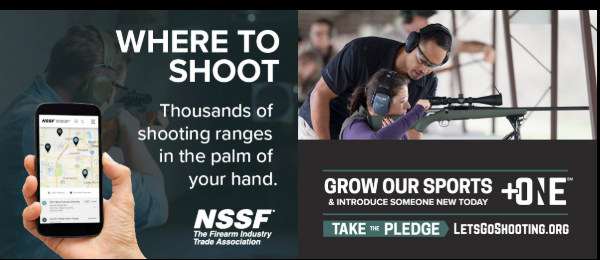
Winchester’s New Shooters Site also links to the NSSF’s WHERE-To-SHOOT Resource, the internet’s most comprehensive listing of gun ranges. The Where-to-Shoot section makes finding a local range easy. Simply input your location and max desired distance, and the site will generate a list of nearby indoor and outdoor ranges with a Google map.
When shooting at long range, two heads (and two sets of eyes) can be better than one. Teaming up with a buddy who acts as a spotter can speed up your long-range learning process. You can focus 100% on the shot, while your buddy calls the wind and spots your hits and misses.
The NSSF has created a short video that shows how shooter and spotter can work as a team. In the video, the NSSF’s Dave Miles works with Rod Ryan, owner of Storm Mountain Training Center in Elk Garden, WV. As the video shows, team-work can pay off — both during target training sessions and when you’re attempting a long shot on a hunt. Working as a two-person team divides the responsibilities, allowing the shooter to concentrate fully on breaking the perfect shot.
The spotter’s job is to watch the conditions and inform the shooter of needed wind corrections. The shooter can dial windage into his scope, or hold off if he has a suitable reticle. As Rod Ryan explains: “The most important part is for the shooter to be relaxed and… pay attention to nothing more than the shot itself.” The spotter calls the wind, gives the information to the shooter, thus allowing the shooter to concentrate on proper aim, gun handling, and trigger squeeze. Rod says: “The concept is that the spotter does all the looking, seeing and the calculations for [the shooter].”
Spotter Can Call Corrections After Missed Shots
The spotter’s ability to see misses can be as important as his role as a wind-caller. Rod explains: “If you shoot and hit, that’s great. But if you shoot and miss, since the recoil pulse of the firearm is hitting your shoulder pretty good, you’re not going to be able to see where you missed the target. The spotter [can] see exactly where you missed, so I’ll have exactly an idea of how many [inches/mils it takes] to give you a quick secondary call so you can get [back on target].”
+ONE Program to Encourage New Shooters
August is National Shooting Sports Month. As part of this effort, the NSSF encourages firearms owners to take one novice to the range this month. This +ONE Movement will help strengthen the ranks of shooters, which, in turn, can help protect our Second Amendment freedoms. The NSSF states: “If just one in three of America’s recreational shooters adds one new person to the shooting sports, we’ll secure a strong future for generations to come. So be the one. For all the thrills and excitement recreational shooting has given you, join the +ONE movement and invite someone to the range today. Share your experience on social media.”
The +ONE campaign seeks to build the ranks of shooters. The NSSF says: “If just one in three of America’s recreational shooters adds one new person to the shooting sports, we’ll secure a strong future for generations to come.” Learn more at LetsGoShooting.org.
As part of the +ONE Movement, the NSSF encourages all participants to practice gun safety and proper firearms handling and storage practices. This video covers basic gun safety procedures:
SHARE THESE 10 SAFETY TIPS WITH +ONE INVITEES
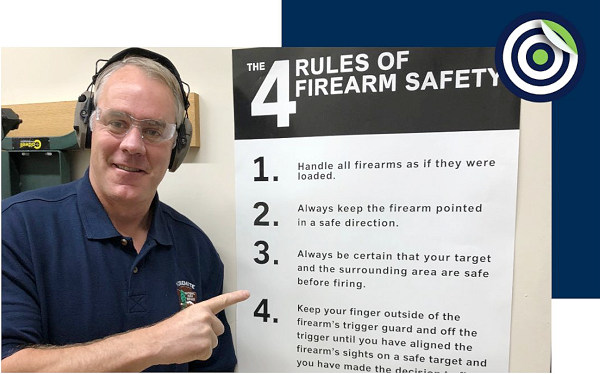
The NSSF has created a list of TEN Rules of Firearms Safety. While you’re at the shooting range or anywhere you handle a firearm, safety ALWAYS comes first. Here are the 10 Key Rules of Firearms Safety. NOTE: The first four rules are the most important.
With fall approaching soon, hunting season is right around the corner. Long-range hunters may want to add Shooter’s Bible Guide to Rifle Ballistics (2nd Edition, 2022) to their reference library. Written by Dr. Wayne van Zwoll, this 264-page resource focuses on the basic principles of ballistics. While the book concentrates on the many factors that affect bullet trajectories, the book also includes chapters on everything from rifle design to bullet construction and handloading. And there are many helpful tips for long-range hunters.
Gunsmith and long-range shooting school instructor Darrell Holland recommends the book highly. This updated Second Addition was released in July 2022, so it is still quite current. Darrell tells us: “Friend and noted author Wayne van Zwoll has authored another fine book on long range shooting. Wayne is a great shot (probably one of the best sling shooters I’ve been around) and superb hunter in his own right. We applaud his efforts to provide sound and accurate knowledge on long range hunting.” This book is available now for just $16.99 on Amazon, 43% off the $29.99 list price.
Van Zwoll is the “real deal” — an experienced outdoorsman, with serious shooting and writing “creds”. Over his career, Van Zwoll worked for the BLM, then Washington’s Department of Game. He worked as a photographer for the U.S. Forest Service, then became one of the Elk Foundation’s first field directors. He has guided hunters in Utah and Wyoming, and has hunted on five continents. Wayne has shot competitively since his days on the Michigan State University rifle team. He qualified for the final Olympic smallbore tryouts in 1972 and later won two state prone titles. For many years he conducted shooting seminars for Safari Club International (SCI). Wayne van Zwoll has authored 14 books, and written more than 2,000 articles for numerous magazines, including Field & Stream, and Outdoor Life. In 2006 he received the Jack Slack Outdoor Writer of the Year award. Wayne now serves as Special Projects Editor for Intermedia Outdoors.
A high ballistic coefficient helped a Creedmoor bullet slice stiff wind 250 yards to this Vaal Rhebok.
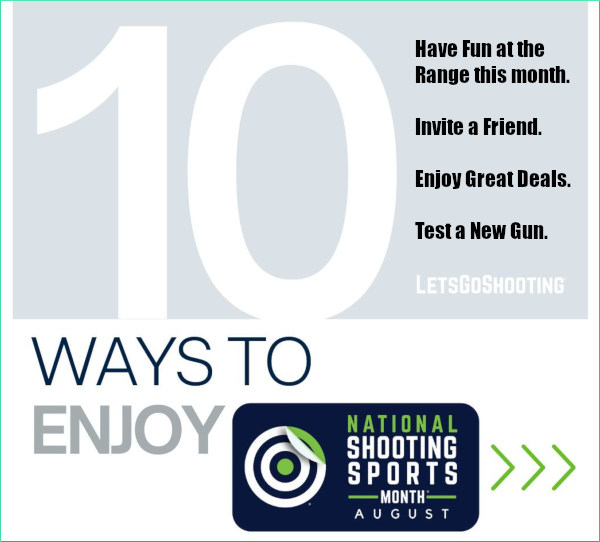
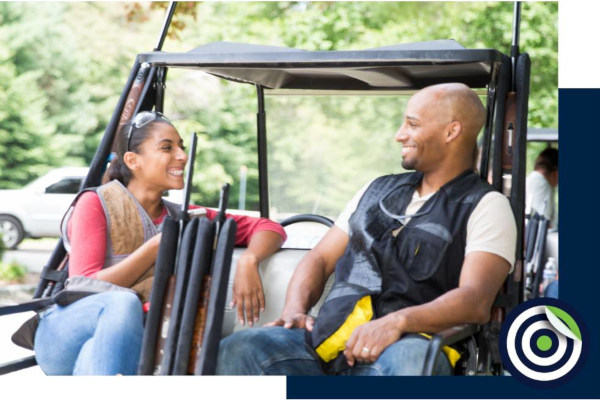
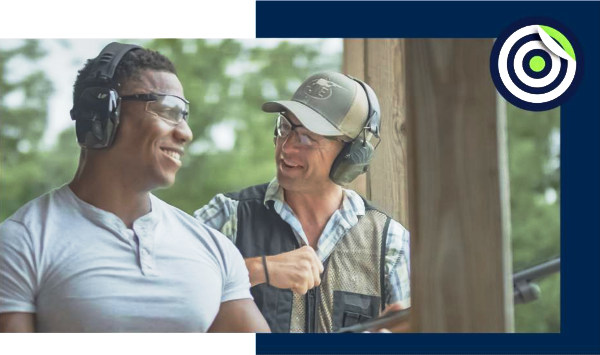
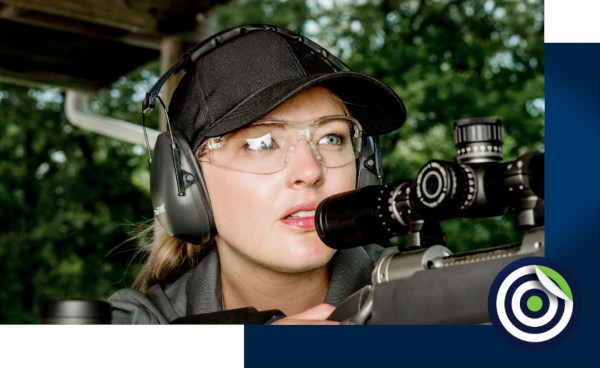
We’re two days into August. And guess what — August is officially National Shooting Sports Month, sponsored by the National Shooting Sports Foundation (NSSF). This month, head to the range, and bring a newbie to introduce him or her to the sport. NSSF’s +ONE Movement encourages experienced shooters to mentor newcomers, so bring a friend to the range, teach firearms safety, and have fun together. More than 63 million adults and youth participate in target shooting sports, so have fun this month!
1. Rediscover Shooting
Haven’t shot in a while? Dust off your shooting gear. Always check to see if firearms are loaded when removing them from storage. And call an old shooting buddy or family member to join you.
2. Try a Drill or Competition
There are many ways to build shooting skills, but two of the most rewarding ways of self-improvement often come from timed drills, accuracy drills or competitions. Find a drill for you or a local pistol, rifle or shotgun competition. There many even be a multi-gun competition.
3. Take Your First Shots
Safety orientation, range rules, range officers… there are things you need to know about if you haven’t tried target shooting before. Learn about range safety and etiquette and consider taking an introductory class like First Shots.
4. Take a Date to the Range
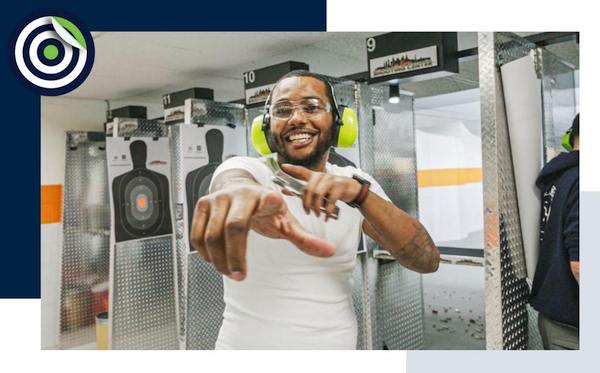
Make it a date! Ask your spouse/partner to go target shooting with you. You’ll have a great time together. Don’t have someone to go with? Call the range and ask about shooting events and training classes.
5. Be a Mentor
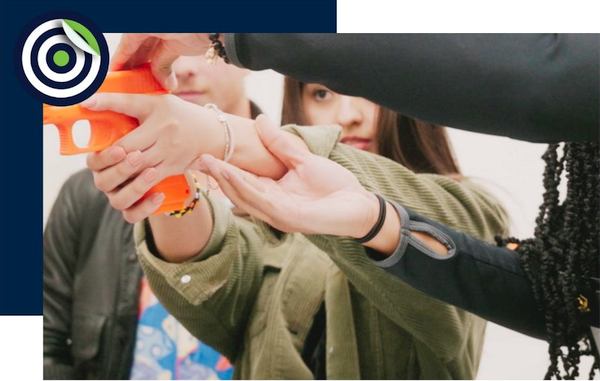
The right teacher makes all the difference when learning a new activity. The +ONE initiative inspires experienced shooters and hunters to guide newcomers and novices on how to safely handle firearms and learn marksmanship skills.
6. Brush Up on Safety
Enroll in a firearm training course or review the rules of firearm safety. Responsible gun owners safely handle their firearms and securely store them when not in use. Check with your local retailer of range for in-person training opportunities.
7. Tune Up for Hunting Season
Hunting is fun and can provide the ability to harvest healthful food. A trip to a firearms retailer or range can help you prepare for hunting season. You can enroll in a hunter education course, find the right gear, and get your rifle sited properly for the fall hunting season.
8. Take Advantage of August Deals
Retailers and ranges will be offering specials during National Shooting Sports Month at thousands of events nationwide. Find a participating business near you to take advantage of these notable offers at ShootingSportsmonth.org.
9. Have A Fun Target Match with Friends
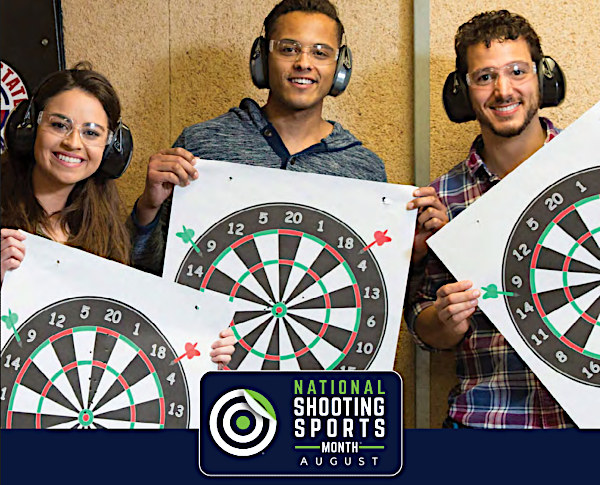
With pistols and rimfire rifles you can have fun shooting indoors, and many ranges are open after work. This is an opportunity to have funs with friends and co-workers. NSSF offers a variety of nice targets you can print out.
10. Share #LetsGoShooting with Friends and Social Media
#LetsGoShooting is the official theme of National Shooting Sports Month. Share your shooting experience on social media networds and encourage other to go to the range for fun, socializing, and training.
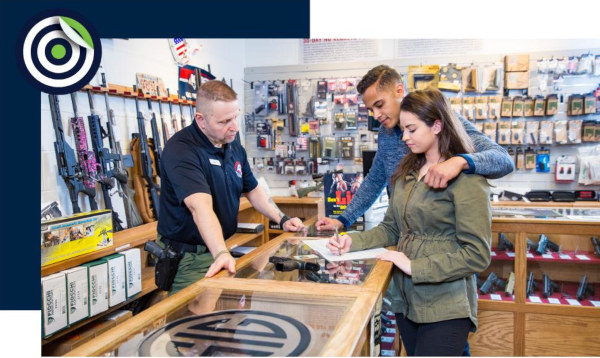
Whether you’re new to target shooting, a first-time gun owner or experienced, see what National Shooting Sports Month has to offer at your shooting range or firearm retailer. America’s firearm owners will find National Shooting Sports Month in August a great time to spend a day at the range enjoying their favorite target-shooting sports with friends and family members. It’s also a time for millions of first-time gun owners to check out all that the shooting sports have to offer.
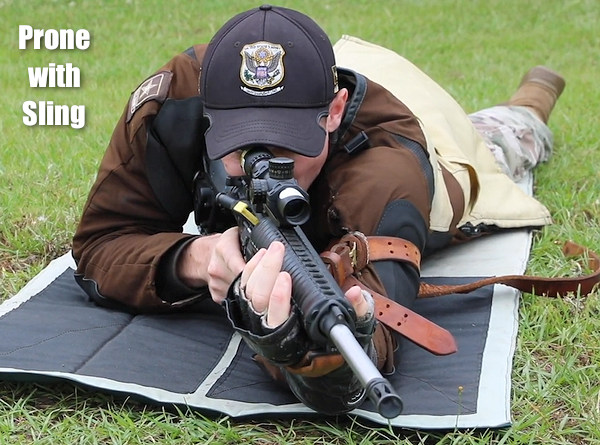
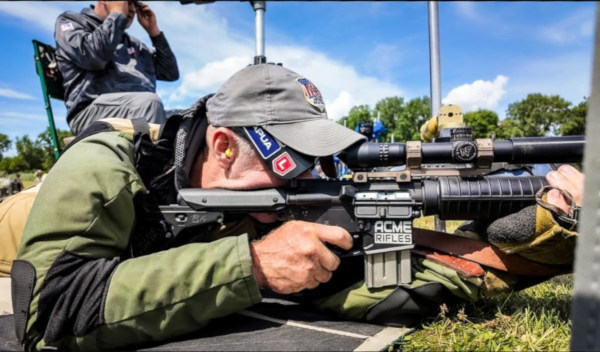
The prone position (with sling) shown by two talented Service Rifle shooters. At top is Brandon Green, a multi-time U.S. National Highpower and Long Range Champion, who has also won the prestigious King’s Prize in the UK. Below is Tony Chow, a gifted match shooter. NOTE: Current Service Rifle rules allow the use of optics up to 4.5X.
Jay Christopherson, 2024 and 2020 Southwest Nationals F-Open Champion, is one of the nation’s best F-Class shooters. When shooting F-Class, Jay uses a SEB Mini front rest and a large rear sandbag to support his big 22-lb F-Open rifle. Though he loves F-Class, Jay has also been interested in Service Rifle competition where no external supports are allowed. When shooting Service Rifle you hold the rifle with your arms and a sling. Some Service Rifle competitions involve three position (Standing, kneeling/sitting, and prone), while others are prone only. Even in the prone position, the sling is a vital accessory. The USAMU video below shows how to rig your sling properly for use in the prone position.
Improving Prone Shooting with Help from Emil Praslick III
Jay dramatically improved his Service Rifle “hard-holding” technique by enlisting the help of Emil Praslick III, former U.S. Army Marksmanship Unit (USAMU) rifle coach. Emil’s guidance and advice resulted in an immediate increase in Jay’s scores on target, as recorded by his ShotMarker electronic target system. Jay noted: “These targets show the difference between hacking it on your own, and spending an hour with someone who knows what they are doing and can tell you that you are doing it wrong.” These targets show Jay’s “before and after” Service Rifle results shooting slung up prone at 600 yards:
Service Rifle, Prone with Sling at 600 Yards
Here is Jay’s target BEFORE training with Emil Praslick — a 194-3X with lots of vertical.
And here is Jay’s improved target AFTER putting Praslick’s advice to work — impressive 199-8X with significantly less vertical.
You can see on this second target much improved vertical. All 20 shots were in a vertical range much smaller than the vertical height of the 10-Ring. Had shot 16 not gone wide left, this would have been a 200. Shot 16 was OUT of the 10-Ring to the left, but note that vertically it has almost perfect elevation.
Jay stated: “I was pretty amazed at not only the difference on the target, but how much difference the changes Emil suggested made to how my hold felt. The entire feel was different and a ton less stress in my neck and arms compared to what I was feeling before. I was actually feeling pretty good about that 194 yesterday, because I hadn’t slung up in two years and that was my highest score (by one point) after doing some load fixing. But having someone explain what you are doing wrong and why makes a world of difference.
Tomorrow is the first day of August, the beginning of National Shooting Sports Month (NSSM). Each August, throughout the month, America’s shooters come together to celebrate our sport and get newcomers involved. To help grow the ranks of shooters, the National Shooting Sports Foundation (NSSF) asks you to bring a new shooter to the range in August. That’s a good mission — adding to the ranks of shooters is the best way to preserve our Second Amendment rights.
This month, newcomers can take their first shots, and experienced shooters can invite someone new to the range or help an older shooter rediscover the fun of target shooting. This month-long event involves all the shooting sports — rifle, pistol, and shotgun.
Find Shooting Sports Events Near You
The NSSF’s ShootingSportsMonth.org website offers a comprehensive, searchable database. This lets you search by state, to find ranges, events, and sales promotions near you. Visit the NSSF online database of NSSM shooting events to find matches, clinics, training sessions, special sales — and much more.
Great FREE Targets for Fun at the Range
To promote National Shooting Sports Month, the NSSF offers 17 FREE Downloadable Targets. There are regular bullseyes, as well as Darts, Golf, and more. We really like the Billiards target and kids love the Water Balloons target. You can download all 17 targets for free, and then print them out, ideally with a color printer. Below are six of our favorite targets. Click HERE to download these six targets (3.5 mb ZIP).
What Shooters Can Do to Promote National Shooting Sports Month:
The NSSF says: “As shooters, you serve a critical role in the continued growth of gun ownership and shooting sports participation. We urge you to join us this August for National Shooting Sports Month.” There are a variety of ways you can help this August:
— Introduce a family member, friend, or group of friends to the shooting sports by taking them to a local range that’s hosting an event.
— Spread the word to family/friends and encourage them to get out to the range in August.
— Encourage the ranges and retailers near you to host an event this August and add them to the official events calendar at www.ShootingSportsMonth.org.
Find Shooting Ranges Throughout the USA
The NSSF offers a directory of shooting ranges online. Visit Wheretoshoot.org to get info on thousands of shooting ranges and facilities around the country. In addition, there is a FREE WheretoShoot Mobile App you can install on your phone. Versions are available for both Android and iOS (Apple) users.
Report from Brandon Green at Camp Perry
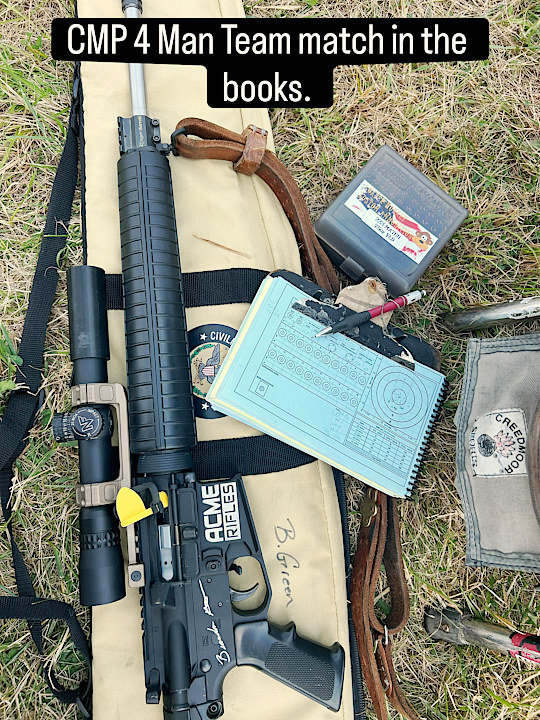
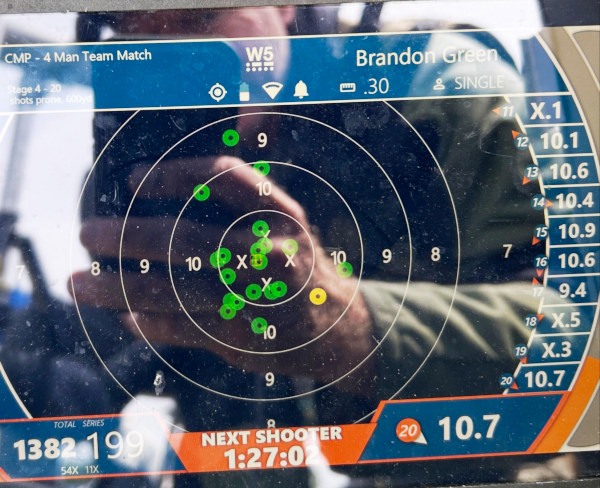
Brandon Green — a multi-time Nat’l High Power and Long Range Champion — recently completed a 4-Man Team Match at the CMP Championships at Camp Perry, Ohio. His team did well but Brandon is hoping to do better in individual competition. Brandon posted: “Now on to the Civilian Marksmanship Program National Rifle Matches. I just want to thank TJ Jones and Krieger Barrels for cutting hammer barrels and building a lights out upper receiver! I didn’t point it as well as I should have, but the rifle wasn’t the problem! Also a big thank you to ACME Rifles/ACME Machine for a new lower and engraving my signature on the side! How cool is that! And thank you to Jack Abrams and Loader Monkey LLC for the ammo! Hopefully I can hold a little harder tomorrow!”
Rifle Training Clinics
The Junior and Advanced Rifle Clinics are in full swing. If you want to learn the finer points of highpower competition this is a good place to start! Thank you to VFB, ACME Rifles, and Civilian Marksmanship Program for getting events like this together. Iron sharpens iron! I also want to thank Krieger Barrels, Creedmoor Sports, and Berger Bullets.
Video from CMP Range with Junior and Advanced Rifle Clinics in Progress
Winner of President’s Shoot-Off
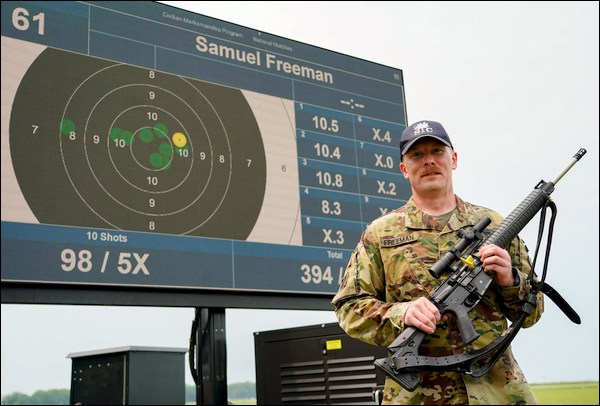
Congratulations to MAJ Samuel Freeman, who was the top competitor in the 2026 President’s Shoot-off! Each year, the top 20 competitors of the President’s Rifle Match meet on the firing line for a 10-shot shoot-off to determine the overall winner. This is the second time MAJ Freeman will be bringing home the President’s Rifle Trophy. Congrats to Samuel.


 +ONE Program to Encourage New Shooters


 Van Zwoll is the “real deal” — an experienced outdoorsman, with serious shooting and writing “creds”. Over his career, Van Zwoll worked for the BLM, then Washington’s Department of Game. He worked as a photographer for the U.S. Forest Service, then became one of the Elk Foundation’s first field directors. He has guided hunters in Utah and Wyoming, and has hunted on five continents. Wayne has shot competitively since his days on the Michigan State University rifle team. He qualified for the final Olympic smallbore tryouts in 1972 and later won two state prone titles. For many years he conducted shooting seminars for Safari Club International (SCI). Wayne van Zwoll has authored 14 books, and written more than 2,000 articles for numerous magazines, including Field & Stream, and Outdoor Life. In 2006 he received the Jack Slack Outdoor Writer of the Year award. Wayne now serves as Special Projects Editor for Intermedia Outdoors.