How accurate can a .45 ACP pistol be, in the hands of an expert marksman? Take a look at that target. This was shot off-hand (no rest) with ONE HAND at FIFTY (50) Yards. That’s TEN shots at 50 yards all inside the 3.36″ 10-Ring with eight shots in the 1.695″ diameter X-Ring.* We bet most folks would have trouble matching that with a scoped rifle shot standing.
Amazing Handgun Accuracy at 50 yards
This remarkable feat of precision pistol shooting — a 100-8X group at 50 yards — was accomplished a few seasons back by PFC Jason Gregoire, a talented young USAMU pistol marksman. And yes, that was done by Jason shooting one-handed!
On its Facebook Page the USAMU posted: “Check out this impressive target by PFC Jason Gregoire of the USAMU Service Pistol Team! This was shot one-handed, with a .45 pistol, and at 50 yards during the Centerfire Match in Columbus, Ohio [on 7/1/2020]. The score was 100-8X. Now that is some marksmanship!”.
How to Improve Your Pistol Skills
Want to improve your bullseye pistol shooting skills? Then watch a series of videos hosted by Brian “Gunny” Zins, a 12-time National Pistol champion, and retired U.S.M.C. Gunnery Sergeant. Here is one the Fundamentals of Bullseye Pistol Shooting videos that Zins produced with the NRA and Shooting Sports USA.
12-time National Pistol Champion Brian Zins Explains Aiming and Trigger Control.
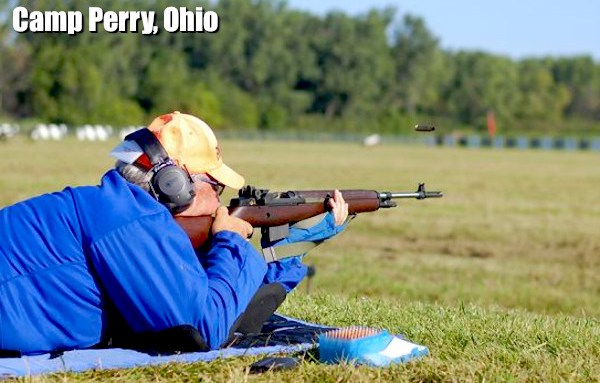
Pistol Competitors (.45 ACP) at 2019 NTT Match at Camp Perry, Ohio.
* This 10-shot group was shot on the NRA B-6 50-yard Pistol Target. Here are the ring dimensions as stated in the NRA Precision Pistol Rules (p. 15):
Rio 2016 World Cup Photo Courtesy ISSF and Team USA
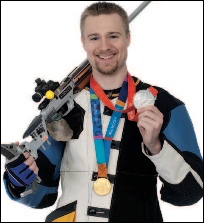
Would you like to try smallbore position shooting? Here are some tips from one of the best 3P shooters on the planet, Olympian Matt Emmons.
Matt Emmons competed in the Three-Position Event at the Rio Olympics, his fourth Olympic appearance. Matt has competed on the U.S. National Team since 1997, medaling in three Olympic games: Gold in 2004 in Men’s 50m Prone; Silver in 2008 in Men’s 50m Prone; and Bronze in 2012 in Men’s 50m 3X40. Although his specialty is Men’s 3-Position rifle, Emmons’ World Championship and Olympic Gold are in Men’s 50m Prone. He usually shoots an Anschütz or Bleiker .22LR rifle, with Eley Tenex ammo.
Winning Gold with a Borrowed Rifle
There is a fascinating story behind Matt’s 2004 Gold Medal, won with a “loaner” rifle. In April 2004, just prior to the Olympic Team Trials, Emmons discovered his rifle had been severely sabotaged in the supposedly secure locker room at the United States Olympic Training Center. The precisely tuned barrel and action were heavily damaged. “I unpacked my gun and I noticed that something wasn’t right,” Emmons said. “Sure enough, somebody had done something to it. I shot it and I couldn’t get the shell out. Emmons said it could not have been an accident: “Oh no, no,” Emmons said. “Somebody took a screwdriver and went in.” Emmons went on to the 2004 Summer Olympics using a rifle belonging to using his former University of Alaska Fairbanks teammate, Amber Darland. With that borrowed rifle he won the Gold Medal in 50m prone. Emmons never found out who the saboteur was, but said “I’d like to know so I could shake their hand and say thanks.”
In this Olympic Channel Video, Matt explains 50m 3-Position Shooting.
Here are shooting tips from Matt, courtesy Anschütz. Click image below to launch a full-screen PDF file.
CLICK Photo to Load Large PDF File
Here Matt Shows the Kneeling Position. The other two positions are Standing and Prone.
Three Sets of Hardware for Three Positions
You may be surprised to find that Matt often totes three complete sets of rifle parts to important matches — three buttplates, three cheekpieces, and three Centra sights with adjustable irises. Matt told Shooting Sports USA that he travels with “three sets for three positions. Our final is so fast that I need three sets of everything to allow a fast change-over between positions.” Matt carries his gear in an an Anschütz sport bag: “It’s similar to the big Ogio duffels with wheels, but lighter. I’ve worked with AHG/Anschütz for many years and I like their bag because all of my junk fits in it.”
The CMP M14 Heritage Match was held Sunday, August 3, 2025 at the Viale Range at Camp Perry.
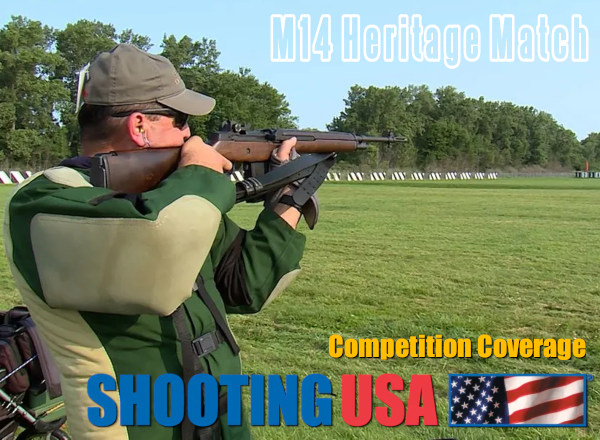
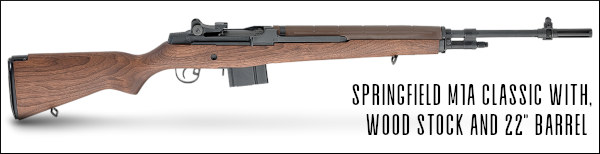
M1A rifles at M14 Heritage Match at Camp Perry Shooting USA TV has a good show this week featuring the M14 Heritage Match at Camp Perry, Ohio. One of most popular matches held during the CMP National Matches at Camp Perry, the Franklin Armory M14 Heritage match features M1A rifles, which are a modern, semi-auto version of the M14. The 2025 M14 Heritage Match was held Sunday, August 3, 2025, at the CMP 2025 National Rifle Matches.
Shooting USA SHOW TIMES: This Shooting USA Episode airs Wednesday, November 12, 2025 at 9:00 PM Eastern and Pacific; 8:00 PM Central. If you miss the regular broadcast, you can stream the show online at any time on Vimeo for $0.99 per episode.
History of the M14 Heritage Match and Springfield M1A Match
The Franklin Armory M14 Heritage Match, previously the Springfield Armory M1A match, began with one man’s concept. Springfield Armory’s Mike Doy witnessed the waning of classic M1 Garand and M1A rifles from the competitive High Power firing lines. “I really wanted to get those M1A rifles out of safes and closets and back out onto the field. So [in 2008] I promoted the idea of running an M1A-specific match at Camp Perry. That first year we had over 600 competitors and spectators.”
Take the time to WATCH this 3-minute video. It has great match footage of Camp Perry and interviews with M1A competitors. Well worth watching!
M1A Competition at Camp Perry National Matches
For many years, the semi-auto version of the M14 was “top dog” in iron sights Service Rifle competition. Now that discipline is dominated by .223 Rem (5.56×45) AR-type rifles, but the bigger .308-caliber rifle, now sold as the M1A, remains popular and is the star of the popular “M14 Heritage Match”.
Dick Jones reports that accurized M14/M1As could post remarkable scores: “The accuracy potential of the M14/M1A is unquestionable. During their reign as service rifles, they produced multiple perfect 200 scores at 600 and 1000 yards in the hands of top shooters. This is a difficult feat with a modern, scoped, magnum-caliber rifle and remarkable with an iron-sighted battle rifle. Good competition rifles can group 10 shots under one MOA, and the meticulously-massaged rifles used by the top shooters during my career would consistently put up 10 shots under an inch at 200 yards off a test cradle.”
M1A Match Equipment Rules and Course of Fire
Renewed interest in the M1A led to the first dedicated Camp Perry M1A match in 2008. That first-ever match drew over 500 shooters. Match equipment rules allow pretty much all types/grades of M1As. The one-day course of fire consists of 50 shots at 300 yards on the NRA MR-65F target, as follows: 5 sighters; 20 shots slow-fire prone; 10 shots rapid-fire prone; 10 shots rapid-fire, kneeling or sitting; and 10 shots slow-fire standing. Here are photos from the 2014 MIA match, courtesy NRA General Operations.
You have probably watched one of the excellent shooting sports videos Ryan Cleckner has done for the NSSF. Ryan’s Understanding Minute of Angle (MOA) video (see below) has been viewed over 3.8 million times! Ryan, a former sniper instructor Ryan who is now an attorney, is noted for his ability to explain complex topics in an easy-to-comprehend manner.
Cleckner has also authored a great book, the Long Range Shooting Handbook, which expands on the topics covered in his popular video series. This book is the #1 Best Seller on Amazon in its category. You can view Sample Chapters from Ryan’s book — just click “Read Sample” on the Amazon product page.
As a long-range shooting expert, Ryan Cleckner has impressive credentials. Cleckner was a special operations sniper (1/75 Rgr) with multiple combat deployments, and he has served a U.S. Army sniper instructor. Currently he works as a firearms industry executive and attorney.
The Long Range Shooting Handbook is divided into three main categories: What It Is/How It Works, Fundamentals, and How to Use It. “What It Is/How It Works” covers equipment, terminology, and basic principles. “Fundamentals” covers the theory of long range shooting. “How to Use It” gives practical advice on implementing what you’ve learned, so you can progress as a skilled, long range shooter.
Ryan Cleckner’s best-selling Long Range Shooting Handbook is designed as an introduction to important fundamental concepts such as MOA vs. MILs, External Ballistics, and Environmental Effects. Included are personal tips and advice based on Cleckner’s years of experience as a sniper instructor.
Iain Harrison, editor of Recoil Magazine, said: “Whether you’re looking to dip a toe into the complex world of long range shooting, or you’re a seasoned shooter with years of trigger time, Ryan Cleckner’s book will prove to be excellent reference material. Well written and easy to understand, it covers all the essential topics that a well-rounded shooter needs to master.”
In this video, Ryan Cleckner reviews proper technique for rifle shooters. A stable platform, sight alignment, sight picture, and trigger control are key fundamentals to shooting properly.
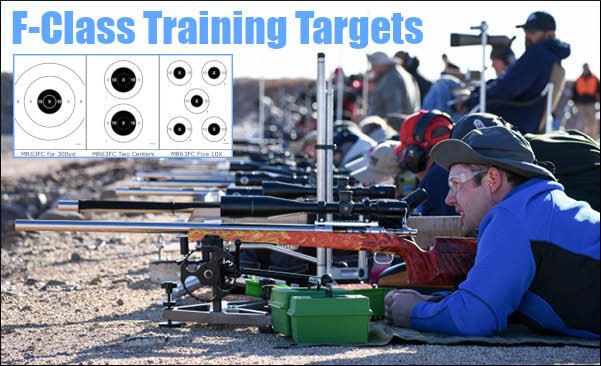
Here’s a handy training option for F-Class shooters. Forum member SleepyGator is an F-Class competitor, but there are no long-distance ranges close to his home. Accordingly, he wanted some “reduced-distance” targets he could use at 300 yards for practice. There IS an official reduced-distanced standard for 300-yard F-Class matches. This utilizes the NRA No. MR-63FC – F-Class Target Center which is pasted over the MR-63 target. It provides a 1.42″ X-Ring, 2.85″ 10-Ring, and 5.85″ Nine-Ring. We offer some free targets you can print out for use at 300 yards. The dimensions of F-Class targets are found in the NRA High Power Rules, Sec. 22, part 4, page 70-71 — see sample below.
To duplicate the 300-yard target, SleepyGator made a printable version of the MR-63FC Target Center, along with a pair of training targets with two bulls and five bulls. The two-bull and five-bull targets mirror the scoring rings on the MR-63FC, but they display only the innermost three rings and two rings respectively. All three targets are Adobe PDF files that can be easily printed.
NOTE: You may need to adjust the scale (sizing) on your printer to get the dimensions exactly correct. As noted above, when printed, the 10-Ring on all three targets should measure 2.85″. This should provide some handy practice targets you can use between matches. Thanks to SleepyGator for providing these targets. You can download all three as a .Zip archive. After downloading the .Zip file, just click on the .Zip archive to extract the individual targets.
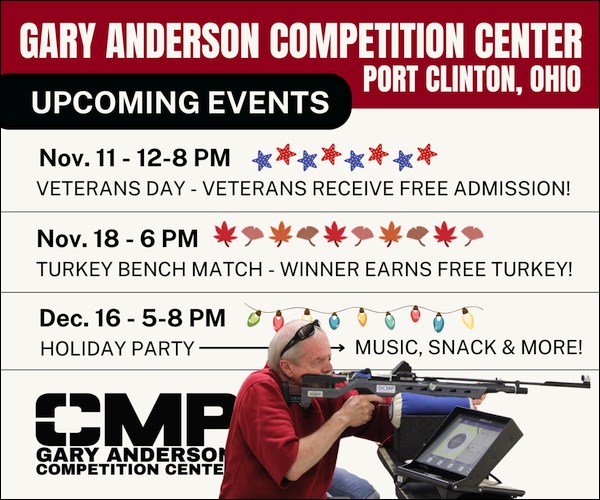
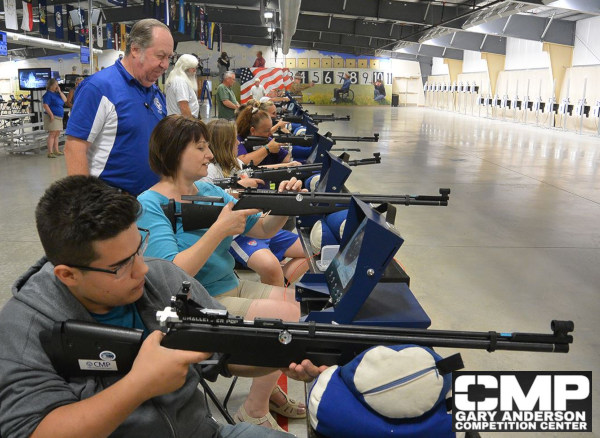
This month the Civilian Marksmanship Program (CMP) will offer multiple events at the Camp Perry Facility in Ohio, including a Veterans’ Day Program (free for Veterans) at the Gary Anderson CMP Competition Center. The Competition Center, on the grounds of the Camp Perry National Guard Training Site in Port Clinton, Ohio, is open to the public. The facility houses a retail store, classroom, common area, Laser Shot simulators, and an 80-point indoor electronic target range for air rifle and air pistol.
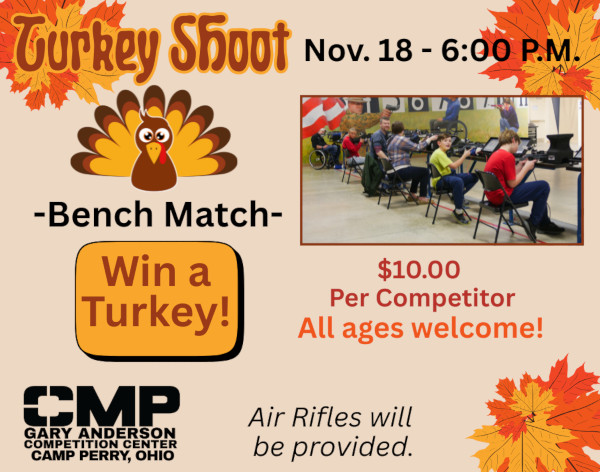
Later in November there will be a Turkey Shoot Air Rifle Benchrest Match on November 18th. This will be open to the general public and the top shooters can receive a turkey as a prize.
Upcoming events include:
November 11, 12-8 p.m. – Veterans Day – Veterans receive free admission for the air range and Laser Shot simulators.
November 18, 6 p.m. – Turkey Shoot Bench Match – Participants fire air rifles from a support block, equipment provided! Prizes will be awarded to the top three places.
December 16, 5-8 p.m. – Holiday Party – Festive music, refreshments and more!
Bring your own equipment or you can shoot air rifles provided by the facility. Trained staff members will supervise activities and provide safe oversight during training and matches. All ages are welcome. However, juniors must be at least 10 years old to handle air rifles or air pistols.
The NRA has produced a good video on general principles of gun safety. New shooters should definitely watch this video, which provides many important reminders for long-time gun owners as well. This video and other safety principles are featured in a Shooting Sports USA article.
While at the range, shooters should practice Three Basic Rules:
1) Always keep the gun pointed in a safe direction.
2) Always keep your finger OFF the trigger until ready to shoot.
3) Always keep the gun UNLOADED until ready to use.
In addition, whenever you are shooting, indoors or outdoors, know what is behind your target and never shoot if there is not a safe backstop. With a centerfire rifle at an outdoor range, just a few degrees of elevation can cause a shot to impact more than a mile away.
Store Guns Safely When Not in Use
After your range sessions or hunts, is vital to store all guns safely. We recommend storing all firearms (pistols, rifles, shotguns) in a sturdy gun safe with thick steel walls. Use a GoldenRod or other device to control humidity inside the safe. We also like to use Bore-Stores or other treated gun sacks to help protect against corrosion.
AccurateShooter’s Target Page provides over 50 FREE downloadable targets. You’ll find all types of targets — sight-in targets, varmint targets, rimfire targets, bullseye targets, tactical targets, load development targets and more. CLICK HERE for all our free targets, including our popular LOAD DEV target.
On this load development target, all your load data fits neatly in the boxes under each target. The diamonds have 1/2″ sides and you can align your cross-hairs on the horizontal and vertical lines. When we test, we crank in a little elevation, setting the point-of-impact higher. That way our shots fall in the gray circles, leaving the red diamonds intact for precise aiming.
Storm Tactical Targets — Hundreds of FREE, Printable Targets
If you want an even greater selection of targets, specialized for PRS and NRL shooters, Storm Tactical offers a vast collection of tactical targets, available in three different versions: MOA, MIL Yards, and MIL Meters. These target sets were created with input from Sniper’s Hide. Storm Tactical also created a great rimfire target set. This includes side-by-side target blocks for fun, one-on-one competition. If you shoot NRL22 or just enjoy shooting with a buddy, we highly recommend the rimfire target set.
Overall there are 299 Storm Tactical Targets in four sets.
CLICK links to launch each Storm Tactical target collection. Then you can click the download icon to save to your hard drive. OR, you can scroll up and down to select the target(s) you like which you can tell your printer to print. We do recommend downloading the complete archives. File sizes are listed.
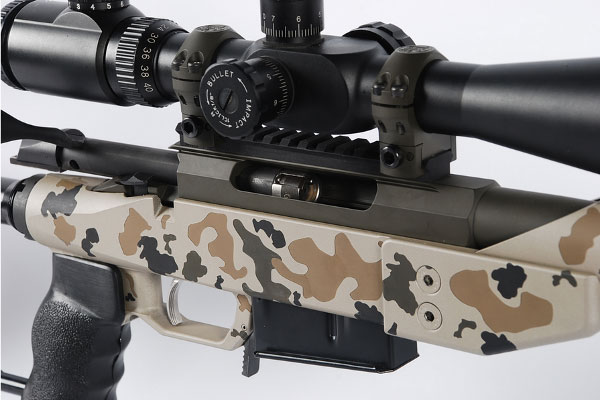
Here’s a Tikka T3 in Third Eye Tactical cerakoted chassis.
Rimfire Twin Target, for One-on-One Shooter Challenges
You’ll find this fun target on the third page of the Rimfire Target Pack. Just download the PDF file and instruct your printer to deliver page three. Or print out all six (6) rimfire targets if you like.
If you are shopping for a new rimfire rifle, particularly a .22 LR, you may want to pick up a copy of Small-Bore Rifles: A Guide for Rimfire Users by C. Rodney James. This provides a detailed history of rimfire cartridges and provides a look at a variety of rimfire rifles for various applications — target, plinking, varminting. SSUSA.org explains this book covers “every aspect of rimfire shooting, from a detailed history of its calibers and platforms, to a discussion of proper maintenance and expected accuracy[.]” American Rifleman Editor-in-Chief, Mark Keefe, writes: “This little book is the most useful treatment of the [.22 Long Rifle] I have read, and it is highly recommended for anyone serious about being a rimfire rifleman.”
The 248-page book is available for $17.99 from Skyhorse Publishing in both paperback and ebook formats. You can view a 40-page sample of this book, including the index, on Amazon. CLICK HERE, then, when the page opens on Amazon.com, click the “READ SAMPLE” link below the book cover image. Amazon offers the book in Kindle format for $12.99.
This book focuses primarily on the .22 LR (Long Rifle) cartridge. However, it does include extensive information on other rimfire chamberings, including .17 PMC/Aguila, .17 HMR, and .22 WMR. Here’s part of the 22 WMR section:
Here are reviews by recent verified purchases of the book:
“Everything you could ever want to know about the development of the .22 round, the ballistics of the same and the history of early bolt-action .22 rifles are presented in an easy-read style by a very knowledgeable author. There are plenty of color photographs and a lot of useful maintenance information throughout the book. I do have one complaint… the book has almost no information on semi-automatics.” — K. Greene
“A must-read book for the rimfire enthusiast. Much accurate information presented in an enjoyable format. From the earliest rimfire rounds to the latest 17s [are] all are covered in this book. Bolt actions, semi-autos and single-shot rifles are covered with the pros and cons of each. What makes for accuracy from the rifle to the cartridge is well covered.” — Ken Cook
2025 World Action Pistol Championship
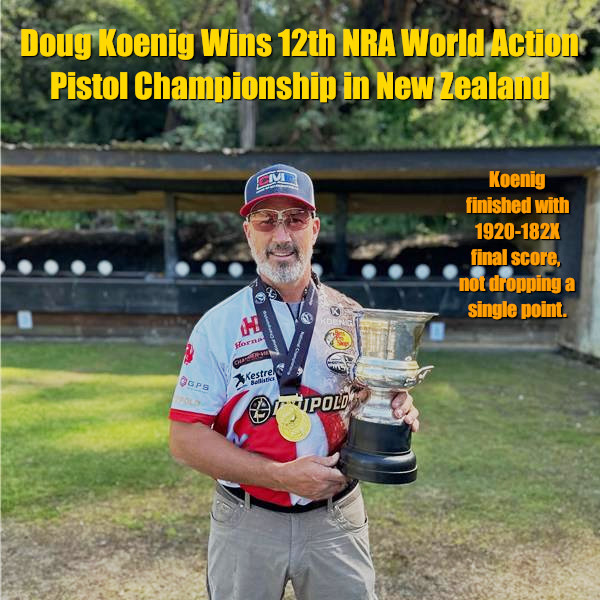
Legendary shooter Doug Koenig recently secured a major victory at the NRA World Action Pistol Championships, which took place October 21-25, 2025 in Hamilton, New Zealand. This big win was the 8th Action Pistol World Championship title Doug has earned in his remarkable shooting career.
Koenig also competed at the New Zealand Action Pistol Nationals, held the weekend prior to the World Championships. Using the event as a warm-up, Koenig delivered a flawless Nationals performance, shooting a perfect 1920-179X score to secure the NZ national title. Doug then won the World Pistol Championship with another perfect score of 1920 with an X-count of 182X. That is mighty impressive!
The World Championship, hosted by the Hamilton Pistol Club, featured a unique format, with one event per day: Barricade (Tuesday), Plates (Wednesday), Practical (Thursday), and Mover (Friday). Using Vihtavuori N320 powder, Koenig once again rose to the occasion, shooting a perfect 1920 with 182 Xs. Koenig was the only competitor to shoot a clean match, earning him the top spot in the World Championship.
Koenig also helped win the Open Team Event at the 2025 World Pistol Championship in New Zealand. The 4-person USA-CMP Open Team claimed the vaunted Team World Championship. Team members were: Doug Koenig, Joey Deleon, Benito Martinez, and Bruce Piatt (who is also a Team Vihtavuori member).
Notably teammate Bruce Piatt earned 2nd Place Overall, 2nd in the High Master Division, and 1st in the Senior Division. Competing for the 10th time on the world stage, Piatt noted that “The competition was fierce through the four stages of fire”.
These two videos show Doug Koenig in action in past years at the Bianchi Cup Range.
A proud member of Team Vihtavuori, Koenig expressed gratitude to his sponsors and supporters. “None of this would be possible without the continued support of Vihtavuori and all of my sponsors who have stood by me throughout my career.”


 Amazing Handgun Accuracy at 50 yards


 Matt Emmons competed in the Three-Position Event at the Rio Olympics, his fourth Olympic appearance. Matt has competed on the U.S. National Team since 1997, medaling in three Olympic games: Gold in 2004 in Men’s 50m Prone; Silver in 2008 in Men’s 50m Prone; and Bronze in 2012 in Men’s 50m 3X40. Although his specialty is Men’s 3-Position rifle, Emmons’ World Championship and Olympic Gold are in Men’s 50m Prone. He usually shoots an Anschütz or Bleiker .22LR rifle, with Eley Tenex ammo.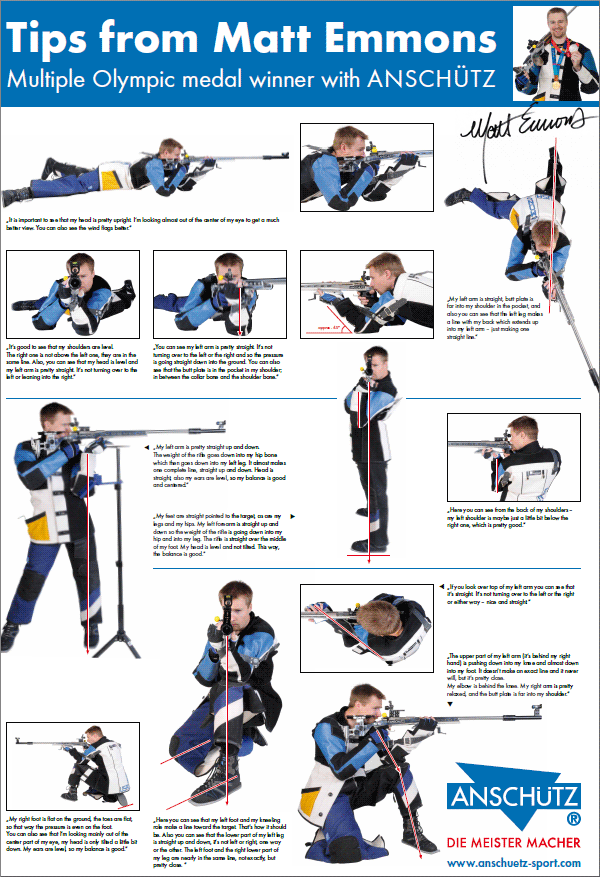






 If you want an even greater selection of targets, specialized for PRS and NRL shooters,




 Koenig also helped win the Open Team Event at the 2025 World Pistol Championship in New Zealand. The 4-person USA-CMP Open Team claimed the vaunted Team World Championship. Team members were: Doug Koenig, Joey Deleon, Benito Martinez, and Bruce Piatt (who is also a Team Vihtavuori member).


