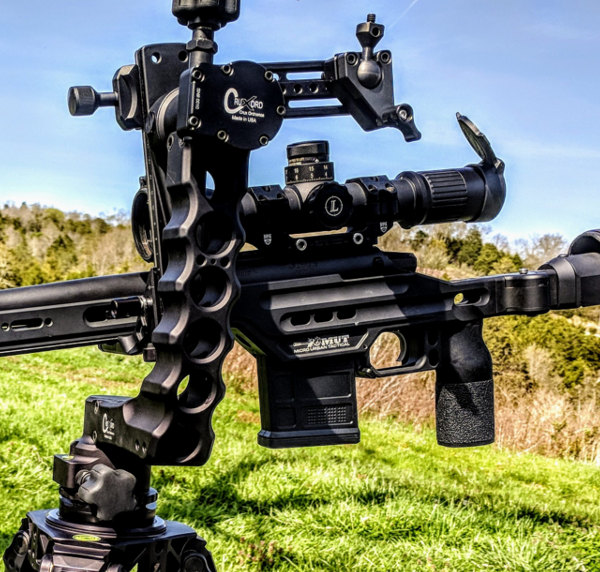
The new Grayboe Ridgeback stock is made from a proprietary fiberglass/epoxy compound. MSRP is $599.00 with options for Rem 700/Rem Clone Short Action or Rem 700 Long Action.
Grayboe now offers the Ridgeback stock with both DBM (Detachable Box Magazine) or BDL inlet options. We like the design of this stock. In the rear is a nice adjustable cheekpiece and the toe (underside) has a long straight run which works well in the bags. Length of Pull is adjustable with spacers. The stock is offered for both long and short Rem 700/Rem clone actions, and the DBM version fits AICS magazines. The new Ridgeback Stock is available through the Grayboe network of dealers or direct from the Grayboe website.
The Grayboe Ridgeback blends qualities of traditional fiberglass stocks with modern features pioneered in chassis systems. The Ridgeback is constructed of proprietary Fiberglass / Epoxy compound formed under high pressure and heat. This creates a precise, low void, homogeneous stock that maintains dimensional stability and strength in all weather and shooting conditions. The Ridgeback features a vertical pistol grip, adjustable cheek piece, and handy M-LOK built into the fore-end. This allows easy customized placement of accessories. Finally the Ridgeback even includes a built-in bubble level — that’s clever and handy.
Grayboe Ridgeback Stock Features:
– Adjustable Cheek-piece
– Adjustable Length of Pull
– Fore-End includes built-in M-LOK
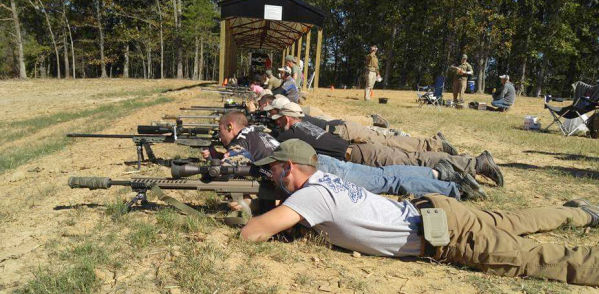
The GAP Grind is one of the most popular tactical matches on the planet. So popular, in fact, that this 3-day Pro-Am event will likely “sell out” this year — with more interested shooters than available slots. To ensure you get a spot at the 2018 GAP Grind, which runs October 5-7, 2018, register early. GAP Grind Registration opens June 1st, 2018 at 9:00 am CST. The 2018 Grind will take place at the K&M Precision Rifle Training Shooting Complex in Finger, Tennessee.
If you haven’t experienced major PRS Pro-Am event like the Grind, with hundreds of talented shooters, check out this video from ShootingUSA. Show host John Scoutten provides a competitor’s perspective.
Lots of Action, with 20+ Stages
The GAP Grind is a notoriously challenging, “high tempo” match with minimal down-time between stages. Over the course of 20+ stages, competitors will fire 200+ shots at a variety of steel, paper, moving, and reactive targets out to 1,200 yards. Targets vary in size/difficulty based on the shooter’s position, distance, and time allotted. Most stages include “stressors” — i.e. time limits or required movement(s).
Josh Temnnen Facebook photo
The GAP Grind is held at the impressive K&M Shooting Complex in Tennessee:
GAP Grind Hardware Shelley Giddings, a skilled shooter of both firearms and cameras, snapped these images of state-of-the-art tactical rifles at the 2014 GAP Grind. See more firearms images on Shelley’s Facebook Page.
Pandemic: Zombies in the Heartland
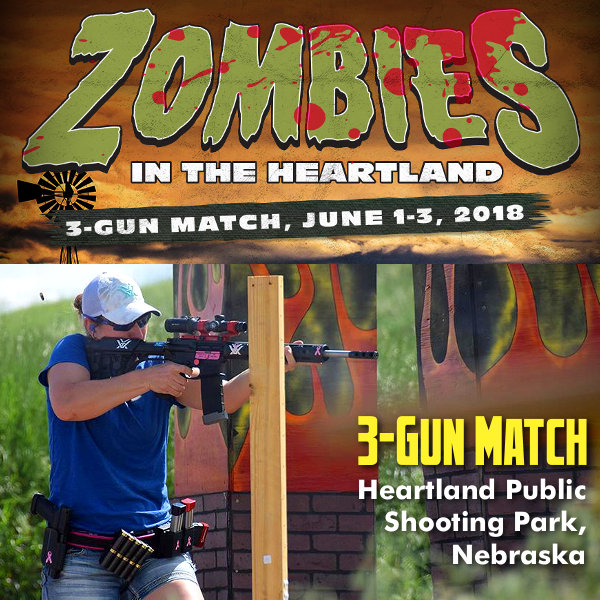
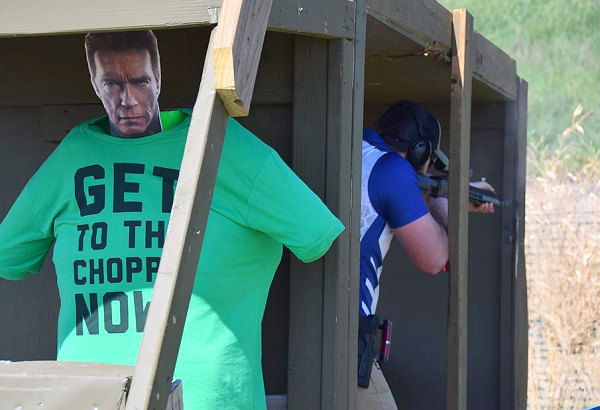
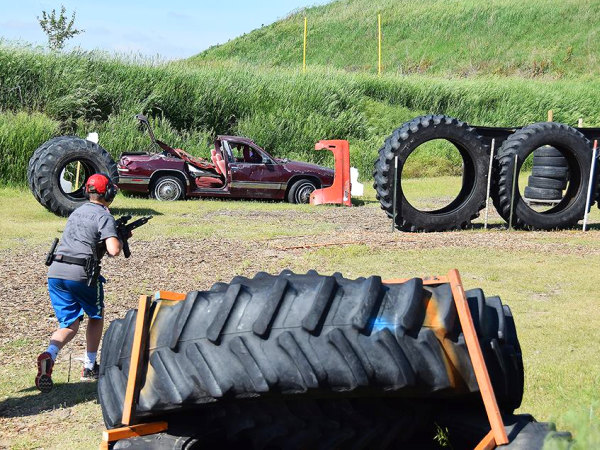
Every year Hornady hosts the very popular Zombies in the Heartland event. This “Pandemic” 3-Gun fun match, one of the biggest three-gun shoots in the nation, is just 11 days away. This event will take place June 1-3, 2018 at the Heartland Public Shooting Park in Grand Island, Nebraska. The Pandemic traditionally has a rich prize table worth over $150,000. Prizes include pistols, rifles, shotguns, scopes, AR uppers, gun parts, and gear of all kinds.
The Pandemic is a veritable theme park for shootists, with many fun stages and innovative targets. Many unique, reactive zombie targets have been developed specifically for this match. The use of paper targets has been minimized — so it’s mostly “bang and clang”.
There will be ten multi-gun stages this year. Rifles, pistols and shotguns are used on most stages. There are also fun side-matches. We highly recommend you watch the video below to see highlights from last year’s Pandemic.
2017 Zombies in the Heartland Highlights Video. Guys, this well-made video is WORTH WATCHING! This video offers Shooter’s POV views of many stages including full auto:
This year there will be ten (10) stages, each with a different shooting challenge. Shotguns, rifles and handguns will be used on most stages, which feature handgun targets from 1-15 yards, shotgun targets from 10-20 yards, and rifle targets from 1-200 yards, so be prepared for a variety of target presentations and engagements. There will also be side matches with full-auto demo firearms, exploding targets, specialty targets. View the Zombie Guide Page for more info.
Here’s something that should make you smile. We know that PRS competitors love their support bags. At a PRS matches you’ll see all sizes and shapes of bags — rear sandbags, front bags, barricade bags, even bags you wear on your arms. And now the bag has evolved to the Nth Degree — the Numero Uno bag. This jumbo bag may seem like a joke, but it does offer some advantages.
On his Facebook page, Robert Brantley showed a fellow who used the “Mother of All Bags” in a recent PRS match. This huge camo-fabric bag seemed to be inspired by bean bag chairs. Brantley posted “The Numero Uno! When there’s only time for one bag, why settle for less?”
At the 1:05 time mark the shooter uses the Uno for low position support. It works!
This thing was big enough to support the shooter in seated position, three feet off the ground. We’re not sure about the filling but we suspect the Numero Uno is filled with lightweight packing materials or the material used inside sleeping bags.
Between stages, the Numero Uno also serves as a comfy back rest. Note the color-coordinated orange camo shooting jacket, orange rifle stock, and orange suppressor cover. Who says PRS guys can’t be fashionable too?
PRS Competitors Up in Arms about Big Bag
The giant Numero Uno bag stirred some controversy on Facebook:
“What’s next… the tactical couch?” — Jacob P.
“This is when they need to put rules on the amount of bags you can use. It’s to the point where it’s getting out of control, and PRS shooting is becoming a joke.” — Bryan L.
“This is getting out of control. Need to start restricting to one bag, one tripod. See where skill comes in and not so many crutches.” — Bryce H.
However, George Gardner of G.A. Precision was not too concerned: “Simmer down boys — the guy running it didn’t place well. I’m pretty sure it was more of a funny thing for him. What is the PRS supposed to do? Make a Size limit? He carried it all match long. I’m really not sure it was helpful but it made for great commentary.”
The True Origin of the Numero Uno
In truth, the super-sized Numero Uno bag was crafted by Armageddon Gear in jest. Watch this original Numero Uno spoof video with Armageddon’s owner Tom Fuller. You’ll see the the bag was created as a joke item. Tom’s wise-ass idea was that, if the PRS allowed only one bag in matches, then it should be the biggest bag possible — the Numero Uno. Enjoy…
Want to learn more about Long Range Shooting? Check out the “Elements of Long Range Shooting” videos from the National Shooting Sport Foundation (NSSF). In this multi-part series, Bryan Litz of Applied Ballistics covers a variety of topics of interest to precision shooters. Today we feature three of these videos. There are five other videos in this series. Watch the entire 8-video “Elements of Long Range Shooting” series on the NSSF YouTube Channel.
Atmospherics and Density Altitude
Bryan Litz explains: “An important element in calculating an accurate firing solution for long-range shooting is understanding the effects of atmospherics on a projectile.” Atmospherics include air pressure, air temperature, and humidity. Bryan notes: “Temperature, pressure, and humidity all affect the air density… that the bullet is flying through. You can combine all those factors into one variable called ‘Density Altitude’.” Density Altitude is used by the ballistic solver to account for air density variables that affect bullet flight.
Bullet Ballistic Coefficients
A bullet’s ballistic coefficient (BC) basically expresses how well the bullet flies through the air. Higher BC bullets have less aerodynamic drag than lower BC projectiles. You will see BCs listed as either G1 and G7 numbers. These correspond to different bullet shape models. Generally speaking, the G7 model works better for the long, boat-tail bullets used for long-range shooting. Notably, a bullet’s drag is NOT constant in flight. The true BC can vary over the course of the trajectory as the bullet velocity degrades. In other words, “BC is dynamic”. That said, you can make very accurate drop charts using the BCs provided by major bullet-makers, as plugged into solvers. However, long-range competitors may want to record “real world” drop numbers at various distances. For example, we’ve seen trajectories be higher than predicted at 500 yards, yet lower than predicted at 1000.
Ballistics Solvers — Many Options
Bryan Litz observes: “When we talk about the elements of long range shooting, obviously a very important element is a getting a fire solution, using a ballistic solver. There are a lot of ballistic solvers out there… Applied Ballistics has smartphone Apps. Applied Ballistics has integrated the ballistic solver directly into a Kestral, and the same solver runs (manually) on the Accuracy Solutions Wiz-Wheel. The point is, if it is an Applied Ballistics device it is running the same solutions across the board.”
About Bryan Litz
Bryan began his career as a rocket scientist, quite literally. He then started Applied Ballistics, the leading company focusing on ballistics science for rifle shooting. A past F-TR Long-Range National Champion and Chief Ballistician for Berger Bullets, knows his stuff. His Applied Ballistics squad was the winning team at the 2017 King of 2 Miles event, and Applied Ballistics recently received a major U.S. defense contract to to execute Phase 1 of the Extreme Sniper Strike Operations (ESSO) project.
Tactical-style rifles with metal modular chassis are all the rage right now, and there’s a new player in the game, the T/C Long Range Rifle. It looks good. We like the chassis features, and the chambering choices: 6.5 Creedmoor, .243 Win, and .308 Win. The rifle comes with a 5R-rifled, fluted barrel, and a Performance Center trigger adjustable from 2.5 to 3.5 pounds. The threaded barrel is fitted with a factory muzzle brake. Notably, this rifle ships with a One-MOA three-shot accuracy guarantee.
At the NRA show in Dallas, Thompson/Center Arms announced the launch of a new bolt-action, chassis-style rifle — the Performance Center T/C Long Range Rifle (LRR). The T/C Long Range Rifle is built on an aluminum chassis stock that features an adjustable cheek piece and butt plate for a custom fit, with an angled toe on the buttstock that should work well with bags. The forearm has Magpul® M-LOK® slots for quick, easy mounting of accessories. The new Performance Center T/C Long Range Rifle also includes a 20 MOA Picatinny-style rail. That helps provide more elevation for long-range applications.
GunsAmerica checked out the T/C LRR at the NRA Show and said this new rifle looks impressive — the stock is well-designed, and overall fit & finish is good. One observer noted: “Could this be the Ruger RPR killer?” Read Full Report HERE with many large photos.
With a $1211.00 MSRP, this rifle should have a “street price” around $1000. So it will compete directly with the Ruger Precision Rifle. If the T/C LRR proves accurate, it could be a major player in the PRS Factory division. That class is limited to $2000.00 for the rifle and $3000.00 for rifle and optics.
The new Performance Center T/C Long Range Rifle has been on display at Thompson/Center Booth #8555 during the NRA Annual Meetings this weekend in Dallas, Texas. Available in both a Black and Flat Dark Earth (FDE) finish, the Performance Center T/C Long Range Rifle ships with one 10-round detachable magazine, a Caldwell Pic Rail XLA Bipod, and soft case.
Tony Miele, General Manager of Performance Center, said, “With the growing popularity of long range, precision shooting, we wanted to ensure our customers had an option available from the Performance Center. We’ve teamed up with Thompson/Center to design the new Long Range Rifle.” NOTE: Thompson/Center Arms (T/C) is a Smith and Wesson company.
The National Shooting Sports Foundation (NSSF), the trade association for the firearms, ammunition, hunting and shooting sports industries, Board of Governors today unanimously voted to expel Dick’s Sporting Goods from membership for conduct detrimental to the best interests of the Foundation.
Dick’s Sporting Goods recently hired a Washington D.C.-based government affairs firm, for “[l]obbying related to gun control.” Dick’s Sporting Goods CEO Edward W. Stack announced earlier this year the retail chain would end sales of modern sporting rifles, voluntarily raise the age to 21 to purchase firearms in their stores and called for more restrictive legislation. Dick’s later announced they would destroy the remaining modern sporting rifle inventory. NSSF responded that business decisions should be individually made, but was nonetheless disappointed and the decision does not reflect the reality of the vast majority of law-abiding gun owners.
Nosler’s line of RDF™ (Reduced Drag Factor) bullets feature very high Ballistic Coefficients, hybrid-type ogives, and tight, factory-closed meplats. Nosler’s RDF bullets were designed to be very competitive match projectiles for their respective bullet weights. Now offered in four calibers, Nosler RDF bullets genuinely deliver excellent performance for the price. Shooters, particular PRS competitors, have found the RDFs deliver the flat trajectory and high BC necessary to reach the podium.
Nosler is proud of its RDF bullets, which feature tight, uniform meplats: “Nosler knows what gives competitive shooters an edge, isn’t an edge at all. It’s a point. With the highest in-class Ballistic Coefficient and smallest, most consistent meplat, RDF is the flattest-shooting match bullet in its class. Now available in more calibers and weights, the RDF’s meticulously-optimized compound ogive and long, drag-reducing boat-tail make achieving peak accuracy a snap”.
Experience RDF, the Flattest-Shooting Match Bullet:
RDF bullets are also available in Nosler factory ammunition in a variety of popular cartridge types. Nosler factory ammo lets you spend more time at the range and less at your reloading bench. Look for RDF bullets loaded in Nosler’s “Match Grade” Ammunition. Below is the .264-caliber, 140 grain RDF loaded in 6.5 Creedmoor, a popular chambering for PRS and tactical shooters.
Story based on report by Paul Phillips of Global Precision Group
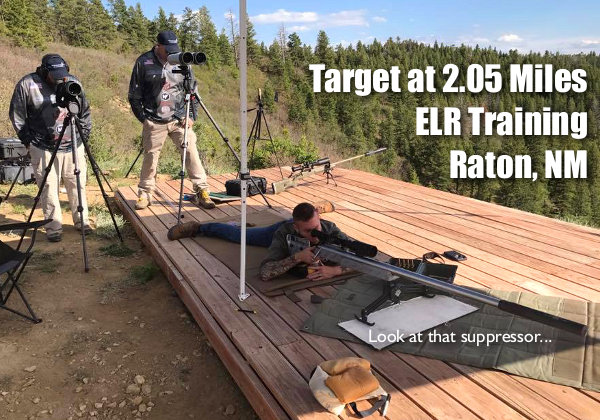
Extreme Long Range (ELR) shooting continues to evolve, with new forms of competition “pushing the envelope” of marksmanship (and ballistics) at distances out to 4900 yards (2.8 miles) and beyond. The latest big-time ELR shooting match was the World’s Longest Shot Challenge (WLSC) in Texas. This match was held at the Valdina Ranch, 1700+ acres of gorgeous hill country property, located about 1.5 hours west of San Antonio, Texas. The event attracted 28 shooters competing in four classes. Each competitor could be supported by a spotter and a wind coach, shooting as a three-person team.
Key “Take-Aways” from the 2018 WLSC Match:
1. Prototype Berger .375 Caliber Bullet is a Winner
The new .375 caliber monolithic Berger bullet designed by Bryan Litz was used by the first and second place finisher in the above .338 Caliber class. It performed great and the ultra-high BC was confirmed.
2. Team Applied Ballistics Dominated
The combined Applied Ballistics Team made first-round impacts at 1760, 2000, 2200, and 2400 yards. Also, 11 out of the 12 impacts total at 2200 yards belonged to Team AB. And Team AB’s Chris Palka had the top score overall, in his first-ever major ELR competition. That demonstrates how well the AB ballistics solutions work. By yardage, Chris recorded 68280 points total, as follows: 1760×6, 2000×10, 2200×9, 2400×3, 2680×4.
Christopher Palka (Team AB), shooting his first-ever ELR match, finished First Overall. Tactiholics Photo.
3. Got Doppler? Advanced Radar Technology for ELR
To shoot at these extreme ranges, you need rock-solid BC information on your projectiles. Luckily Applied Ballistics brought a Doppler Radar and allowed competitors to shoot their ammo to give them personalized ballistic information.
Top Shots By Class
Above .338 Non-Factory (mostly .375 CheyTac)
.338 and under Factory (mostly .338 Lapua Mag)
.338 and under Non-Factory (mostly .338 Edge)
Chris Palka 68280 HIGH SCORE
Paul Phillips 57360
Chase Stroud 47520
Pete Contacos 44360
Paul Phillips 20080
Chris Wiencke 14160
Tim Seller 25760
Eddie 14560
Calvin 11200
NOTE: There was also a fourth class at the WLSC, the “Above .338 Factory Class” (.50 BMG) with Jay Divorsky scoring 14560.
WLSC Match Procedures and Scoring:
Competitors shot with time limits at each distance: 5 minutes to make 5 shots at each plate. Hits on steel scored points, with a big premium on first-round hits. The point values (for hits) were based upon standard ELR practice: 5 times the distance on the first shot, 4 times the distance on the second shot, and so on. In this ELR match each team may have three members: Shooter, Wind Coach, and Spotter.
Paul Phillips reported: “After drawing names randomly for shooting order, on Day One we shot 36″ metal plates at 1760, 2000, 2200, and 2400 yards. The second day was elimination day — you had to make impact on each target at least once to advance to the next distance. These targets started at 2680 ranging out to 4900 yards. We had winds from 4-8 mph on the first day and 6-15 mph on the second day which made it very challenging.”
Proof in the Shooting — AB Solvers and Berger Bullets
Bryan Litz of Applied Ballistics stated: “This event was a successful test of several new things. Berger’s prototype .375 caliber solid bullets worked well in numerous guns and tracked perfectly to the most distant targets. Radar measurements of these new bullets indicate extraordinary performance as well. The AB Team also had a couple new staff members shooting their first ELR competition (Chris Palka and Chris Wiencke) who both did well with Chris Palka actually winning the event. This match was a successful demonstration of the science of accuracy being used to put rounds on target. The thing about science, is that it works the same for everyone. The ballistic software and Custom Drag Model (CDM) data that we used to put first-round hits on targets out to 2400 yards is the same software that’s available to everyone in the AB devices (Kestrel, Sig Kilo, Garmin Fortrex) and Mobile Apps.”
The AB ELR Team dominated the Podium in the above .338 Non-Factory Class. Chris Palka was high scorer followed by Paul Phillips (Second) and Chase Stroud (Third). The top two finishers were using Applied Ballistic Weapon Division Rifles sending the new Berger .375-Cal solid bullets designed by Bryan Litz. The third place finisher shot a .375 CheyTac with 400 grain Cutting Edge Laser bullets.
In the .338 and under Factory Class there were mostly .338 Lapua Magnums. These .338s did very well and two out of the three shooters made it to the two-mile plate. The final standings in the 338 and under Factory Class: Peter Contacos (first), Paul Phillips (second), Chris Wiencke (Third). Both Paul and Chris were shooting 300 grain Berger bullets.
Title Sponsor ELRHQ, a McMillan company, brought tables full of gear. Everything was on display: scopes, bipods, mats, bags, triggers, actions, brakes, stocks, LabRadars, TargetVision target cams, and more. ELRHQ.com is a great one-stop online vendor with the latest and greatest gear for those interested in the ELR discipline and precision shooting.
The match was organized by Travis Walla who did a great job. The event ran smoothly and shooters say the Texas BBQ was great. Travis posted: “We had an awesome event, thanks to all of our sponsors that helped make this event a huge success. We also had a awesome opportunity for those that shot this match — they were able to shoot across the Oehler Research 88 and Applied Ballistics LLC radar at the same time out to 2400 yards on Saturday afternoon. Thanks again…”
Looks like MasterPiece Arms (MPA) stocks are a top choice for the tactical game. MPA chassis systems have been used to WIN 5 of the last 12 matches in the Precision Rifle Series (PRS). The MPA BA Chassis was used by David Preston to win the Carolina PRS Match, Defiance Long Range Shooting Experience (LRSE), and Rocky Mountain Mayhem PRS Match; by Matt Brousseau to win the Bushnell Lonestar Challenge; and by Matt Rooks to win the MPA Spring Shootout. Five of twelve works out to a 42% win percentage — pretty impressive considering all the stock/chassis options on the market today.
The MPA BA Chassis was recently surveyed to be the number one chassis/stock system used by PRS competitors in the PRS 2017 Finale Gear Survey. It experienced a 900% increase in use in 2017 from 2016, which was by far the biggest jump among all chassis systems used by PRS competitors.
MPA’s president, Phil Cashin, is an active PRS shooter. He finished in the top 100 in 2017 and qualified for the finale last year. Cashin, shown in the video below, regularly tests out new ideas and upgrades in actual competition and he regularly seeks out feedback from top tactical competitors. As they say, competition improves the breed.
MPA Production Class Rifle
MPA also offers a PRS Production Class Rifle (PCR) using the MPA Chassis system mated to a Savage Model 12 action. Production Class rifles may cost no more than $2000.00 before optics. Designed specifically for the new PRS Production Class, MPA’s PCR Competition Rifle offers many premium features yet stays under the $2,000 Class limit. The Savage action is upgraded with a Rifle Basix 2-lb trigger, and the adjustable, modular chassis offers a bag rider, barricade stop, and built-in bubble level.
For more information on the MasterPiece Arms product line of rifles, chassis systems and accessories, visit www.Masterpiecearms.com.




 Pandemic: Zombies in the Heartland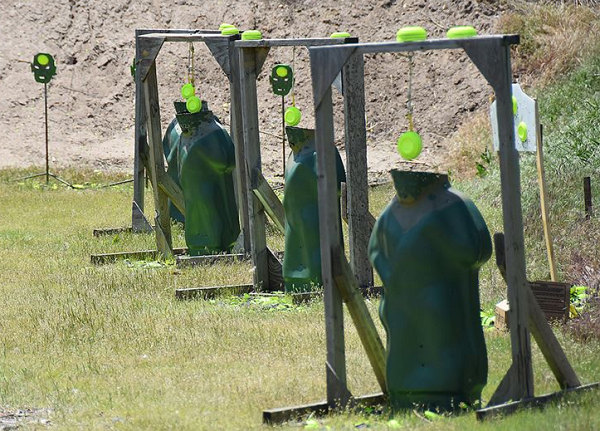





 With a $1211.00 MSRP, this rifle should have a “street price” around $1000. So it will compete directly with the Ruger Precision Rifle. If the T/C LRR proves accurate, it could be a major player in the PRS Factory division. That class is limited to $2000.00 for the rifle and $3000.00 for rifle and optics.