Readers who have just recently discovered the Daily Bulletin may not realize that AccurateShooter.com has hundreds of reference articles in our archives. These authoritative articles are divided into multiple categories, so you can easily view stories by topic (such as competition, tactical, rimfire, optics, shooting skills etc.). One of the most popular categories is our Technical Articles Collection. On a handy index page (with thumbnails for every story), you’ll find over 120 articles covering technical and gunsmithing topics. These articles can help you with major projects (such as stock painting), and they can also help you build more accurate ammo. Here are six popular selections from our Technical Articles archive.
Stress-Free Pillar Bedding. Richard Franklin explains how to do a top-quality bedding job, start to finish.
Gun Safe Buyers Guide. Our comprehensive Safe Buyers Guide examines the key features to consider in a safe — Wall Thickness, Volume, Shelving, Fire Rating, Lighting, Weight and more. We also explain the Pros/Cons of Dial vs. Digital (Keypad) locking systems.
Savage Action Tuning. Top F-TR shooter Stan Pate explains how to enhance the performance of your Savage rifle by optimizing the torque settings of the action screws.
Complete Precision Case Prep. Jake Gottfredson covers the complete case prep process, including brass weight sorting, case trimming, primer pocket uniforming, neck-sizing, and, case-neck turning.
Stock Painting Instructions. Step-by-step guide for stock painting by expert Mike Ricklefs. Mike shows both simple coverage and fancy effects.
Ultrasonic Case Cleaning. This article reviews the recommended process for cleaning cartridge brass with ultrasonic cleaning machine. We cover the right liquid solutions, processing times, and case drying options.
New to the PRS/NRL tactical game? Wouldn’t it be great to get hands-on training with Top 10 PRS master competitors. Well now that is possible with the Masterpiece Arms MPA BA Academy program at the Rockland Precision Range in Pennsylvania. These are intense 1- or 2-day training sessions taught by some of the best PRS shooters on the planet. Instructors will be David Preston and Ken Sanoski. Both men have won multiple PRS matches and qualified for the AG Cup, which is limited to the TOP 20 PRS/NRL shooters in the USA. Rockland Precision is a new 1,000+ yard rifle range and training facility in Kennerdell, Pennsylvania.
NOTE: Participants must provide Rifle and Ammo. For all classes, students must bring a complete, scope-equipped rifle that will hold 1 MOA or better accuracy, together with front bipod and rear sandbag. For all the classes, trainees must also supply their own ammo — 100 rounds for the 1-day classes, or 200 rounds for the 2-day sessions.
One-Day PRS Clinic
The 1-Day PRS Clinic suits shooters of all levels of experience and skill. The staff will lead students through a course of fire, evaluate, and make necessary changes to increase the shooter’s performance. This course will be offered on March 20, June 12, and July 17, 2020, and costs $225. For more information and/or to register CLICK HERE
Intro to Long Range 2-Day Course
This 2-day training course starts with shooting fundamentals and then trains students to successfully engage targets at distance in PRS/NRL style competitions. Focus will be on fundamentals of building a strong shooting position, understand and utilization of windage and elevation adjustments on the optic, and reading atmospheric conditions such as mirage and wind. In addition, trouble-shooting equipment and ammo will be covered. This 2-day course will be offered on June 28-29 and August 15-16, 2020. Cost is $575. For more information and/or register, CLICK HERE.
Intermediate/Advanced Precision Rifle Class
This 2-day course is designed for students who are looking for advanced long-range enhancements to their existing skill-set, with the focus of adapting these skills to practical/positional competitions. This 2-day course will be held July 25-26, 2020. Cost is $575. For more info and to register, CLICK HERE
March is just four days away. That means the spring shooting season will soon be starting. Before you head to the range for the first time, we recommend you do some basic tasks with your firearms. Here’s some good advice on readying your rifles for the 2020 shooting season.
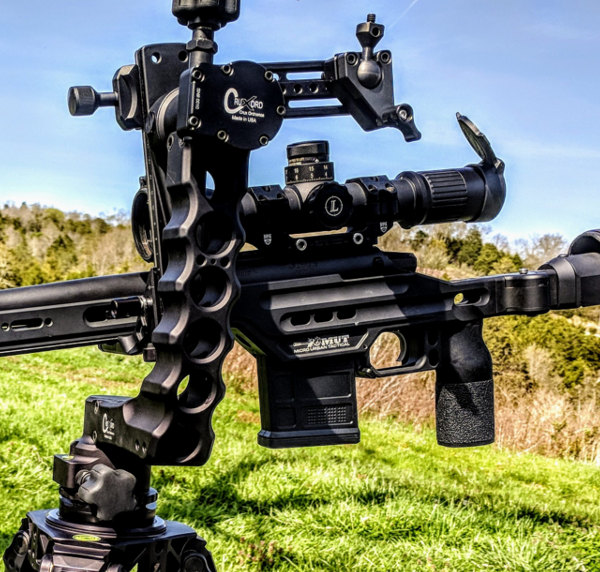
by Ron Dague, Sinclair International I give my rifles a pre-season check before the shooting season starts. This starts with a general inspection starting with the butt-plate or recoil pad and making sure that all the screws and adjustable parts (on an adjustable butt-plate) move freely up or down and side to side. If you got caught in rain some of these screws and adjustable parts may not move when needed. I disassemble parts as needed and put rust preventative or a light oil and/or grease on threads and sliding parts. On rifles with recoil pads and fixed butt-plates, make sure the screws are tight and that holes in the stock aren’t stripped out. Make sure there are no cracks in the stock and around the butt-plate. If the recoil pad is glued-on, just make sure it hasn’t come loose.
Next I take the action out of the stock and check for cracks and wear marks. I look at the bedding to make sure that oils and cleaning solvents have not damaged the bedding. While the action is out of the stock, I look for any surface rust or dirt/dust in the recoil lug area and magazine well. Clean as needed and repair or re-bed if needed.
Trigger Assembly and Action With the barreled action out of the stock, it is a good time to spray out the trigger with cleaner. I use Ronson oil or lighter fluid. [Editor’s Note: Some trigger-makers advise against using any kind of lubricant, grease or oil — so plain lighter fluid is preferred.] After the trigger is cleaned you may want to check the trigger pull weight. If you don’t feel comfortable doing this, take it to a gun smith and have it checked. It is worth every penny to not have a trigger issue and/or a safety malfunction. I also take the bolt apart and clean the firing pin spring and bolt housing with Gun Scrubber or automotive brake cleaner. Then lube the firing pin-spring and firing pin with light oil. I use Kel Lube and/or Butch’s gun oil. Put a small dab of gun grease on the [bolt locking lugs] and cocking ramp.
I will also spray the outside of the action and barrel and give that a light coating of oil for rust prevention. I clean the action with Sinclair’s action cleaning tool. Don’t forget to clean the bore. Even though you didn’t fire the rifle, this makes sure nothing obstructs your barrel.
Checking Metal Fixtures and Fasteners Next I look at the trigger guard and hinged floor plate and make sure it works as designed. Make sure there are no cracks in the trigger guard from an accidental drop. Check guard screws and /or action screws for tightness and tighten to proper spec. There are torque specs for this, but on wood stocks the wood can crush and this should be checked throughout the year as weather change can affect this. My entire collection of rifles are bedded and I just tighten them just snug with screw driver or Allen wrench. The rimfire rifles have a spec of 55 to 74 inch/lbs and I think would carry over to center fire as well. I would caution you about torque wrenches as you need a good quality wrench, and read the directions on how to use it. You can over torque if not careful. Check the swivel studs and bipod to make sure there tight as well. You may want to take scope off and check the base screws and check the rings.
Test Fire the Rifle After Maintenance
After all cleaning and is done and everything is reassembled, take a few rounds out to the range and test fire to make sure everything works as it should. Don’t forget to run 3-5 rounds through the magazine at least two times for function. I look at this as preventive maintenance on the rifle. If you give it a look over you shouldn’t have any trouble during the rifle matches or hunting trip.
Ron Dague
Certified Reloading Instructor
Certified Range Safety Officer
Email: rond [at] sinclairintl.com
Phone: 800-717-8211
This Article Originally Appeared in Sinclair International’s The Reloading Press.
When we first ran this story a while back, it spurred a hot debate, with strong opinions on both sides of the issue. Some guys argued vehemently that volumetric powder dispensing was best — citing the experience of short-range benchresters, most of whom still throw their charges. Others say weighing your charges is best, so long as you have a very precise, and very repeatable scale. Many of the top F-Class and 1000-yard shooters now weigh their charges to the kernel.
Most competitive long-range shooters weigh powder charges for their handloads. Some even use ultra-precise magnetic force restoration scales to load to single-kernel tolerances. But is weight-based measuring always the best way to fill a case with powder? Another option is volumetric charging. This method fills a precisely-sized cavity with powder and then dumps the charge into the case. A Harrell’s rotary powder measure works this way, as does the sliding powder filler on a Dillon progressive press.
For long-range applications, most people believe that precise weighing of powder charges is the best way to achieve optimal accuracy and low ES/SD. However, those short-range Benchrest guys do pretty darn well with their thrown charges, at least at 100 and 200 yards.
Our friend Dennis Santiago recently observed something that made him scratch his head and wonder about weighing charges. His AR-15 match rifle shot better with volumetric (cavity-measured) charges than with weighed charges dispensed by an RCBS ChargeMaster. Here’s what he reports:
Cavity vs. Dribble (Dennis Santiago Report) I had the chance to compare nominally identical ammunition loaded two ways. These were all .223 Remington match loads using 77gr Sierra Match Kings over 23.4 grains of Hodgdon Varget. Same gun. However I loaded some ammo with charges dispensed with a Lee cavity-style powder measure while other rounds were loaded with powder weighed/dispensed by an RCBS ChargeMaster. The cavity-drop ammo (with powder dropped from the Lee unit) was consistently better than the weighed-charge ammo. I have no idea why…
So, ladies and gentlemen — what do you think? Why did Mr. Santiago’s volumetrically-charged ammo shoot better than ammo filled with weighed charges? What’s your theory? Gary Eliseo suspects that Dennis’s Chargemaster might have been drifting. What do you think? Post your theories in the comments area below.
Velocity vs. barrel length — How much speed will I sacrifice with a shorter barrel? Hunters and competition shooters often ask that. Today we DO have solid answers to that question for many cartridge types thanks to Rifleshooter.com.
Bill, Rifleshooter.com’s Editor, explained his test procedure:
“I gathered four different types of factory Federal 224 Valkyrie ammunition, the 90gr Sierra MatchKing (SMK), 90gr Fusion soft point (SP) (referred to a Fusion MSR), 75gr Total Metal Jacket (TMJ) and 60gr Nosler Ballistic Tip Varmint (NBT). After a brief barrel break in and zero, I fired 5 rounds of each cartridge at each barrel length (except the 75 TMJ, I fired 4 rounds at each barrel length due to limited resources). I recorded the average muzzle velocity and standard deviation for each ammunition and barrel length combination and cut the barrel back 1 inch and repeated the process. I recorded barrel lengths from 28″ to 16.5″ (I try to save these barrels as finished 16″ tubes so they don’t go to waste).”
The Heavy Bullet 90gr Ammo Lost about 21 FPS per Inch
How did the test turn out? You’ll find all the results summarized in helpful tables with inch-by-inch velocity and SD numbers. For the two, 90gr ammo samples, results were similar. The 90gr SMK ammo started at 2782 fps (28″), finishing at 2541 fps (16.5″). That’s a loss of 241 fps, or 20.96 fps average per inch of length. The ammo loaded with 90gr Fusion SPs started at 2797 fps (28″) and ended at 2561 fps (16.5″), a drop of 236 fps. That’s 20.5 fps loss per inch. NOTE: Ambient temperature during the test was 45° F. You could expect the overall velocities to be a bit higher during hotter summer months.
With a the smaller bullets, the effect was even more dramatic. As you’d expect they started out faster. The ammo with 60gr Nosler Ballistic Tips (NBT), a good choice for varminters, started at 3395 fps (28″), and declined to 3065 fps (16.5), a total velocity drop of 330 fps. Average velocity loss was 28.7 fps per inch of barrel length. Rifleshooter.com also tested Federal 75gr TMJ ammo.
About the .224 Valkyrie Cartridge
The new .224 Valkyrie was introduced late last year as a Hot Rod cartridge that will work in AR15s. Designed to rival the .22 Nosler while still running well in ARs, the new .224 Valkyrie offers excellent long-range performance when loaded with modern, high-BC bullets. We expect some bolt-action PRS shooters might adopt the .224 Valkyrie. Why? Reduced recoil. With the 90gr SMK, the .224 Valkyrie offers ballistics similar to the 6.5 Creedmoor but with significantly less felt recoil. Check out this chart from Federal showing comparative recoil levels:
.224 Valkyrie vs. .22-250 Remington
The Social Regressive explains: “There are two key reasons why the .224 Valkyrie is unique and desirable. First, it is specifically designed to fit the limitations of the AR-15 platform. It does so even when loaded with gigantic bullets, like the 90-grain SMK that Federal announced. The .22-250 Rem is too long and too fat to work in the AR-15 platform; it needs an AR-10 bolt and magazine.”
The new .224 Valkyrie is basically a 6.8 SPC case necked down to .22-caliber. You can use your existing AR15 lower, but you will need a dedicated .224-Valkyrie upper, or at the minimum a new barrel, modified bolt with proper bolt face, and 6.8-compliant mags.
This barrel’s shoulder was 0.025″ off the action because Red Locktite had been used on the threads.
Gunsmith Thomas ‘Speedy’ Gonzales offered this interesting report about how NOT to headspace a barrel. Hopefully you never discover something like this…
“A good friend and customer sent this rig in for repair after FedEx damaged the rifle during inbound transport from another smith. After repairing the stock and rebedding it, I decided to re-polish the barrel to make the repair perfect. Well this just added insult to injury as the barrel did not want to come off. After a few choice words, the barrel finally broke free only to reveal something very disturbing. It seems the barrel had been ‘headspaced’ by using RED Loctite to hold it in place.” [Editor: That’s definitely NOT how barrels should be fitted.]
Speedy was not happy: “I hope the smith that did this sees the photos and realized what jeopardy he put my customer in or anyone who shot the rifle for that matter. When cleaned up, the shoulder on the barrel was over 0.0250″ (25 thousandths) away from the face of the receiver.” [Editor: That’s a lot in this business]. Check out the images below to see how much the barrel rotated further inward when cleaned up. The barrel spun in nearly another eighth-turn or more. Not good.
F-Class shooting (both F-Open and F-TR) is one of the fastest-growing forms of rifle competition. Each season many new shooters hit the line and attendance at the major F-Class matches increases every year. But if you’re new to the game, you may ask “Where can I shoot an F-Class match?”. Well, Forum member Rod V. (aka Nodak7mm) has compiled a useful list of 112 ranges throughout the USA where F-Class matches are held. With venues from Alabama to Wyoming — you should find an F-Class program not too far from home. The list, in Excel spreadsheet format, provides range locations and weblinks (where available). Click the link below to download the F-Class Range List (.xls file):
Note — this list, now in its 20th Revision, is augmented regularly, but info is still being gathered. No claim is made that the list is comprehensive. But it still covers the the lion’s share of the important F-Class venues nationwide. If you know of a range that should be added to the list, please post the location on our F-Class Range List Forum thread. Rod will update the list as new range info is received. Rod writes: “Range information is wanted and welcomed. I would like your help on collecting specific info on Clubs/Ranges where known F-Class matches are held.” Here’s a partial sample from Rod’s list:
Many of our readers use AR-type rifles for Service Rifle matches, varmint hunting, 3-Gun competition, or defensive use. AR-platform rifles can be configured in a multitude of ways to suit the application. But if you plan to put together your own purpose-built AR rifle, how do you get started?
For AR Do-It-Yourselfers, we suggest reading Glen Zedicker’s book, the Competitive AR-15 Builders Guide. Following on Zedicker’s The Competitive AR15: Ultimate Technical Guide, the Builders Guide provides step-by-step instructions that will help non-professional “home builders” assemble a competitive match or varmint rifle. This book isn’t for everyone — you need some basic gun assembly experience and an aptitude for tools. But the AR-15 Builders’ Guide provides a complete list of the tools you’ll need for the job, and Zedicker outlines all the procedures to build an AR-15 from start to finish.
One of our Forum members who purchased the AR-15 Builders Guide confirms it is a great resource: “Much like any of the books Mr. Zediker puts out this one is well thought-out and is a no nonsense approach to AR building. I can not stress how helpful this book is from beginner to expert level.”
Along with assembly methods, this book covers parts selection and preparation, not just hammers and pins. Creedmoor Sports explains: “Knowing how to get what you want, and be happy with the result, is truly the focus of this book. Doing it yourself gives you a huge advantage. The build will honestly have been done right, and you’ll know it! Little problems will have been fixed, function and performance enhancements will have been made, and the result is you’ll have a custom-grade rifle without paying custom-builder prices.” Other good resources for AR projects is Gunsmithing the AR: The Bench Manual, and the Building Your AR from Scratch DVD.
The true cost of living has risen significantly in recent years. Accordingly, it’s important to save money whenever possible. General prices are going up, health costs are rising significantly*, and the cost of components (bullets, brass, powder) continues to climb. To help you hang on to those hard-earned dollars, here are seven ways shooters can save money on gear purchases and other shooting-related expenses.
1. Watch for Our Deals of the Week. Every Monday, in our Daily Bulletin, AccurateShooter.com offers some of the best deals to be found. We search the web to find great deals on ammo, reloading components, optics, tools, firearms, gun safes, electronics and more. It’s not unusual to find savings of 20-35% through our Deals of the Week. And many of our vendors are now offering special deals just for AccurateShooter.com readers.
2. Check Out the Forum Classifieds. There are great deals to be found every day in the AccurateShooter Shooters’ Forum. The latest deals are displayed in the right column of every Forum page. To see all the listings, browse through the Forum MarketPlace section which has four main categories:
Guns, Actions, Stocks, & Barrels
Tools, Dies, Rests, Reloading Components & Misc
Scopes, Optics, Sights, Rings, Bases Etc.
Commercial Sales by Paid Sponsors
3. Share a Ride to Matches. Fuel prices are on the rise — Mid-grade gasoline is nearly $4.00 per gallon in Southern California now and around $2.80/gallon nationwide. With many shooters living 30-100 miles from the nearest range, fuel remains a big part of a shooter’s hobby budget. We’d say 90% of shooters drive solo to matches, often in large, gas-guzzling trucks. If you drive 200 miles round-trip to attend a match in a 20-mpg vehicle, you’ll burn over $28.00 worth of gasoline on your trip. That adds up. By simply sharing the ride with one fellow shooter you cut your fuel expenditures in half. And, if you alternate vehicles with a buddy from one match to the next, you save on vehicle wear and tear. At $0.50/mile (overall operating costs) consider the savings.
4. Use Discount Codes to Save. It’s always smart to check for discount codes before you buy. In the Daily Bulletin, we feature “Deals of the Week” every Monday morning, and we provide discount Coupon Codes when available. These can reduce the price substantially or lower shipping costs. Search codes for Creedmoor Sports, Brownells, Sinclair Int’l, Cabela’s, MidwayUSA, and Precision Reloading. Check your email also — some discount codes are only announced in email newsletters. If you can’t find a Coupon Code for your preferred vendor, visit Gun.deals and/or RetailMeNot.com. Both those sites list current coupon codes, and RetailMeNot.com covers thousands of vendors.
5. Shop for “Demo” Optics. Modern high-quality optics can easily cost $1500.00 or more, often exceeding the value of the rifle on which they are mounted. However, you can often save 20-30% by purchasing demo optics. These are normally display units used at trade shows. They may have slight ringmarks, but otherwise they are “as new”, having never been carried in the field or used on a rifle that has fired live ammo. When purchasing demo scopes, you should always ask about the warranty before consummating the sale. However, most demo scopes from name-brand manufacturers come with full factory warranties. EuroOptic.com and SWFA.com are two respected vendors that offer a good selection of demo optics.
6. Train with Rimfire Rifles. The true cost of shooting a match-grade centerfire rifle, when you consider barrel wear along with bullets, powder, primers, and brass, can exceed $1.20 per round. READ Shooting Cost Article. By contrast, quality .22 LR target ammo sells for under $0.15 per round. Good rimfire barrels last a long, long time, so you don’t have to be concerned about wearing out your barrel quickly. A quality rimfire barrel can retain its accuracy for 10,000 rounds or more. If you run the ballistics, a .22 LR round at 100 yards can emulate the wind drift experienced by a centerfire cartridge at long range. This allows for effective cross-training with much less expensive ammo.
7. Take Advantage of Factory Rebates. Every year there are some attractive rebates available from quality manufacturers such as RCBS, Hornady, Savage, CCI, Federal, Nikon, and Remington. You’ll find rebates on rifles, pistols, optics, ammo, powder, bullets, reloading tools — you name it. Yes, many rebates are used to move less-popular merchandise. But some rebates apply to a very wide range of merchandise (perhaps with a dollar total minimum), so it’s hard to go wrong if you shop smart. Just make sure that, when you buy a product, you retain the sales slip and the original packaging (it’s also wise to print out online orders). To qualify for the rebate, you may need to mail in a product identification code found on the box, along with your original sales receipt.
* Since the adoption of Obamacare, there has been a huge increase in medical insurance costs for self-employed persons above a modest income level. Prior to Obamacare, this Editor was paying about $330/mo for Blue Shield insurance in California. Now my Blue Shield policy (similar coverage but with higher deductibles) is over $1350 per month — a 409% increase! And the office visit co-pay free has risen from $25.00 to $75.00, a 300% increase.
Our friend Gavin Gear of UltimateReloader.com was a busy man at SHOT Show 2020 in Las Vegas. He visited many leading vendors, and he also interviewed some of the most knowledgeable experts in the world of precision shooting. Today we present three important video interviews hosted by Gavin — the SHOT Show Brain Trust series.
First up is Bryan Litz, world-renowned ballistics expert and founder of Applied Ballistics LLC. The software developed by Bryan’s company is used by top competitive shooters and military marksmen. The second member of the Brain Trust is Emil Praslick III. Former Coach of the USAMU rifle team, Emil is considered to be one of the best wind-readers on the planet. Finally, we showcase a father and son team from New Zealand, Alex and Matt Finlay, developers of the Annealing Made Perfect (AMP) electrical induction annealing system.
Bryan Litz of Applied Ballistics LLC.
This interview with Bryan Litz is a “must-watch” for any serious long-range shooter. Bryan, founder of Applied Ballistics LLC., explains many important ballistics concepts. In addition Bryan discusses bullet design qualities that can reduce drag, increase BC, and improve bullet-to-bullet consistency.
Emil Praslick (U.S. Army Ret.) of Capstone Precision Group
Emil Praslick III, former coach of USAMU and USA Long Range teams, has been hailed as a “wind guru” — a master of wind reading. Emil now works for Capstone Precision Group, Parent of Berger Bullets, Lapua, Vihtavuori, and SK. In this wide-ranging interview, Emil talks about wind-reading strategies, modern bullet designs, and ballistics challenges in Long Range shooting.
Alex and Matt Finlay of Annealing Made Perfect (AMP)
Father Alex and son Matt Finlay have brought break-through technology to the world of precision hand-loading. Their innovative AMP annealing machines are true “game-changers” that extend useful case life and improve loading consistency. The computer-controlled AMP MK 2 annealing system is the most advanced and precise annealer available for the general consumer.
Comment from Interviewer Gavin Gear
It’s an absolute privilege to have access to the “best in the business”. I have so much respect for these innovators: Bryan Litz and Applied Ballistics, Emil Praslick: King of 2 Mile winning team member (2017), and the Annealing Made Perfect team (Alex and Matt). In each case, there’s very interesting innovation happening, and I’ve applied much of what I’ve learned from these people into my daily work on UltimateReloader.com.


 Readers who have just recently discovered the Daily Bulletin may not realize that AccurateShooter.com has hundreds of reference articles in our archives. These authoritative articles are divided into multiple categories, so you can easily view stories by topic (such as competition, tactical, rimfire, optics, shooting skills etc.). One of the most popular categories is our Technical Articles Collection. On a handy index page (with thumbnails for every story), you’ll find over 120 articles covering technical and gunsmithing topics. These articles can help you with major projects (such as stock painting), and they can also help you build more accurate ammo. Here are six popular selections from our Technical Articles archive.




 I give my rifles a pre-season check before the shooting season starts. This starts with a general inspection starting with the butt-plate or recoil pad and making sure that all the screws and adjustable parts (on an adjustable butt-plate) move freely up or down and side to side. If you got caught in rain some of these screws and adjustable parts may not move when needed. I disassemble parts as needed and put rust preventative or a light oil and/or grease on threads and sliding parts. On rifles with recoil pads and fixed butt-plates, make sure the screws are tight and that holes in the stock aren’t stripped out. Make sure there are no cracks in the stock and around the butt-plate. If the recoil pad is glued-on, just make sure it hasn’t come loose.
 With the barreled action out of the stock, it is a good time to spray out the trigger with cleaner. I use Ronson oil or lighter fluid. [Editor’s Note: Some trigger-makers advise against using any kind of lubricant, grease or oil — so plain lighter fluid is preferred.] After the trigger is cleaned you may want to check the trigger pull weight. If you don’t feel comfortable doing this, take it to a gun smith and have it checked. It is worth every penny to not have a trigger issue and/or a safety malfunction. I also take the bolt apart and clean the firing pin spring and bolt housing with Gun Scrubber or automotive brake cleaner. Then lube the firing pin-spring and firing pin with light oil. I use Kel Lube and/or Butch’s gun oil. Put a small dab of gun grease on the [bolt locking lugs] and cocking ramp.
 Next I look at the trigger guard and hinged floor plate and make sure it works as designed. Make sure there are no cracks in the trigger guard from an accidental drop. Check guard screws and /or action screws for tightness and tighten to proper spec. There are torque specs for this, but on wood stocks the wood can crush and this should be checked throughout the year as weather change can affect this. My entire collection of rifles are bedded and I just tighten them just snug with screw driver or Allen wrench. The rimfire rifles have a spec of 55 to 74 inch/lbs and I think would carry over to center fire as well. I would caution you about torque wrenches as you need a good quality wrench, and read the directions on how to use it. You can over torque if not careful. Check the swivel studs and bipod to make sure there tight as well. You may want to take scope off and check the base screws and check the rings.
 Most competitive long-range shooters weigh powder charges for their handloads. Some even use ultra-precise magnetic force restoration scales to load to single-kernel tolerances. But is weight-based measuring always the best way to fill a case with powder? Another option is volumetric charging. This method fills a precisely-sized cavity with powder and then dumps the charge into the case. A
 Velocity vs. barrel length — How much speed will I sacrifice with a shorter barrel? Hunters and competition shooters often ask that. Today we DO have solid answers to that question for many cartridge types thanks to


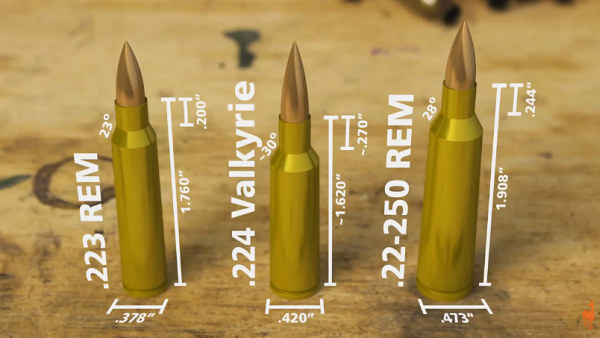 Image from Social Regressive


 Many of our readers use AR-type rifles for Service Rifle matches, varmint hunting, 3-Gun competition, or defensive use. AR-platform rifles can be configured in a multitude of ways to suit the application. But if you plan to put together your own purpose-built AR rifle, how do you get started?

 2. Check Out the Forum Classifieds. There are great deals to be found every day in the AccurateShooter
  3. Share a Ride to Matches. Fuel prices are on the rise — Mid-grade gasoline is nearly $4.00 per gallon in Southern California now and
  4. Use Discount Codes to Save. It’s always smart to check for discount codes before you buy. In the Daily Bulletin, we feature “Deals of the Week” every Monday morning, and we provide discount Coupon Codes when available. These can reduce the price substantially or lower shipping costs. Search codes for Creedmoor Sports, Brownells, Sinclair Int’l, Cabela’s, MidwayUSA, and Precision Reloading. Check your email also — some discount codes are only announced in email newsletters. If you can’t find a Coupon Code for your preferred vendor, visit
  5. Shop for “Demo” Optics. Modern high-quality optics can easily cost $1500.00 or more, often exceeding the value of the rifle on which they are mounted. However, you can often save 20-30% by purchasing demo optics. These are normally display units used at trade shows. They may have slight ringmarks, but otherwise they are “as new”, having never been carried in the field or used on a rifle that has fired live ammo. When purchasing demo scopes, you should always ask about the warranty before consummating the sale. However, most demo scopes from name-brand manufacturers come with full factory warranties.
  6. Train with Rimfire Rifles. The true cost of shooting a match-grade centerfire rifle, when you consider barrel wear along with bullets, powder, primers, and brass, can exceed $1.20 per round.


