If the battery on your safe’s electronic lock is more than a year old, or if it is not giving you the right voltage, replace it today!
Well it’s a New Year folks — 2022 is here, so change those Gun Safe Keypad Batteries!
By this time, many of our readers have stashed their guns away in the safe for the remainder of the winter. It’s easy to just tuck the guns away and forget about them. But there’s something you should do before you shut the safe door. If you have a safe with an electronic keypad, you should replace the battery every year as a precautionary measure. Trust us, you don’t want to come back in a few months and find that the keypad memory is kaput, and you’re locked out. That can lead to frustration and an expensive locksmith visit.
Here’s a true story. I have one safe with a Sargent & Greenleaf (S&G) keypad. A couple years back, in early December, I went to get into the safe. I punched in the correct combination, but all I got was a rapid “beep, beep, beep, beep” after I finished the last combination entry. I tried again to ensure I entered the combination correctly (I did). But again, the locking system responded with multiple rapid beeps indicating something was wrong. And the safe would not open. Now I was worried….
I popped out the battery holder (which slides in from the bottom of the keypad housing on the door). I removed the battery and tested it with a volt-meter. The 12-month-old Duracell 9-volt battery only registered 6.1 volts.
Low voltage was the problem. I went down to the store and got a couple new 9V batteries. I tested the new batteries and both measured 9.4 volts output. I slipped one of the new 9V batteries into the keypad housing, punched in the combination and everything worked OK again. Eureka.
Most electronic locks for safes WILL “remember” the combination for a period of time even when the battery is low (and the keypad’s “brain” should retain the combination when you remove the battery for replacement). However, a dead battery, or extended periods of low voltage can give you problems. Don’t rely on wishful thinking…
Here is a simple, low-cost way to get reliable readings of case headspace when you “bump” the shoulder back on your 6BR, .243 Win, or .308 Win brass. Credit Boyd Allen for this tip. First, you’ll need one .45 acp case (.40 SW works too), with primer removed. Make sure the pistol case is trimmed square and that it is round. We recommend you first size it, trim it and chamfer. Next, take the .45 acp (or .40 SW) case and slip it over the neck of a fired, unsized rifle case with the primer removed. Align the two cases between the jaws of your calipers and note the length from rim to rim (See photo below, with striped case).
OK, now you have the length for a fired rifle case BEFORE sizing. Next, take a full-length sized rifle case (without primer) and do the same thing, placing the pistol case over the neck of the FL-sized case (Bottom Photo). The difference between the two numbers is the amount of “bump” or set-back you are applying to the shoulder. Here the difference is .0015″. The amount of bump you need varies with your chamber and your load, but .0015-.002″ is a good initial setting. By using this simple tool, you can avoid bumping the shoulder too much. This will also help you set-up the depth of your full-length die to get the proper amount of bump each time.
Other Pistol Brass Types Work Too: Some folks have used this method but they prefer to work with 10mm or .40 SW brass rather than a .45 acp, because slightly smaller-diameter pistol cases may conform to the shoulders of their sized rifle cases a bit better. That works fine — use whatever pistol brass case works best for your rifle brass. We got very repeatable results with .45 acp brass but the method also works with 10mm or .40 SW brass. Just be sure the pistol brass has been sized, trimmed, chamfered, and de-burred.
As a 2022 New Year’s bonus for our Bulletin readers we decided to showcase 10 of our favorite gun tech, reloading, and shooting technique videos for our readers. These videos were created by top YouTube content providers: F-Class John, Gavin Gear, Keith Glasscock, Erik Cortina, Thomas Haugland, and Pieter Malan. Consider this like an all-star gun channel collection. These videos will help you load more accurate ammo, improve your “mental game”, and shoot better in matches. Enjoy!
Sinclair International has created a series of instructional videos illustrating the basics of metallic cartridge reloading. The 8-Part series starts with reloading basics and provides step-by-step, how-to instructions that will help new reloaders get started. Detailed, animated illustrations show you what happens inside the chamber when shooting, and inside the dies during each step of reloading. The videos can be viewed on Sinclair International’s YouTube channel. Shown below is the first video in the series:
Each of the Sinclair videos is hosted by then Sinclair Int’l President Bill Gravatt (now with Creedmoor Sports). Bill doesn’t just show you “how”, he tells you “why”. The how-to segments cover case inspection, proper die set up, case sizing, primer installation, powder measuring, bullet seating, crimping, and even goes into the record keeping needed for the handloader. “We wanted to give shooters who haven’t reloaded a look at all the advantages of creating your own ammo and how easy it is to get started,” said Gravatt, “without telling them they had to have any certain brand or type of equipment to do the job.”
The Eight Video Topics Are:
Part 1 — Intro to Video Series
Part 2 — Intro to Reloading Safety
Part 3 — Metallic Cartridge Components
Part 4 — The Firing Sequence
Part 5 — Tools for Reloading
Part 6 — Loading Bottle-Neck Cartridges (2 videos)
Part 7 — Loading Straight Wall Cartridges
Part 8 — Reloading Series Conclusion
Reloading Tools
Shown below is Part 5 of the video series, covering the tools used for precision reloading.
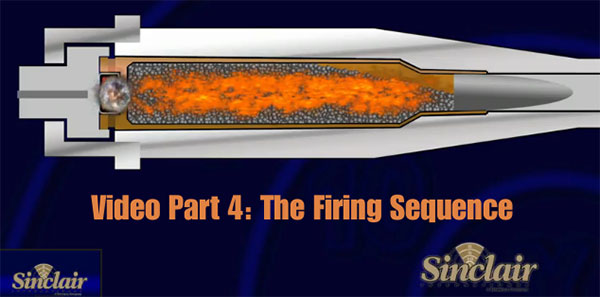
We also strongly recommend the Part 4 Video to readers who are getting started in reloading. This “How Things Work” segment covers the sequence of events inside the chamber (and barrel) when the cartridge is fired. The video includes helpful graphics that show what happens to the primer, powder, cartridge, and bullet when the round is fired. The video also illustrates “headspace” and explains how this can change after firing. We think this video answers many common questions and will help reloaders understand the forces at work on their brass during the firing process.
“Science tells us that exposure to continuous noise of 85 dB for eight hours is enough to cause permanent hearing loss, and worse, spikes of 130 dB and more can result in permanent hearing damage instantly.” Source: NRA Blog.
The Risk of Hearing Loss
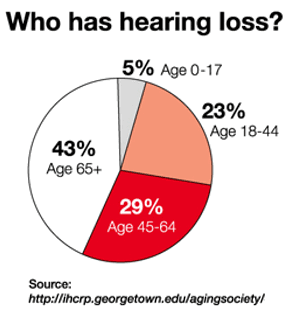
Hearing loss can be progressive and irreversible. If you are a shooter, this is serious business. As the NRA Blog cautions: “You may not even realize you’re harming your hearing. Hearing loss occurs gradually, and can go effectively unnoticed until symptoms become severe. By then, the damage is done.”Effective hearing protection is a must whenever you are shooting firearms or when you are in the vicinity of gun-shots. For ultimate protection, we recommend a good set of tapered foam earplugs, topped by ear-muffs. However, there are situations when you may prefer lighter-weight hearing protection that can be quickly removed. For example, if you are standing well behind the firing line as an observer, or if you are working as a rangemaster or waddie some distance away from the shooters.”
Sound Levels for Common Noises:
9mm Luger pistol: 160 dB
Jet aircraft engine (near): 140 dB
.22 LR pistol: 134 dB
Normal human pain threshold: 120 dB
Noisy Nightclub: 110 db
Riding Motorcycle at 65 mph: 103 db
Power Lawnmower: 95 dB
Hearing damage possible: 85 dB (sustained for 8+ hours)
Ringing Telephone: 80 dB
Normal conversation: 60 dB
What about suppressors? If you use a suppressor is it OK to dispense with hearing protection? Not really. Even the most effective suppressors, on the smallest and quietest calibers (.22 LR), reduce the peak sound level of a gunshot to between 110 to 120 dB. To put that in perspective, according to the National Institute for Occupational Safety and Health (NIOSH), that is as loud as a jackhammer (110 dB) or an ambulance siren (120 dB). For normal caliber handguns and rifles, suppressed sound levels routinely exceed 130 dB, just shy of OSHA’s “hearing safe” threshold of 140 dB. Accordingly, we recommend use of hearing protection even when shooting suppressed.
1. Ear Muffs — Max Protection and Compact Options
The highest current USA Noise Reduction Rating is 34 dB NRR. To get that kind of protection, you need pretty big muffs, but thankfully, you don’t have to spend big bucks. For under $15.00 you can buy quality ANSI-approved muffs with a 30+ dB Noise Reduction Rating. Chose the 34 NRR G&F Pro Muffs at $10.99 or the more comfortable 30 NRR Walker EXT Range Muffs for $12.75. Both products have padded head-bands which retract.
Many hunters and competitive shooters prefer low-profile ear muffs. As these typically have a lower Noise Reduction Rating, perhaps NRR 22-24, we recommend running earplugs under muffs, particularly when you are at a busy range or shooting a match. If you use low-profile electronic muffs, such as Howard Leight Impact Sport Muffs, you should still be able to hear range commands even with plugs underneath.
2. Electronic Plugs — New Technology with Adjustable Volume
For maximum hearing protection we still recommend good muffs over quality foam ear plugs, there is a new option available. A variety of companies now offer electronic ear buds that include small speakers so you can hear range commands and conversations. Please note — these MUST be specially-designed protective in-ear devices. Do NOT just use ear-buds designed for music playback!
Howard Leight recently introduced new Impact Sport In-Ear plugs with an impressive 29 dB Noise Reduction Rating (NRR). That NRR is better than most compact ear muffs. The plugs automatically compress amplification when loud impulse sounds (like gunshots) exceed 85dB. Internal amplification allows you to hear range commands and conversations. The cord connecting the plugs includes twin, handy volume controls. These plugs come with moldable earhooks with 3 different ear tip sizes. The base unit (dark green color) is $85.39 on Optics Planet. A deluxe model with BlueTooth is also available for $113.62 on Amazon. With the BlutTooth version you can take phone calls.
3. Foam Earplugs — Small, Inexpensive, but Essential
20 Pairs
50 Pairs
Quality foam earplugs offer great hearing protection at low cost. These Howard Leight NRR33 Max plugs are your Editor’s favorite foam earplugs. Between shooting, motorcycling and mowing lawns, I probably have Max plugs in my ears 3-4 days a week. These Leight Max plugs are very effective, easy to insert/remove (with the flared ends), and they seem to be less abrasive in the ear canal than some other brands. Right now you can get 20 pairs of these NRR33 Leight Max plugs for just $8.88 or 50 pairs for $11.90.
Note, if you prefer thin, light-weight earmuffs, we recommend running earplugs underneath for double protection while shooting firearms (or when you’re on the firing line). Sound experts tell us that running plugs and muffs together can effectively improve your effective noise reduction by 4-7 dB NRR.
Hearing bands are inexpensive, lightweight, and are handy for special situations, such using hedgetrimmers and noisy power tools, when you may need to frequently remove the protection. These banded products are a also a very good form of hearing protection for hunters. You can keep them handy around the neck while spotting game, and then insert the plugs before shooting. We have tried two types of banded hearing protection, the Howard Leight Quiet Band (shown above) (25 dB NRR), and the Radians Rad-Band (23 dB NRR). The Leight Quiet Band is quite durable and the plugs can be replaced.
Radians Rad-bad is very light-weight, with Jelli™ Plugs that are comfortable, washable, and reusable. Peltor also offers Sport Banded Earplugs but we think those are a bit flimsy and the NRR seems exaggerated.
Reloading components are in short supply these days, particularly powder and primers. But primers may be the biggest challenge these days — finding them may seem like a Quest for the Holy Grail. That’s a big problem for handloaders. You may be able to find substitutes for your favorite powder and bullets, but if you don’t have primers, you can’t even get started.
To locate primers these days, you must consider ALL possible sources: local gunshops, local private sales, sale tables at shooting club meetings, gun/hunting forum classifieds, large outdoor stores, and mail-order vendors. Then yes, worst case scenario, look at the auction sites such as GunBroker.
You need to be looking at multiple places — local vendors, gun clubs, big retailers such as Cabela’s and Sportsman’s Warehouse. And get creative — talk to shooting buddies, check for estate sales.
Consider all Possible Sources — Not Just Online Vendors
The guys who are scoring primers these days are resorting to old-fashioned methods — visiting small, mom-and-pop gunstores, checking local estate sales, and “networking” with local shooting club members. First, if you are not a member of a local shooting club, you should join for a multitude of reasons. We recently acquired some powder at a local shooting club meeting, exchanging some H4198 for Hodgdon Varget straight across. A Forum member recently scored both powders and primers at the estate sale of a shooting club member.
For the best chance of success, regularly check 6-10 brick-and-mortar locations in your region. One good way to do this is by combining forces with shooting buddies. Get together with 3 or 4 guys and collectively scout ALL the local gunshops and outdoor stores with shooting supplies. You CAN get lucky. For example, we regularly check a small gunstore in a nearby mall. Just last week we were able to find CCI pistol primers! Yes, deliveries are happening, you just need to check. And check often.
How to Find Primers — SEVEN STRATEGIES
1. Make a list of ALL local gunshops and outdoor supply stores within a 70-mile radius. Call them on a regular basis.
2. Join a local shooting club. Attend meetings where you can sell/exchange products. (We recently exchanged pistol primers for rifle primers we needed).
3. Join local/regional gun forums. You may find listings for “face-to-face” transactions where you can buy/exchange primers. Our AccurateShooter Forum also has a thread on Where to Find Primers.
4. Bookmark multiple vendor websites and check daily (we provide a list below).
5. Combine resources with some shooting buddies. Get together with 3 or 4 guys and collectively scout ALL the local gunshops and outdoor stores with shooting supplies. Assign each guy a different “territory” (perhaps close to his work locations).
6. Search your garage and storage areas. This Editor recently found 5000 Winchester Small Pistol Primers in an unopened box. These were left over from his IDPA and 3-gun days, years ago.
7. Consider APS Primers. CCI sells APS primers pre-loaded in plastic strips. These can still be found gathering dust in some shops. You can remove the primers from the strips, or simply buy an APS priming tool and use them as intended.
Online Vendors for Primers
Here are leading online retailers that sell primers (along with other reloading components). NOTE: Most of these vendors’ primer inventories sell out quickly. So you need to check regularly. Persistence will pay off, eventually. Primer shipments DO arrive, they just sell out fast.
Best Strategy for Online Primer Purchasing (Not Auctions)
With these (and other) online vendors, you need to check “early and often”. Primers may arrive and sell out in a matter of minutes. You should bookmark multiple sources and check them multiple times each week.
The primer shortage has been worsened by dramatically reduced imports of Russian primers.
WARNING — SCAM Websites Want to Steal Your Money
BEWARE of websites that list unlimited quantities of hard-to-find primers. In recent weeks we have seen five criminal scam websites selling reloading products including powder and primers. Here a quick tip — if the website does not take regular credit cards (MC/Visa/Amex/Discover) it is likely a scam site. And if you can order 200 8-lb jugs of Varget it is definitely a scam site! Bottom Line — beware of ANY seller without an established history, and be very wary of sites that only take Zelle, Venmo, and Bitcoin.
Last Word — About Online Auctions for Primers
We are seeing persons selling primers at crazy high prices ($200/1000!) via online auctions at Gunbroker and elsewhere. Be careful… very careful. Primers are a HAZMAT product. They may ONLY be shipped legally by Hazmat-certified businesses. Some of the Auction sellers are not HAZMAT-certified. If your primer shipment is seized or not delivered because the seller was not properly certified, don’t expect to get your money back.
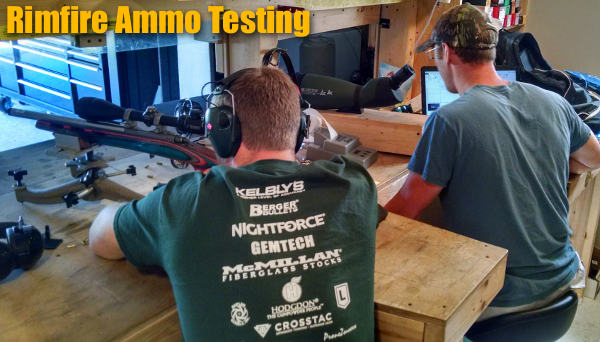
Photo shows Bryan Litz (on right) and tester Mitchell Fitzpatrick. Bryan said: “Only 2,445 rounds to go! We’re testing over 50 ammo types in five different twist barrels… science can be exhausting!”
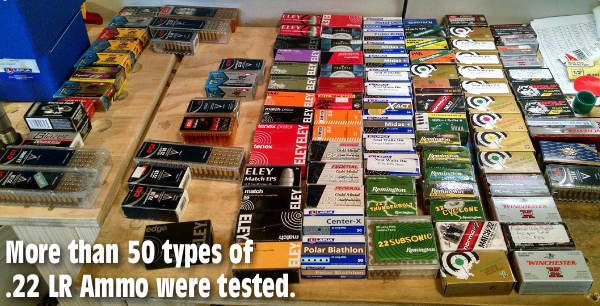
Do you know the actual BC (Ballistic Coefficient) of your rimfire ammunition? Well Applied Ballistics has the data, thanks to a comprehensive, marathon ammo testing session. Some years back, in an effort to determine the “real world” BCs of various rimfire ammo types, Bryan Litz and his team at Applied Ballistics did an extraordinary, in-depth shooting test. Litz and company tested over fifty types of .22 LR ammo, using five different twist-rate barrels. This was one of the most comprehensive and through rimfire ammo tests ever done.
Bryan tolds us: “We tested many types of .22 rimfire ammo for the 2nd Edition of the Ballistic Performance of Rifle Bullets book. We used a pair of Oehler chronographs to measure velocity at the muzzle (MV) and velocity at 100 yards.” With these numbers (average and SD) Bryan can calculate G1 BCs for all the 50+ types of rimfire ammo. What’s more, because every sample is shot through five different barrels (each with a different twist rate) Bryan can also determine how velocity is affected by twist rate.
The tests are primarily to determine velocities for BC calculations — this was not an accuracy test. Bryan explains: “Our tests are not really looking at accuracy, mainly because that’s so subjective to different rifles. Our testing is primarily focused on measuring the BC of rimfire rounds from different twist-rate barrels. The MVs and BCs from the different twist test barrels was then published by Applied Ballistics in print books. Bryan Litz told us: “The .22 LR Rimfire data was originally published in Ballistic Performance of Rifle Bullets, 2nd Edition, which is now out of print. The 3rd Edition of that book doesn’t have rimfire data. The rimfire testing results and data were re-published in Modern Advancements in Long Range Shooting – Volume II (along with many other topics).
Bringing Science to the Rimfire World
Bryan’s goal with this project was to increase the rimfire knowledge base: “We hope to give the world of .22 LR rimfire a good dose of science. How is the BC of .22 rimfire ammo affected by barrel twist? Do subsonic rounds have more consistent BCs than supersonic or transonic rounds? What brands have the highest BCs? What brands have the most consistent MVs?”
Data from two Oehler chronographs is recorded in a computer. Ammo samples were tested in five (5) different barrels (of varying twist rates). Give credit to Dane Hobbs who supplied a test rifle, multiple barrels, and most of the ammo types for the test.
.22 LR at 300 Yards?
Bryan also conducted some longer range rimfire tests. His interesting findings have appeared in the Modern Advancements in Long Range Shooting book series. Bryan notes: “While .22 rimfire isn’t typically considered ‘long range’, we were able to consistently hit a two-MOA steel target at 300 yards with the trajectory predicted by AB software and the measured BC of some standard .22 LR rimfire ammo. The info we’’re generating may make it possible to push the range of target engagement for a round that’s not seen much advancement in many decades.”
Do you know someone getting started in the shooting sports? Or perhaps you know shotgun or rifle shooters who want to improve their handgun skills because they have obtained CCW pistol permits? Then here is a good resource for those shooters-in-training. Smith & Wesson GUNSMARTS is a new video series that covers the key points of firearm ownership, from purchasing a pistol, to shooting techniques, gun safety, and storage. While this 38-part series does include some rifle-centric videos, it is mostly focused on handgun training, as you might expect from Smith & Wesson.
The GUNSMARTS series has 38 different videos covering gun safety, gun operation, marksmanship, maintenance, and secure storage. There are both general videos about gun handling and very specific videos about topics such as sight alignment, magazine loading, optics and more. Here are six of the best videos in the series. You will find 32 more on the Smith & Wesson Gunsmarts Playlist Page.
10 Tips for Your First Visit to the Range
Shooting Fundamentals — Sight Picture and Sight Alignment
Handgun Skills — Grip Pressure
Concealed Carry Positions and Holster/Belt Options
Most competitive shooters are pretty good about bore cleaning (some may even clean their bores too aggressively). However, we’ve found that many shooters neglect the chamber area and the bolt lug recesses. It’s too easy to clean the bore, slip out the guide rod and say “I’m done.” Sinclair Int’l explains why it’s important to clean the action interior: “Shooters use a lot of grease and oil on their bolts to reduce friction and to prevent wear[.] Unfortunately, both of these compounds attract grit, powder and primer residues. Cleaning your receiver is especially critical [with] custom actions where the fit between the action and bolt is held to very tight tolerances. Routine cleaning of the action will prevent unnecessary wear on the bolt body, locking lugs, and the action raceways/guide rails. Frequent action cleaning is also essential to keeping the trigger area free of debris which can cause trigger hang-ups and failures.”
Your rifle deserves a clean action and lug recesses. For action cleaning, our friend Danny Reever favors the PMA Action Cleaning tool. This handy tool speeds up the cleaning process, letting you do a better job in less time. Danny reports: “I’ve been using the PMA Action Cleaning Tool Kit for quite some time. Previously, I used one of the old style (round knob) action-cleaning tools with cylindrical cotton rolls. I think the PMA Action Cleaning Tool Kit is easier to use, and possibly achieves better results. Read Full Tool Review.
Cleaning the Chamber
Combustion by-products, lubricants, and solvent residues can collect in your chamber. Severe build-up of grease and carbon can interfere with chambering. Also some solvents will promote corrosion. You need to keep your chambers clean.
1) Install a clean cotton mop of the correct size on the end of a chamber rod and insert the mop into the chamber. Rotate the mop several times to remove any brush bristles left behind and any excess solvent that was between the rod guide snout and the end of the chamber. Make sure the chamber is dry. Prior to storing a rifle you can oil the chamber but make sure the oil is removed prior to firing the rifle.
2) Alternatively, install an old bore brush on a chamber rod, overlap a couple of patches on the brush bristles, and wrap them around the brush completely. Then insert the patch-covered brush into the chamber while rotating it to remove the excess solvent and debris. Push it firmly into the neck area of the chamber. A similar method is to pierce a large patch on the end of the brush loop and insert it into the action, again rotating the brush as you push the patch up against the breech.
Cleaning the Lug Recess Area
The action lug recess area is one of the dirtiest places on a bolt-action rifle. To properly clean this area, always use a tool designed for the task, such as the $29.99 Sinclair Action Cleaning Tool (part # ACT1) which is part of the full Sinclair Action Cleaning Tool Kit ($49.99, part #ACT2).
1) Insert a cotton roll or cleaning felt into your lug recess cleaning tool and wet both ends and the face of the cotton roll/felt with solvent.
2) Insert the tool into the action and push it forward until it is positioned fully in the lug recess area and rotate the tool head several times. Then reverse the rotation for another few turns. While rotating the tool move it slightly in and out to cover the entire recess area and to also clean the breech face.
3) Remove the tool from the action and inspect the surface of the felt or cotton roll. If there is quite a bit of residue on both sides of the felt/roll, then repeat with another wet felt/roll.
4) When you feel the recess area is completely clean, insert a dry cotton roll into the tool and rotate the tool head to remove any remaining solvent and debris. If necessary, use a second dry cotton roll.
5) You can follow this step up with another pass of a mop or patches into the chamber to get any debris or solvent that pushed forward out of the lug recess area.
The NRA Blog has produced an interesting graphic guide to firearms function. This “How Guns Work” infographic shows the basics of bolt-action rifle operation and how a centerfire cartridge propels a bullet through a barrel during the “firing sequence”. There’s some good artistry here, with cutaway drawings letting you look inside an action and cartridge.
Enjoy this technical graphic. The NRA Blog says: “In celebration of cartridges big and small, we partnered with OutdoorHub to bring you a detailed look into how guns work. While the infographic will be most instructive to newcomers, we think avid shooters will find it interesting, too.”


 Well it’s a New Year folks — 2022 is here, so change those Gun Safe Keypad Batteries!



 The Risk of Hearing Loss


 Bryan tolds us: “We tested many types of .22 rimfire ammo for the 2nd Edition of the


