|
|
January 22nd, 2010
At the 2010 SHOT Show we had the unique opportunity to corner three “superstars” of High Power shooting, and solicit their wind-reading secrets. In the three videos below (in alphabetical order), Carl Bernosky (8-Time Nat’l High Power Champion), David Tubb (11-time Nat’l High Power Champion), and John Whidden (2-Time Nat’l High Power Long-Range Champion) shared some of the wind-doping strategies that have carried them to victory in the nation’s most competitive shooting matches. This is GOLD folks… no matter what your discipline — be it short-range Benchrest or Long-Range High Power — watch these videos for valuable insights that can help you shoot more accurately, and post higher scores, in all wind conditions.
We were very fortunate to have these three extraordinarily gifted champions reveal their “winning ways”. After recording the interviews, both Jason and I stood there in stunned silence…with jaws dropped. These guys REALLY know their stuff. I thought to myself “Wow, this is how a baseball fan might feel if he could assemble Babe Ruth, Lou Gehrig, and Ted Williams in the same room, and have them each reveal their hitting secrets.” Watch the videos and soak up the wisdom of some truly legendary shooters….
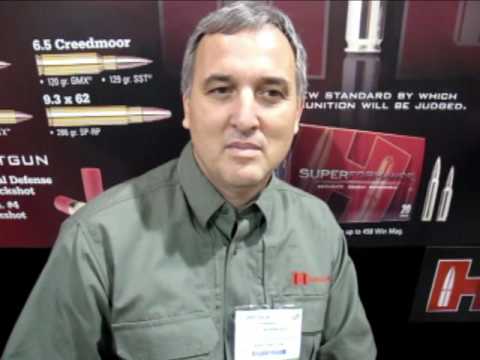
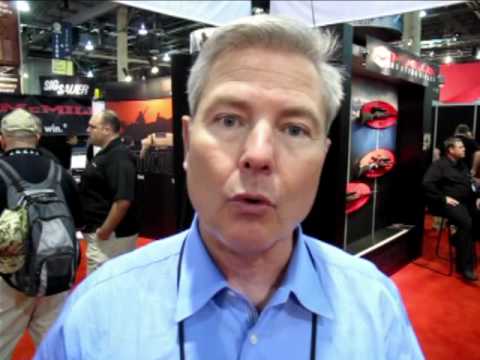
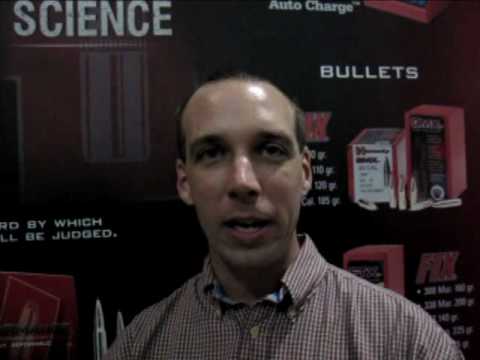
By the way, the above clips are only part of longer interviews with Carl, David, and John. Stay tuned for other videos where these three champions talk about specific skills and techniques they’ve developed for the high power and long-range prone game.
December 30th, 2009
 There is, understandably, quite a bit of confusion concerning caliber limitations for Palma rifles and Palma competition. Some folks say you can shoot a .308 Winchester (or 7.62 NATO) with a bullet weight up to 156 grains. Others say you can shoot a .308 Win (or 7.62 NATO) with any bullet weight. Still others opine that you can shoot EITHER a .223 Rem (5.56×45) or a .308 Win (or 7.62 NATO). There is, understandably, quite a bit of confusion concerning caliber limitations for Palma rifles and Palma competition. Some folks say you can shoot a .308 Winchester (or 7.62 NATO) with a bullet weight up to 156 grains. Others say you can shoot a .308 Win (or 7.62 NATO) with any bullet weight. Still others opine that you can shoot EITHER a .223 Rem (5.56×45) or a .308 Win (or 7.62 NATO).
So who is right? Well, all these viewpoints are correct in part. That’s because different rules apply in different venues. In most, but not all United States Palma competitions, you can shoot either a .223 Rem or .308 Win with no restriction on bullet weights. In some U.S. Matches, most notably the Spirit of America, certain prizes are limited to .308s with 156gr max bullet weights OR .223s with 81gr max bullet weights. What’s the bottom line? In most USA Palma competitions you can shoot either a .308 or a .223 with no limit on bullet weight. In International Palma competitions you can shoot either a .308 or a .223 but the max bullet weight is limited.
Applicable Rules for NRA Palma Competition
To help clarify the Palma rules, German Salazar has collected the applicable NRA and international rules which govern Palma and iron-sights fullbore competition. First, German explains: “The Palma Rifle is defined by NRA High Power Rule 3.3.3″ which states:
3.3.3 U.S. Palma Rifle:
(a) A rifle with metallic sights chambered for the unmodified .308/7.62 or
.223/5.56 NATO cartridge case. Rifles which also meet Rules 3.1 (.308 only)
or 3.1.1 (.308 only) are authorized.
(b) A rifle with metallic sights chambered for the unmodified .308/7.62 NATO
cartridge case. Rifles which also meet Rules 3.1 (.308 only) or 3.1.1 (.308
only or 3.1.2 (.223 only) are authorized.
German tells us: “The references to Rules 3.1, 3.1.1 and 3.1.2 apply to the M1, M14 and M16 rifles or civilian equivalents thereof. Accordingly, Palma Division ‘A’, which is how all matches other than the National Matches are fired, allows any rifle chambered in .308 or .223 with metallic sights. Palma, Division B, which is rarely seen outside the Nationals, is a separate award category for the service rifle in a Palma match.”
German notes that: “In all instances, there is no restriction on bullet weight, rifle weight or trigger weight of pull. All of these are unrestricted. The rules specify that the rifle must be chambered for the unmodified .308 or .223 “cartridge case” but if the chamber has, for instance, a longer than standard throat to accomodate a heavier bullet, that is acceptable.”
CLICK HERE to download NRA High Power Rules Book (PDF File)

NEW NRA Fullbore Rules and International Rules
A few matches are run under the new NRA Fullbore Rules which are meant to align the USA with the rules observed in other nations competing in similar matches. The most notable of these is the annual Spirit of America Match which is also the Fullbore National Championship. The Grand Aggregate prize of the Fullbore National Championship is restricted to those competitors firing the International Target Rifle.
Under the Fullbore Rules, there are two categories of rifle, the Target Rifle, which is the same as the High Power Palma Rifle, and the International Target Rifle, which is compliant with the rules of most other nations. The International Target Rifle has restrictions on trigger weight of pull, but no restrictions on overall rifle weight. Additionally, there is an ammunition restriction which limits the weight of the bullet to 156 grains for the .308 and to 81 grains for the .223; this restriction applies to both Target Rifle and International Target Rifle categories. The applicable rules are listed below.
CLICK HERE to download NRA Fullbore Rule Book (PDF File)
3.3.5 Target Rifle:
(a) A rifle with metallic sights chambered for the unmodified .308/7.62mm
cartridge case. This rifle has no restrictions regarding weight of the rifle
or trigger, However, the trigger must be safe.
(b) A rifle with metallic sights chambered for the unmodified .223/5.56mm x
45 cartridge case. This rifle has no restrictions regarding weight of the
rifle or trigger. However, the trigger must be safe.
3.3.6 International Target Rifle:
(a) A rifle with metallic sights chambered for the unmodified .308/7.62mm
cartridge case with a minimum trigger weight of 0.5 kilograms (approximately
1.1 pounds and the total weight of the rifle is unlimited. OR…
(b) A rifle with metallic sights chambered for the unmodified .223/5.56mm
cartridge case with a minimum trigger weight of 0.5 kilograms (approximately
1.1 pounds) and the total weight of the rifle is unlimited.
3.17 Ammunition:
(a) Target Rifle / International Target Rifle — .308/7.62mm NATO with a
maximum permitted bullet weight of less than 156 grains or .223/5.56mm x 45 NATO with a maximum permitted bullet weight of less than 81 grains.
December 11th, 2009
– Match Report by German Salazar
This past week 89 shooters competed in what is traditionally the biggest winter Palma match in the USA — the 2009 Arizona Palma State Championship. Held at the Ben Avery Shooting Facility in Phoenix on December 4-6, the event included Palma, F-Open and F-TR classes. Ben Avery’s High Power range has 100 firing points to 1000 yards and is renowned for challenging conditions and excellent match administration.
Trend Towards Heavy Bullets
Chatting with competitors, we noted an increase in the use of bullets heavier than 155 grains, with the Berger 185 being the most frequently mentioned alternative, although the Berger 175 was also in use as were Sierra and Berger 190 grain bullets. Competitor frustration with the availability of Varget and its ever-changing burn rate are driving an increased use of H4895, IMR 4320 and IMR 4064 in the Palma. Tubeguns were also much in evidence, being a Western favorite with large number of them on the line in the hands of the California and Arizona shooters. Gary Eliseo was on hand as always and had a good performance throughout.

Match Kicks Off With Tough Conditions
The match opened Friday, December 4, as all Palma matches do, with the 800-yard stage. Relay after relay battled cold north winds. Over half the competitors were High Masters, yet only two shooters fired scores of 150 — Tom Whitaker of California and Phil Hayes of Arizona. As the morning wore on and the competitors moved back to 900 and 1000 yards, the wind eased off a bit and scores improved with 150s becoming more common. At the end of the day, Whitaker’s 450-30X topped the list, followed by Bryan Litz of Berger Bullets and Kelly Bachand from Washington.
On Saturday morning, the desert chill remained, but the flags hung limply, raising hopes for high scores. Those expectations were realized as Bud Solis, a retired Seattle police officer, put up a sterling 450-25X to lead the day. Close behind (all with 449 scores) were Bachand, Gary Rasmussen (WA), German Salazar (AZ), and Randy Teissedre (CA). The final day, Sunday, conditions began relatively calm but progressively got windier with frequent direction changes. No one was able to master the conditions for a 450, but the mother-daughter duo from Prescott, AZ, Nancy Tompkins and Michelle Gallagher, came closest, each shooting a 449 with Nancy’s 29X just edging out Michelle’s 26X. David Littlefield (WA) and Jim O’Connell (CA) also shot 449s on Sunday.
Gallagher Wins Match, with Whitaker and Bachand One Point Behind
Michelle Gallagher posted a 3-day tally of 1345-81X, giving her a one-point victory over runner-up Tom Whitaker (1344-91X) and third place Kelly Bachand (1344-79X). Note that Tom had ten more Xs than Michelle, but came up just one-point shy. Bryan Litz finished fourth overall, with German Salazar in fifth (on a tie-breaker over Michael Storer). All the Top Ten are listed, with scores, in the table below. In Team Competition, the US Team coached by Gary Rasmussen compiled a 1787-95X, edging second-place Team Berger (1783-96X) and third-place Bald Eagles Grand Seniors (1782-75X).
CLICK HERE for Individual Match Results | CLICK HERE for TEAM Match Results
 Top Ten Grand Aggregate Top Ten Grand Aggregate
1. MICHELLE GALLAGHER: 1345-81X – MW
2. TOM WHITAKER: 1344-91X – HiSR
3. KELLY BACHAND: 1344-79X – HM
4. BRYAN LITZ: 1343-91X – HM
5. GERMAN SALAZAR: 1339-68X – HM
6. MICHAEL STORER: 1339-68X – HiJR
7. FELIX SOLIS: 1338-59X – HM
8. ROBERT GUSTIN: 1337-64X – HM
9. ALLEN SPIKER: 1335-50X – HM
10. JIM O’CONNELL – 1332-62X – HM
The F-Open Class was won by Rick Curtis of Phoenix at 1328-67X with Darren Sucato, another tough Phoenix shooter in second place. F-TR went to John Chilton with his factory Savage F-TR rifle putting up an impressive 1308-45X.
There are weekly matches in Phoenix for across the course High Power, Prone, F-Class, and Smallbore. A complete schedule is found on www.desertsharpshooters.com. The Arizona state association website ASRPA.com also has useful information.
December 8th, 2009
Doan Trevor, a gunsmith based in New Mexico, has created a stunning Palma rifle to benefit the USA Veterans Rifle Team. Doan, a gifted wood-worker and machinist, crafted the high-grade walnut stock, fitted the barreled action, and custom-fabricated many of the gun’s metal features. The step-by-step process of creating this one-of-a-kind rifle is illustrated on Doan’s website. Visit DoanTrevor.com, to see the Veterans Team Rifle being built from start to finish. Below are photos of the finished rifle, plus the “work in progress”.

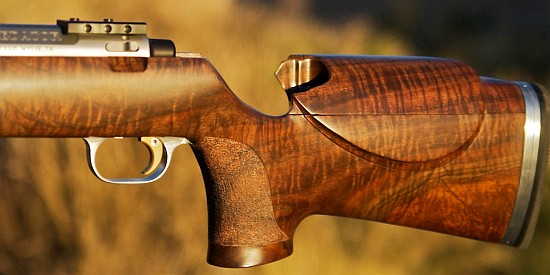
The USA Veterans Team Rifle carries a unique serial number signifying the 2011 World Championships in Australia. CLICK HERE to learn more about the US Veterans Rifle Team, www.USAVRT.org.
Rifle Raffle Tickets Cost $5.00
You have a chance to own this special Trevor-built Palma Rifle. Raffle tickets for the USA Veterans Team rifle can be bought for $5 each or six (6) for $25 from Mike StClair, 12138 Eastglen Street, San Diego, CA 92131. Questions? You can email Mike: estclai1 [at] san.rr.com. Make checks payable to Palma Promotions.
Components Donated for USA Veterans Team Rifle
A variety of individuals and businesses donated components for the USA Veterans Team Rifle. Krieger Barrels donated the barrel while Scott Riles provided front sight and trigger. Doan Trevor and Richards Microfit jointly donated the stock, while Stillers Precision Firearms, LLC provided the stainless Predator action.
Contact: Doan Trevor, DoanTrevor.com, Ph: 505-890-0368. Photos © Sue Trevor 2009.
December 7th, 2009
Adam Braverman of Nammo-Lapua just confirmed that Lapua, at the behest of the U.S. Palma team, has been quietly developing a NEW version of the .308 Winchester cartridge that has a small BR-style primer pocket. That’s right, this is no joke. Lapua has crafted small primer pocket .308 Winchester brass that will be introduced at SHOT Show in Las Vegas (Jan. 19-22).

The new .308 variant is identical to Lapua’s current .308 match brass with the exception of the primer pocket. The brass will be head-stamped “.308 Win Lapua Palma”.
FLASH HOLES: The flash-hole size for the current pre-production .308 Lapua Palma brass is 1.5mm (.059″), the same as Lapua 6mmBR and 220 Russian brass. Lapua spokesmen were not certain if the flash hole size will change for the regular production brass. Note: if you have a Redding .308 die, you can ask Redding for a smaller decapping rod tip (.057″) to use with the new brass.
Tests Reveal Better ES and SD with Small Primers
Initial tests of the small primer pocket .308 by U.S. Palma team members have been very promising. The small primer pocket case seems to have advantages in both accuracy and the ability to handle high-pressure loads. However, the primary improvement found with the smaller primer is reduced ES and SD. Palma Team members have found that, with almost every brand of primer tested (small vs. large), the smaller version has yielded reduced Extreme Spread and Standard Deviation. This pays dividends in 1000-yard shooting. Also, some testers believe that small primers are more consistent and require less sorting — and that there are more varieties of small primers that seem to work really well in the .308 case. Moreover, the small primer types are more uniform, from lot to lot, than are large primers, according to some testers. More info will follow later today.
November 19th, 2009
SFC Emil Praslick III sent us this report on the U.S. Palma Team tryouts at Camp Butner, NC. You can read other reports from Coach Praslick on the U.S. National Rifle Team Blog.
Last Tryout in the Books… On to the National Team
By Coach Emil Praslick
It was a hardy and intrepid group of US Palma Team hopefuls that braved the last vestiges of Hurricane Ida last weekend at Camp Butner, North Carolina. Camp Butner is the home range of the North State Shooting Club, which hosted the US Palma Team’s third and final tryout session. Temperatures in the 40s, winds from 20-30 mph, and a driving rain tested the mettle of both coaches and shooters.
 US Team Captain, Dennis Flaharty flung his net across the entire United States in a search for the best team shooters. By adopting a regional format for the tryouts, and separating the country into three areas (West Coast, Midwest, and East Coast), the team maximized the potential for attracting the best shots our vast nation has to offer. The three venues were: Sacramento, CA; Lodi, WI; and Butner, NC. At each venue, the top performers were invited to become members of the United States National Developmental Team. US Team Captain, Dennis Flaharty flung his net across the entire United States in a search for the best team shooters. By adopting a regional format for the tryouts, and separating the country into three areas (West Coast, Midwest, and East Coast), the team maximized the potential for attracting the best shots our vast nation has to offer. The three venues were: Sacramento, CA; Lodi, WI; and Butner, NC. At each venue, the top performers were invited to become members of the United States National Developmental Team.
New Team Tryouts Format
The format for the tryouts was different than any ever conducted by the United States. In the past, these events were held very much like individual matches. Shooters were evalauated by the scores they shot in a series of matches. While this undoubtedly picked the best individual shooters, those who experienced difficulty doping the wind, or those who simply shot during more difficult conditions, were often deselected early in the process. The current procedures call for shooters to be supervised by coaches at all times. This not only removes a shooter’s ability to negotiate wind from the process, it also gives the team management the opportunity to evaluate prospective coaches and to work on firing line procedures. Shooters are graded on their ability to shoot “elevation”, their speed, and their overall performance as part of the team.
The intent of forming a National Developmental Team was to establish a pool of skilled, international-quality shooters; not only for the upcoming 2011 Palma Match in Australia, but as the nucleus for future teams. The US National Team has an ambitious schedule for 2010, with trips to Canada, Camp Perry, Raton (NM) for The Spirit of America Matches, and Australia.
 The next milestone for the US National Developmental Team is to finish the processing of the shooter’s elevation data, and to begin planning which shooters will represent the United States at the planned events. Shooters will then be evaluated in match conditions and recieve further training/evaluation prior to the final Palma Team selection in the Fall of 2011. The next milestone for the US National Developmental Team is to finish the processing of the shooter’s elevation data, and to begin planning which shooters will represent the United States at the planned events. Shooters will then be evaluated in match conditions and recieve further training/evaluation prior to the final Palma Team selection in the Fall of 2011.
I would like to thank all of the volunteers who assisted with the target pulling, scoring, running the firing line, and the host of myriad tasks that are necessary to conduct an event of this complexity. I would also like to thank the coaches who coached 400 rounds per day at 1000 yards with no complaint. It was a grueling (but very beneficial) exercise for them. We will announce the final US National Developmental team soon.
TWITTER: You can also follow the US National Team on Twitter. Visit www.twitter.com/usnationalrifle for the latest news.
November 10th, 2009
 It was “Ladies First” at the California State Long-Range Championship held this weekend at the Coalinga Range in central California. Palma ace Noma Mayo topped a field of 26 shooters (24 men and 2 women) to take the CA title with an impressive 787-34X score. It was “Ladies First” at the California State Long-Range Championship held this weekend at the Coalinga Range in central California. Palma ace Noma Mayo topped a field of 26 shooters (24 men and 2 women) to take the CA title with an impressive 787-34X score.
The diminutive senior lady shooter had the men saying “Noma, ‘No Mas'” by the end of the 3-day event. Using the latest (#2156) Sierra 155gr Palma bullets, Noma steered her .308 Win, iron-sighted Palma rifle to victory, displaying great consistency and superior wind-reading skills. Finishing second overall was Michael Dunio (782-29X), while Noma’s husband Marty Mayo took third with a 779-16X score. Marty teamed with Noma to win the two-person Team match on Saturday, with a combined 385-7X.
Shooting his trusty 6BRX, Peter White took the F-Class title with a strong 785-36X score. Taking second was our friend and Forum member Gary Wood, who shot a 778-28X with the 6.5-284 featured recently in the Daily Bulletin. Gary Childs placed third in F-Class (769-25X), shooting a straight .284 Win with a handsome stock he crafted himself. When comparing these scores to the iron sight shooters, keep in mind the F-Classers shot a target with much smaller ‘X’ and scoring rings. We want to give special thanks to Gary Wood, whose generous donation to AccurateShooter.com made it possible for this Editor and assistant Mark LaFevers to cover the event.

There were some beautiful long-range rigs at the match, including many Gary Eliseo tubeguns. (Gary competed at the event, and shot well on Friday and Saturday, but fell victim to shifty winds on the final day.) In addition to the high-tech tubeguns, many handsome wood-stocked Palma rifles were used, including a Bastogne-walnut-stocked beauty built and shot by gunsmith Tom Luhmann of TLC Gunworks in Clovis, CA.

An interesting “California-legal” AR Platform rifle caught Mark’s eye. It sported a handsome matte camo finish, but the chambering was the most noteworthy feature. This rifle was chambered as a 6mm Dasher, an improved 6mmBR with a shorter neck and 40° shoulder. Most of the AR match rifles we’ve seen have gone to a Grendel-based case, if they step up past the .223 Remington. The 6BR parent case uses a .308-sized bolt-face, whereas the Grendel case rim is smaller. Also, with its steep shoulder angle, the Dasher can prove challenging to feed. However, the gun’s builder Marcus Naslund said they had achieved good feeding and function by opening up the gas port and adapting a custom single-stack magazine, made from aluminum billet. Despite California’s Draconian gun laws, this rifle is legal for sale in the Golden state because a “tool” (which can be a bullet tip) is required to remove the otherwise “non-detachable” magazine.

September 8th, 2009
 Kelly Bachand, a 22-year-old electrical engineering student at the Univ. of Washington, recently ventured to the Canadian Fullbore Rifle Championships held August 13-22 at the Connaught Ranges in Ottawa. He arrived an unknown, relatively untested in international competition. By the end of the week, every shooter in Ottawa knew this young man’s name. Kelly Bachand, a 22-year-old electrical engineering student at the Univ. of Washington, recently ventured to the Canadian Fullbore Rifle Championships held August 13-22 at the Connaught Ranges in Ottawa. He arrived an unknown, relatively untested in international competition. By the end of the week, every shooter in Ottawa knew this young man’s name.
Kelly turned in a performance of historic proportions, out-shooting 300 other marksman to win many of the event’s most prestigious matches, including the Open Target Rifle Championship with a score of 1045-105V (the “V” is the Canadian equivalent of an “X” in the USA). Kelly also won the multi-day 21st Century Aggregate (1344-140V), the Harrison Aggregate, the MacDonald Stewart Aggregate (824-80V), the Polar Bear Aggregate, and he shot on the winning USA Young Eagles team in the Under 25 international team matches.
Among the various matches at the Canadian Championships, Kelly had eight (8) first place finishes, and twenty other Top 10 finishes. As you can see at right, Kelly harvested enough trophies to fill a truck. And to top that off, just after returning from Canada, Kelly won the 2009 Northwest Int’l Prone Championship. He did that all with his new Barnard-actioned .308 Palma rifle provided by MT Guns.
Years of Preparation Lead to Success
Though he’s only 22, Kelly has been shooting for over 16 years. He told us: “I began shooting when I got a Red Ryder BB gun for Christmas when I was 6. I shot air rifle in high school and enjoyed it immensely. After graduating in 2005, I joined a Washington-based high power rifle team, the Bad Apples, which went on to win National Junior team titles. I began shooting long range with a Palma rifle towards the end of 2005 and was then the high junior at Camp Perry in the Leech Cup in 2006 and the Andrus in 2007 (both times shooting a borrowed Palma rifle). While I had been high junior and placed first in my classification a number of times, it was not until the weekend before the Canadian Championships that I earned my first overall match win — in a small local event with no more than 20 shooters. This match was, however, a huge success for me mentally; I did not crumble under pressure on my last string at 600 yards and ended the match with a perfect score, not dropping a single point.”
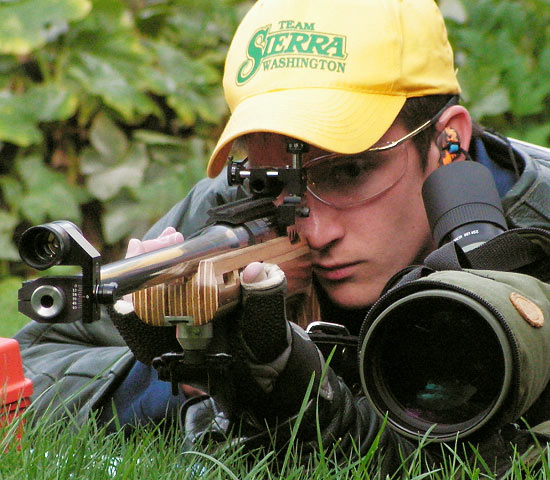
Special Challenge of Pair Shooting in Canada
Kelly reports: “The biggest differences about shooting in Canada are the 5-point V centered targets which are black and white (not buff) and the fact that shooting is done in pairs. I had been to the range in Connaught before in 2007 as a firing member of the World Champion Under 21 USA Young Eagles. The range there is beautiful and studded with flags between the firing line and the target bay. Unfortunately the flags were brand new this year and were unresponsive to wind for the first few days of shooting. It was sunny, cloudy, there was thunder, and there was rain so thick that the targets literally disappeared and shooting had to be paused. I had to be ready for anything.
After a few days of shooting I noticed my name was towards the top in a few Aggregates, but I focused my energy to avoid thinking about anything more than the next shot I needed to take. At one point I shot a perfect score but with a very low V count, and a friend asked me about it, I jokingly replied “it doesn’t matter how many Vs I shoot if I keep shooting cleans.” And that’s how I steadily moved up after each day of shooting. Beginning the final day in first place, I was paired with the second place Canadian shooter, who was just a point behind me, for the final 15 shots at 900m. I have never felt more pressure than when I was shooting side by side with my competition. Each shot I knew what I needed to do. Throughout the entire 15-shot string, that knowledge increased my heart rate but also my desire to win.”
MT Guns Provides Winning Match Rifle
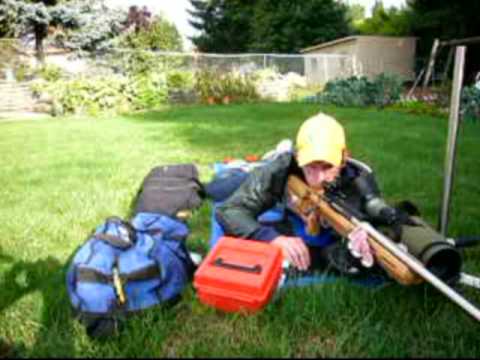
As a “starving student”, a new Palma rifle was out of reach financially for Kelly … until MT Guns came to the rescue. Kelly explains: “When I was no longer able to borrow the match rifle I had used as a junior, I needed a new gun. As a college student paying for school with a part-time job, I couldn’t afford a competitive Palma rifle. Seeking sponsorship, I contacted Mac Tilton of MT Guns and asked if he could help me out. Mac generously offered to provide me with a complete rifle, and his crew at MT Guns produced an absolute tack-driver. My new MT Guns .308 Palma rifle features a Barnard 3-lug action, 32” True-Flight barrel, a Mastin Anschütz-style stock, Warner rear sight, and Riles 22mm front sight. This rifle fits me well and is a pleasure to shoot. The gun groups better than any other rifle I have shot. My load is 46+ grains of Varget pushing Sierra 155gr #2156 MKs with CCI BR-2 primers in Lapua brass. I have shot this load exclusively in every competition whether it was a Palma match or an any/iron match.” Interestingly, Kellly shot the entire Canadian Championship without cleaning his New Zealand-made True-Flite barrel. According to Kelly, he put “nothing but bullets through the barrel in Canada — well over 300 rounds including sighters and team matches”.
September 4th, 2009
Well I guess we’re all going to have to read Bryan’s book now…. Over the past few days in Raton (NM), Bryan Litz, author of Applied Ballistics for Long-Range Shooting, proved he has the trigger-pulling skills to match his technical knowledge. At the 2009 Spirit of America Nat’l Fullbore Prone Championship, Bryan put on a clinic, winning most of the individual fullbore matches, and leading his “Palma Red” Team to victory in the Cunico Team Match, Folsom Team Match, Sierra Team Match, and Galaxy Team Match. The “Palma Red” Team was ably coached by Steve Cunico. Bryan’s fellow “Palma Red” shooters on the team were David Crandall, Trudie Fay, and Noma Mayo, all of whom shot great. Congratulations to Coach Cunico, Bryan, and all the Palma Red team members.

Bryan Litz also lead the pack in all the individual Aggregate standings — Short Agg, Long Agg, and Grand Agg (1793-121X). Finishing second in Individual Grand Agg was Mitchell Maxberry (1788-108X), and Nancy Tompkins took third (1787-112X). Charles Ballard (2008 F-Class Nat’l Champ) was the overall top shooter in F-Class with a 1775-94X. Second-place finisher Danny Biggs (1770-83X) edged Larry Batholome (1769-103X) by one point, but Larry had the high X-count among F-Classers. Keep in mind that F-Class targets have smaller scoring rings than the full-bore targets.


There must be some good info in Bryan’s Ballistics book, because Bryan seemed to have an edge over all the other shooters at the SOA this year. Litz started strong and stayed strong throughout the week, winning three of four individual events. USAR Shooter Russel Theurer captured the Sinclair Int’l Individual Match with a strong 449-24X performance. Russ observed: “It’s interesting to see that every day’s Match was won with the Berger 155.5 bullet”. Complete results of the 2009 SOA can be found on the Bald Eagles Rifle Club website. Here are rankings from the individual events:
McGee Individual Match
Bryan Litz, 450-30X | Nancy Tompkins, 447-29X | Mitchell Maxberry, 446-27X
U.S. Air Force Individual Match
Bryan Litz, 449-31X | Trudie Fay, 449-25X | Michelle Gallagher, 448-28X
Sinclair Individual Match
Russel Theurer, 449-24X | David Crandall, 448-33X | Mitchell Maxberry, 448-26X
Sierra Bullets Individual Match
Bryan Litz, 448-30X | Michelle Gallager, 448-29X | Mark Andrew, 447-21X
SOA Grand Aggregate (Individual)
Bryan Litz, 1793-121X | Mitchell Maxberry, 1788-108X | Nancy Tompkins, 1787-112X
Praise for Bald Eagles Club
Bryan Litz had high praise for the folks who run the Spirit of America Match: “The Bald Eagles do a great job running a safe and efficient National Championship. There is an extraordinary amount of experience and common sense at work…. In my opinion, they’re a shining example of how things should be done. One example is squading the relays according to standings. I believe it makes for a more fair contest. If you enjoy midrange and long range shooting, then I highly recommend making the trip to Raton for the Spirit of America match next year. The range is beautiful, people are friendly, and you’ll get plenty of team and individual shooting in the 7 days.”
September 2nd, 2009
Phoenix Precision, based in Elk River, MN, crafts precision target sights for long range target shooters. Known for their outstanding reliability and repeatability, Phoenix rear sights are gaining popularity among competitors in prone, Palma, and High Power disciplines. Some of the top “sling and irons” shooters in the country have switched to Phoenix sights.
Gary LaValley, owner of Phoenix Precision, crafts his rear sights using advanced CNC machinery. The sight housings are anodized, aircraft-grade aluminum. For precise repeatability, the sights feature stainless guide pins and lead screws, plus oil-impregnated bronze guide and thread bushings. The sights offer 70 MOA of elevation, 60 MOA of windage, with 1/4-MOA clicks. Knob rotations for elevation and windage are either NRA match rifle (Counter-CW) or service rifle (CW). Quarter-minute clicks are standard, but on request for the Palma shooters, 1/2-MOA windage detent plates are available at no extra charge. Phoenix sights accept both Anschutz and Gehmann accessories.
 |
 |
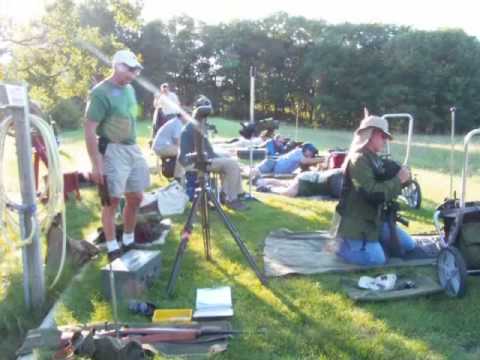
Phoenix Precision micrometer rear sights are offered in two basic models: top mount ($380.00), and side mount ($355.00). Both types are available in either right- or left-hand configuration (no extra charge for lefties). Top mount models are designed for use on rail-equipped AR flattops, tube guns, Tubb 2000s, and Gary Eliseo stocks. Side mount models are most commonly used on bolt action rifles, but they also work on Picatinny or Weaver-style rails with the use of an adaptor. So, if you have both an older-style Palma rifle and a new, rail-topped tube-gun, you can use the sight on both rigs. Many shooters do use the same Phoenix rear sight on multiple rifles, as shown in the video below. In the video, when real competitors talk about their Phoenix sights, you hear two things time and again: “quality” and “repeatability”.
For more information about Phoenix Target Sights and Scope Rails, visit www.PhoenixPrec.com, or call Gary LaValley at (763) 263-3327.
|


