The Precision Rifle Series (PRS) is holding its season-ending Championship Match this weekend at a “top-secret” ranch location near Tehachapi, California. The nation’s top 75 PRS marksmen (plus 30 regionally-qualified shooters) have been invited to compete in a challenging series of stages, with targets from 100 yards to well over 1000 yards. This is supreme test of marksman and rifle. The PRS involves shooting from multiple positions, carrying all your hardware over considerable distances. This ain’t no belly benchrest match that’s for sure.
This video showcases the 2014 PRS Championship in Frost, Texas. This year’s PRS Finale will be held in California. (Video is well worth watching — with LOTS of action):
The PRS has attracted a host of sponsors, so the prize table will be huge for this event:
For those interested in learning more about the PRS game, Rich Emmons, one of the founders of the Precision Rifle Series (PRS), has written an insightful article about getting started in the tactical game. Here are highlights from Emmon’s PRS — Intro to Competition article.
Precision Rifle Series — Intro to Competition
by Rich Emmons, PRS President
Tactical Shooting with a precision rifle is not like other disciplines, there is no set course of fire or format. That is what makes it so fun! What I quickly learned from my first competition and the many that followed was there is so much to learn and shooting in competition put everything you thought you knew to the test.
Getting Started — What to Expect
If you’re reading this, you have probably already have been bitten by the long range shooting bug. It can seem quite intimidating to just jump in with a new bunch of shooters you don’t know and shooting lingo you don’t quite understand yet. But here is the key — show up and shoot! I guarantee you if you show up to a match as a new shooter, other experienced shooters will guide you along and give you help on anything you need.
AUDIO: Click Button to hear Rich Emmons Talk about the Precision Rifle Series.
Now, a couple things you should just expect. You’re not as good as you think you are. Don’t expect to come into your first match and beat all the veterans. That just doesn’t happen unless you have had some really good coaching or other shooting competition experience to get you ready for this type of competition. If possible, find a local rifle club that has monthly long range matches, or any type of match will help prepare you for a larger PRS event. Getting involved with a rifle club and starting out shooting monthly matches is definitely the way to jump into competition shooting.
The Gear You Need
The first question that many ask is: “What kind of rifle/caliber/scope do I need?” The easiest answer to this is, the best you can afford. It’s no secret the gear is expensive. It took me several years of buying sub-par gear and eventually trading up to figure this out. Now, a guy can get a real sense of pride of doing it on the cheap, or with a factory rifle. I’ve seen many old Savage 10FPs take down custom rigs that cost 10 times as much. And if that’s all you can afford, then eventually you will learn the limitations of yourself or your gear. As for choice of cartridge/caliber, the Precision Rifle Blog has analyzed three years worth of match results from the best tactical shooters in the nation. CLICK HERE to read an article that reveals what the “top guns” use.
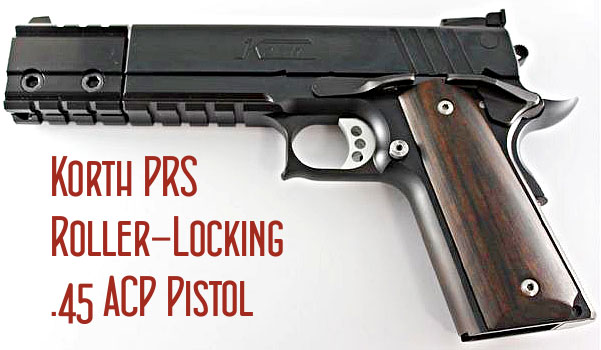
At the 2015 Media Day at the Range, I got to try our some sweet firearms. One was a handgun I’ve lusted after for a couple years, every since watching the killer video German arms-maker Korth created for its Pistole PRS. This video has some great exploded parts views and 3D animations, showing how the roller locking system works when a .45 ACP round is fired.
3D-Cutaway Shots from PRS Pistol Video
Video from 2014 Media Day
This Video was put together by another journalist last year, but we shot the same gun this year.
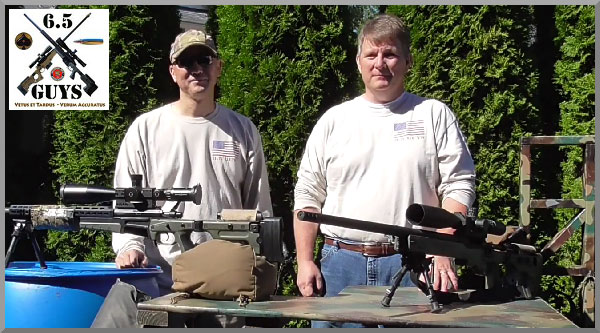
The 6.5 Guys, a dedicated duo of Pacific NW rifle shooters, have created an interesting series of shooting-related videos on their 6.5 Guys YouTube Channel. In this video, The 6.5 Guys set up and demonstrate the Bench-Source cartridge brass annealing machine. The video explains how to set up the machine, how to attach and adjust the torches, and how to “fine tune” the flame and dwell time to achieve best results.
To complement this video, the 6.5 Guys (aka Ed and Steve) have published an Annealing Tech Talk article on 65guys.com. If you own an annealing machine, or are getting started with cartridge annealing, you should read that article. It covers basic annealing principles, and gives useful tips on temp control, dwell time, and frequency of annealing. After the video, we feature highlights from this article.
Temperature Control
We use 750° Tempilaq applied inside the case neck to indicate that the proper temperature has been achieved. If you turn off the lights, you will notice that the brass just barely starts to turn color. As you go beyond the 750° mark we observed that the case mouth will start to flare orange — you can see this with the lights on. From our research, we understand that this is the result of zinc burning off. We adjust the time on our machine between the point that the Tempilaq turns liquid and the flame starts to turn orange. In other words, if the flame is starting to turn orange reduce the time. We let the cases air cool — we don’t quench them in water.
The case starts to flare orange here, during a set-up test. Dwell time was then reduced slightly.
Flame Orientation
We aim the flame at the neck-shoulder junction. Some folks like to aim it at the neck and others the shoulder. When you see how the two flames meet and spread out vertically, it probably doesn’t make that much of a difference.
Here you can see the flame points aimed at the neck-shoulder junction.
Case Coloration
Cases will turn color after annealing, but the degree of color change is not a reliable indicator. We have noticed that the appearance of cases will vary depending on brass manufacturer, brass lot, light source, and how long ago the case was annealed.
How Often Should You Anneal?
Some shooters anneal every time while others choose a specific interval. We noticed work hardening around five firings that resulted in inconsistency in shoulder setback and neck tension, so we choose to anneal every three firings. Your mileage will vary depending on how hot your loads are and how aggressively you resize.
Who are the 6.5 Guys? They are Ed (right) and Steve (left), a pair of avid shooters based in the Pacific Northwest. They have released 22 Videos on the 6.5 Guys YouTube Channel.
Mid-sized 6.5mm cartridges proved themselves at the recent Shoot for the Green match in northwest Oklahoma. Four out of the top five shooters ran a rifle chambered for the 6.5×47 Lapua, with the fifth shooting the slightly larger 6.5 Creedmoor cartridge. 53 shooters from as far away as California showed up to test their skills in the stiff March winds in NW Oklahoma. The course of fire was challenging, with improvised field shooting positions and targets set as far as 1300 yards out. And there were “Troop” stages that competitors have come to expect in Oklahoma. Match winner Rick Reeves stated, “I enjoyed the troop stages more than anything else, even though I didn’t shoot them the best.”
Steve Elmenhorst shooting a Troop Stage.
Rich Emmons, who steered his 6.5x47L to fourth place, has written a match report for PrecisionRifleSeries.com. Day One saw temps around 70 degrees with only light, switchy winds. But Day Two was brutal, Emmons reports: “On Sunday… 40-50 mph winds hit NW Oklahoma hard and most competitors were woken up. To say that shooting in the 15-30 mph winds with temps in the high 30s [was really tough] is an understatement. All competitors struggled a bit and scores were understandably lower on Day Two. Conditions were brutal and both the ROs and the competitors deserve a gold star for toughing it out and finishing the match.” CLICK HERE for Complete Match Results
Top 5 Shooters Equipment List
Rick Reeves
6.5×47 Lapua, 140 Berger Hybrid, Surgeon Action, McMillan A-5 Stock, Bartlein Barrel, Rem trigger, Vortex Razor scope, Built by DMFJ, Tab Sling & bag, Harris Bipod, AAC Suppressor.
The GAP Grind is one of the nation’s premier tactical matches. The 20-minute YouTube video embedded below features highlights of the 2013 GAP Grind, hosted this fall at the K&M Precision Rifle Training facility near Crestview, Florida. It’s interesting to see the many types of rifle systems used at this match — Tubeguns, Aluminum Chassis rifles, AI models, and customs built on fiberglass stocks. These are all used in a dizzying variety of shooting positions and scenarios. Ninety (90) competitors fired over 15,000 rounds during this year’s GAP Grind.
The video employs multiple camera angles, giving you an “insider’s view” of the match. Starting at 16:30 you’ll see an interesting sequence — the Bartlein Steel Safari, with multiple steel targets engaged at progressively longer distances. Watch carefully and you’ll see bullet trace and the “splash” of impact. (This sequence is also previewed at the 2:30 time-mark — watch the trace).
Watch 2013 GAP Grind Tactical Match Video
The GAP Grind has been described as “a high tempo match with minimal ‘down-time’ between stages”. Competitors use rifle and pistol in a variety of scenarios, with pistol stages from 5 to 40 yards, and rifle engagements out to 1000 yards. Targets — an assortment of steel, reactive, paper, and automated moving targets — vary in difficulty based on the shooters’ position, distance, and time allotted. Most stages involve time limits, or required movement, or other “stressors” that heighten the difficulty (and get the heart pumping). Scoring employs Precision Rifle Series (PRS) guidelines in order to reward the most consistent shooters.
The “Top Guns” of the tactical shooting world will be heading to the PRS Finale this upcoming weekend. This event, the culmination of the 2013 Precision Rifle Series, runs December 6-8, 2013 at the K&M Precision Rifle Training facility in Florida. The PRS Finale is a unique championship-style match for the nation’s best tactical shooters, competing with bolt-guns in four divisions: Pro, Semi-pro, Military, and Law Enforcement. To learn more about the PRS, visit PrecisionRifleSeries.com. You’ll find a good article on the ModernServiceWeapons.com (MSW) website, that outlines PRS rules, spotlights PRS match venues, and lists recommended gear. READ MSW PRS Article.
Below is a great video covering the 2012 PRS Finale from start to finish. Held at the Rifles Only range in Texas last December, the 2012 event drew 55 of the nation’s top tactical shooters, who competed for glory… and thousands of dollars worth of cash and prizes. If you like the tactical game, you’ll love this professionally-edited video. Because this video is over 29 minutes long, we’ve provided a timeline so you can quickly find the highlights:
AUDIO: Click Button to hear Rich Emmons Talk about the Precision Rifle Series.
Video TimeLine:
Registration:1:56
Chrono Work: 2:25
Night Briefing: 3:10
Day One: 4:00+
Running Wire: 5:15
Prone Mover: 6:48
Tower Challenge: 7:12
Net Challenge: 8:43
Tri-Level Barricade: 11:28
1/4-Miler Berzerker: 11:52
Mound Shot: 12:57
Platform: 13:14
Platform Mover: 13:42
5-Target Speed Dot: 14:26
The Rat Trap: 15:00
End of Day One Brief: 16:42
Day Two Start: 17:22
Ace Challenge: 17:30
Know Your Limits: 18:54
Non-Supported Engage: 19:25
Culverts Only: 20:25
Awards Ceremony: 23:15
Sponsor Credits: 26:50
Interviews with Competitors: 27:24
How did the PRS get started? Rich Emmons, PRS President, explains that the concept was to “accumulate ten or so matches and create a point series” that would determine “who was the best [tactical] rifle shooter in the country”. Rich says that: “It’s a points race, but it’s also a big Finale that brings the ‘best of the best’ all together in one ‘monster’ match.” The winner of the 2012 PRS Series was Wade Stuteville, who also took first in the 2012 Finale. Runner-up in the 2012 Series (with a third-place Finale finish) was Team GAP’s Chase Stroud. Jeff Badley of Team GAP finished third in the PRS 2012 Series (and second in the Finale). SEE 2012 PRS Pro Shooters Equipment List.
How to Get Started in Tactical Matches
If this fun and challenging tactical discipline appeals to you, head out to the range and get involved. Begin with local matches and develop your skill set. You don’t have to invest in $6000.00+ worth of rifle and optics. GAP’s George Gardner says you don’t need ultra-expensive gear: “The most important piece of gear is yourself. A one-minute rifle [can] win these matches every time… so you’ve got to bring it. You don’t get good overnight, so for someone trying to get into this, just shoot — you’ve got to get out there and shoot. My advice would be to get out and shoot one of these matches. It doesn’t matter how you place — just do it. You have to have a starting point. If you don’t start, you’ll never finish.”
Tactical Precision Rifle Matches are hugely popular, with many matches “sold out” months in advance. Now it looks like the precision tactical discipline is headed for the big-time. Stealing a page from the 3-Gun Nation playbook, a group of tactical competitors is launching a new nationwide series of matches for tactical shooters, the Precision Rifle Series 2012 (PRS). These matches will involve shooting at distances from 100 to 1000 yards, with a wide variety of stages, many involving barriers, or run-and-shoot challenges. This is not 3-Gun, mind you — at this time the PRS directors want to keep the focus on rifles. However, at some events, Match Directors may offer a couple stages that involve pistol shooting — but this is optional. The vast majority of PRS stages will be rifle-only.
Currently, most PRS shooters are fielding bolt-action rifles with detachable box magazines. However, the event is NOT restricted to bolt guns. Rich Emmons, one of the founders of the Precision Rifle Series told us: “About 90% of the shooters are using bolt-action rifles, but we are seeing more interest in ARs and other semi-automatics. Currently the rules are open, so you can shoot your AR if you wish. In fact, on some stages there may be a benefit to using a semi-automatic. But we still expect that most competitors will prefer bolt guns for their accuracy, simplicity, and reliability.”
To learn more about the Precision Rifle Series, visit PrecisionRifleSeries.com or email Rich Emmons at PrecisionRifleSeries [at] gmail.com.
Matches Will Be Hosted at Multiple Venues
Currently nine (9) PRS events are scheduled, culminating in a “Series Finale” in December, 2012 at the Rifles Only facility in Texas. Shooters who register for the Series (and pay the $75.00 PRS annual dues) may count up to three (3) Series events for season points to earn a spot to shoot the 2012 Series Finale. Season Finale contestants will be competing for cash, match prizes and total points. All Finale-qualified shooters who earn a spot to the Finale will receive a reserved slot for the 2013 PRS season.
PRS Rules and Scoring Procedures have been set by an “Oversight Committee” of well-known tactical shooters and match directors: Rich Emmons, Kevin Elpers, Scott Milkovich, Dustin Morris, Vu Pham, and Wade Stuteville.
A Series Event win will earn the first-place competitor 100 Series Points. The remaining field of competitors “will receive points normalized from the percentage earned in relationship to the top score”. (We’re not quite sure what that means, except that the points a shooter earns will be based on his match performance.) Points are important as shooters qualify for the Series Finale one of three ways: 1) by winning any qualifying match; 2) by earning enough season Series points to be in the Top 50 shooters nationwide; or 3) by being a Top 15% finisher (or better) at two events.
Upcoming Events
Total Season Series points will be calculated from the highest scoring 3 events listed below. The PRS Committee may add up to three more events to the 2012 Series Schedule.




 The 6.5 Guys, a dedicated duo of Pacific NW rifle shooters, have created an interesting series of shooting-related videos on their

 Mid-sized 6.5mm cartridges proved themselves at the recent

 The
The 


 How to Get Started in Tactical Matches


 Matches Will Be Hosted at Multiple Venues
 A Series Event win will earn the first-place competitor 100 Series Points. The remaining field of competitors “will receive points normalized from the percentage earned in relationship to the top score”. (We’re not quite sure what that means, except that the points a shooter earns will be based on his match performance.) Points are important as shooters qualify for the Series Finale one of three ways: 1) by winning any qualifying match; 2) by earning enough season Series points to be in the Top 50 shooters nationwide; or 3) by being a Top 15% finisher (or better) at two events.


