There is a good article on gun safes in SHOT Business, a publication for the NSSF SHOT Show audience. Written by Christopher Cogley, this Safe Spaces Article offers some very important things to consider when purchasing a gun safe. Here are key points from that article:
Safe Security — The security of a gun safe comes down to two main factors: the thickness of the steel and the construction of the safe. When it comes to construction, look for a safe that has continuous welded construction instead of bolts or spot-welding, which are easier for trained gun thieves to cut through with torches or high-power saws.
Lock Options — Traditional combination locks are arguably the simplest choice. The downside, though, is they don’t provide quick access to firearms in an emergency. Electronic and biometric keypads provide quicker access — but be sure to replace the batteries every year.
Fireproof Rating — Aside from theft, the biggest threat to your firearms is fire. Unfortunately, the fireproof rating on gun safes can be confusing because there is no single, “standard” fireproof rating. As a general rule, the fireproof rating states how long a safe can be exposed to a fire of a particular temperature and maintain a temperature inside the safe of no more than 350 degrees F. To put this in context, the average house fire creates temperatures between 800 and 1,200 degrees F.
Where to Place a Gun Safe in Your Home
The Safe Spaces article includes advice from Stephen Hall, CEO of Lock It Up Safes. Hall addressed the question: “Where should I put my safe?”
Hall states: “Ease of installation should NOT be the foremost consideration when making this decision. Putting a safe in the garage has both pros and cons. We see some retailers recommend the garage solely because they don’t have the right team on board to install safes in other locations, and wheeling one into the garage is the easy way out.
Putting a safe in the garage is fine if that is the only place you an put it, but most want the safe in the home, where they can get to it quickly. Temperature and humidity are important considerations as well, and both are more easily controlled in a house rather than in the garage.
One advantage to garage installation is the concrete floor provides a solid base for safe installation. Houses built on concrete slabs also offer a solid anchor on the first level. If the safe needs to go to an upper floor, the weight of the safe and its contents need to be factored in.”
Place Safe Against Outside Wall
Hall recommends placing your gun safe against an outside wall: “In case of fire, the safe will typically last longer as there is not a lot that can burn on one side of the safe, thus keeping it cooler.”
Don’t Make the Mistake of Buying an Undersized Safe
The most common mistake people make when buying a gun safe is getting a safe that’s too small. This video explains why you should probably invest in a bigger safe. First, the rated gun capacity is exaggerated — rifles with mounted optics, long barrels, wide forearms and/or pistol grips take up considerably more space than a small rimfire rifle or a lever gun with iron sights. Second, your gun collection will likely grow in years to come. Third, you may want to store other valuables in the safe — such as vital documents, jewelry, watches, and pricey electronics. In this video the host notes: “Get a much larger safe than you think you’ll need at first. This will guarantee that you will have enough room for future purchases and all the guns and equipment you currently have.”
Recommended Safe Features for Long-Gun Storage
Editor’s Recommendation:
Budget $1200-1500 for a safe from a major maker, with external hinges, and an interior at least 58″ high. That gives you room for 30″-barreled rifles with a top shelf for handguns and other valuables. A rotary rack and slide-out drawers are great additions.
Keypad or Dial? We favor rotary dial locks. With minimal maintenance they will function flawlessly for decades. But the digital locks offer quick-access and convenience. If you go digital, get a commercial-grade unit.
Fire-lining is worth getting, but a thin layer of sheet-rock doesn’t make a safe truly “fire-proof”.
Interior at least 58″ High and 30″ wide Overall Weight 750+ Pounds 8 Gauge or Heavier Wall Thickness Double-Wall, Composite Door with Relockers Minimum UL RSC Rated. TL-15 or TL-30 Rating is Desirable External Hinges
Mechanical UL Group II (or better) Lock with Standard Dial Or UL Type 1 Commercial-Grade Electronic Lock
Custom Interior Suitable for Scoped Guns with Long Barrels On-Door Storage System for Non-scoped Long Guns OR Rotary Gun Rack for Scoped Rifles and ARs
Internal (sandwiched) Insulator, Reinforced if Sheet-rock Palusol? Heat-Activated Expanding Door Seals
Slide-out Drawers for Handguns Fire-lined Inner Safe for Paper and Media
Low Gloss, Rust-resistant External Finish Pre-Drilled holes for Lag Bolts and in Rear for Electric Cord Overhead Fluorescent Lamp and/or LED Mini-lights on Strings
Introduction — What You Need in a Security Gun Safe
If you own firearms, you need a gun safe. In some states, such as California, if you don’t own a safe, you face potential liability if your firearms are stolen. Purchasing a safe is no easy decision however. There are dozens of safe manufacturers and countless design options. Sorting out the facts from the marketing claims can be difficult.
Today’s seven Saturday Showcase videos explain the most important qualities you should look for in a safe, and help you with the tough decisions, such as “Should I get a digital lock or a dial lock?”, “What kind of fire-proofing is most effective?”, “How big a safe do I really need?”, and “What interior works best with long-barreled scoped rifles?” You’ll find reviews of full-size safes, modular safes, and smaller handgun safes. Plus you’ll find expert advice on how to install your safe in your home and how to keep the contents free from rust.
Budget $1200-1500 for a safe from a major maker, with external hinges, and an interior at least 58″ high. That gives you room for 30″-barreled rifles with a top shelf for handguns and other valuables. A rotary rack and slide-out drawers are great additions.
Keypad or Dial? We favor rotary dial locks. With minimal maintenance they will function flawlessly for decades. But the digital locks offer quick-access and convenience. If you go digital, get a commercial-grade unit.
Fire-lining is worth getting, but a thin layer of sheet-rock doesn’t make a safe truly “fire-proof”.
Interior at least 58″ High and 30″ wide Overall Weight 750+ Pounds 8 Gauge or Heavier Wall Thickness Double-Wall, Composite Door with Relockers Minimum UL RSC Rated. TL-15 or TL-30 Rating is Desirable External Hinges
Mechanical UL Group II (or better) Lock with Standard Dial Or UL Type 1 Commercial-Grade Electronic Lock
Custom Interior Suitable for Scoped Guns with Long Barrels On-Door Storage System for Non-scoped Long Guns OR Rotary Gun Rack for Scoped Rifles and ARs
Internal (sandwiched) Insulator, Reinforced if Sheet-rock Palusol? Heat-Activated Expanding Door Seals
Slide-out Drawers for Handguns Fire-lined Inner Safe for Paper and Media
Low Gloss, Rust-resistant External Finish Pre-Drilled holes for Lag Bolts and in Rear for Electric Cord Overhead Fluorescent Lamp and/or LED Mini-lights on Strings
Advice for Gun Safe Buyers — Seven Key Things to Consider
This video covers key gun safe features — Seven Things to Consider Before Buying a Gun Safe. Not all gun safes are created equal. There are many variables — fire ratings, burglar ratings, colors, lock choices, internal capacity, door storage, and more. And with the recent controversy involving Liberty Safes, you should check the safe-maker’s policies regarding digital passcodes — you don’t want your passcode revealed without a warrant and/or without your consent.
DOs and DON’Ts of Safe Buying
DO purchase a safe that is bigger than you think you need.
Your gun collection is bound to grow over time. A good safe is more than just a gun locker–it becomes a secure storage device for your family’s other valuables as well. You’ll find you quickly fill up even a large safe. Spend the money for the size, protection, and features you want. Your gun collection may be worth many tens of thousands of dollars. Some people who visit this site wouldn’t hesitate to spend $1300 for a custom action or $1800+ for a competition scope, yet they don’t want to spend more than a few hundred dollars on a safe. That’s not common sense. If you’re on a tight budget, consider a used safe. Unlike many other products, safes don’t really wear out over time. When businesses change locations, you can get a very high quality commercial safe for little more than the cost of removing it.
DO spend more for a safe that offers fire-resistance.
But you have to do your homework–you can spend a lot of money for “fire-proofing” that actually is not very effective. Make sure if sheet-rock is used that it is properly installed. If you have valuable documents and media files, it’s not a bad idea to purchase a smaller, commercial-grade fire safe to put inside the gun safe. This gives you double protection.
DO look at many different brands of safes before you buy.
There ARE significant differences among brands. For example, Browning offers a unique (patent-pending) door-mounted rifle rack. Zanotti offers slide-out drawers and a modular design that is much easier for an owner to move. Ft. Knox uses an advanced method to secure and stabilize its fire-proofing layers within the safe. Brown offers custom exotic wood interior shelving and safes with commercial-grade burglary protection (much thicker steel with heavy composite doors and walls). Amsec offers a proprietary “DryLight” poured concrete-type fire insulation with greater structural strength than typical sheet-rock panels.
DO investigate the safe’s specifications.
Just because a safe is big and heavy doesn’t mean it’s particularly secure. Heavy-gauge steel is much more resistant to cutting and drilling than light 12- or 14-gauge steel. Some safes on the market have walls so thin they can be penetrated with a fire ax. We recommend 10-gauge steel at a minimum, and 8 gauge is much better. The safe should carry a UL RSC (Underwriters Laboratories “Residential Security Container”) or better rating.
DO ask about the safe’s safeguards against tampering.
A quality safe will feature extra armor or devices to defeat drilling. Low-grade safes can be opened in a few minutes with simple, battery-powered hand tools. All safes should have relockers to help ensure the safe remains locked in the case of a burglary. Relockers are hardened pins that are triggered during an attack, and cannot be retracted without hours of drilling. The number of relockers on a safe ranges from 2-10+ depending on the safe’s size and burglary grade.
DON’T store powder in your safe. A tightly-sealed metal box with a large quantity of powder inside is a bomb. Store powder in a separate, lightly-constructed cabinet or plastic box. The main thing for powder is to keep it dry and away from moisture and light.
Don’t Make the Mistake of Buying an Undersized Safe
The most common mistake people make when buying a gun safe is getting a safe that’s too small. This video explains why you should probably invest in a bigger safe. First, the rated gun capacity is exaggerated — rifles with mounted optics, long barrels, wide forearms and/or pistol grips take up considerably more space than a small rimfire rifle or a lever gun with iron sights. Second, your gun collection will likely grow in years to come. Third, you may want to store other valuables in the safe — such as vital documents, jewelry, watches, and pricey electronics. In this video the host notes: “Get a much larger safe than you think you’ll need at first. This will guarantee that you will have enough room for future purchases and all the guns and equipment you currently have.”
What Happens in a Fire and Deluxe Features
This video shows what can happen INSIDE a gun safe during a fire. This Winchester safe did not fare well during a major hourse. That’s why you want to buy a safe with a good fire rating.
This video shows the features of a large Superior Safe Co. gunsafe with internal organizers and door storage for handguns and accessories.
Modular Safes — Smart Option for Easier Moving
This article features a great video showing how to assemble a modular safe in under 30 minutes. This article also explains the benefits of modular gunsafes — primarily easier transport and installation. “Modular safes have been around for a few years now and are becoming more popular. Here’s why: The safe comes delivered to you in panels, so you can bring them into your home one at a time and put it together anywhere you like. This makes it easy to carry up and down stairs, onto elevators or anywhere! Security — Is it as secure as one that comes pre-assembled? The answer is, absolutely.” READ FULL ARTICLE on NRAWomen.com.
Five Good Gun Safes Under $500
We know some readers have a tight budget. This video looks at some recommended lower-cost safes under $500.00 list price. Note, however, that this video was produced in 2022. Now in 2023, with Bidenflation, the actual gun safe prices may be higher. For a full-size safe, we do recommend you spend quite a bit more — the investment in a higher quality safe, with better fire rating, is worth it.
Locking Device–Mechanical Dial vs. Digital Locks Recommendation: UL Group II mechanical dial lock or commercial-grade electronic.
For gun safes, we prefer rotary-combination dial locks, although commercial-grade electronic locks are now very good. While less convenient, and slower to open than electronic locks, combination locks are still more durable and trouble-free than the digital locks found on many low- to medium-cost gun safes. Among the combination locks, the Sargent & Greenleaf model 6730 (UL Group II) remains an industry standard. The director of Sturdy Safes noted: “An S&G 6730 will be working fine when your grandchildren have grandchildren.” For home use, we also recommend the standard, high-visibility “front-read” white on black dial.
Avoid the cheap, imported electronic locks. These are known for failing relatively quickly–the keypad internals just wear out. With some of these designs, if the lock fails while the door is closed, you’ll have to employ a professional gunsmith to drill your safe and replace the locking assembly and keypad. With any electronic lock, re-program your combination now and then so that keypad wear patterns don’t reveal the numbers you push to open the safe. But when you change the combination, be sure to record the new setting.
With a dial lock, choose a design that meets UL Group II (or better) certification. If you choose a digital lock, we strongly recommend that you select a UL Type I, Commercial Grade lock from LaGard, Sargent & Greenleaf, or Kaba Mas. Commercial-grade locks, such as the S&G Comptronic” 6120 or LaGard “SafeGard” are much more robust and are designed to be used 20 times a day or more in retail and banking environments. A good commercial digital keypad lock should give 10 years or more of continuous use before replacement is required. With any digital lock, however, you should replace the battery at least once a year. Normally this can be done without professional assistance.
A rapid-access bedside safe is a great way to keep your pistol secure, but also readily available, close at hand. Not all rapid-access pistol safes are created equal, however. In this video, John of Pew Pew Tactical explains what to look for in a small pistol safe, and points out the pros and cons of the four safes tested:
Fort Knox FTK-PB Simplex Pistol Box
Strong case, reliable no-battery locking system. Very good safe, but expensive ($299.00 on Amazon).
Vaultek Electronic Pistol Safes Vaultek offers multiple styles and sizes, many with advanced biometric capabilities. Vaultek rapid access safes are offered in sizes to hold a single handgun or multiple pistols along with other valuables.
There is a good article on gun safes in SHOT Business, a publication for the NSSF SHOT Show audience. Written by Christopher Cogley, this Safe Spaces Article offers some very important things to consider when purchasing a gun safe. Here are key points from that article:
Safe Security — The security of a gun safe comes down to two main factors: the thickness of the steel and the construction of the safe. When it comes to construction, look for a safe that has continuous welded construction instead of bolts or spot-welding, which are easier for trained gun thieves to cut through with torches or high-power saws.
Lock Options — Traditional combination locks are arguably the simplest choice. The downside, though, is they don’t provide quick access to firearms in an emergency. Electronic and biometric keypads provide quicker access — but be sure to replace the batteries every year.
Fireproof Rating — Aside from theft, the biggest threat to your firearms is fire. Unfortunately, the fireproof rating on gun safes can be confusing because there is no single, “standard” fireproof rating. As a general rule, the fireproof rating states how long a safe can be exposed to a fire of a particular temperature and maintain a temperature inside the safe of no more than 350 degrees F. To put this in context, the average house fire creates temperatures between 800 and 1,200 degrees F.
Where to Place a Gun Safe in Your Home
The Safe Spaces article includes advice from Stephen Hall, CEO of Lock It Up Safes. Hall addressed the question: “Where should I put my safe?”
Hall states: “Ease of installation should NOT be the foremost consideration when making this decision. Putting a safe in the garage has both pros and cons. We see some retailers recommend the garage solely because they don’t have the right team on board to install safes in other locations, and wheeling one into the garage is the easy way out.
Putting a safe in the garage is fine if that is the only place you an put it, but most want the safe in the home, where they can get to it quickly. Temperature and humidity are important considerations as well, and both are more easily controlled in a house rather than in the garage.
One advantage to garage installation is the concrete floor provides a solid base for safe installation. Houses built on concrete slabs also offer a solid anchor on the first level. If the safe needs to go to an upper floor, the weight of the safe and its contents need to be factored in.”
Place Safe Against Outside Wall
Hall recommends placing your gun safe against an outside wall: “In case of fire, the safe will typically last longer as there is not a lot that can burn on one side of the safe, thus keeping it cooler.”
Don’t Make the Mistake of Buying an Undersized Safe
The most common mistake people make when buying a gun safe is getting a safe that’s too small. This video explains why you should probably invest in a bigger safe. First, the rated gun capacity is exaggerated — rifles with mounted optics, long barrels, wide forearms and/or pistol grips take up considerably more space than a small rimfire rifle or a lever gun with iron sights. Second, your gun collection will likely grow in years to come. Third, you may want to store other valuables in the safe — such as vital documents, jewelry, watches, and pricey electronics. In this video the host notes: “Get a much larger safe than you think you’ll need at first. This will guarantee that you will have enough room for future purchases and all the guns and equipment you currently have.”
Recommended Safe Features for Long-Gun Storage
Editor’s Recommendation:
Budget $1200-1500 for a safe from a major maker, with external hinges, and an interior at least 58″ high. That gives you room for 30″-barreled rifles with a top shelf for handguns and other valuables. A rotary rack and slide-out drawers are great additions.
Keypad or Dial? We favor rotary dial locks. With minimal maintenance they will function flawlessly for decades. But the digital locks offer quick-access and convenience. If you go digital, get a commercial-grade unit.
Fire-lining is worth getting, but a thin layer of sheet-rock doesn’t make a safe truly “fire-proof”.
Interior at least 58″ High and 30″ wide Overall Weight 750+ Pounds 8 Gauge or Heavier Wall Thickness Double-Wall, Composite Door with Relockers Minimum UL RSC Rated. TL-15 or TL-30 Rating is Desirable External Hinges
Mechanical UL Group II (or better) Lock with Standard Dial Or UL Type 1 Commercial-Grade Electronic Lock
Custom Interior Suitable for Scoped Guns with Long Barrels On-Door Storage System for Non-scoped Long Guns OR Rotary Gun Rack for Scoped Rifles and ARs
Internal (sandwiched) Insulator, Reinforced if Sheet-rock Palusol? Heat-Activated Expanding Door Seals
Slide-out Drawers for Handguns Fire-lined Inner Safe for Paper and Media
Low Gloss, Rust-resistant External Finish Pre-Drilled holes for Lag Bolts and in Rear for Electric Cord Overhead Fluorescent Lamp and/or LED Mini-lights on Strings
If the battery on your safe’s electronic lock is more than a year old, or if it is not giving you the right voltage, replace it today!
Check Your Gun Safe Batteries
We’re into Q2 of 2024 already. Hey guys — when was the last time you replaced the batteries in your gun safe? Has it been more than a year? If so, it’s time you get a new battery (or two) for that safe. The electronic keypad won’t work with an insufficient charge, and the lock system could potentially lose its combination memory if you wait too long.
IMPORTANT: If you have a safe with an electronic keypad, you should replace the battery every year as a precautionary measure. Trust us, you don’t want to come back in a few months and find that the keypad memory is kaput, and you’re locked out. That can lead to frustration and an expensive locksmith visit.
Here’s a true story. I have one safe with a Sargent & Greenleaf (S&G) keypad. A couple years back, in early December, I went to get into the safe. I punched in the correct combination, but all I got was a rapid “beep, beep, beep, beep” after I finished the last combination entry. I tried again to ensure I entered the combination correctly (I did). But again, the locking system responded with multiple rapid beeps indicating something was wrong. And the safe would not open. Now I was worried….
I popped out the battery holder (which slides in from the bottom of the keypad housing on the door). I removed the battery and tested it with a volt-meter. The 12-month-old Duracell 9-volt battery only registered 6.1 volts.
Low voltage was the problem. I went down to the store and got a couple new 9V batteries. I tested the new batteries and both measured 9.4 volts output. I slipped one of the new 9V batteries into the keypad housing, punched in the combination and everything worked OK again. Eureka.
Most electronic locks for safes WILL “remember” the combination for a period of time even when the battery is low (and the keypad’s “brain” should retain the combination when you remove the battery for replacement). However, a dead battery, or extended periods of low voltage can give you problems. Don’t rely on wishful thinking…
If the battery on your safe’s electronic lock is more than a year old, or if it is not giving you the right voltage, replace it today!
Check Your Gun Safe Batteries
We’re halfway through 2023. Hey guys — when was the last time you replaced the batteries in your gun safe? Has it been more than a year? If so, it’s time you get a new battery (or two) for that safe. The electronic keypad won’t work with an insufficient charge, and the lock system could potentially lose its combination memory if you wait too long.
IMPORTANT: If you have a safe with an electronic keypad, you should replace the battery every year as a precautionary measure. Trust us, you don’t want to come back in a few months and find that the keypad memory is kaput, and you’re locked out. That can lead to frustration and an expensive locksmith visit.
Here’s a true story. I have one safe with a Sargent & Greenleaf (S&G) keypad. A couple years back, in early December, I went to get into the safe. I punched in the correct combination, but all I got was a rapid “beep, beep, beep, beep” after I finished the last combination entry. I tried again to ensure I entered the combination correctly (I did). But again, the locking system responded with multiple rapid beeps indicating something was wrong. And the safe would not open. Now I was worried….
I popped out the battery holder (which slides in from the bottom of the keypad housing on the door). I removed the battery and tested it with a volt-meter. The 12-month-old Duracell 9-volt battery only registered 6.1 volts.
Low voltage was the problem. I went down to the store and got a couple new 9V batteries. I tested the new batteries and both measured 9.4 volts output. I slipped one of the new 9V batteries into the keypad housing, punched in the combination and everything worked OK again. Eureka.
Most electronic locks for safes WILL “remember” the combination for a period of time even when the battery is low (and the keypad’s “brain” should retain the combination when you remove the battery for replacement). However, a dead battery, or extended periods of low voltage can give you problems. Don’t rely on wishful thinking…
If the battery on your safe’s electronic lock is more than a year old, or if it is not giving you the right voltage, replace it today!
Replace Your Safe’s Keypad Battery Every Year
This time of year, many of our readers are putting their guns away in a safe for the winter. It’s easy to just tuck the guns away and forget about them. But there’s something you should do before you shut the safe door. If you have a safe with an electronic keypad, you should replace the battery every year as a precautionary measure. Trust us, you don’t want to come back in a few months and find that the keypad memory is kaput, and you’re locked out. That can lead to frustration and an expensive locksmith visit.
Here’s a true story. I have one safe with a Sargent & Greenleaf (S&G) keypad. A couple years back, in early December, I went to get into the safe. I punched in the correct combination, but all I got was a rapid “beep, beep, beep, beep” after I finished the last combination entry. I tried again to ensure I entered the combination correctly (I did). But again, the locking system responded with multiple rapid beeps indicating something was wrong. And the safe would not open. Now I was worried….
I popped out the battery holder (which slides in from the bottom of the keypad housing on the door). I removed the battery and tested it with a volt-meter. The 12-month-old Duracell 9-volt battery only registered 6.1 volts.
Low voltage was the problem. I went down to the store and got a couple new 9V batteries. I tested the new batteries and both measured 9.4 volts output. I slipped one of the new 9V batteries into the keypad housing, punched in the combination and everything worked OK again. Eureka.
Most electronic locks for safes WILL “remember” the combination for a period of time even when the battery is low (and the keypad’s “brain” should retain the combination when you remove the battery for replacement). However, a dead battery, or extended periods of low voltage can give you problems. Don’t rely on wishful thinking…
If the battery on your safe’s electronic lock is more than a year old, or if it is not giving you the right voltage, replace it today!
Well it’s a New Year folks — 2022 is here, so change those Gun Safe Keypad Batteries!
By this time, many of our readers have stashed their guns away in the safe for the remainder of the winter. It’s easy to just tuck the guns away and forget about them. But there’s something you should do before you shut the safe door. If you have a safe with an electronic keypad, you should replace the battery every year as a precautionary measure. Trust us, you don’t want to come back in a few months and find that the keypad memory is kaput, and you’re locked out. That can lead to frustration and an expensive locksmith visit.
Here’s a true story. I have one safe with a Sargent & Greenleaf (S&G) keypad. A couple years back, in early December, I went to get into the safe. I punched in the correct combination, but all I got was a rapid “beep, beep, beep, beep” after I finished the last combination entry. I tried again to ensure I entered the combination correctly (I did). But again, the locking system responded with multiple rapid beeps indicating something was wrong. And the safe would not open. Now I was worried….
I popped out the battery holder (which slides in from the bottom of the keypad housing on the door). I removed the battery and tested it with a volt-meter. The 12-month-old Duracell 9-volt battery only registered 6.1 volts.
Low voltage was the problem. I went down to the store and got a couple new 9V batteries. I tested the new batteries and both measured 9.4 volts output. I slipped one of the new 9V batteries into the keypad housing, punched in the combination and everything worked OK again. Eureka.
Most electronic locks for safes WILL “remember” the combination for a period of time even when the battery is low (and the keypad’s “brain” should retain the combination when you remove the battery for replacement). However, a dead battery, or extended periods of low voltage can give you problems. Don’t rely on wishful thinking…
If the battery on your safe’s electronic lock is more than a year old, or if it is not giving you the right voltage, replace it today!
This time of year, many of our readers are putting their guns away in a safe for the winter. It’s easy to just tuck the guns away and forget about them. But there’s something you should do before you shut the safe door. If you have a safe with an electronic keypad, you should replace the battery every year as a precautionary measure. Trust us, you don’t want to come back in a few months and find that the keypad memory is kaput, and you’re locked out. That can lead to frustration and an expensive locksmith visit.
Here’s a true story. I have one safe with a Sargent & Greenleaf (S&G) keypad. A couple years back, in early December, I went to get into the safe. I punched in the correct combination, but all I got was a rapid “beep, beep, beep, beep” after I finished the last combination entry. I tried again to ensure I entered the combination correctly (I did). But again, the locking system responded with multiple rapid beeps indicating something was wrong. And the safe would not open. Now I was worried….
I popped out the battery holder (which slides in from the bottom of the keypad housing on the door). I removed the battery and tested it with a volt-meter. The 12-month-old Duracell 9-volt battery only registered 6.1 volts.
Low voltage was the problem. I went down to the store and got a couple new 9V batteries. I tested the new batteries and both measured 9.4 volts output. I slipped one of the new 9V batteries into the keypad housing, punched in the combination and everything worked OK again. Eureka.
Most electronic locks for safes WILL “remember” the combination for a period of time even when the battery is low (and the keypad’s “brain” should retain the combination when you remove the battery for replacement). However, a dead battery, or extended periods of low voltage can give you problems. Don’t rely on wishful thinking…
We know many of our readers have large firearms collections. If you’ve been collecting guns for a decade or more, chances are you’re running out of room in your gun safe. For guys who need a bigger safe, we’ve found a REALLY BIG GUN SAFE at a great price.
Right now CostCo is offering the Cannon CS72 Executive Series 72-Gun Safe for just $749.99 DELIVERED! That’s a great price for a HUGE safe with 43.8 cubic feet of internal space. This 649-pound behemoth measures 59″H x 45″W x 28″D and weight 696 pounds (over 1/3 of a ton!). This is built strong with 1″ thick composite door, six 1″-diameter locking bolts, and 60-minute fire rating (dual expandable fire seal).
Shipping Included in $749.99 Price!
This $749.99 price includes “Standard shipping via common carrier” to the lower 48 states. The estimated delivery time will be approximately 7 – 10 business days from the time of order. NOTE: This is a great value. You could easily pay $1600 or more for a safe this size from a typical local vendor.
Cannon CS72 Safe Features:
72 Gun capacity — 43.8 Cubic Feet
Exterior dimensions: 59″H x 45″W x 28″D
696-pound weight (0.348 Tons)
60 minute fire rating
UL-Listed Digital lock
Triple hard plate protect lock mechanism
Six 1″-diameter active locking bolts, 14-gauge Steel Body
Dual expandable fire seal — seal expands up 12 times its size
Warranty: Free repair/replacement after Fire, Burglary, or Natural Flood
Comment About Safe Weight:
At 696 pounds, this Cannon CS72 is a HEAVY Safe. That can be a one-time negative when you are moving the safe into your house or shop. However, Big and Heavy is a big plus when it comes to security. Thieves prefer to target safes that can be moved quickly with a dolly or hand cart. Bolt this safe to your floor and it isn’t going anywhere.
If the battery on your safe’s electronic lock is more than a year old, or if it is not giving you the right voltage, replace it today!
This time of year, many of our readers are putting their guns away in a safe for the winter. It’s easy to just tuck the guns away and forget about them. But there’s something you should do before you shut the safe door. If you have a safe with an electronic keypad, you should replace the battery every year as a precautionary measure. Trust us, you don’t want to come back in a few months and find that the keypad memory is kaput, and you’re locked out. That can lead to frustration and an expensive locksmith visit.
Here’s a true story. I have one safe with a Sargent & Greenleaf (S&G) keypad. A couple years back, in early December, I went to get into the safe. I punched in the correct combination, but all I got was a rapid “beep, beep, beep, beep” after I finished the last combination entry. I tried again to ensure I entered the combination correctly (I did). But again, the locking system responded with multiple rapid beeps indicating something was wrong. And the safe would not open. Now I was worried….
I popped out the battery holder (which slides in from the bottom of the keypad housing on the door). I removed the battery and tested it with a volt-meter. The 12-month-old Duracell 9-volt battery only registered 6.1 volts.
Low voltage was the problem. I went down to the store and got a couple new 9V batteries. I tested the new batteries and both measured 9.4 volts output. I slipped one of the new 9V batteries into the keypad housing, punched in the combination and everything worked OK again. Eureka.
Most electronic locks for safes WILL “remember” the combination for a period of time even when the battery is low (and the keypad’s “brain” should retain the combination when you remove the battery for replacement). However, a dead battery, or extended periods of low voltage can give you problems. Don’t rely on wishful thinking…


 For gun safes, we prefer rotary-combination dial locks, although commercial-grade electronic locks are now very good. While less convenient, and slower to open than electronic locks, combination locks are still more durable and trouble-free than the digital locks found on many low- to medium-cost gun safes. Among the combination locks, the Sargent & Greenleaf model 6730 (UL Group II) remains an industry standard. The director of Sturdy Safes noted: “An S&G 6730 will be working fine when your grandchildren have grandchildren.” For home use, we also recommend the standard, high-visibility “front-read” white on black dial.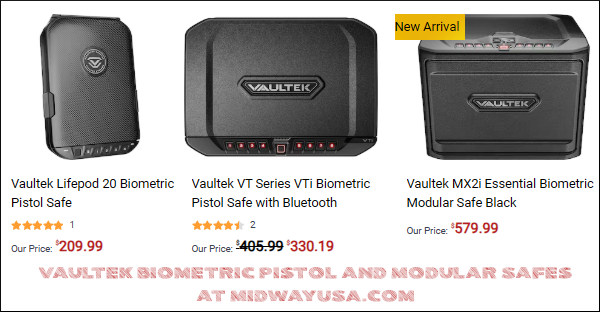

 Check Your Gun Safe Batteries
 Check Your Gun Safe Batteries


