Here’s great news for F-TR and long-range competitors. SEB Joy-Pods are getting ready to ship. Produced by SEB Rests in Indonesia, these superb joy-stick controlled bipods are favored by top F-TR competitors. They also work great for informal bench shooting and varmint shooting from the ground or a truckbed. We also know some folks who use Joy-Pods with .22 LR rifles at rimfire benchrest matches.
The Joy-Pod has been a huge success around the world. And while the the Joy-Pod’s geometry has worked exceptionally well, designer Sebastian Lambang has made some minor updates to the main support arms. The angle of the horizontal arms is slightly flatter (more horizontal). This allows the entire unit to ride lower if desired. Compare the two types of Joy-Pods in the photo below. The older design is in the rear while the updated Joy-Pod is in the front. The new Joy-Pod rides about 1.2″ lower at lowest setting.
Order Joy-Pods through SEB USA
Joy-Pods, Mini-X, NEO and other SEB Rest products are sold in the United States by SEB USA, run by Ernie Bishop. Contact Ernie for the current pricing and the projected delivery dates. Visit Sebrests-USA.com for ordering information.
The U.S. Army Marksmanship Unit (USAMU) has published a series of reloading articles on its Facebook Page. In this article, the second in a 3-part series, the USAMU covers the process of loading competition pistol ammunition. The authors focus on two key elements — the taper crimp and the quality/uniformity of the original brass. If you shoot pistol competitively, or just want to maximize the accuracy of your handguns, read this article. The taper crimp tips are very important.
Loading Accurate Competition Pistol Ammunition — Part 2 of 3
Today, we resume our series on factors affecting accuracy in pistol handloads. Readers who missed Part One can visit our USAMU Facebook Page. Scroll down to March 28, 2018 to find that first installment which is worth reading.
One often-overlooked aspect of handloading highly-accurate pistol ammunition is the amount of taper crimp used, and its effect on accuracy. (NOTE: this article pertains to loading for semi-autos – revolver crimp techniques involve some quite different issues.) Briefly, different amounts of taper crimp are used with various handloads to obtain best accuracy. The amount is based on bullet weight, powder burn rate and charge, plus other factors such as case neck tension. During machine-rest testing of experimental Service Pistol ammunition, many variables are examined. Among these, our Shop often varies a load’s crimp in degrees of 0.001″ when re-testing for finest accuracy.
How to Measure Taper Crimp on Pistol Cartridges
One question that often arises is, “How do I measure the taper crimp I’m putting on my cartridges?” Using the narrow part of one’s dial caliper jaws, carefully measure the case diameter at the exact edge of the case mouth on a loaded cartridge. It’s important to take several measurements to ensure consistency. Also, be sure to measure at several places around the case mouth, as case wall thickness can vary. After measuring 2-3 cartridges with a given crimp setting, one can be confident of the true dimension and that it can be repeated later, if needed.
However, for good results, one must use brass from one maker due to variances in case wall thickness. For example, the same degree of crimp that imparts a measurement of 0.471″ with Brand X brass may result in 0.469″ with Brand Y. Thus, for best accuracy, using brass from the same manufacturer is important — particularly for 50-yard Slow Fire. In a perfect world, it is better still to use brass from one lot number if possible. With the popularity of progressive presses using interchangeable tool heads, keeping separate tool heads adjusted for each load helps maximize uniformity between ammunition lots.
Brass Uniformity and Accuracy
Brass is important to pistol accuracy. While accurate ammunition can be loaded using brass of mixed parentage, that is not conducive to finest results, particularly at 50 yards. It is important for the serious competitor to pay attention to his brass – even if only for the 50-yard “Slow Fire” portions of “Bullseye” matches and practice. By segregating brass as described above, and additionally keeping track of the number of times a given batch of cases has been fired, one can ensure case neck tension and case length are at their most uniform.
Given the large volumes of ammunition consumed by active pistol competitors, using inexpensive, mixed surplus brass for practice, particularly at the “short line” (25 yards), is understandable. In NRA Outdoor Pistol (“Bullseye”), the 10-ring is relatively generous — especially for a well-trained shooter with an accurate pistol and load. However, for the “long line” (50 yards), purchasing and segregating a lot of high-quality brass to be used strictly for slow-fire is a wise idea. To keep track of your brass on the line, use a unique headstamp marking with 1 or 2 colors of marking pen ink.
Uniform Cartridge Overall Length is Important
Cartridge case Overall Length (OAL) uniformity as it comes from the factory is important to achieving utmost accuracy. More uniform case lengths (best measured after sizing) contribute to greater consistency of crimp, neck tension, ignition/burn of powder charge, headspace (rimless cartridges), etc. Cartridge case-length consistency varies noticeably by maker and, with lesser manufacturers, also from lot to lot. Some manufacturers are more consistent in their dimensions than others, and also in the hardness/ductility of their brass. Similarly, pay attention to primer brands, powder lot numbers, etc.
Consider Using a Lock-Out Die with Progressive Presses
When reloading pistol ammo with a Progressive press, we strongly recommend the use of a lock-out die, or other system that can detect double charges or low charges. If your progressive is manually advanced, the possibility of a double charge is very real — and that can have disastrous consequences.
On UltimateReloader.com website you’ll find an excellent two-part series on the function and set-up of the RCBS Lock-Out Die. This die prevents loading if a high or low powder charge is detected. The video below shows setup of the RCBS Lock-Out Die on the Dillon XL-650 progressive press.
What are the top-selling new rifles in the USA? You might be surprised — there are no Remingtons among the Top 5 bolt guns. In the bolt-action category, the Ruger American is on top, followed by the Tikka T3X and the CZ 457. Among semi-auto rifles, a Ruger AR is in third place, the Springfield M1A is ranked second, and the venerable Ruger 10/22 is still the best-selling self-loading rifle.
Shopping for a rifle? Your buying decision may be simplified by seeing what other consumers have chosen, as revealed by nationwide sales trends. You can now check firearms sales figures using “Gun Genius”, a data-crunching service of Gunbroker.com. On GunGenius.com you can select any type of firearm (handgun, rifle, shotgun) and see the top sellers for that category. Here are the top-selling NEW bolt-action rifles and semi-auto rifles. On the Gun Genius site you’ll find links for gun specifications. There are separate listings for used rifles. The chart are based on May 2022 sales data.
Here are the FIVE top-selling NEW bolt-action rifles for May 2022:
Here are the FIVE top-selling NEW semi-auto rifles for May 2022:
Get Sales Rankings for Other Categories of Firearms
On GunGenius.com, in addition to the categories above, you can chose lever-action rifles, single-shot rifles, semi-auto pistols, revolvers, semi-auto shotguns, pump shotguns, and more. You can also filter for sales trends (upwards and downwards). Drill down to see detailed product specifications and current prices.
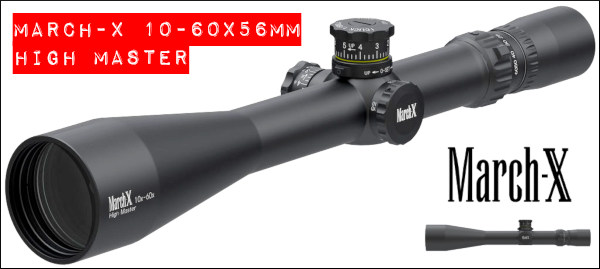
Review of March-X 10-60x56mm High Master Riflescope
By James Mock
This review is about the impressive new March-X 10-60x56mm High Master scope with Super ED lenses. We’ll start with some background. About 15 years ago, I saw Turk Takano at the Super Shoot and he seemed excited about a new rifle scope that he had on his benchrest rifle. It was a March 40x fixed power model that was a prototype. This was the first March to reach the USA. He told me that it was hand assembled in Japan by top optical engineers. When asked if I would like to look through it, I jumped at the opportunity. This scope was breath-taking in its clarity, brightness and quality of image. This scope soon was selling very well in a tough market. Some who made this possible were Turk Takano, the Kelbly family and Lou Murdica. All of these invested time and money into seeing that this new scope was available to American shooters.
I have had the pleasure of testing many high-magnification rifle scopes. Most have been exceptionally well suited to the task for which they were designed. Presently, I shoot 300- and 600-yard competition and the scopes that I favor are second focal plane (SFP) high-powered variables with an MOA-type reticle. Many in the optics industry have been very generous to enable me to test their scopes. Among those who have helped me over the years is Lou Murdica. When March first came to the USA, Lou loaned me his 40X fixed power scope, an exceptional scope for 100/200 yard BR shooting.
March-X 10-60x56mm High Master Scope — Impressive New Optic
I quit shooting short-range benchrest in 2013, but have been shooting 300- and 600-yard benchrest matches since then. It was quite a change for me to shoot a target to which I could not see my bullet holes. With my 78-year-old eyes and the Louisiana atmosphere, I have only been able to see 6mm bullet holes (in good conditions) at 600 yards with two scopes. They were the 15-55x52mm Nightforce Competition and the 12-52x56mm Valdada Terminator. Although I have not had the conditions with which to see small bullet holes at 600, Lou states that he can with this scope on days without mirage.
March introduced the world to ED lenses in rifle scopes and all of their scopes with lenses larger than 24mm have these superb lenses. Most of today’s premium scopes feature ED glass. However, March has now upped the ante and has a “Super ED” lens in certain tier 1 “High Master” scopes. According to March, these scopes produce images approaching the quality of the images produced by PURE fluorite lens.*
After reading some glowing reports about March’s High Master scopes, I contacted Lou Murdica and asked if he had a 10-60x56mm High Master he could loan me for an evaluation. The High Master Lens System has two Super ED lens elements within its lens system. By using Super ED lens elements, March was able to suppress chromatic aberration even more than with ED lenses and thus produce a sharper image with greater contrast, while still having a strong scope. March found a better way with this new objective lens system. High Master scopes also have addressed the problem of focus change with temperature variations.
Lou sent me a 10-60x56mm High Master for evaluation. I received the scope in July, when Louisiana’s weather is VERY hot. Although I tested with considerable mirage, this gives me a chance to test in less than ideal conditions. The scope that I received had a duplex reticle similar to the duplex made famous by Leupold. The section between the heavy lines subtends 3 inches at 25X, or 1.5 inches from the crosshair in the center to the heavy line. The technical data for this scope reveals why it carries a high price tag. Many believe that it is the Super ED lens that causes the high price, but that is only partially the reason. March designed a 56mm objective lens with THREE large segments (two of which are 50mm). These 50mm segments replace some of the 20mm lens others use in the tube body. The lenses used by March have high fluorite content and produce superb images. The lenses are fully multi-coated with the finest coatings for maximum light transmission. Chose either standard or illuminated reticle.
March-X 10-56x56mm High Master Scope Specifications:
34mm main tube, scope body machined from aluminum ingot
56mm front objective
Elevation adjustment range 60 MOA
Windage adjustment range 40 MOA
Length 16.2 inches
Weight 33.1 ounces
Eye Relief 3.98 inches at 10x and slightly less at 60x
Side Focus Parallax range 10 yards to infinity
High Master lens system (Super ED lenses)
Temperature Anti-Drift Lens System
All Japanese metal parts with no plastic part except for minimum essentials such as an insulator.
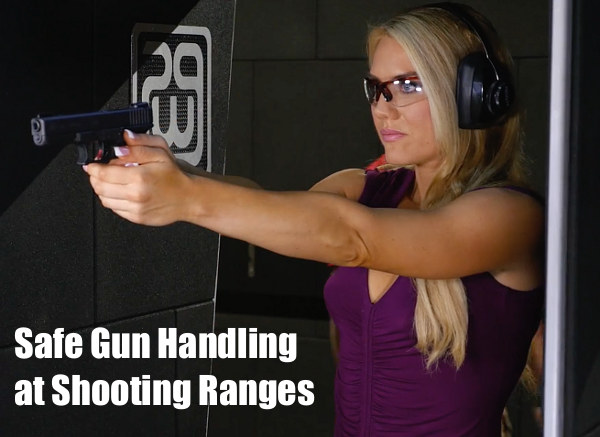
There has been a long, cold winter in many parts of the USA. So if you want to maintain your shooting skills, shooting indoors may be the only convenient option. When shooting indoors you should always be extra careful and follow all key gun safety practices and adhere to proper range “Etiquette”.
The NSSF (NSSF) offers a useful Range Safety and Etiquette video. This 8.5-minute video explains safe practices, especially at indoor ranges. In the video, the moderator list the basic rules of gun safety, before covering key range etiquette topics such as range officer commands, how to uncase your firearm on the range when you first arrive, and what to do if a firearm is accidentally dropped. There are also safety tips specific to handling both semi-automatic handguns and revolvers.
BAD RANGE BEHAVIOR — Five Things NOT to Do at the Range
Here are the five worst behaviors we’ve seen at indoor ranges. These behaviors are both dangerous and inconsiderate. Any one of these behaviors can get you permanently banned from an indoor range.
1. Sweeping other individuals after loading a weapon behind the firing line is very bad. All your weapons should be empty until you reach your shooting station.
2. Turning the handgun sideways while trying to clear a malfunction or insert/remove a magazine. This will point the muzzle at a fellow shooter. Or, after shooting a gun, the shooter fails to clear the weapon and then places the gun somewhere near the shooting station with the muzzle in an unsafe position.
3. Reacting unpredictably when firing a high recoil handgun. We’ve seen people take a second shot by accident with the muzzle way off target.
4. Not obeying range commands — in particular continuing to shoot during called cease-fires.
5. Poorly aimed shooting that hits target frames or carriers, causing ricochets.
Seven Types of People at the Gun Range — HUMOR
This video is satire, but with lots of truth in the characterizations. Laughter guaranteed.
Double-Up on Hearing Protection When Shooting Indoors
When shooting pistols indoors we recommend quality muffs with earplugs underneath, offering double protection. When inside an enclosed range, with other shooters blasting away right next to you, you really need effective hearing protection. But you also need to hear range commands and be able to communicate with your fellow shooters. That’s why we recommend electronic muffs with plugs underneath.
Today’s episode of Shooting USA TV has two interesting reports. Fans of 1911 pistols will enjoy the report on America’s leading collector of this classic handgun. In addition, Shooting USA has an informative feature on the Springfield Model 1903 bolt-action rifle, which served the U.S. military in two World Wars.
Shooting USA SHOW TIMES: This Shooting USA Episode airs Wednesday, October 5, 2022 at 9:00 PM Eastern and Pacific; 8:00 PM Central. If you miss the regular broadcast, you can stream the show online at any time on Vimeo for $0.99 per episode.
America’s Most Notable 1911 Collector
Today’s Shooting USA episde features a notable collector of rare and extremely valuable 1911s from as far back as the Military Trials in March of 1911. He even owns the Savage that competed for the contract and lost to John Browning’s design made by Colt. Plus, he has 1911s with official documents to prove they don’t exist, but they are very much present in his collection. At a location in Indiana, behind a 1300-pound door, rests a stash of 1911s that would make any museum proud.
The 1911 pistol, the most famous of John Browning’s classic pistol designs, served as the standard pistol of the US Military for 75 years. More than two and a half million were made for U.S. forces, and civilian versions are still in production today. The 1911 is one of the most popular for collectors, because of its rich history, and the many variations by different gun-makers.
There are so many different variations of the war era 1911 that it’s hard to keep track of all the versions. In fact, some 1911s are known not by the markings they have but rather the markings they lack. Collectors call them “lunchbox guns”, pistols that made their way out of the factory (maybe in somebody’s lunchbox) before they got a serial number and proof markings.
History’s Guns — Springfield Model 1903-A3 Rifle
Mention WW II and instantly folks will remember the M1 Garand. But at the start of the war, there weren’t enough of them. So, thousands of American soldiers instead carried the Model 1903 Springfield, left over from World War I. And Remington got the contract to make more and make them quickly. That brought changes, lots of them, and a new designation, the U.S. Model 1903-A3. This legendary rifle is featured today on Shooting USA’s History’s Guns segment.
M1903 Springfield shooter at Camp Perry. From GarandThumbBlog’s 2015 CMP Games Video.
The Shooting Sports USA website includes two excellent articles about the basics of metallic cartridge reloading. These two articles provide an excellent summary of the key procedures. If you are new to reloading, we recommend you read both articles:
Part II is particularly helpful because it explains the entire reloading process step-by-step, with 14 listed steps. The author notes: “In this, the second installment on metallic cartridge reloading, we’ll follow the sequence of steps involved in reloading a rifle cartridge and refining a metallic cartridge load. These steps are based on the use of a single-stage reloading press and a separate priming tool.”
Much important advice is provided as this article runs through the 14 Steps of Reloading. For example, when explaining Step 13, Bullet Seating, the article states:
“Proper seating depth is critical. Too much bullet protrusion and the cartridge may not work through the gun’s magazine, or it may fail to chamber. Too little and the bullet intrudes excessively into the powder chamber, decreasing volume and raising pressure. Neck tension is also important; any bullet that fails to seat with some resistance may be held only loosely by the neck and may be driven back into the case when the round is chambered, especially in semi-automatic arms.”
Important Guide to Detecting Over-Pressure Signs in Brass
As an example of the invaluable advice provided in these two articles, here’s a sample from Part II that explains how to determine if your load is over-pressure. We recommend that EVERY reader read this twice. There are more things to consider than a stiff bolt lift. You need to inspect cartridges very carefully:
Here’a useful article by Sierra Bullets Media Relations Manager Carroll Pilant. This story, which originally appeared in the Sierra Bullets Blog, covers some of the more common ammo problems that afflict hand-loaders. Some of those issues are: excessive OAL, high primers, and improperly-sized cases. Here Mr. Pilant explains how to avoid these common problems that lead to “headaches at the range.
I had some gentlemen at my house last fall getting rifle zeros for an upcoming elk hunt. One was using one of the .300 short mags and every 3rd or 4th round would not chamber. Examination of the case showed a bulge right at the body/shoulder junction. These were new cases he had loaded for this trip. The seating die had been screwed down until it just touched the shoulder and then backed up just slightly. Some of the cases were apparently slightly longer from the base to the datum line and the shoulder was hitting inside the seating die and putting the bulge on the shoulder. I got to thinking about all the gun malfunctions that I see each week at matches and the biggest percentage stem from improper handloading techniques.
One: Check Your Cases with a Chamber Gage
Since I shoot a lot of 3-gun matches, I see a lot of AR problems which result in the shooter banging the butt stock on the ground or nearest solid object while pulling on the charging handle at the same time. I like my rifles too well to treat them that way (I cringe every time I see someone doing that). When I ask them if they ran the ammo through a chamber gage, I usually get the answer, “No, but I need to get one” or “I didn’t have time to do it” or other excuses. The few minutes it takes to check your ammo can mean the difference between a nightmare and a smooth running firearm.
A Chamber Gauge Quickly Reveals Long or Short Cases
Size Your Cases Properly
Another problem is caused sizing the case itself. If you will lube the inside of the neck, the expander ball will come out a lot easier. If you hear a squeak as the expander ball comes out of a case neck, that expander ball is trying to pull the case neck/shoulder up (sometimes several thousandths). That is enough that if you don’t put a bulge on the shoulder when seating the bullet … it can still jam into the chamber like a big cork. If the rifle is set up correctly, the gun will not go into battery and won’t fire but the round is jammed into the chamber where it won’t extract and they are back to banging it on the ground again (with a loaded round stuck in the chamber). A chamber gage would have caught this also.
Oversizing cases also causes problems because the firing pin doesn’t have the length to reach the primer solid enough to ignite it 100% of the time. When you have one that is oversized, you usually have a bunch, since you usually do several cases at a time on that die setting. If the die isn’t readjusted, the problem will continue on the next batch of cases also. They will either not fire at all or you will have a lot of misfires. In a bolt action, a lot of time the extractor will hold the case against the face of the breech enough that it will fire. The case gets driven forward and the thinner part of the brass expands, holding to the chamber wall and the thicker part of the case doesn’t expand as much and stretches back to the bolt face. If it doesn’t separate that time, it will the next time. When it does separate, it leaves the front portion of the case in the chamber and pulls the case head off. Then when it tries to chamber the next round, you have a nasty jam. Quite often range brass is the culprit of this because you never know how many times it has been fired/sized and in what firearm.’Back to beating it on the ground again till you figure out that you have to get the forward part of the case out.
Just a quick tip — To extract the partial case, an oversized brush on a cleaning rod [inserted] and then pulled backward will often remove the case. The bristles when pushed forward and then pulled back act like barbs inside the case. If you have a bunch of oversized case that have been fired, I would dispose of them to keep from having future problems. There are a few tricks you can use to salvage them if they haven’t been fired though. Once again, a case gage would have helped.
Two: Double Check Your Primers
Another thing I see fairly often is a high primer, backwards primer, or no primer at all. The high primers are bad because you can have either a slam fire or a misfire from the firing pin seating the primer but using up its energy doing so. So, as a precaution to make sure my rifle ammo will work 100% of the time, I check it in a case gage, then put it in an ammo box with the primer up and when the box is full, I run my finger across all the primers to make sure they are all seated to the correct depth and you can visually check to make sure none are in backwards or missing.
Three: Check Your Overall Cartridge Length
Trying to load the ammo as long as possible can cause problems also. Be sure to leave yourself enough clearance between the tip of the bullet and the front of the magazine where the rounds will feed up 100%. Several times over the years, I have heard of hunters getting their rifle ready for a hunt. When they would go to the range to sight in, they loaded each round single shot without putting any ammo in the magazine. On getting to elk or deer camp, they find out the ammo is to long to fit in the magazine. At least they have a single shot, it could be worse. I have had hunters that their buddies loaded the ammo for them and then met them in hunting camp only to find out the ammo wouldn’t chamber from either the bullet seated to long or the case sized improperly, then they just have a club.
Four: Confirm All Cases Contain Powder
No powder in the case doesn’t seem to happen as much in rifle cartridges as in handgun cartridges. This is probably due to more handgun ammo being loaded on progressive presses and usually in larger quantities. There are probably more rifle cartridges that don’t have powder in them than you realize though. Since the pistol case is so much smaller internal capacity, when you try to fire it without powder, it usually dislodges the bullet just enough to stick in the barrel. On a rifle, you have more internal capacity and usually a better grip on the bullet, since it is smaller diameter and longer bearing surface. Like on a .223, often a case without powder won’t dislodge the bullet out of the case and just gets ejected from the rifle, thinking it was a bad primer or some little quirk.
For rifle cases loaded on a single stage press, I put them in a reloading block and always dump my powder in a certain order. Then I do a visual inspection and any case that the powder doesn’t look the same level as the rest, I pull it and the one I charged before and the one I charged after it. I inspect the one case to see if there is anything visual inside. Then I recharge all 3 cases. That way if a case had powder hang up and dump in the next case, you have corrected the problem.
On progressive presses, I try to use a powder that fills the case up to about the base of the bullet. That way you can usually see the powder as the shell rotates and if you might have dumped a partial or double charge, you will notice as you start to seat the bullet if not before. On a progressive, if I don’t load a cartridge in one smooth stroke (say a bullet tipped over sideways and I raised the ram slightly to reset it) Some presses actually back the charge back adding more powder if it has already dumped some so you have a full charge plus a partial charge. When I don’t complete the procedure with one stroke, I pull the case that just had powder dumped into it and check the powder charge or just dump the powder back into the measure and run the case through later.
Hunting season is underway around the country. If you need a good hunting rifle, consider a Tikka. The Tikka T3 and newer T3x rifles are very popular with hunters around the globe — for good reason. These rifles offer smooth-running actions, easy sub-MOA accuracy with good ammo, crisp triggers, and ultra-reliable detachable box magazines. The Tupperware stocks aren’t super-rigid, but they are comfortable and easy to handle. If you are looking for a hunting rifle, the Tikka T3 and T3X models are smart choices, offering good performance for the price (starting at $649.99 for the T3X Lite version). The T3 series is offered in a wide selection of chamberings, from .204 Ruger up to the large magnums.
Here are three good Tikka T3/T3x video reviews. The first, from the popular Backfire YouTube channel covers the features of the Tikka T3 series. The second and third videos are from New Zealand and Scotland respectively. Both reviewers are experienced hunters who explain why the T3 is well-suited for hunting applications. These videos cover the T3’s controls and how to use the rifle most effectively during a hunt.
VIDEO One — Why the Tikka T3x Is Great for Hunting
With 550,000+ subscribers, the Backfire Channel is one of the most popular gun channel on YouTube. You can trust what the Backfire reviewer say because they pay their own money for the products they review. This video reviews Tikka’s current generation T3s rifle. Backfire had high praise for Tikka T3x rifles: “The Tikka T3x SL is an incredibly lightweight mountain rifle that should be in every hunter’s safe. We like it for its lightweight build, stainless steel barrel, superb trigger, and surprisingly accurate shooting. Overall, this is the hunting rifle we recommend more frequently than any other.”
VIDEO Two — Tikka T3 Controls and Function
In this video, New Zealander Mitch of BushBrothersNZ reviews a T3 with polymer stock and stainless barrel chambered for the .270 Win. Mitch focuses on the T3’s controls and functions, with particular attention to the operation of trigger, safety, and bolt.
VIDEO Three — Report from Scotland with .223 Rem Tikka T3
In this video, David, a hunter and wilderness skills teacher from Scotland, demonstrates the features (and remarkable accuracy) of a factory Tikka T3, chambered in .223 Remington. With David’s handloads, this rifle has grouped just over an inch at 250 yards, as shown near the end of the video.
David uses his rifle primarily for fox-hunting (often done at night). He employs a variable-power scope with an illuminated reticle to target his night-time prey. David offers many tips for predator hunters. He prefers an extra-high Harris bipod. With the bipod’s legs fully extended, he can assume a comfortable and solid sitting position. The rifle is supported on his shoulder and on the bipod, leaving both of his hands free. Being able to support the rifle without gripping it is a major advantage, David explains. This frees his hands to search for animals with binoculars or scan distances with his rangefinder.
At the request of our readers, we provide select “Deals of the Week”. Every Sunday afternoon or Monday morning we offer our Best Bargain selections. Here are some of the best deals on firearms, hardware, reloading components, optics, and shooting accessories. Be aware that sale prices are subject to change, and once clearance inventory is sold, it’s gone for good. You snooze you lose.
NOTE: All listed products are for sale to persons 18 years of age or older. No products are intended for use by minors.
1. KYGUNCO — Hunting Sale with Guns, Optics, Ammo, Camo Gear
⏺ Hunters save on guns, optics, ammo, camo gear and more
Hunting season is here. And right now you can get EVERYthing you need at a discount, thanks to KYGUNCO’s big Fall Hunting Sale. You’ll find hunting rifles, scopes, rangefinders, camo clothing, trail-cams, and scent-blockers on sale. In addition, there is a large selection of quality factory hunting ammunition from Federal, Norma, and Winchester. Shown above are some of the best deals, but there are hundreds of other items on sale including crossbows, knives, deer attractant feed, and even tree-stands. CLICK HERE for the full KYGUNCO Hunting Season Sale Flyer with all the deals.
⏺ Versatile, affordable — great for ARs and sighting-in hunting rifles
Here’s a great product for sighting-in your hunting rifles. This Caldwell Precision Adjustable Turret Rest, now just $76.11 on Amazon offers quick horizontal and vertical adjustment making it great for target shooting as well as varminting from a bench. Amazon user ‘Jet Mech 1′ reports “…it’s REALLY solid! Solid steel legs and everything is heavy duty. It’s really compact. Easily fits in the smallest car trunk. It holds your firearm very securely. The tilt and pan is super smooth and precise. This is the perfect platform for an AR-style rifle but works equally well for just about anything.”
3. Locked-N-Loaded — SAR USA Mete 9mm w/ Red Dot, $329.99
⏺ Amazing deal on modern 9mm pistol with installed Red Dot
Here’s a great deal on a versatile 9mm handgun for self-defense and/or action pistol matches. The SAR USA Mete 9mm with Riton Red Dot is ON SALE now for just $329.99 at Locked-N-Loaded. Yes that low price includes the Red Dot sight! These optics-equipped SAR USA Mete pistols are offered with Safari Tan frame. Great bargain for just $329.99. There is a OD Green frame version also, but it could sell out fast.
4. Midsouth — .22 LR, .22 WMR, .17 HMR Rimfire Ammo Sale
⏺ Big inventory of .22 LR and .17 HMR ammo at good prices
With the current high price of powders and primers, more shooters are turning to rimfire shooting. Bulk .22 LR ammo costs as little as six cents a round. Compare that to $1.00 or more for factory centerfire ammmo. Right now Midsouth is running a big sale on rimfire ammunition. Save big on .22 LR, .22 WMR, and .17 HMR.
5. Amazon — Frankford Arsenal Perfect Seat Priming Tool, $59.99
⏺ Precise Depth Control, 12 Shell Holders, Quick-Change, Carry Case
Seating primers to a consistent depth helps deliver enhanced accuracy and low ES/SD. However, most priming systems don’t allow precise depth control. If you’re looking for a priming tool that allows you to adjust primer seating depth, check out the Frankford Arsenal Perfect Seat Hand Primer. This tool comes in a protective case along with a full set of case holders and primer flip tray. A quick thumb release system allows you to switch from small to large primers quickly. Get this now for $59.99 on Amazon.
6. Palmetto SA — PSA 36″ Gun Case plus 7 Magpul Mags, $99.99
⏺ Great combo for AR owners — good value
Here’s an excellent bundle deal for AR and tactical rifle owners. You get a rugged, 36″ long gun case with 3 large storage pouches for ammo and accessories. The case features comfortable back-pack style shoulder straps. Choose either the Flat Dark Earth (FDE) model or the Black model case. Both cases come with SEVEN quality 30rd Magpul magazines. With either color choice, get both the 36″ case and 7 mags for $99.99.
7. Amazon — KUBEI USB Rechargeable Digital Scale, $24.99
⏺ Compact scale with USB-rechargeable battery at great price
Everyone can use an inexpensive, compact scale for loading at the range or sorting bullets or maybe even primers. One very affordable option KUBEI USB Rechargeable Digital Scale. Unlike most other inexpensive digital scales, this comes with a large dust cover with a “window” for your powder pan. Notably, this scale can be conveniently recharged with a standard USB cable — no batteries to replace ever! We have heard positive reports from Forum members about this $24.99 portable scale, which offers 9 types of weight units, calibration weight, and fold-down protective lid.
8. Amazon — F.A.T. Firearm Torque Wrench, $47.89
⏺ Versatile, precise, affordable Torque Wrench for gun owners
Here’s versatile tool every gun owner can use. This Wheeler Engineering F.A.T. (Firearm Accurizing Torque) Wrench performs a multitude of duties for rifles and handguns. The wrench provides a precise read-out of torque values for action screws, scope rings, and other vital connectors. The wrench is also handy for working on other projects (such as torqueing motorbike fasteners). This torque wrench comes complete with 10 bits, all in a handy, fitted case. Save 20% now with the $47.89 Amazon Sale Price.
9. Graf & Sons — Lockdown Safe Accessory Package, $12.50
⏺ Good accessories for every gun safe — now 75% Off
Here’s a great Lockdown Accessory Package for gun safes at a super-low price. The battery-powered vault light is a must-have item. You also get an excellent large organizer that can hold pistols, knives, Kestrels, and other items. The hardshell Document Holder takes documents up to 10″ x 12.5″. For interior mounting, Velcro pads and magnets are supplied for both the Organizer and the Document Holder, so fitting to fabric-covered or bare metal doors/safe walls will work. The price for all three items is just $12.50 — a whopping 75% savings off the regular $49.99 price.
⏺ Good compact electronic muffs plus 4-lens safety glasses
Here’s a quality ear and eye protection combo for shooters. The Walker’s Razor Slim electronic (amplified) muffs offer a 23 dB Noise Reduction Rating (NRR). These are pretty comfortable and have a slim profile — good for prone shooting. These muffs feature twin mics, volume control, and a handy audio input jack. This kit, now just $49.99 at MidwayUSA (41% Off), includes a nice set of ANSI Z87.1-approved safety glasses with four interchangeable lenses: Smoke Gray, Amber, Yellow, and Clear.
11. Amazon — 10000mAh Dual USB Battery Packs, $21.99
⏺ Recharge your smartphones and tablets — good for Labradar too
Do you have a cellphone, tablet, LabRadar, barrel cooler, or other device that needs mobile power? If so, we found a great deal on a pair of Miady 10000mAh Dual USB Portable Chargers. Yes you get TWO (2) charging packs for just $21.99 total! Featuring USB and USB-C ports and fast 2 amp charging capability, this pair of portable power banks is a very good deal.





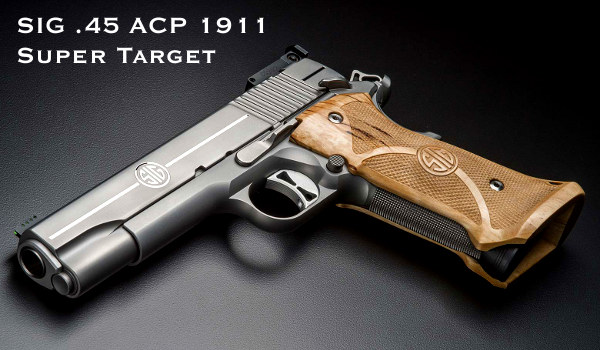




 Today’s Shooting USA episde features a notable collector of rare and extremely valuable 1911s from as far back as the Military Trials in March of 1911. He even owns the Savage that competed for the contract and lost to John Browning’s design made by Colt. Plus, he has 1911s with official documents to prove they don’t exist, but they are very much present in his collection. At a location in Indiana, behind a 1300-pound door, rests a stash of 1911s that would make any museum proud.


 Oversizing cases also causes problems because the firing pin doesn’t have the length to reach the primer solid enough to ignite it 100% of the time. When you have one that is oversized, you usually have a bunch, since you usually do several cases at a time on that die setting. If the die isn’t readjusted, the problem will continue on the next batch of cases also. They will either not fire at all or you will have a lot of misfires. In a bolt action, a lot of time the extractor will hold the case against the face of the breech enough that it will fire. The case gets driven forward and the thinner part of the brass expands, holding to the chamber wall and the thicker part of the case doesn’t expand as much and stretches back to the bolt face. If it doesn’t separate that time, it will the next time. When it does separate, it leaves the front portion of the case in the chamber and pulls the case head off. Then when it tries to chamber the next round, you have a nasty jam. Quite often range brass is the culprit of this because you never know how many times it has been fired/sized and in what firearm.’Back to beating it on the ground again till you figure out that you have to get the forward part of the case out.


