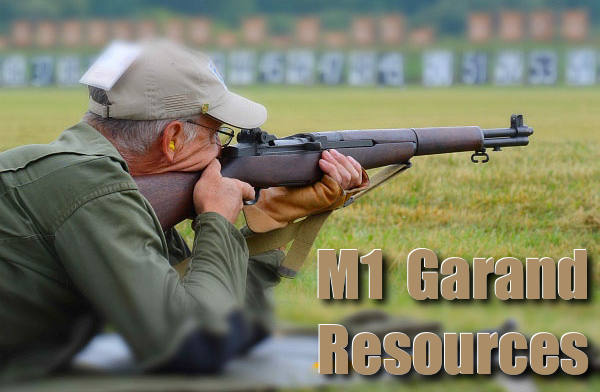
Today, .30-06 M1 Garands and classic military rifles will fill the firing lines at Camp Perry. The National John C. Garand, Springfield, Vintage and Modern Military Match (GSMM) concludes today, Sunday, August 4, 2024. (See CMP Camp Perry 2024 Calendar.) Some participants will shoot just one rifle type, but there is also a combined GSMM 4-Gun Aggregate. This GSSM Agg encompasses a series of position shooting matches on NRA SR targets at the CMP Nationals. Match scores will be posted on the CMP National Matches Results Page.
This video shows the Garand Match at Camp Perry. The rifles are still the same a decade later…
The annual GSMM event is one of the most popular events at Camp Perry, drawing participants from around the nation. One of America’s top GSSM shooters is Brian Williams, who was profiled in our Daily Bulletin. The 4-gun Aggregate includes Garand, 1903 Springfield/1917 Enfield (or similar bolt rifle), M1 Carbine, and AR-type rifle for “Modern Military”. Remarkably, Brian won the GSMM 4-Gun at the CMP National Matches in Camp Perry three years in a row — the inaugural 2017 4-Gun Agg, plus 2018 and 2019. Below, Brian offers some thoughts on the classic wood-stocked rifles used in GSMM competition: M1 Garand, 1903 Springfield, and M1 Carbine.
M1 Garand Service and Maintenance
Shooting Sports USA (SSUSA) published an excellent article on Service and Maintenance of M1 Garand Rifles. This offers some smart tricks, such as using smoke from burning masking tape to darken the front sight post. There is also an older SSUSA article that covers basic cleaning and servicing and also explains how to upgrade the performance of your Garands. READ Article HERE.
M1 Garand Disassembly, Cleaning, and Lubrication
This Brownells video shows how to disassemble your M1 Garand.
This TekMat video explains how to clean and lubricate your M1 Garand.
Recommended M1 Garand Service Manuals
Among the many M1 Garand manuals available, we recommend the CMP’s U.S. Rifle, Caliber .30, M1: ‘Read This First’ Manual. This booklet covers take-down, reassembly, cleaning, lubrication, and operation. The manual comes with CMP rifles or can be purchased for $3.25 from the CMP eStore. The author of Garand Tips & Tricks says: “It’s one of the best firearms manuals I’ve seen and I highly recommend it.”
The Classic Wood Guns of CMP 4-Gun Competition
Perspectives on M1 Garand, M1903A3, M1917, and M1 Carbine
CMP 4-Gun ace Brian Williams provides perspectives on the “Wood Gun” game, with suggestions on how to improve your performance with the M1 Garand, M1903 Springfield, M1917 Enfield, M1 Carbine, and other 20th Century military rifles. Brian explains what to look for…
Q: What should one look for when acquiring older rifles for CMP 4-Gun Games — M1 Garand, M1903/1903A3, M1917, M1 Carbine? What are realistic budgets for these firearms? What kind of accuracy can one expect? What upgrades are important?
Brian: All of these military surplus rifles are out there, but they are getting harder to get your hands on. And, just like everything else, the prices continue to rise. Not that long ago you could get your hands on a M1 Garand for four or five hundred dollars. In today’s market they are usually about double that price. But understand that these rifles are all unique and all have a story to tell. No two are alike, or have the same story. Just like the guns themselves, there are fewer and fewer dedicated gunsmiths for these vintage rifles. But I promise if you look for a good smith, they are out there and they are some of the most interesting people you will ever meet.
M1 Garand — Of the four (4) centerfire guns I shoot in the CMP games, my favorite has to be the M1 Garand. There were over 6 million of them produced in a very short time period, and every single one has its own unique story, and that is just cool. M1 Garands are capable of good accuracy. I believe that a well-maintained M1 with at least a replacement barrel is capable of shooting between 1 and 1.5 MOA.
M1903A3 Springfield — I find that the sights on a M1903A3 are a little easier to see than the sights of the M1903, but both are very accurate rifles. Like most military rifles in the current climate the prices have risen dramatically, but there are some gems out there that can be had for far less than $1000. The nice thing about the Springfield rifle is that almost all of the accuracy than you would want can come from just replacing a worn out 80-year-old barrel. In terms of accuracy, I think a good M1903A3 can shoot 1 MOA most of the time.
M1917 Enfield — This rifle is the newest of my collection and it shoots very well, with just a new Criterion barrel — again about 1 MOA with iron sights. These rifles are very close in price to the M1903 Springfield. But if you do your homework and keep your eyes open, there are always great deals to be found. I actually prefer shooting the M1917 to my M1903A3, due primarily to the M1917’s cock-on-close bolt which allows smoother cycling.
Public domain photo from Armémuseum (The Swedish Army Museum).
M1 Carbine — By 1945 there had been more M1 Carbines built than Garands. Today the Carbine can be harder to find, and due to the scarcity the price has shot up and most military M1 Carbines are going for more than $1000 at this point. The great thing about the M1 Carbine is that as long as you have a good ammo supply this rifle can shoot. Honest. I have had countless numbers of people that tell me that there is not an M1 carbine that will shoot. I can tell you from experience that they will, but you are going to have to put in some time with one to learn how to get it to shoot where you want it.
The M1 Carbine shoots the .30 Carbine round, with 110gr bullet going about 1990 FPS. In comparison, the .30-06 Springfield round used in the M1 Garand is almost three times more powerful than the .30 Carbine.
Forum member F-Class John is an avid F-Class competitor and expert handloader. John reviews reloading hardware and shooting-related products for his popular F-Class John YouTube Channel, which now boasts 500+ videos. John also does important product testing for AccurateShooter.com. Through his YouTube channel, John has reviewed many of the latest and greatest reloading tools and accessories. For today’s Video Showcase, we selected seven F-Class John product reviews. Products tested include Ingenuity Products Powder Dispenser, AMP Mark II Annealer, Multiple Joystick front rests, Micron Reloading Dies, SEB Neo-X and Rodzille T-Rex (with field tests),
If you like these informative videos, consider joining F-Class John’s Patreon Channel for live video meetings, more in-depth videos, and detailed explanations. Join Patreon via Patreon.com/fclassjohn for full length videos, live chats, and more.
Ingenuity Precision Automated Powder Dispensing System
The innovative new Ingenuity Precision powder dispensing system is a true rival to the popular AutoTrickler system. F-Class John worked with the team at Ingenuity Precision during the development of this advanced, computer-controlled powder dispensing system and he is impressed with the results. John shows the Ingenuity Products unit in action with a variety of popular powder brands. He also demonstrates how the system can be conveniently controlled via an App on your cell phone. If precision powder dispensing is your goal, you should watch this video start to finish. When fine-tuned to the powder type, this machine can deliver exceptionally repeatable results. It is now available for PRE-ORDER.
AMP Annealing Mark II DB Annealer
The AMP Mark II DB Annealer is the latest and greatest microprocessor-controlled induction annealing machine from Annealing Made Perfect in New Zealand. This machine provides precise, exact annealing for your cartridge brass. Precision annealing can both improve reloading consistency and extend brass life dramatically. We know some 30 BR shooters with AMP annealers who have reloaded their cases over 20 times. In this video F-Class John explains the features of the AMP Mark II DB machine and shows how to create a “profile” for your brass that can be logged in the machine’s memory.
Rifle Front Rest Reviews — For F-Class and Benchrest
If you need a front rest for Benchrest or F-Open competition, this is a must-watch video when you are starting to shop. F-Class John reviews the features of numerous modern joy-stick front rests: SEB Neo-X (2:00 time-mark), SEB Min-X (tripod rest, 10:10 time-mark), 21st Century Hybrid Rest (19:54 time-mark), Rodzilla T-Rex (26:13 time-mark), Lenzi (33:58 time-mark), Caldwell Fire Control (37:26 time-mark). John has shot off most of these rests and his describes optional features on the products. The price range is significant — from about $249.99 for the Caldwell to $2000.00+ for some of the premium rests.
Micron Micrometer Seating Dies from Bullet Central
Micron dies are made with high quality and superb functionality. If you are looking for a premium micrometer-adjustable seating die, the Microns are definitely worth considering. These dies are offered by Bullet Central for a wide variety of cartridge types from .22 up to .30 calibers. Along with standard cartridge types such as .284 Win, 7mm WSM, 7mm RSAUM, .308 Win, and 300 RSAUM, Micron makes seaters for popular competition cartridges such as 22 GT, 6mm PPC, 6mm BR, 6 Dasher, 6 BRA, and 6 GT. At $325.00, these Micron dies are very pricey, but you can use Code MICRON15 at Bullet Central to save 15% on your Micron die purchase.
SEB NEO-X and Rodzilla Raptor Front Rests
This video covers two outstanding front joystick rests, the SEB Neo-X and the Rodzilla Raptor. Both of these rests work great for both benchrest and F-Class shooters, centerfire and rimfire. Build quality is outstanding for both rests. Tester F-Class John observes: “Both are great units and user preference will really dictate which to get. I own both and find they give me consistent target acquisition.” To learn more about these two excellent front rests, visit TheRodzilla.com and/or SEB Rests USA.
AutoDod IDOD Powered Neck-Turning Machine
Here is F-Class John’s review of the impressive AutoDod IDOD machine, the most sophisticated neck-turning machine on the planet. This F-Class Products machine uses twin precision cutter tips to turn case necks inside and out quickly and efficiently, with superior precision. The cases are held securely in a precision-machined spindle attached to an electric motor. Twin blades move precisely during the cutting process, milling the necks inside and out. The turned necks come out perfect every time, with the shoulders trimmed exactly (with doughnut removed) as well.
Bix’N Andy Dakota Triggers
This video reviews the popular Bix’N Andy Dakota Triggers sold by Bullet Central. These triggers can do double duty — working for competition AND field use. Starting at $199.99, the Dakota triggers offer excellent performance for the price, and there are models suited for popular factory actions including Remington, Tikka, Sako and more. These triggers are available with integrated safeties. The Dakota trigger is also built to perform in all weather conditions, a nice feature for hunting rifles. For most of the Bix’N Andy Dakota triggers, the pull weight adjusts from 0.88 lbs (400 grams) to 4.41 lbs (2000 grams).
This video includes a range demo segment where John shows how Dakota triggers function in two of his match rifles. If you think a Bix’N Andy Dakota trigger will work for you, use code FCDAKOTA20 to save 20% on the Dakota purchase price for a limited time.
“Science tells us that exposure to continuous noise of 85 dB for eight hours is enough to cause permanent hearing loss, and worse, spikes of 130 dB and more can result in permanent hearing damage instantly.” Source: NRA Blog.
The Risk of Hearing Loss
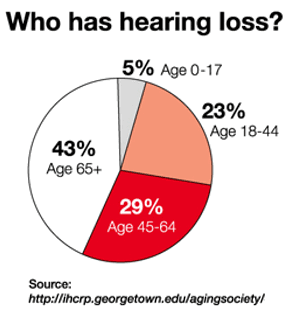
Hearing loss can be progressive and irreversible. If you are a shooter, this is serious business. As the NRA Blog cautions: “You may not even realize you’re harming your hearing. Hearing loss occurs gradually, and can go effectively unnoticed until symptoms become severe. By then, the damage is done.”Effective hearing protection is a must whenever you are shooting firearms or when you are in the vicinity of gun-shots. For ultimate protection, we recommend a good set of tapered foam earplugs, topped by ear-muffs. However, there are situations when you may prefer lighter-weight hearing protection that can be quickly removed. For example, if you are standing well behind the firing line as an observer, or if you are working as a rangemaster or waddie some distance away from the shooters.”
Sound Levels for Common Noises:
9mm Luger pistol: 160 dB
Jet aircraft engine (near): 140 dB
.22 LR pistol: 134 dB
Normal human pain threshold: 120 dB
Noisy Nightclub: 110 db
Riding Motorcycle at 65 mph: 103 db
Power Lawnmower: 95 dB
Hearing damage possible: 85 dB (sustained for 8+ hours)
Ringing Telephone: 80 dB
Normal conversation: 60 dB
What about suppressors? If you use a suppressor is it OK to dispense with hearing protection? Not really. Even the most effective suppressors, on the smallest and quietest calibers (.22 LR), reduce the peak sound level of a gunshot to between 110 to 120 dB. To put that in perspective, according to the National Institute for Occupational Safety and Health (NIOSH), that is as loud as a jackhammer (110 dB) or an ambulance siren (120 dB). For normal caliber handguns and rifles, suppressed sound levels routinely exceed 130 dB, just shy of OSHA’s “hearing safe” threshold of 140 dB. Accordingly, we recommend use of hearing protection even when shooting suppressed.
Compact, Low-Profile NRR 27 dB-Rated Ear Muffs
Many hunters and competitive shooters prefer low-profile ear muffs. As these typically have a lower Noise Reduction Rating, perhaps NRR 22-27, we recommend running earplugs under muffs. If you use low-profile electronic muffs, such as Howard Leight Impact Sport Muffs, you should still be able to hear range commands even with plugs underneath.
Another good option for hunters and range visitors are hearing bands, basically earplugs connected with a semi-rigid plastic band. These banded products provide “quick access” hearing protection for hunters. You can keep them handy around the neck while spotting game, and then insert the plugs before shooting.
Howard Leight MAX NRR 33 Earplugs, Just $8.44 for 20 Pairs
These Howard Leight NRR 33 Max-1 Plugs are your Editor’s favorite foam earplugs. Between shooting, motorcycling and mowing lawns, I probably have Howard Leight foam plugs in my ears 3-4 days a week. They are comfortable and the flared outer edge helps the NRR. You can get 20 pairs for $8.44 on Amazon. There is also a Max-30 corded version, with the same excellent 33 dB Noise Reduction Rating. Get five pairs of Max-30 Corded Plugs for $5.99 on Amazon, or 100 pairs of Max-30s for $27.99.
Note, if you prefer thin, light-weight earmuffs, we recommend running earplugs underneath for double protection while shooting firearms (or when you’re on the firing line). Sound experts tell us that running plugs and muffs together can effectively improve your effective noise reduction by 4-7 dB NRR.
Watch this video to see how a sound suppressor (aka “silencer”, “moderator”, or “can”) is constructed, start to finish. It’s more complicated than you might expect — there are quite a few stages in the process. The video below shows the fabrication of a SilencerCo Octane 45 suppressor:
SilencerCo writes: “What, exactly, goes into making a silencer? It may be more than you’d expect. From cutting metal to chemical baths, to extensive quality control every step of the way, our streamlined process is more than just a few steps. Watch our newest video, HOW IT’S MADE: Octane 45, to catch a glimpse behind SilencerCo’s doors.”
How Loud Are Unsuppressed Rifles?
Firearms Are Loud — 140 dB to 175 dB. ASHA explains: “Almost all firearms create noise that is over the 140-dB level. Exposure to noise greater than 140 dB can permanently damage hearing. A small .22-caliber rifle can produce noise around 140 dB, while big-bore rifles and pistols can produce sound over 175 dB. Firing guns in a place where sounds can reverberate, or bounce off walls and other structures, can make noises louder and increase the risk of hearing loss. Also, adding muzzle brakes or other modifications can make the firearm louder. People who do not wear hearing protection while shooting can suffer a severe hearing loss with as little as one shot[.]” Source: ASHA, Recreational Firearm Noise Exposure.
How Much Does a Good Suppressor Really Reduce Firearm Sound Levels?
That depends on the rifle, the cartridge, and the effectiveness of the suppressor. American Hunter explains: “Suppressors retard the speed of propellant gases from the cartridge that rapidly expand and rush out of the barrel. It’s these gases that produce the loud boom that’s heard for miles. A suppressor’s series of internal baffles slows these gases so they are not all released at once, thereby muffling the sound.” Many good commercial suppressors can achieve 30-35 dB sound suppression. However, Zak Smith of Thunder Beast Arms says: “There are a bunch of manufacturers who publish values that are not reproducible, or use an ad-hoc test instead of a mil-spec test. In many cases we’ve tested the exact same suppressors they’ve advertised with 30-40 dB reductions and found they are actually in the high 20s instead.”
Again, for this reason, we recommend that hunters use ear protection, such as electronic muffs, even when shooting suppressed.
Well folks, today is the first day of August, National Shooting Sports Month (NSSM). To help grow the shooting sports, the National Shooting Sports Foundation (NSSF) asks you to bring a new shooter to the range this month. That’s a good mission — adding to the ranks of shooters is the best way to preserve our Second Amendment rights.
This coast-to-coast celebration spotlights the fun and enjoyment of target shooting. Newcomers can take their first shots, and experienced shooters can invite someone new to the range or help an erstwhile shooter rediscover the fun of target shooting. This month-long event involves all the shooting sports — rifle, pistol, and shotgun.
The NSSF has an online database of NSSM shooting events scheduled for August. In most states you’ll find a large number of August events in the database — matches, clinics, training sessions, special sales — and much more. To see the events in your region, go to the Shooting Events Page and select a state or put a ZIP Code in the search field on the right. The scheduled events will then be listed in a scrolling vertical list in the right column. Here is an example from the state of Texas:
Here’s Your Chance to Win $500 with 2024 #RangeChallenge
Feelin’ Lucky? Then head to the range and shoot a target for a change to win $500.00. Celebrate National Shooting Sports Month and take the #RangeChallenge for a chance to win rewards this month. The NSSF will randomly select 10 winners in August to each receive a $500 gift card!
Enter by either: (1) posting a photo or video of you and your target to Instagram accompanied with the #RangeChallenge hashtag; or (2) Uploading a photo of you and your target directly to the Sweepstakes Page. You can CLICK HERE to download official August 2024 Range Challenge Target.
FREE Downloadable Fun Targets for Shooting Sports Month
On the NSSF Shooter Toolkit Page, you’ll find 17 FREE Downloadable Targets. Shown below are 15 of the targets. Pick the target(s) you want on the Shooter Toolkit Page or Download all 17 FREE Targets.
There are regular bullseyes, as well as Darts, Golf, and more. We really like the Billiards target and kids love the Water Balloons target. You can download all 17 targets for free, and then print them out, ideally with a color printer.
What Shooters Can Do to Promote National Shooting Sports Month:
The NSSF says: “As shooters, you serve a critical role in the continued growth of gun ownership and shooting sports participation. We urge you to join us this August for National Shooting Sports Month.” There are a variety of ways you can help this August:
— Introduce a family member, friend, or group of friends to the shooting sports by taking them to a local range that’s hosting an event.
— Spread the word to family/friends and encourage them to get out to the range in August.
— Encourage the ranges and retailers near you to host an event this August and add them to the official events calendar at www.ShootingSportsMonth.org.
Bushnell Match Pro ED 15×56 Binocular with MRAD Reticle
Bushnell’s impressive Match Pro ED 15×56 binoculars are designed for precision and competition rifle shooters. These 15-power, high-magnification binoculars offer ED Prime glass and a proprietary, rotating Shot-Call MRAD reticle. This reticle allows fast shot calls and corrections — something important for PRS/NRL competition. Bushnell says these new 15×56 binoculars, when mounted securely, have “enough power to effectively replace your spotting scope with a wide field-of-view that puts less stress on your eyes and allows you to more easily observe projectile flight.”
Early prototype versions of the Match Pro ED 15×56 binocular proved their worth in PRS/NRL competition. Bushnell pro shooter Robert Brantley has used the Match Pro ED binocular in PRS matches where he won four consecutive Tactical Division titles. In this video, Brantley explains the key features of Bushnell’s 15X, reticle-equipped Match Pro ED binoculars:
“The … Match Pro binos offer the perfect setup for spotting and calling shots on the range,” said Brantley. “They offer … the ability to fine tune corrections with the Shot-Call reticle. It truly does offer the best of everything and I’m not ever going back to shooting without them.”
Two important features of the Match Pro ED binoculars are the Shot-Call reticle and BridgeSet Stabilizer. The offset MRAD reticle is designed for target sizing, ranging and follow-up shot correction. The reticle has a dedicated focus adjustment and can be rotated for leveling after IPD (interpupillary distance) adjustment. Users can lock in their preferred IPD with the integrated bridge-lock, which ensures the binoculars are set for quick use.
This unit has some cool features. The BridgeSet IPD stabilizer provides a barrel angle stop that keeps your inter-pupillary distance constant in the field. A first of its kind, the BridgeSet is like a zero stop for your binoculars. These binoculars also have dual adjustable diopters to keep both barrels perfectly focused. This is important because many folks have slightly different vision in their left vs. their right eyes.
Bushnell’s 15-power Match Pro ED binoculars boast fully multi-coated ED (Extra-Low Dispersion) Prime objective lenses and BaK4 Abbe-Koenig roof prisms with PC3 dielectric phase coatings to ensure 92% light transmission. These Match Pro ED binoculars also feature Bushnell’s EXO-Barrier for high resolution regardless of weather conditions. A rugged magnesium housing protects the internal mechanisms while IPX5 waterproof sealing shields the optics from moisture. Another very good feature is that you can mount a tripod adapter to either the front or rear bridges based on your preference. That’s handy. These binoculars weigh a hefty 56 ounces (3.5 pounds), so you’ll definitely want to mount them on a tripod.
These Bushnell Match Pro ED 15×56 binoculars are available for $699.99 at EuroOptic.com and other leading vendors. Plus EuroOptic is currently offering FREE shipping with orders over $250.00. The Match Pro ED 15×56 binocular is backed by Bushnell’s 20-year Lifetime Ironclad Warranty. CLICK HERE to see full product profile on Bushnell.com.
Think you can shoot fast with a bolt gun? Bet you can’t beat these Norwegian speed-demons. In 2019, Inge Hvitås set a Mad Minute World Record, putting 39 rounds inside a 16″ circle at 200 meters, all in a single minute. At the same match, another Norwegian ace fired 48 rounds in a minute, with 38 in the bullseye. Now that’s spectacular speed and accuracy. We first ran this story in 2019 when the record was set. Wikipedia reports this is still the current record. So we believe no one has ever put more rounds on a 16″ target at 200m (with a bolt-action rifle) than Inge Hvitås. We include videos showing Inge’s amazing sequence.
Watch Inge Hvitås Set New Mad Minute World Record:
NOTE: This video, hosted by Facebook, may be slow to load. But be patient — it’s amazing to watch! CLICK HERE to run this story all by itself, speeding up the video load.
Mad Minute World Record — 39 Hits in One Minute (60 seconds)
At the Haga shooting range in Norway, spectators witnessed spectacular speed shooting in 2019. Norwegian shooter Inge Hvitås set a Mad Minute Challenge World Record with 39 hits in ONE MINUTE at 200m. The target was a 40cm (15.75″) bullseye placed at 200m (218 yards). Fellow Norwegian Jesper Nilsstua also shot brilliantly, sending 48 rounds down-range in one minute. Jesper had 38 hits, missing the record by just one. Both shooters were using iron-sighted Sauer 200 STR target rifles, which are normally chambered for the 6.5×55 cartridge. For this event, magazines are limited to 5 rounds and shooters may use slings but no bipods or other support.
Amazing Bolt-Gun Cycling Speed — 48 Rounds in One Minute
Another Norwegian ace, Jesper Nilsstua, missed the Mad Minute Challenge record (by one hit), but boy was he fast. Dennis Santiago (who has done his own Mad Minute drill), was dazzled: “This dude didn’t get the new world’s record of 39 hits in 60 seconds. He ‘only’ got 38 hits after getting off an amazing 48 shots in 60 seconds. Watch the smoothness of his shooting. It’s amazing.”
NOTE to Readers: This video is hosted by Facebook. It may be slow to load. But it is worth watching.
For the Mad Minute Challenge in Norway, a standard 200m DFS target was used, with 1 point per hit within the black area which is 40cm (15.75″, or 6.9 MOA) in diameter.
Norwegian Mad Minute Challenge — Event Rules
The organizers of the event posted: “The Mad Minute Challenge [is] a modern edition of a old military drill. This is a place for sport shooters to … share experiences on the subject of speed shooting with bolt-action rifles. The Mad Minute Challenge is all about the sport! To make a attempt for the record everyone must follow these five simple rules:”
Rapid-Fire Shooting Comparison Video
To illustrate the remarkable speed of Norwegian champion Inge Hvitås, this video shows Inge (top of frame) compared with other skilled competitors shooting the same 1-minute course of fire in Lesja, Norway.
About the Original MAD MINUTE
“Mad Minute” was a pre-World War I term used by British Army riflemen during training at the Hythe School of Musketry to describe scoring a minimum of 15 hits on a target at 300 yards within one minute using a bolt-action rifle (usually a Lee-Enfield or Lee-Metford rifle). It was not uncommon during the First World War for riflemen to greatly exceed this score. The record, set in 1914 by Sergeant Instructor Alfred Snoxall, was 38 hits.
Listed as “Practice number 22, Rapid Fire” of The Musketry Regulations, Part I, 1909, this drill required at least 15 shots on the Second Class target at 300 yards. The exercise was just one of several annual tests to classify a soldier as a sharpshooter, first or second class shooter depending on the points achieved.
Research indicates the Second Class target was a 48″ x 48″ square with 24″ inner circle and 36″ outer circle. The sight mark was a central 12″ x 12″ shape representing a soldier. ALL hits scored points (3 for center circle, 2 for outer circle, 1 for outer square). NOTE: Though some sources say the Mad Minute drill used a 12″-diameter round target, this appears to be a mistake from Ian Hogg’s book “The Encyclopedia of Weaponry”. No other source mentions a 12″ circle, which would be a mere 3.82 MOA. In reality the true drill target was a 48″ x 48″ square, roughly 15 times larger. (From No.WikiPedia.)
Want to learn more about Long Range Shooting? Check out the NSFF “Elements of Long Range Shooting” videos hosted by ballistics guru Bryan Litz of Applied Ballistics. In this multi-part series, Bryan covers a variety of topics of interest to precision shooters. For today’s Saturday at the Movies special, we feature seven of Bryan’s videos. Watch other informative Long Range Shooting and Ballistics videos with Bryan Litz on the NSSF YouTube Channel.
Atmospherics and Density Altitude
Bryan Litz explains: “An important element in calculating an accurate firing solution for long-range shooting is understanding the effects of atmospherics on a projectile.” Atmospherics include air pressure, air temperature, and humidity. Bryan notes: “Temperature, pressure, and humidity all affect the air density… that the bullet is flying through. You can combine all those factors into one variable called ‘Density Altitude’.” Density Altitude is used by the ballistic solver to account for variables that affect bullet flight.
Bullet Ballistic Coefficients
A bullet’s ballistic coefficient (BC) basically expresses how well the bullet flies through the air. Higher BC bullets have less aerodynamic drag than lower BC projectiles. You will see BCs listed as either G1 and G7 numbers. These correspond to different bullet shape models. Generally speaking, the G7 model works better for the long, boat-tail bullets used for long-range shooting. Notably, a bullet’s drag is NOT constant in flight. The true BC can vary over the course of the trajectory as the bullet velocity degrades. In other words, “BC is dynamic”. That said, you can make very accurate drop charts using the BCs provided by major bullet-makers, as plugged into solvers. However, long-range competitors may want to record “real world” drop numbers at various distances. For example, we’ve seen trajectories be higher than predicted at 500 yards, yet lower than predicted at 1000.
Transonic Range
When considering your rifle’s long-range performance, you need to understand the limit of your bullet’s supersonic range. As the bullet slows below the speed of sound, it enters the transonic zone. This can be accompanied by variations in stability as well as BC changes. Bryan explains “once your bullet slows done below supersonic and you get into transonic effects, there are a lot more considerations that come into play. The drag of the bullet becomes less certain, the stability of the bullet can be challenged, and things related to long times of flight, such as Coriolis and Spin Drift, come into play. So whenever you are shooting long range you need to where your bullet slows down to about 1340 fps.”
Ballistics Solvers — Many Options
Bryan Litz observes: “When we talk about the elements of long range shooting, obviously a very important element is a getting a fire solution, using a ballistic solver. There are a lot of ballistic solvers out there… Applied Ballistics has smartphone Apps. Applied Ballistics has integrated the ballistic solver directly into a Kestral, and the same solver runs (manually) on the Accuracy Solutions Wiz-Wheel. The point is, if it is an Applied Ballistics device it is running the same solutions across the board.”
Bullet Stability and Twist Rates
In this video, Bryan Litz talks about bullet in-flight stability and how to calculate barrel twist-rate requirements for long-range bullets. Bryan explains that bullet stability (for conventional projectiles) is basically provided by the spinning of the bullet. But this spin rate is a function of BOTH the nominal twist rate of the barrel AND the velocity of the projectile. Thus, when shooting the same bullet, a very high-speed cartridge may work with a slower barrel twist rate than is required for a lower-speed (less powerful) cartridge. For match bullets, shot at ranges to 1000 yards and beyond, Bryan recommends a twist rate that offers good stability.
Scope Tracking — Tall Target Test
Have you recently purchased a new scope? Then you should verify the actual click value of the turrets before you use the optic in competition. While a scope may have listed click values of 1/4-MOA, 1/8-MOA or 0.1 Mils, the reality may be slightly different. Many scopes have actual click values that are slightly higher or lower than the value claimed by the manufacturer. The small variance adds up when you click through a wide range of elevation. In this video, Bryan Litz shows how to verify your true click values using a “Tall Target Test”. The idea is to start at the bottom end of a vertical line, and then click up 30 MOA or so. Multiply the number of clicked MOA by 1.047 to get the claimed value in inches. For example, at 100 yards, 30 MOA is exactly 31.41 inches. Then measure the difference in your actual point of impact.
Coriolis Effect
The Coriolis Effect comes into play with extreme long-range shots. The rotation of the earth actually moves the target a small distance (in space) during the long duration of the bullet’s flight. Bryan Litz notes that, in most common shooting situations inside 1K, Coriolis is not significant. At 1000 yards, the Effect represents less than one click (for most cartridge types). Even well past 1000 yards, in windy conditions, the Coriolis Effect may well be “lost in the noise”. But in very calm conditions, when shooting at extreme ranges, Bryan says you can benefit from adjusting your ballistics solution for Coriolis: “The Coriolis Effect… has to do with the spin of the earth. The consequence of that is that, if the flight time of the bullet gets significantly long, the bullet can have an apparent drift from its intended target. The amount [of apparent drift] is very small — it depends on your latitude and azimuth of fire on the planet.”
About Bryan Litz
Bryan began his career as a rocket scientist, quite literally. He then started Applied Ballistics, the leading company focusing on ballistics science for rifle shooting. A past F-TR Long-Range National Champion and Chief Ballistician for Berger Bullets, knows his stuff. His Applied Ballistics squad was the winning team at the 2017 King of 2 Miles event, and Applied Ballistics has earned major U.S. defense contracts.
The U.S. Army Marksmanship Unit (USAMU) published a series of reloading articles on its Facebook Page. In this article, the second in a 3-part series, the USAMU covers the process of loading competition pistol ammunition. The authors focus on two key elements — the taper crimp and the quality/uniformity of the original brass. If you shoot pistol competitively, or just want to maximize the accuracy of your handguns, read this article. The taper crimp tips are very important.
Loading Accurate Competition Pistol Ammunition — Part 2 of 3
Today, we resume our series on factors affecting accuracy in pistol handloads. Readers who missed Part One can visit our USAMU Facebook Page. [To read the first article in the series, search for March 28, 2018 to find that first installment, which is definitely worth reading.]
One often-overlooked aspect of handloading highly-accurate pistol ammunition is the amount of taper crimp used, and its effect on accuracy. (NOTE: this article pertains to loading for semi-autos – revolver crimp techniques involve some quite different issues.) Briefly, different amounts of taper crimp are used with various handloads to obtain best accuracy. The amount is based on bullet weight, powder burn rate and charge, plus other factors such as case neck tension. During machine-rest testing of experimental Service Pistol ammunition, many variables are examined. Among these, our Shop often varies a load’s crimp in degrees of 0.001″ when re-testing for finest accuracy.
How to Measure Taper Crimp on Pistol Cartridges
One question that often arises is, “How do I measure the taper crimp I’m putting on my cartridges?” Using the narrow part of one’s dial caliper jaws, carefully measure the case diameter at the exact edge of the case mouth on a loaded cartridge. It’s important to take several measurements to ensure consistency. Also, be sure to measure at several places around the case mouth, as case wall thickness can vary. After measuring 2-3 cartridges with a given crimp setting, one can be confident of the true dimension and that it can be repeated later, if needed.
However, for good results, one must use brass from one maker due to variances in case wall thickness. For example, the same degree of crimp that imparts a measurement of 0.471″ with Brand X brass may result in 0.469″ with Brand Y. Thus, for best accuracy, using brass from the same manufacturer is important — particularly for 50-yard Slow Fire. In a perfect world, it is better still to use brass from one lot number if possible. With the popularity of progressive presses using interchangeable tool heads, keeping separate tool heads adjusted for each load helps maximize uniformity between ammunition lots.
Brass Uniformity and Accuracy
Brass is important to pistol accuracy. While accurate ammunition can be loaded using brass of mixed parentage, that is not conducive to finest results, particularly at 50 yards. It is important for the serious competitor to pay attention to his brass – even if only for the 50-yard “Slow Fire” portions of “Bullseye” matches and practice. By segregating brass as described above, and additionally keeping track of the number of times a given batch of cases has been fired, one can ensure case neck tension and case length are at their most uniform.
Given the large volumes of ammunition consumed by active pistol competitors, using inexpensive, mixed surplus brass for practice, particularly at the “short line” (25 yards), is understandable. In NRA Outdoor Pistol (“Bullseye”), the 10-ring is relatively generous — especially for a well-trained shooter with an accurate pistol and load. However, for the “long line” (50 yards), purchasing and segregating a lot of high-quality brass to be used strictly for slow-fire is a wise idea. To keep track of your brass on the line, use a unique headstamp marking with 1 or 2 colors of marking pen ink.
Uniform Cartridge Overall Length is Important
Cartridge case Overall Length (OAL) uniformity as it comes from the factory is important to achieving utmost accuracy. More uniform case lengths (best measured after sizing) contribute to greater consistency of crimp, neck tension, ignition/burn of powder charge, headspace (rimless cartridges), etc. Cartridge case-length consistency varies noticeably by maker and, with lesser manufacturers, also from lot to lot. Some manufacturers are more consistent in their dimensions than others, and also in the hardness/ductility of their brass. Similarly, pay attention to primer brands, powder lot numbers, etc.
Consider Using a Lock-Out Die with Progressive Presses
When reloading pistol ammo with a Progressive press, we strongly recommend the use of a lock-out die, or other system that can detect double charges or low charges. If your progressive is manually advanced, the possibility of a double charge is very real — and that can have disastrous consequences.
On UltimateReloader.com website you’ll find an excellent two-part series on the function and set-up of the RCBS Lock-Out Die. This die prevents loading if a high or low powder charge is detected. The video above shows setup of the RCBS Lock-Out Die on the Dillon XL-650 progressive press.
With good factory rifle ammo costing $1.30 per round or more — a Laser BoreSighter could pay for itself in just a couple range sessions.
Laser BoreSighters — fitted to your chamber — help you get on target more quickly, particularly with factory firearms. Just activate the unit, slip it into the chamber and look for the red dot on the target. The laser dot is about 2″ in diameter at 100 yards, and is visible even in full sunlight. Right now you can get HQ Issue Sight-Rite BoreSighters starting at $19.99 at Sportsman’s Guide (member price is $17.99). These units have a durable brass metal body and the battery will run an hour.
Rifle and Shotgun Cartridge Types:
Sight-Rite Boresighters are offered for popular rifle and shotgun cartridge types including: .17 HMR, .22 LR, .223 Rem, .204 Ruger, .22-250, 6.5 Creedmoor, 7mm WSM, .30-30, 20 Gauge shotshell, 12 Gauge Shotshell. Sportsman’s Guide also offers Sightmark Pistol Laser BoreSighters for $26.99: .38 SPL/.357 Mag, 9mm, .40 SW, .44 Magnum, .45 ACP.
Amazon offers MidTen Laser Boresighters complete with 6 batteries (two sets). This runs $17.99 for the .223 Rem cartridge while a larger boresighter for .25-06/.270 Win/.30-06 Boresighter is $19.89.
In-chamber BoreSighters are much safer than the kind that you insert in the end of the barrel (or attach to muzzle). If you forget your laser bore-sight placed in the end of the barrel, and then fire a round, you can blow up your barrel and/or suffer serious injury — it HAS happened.
This video shows how to use in-chamber Sightmark laser boresighters. The HQ Issue Sight-Rite XSI boresighters work the same way:


 Today, .30-06 M1 Garands and classic military rifles will fill the firing lines at Camp Perry. The National John C. Garand, Springfield, Vintage and Modern Military Match (GSMM) concludes today, Sunday, August 4, 2024. (See CMP Camp Perry 2024 Calendar.) Some participants will shoot just one rifle type, but there is also a combined GSMM 4-Gun Aggregate. This GSSM Agg encompasses a series of position shooting matches on NRA SR targets at the CMP Nationals. Match scores will be posted on the CMP National Matches Results Page.



 The Risk of Hearing Loss


 Research indicates the Second Class target was a 48″ x 48″ square with 24″ inner circle and 36″ outer circle. The sight mark was a central 12″ x 12″ shape representing a soldier. ALL hits scored points (3 for center circle, 2 for outer circle, 1 for outer square). NOTE: Though some sources say the Mad Minute drill used a 12″-diameter round target, this appears to be a mistake from Ian Hogg’s book “The Encyclopedia of Weaponry”. No other source mentions a 12″ circle, which would be a mere 3.82 MOA. In reality the true drill target was a 48″ x 48″ square, roughly 15 times larger. (From