About Jerry Miculek… The Man, The Myth, The Legend
The video above begins: “My name is Jerry Miculek. Guns are what I do.” Jerry Miculek is a true legend in the firearms community. Acknowledged as the best wheelgun speed-shooter in history, Jerry is also an accomplished rifle and shotgun shooter with many class victories in 3-Gun competition. He also has been a prolific YouTube Video creator. For this Saturday at the Movies story, we are featuring five notable Jerry Miculek videos. You will find over 200 more informative and entertaining videos on the Jerry Miculek Pro Shooter YouTube channel
Here Jerry shoots two, double-barrel .45 ACP 1911 pistols (AF2011) at the same time, one in each hand. Jerry was the first-ever person to accomplished this 4-barrel feat with twin handguns. Employing the dual double-barreled pistols, Jerry send 20 rounds downrange in under 1.5 seconds. This amazing sequence is captured with hi-speed cameras for vivid slow-motion playback. There are some spectacular close-ups as the bullets leave the muzzles. Worth watching!
2. Take-Down and Full Cleaning of AR-15
If you want to keep your black rifle running smoothly and reliably, you must clean it regularly and follow the correct maintenance procedures. In this video, Jerry Miculek takes down and cleans an AR-platform rifle belonging to his daughter Lena. This is a good video because Lena’s rifle was “run hard and packed up dirty” so you can see where carbon and grease build up. This 35-minute video is very thorough. Jerry is one of the nation’s top action carbine shooters, so listen carefully to his advice on cleaning and lubrication.
3. Jerry Reviews Magnetospeed T1000 Target Impact Indicator
MagnetoSpeed makes more than barrel-mounted chronographs. The T1000 is a target hit indicator that illuminates a super-bright red light when you hit a steel target. The T1000 was designed to be mounted to the back side of AR500 steel targets. In this video Jerry tests the MagnetoSpeed T1000 indicator light system. We like the T1000, especially for longer ranges where impacts on plates may not be easily visible. And you never have to paint your steel targets again to show impacts!
4. Shooting 240 Yards with 85-Year-Old K-22 Rimfire Revolver
Jerry Miculek is probably the greatest (certainly speediest) revolver shooter in history. He has set multiple world records with Smith & Wesson wheelguns. Here he tests a true classic — an 85-year-old S&W model K-22 revolver chambered for the .22 LR rimfire cartridge. Jerry uses this handsome classic blued revolver to hit targets at 240 yards!
5. 80,000 Philippine M1 Garands in One Place
Last year Jerry Miculek recently the CMP where he looked at the vast inventory of military rifles, including 80,000+ M1 Garands recently received from the Philippines. CMP tech staff showed Jerry some rare Garands that had never been issued. If you’re interested in classic military arms, you should definitely watch Jerry’s video. Gina Johnson, CMP’s general manager, told Guns.com that: “We have roughly 86,000 rifles from the Philippines and roughly 13,000 rifles from Turkey in our possession”.
Along with the 80,000+ Philippines Garands, the CMP received 13,000 from Turkey. The arrival of these 99,000 M1 Garands is great news for rifle collectors. Garands have been in short supply in recent years. Garands were getting harder to acquire from the CMP. In fact, over the past two years, many common Garand varients have been “sold out” on the CMP site.
If you want to stay current with trends in the firearms industry, and see important new product releases before they hit dealers’ shelves, you should check out Shooting Industry magazine. While tailored for firearms/outdoor gear retailers and industry professionals, this monthly journal also provides valuable information for all gun owners. We read Shooting Industry to learn about sales trends, new products, and current gun laws issues.
READ for FREE — Shooting Industry is now available in a digital format for FREE. There are free archives going back 14 years to December 2007.
Get FREE Digital Shooting Industry Magazines for the Past 13 Years
You can access, for free, 14 years of Shooting Industry back issues, plus all the recent 2021 issues. CLICK HERE for the current issue along with all issues for the previous three years: 2018, 2019, 2020. IMPORTANT — To access older issues, you much first launch a recent digital edition. That will give you access to the full 14-year archive, as explained below.
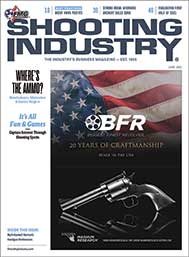
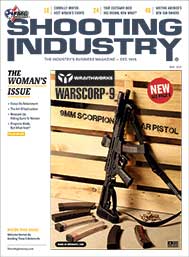
Here are links for the most recent three issues — July 2021, June 2021, and May 2021. Simply click each cover to read full issue for FREE:
July 2021
Top Stories:
Trends Of First-Time Buyers
COVID-19’s Effect On Hunting
June 2021
Top Stories:
Where’s All the Ammo?
Industry’s Public Companies
May 2021
Top Stories:
The Art of Instruction
New Gun Owners in America
How to Access Magazine Archives Back to December 2007
Once you have launched the digital version of a recent issue, you can access the past 14 years of Shooting Industry back issues by using the ARCHIVE Button. First click on the MENU icon (three horizontal lines). Then click on the link for ARCHIVE. When you click on “Archive”, a list appears on the right. Scroll down to select any issue from July 2021 back to December 2007. Note: The index is divided, so some of the more recent Shooting Illustrated issues are found at the BOTTOM of the Archive, while others are at the top, or the middle. Be patient and look for “SIxxxx”
BONUS! FREE Back Issues of GUNS Magazine and American Handgunner
In the Shooting Industry Archives, you will also find free digital editions of GUNS Magazine and American Handgunner. These will be found in the archive tables on the right. Just look for GUNSxxxx in the list entry for GUNS Magazine back issues, or AHxxxx for American Handgunner back issues.
Sako, and its subsidiary Tikka, make some of the finest hunting rifles you can buy. These offer smooth actions, and very good out-of-the-box accuracy for factory rifles. In addition, Sako and Tikka now offer high-tech carbon fiber stocks, along with Sako’s handsome wood stocks. With the three videos showcased today, you get a virtual tour of the Sako/Tikka production facilities in Finland.
In this informative video, the Canada in the Rough team tours the Sako/Tikka factory in Riihimäki, Finland. All aspects of the production process are covered — crafting actions, barrel-making, stock fitting and more. It was interesting to see the hammer-forging process for barrels, and the exacting measurements that are performed on the actions and bolt assemblies. If you have an interest in rifle production and the type of modern, computer-controlled machinery now being used, definitely watch this video.
Visit to SAKO/Tikka Carbon Fiber Stock Factory
This Sako-produced video shows how the company’s modern carbon-fiber stocks are produced. The stock production process is highly automated, to ensure that the finished stocks have very precise dimensions. These carbon Sakos are some of the nicest carbon-fiber stocks we’ve ever seen.
SAKO Factory Tour in Riihimäki Finland
In this segment, huntress and outdoor video host Mia Anstine tours the Sako manufacturing facility in Riihimäki, Finland. This video covers both firearms production and ammunition manufacturing. In a follow-up video Mia tests Sako rifles and Sako ammunition at a Finland range. Mia also reported on her Sako factory tour in the Beretta Blog. She notes: “Sako built its original manufacturing facility during World War I. To this day they still utilize the original buildings but have also grown over the years to include larger production areas and updated equipment.”
Canada in the Rough Video Tip from Boyd Allen — we welcome reader submissions
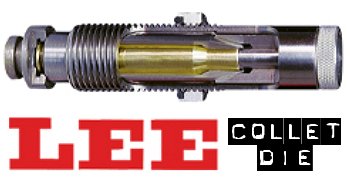
Editor’s NOTE: We generally recommend full-length sizing your cases. But there may be some situations where you may want to body-size your brass in one operation, and then neck-size the case as a final operation for reduced run-out. Or, perhaps you have a non-bushing FL sizing die and you want to modify the neck sizing. This article explains how to use a Lee Collet Die to size case-necks.
For those who prefer to neck-size their brass (rather than full-length-size), the LEE Collet Die is a popular, inexpensive option. It works by having collet tangs or “fingers” press the neck against a central mandrel. A collet squeezes the case neck against a precision mandrel for a perfect fit with minimum run-out. The benefit is that you get a very straight neck, which is sized consistently from top to bottom. Canadian shooter Jerry Teo explains: “LEE Collet Dies produce sized cases with very low runout (measured runout is under .001″ using a Sinclair concentricity gauge). You also don’t get the build-up of brass at the base of the neck, as can happen with bushing neck dies. The neck-shoulder junction stays nice and crisp.”
Here’s a good video that explains how to use a Lee Collet Die to Neck-Size .243 Win brass:
UPDATE to LEE Collet Dies — Neck Protrusion Change
The Lee Precision website notes a small design change: “If you’re a long-time user of Lee Collet Neck Sizing Die you may notice we have modified the Collet so a small portion of the neck protrudes through the end of the Collet-sizing portion. This often-requested modification was implemented in 2019. This change allows the portion of the neck that protrudes above the Collet to remain in its fire-formed condition. This provides a natural flare to the case neck allowing easy and concentric seating of bullets. This is especially important when seating cast bullets or low-drag coated bullets.”
TIP ONE — Adjusting Tension
LEE Collet dies don’t have a specific mechanical adjustment for neck tension. But you CAN easily modify the die to provide more or less tension. If you want to adjust the neck tension using a Lee Collet die, you can simply chuck the mandrel in a drill and reduce the diameter with some sand-paper (to increase neck tension) or you can order a mandrel the next caliber larger and turn it to whatever diameter you want (the larger the mandrel diameter, the less the neck tension). You can also order custom mandrels from Lee sized to any diameter you want.
Regarding neck tension, Boyd Allen makes an important point: “The only way to properly get more neck tension with collet dies is to either reduce the diameter of the mandrel, or order a smaller-diameter mandrel from Lee. I remind folks that adjusting the die position to have more toggle at the top of the ram stroke (not the factory recommended method), or leaning on the press handle with more force than recommended will NOT increase neck tension.”
No Custom Lee Collet Dies For Now
In years past, Lee also offered Custom Collet Dies, made from two fired cases. Hopefully these will be available in the future. However, earlier this year, Lee announced it had suspended sale of most custom dies including Collet Dies: “March 17, 2021: Due to unprecedented order volume, we have suspended custom services for Collet Necksizing Dies, Full-Length Sizing Die Sets, Quick Trim Dies, Case Length Gauges, Factory Crimp Dies, and Bullet Molds until we are able to meet the required volume of our standard products.”
TIP TWO — Polish and Tune for Easy Case Removal
Some users have complained that their Collet Dies grab the case-neck too firmly, making the case hard to remove. There are solutions to this problem. First inspect the collet fingers and smooth the inner surface up a bit with polishing compound or an extra-fine sanding pad. Second, you can open up the fingers a little bit. LEE recommends that if your Collet Die is sticking, take a steel punch and tap the fingers apart a little bit so that the natural “unloaded” position is wider. Lastly, you should lightly lubricate the outside of the collet fingers (see arrows) before you re-assemble the die. This will ensure they slide smoothly. Also, to prevent the collet fingers from closing too tight, never load up the die with your press without putting a case in place first. Without a case neck between the collet fingers and the mandrel, the collet can clamp itself too tight as you raise the ram.
TIP THREE — Always Have a Case Inside When Operating Collet Die
Our friend Boyd Allen tells us that you need to follow directions and NEVER operate the die without a case inside. Boyd explains: “This is because doing so will spring the quadrents of the collet inward so that they interfere with the insertion of a case, and the user will have to figure out how to undo the damage if the die is to operate properly. This advice would not be needed if everyone read the instructions before using the die…. but many times, they don’t. Another thing that I tell new users is to take the die apart so that they will have a better chance of understanding how it works.”
TIP FOUR — Size Twice and Spin Your Case 1/8th Turn
After reaching fully “down” on your press handle, withdraw the case about an inch and manually rotate it about 1/8th (NOT 1/4 or 1/2) turn while still in the shell-holder, then size again. This will place the die’s collet petals on the four “high spots” of the case neck and will result in a rounder, more evenly-sized neck with slightly more bullet tension. This takes only about one second more per case and is well worth the slight extra effort. (We thank reader Stonecreek for this smart tip).
For those of us in the Western USA facing drought, heat waves, and forest fires, it is a bit amazing to see a shooting range with verdant green fields, and lush vegetation. Well that is the environment in far-away Queensland, Australia. Here is a photo essay from Aussie Zac Link Cameron who hails from Cairns, Queensland, up near the Great Barrier Reef. On June 20, 2021, Zac was at a scenic range, shooting out to 1000 yards. He posted on Facebook: “Beautiful morning for it at a beautiful range!”
Zac was competing at 1000 yards with his lovely “missus” Morgan Crisp at the Atherton Rifle Club range, situated west of Cairns in Queensland. Zac and Morgan are members of the Cairns Rifle Club, which also has an 800m range north of Cairns, located inland from Wangetti Beach (see map below). Posting on Facebook, Zac wrote: “First time at 1000 yards for the Missus today with her factory Howa 1500 in .223 Remington. Conditions couldn’t have been more perfect other then the swirling wind not making up its mind! But the little .223 did bloody good for its first outing past 800m. 1000 yards today and my gosh Atherton is a beautiful range!”
Zac wrote: “Dropped 2 points on my first target and didn’t drop any on my second. I definitely need to work on my wind reading though.”
Zac Cameron: “Beautiful morning for it at a beautiful range!”
Indeed, this is a beautiful range. It’s great to see all that greenery. Here is a fly-over video from the Atherton Tableland Gun Club Range, west of Cairns, another popular Queensland shooting venue. You can see other Queensland shooting ranges on Zac Cameron’s Long Range Australia FNQ Facebook page.
Australia Rifle Competition Disciplines
As stated on the Cairns Rifle Club website, there are multiple disciplines sanctioned by the National Rifle Association of Australia (NRAA) which are shot by Cairns Rifle Club:
Target Rifle: This discipline is shot with a .308 or .223 caliber rifle, and held by the shooter using peep sights and a sling. Target Rifle has been actively contested since before World War I. The Cairns Rifle Club has operated continuously since 1893 — 128 years.
F-Class: This discipline is contested with optical sights (scopes) and the use of bipods or rests. Three categories of F-Class exist. Two are shot from an adjustable rest being F-Standard which is limited to either .308 Win or .223 Rem caliber rifles and F-Open which is unlimited up to a maximum of 8mm. The other discipline is F-TR which is shot from a bipod and limited to .308 Win caliber. [Editor’s Note — This is different than in the USA which has F-TR (bipod .223 Rem or .308 Win) and F-Open (front rest, open caliber) only.]
Sporting/Hunting Class: The most recent addition to the disciplines is the Sporting/Hunting Class.
The disciplines are contested at distances from 300m through to 800m at Wangetti and up to 1000 yards elsewhere. Here is a MAP for Wangetti, 40km north of Cairns.
Zac and Morgan are members of the Cairns Rifle Club, an organization with a rich history, going back to 1893. Here are Cairns Rifle Club members in 1903:
The NRA Blog ran an feature on Silhouette shooting by NRA Silhouette Program Coordinator Jonathan Leighton. Here are selections from Leighton’s story:
NRA Silhouette Shooting
The loud crack from the bullet exiting the muzzle followed by an even louder ‘clang’ as you watch your target fly off the railing is really a true addiction for most Silhouette shooters. There is nothing better than shooting a game where you actually get to see your target react to the bullet. In my opinion, this is truly what makes this game so much fun.
Metallic Silhouette — A Mexican Import
Silhouette shooting came to this country from Mexico in the 1960s. It is speculated that sport had its origins in shooting contests between Pancho Villa’s men around 1914. After the Mexican Revolution the sport spread quickly throughout Mexico. ‘Siluetas Metalicas’ uses steel silhouettes shaped like game animals. Chickens up front followed by rows of pigs, turkeys, and furthest away, rams. Being that ‘Siluetas Metalicas’ was originally a Mexican sport, it is common to hear the targets referred to by their Spanish names Gallina (chicken), Javelina (pig), Guajalote (turkey) and Borrego (ram). Depending on the discipline one is shooting, these animals are set at different distances from the firing line, but always in the same order.
Before Steel There Was… Barbeque
In the very beginnings of the sport, live farm animals were used as targets, and afterwards, the shooters would have a barbeque with all the livestock and/or game that was shot during the match. The first Silhouette match that used steel targets instead of livestock was conducted in 1948 in Mexico City, Mexico by Don Gonzalo Aguilar. [Some matches hosted by wealthy Mexicans included high-ranking politicians and military leaders].
As the sport spread and gained popularity during the 1950s, shooters from the Southwestern USA started crossing the Mexican border to compete. Silhouette shooting came into the US in 1968 at the Tucson Rifle Club in Arizona. The rules have stayed pretty much the same since the sport has been shot in the US. NRA officially recognized Silhouette as a shooting discipline in 1972, and conducted its first NRA Silhouette Nationals in November of 1972.
Silhouette Ace Eric Mietenkorte Shooting Smallbore Silhouette — Perfect Form:
Now There Are Multiple Disciplines
The actual sport of Silhouette is broken into several different disciplines. High Power Rifle, Smallbore Rifle, Cowboy Lever Action Rifle, Black Powder Cartridge Rifle, Air Rifle, Air Pistol, and Hunter’s Pistol are the basic disciplines. Cowboy Lever Action is broken into three sub-categories to include Smallbore Cowboy Rifle, Pistol Cartridge Cowboy Lever Action, and regular Cowboy Lever Action. Black Powder Cartridge Rifle also has a ‘Scope’ class, and Hunter’s Pistol is broken into four sub-categories. Some clubs also offer Military Rifle Silhouette comps.
Where to Shoot Silhouette
NRA-Sanctioned matches are found at gun clubs nation-wide. There are also many State, Regional, and National matches across the country as well. You can find match listings on the Shooting Sports USA website or contact the NRA Silhouette Department at (703) 267-1465. For more info, visit SteelChickens.com, the #1 website dedicated to Silhouette shooting sports.
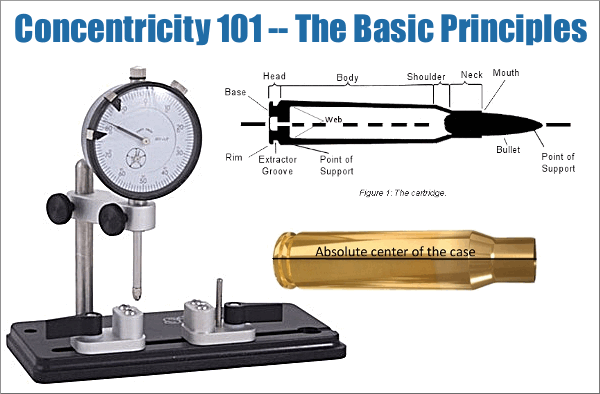
Sinclair Internationalhas released an interesting article about Case Concentricity* and bullet “run-out”. This instructional article by Bob Kohl explains the reasons brass can exhibit poor concentricity, and why high bullet run-out can be detrimental to accuracy.
Concentricity, Bullet Alignment, and Accuracyby Bob Kohl
The purpose of loading your own ammo is to minimize all the variables that can affect accuracy and can be controlled with proper and conscientious handloading. Concentricity and bullet run-out are important when you’re loading for accuracy. Ideally, it’s important to strive to make each round the same as the one before it and the one after it. It’s a simple issue of uniformity.
The reason shooters work with tools and gauges to measure and control concentricity is simple: to make sure the bullet starts down the bore consistently in line with the bore. If the case isn’t properly concentric and the bullet isn’t properly aligned down the center of the bore, the bullet will enter the rifling inconsistently. While the bore might force the bullet to align itself with the bore (but normally it doesn’t), the bullet may be damaged or overstressed in the process – if it even it corrects itself in transit. These are issues we strive to remedy by handloading, to maintain the best standard possible for accurate ammunition.
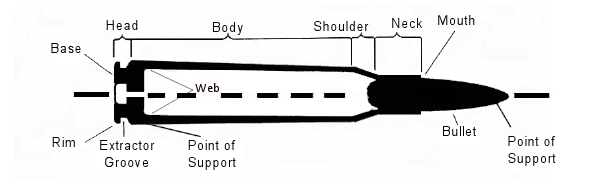
The term “concentricity” is derived from “concentric circle”. In simple terms it’s the issue of having the outside of the cartridge in a concentric circle around the center. That goes from case head and center of the flash hole, to the tip of the bullet.
Factors Affecting Concentricity
The point of using this term is to identify a series of issues that affect accurate ammunition. Ideally this would work best with a straight-walled case; but since most rifle cartridge cases are tapered, it equates to the smallest cross section that can be measured point by point to verify the concentric circle around the center. For the examples below, I’m working with .308 Winchester ammo.
Figure 1: The cartridge.
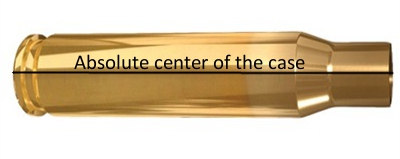
Figure 2: Centerline axis of the case, extending from flash hole to case mouth.
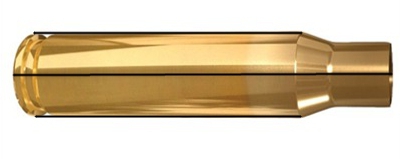
The case walls have to be in perfect alignment with the center, or axis, of that case, even if it’s measured at a thousandth of an inch per segment (in a tapered case).
Figure 3: Case body in alignment with its axis, or centerline, even in a tapered case.
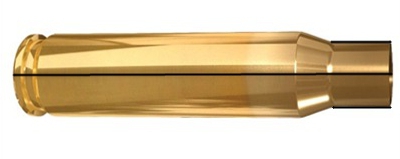
The case neck must also be in alignment with its axis. By not doing so you can have erratic bullet entry into the bore. The case neck wall itself should be as uniform as possible in alignment and in thickness (see the M80 7.62x51mm NATO cartridge in Figure 5) and brass can change its alignment and shape. It’s why we expand the case neck or while some folks ream the inside of the neck and then turn the outside for consistent thickness, which affects the tension on the bullet when seated.
Figure 4: Neck in alignment with center of the case axis.
Figure 5: Variations in case neck wall thickness, especially on some military brass, can cause an offset of the bullet in its alignment. This is an M80 ball round. Note the distinct difference of the neck walls.
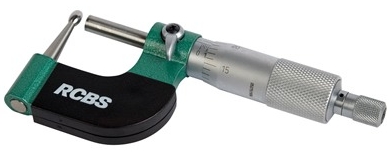
Having a ball micrometer on hand helps, especially with military brass like 7.62x51mm in a semi-auto rifle, where there are limits as to how thin you want the neck walls to be. In the case of 7.62 ball brass you want to keep the wall to .0145″.
Figure 6: A ball micrometer like this RCBS tool (#100-010-268) can measure case neck thickness.
Turning the outside of the neck wall is important with .308 military cases regardless of whether you expand or ream the neck walls. There are several outside neck turning tools from Forster, Hornady, Sinclair, and others. I’ve been using classic Forster case trimming (#100-203-301) and neck turning (#749-012-890) tools for 40 years.
Bullet Run-Out
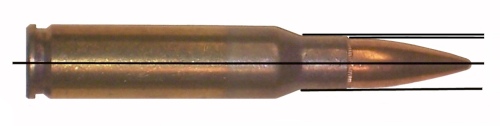
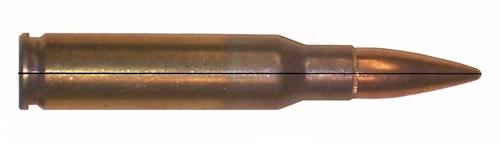
The cartridge, after being loaded, still needs to be in alignment with the center of the case axis. Figure 7 shows a bad example of this, a round of M80 ball. A tilted bullet is measured for what’s known as bullet “run-out”.
Figure 7: An M80 round with the bullet tilted and not aligned with the axis. This will be a flyer!
Run-out can be affected by several things: (1) improperly indexing your case while sizing, which includes not using the proper shell holder, especially while using a normal expander ball on the sizing die (it also can stretch the brass). (2) The head of a turret press can flex; and (3) improper or sloppy bullet seating. This is also relevant when it comes to using a progressive press when trying to load accuracy ammo.
Mid Tompkins came up with a simple solution for better bullet seating years ago. Seat your bullet half way into the case, back off the seater die and rotate the case 180 degrees before you finish seating the bullet. It cuts down on run-out problems, especially with military brass. You also want to gently ream the inside of the neck mouth to keep from having any brass mar the surface of the bullet jacket and make proper seating easier. A tilted bullet often means a flyer.
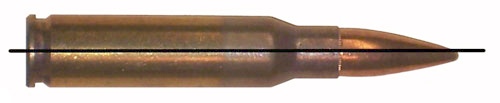
Figure 8: Proper alignment from the center of the case head to the tip of the bullet.
(NOTE: This links to a Web Archive of the original Sinclair Int’l article.)
*Actually some folks would say that if we are talking about things being off-center or out-of-round, we are actually talking about “eccentricity”. But the tools we use are called “Concentricity Gauges” and Concentricity is the term most commonly used when discussing this subject.
Story Tip from EdLongrange. We welcome reader submissions.
On Father’s Day, time spent together is more important than any gift that comes in a box…
Today is Father’s Day, a special Sunday when we acknowledge our patriarchs and show our gratitude for all their hard work and sacrifice on our behalf, and the love they have shown us over the years. If you’re lucky, you’re reading this after having spent a day at the shooting range (or the local fishing hole, or golf course) with your Dad. The important thing is to be together with “Pops” and do something you both enjoy together. If you haven’t finalized your Father’s Day planning, here are some suggestions:
1. Hand-wash and wax your father’s truck or car.
2. Clean your dad’s rifles, or help him put together some handloads.
3. Take your dad out to a live music concert, go to a ball game, or maybe head down to the local fishin’ hole.
4. Go for a hike together or just a drive in the country.
5. Head down to Sears or the local hardware store and let you Dad pick out some new tools.
6. Sit down with your dad, bring a note pad, and ask him to tell you some stories about his youth, or his military experience. This Editor learned some amazing things about his own father this way.
Whatever you choose to do with your father, use your time wisely. Turn off your computer, and go be with your father today. Do something with him that makes him smile. The time spent together is more important than any gift that comes in a box. And, if he lives far from you, give him a call and let him know how important he is to your life. Remind him of the old adage: “Good fathers make good sons”.
When my father, a disabled WW2 Army vet, passed away I received the flag that was draped on his coffin. On most days I fly one of those nylon flags that you can pick up at hardware or department stores. But on holidays, like today, and his birthday, Dad’s flag is out there snapping in the breeze on top of the pole. I find myself talking to him as it gets put up in the morning and comes down at sunset. Hope when the time comes one of my boys will fly my flag. — Bill Slattery Jr.
My father used to play with my brother and me in the yard. Mother would come out and say, “You’re tearing up the grass”! “We’re not raising grass,” Dad would reply, “We’re raising boys”. — Harmon Killebrew.
The Civilian Marksmanship Program (CMP) has added Mid-Range 3×600 events to its list of local club matches that can be CMP-sanctioned. For the new sanctioned Mid-Range 3×600 matches, clubs may choose to have service rifle and/or match rifle categories. The match and service rifle classifications will be the same used in across-the-course competitions. The rifles used can include Service Rifles, High Power Match Rifles, AR Tactical Rifles, and F-Class Rifles (both F-TR and F-Open).
The CMP notes: “With the 3×600 match, various rifles can compete side by side. Service rifles, match rifles and AR tactical rifles shoot at the regular MR1 600-yard targets. F-Class rifles shoot at the MR-1FC, which is an F-Class target. Scoring rings are similar, making it more difficult, with individuals shooting off of rests and/or bipods.”
Match sanctioning allows CMP Affiliated Clubs to host a number of competitions and clinics, including air rifle, High Power rifle, pistol, rimfire, smallbore rifle and long range disciplines, on their own ranges. CMP’s Long Range program is one of the latest installments to the safety-and-education-based organization and is rapidly growing in popularity.
To sanction a CMP Mid-Range 3×600 event, Affiliated Clubs should visit the CMP Competition Tracker Page. Then click the “Clubs > Sanction Your Club’s Match” option to start a request.
Rifle Specifications for the Mid-Range 3×600 Program:
F-TR (Target Rifle) Classification:
— Rifles chambered for unmodified .223 Rem or .308 Winchester (or NATO equivalents) are permitted.*
— Maximum rifle weight is 18.25 pounds (w/the bipod attached).
— The only front support allowed is a bipod. A sandbag may be used under the rear of the stock.
— Rifles with a 24-inch barrel or longer will suffice. Heavy-barreled factory guns are allowed.
F-Open Classification:
— Open rifles can be chambered for any cartridge up to .35 caliber.
— Rifles must weigh no more than 22 pounds, have a maximum fore-end width of three inches and can be shot using a front tripod rest and separate rear sandbag.
— Rifles may be fired from an adjustable front rest (such as benchrest shooters use), plus a rear sandbag.
— Rifles must be fired from the shoulder, and rail guns are not allowed.
AR Tactical Rifle:
— .223 Rem or .308 Win AR-platform only
— 20-inch max barrel length
— 15-power scope
— Bi-pod or ruck-sack rear rest may be a bag without ears (tactical front rests, such as Harris-type bipods and limited rear rests one might find used in military or police tactical situations).
— There are additional requirements for the AR Stock and grip. **
Other CMP-Sanctioned Match Offerings
The CMP also offers match sanctioning for Long Range 1000-Yard Match, Long Range Palma Match, F-Class Long Range Match, F-Class Palma Match and F-Class 3×600 Match. Learn more about CMP sanctioned matches and clinics at https://thecmp.org/clubs/clinics/.
* The CMP Press release also includes this reference for F-TR: “Rifles may be chambered for any cartridge, not exceeding .308 inches in diameter and not less than .224 inches in diameter.” We don’t know what to make of that statement. Normally F-TR is limited to .223 Rem (5.56x45mm) or .308 Win (7.62x51mm) only. And this would contradict the first part of the CMP class specification.
** The “Tactical” (Military or Police) butt-stock and cheek-piece must be symmetrical (ambidextrous) and in line with the centerline of the bore. The butt-plate must be vertical (perpendicular to the centerline of the bore). The length-of-pull of the stock may be adjustable. Butt-stocks that allow other adjustments, such as the cheek-piece height or butt-plate location, will be allowed. The stock may or may not have a pistol grip. If the stock has a pistol grip, it may not be designed to support the bottom of the trigger hand (hand rest) or extend more than six inches below the centerline of the bore.
Dual-Lock Technology: Cannon offers an innovative combined digital/mechanical lock system. This dual-access lock provides the rapid access of an electronic lock backed up by the assurance of a manual (rotary dial) combination lock.
Electronic (Keypad) Lock vs. Manual (Rotary) Lock
Smart gun owners know they need a good, solid gun safe. But when choosing a gun safe, what kind of lock should you select — electronic or mechanical? Both types have their advantages and disadvantages. This article will help you make the right choice for your needs and also get the most reliable performance from either type.
Gunsafes can be fitted with either an electronic keypad-style lock, or a conventional dial lock. In our Gunsafe Buyer’s Guide, we explain the important features of both dial and electronic lock systems. Many safe-makers will tell you that consumers prefer electronic locks for convenience. On the other hand, most of the locksmiths we’ve polled believe that the “old-fashioned” dial locks, such as the Sargent & Greenleaf model 6730, will be more reliable in the long run.
Here is the opinion of RFB from Michigan. He is a professional locksmith with over two decades of experience servicing locks and safes of all brands and types:
What a Professional Locksmith Says:
For the convenience of quick opening, the electronic locks can’t be beat. However, for endurance and years of trouble-free use, the electronics can’t compare with the dial lock.
I’ve earned my living, the past 22 years, servicing locks of all types. This includes opening safes that can’t otherwise be opened. I do warranty work for several safe manufacturers (including Liberty). What I’ve learned in all those years is that manual dial locks have very few problems. The most common is a loose dial ring which can shift either left or right, which will result in the index point being in the wrong place for proper tumbler alignment. This is simple to fix.
Electronic locks, however, can have all kinds of issues, and none (except bad key-pad) are easy to fix, and when one goes bad, it must be drilled into to open it. IMO, it’s not a matter of ‘if’ an electronic lock will ultimately fail, but a matter of ‘when’ it will fail. Over the past 10 years or so, since electronics have become more and more prevalent, I’ve had to drill open bad electronic locks vs. bad manual dial locks on a ratio of about 20-1.
My professional opinion is to get the manual dial lock, unless you’ve got a good friend who is a locksmith/safecracker.
How Secure is Your Lock?
RFB tells us that both dial and electronic locks offer good security, provided it’s a good quality lock made by LaGard, Sargent & Greenleaf, Amsec, or Kaba/Ilco. However, RFB warns that “Some of the ‘cheaper’ locks (both manual and electronic) however, are very simple to bypass.
An electronic lock that’s glued or ‘stuck’ to the door with double-sided tape, and has its ‘brain’ on the outside of the lock in the same housing as the keypad, and merely sends power to an inner solenoid via a pair of wires through the door, is a thief’s best friend. The good ones have the brain inside the safe, inaccessible from the outside.
No amateur can ‘manipulate’ either a good manual or electronic lock. Both give you a theoretical one million possible combinations. I say ‘theoretical’ because there are many combinations that cannot, or should not, be used. You wouldn’t set your combo on a dial lock to 01-01-01 etc., nor would you set an electronic to 1-1-1-1-1-1, or 1-2-3-4-5-6.”
Tips for Dial Locks
RFB notes that “The speed, and ease of use, of a manual dial lock can be improved upon, simply by having your combo reset using certain guidelines. Avoid high numbers above 50. Having a 1st number in the 40s, 2nd number anywhere from 0-25, and 3rd number between 25 and 35 will cut dialing time in half, without compromising security. (For mechanical reasons I won’t get into here, the 3rd number of a good manual dial lock cannot — or should not — be set to any number between 95 & 20).”
Tips for Electronic Locks
Electronic locks can have the combination changed by the user much more easily than dial locks. That should be a good thing. However, RFB explains: “That can be a double-edged sword. More than a few times I’ve had to drill open a safe with an electronic lock that has had the combo changed incorrectly by the user, resulting in an unknown number that nobody can determine. Also, don’t forget that electronic locks have a ‘wrong-number lock-out’. I would NOT rely on the normal quickness of an electronic 6-number combo in an emergency situation. If for any reason (panic etc.) you punch in the wrong number several times, the lock will shut down for a 5-minute ‘penalty’.
Replace Electronic Lock Batteries Every Year
To get the most life out of any electronic (keypad Lock), you should change the battery at least once a year, whether it needs it or not. Low voltage won’t necessarily shut down the lock, but using it in a low voltage situation is bad for the electronics, and eventually will cause lock failure. So, If you do nothing else to maintain your digital-lock safe, replace the battery every year. And get a fresh battery (with a release date) from the store — don’t just pull a battery out of a storage bin, even if it’s never been used. Old batteries can degrade, even when in storage.






 TIP ONE — Adjusting Tension
 TIP TWO — Polish and Tune for Easy Case Removal


 The
The 
 Metallic Silhouette — A Mexican Import
 Before Steel There Was… Barbeque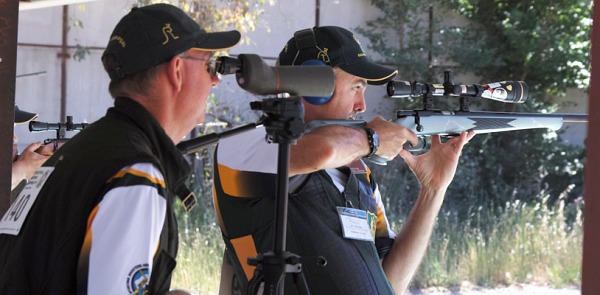


 Today is Father’s Day, a special Sunday when we acknowledge our patriarchs and show our gratitude for all their hard work and sacrifice on our behalf, and the love they have shown us over the years. If you’re lucky, you’re reading this after having spent a day at the shooting range (or the local fishing hole, or golf course) with your Dad. The important thing is to be together with “Pops” and do something you both enjoy together. If you haven’t finalized your Father’s Day planning, here are some suggestions:


 Gunsafes can be fitted with either an electronic keypad-style lock, or a conventional dial lock. In our
  Tips for Dial Locks
 Replace Electronic Lock Batteries Every Year


