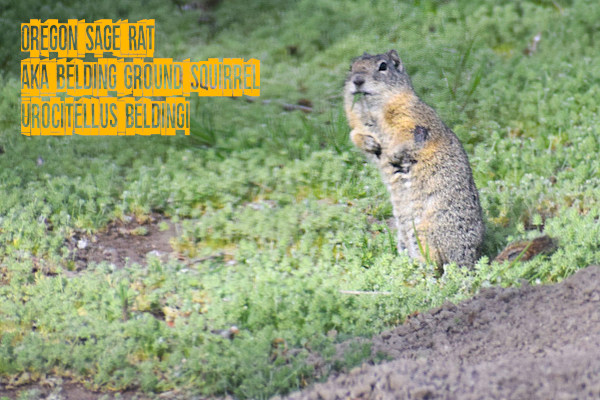
Our AccurateShooter.com Forum has an active section for hunting and varminting. One of the notable varminting threads in recent weeks was an account of a varmint hunt in Eastern Oregon. Forum member “Rick in Oregon” spent a week this past April nailing small varmints — known as “Sage Rats”, aka Belding ground squirrels (Urocitellus beldingi). Rick did most of his shooting with his handsome Cooper M38 rifle chambered for the 20 VarTarg wildcat, which is basically a .221 Fireball case necked down to .20 caliber. Here is Rick’s report on his successful Sage Rat Safari.
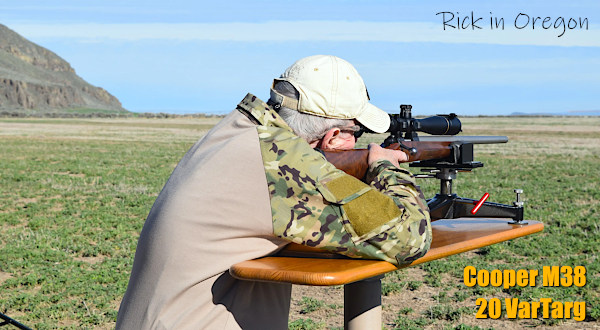
Forum member Rick in Oregon with his 20 VarTarg Cooper M38 rifle.
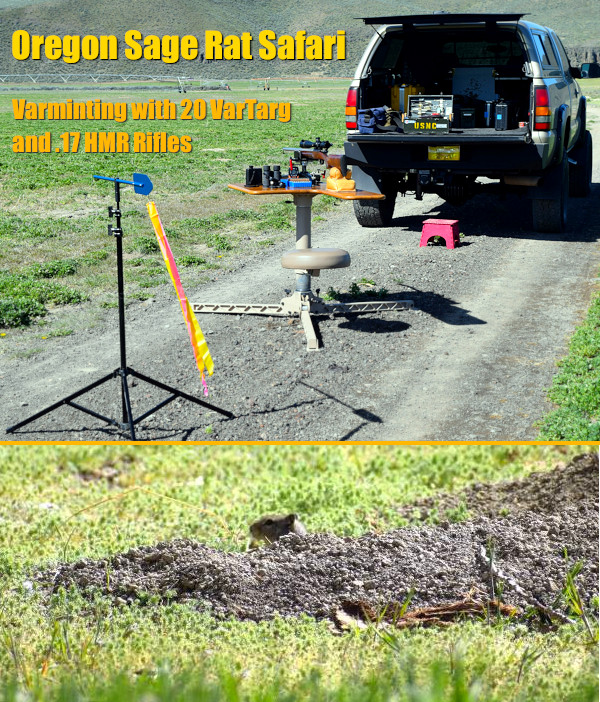
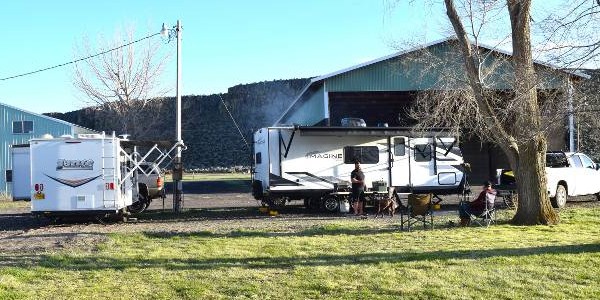
We just returned from a week-long sage rat shoot in the Orygun outback. Decent weather this time, no blowing snow, just plenty of sunshine and our buddy “Skippy the Flying Squirrel” to enhance our shooting enjoyment. Our rancher host refuses to use poison, so he welcomes us with the ability to hook our trailers to power and water, and a nice place to park them while we rid him of his sage rat problem. A true win-win situation for all. Out of respect for the rancher, we did not drive out into the fields. Instead we parked on the perimeter two-tracks, placed our portable benches, set up our windflags, then had at it.
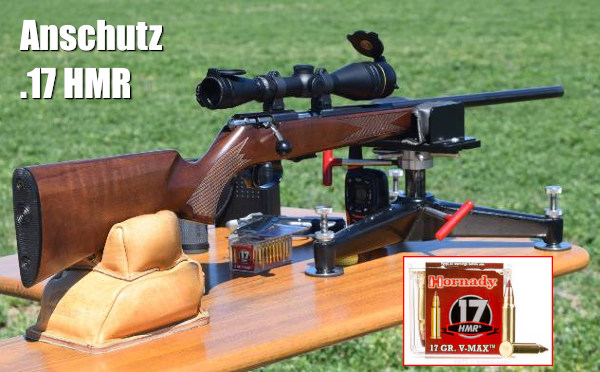
For shooting these small critters, you need accurate rifles that shoot less than 0.5 MOA. The sage rats are small and they may be partially concealed inside their relatively flat mounds. I took my custom M700 .204 Match 1:11-twist rifle, but there were no long range opportunities to justify burning over 25 grains of powder, as no elevated positions were available to take advantage of it. Shooting from the flat terrain gets much mirage, making any hits past 350 yards virtually impossible, so my 20 VarTarg got the most action out to 350 yards. Then inside of 200 yards I used my Anschutz 1715D HB in .17 HMR which did a very fine job of rat launching.
Rick is a definite 20 VarTarg devotee: “For years I thought my .223 AI was the ideal Prairie Dog cartridge. It may well be, but for sage rats, the 20 VarTarg has few equals when efficiency and performance is considered. This makes 15 years of 20 VT sage rat medicine for me, and I do not see any changes on the horizon. It also works quite well on rockchucks!”
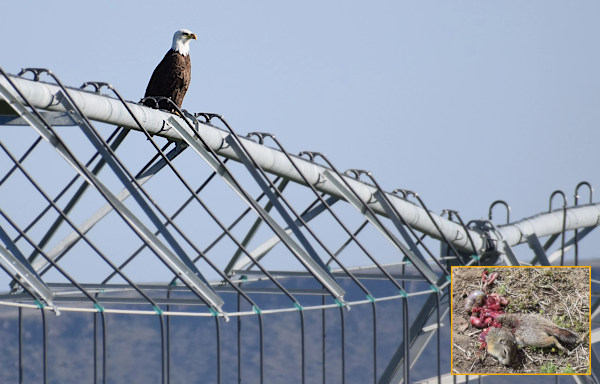
As usual when the “Eastern Oregon Raptor Feeding Society” shows up, so do the raptors. In fact bald eagles, golden eagles, hawks, and ravens all feast on the generous sage rat meals we provide. The terminal effects of the .20-Cal 32-grain bullets can’t be overstated. It sure makes it easy for the birds to do their thing. CLICK HERE for dead critter “blood and guts” close-up photo.
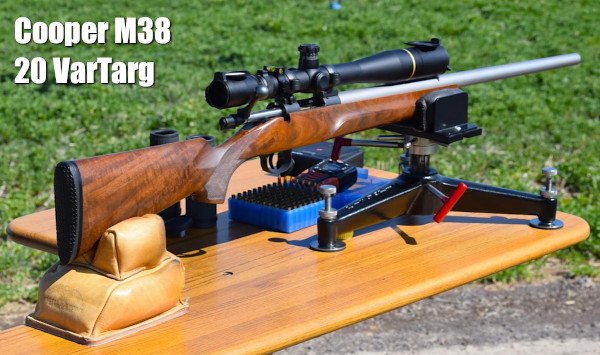
Above is Rick’s Cooper M38 chambered for the 20 VarTarg wildcat on his rotating field bench. Rick tells us: “My Cooper M38 VR 20 VarTarg is basically a stock offering from Cooper Firearms of Montana with a Jard 10 oz. trigger added. The barrel is a 1:12-twist 24″ Wilson chambered by Cooper. The bedding was perfect so I have not touched it in that regard.”
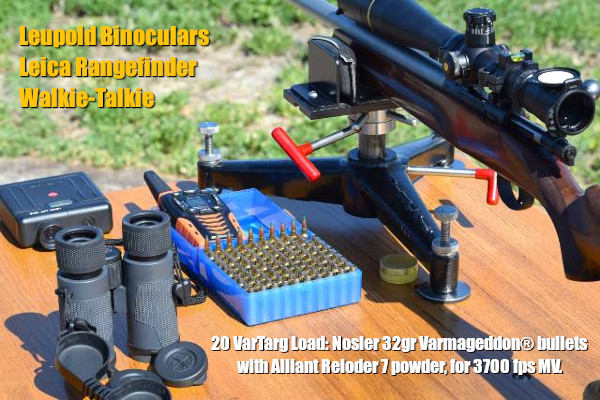
Rick’s load with Nosler 32gr Varmageddon bullets runs 3680 FPS — wicked fast. He loads Alliant Reloder 7 in Lapua or Nosler brass with Rem 7½ primers. Rick says this rig is VERY accurate, delivering groups in the sub-quarter-MOA range.
The scope is a Leupold VX3 6.5-20x40mm LR, with Varmint Hunter Reticle, factory-installed M1 elevation turret, EGW scope level, carried in Leupold rings. Rick notes: “My come-up chart in the scope’s ocular cover was developed using Sierra Infinity ballistics software based on my actual load. The chart has proven to be deadly spot-on at all suitable ranges I encounter the rats and rockchucks.”
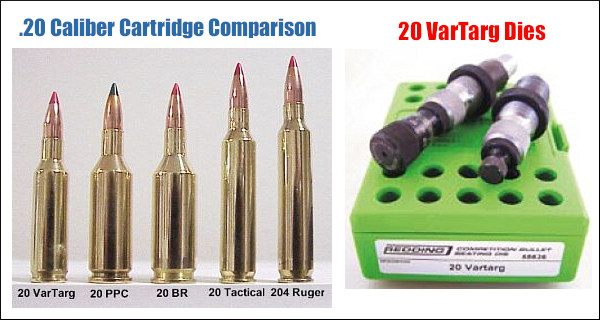
EDITOR: The 20 VarTarg cartridge is based on the .221 Fireball case, necked down to .204 and slightly modified for extra capacity. This very efficient cartridge offers low recoil and great accuracy. It’s one of our first choices for ground squirrels and P-dogs out to 300 yards.
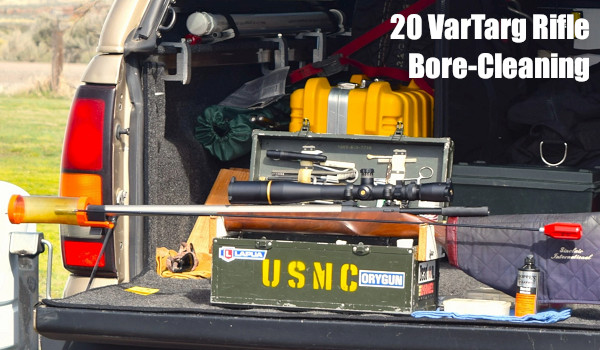
Tailgate Cleaning Set-Up — Brush That Barrel Back at Camp
Rick notes: “When the winds get up, cleaning in the field is problematic, blowing patches about, so cleaning back at camp on the tailgate is the hot setup.”
Anschutz 1715D HB in .17 HMR
For shots inside 200 yards, the .17 HMR works well. Rick notes: “The little ones were out, so inside of 200 yards, my Anschutz .17 HMR was the perfect medicine for that work. It really thumps those guys [doing] a very fine job of rat-launching.”
The .17 Hornady Magnum Rimfire (HMR) The .17 Hornady Magnum Rimfire (HMR) was introduced in 2002 by Hornady as a high-velocity, rimfire cartridge derived from the .22 Magnum case necked down to .17-caliber. The .17 HMR gained popularity among varmint hunters and target shooters for its good accuracy and hitting power out to 200 yards or more — all with low recoil and relatively low cost (compared to centerfire ammo).
Most .17 HMR ammo runs 17-grain or 20-grain hollow-point or plastic-tipped bullets at speeds around 2375-2550 FPS (lower for 20-grainers). Though lightweight, these small projectiles do deliver a powerful impact on small game while maintaining low recoil. Compared to the .22 LR, the .17 HMR offers superior ballistic performance, with flatter trajectories and higher energy at extended distances. It’s good for shooting prairie dogs, ground squirrels, sage rats, and other small critters.
During his sage rat safari in Oregon, Rick stayed in his trailer (see above). Rick noted that one critter “was frolicking about my trailer, so he made a good subject for a 300mm telephoto lens, shot out my dinette window. I can never get that close to them when in the field.”
Jerry Miculek is the best action revolver shooter who has ever lived. Miculek is also a true master with rifle and shotgun. This guy shoots hundreds of thousands of rounds every year in all types of firearms. Through that process, he has discovered common mistakes many shooters make. Those mistakes can harm the guns, or threaten the safety of the operator. Here Jerry offers some vital gun handling and safety advice in his “Never Do This” video series.
Jerry Miculek has won multiple revolvers championships, and has set amazing records for revolver speed shooting (with reloads). Yes Jerry, “Mr. Revolver”, knows a thing or two about wheelguns. In this video, Jerry explains how you can damage your revolver by using the wrong methods to open and close the cylinder and extract ammo. Jerry shows what NOT to do, and then he very carefully explains the proper procedure to release the cylinder, and swing it out of the frame. In addition, Jerry shows how best to swing a loaded cyclinder back into place. If you own a revolver, ANY revolver, you should definitely watch this video.
In this second video, Jerry explains common mistakes people make when handling and shooting three classic, semi-auto firearm types — the M1 Garand, the SKS carbine, and the M1911 pistol. Jerry shows handling faults that can cause out-of-battery detonation or early primer strikes, or cause jams in the Garand and SKS. Then Jerry explains why you should never release the slide on a M1911 pistol with a round already in the chamber. This is a must-watch video for Garand owners.
Here Jerry demonstrates of the most common jams that can happen with AR-platform rifles. Miculek reveals the cause of the issue and then shows how to prevent it. Jerry notes: “This is one of those malfunctions that you won’t see coming! I’ve seen it … on the range and it can be devastating to your time in a match. All ammo used in the video were dummy rounds and intentionally loaded for training without powder or primers.”
With the New Year approaching, we thought our readers might enjoy some historical background on the National Rifle Association, an organization which has served American firearms owners and marksmen for over 150 years.
Shooting Sports USA (SSUSA) has a good article on the origins and history of the National Rifle Association. This feature story covers the first 36 years of NRA history from 1871 to 1907. The NRA was founded in 1871, and 1907 marked the first year of Matches at Camp Perry, Ohio.
SSUSA explains the NRA’s original mission: “The NRA’s program during its youthful years centered mainly on improving marksmanship among the military. Rifle tournaments at ranges in Creedmoor (NY), Sea Girt (NJ), and Camp Perry (OH) captured the country’s spirit of nationalism and resulted in key improvements in rifles and target scoring. NRA also set standards for military rifle training and even inspired the federal government to form its own segment within the War Department to focus on promoting rifle practice among soldiers as well as civilians.”
1871 — A group of New York National Guardsmen founded the National Rifle Association to promote marksmanship training. Figures such as Capt. George Wingate had called for better rifle marksmanship to support the nation’s defense.
1872 — The NRA acquires Creed’s Farm in Long Island, New York for $26,250. Renamed “Creedmoor”, this becomes the NRA’s first range. The first match was held in 1873.
1874 — The NRA hosts its first International Match, shot at the Creedmoor Range in New York.
The First-Ever Creedmoor Challenge Match in 1874
The Irish International Shooting team arrived in New York on the 16th of September and proceeded to “take in the sights”, which was understandable, before some practice at the Creedmoor range. On September 26th they presented themselves for the match with confidence and in high spirits. The crowds that day were reported to be between 5,000 and 10,000 strong, which showed the huge support already growing for the fledgling sport in America.
The course of fire was 15 shots to each man at 800, 900, and 1000 yards. Unfortunately, the details of each mans scores at the individual distances have been lost to time but we do know that the Americans were well ahead after the 800-yard shoot. The Irish then caught up after the 900-yard and finished the 1000-yard shoot ahead by 1 point. The Americans still had one man left to shoot and it came down to his very last shot with which he scored a 4 giving the American team the win over the Irish by 3 points.
1892 — The NRA moves its Annual Matches to the Sea Girt Range in New Jersey, which was less than 60 Miles from New York City, NY. The Sea Girt Range was maintained by the New Jersey State Rifle Association, founded in 1878.
1903 — The U.S. War Department sets up a National Board for the Promotion of Rifle Practice (NBPRP). In 1903, an amendment to the War Dept. Appropriations Bill established the NBPRP to promote both Military and Civilian marksmanship. This government advisory board became the predecessor to today’s Corporation for the Promotion of Rifle Practice and Firearms Safety that now governs the CMP.
1907 — The NRA commences National Matches at Camp Perry, Ohio.
History of Camp Perry
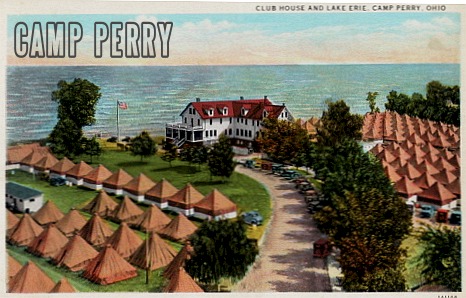
The National Matches have been held at Camp Perry since 1907. The range is located along the shores of Lake Erie in northern Ohio near Port Clinton. The site was first acquired in 1906, in response to the need for a larger facility for military training and the NRA’s shooting programs. In 1906 Gen. Ammon B. Crichfield, Adjutant General of Ohio, ordered construction of a new shooting facility on the shores of Lake Erie, 45 miles east of Toledo, Ohio. The original land for Camp Perry was purchased in 1906, and the reservation was named after Commodore Oliver Hazard Perry, the American naval commander who won the Battle of Put-in-Bay during the War of 1812.
On August 19, 1907, Cpl. L. B. Jarrett fired the first shot at the new Camp Perry Training Site. And that year, 1907, Camp Perry held its first National Pistol and Rifle Championship events. This location has hosted the annual NRA National Matches ever since. Today, over 4,000 competitors attend the National Matches each year, making it the most popular shooting competition in the western hemisphere.
Federal legislation originally launched the National Matches. The 1903 legislation also established the National Matches, commissioned the National Trophy and provided funding to support the Matches.
This impressive 15-round group was shot by Jim See of Elite Accuracy.
Different Shooting Disciplines Demand Different Levels of Precision/Accuracy
In the rapid-fire 3-Gun game, you could probably “clean” most stages with a 2-MOA rifle. By contrast, in the short-range group benchrest game, to compete with the best, you’ll need a rifle that shoots in the “ones” (i.e. 0.1-0.19 MOA) in perfect conditions. In 1000-yard F-Class competition, the top shooters want a rifle that will hold one-third-MOA of vertical at that distance.
What is your standard of accuracy? How good is “good enough”. Jim See, a skilled gunsmith and successful PRS competitor, recently answered that question for his tactical discipline. For the kind of matches Jim shoots, he likes to have a rifle that will hold half-MOA for five (5) shots, 3/4-MOA for 15 shots, and 1 MOA for twenty shots. Remarkably, Jim’s rifle can do that with factory ammo. Above is an impressive 15-shot group shot with .260 Remington Federal Premium Ammo.
“I say it all the time, my loads need to print 5 under 1/2″, 10 under 3/4″, and 20 under 1″. It’s simple, if a hot barrel will keep 20 rounds fired in succession under my standard it will be a good barrel and load for Precision Match Shooting. Federal Premium Gold Metal Match .260 with Sierra bullets made the cut for me today. 15 consecutive shots under 3/4 MOA.” –Jim See
It’s said that you “can never have too much accuracy”, but there are acceptable standards for each discipline, and they’re not the same. A 100/200 yard Benchrest shooter will be sorely disappointed with a rifle/ammo set-up that can only deliver half-MOA. On the other hand, a PRS competitor like Jim See can achieve great success with a lesser degree of precision. This means you can save time and money. You can run your barrels longer between cleanings, and you don’t have to go “full OCD” when loading your ammo. The PRS shooter does not need to weigh-sort primers, or load powder to single-kernel standards. Proof is the performance. Jim See has been a podium finisher at many PRS and tactical events. Learn more about Jim’s gunsmithing and training operations at Jim’s Facebook Page.
Download This Load Development Target
Jim’s target seemed a bit familiar. AccurateShooter.com created this Diamond and Dot Target a few years back. On each aiming point, there are high-contrast black horizontal and vertical lines for aligning your cross-hairs. The gray circle lets you see the bullet impacts above, without obliterating the red diamond, which is quite useful for precise aiming (we put fine cross-hairs on the points of the diamond). This target sheet includes data entry tables below each of the three aim points. There are many other free targets out there, but this format is very popular. We’re pleased to see Jim using it. You can download this and dozens of other FREE Targets from the AccurateShooter.com Target Page.
With schools closed for the summer and kids spending more time at home, firearms safety is more important than ever. Given that fact, the NSSF reminds gun owners to keep their guns locked up so they cannot be accessed by children. The National Shooting Sports Foundation (NSSF) and its partners urge gun owners to keep firearm safety a top priority and are making safety resources widely available as gun and ammunition sales increase, especially among first-time firearm purchasers.
For anyone considering buying a gun, Project ChildSafe’s Road To Responsible Firearm OwnershipMany Paths to Firearm Safety video series helps gun owners determine the best safe storage device for their home/lifestyle. You also view the Safe Storage Options chart.
NSSF encourages gun owners and non-gun owners to use the firearm safety resources available on its Project ChildSafe website. These include the McGruff Gun Safety videos for young children and this educational video explaining how to discuss gun safety with children:
“More parents are assuming the role of educators in their homes, so it’s a good to time have a talk with your kids about gun safety, even if you don’t own a gun”, states Joe Bartozzi, NSSF President and CEO. “If you do own a firearm, be sure your family understands the safety rules regarding firearms in your home, and always store guns responsibly when not in use.”
Today, July 4th, we are celebrating a special birthday — the launching of a new nation that would become the world’s greatest exemplar of freedom and democracy. In our modern world, it is easy to lose sight of the challenges that faced our fore-fathers, and the continuing burdens we all share, as Americans, to maintain the struggle for freedom, both at home and abroad. It is more important than ever that we remember the ideals on which the nation was founded, and remember that our nation became great through the efforts and talents of a free citizenry, not through an all-powerful central government.
In the Beginning — Overcoming Great Odds
In a July 4th speech, Navy Lt. Ellen Connors wrote: “Our nation declared its independence in order for our families to live free –- not just for one generation but for future generations. And what odds [the founding fathers] faced. It must have seemed impossible. Our forefathers went up against the world’s most colossal empire since ancient Rome. No colony had ever successfully left a mother country to set up a self-governing state.”
The Price of Freedom… The Pride of A Nation
Here is a selection from Daniel Webster’s July 4th, 1851 Oration. His words ring true even now:
On the 4th of July, 1776, the assembled Representatives of the United States of America in Congress declared that these United Colonies are, and of right ought to be, FREE and INDEPENDENT States. This Declaration, made by most patriotic and resolute men, trusting in the justice of their cause and the protection of Heaven, and yet made not without deep solicitude and anxiety, has now stood for seventy-five years, and still stands. It was sealed in blood. It has met dangers, and overcome them; it has had enemies, and conquered them; it has had detractors, and abashed them all….
Every mans’ heart swells within him… as he remembers that seventy-five years have rolled away, and that the great inheritance of liberty is still his — his, undiminished and unimpaired, his in all its original glory; his to enjoy; his to protect; and his to transmit to future generations.
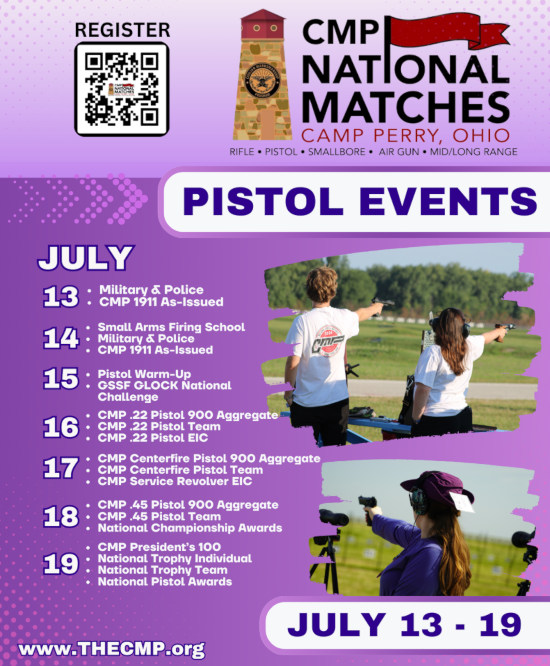
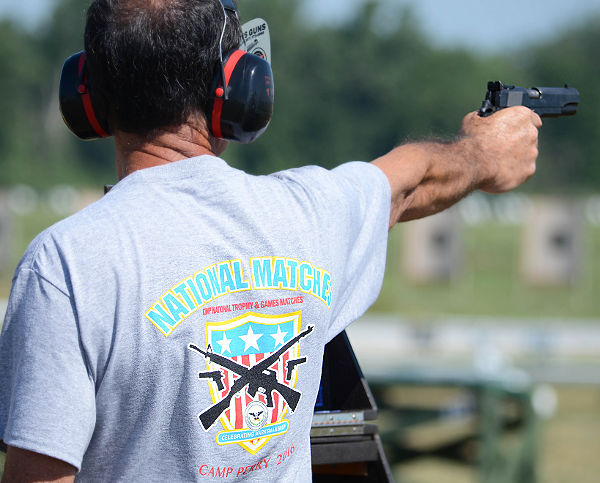
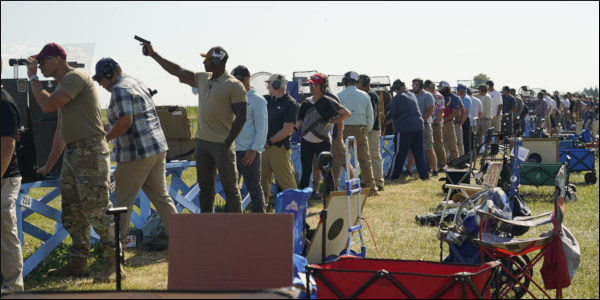
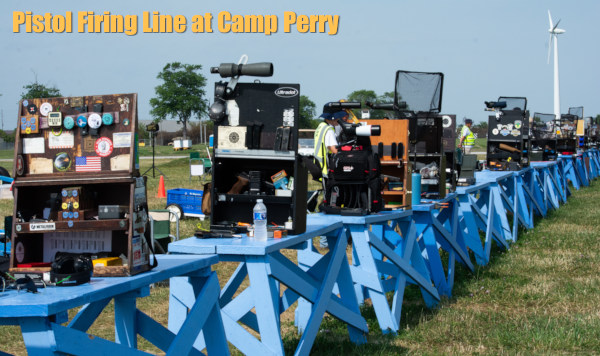
There will be major rimfire and centerfire pistol competitions at the 2025 CMP National Matches at Camp Perry, Ohio. Hundreds of shooters will participate in these popular individual and team events, which commence in mid-July.
The pistol competitions begin on July 13, 2025 with Military & Police and CMP 1911 pistol matches. These continue through the 14th, when the CMP will also conduct a Small Arms Firing School (SAFS) led by USAMU, Military Team, and CMP instructors. Following classroom instruction and practice on the range, SAFS participants will fire an M17 EIC Match.
On July 15 the GSSF Glock Challenge match will be held. On the 16th the .22 Rimfire 900 Aggregate, Team Matches, and Rimfire EIC matches will be held. In the past, these matches have been hugely popular — with 480+ Rimfire competitors from novices to experts.
Following the rimfire pistol matches, there will be centerfire Pistol Aggregate and Team Matches on July 17, followed by .45 Pistol Aggregate and Team matches on July 18. Then, on the 19th, the big President’s 100 Pistol Match, National Trophy Individual Match, and National Trophy Pistol Team Matches will be held. There will be plenty of talent on the firing line. In recent years, over 90% of the top 50 Service Pistol shooters were Distinguished. The Pistol Games conclude on Saturday the 19th, with Pistol Games Awards at the end of the day.
This video shows .45 ACP centerfire pistol competitors at Camp Perry
Interested in competing in the Camp Perry Pistol Matches this summer with either a .22 LR Rimfire pistol or centerfire pistol? It’s not too late to register. CLICK HERE for Pistol Match Online Registration.
Looking downrange at the 600-yard targets. All Camp Perry photos courtesy Dennis Santiago.
The National President’s 100 Match is a famous competition held at Camp Perry every summer. This year’s President’s 100 will take place on July 28, 2025, three weeks away. SEE 2025 Camp Perry NM Calendar.
This is a huge event. in recent years, there have been over 1000 ranked competitors from throughout the nation, making this one of the biggest rifle events of the year. Credit our friend Dennis Santiago for this report. Dennis has competed in the President’s 100 in recent years.
The President’s 100 Rifle Match is richly steeped in history. This unique match was first held in 1878. Above is the view from the line at 600 yards. The top 100 competitors overall in the President’s Rifle Match are designated as the President’s 100. They receive President’s 100 medallions and certificates.
President’s 100 Shoot Off — The Top 20 shooters compete in the Shoot-Off.
President’s 100 Course of Fire
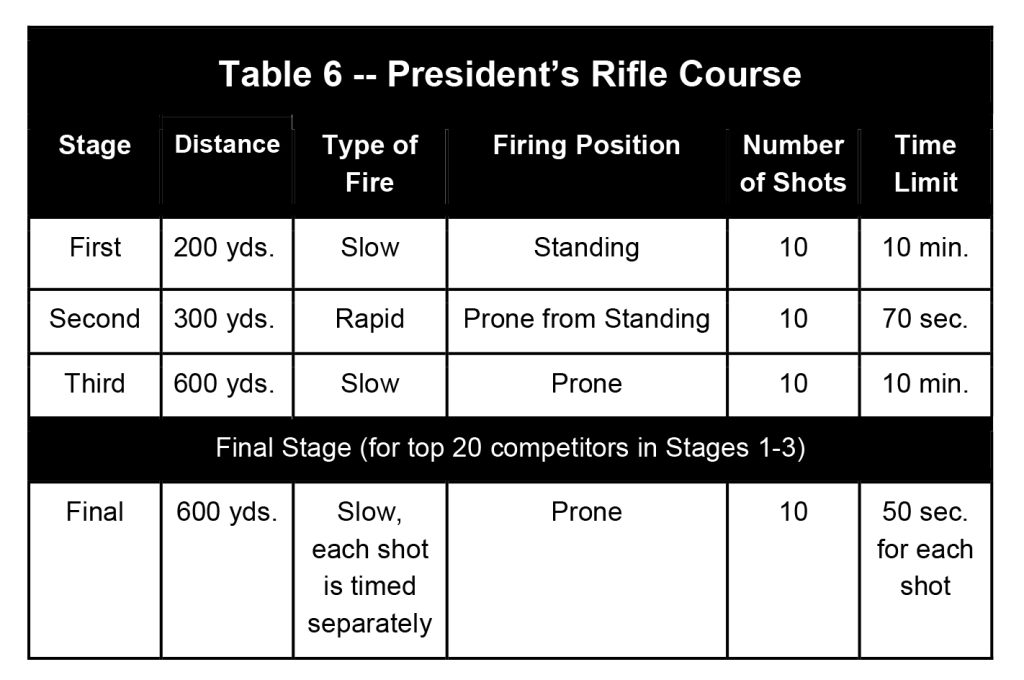
There is a three-yardage, four-stage Course of Fire for the President’s Rifle Match Course of Fire. Firing is done on the SR target at 200 and 300 yards and the MR target at 600 yards. Scores in stages 1-3 determine the President’s 100 and the final rankings of competitors in 21st place and below. Scores in stages 1-4 determine the match winner and the final rankings in places 1-20. If there is a tie for first place (equal total and X-count), the tied shooters will continue to fire one-shot-at-a-time until the tie is broken. No sighters are permitted in National Trophy Rifle Matches.
Origins of the President’s Match The National Rifle Association’s President’s Match was instituted in 1878, as the American Military Rifle Championship Match. In 1884, the name was changed to the President’s Match for the Military Rifle Championship of the United States. It was fired at Creedmoor, New York until 1891. In 1895, it was reintroduced at Sea Girt, New Jersey. Today, the match is held at Camp Perry, Ohio.
The President’s Match was patterned after the Queen’s Match for British Volunteers. That British competition was started in 1860 by Queen Victoria and the NRA of Great Britain to increase the ability of Britain’s marksmen following the Crimean War.
The tradition of making a letter from the President of the United States the first prize began in 1904 when President Theodore Roosevelt personally wrote a letter of congratulations to the winner, Private Howard Gensch of the New Jersey National Guard.
After a hiatus in the 1930s and 1940s, The President’s Match was reinstated in 1957 at the National Matches as “The President’s Hundred.” The 100 top-scoring competitors in the President’s Match were singled out for special recognition.
E-Targets at 2025 National Matches — Rimfire and Centerfire
After years of testing, the Civilian Marksmanship Program (CMP) will make full use of eTargets at the 2025 National Rifle Matches at Camp Perry, which run July 20 through August 9, 2025. The advanced Kongsberg eTargets will be used at all Highpower rifle matches, National Trophy Rifle competitions, and Rifle Games events. In addition the eTargets will be used for the Rimfire Sporter Match on July 20 and the National Mid/Long Range Matches in August. The use of eTargets eliminates the need for pit duty, drastically cutting down the duration of each match. CLICK HERE to learn more about Camp Perry eTargets.
These matches are conducted by the CMP and Ohio National Guard. Since their inception, the National Matches have become a huge, national shooting sports event with over 4,500 annual participants.
Editor: America’s birthday, the 4th of July, is just five days away. To help mark this historic occasion, today we feature a pair of patriotic rifles — a Light Gun and a big Heavy Gun both used in 1000-yard competition at the famed Williamsport Range in Pennsylvania. These rifles both feature handsome patriotic graphics featuring the U.S. Constitution and the Stars and Stripes.
Report by Andrew Murtagh
I’ve been a long range shooter for over two decades. Like most shooters in this game I’ve built, bought, and sold many rifles during my tenure. Here’s my tale of two special rifles, a Heavy Gun and a Light Gun, both sporting Patriotic stock graphics. I have shot both of these rifles in competition at Reade Range and The Original Pennsylvania 1000-Yard Club, aka “Williamsport”, where I have served as Club Vice-President.
My two Patriots were both acquired second-hand from a fellow shooter, Mike Bonchack. As purchased, they were very different from what they are now. I first decided to rechamber them using my reamers. The Light Gun (LG) is now chambered in 6×47 Lapua with 0.267″ neck, while the Heavy Gun (HG) is a 6mm Dasher with 0.266″ neck. After re-chambering the barrels, next I decided to get both guns up to maximum weight. The LG already had an adjustable weight system so it was easy to get it to 17 pounds. For the HG, I added an additional 25 pounds of lead/epoxy fill which was milled into the barrel channel and butt stock.
The Story Behind the Patriotic Graphics
I was initially going to have the LG painted until a close friend and fellow shooter, Tom Murtiff, suggested hydrographics. I landed on the patriotic theme because I’m a right-wing leaning Constitutionalist who still believes in the principles upon which our Founding Fathers built this nation. I wanted to express my support of our country’s Constitution and its Amendments. The search for the perfect patriot print was on.
This was my first hydrographic print experience and I was overwhelmed with the sheer number and variety of prints available. I spent a few days searching when I found the Amendment print. I then contacted Rick Schuh, owner of Boyzhid Hydrographics. He then prepped, hydro-dipped, and clear-coated the LG. Late in 2017 I purchased the HG and through a lengthy process in 2018 the metal work and stock additions were completed. I was now back in search of the perfect print. This was also lengthy, and I couldn’t find anything that spoke to me except for a suggestion to have “twin” rifles. I liked the idea — a pair of “Patriots!”
Rick was again employed to dip the Heavy Gun. That became a real undertaking because the stock alone (no metal attached) now weighed 35 pounds. He had to manufacture reinforced hangers to apply the graphics without flaw. The stock came out perfect to my eye, but not to his. On the bottom, which is rarely seen on any HG, he airbrushed a small flag to cover an area that stretched the print. Rick also made a jeweled plate for the toe of the butt.
I’m including this image so everyone can see Rick’s extra effort to make the HG perfect. I often joke with him about the added work no one would see. Well now the world can view his workmanship.
1000-Yard Heavy Gun Specifications:
Kelbly Stolle F-Class Panda dual-port, right eject with Kelbly Picatinny rail
Modified Ryan Miller HG stock bedded/pillared/weighted by David Powley
Bartlein 1:8.5-8″ gain-twist 0.236″ bore barrel
— chambered in 6mm Dasher 0.266″ neck by David Powley
Ryan Miller barrel-block fitted with nylon bushing by David Powley
Harrell’s muzzle brake
Jewell trigger
Optic One: NightForce 12-42x56mm NXS in Vortex rings
Optic Two: Leupold 7-35x56mm Mark 5 HD in Leupold rings
1000-Yard Light Gun Specifications:
BAT Machine B Action RB/LP/RE
McMillan MBR stock bedded by David Powley
Bartlein 1:8″-twist 0.237″ bore 30″ barrel
— chambered in 6×47 Lapua 0.267″ neck by David Powley
Harrell’s radial muzzle brake
Jewell trigger
NightForce 15-55x52mm Competition Scope in Harrell’s rings
Stock Graphics: Both rifles share a Patriot Constitution Hydrographic print (and clear-coat) by Rick Schuh of BoyzHid Hygrogaphics.
How to Succeed in the 1K Benchrest Games — Q & A with Andrew
Q: How Do You Choose a Chambering/Cartridge for a particular Match or Relay?
Andrew: Cartridge choice depends on the wind forecast. I always have several rifles with particular cartridge/loads for each depending on the forecast. If it’s a light wind day, say 4 to 8 mph with light gusts, I’ll be shooting either a 6×47 Lapua or a 6mm Dasher. If it’s blowing around 10 to 12 mph, I’ll campaign a 6×47 on its high node to get it down range flat. But if it’s really blowing or constantly changing direction, I shoot a big .300 WSM with either 200gr or 210gr bullet.
Q: What Is Your Load Development Method?
Andrew: Initial load development is always done over the chronograph at 100 yards until I get low ES/SD for 5 shots utilizing the same 10 pieces of absolutely perfect brass. Once I’m satisfied with the raw data I move to 1000 yards with a set of match brass and shoot 5-shot strings to find the best-performing exact powder charge. I have found this is usually within 0.20 grains of what performs well over the chronograph.
Q: What Brass, Primers, Powders, and Bullets Do You Use?
Andrew: I use Lapua brass for all things 6mm and Norma brass for my big .30 Cal stuff. I never change primers and shoot CCI BR2s or BR4s. I’m a Varget and H4350 fan. I’ve tried other powders, but they never were fruitful at 1K. Currently the only bullets I shoot are Sierra Match Kings. In the 6mm Dasher and 6×47 Lapua I use the 6mm 107gr SMK. In my .300 WSM I use .308-cal 200gr and 210gr SMKs.
Q: What Advice Do You Have for Novice 1000-Yard Competitors?
Andrew: Leave your ego at home and be willing to learn each and every time you come to the range. The discipline evolves rapidly and so must the shooter. It won’t take long to get left behind and become extremely frustrated with the game if you are not willing to learn and adapt. Find a tutor who is a great shooter and who is willing to mentor you. John Hoover and Tom Murtiff helped me and are very dear friends and great 1000-yard shooters. Believe me, having a good mentor takes years off the learning curve. Lastly, enroll in the Benchrest Shooting School offered by The Original Pennsylvania 1000 Yard Benchrest Club. I’m an instructor there and I, along with all the cadre, will help new shooters rapidly advance their skills.
Q: What’s the Secret to Judging the Wind? (In this discipline there are no target markers after each shot.)
Andrew: That’s the million-dollar question. What I do is find the condition that seems to hold. Once I’m committed into the record string, I follow it to the end. At Williamsport the wind flags can change at every distance so you simply need to pick one flag and hope it’s the one that remains truthful.
Long Range Competition Advice from a Leading 1K Benchrest Competitor
FIVE Key points to remember when shooting 1000-Yard benchrest
1. Be positive and have a clear state of mind when competing.
2. Bench set-up and shooting mechanics must always be the same — every shot. Then follow the shot through your optic.
3. Shoot two (2) shots before making a scope adjustment unless you’re under a minute of the sighter period.
4. Trust yourself and your equipment. You never want to second guess anything you put on the line.
5. Once you commit to shooting your record string, DO NOT STOP.
Andrew wanted to give credit to the many talented guys who have helped with his rifle builds and his reloading equipment. In alphabetical order, these are Mike Bonchack, John Hoover, Tom Murtiff, David Powley, and Rich Schuh (Boyzhid Hydrographics).
BONUS Topic — Case Prep and Loading for 1000-Yard Benrchest
Accurate loading, in my opinion, all starts with perfect brass. I always use Lapua or Norma brass, and when I buy it I try to purchase no less than 500 of the same lot. Most shooters sort by weight and I do as well, but it’s the last thing I do instead of the first. My reasoning behind this is simple, if I’m going to uniform primer pocket, ream and debur flash holes, turn necks, trim cases to length I’m removing lots of material. Therefore the weights change drastically from where they started. That said weight sort at the end, period. I do the entire lot at one time — a labor of love.
Barrel-maker Dan Lilja’s website, RifleBarrels.com has an excellent FAQ page that contains a wealth of useful information. On the Lilja FAQ Page you’ll find answers to many commonly-asked questions. For example, Dan’s FAQ addresses the question of barrel life. Dan looks at factors that affect barrel longevity, and provides some predictions for barrel life, based on caliber, chambering, and intended use.
NOTE: This article was very well-received when it was first published. We are reprising it for the benefit of readers who missed it the first time.
Dan cautions that “Predicting barrel life is a complicated, highly variable subject — there is not a simple answer. Signs of accurate barrel life on the wane are increased copper fouling, lengthened throat depth, and decreased accuracy.” Dan also notes that barrels can wear prematurely from heat: “Any fast varmint-type cartridge can burn out a barrel in just a few hundred rounds if those rounds are shot one after another without letting the barrel cool between groups.”
Q. What Barrel Life, in number of rounds fired, can I expect from my new barrel?
A: That is a good question, asked often by our customers. But again there is not a simple answer. In my opinion there are two distinct types of barrel life. Accurate barrel life is probably the type most of us are referencing when we ask the question. But there is also absolute barrel life too. That is the point where a barrel will no longer stabilize a bullet and accuracy is wild. The benchrest shooter and to a lesser extent other target shooters are looking at accurate barrel life only when asking this question. To a benchrest shooter firing in matches where group size is the only measure of precision, accuracy is everything. But to a score shooter firing at a target, or bull, that is larger than the potential group size of the rifle, it is less important. And to the varmint hunter shooting prairie dog-size animals, the difference between a .25 MOA rifle or one that has dropped in accuracy to .5 MOA may not be noticeable in the field.
The big enemy to barrel life is heat. A barrel looses most of its accuracy due to erosion of the throat area of the barrel. Although wear on the crown from cleaning can cause problems too. The throat erosion is accelerated by heat. Any fast varmint-type cartridge can burn out a barrel in just a few hundred rounds if those rounds are shot one after another without letting the barrel cool between groups. A cartridge burning less powder will last longer or increasing the bore size for a given powder volume helps too. For example a .243 Winchester and a .308 Winchester both are based on the same case but the .308 will last longer because it has a larger bore.
And stainless steel barrels will last longer than chrome-moly barrels. This is due to the ability of stainless steel to resist heat erosion better than the chrome-moly steel.
Barrel Life Guidelines by Caliber and Cartridge Type
As a very rough rule of thumb I would say that with cartridges of .222 Remington size you could expect an accurate barrel life of 3000-4000 rounds. And varmint-type accuracy should be quite a bit longer than this.
For medium-size cartridges, such as the .308 Winchester, 7×57 and even the 25-06, 2000-3000 rounds of accurate life is reasonable.
Hot .224 caliber-type cartridges will not do as well, and 1000-2500 rounds is to be expected.
Bigger magnum hunting-type rounds will shoot from 1500-3000 accurate rounds. But the bigger 30-378 Weatherby types won’t do as well, being closer to the 1500-round figure.
These numbers are based on the use of stainless steel barrels. For chrome-moly barrels I would reduce these by roughly 20%.
The .17 and .50 calibers are rules unto themselves and I’m pressed to predict a figure.
The best life can be expected from the 22 long rifle (.22 LR) barrels with 5000-10,000 accurate rounds to be expected. We have in our shop one our drop-in Anschutz barrels that has 200,000 rounds through it and the shooter, a competitive small-bore shooter reported that it had just quit shooting.
Remember that predicting barrel life is a complicated, highly variable subject. You are the best judge of this with your particular barrel. Signs of accurate barrel life on the wane are increased copper fouling, lengthened throat depth, and decreased accuracy.
Benchrest Barrel Life — You May Be Surprised
I thought it might be interesting to point out a few exceptional Aggregates that I’ve fired with 6PPC benchrest rifles with barrels that had thousands of rounds through them. I know benchrest shooters that would never fire barrels with over 1500 shots fired in them in registered benchrest matches.
I fired my smallest 100-yard 5-shot Aggregate ever in 1992 at a registered benchrest match in Lewiston, Idaho. It was a .1558″ aggregate fired in the Heavy Varmint class. And that barrel had about 2100 rounds through it at the time.
Another good aggregate was fired at the 1997 NBRSA Nationals in Phoenix, Arizona during the 200-yard Light Varmint event. I placed second at this yardage with a 6PPC barrel that had over 2700 rounds through it at the time. I retired this barrel after that match because it had started to copper-foul quite a bit. But accuracy was still good.


The .17 Hornady Magnum Rimfire (HMR) was introduced in 2002 by Hornady as a high-velocity, rimfire cartridge derived from the .22 Magnum case necked down to .17-caliber. The .17 HMR gained popularity among varmint hunters and target shooters for its good accuracy and hitting power out to 200 yards or more — all with low recoil and relatively low cost (compared to centerfire ammo).











 The National Rifle Association’s President’s Match was instituted in 1878, as the American Military Rifle Championship Match. In 1884, the name was changed to the President’s Match for the Military Rifle Championship of the United States. It was fired at Creedmoor, New York until 1891. In 1895, it was reintroduced at Sea Girt, New Jersey. Today, the match is held at Camp Perry, Ohio.