Before you load that nice new cartridge brass for the first time, run an expander mandrel down the case necks. This will iron out dents and provide more uniform neck tension. Chose a mandrel diameter that provides appropriate neck tension.
Lapua brass is so good that you’ll be tempted to just load and shoot, if you have a “no-turn” chamber. However, some minimal case prep will ensure more uniform neck tension. Keeping your neck tension very uniform allows more consistent bullet seating. That, in turn, usually yields better accuracy, and lower Extreme Spread and Standard Deviation (ES/SD). Lapua brass, particularly 6mmBR, 6.5×47, 6.5 Creedmoor, and .308 Win comes from the factory with tighter-than-optimal necks. Before you seat bullets, at a minimum, you should inside chamfer the case mouths, after running an expander mandrel down the necks. The expander mandrels from both Sinclair Int’l and K&M will both leave the necks with enough neck tension (more than .001″) so you can then seat bullets without another operation. We suggest putting a bit of lube on the mandrel before running it down the necks — but remove any lube that gets inside the necks before seating bullets.
Both Sinclair and K&M Tools make a die body specifically to hold expander mandrels. The Sinclair version, is shown above. This $45.99 unit fits caliber-specific expander mandrels ($10.99) which measure approximately .001″ less than bullet diameter for each caliber. This is an updated “Gen II” design that completely captures the mandrel within the die so the mandrel cannot pull out. It also has an O-ring in the die cap that allows the mandrel to self-center within the case neck. Brownells offers two sizes of Sinclair die bodies for expander mandrels: .17 -.338 Caliber (#749011715 $48.99); and .357 – .50 caliber (#749008843, $48.99). All Generation II dies are machined from stainless steel and the standard diameter 7/8-14 dies include the Sinclair Stainless Steel Split Lock Ring.
Once you run the Sinclair expander mandrel down the necks of Lapua brass, after you account for brass spring-back, you’ll have about .002″ neck tension*. This will make the process of seating bullets go much more smoothly, and you will also iron out any dents in the case mouths. Once the case mouths are all expanded, and uniformly round, then do your inside neck chamfering/deburring. The same expander mandrels can be used to “neck-up” smaller diameter brass, or prepare brass for neck-turning.
Forum member Mike Crawford adds: “These expanders can also reduce runout from offset seating. Prior to bullet seating, expand the sized necks to force thickness variance outward. With the Sinclair system, the necks will springback fine, and will not be pulled out of center. This leaves plenty of tension, and bullets seated more centered. I do this, even with turned necks, to get improved seating.”
Mandrels vs. Expander Balls on Decapping Rods
If you haven’t acquired an appropriate expander mandrel for your brass, but you DO have a full-length sizing die with an expander ball, this will also function to “iron out” the necks and reduce tension. However, using a die with an expander ball will work the necks more — since you first size them down, then the ball expands them up again. Typically (but not always), run-out is worse when using an expander ball vs. an expander mandrel.
* This .002″ tension is what we have observed with Lapua 6mmBR, 6.5×47, 6.5 Creedmoor, and .308 Win brass. This might vary with much smaller or larger cases, and of course a different brand of brass might yield different results. If you get too little tension with your current mandrel, you can get a smaller-diameter mandrel from 21st Century Innovation which offers stainless, Black Nitride, or Titanium nitride versions. The Nitride models have noticeably less friction.
“The overturning moment MW tends to rotate the bullet about an axis, which goes through the CG (center of gravity) and which is perpendicular to the plane of drag….
Ruprecht Nennstiel, a forensic ballistics expert from Wiesbaden, Germany, has authored a great resource about bullet behavior in flight. Nennstiel’s comprehensive article, How Do Bullets Fly, explains all the forces which affect bullet flight including gravity, wind, gyroscopic effects, aerodynamic drag, and lift. Nennstiel even explains the rather arcane Magnus Force and Coriolis Effect which come into play at long ranges. Nennstiel’s remarkable resource contains many useful illustrations plus new experimental observations of bullets fired from small arms, both at short and at long ranges.
Shadowgraph of .308 Winchester Bullet
A convenient index is provided so you can study each particular force in sequence. Writing with clear, precise prose, Nennstiel explains each key factor that affects external ballistics. For starters, we all know that bullets spin when launched from a rifled barrel. But Nennstiel explains in greater detail how this spinning creates gyroscopic stability:
“The overturning moment MW tends to rotate the bullet about an axis, which goes through the CG (center of gravity) and which is perpendicular to the plane of drag, the plane, formed by the velocity vector ‘v’ and the longitudinal axis of the bullet. In the absence of spin, the yaw angle ‘δ’ would grow and the bullet would tumble.
If the bullet has sufficient spin, saying if it rotates fast enough about its axis of form, the gyroscopic effect takes place: the bullet’s longitudinal axis moves into the direction of the overturning moment, perpendicular to the plane of drag. This axis shift however alters the plane of drag, which then rotates about the velocity vector. This movement is called precession or slow mode oscillation.”
Raise Your Ballistic IQ
Though comprehensible to the average reader with some grounding in basic physics, Nennstiel’s work is really the equivalent of a Ph.D thesis in external ballistics. You could easily spend hours reading (and re-reading) all the primary material as well as the detailed FAQ section. But we think it’s worth plowing into How Do Bullets Fly from start to finish. We suggest you bookmark the page for future reference. You can also download the complete article for future reference and offline reading.
Starline Brass offers a series of videos with helpful reloading tips. Focused primarily on pistol cartridges, these short videos can help anyone get started with metallic cartridge reloading. If you load pistol rounds on a progressive, this video series is particularly helpful. The on-camera host is Hunter Pilant, son of Carroll Pilant of Sierra Bullets.
Preventing Double Charges
Tip: Use a bulky powder that fills your case more than half way with a correct charge. This will overfill the case if it is double-charged, making it very difficult to seat a bullet.
Tumble New Brass Before Loading the First Time
Tip: Tumble new pistol cartridge brass in used media for 30 minutes before loading for the first time. This will add enough graphite (carbon residue) to smooth case entry into dies. You can also lube the case mouths with graphite, or use spray lube.
Powder Through Expander — How to Eliminate Hang-ups
Tip: When loading pistol brass with a progressive press, sometime the powder-through expander is hard to remove, especially with short cases. There are two fixes — first, try deburring the inside of the case mouth on your cases. Second, the radius of the powder through expander plug can be modified to smooth entry and exit (see photo). Starline will do this modification for free.
At the request of our readers, we provide select “Deals of the Week”. Every Sunday afternoon or Monday morning we offer our Best Bargain selections. Here are some of the best deals on firearms, hardware, reloading components, optics, and shooting accessories. Be aware that sale prices are subject to change, and once clearance inventory is sold, it’s gone for good. You snooze you lose.
NOTE: All listed products are for sale to persons 18 years of age or older. No products are intended for use by minors.
1. Creedmoor Sports — Berger Sale 6mm, 6.5mm, 7mm, .308
⏺ Top quality match and hunting bullets with major savings
Right now Creedmoor Sports is running a sale on popular, ultra-high-quality Berger Bullets. Currently a wide range of Berger Hybrid Target bullets are on sale in 6mm, 6.5mm, 7mm and .308 calibers. These bullets are a top choice for multiple competition disciplines including F-Class, 600-yard Benchrest, and PRS/NRL. NOTE: Along with the bullets on sale, Creedmoor has 6.5 Creedmoor Berger Hybrid Target ammunition on sale also.
2. CDNN Sports — Ruger American Gen II Rifle w/ Scope, $599.99
⏺ Great deal for American-made hunting rifle with Bushnell scope
Need a rifle for your fall hunt? Save up to $149 on this Ruger American Rifle combo at CDNN Sports. This gray-stocked rifle comes complete with a 4-12x40mm Bushnell hunting scope, and 20″ fluted barrel (with brake). Choose .204 Ruger, .223 Rem, .243 Win, .308 Winchester, or .450 BM chamberings. In addition, for the same $599.99 price, there are versions with FDE tan stock or green stock and 16.1″ or 16.4″ barrels offered in .223 Rem, 300 Blackout, and .450 BM. All these Ruger American Gen II rifles come with 4-12x40mm Bushnell scope and rings, adjustable trigger, and Cerakote metal finish.
3. EuroOptic — Athlon Scope Sale, Save up to 48%
⏺ Buyers rate these Athlon scopes as great for the price
Need a great scope at a big discount? Consider the very affordable yet excellent Athlon Optics riflescopes. Right now they are discounted up to 48% at EuroOptic.com. With a wide array of options you can pick up something for AR shooting, PRS/NRL, Benchrest competition, or Long-range hunting. Magnification choices run from 1-6X zoom in the Athlon Midas BTR compact scopes up to 4.5-30X in the Athlon Ares ETR series scopes with 34mm tubes. For a hunting rig, consider the Athlon Midas TAC 4-16x44mm DD SF — it’s now on sale for just $389.99, a 41% savings off the $662.42 regular price.
4. Midsouth — Lee Challenger Press with BONUS Die Set, $79.99
⏺ Good LEE Press on Sale with FREE DIES
The LEE Challenger is the world’s best-selling single station press. The latest Gen III Challenger features an ergonomic lever plus a convenient tube for spent primers. Right now, to mark its 40th Anniversary, LEE is offering a FREE die set with the purchase of the LEE Gen III Challenger Press. Choose one of four cartridge types: .223 Rem, 9mm Luger, .38 SPL/.357 Mag, and .45 ACP (.44 SPL/.44 Mag is also listed but is out of stock). Another good feature of the LEE Press is the Breech Lock Quick Change Die System — change dies instantly with a twist of the wrist.
5. Palmetto SA — S&W Optics-Ready 9mm M&P Shield, $701.99
⏺ Popular 9mm compact pistol with installed red dot sight
Smith & Wesson took the power and features of the full sized M&P pistols and put them into a slim, lightweight pistol — the M&P Shield 9mm. This is an easy-to-conceal 9x19mm slim pistol has a single-stack magazine and ships with a modern 4 MOA Red Dot sight installed on the slide. This pistol has a Armornite corrosion-resistant finish. Two magazines are included — one flush-fit and one with extended base. Overall this is a very good choice for a CCW handgun.
6. Amazon — Caldwell Deadshot Shooting Bag Combo, $27.80
⏺ Good, inexpensive set-up for sighting-in hunting rifles
If you need an inexpensive set of bags to zero your hunting rifle this fall, consider the Caldwell DeadShot Front and Rear Bag combo. The front bag can also be used in PRS/NRL matches for support. NOTE: Both front and rear bags come filled with corn cob media to allow for immediate use. These bags can be used on virtually any surface, and are stable on wood or concrete benches or rotating shooting stand
7. Amazon — Uikro Shooting Mat, $23.98
⏺ Large, well-padded, waterproof roll-up mat under $25
Having a good, comfortable and durable shooting mat is essential for prone shooting. You can spend over $140 on some mats, but a great, affordable option is the $24 Uikro folding mat. This has ample padding and features moisture-resistant 600D Oxford material for durability. This 1.8-lb shooting pad conveniently folds up to 7.9″L x 6.3″W x 2.7″H. With a portable handle, this mat is easy to transport and it can also be attached to a backpack.
8. Midsouth — 1000 rds CCI Blazer 115gr 9mm, $249.99
⏺ Very good, reliable and consistent 9mm pistol ammo
CCI makes very reliable pistol ammo with reloadable brass cases. Right now you can get 1000 rounds of CCI Blazer 9mm FMJ ammo for just $249.99 at Midsouth. That price works out to just $12.50 per 50-round box — a good price. This very affordable 115gr Blazer 9mm ammo is excellent for practice/training, and it is more reliable than commercial reloads.
9. Amazon — Wheeler Screwdriver Kit, $14.99
⏺ Handy kit with Standard, Hex, Phillips, and Torx Bits
Having the right tools is vital when working on guns. We recommend the Wheeler Space Saver Screwdriver Set with Magnetic Handle. This takes up little space on your bench, but contains a durable and comprehensive set of 26 bits of four types. Included with the standard, Phillips, Hex, and Torx bits, is a 2″ long #2 Phillips bit which is ideal for recoil pad installation, and a hex-to-square conversion bit which allows you to use 1/4″ square drive sockets and other attachments.
10. Amazon — MTM R-100 Ammo Box, $17.99 and up
⏺ Best 100-rd ammo box, securely holds cartridges nose up or nose down
For transporting ammo to the range, we like the MTM R-100 Deluxe ammo box (#ad). These durable R-100 flip-top ammo boxes provide excellent protection for your ammo. When rounds are in the nose-down position special fingers in each hole prevent bullets from hitting the bottom of the box, thereby preventing tip damage. On Amazon there are different prices for R-100 boxes for various cartridge types. Prices start at $17.99 for one R-100 box. There is also a choice between opaque green R-100 boxes and semi-transparent blue R-100 boxes. We like being able to see the cartridges inside the box with the blue design. The most popular blue box, for 22-250 to .30-06 cases, is currently $18.85 on Amazon. This works for all these cartridge types: 22-250, 6mm PPC, 6mmBR, 6 Dasher, .243/.270/.308 Win, 25-06, 6.5 Creedmoor, 6.5×55, 6.5-284, 7.62×39, 7mm-08 Rem, .30-06 Springfield and more.
As an Amazon affiliate, this site can earn revenues through sales commissions.
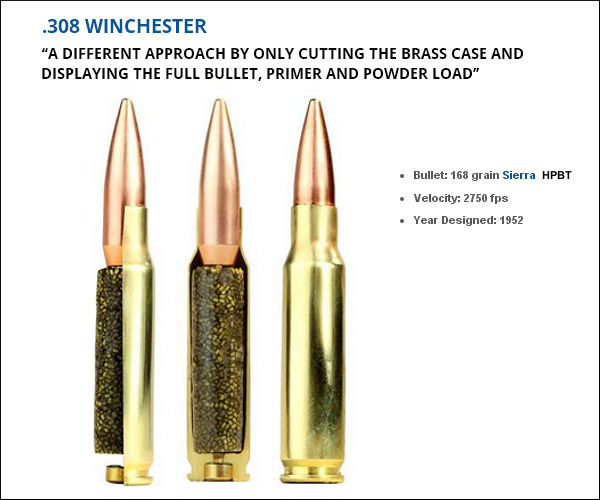
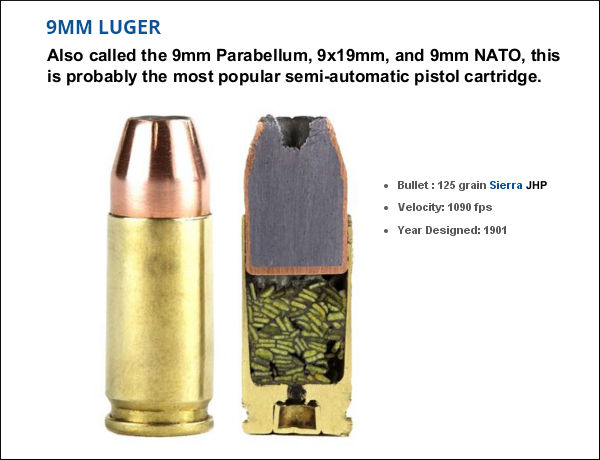
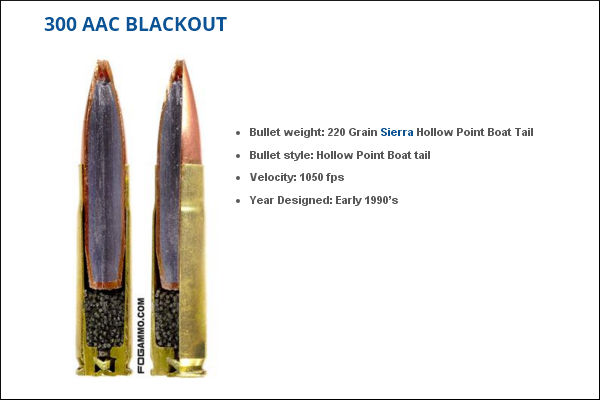
Here’s something you don’t see every day — the inside of loaded cartridges, sliced halfway through. This lets you see how bullet core, jacket, cartridge case, powder, and primer all fit together. Give credit to the folks at FOG Ammunition for creating this interesting series of cut-through ammo images. We show four cartridges here: the .308 Winchester, 9mm Luger, 300 BLK, and .50 BMG. You’ll find two more (the .223 Remington and .45 ACP) on the originalFOG Ammo Blog Article.
This .308 Winchester model took on a different approach by only cutting the brass case and displaying the full bullet, primer and powder load. A spec amount of powder was used to create the model powder form. An estimated 10% volume was added during the forming process, along with an undetermined amount of air pockets.
This bisection is a 9mm Luger Jacketed Hollow Point round with flake powder held together with super glue. After this self-defense round was cut by a trained professional the round was polished by hand. This might look like stick powder, but those are in fact flakes stacked up in cross-section. Designed in 1901 by Georg Luger, this popular cartridge is used by civilians, military, and law enforcement.
For this model of the .300 AAC Blackout (aka 300 BLK), a Dremel tool was used to create a pie cut within the bullet and brass case. A measured amount of power, roughly 65% of spec charge, was placed inside the case with super glue. This cartridge was originally optimized for subsonic use with a suppressor, so the amount of powder used is small relative to the nominal case capacity. That leaves more room for the relatively large .30-caliber bullet.
Last but definitely not least is the .50 Caliber BMG round (aka .50 Browning Machine Gun). Famed for its wartime use in the M2 Machine gun, the .50 BMG round is also used in civilian Long Range competitions. A typical .50 BMG cartridge holds over 225 grains of powder. That’s almost ten times the amount in a 5.56×45 NATO Round! To demonstrate the size of the .50 BMG, check out that .223 Rem for comparison.
Shown are funnel with ultra-long drop tube (which helps get more kernels in the cases), RCBS Chargemaster (in wood box), and Hood Press (similar to Harrell’s Combo press).
Loading at the range remains important in the Benchrest for Group discipline. In a Special Report below, past IBS President Jeff Stover explains how loading methods (and hardware) have evolved over the years. The advent of accurate, affordable electronic powder dispensers, such as the RCBS ChargeMaster and Frankford’s new Intellidropper, have changed the game and made it easier to load efficiently at the range. And quality manual powder measures are fast and can be very consistent, with a little practice. Loading at the range permits competitors to tune their load to the conditions, change seating depths, or even choose different bullets to suit the barrel’s preferences on any given day.
Although pre-loading is not uncommon, most 100/200-yard group shooters usually load at the match, often between relays. The goal is to shoot smaller groups by staying “in tune”. In a game where 5-shot groups “in the 1s and Zeros” is the goal, tuning loads for the conditions helps deliver match-winning accuracy. Nearly all competitors in this short-range discipline shoot the 6mm PPC cartridge, or a PPC variant.
Loading at the Range — Then and Now
In benchrest shooting for group, loading at the range has been de rigueur for decades. In the Score discipline, preloading is usually the custom. The main reason is that, in Score competition, only one Aggregate (warm-up match and five record targets) per day is usually shot. That would be less than 50 shots, assuming a few sighter shots. Also, the 30BR, the dominant Benchrest-for-Score cartridge, is very amenable to pre-loading.
By contrast, the Group discipline includes 21 targets (two warm-ups and twenty record targets) over a weekend, usually shot with 6PPC-chambered rifles. Many times, the 6PPC shooters may tweak their loads through the day given changing atmospheric conditions or simply trying to find the correct tune to “dot up”. This term, “Dot up”, means the shots are essentially going through the same hole, or closely so.
Loading at the range was a bit different when benchrest competition was in its infancy. The 1951 book, Modern Accuracy by Bob Wallack, is the best of the early benchrest books. Copies can be found, from time to time, on eBay or Alibris. It is a fascinating survey of benchrest as it existed more than six decades ago. There’s even coverage of a controversial target that was argued over at the time. In it, there is a photo of Wallack using the rear bumper of a car at the bench to clamp his reloading tools. Things have come a long way compared to the range loading set-ups of modern shooters. Here you can see Bob Wallack way back in 1950:
Modern loading bench set-ups shown in this Special Report belong to top shooters Howie Levy, Bob Hamister, and Kent Harshman.
This impressive 15-round group was shot by Jim See of Elite Accuracy.
Different Shooting Disciplines Demand Different Levels of Precision/Accuracy
In the rapid-fire 3-Gun game, you could probably “clean” most stages with a 2-MOA rifle. By contrast, in the short-range group benchrest game, to compete with the best, you’ll need a rifle that shoots in the “ones” (i.e. 0.1-0.19 MOA) in perfect conditions. In 1000-yard F-Class competition, the top shooters want a rifle that will hold one-third-MOA of vertical at that distance.
What is your standard of accuracy? How good is “good enough”. Jim See, a skilled gunsmith and successful PRS competitor, recently answered that question for his tactical discipline. For the kind of matches Jim shoots, he likes to have a rifle that will hold half-MOA for five (5) shots, 3/4-MOA for 15 shots, and 1 MOA for twenty shots. Remarkably, Jim’s rifle can do that with factory ammo. Above is an impressive 15-shot group shot with .260 Remington Federal Premium Ammo.
“I say it all the time, my loads need to print 5 under 1/2″, 10 under 3/4″, and 20 under 1″. It’s simple, if a hot barrel will keep 20 rounds fired in succession under my standard it will be a good barrel and load for Precision Match Shooting. Federal Premium Gold Metal Match .260 with Sierra bullets made the cut for me today. 15 consecutive shots under 3/4 MOA.” –Jim See
It’s said that you “can never have too much accuracy”, but there are acceptable standards for each discipline, and they’re not the same. A 100/200 yard Benchrest shooter will be sorely disappointed with a rifle/ammo set-up that can only deliver half-MOA. On the other hand, a PRS competitor like Jim See can achieve great success with a lesser degree of precision. This means you can save time and money. You can run your barrels longer between cleanings, and you don’t have to go “full OCD” when loading your ammo. The PRS shooter does not need to weigh-sort primers, or load powder to single-kernel standards. Proof is the performance. Jim See recently took third place at the Spearpoint Shootout, and he has been a podium finisher at other events. Learn more about Jim’s gunsmithing and training operations at EliteAccuracy.com.
Download This Load Development Target
Jim’s target seemed a bit familiar. AccurateShooter.com created this Diamond and Dot Target a few years back. On each aiming point, there are high-contrast black horizontal and vertical lines for aligning your cross-hairs. The gray circle lets you see the bullet impacts above, without obliterating the red diamond, which is quite useful for precise aiming (we put fine cross-hairs on the points of the diamond). This target sheet includes data entry tables below each of the three aim points. There are many other free targets out there, but this format is very popular. We’re pleased to see Jim using it. You can download this and dozens of other FREE Targets from the AccurateShooter.com Target Page.
6.5 Creedmoor (right) shown with .308 Win (left) and .243 Win (center) for comparison.
Though most popular for competition applications (PRS and XTC), the 6.5 Creedmoor is also a capable hunting cartridge. A few seasons back Norma spotlighted the 6.5 Creedmoor cartridge and outlined the game-harvesting capabilities of Norma 6.5 Creedmoor factory ammunition. Here are highlights of that article, which may interest hunters this fall.
Origins of the 6.5 Creedmoor
Dave Emary, senior engineer at Hornady, asked fellow competitive shooters about their “wish list” for a mid-sized round with long-range potential. It needed to offer efficiency, good ballistics, fine accuracy, and reliable feeding from a magazine. To achieve these goals, Emary necked the .30 T/C to .264 caliber (6.5 mm). Dennis DeMille, then working at Creedmoor Sports, was also involved in the design (and naming) of the new cartridge type.
The shoulder on this 6.5 Creedmoor case is well to the rear, so long bullets with high ballistic coefficients can be used in short actions. The efficient Creedmoor case and its modest powder charge deliver hard hits on big game while keeping recoil modest. The case runs well in magazines sized for the .308 Winchester, and because it is efficient, the 6.5 Creedmoor delivers velocities very close to the .260 Remington (which is basically a 6.5-308 Win) with less powder. The 6.5 Creedmoor cartridge has shown excellent accuracy in PRS competition, though the 6mm Creedmoor has proven more competitive, given its reduced recoil. Overall the 6.5 Creedmoor has been a huge commercial success — the 6.5 CM is now one of the most-commonly chambered cartridges in new factory rifles.
Hunting with the 6.5 Creedmoor
by Wayne van Zwoll
I learned about the 6.5 Creedmoor by way of a rifle from Todd Seyfert at Magnum Research. The Remington 700 action wears a carbon-fiber barrel with a Krieger stainless core. GreyBull Precision added a stock and a modified 4.5-14X Leupold scope. Its 1/3-minute elevation dial is calibrated specifically for 130-grain boat-tail spitzers at Creedmoor velocities. “Spin the elevation dial to the distance in yards, and aim dead-on.” said GreyBull’s Don Ward. Prone with a sling, I was soon banging steel at 500 yards.
By the charts, the 6.5 Creedmoor is a superb cartridge for deer-size game. But I caught only a late elk season with this new rifle. The 6.5×55 and .260 had taken elk for me; surely the Creedmoor would as well. Alas, the close shot I’d wanted, to ensure precise bullet placement, didn’t come. When on the final evening Don and I spied a bull far off, there was no approach. “Your call,” he shrugged. “The air is dead-still.” I snugged the sling, prone, and dialed to the yardage. Ribs spot-lit by a sinking sun, the bull paused. Craaack! The animal spun, sprinted and fell. That shot was twice as long as any I’d ever attempted at elk.
Whitetail hunting with a Ruger 77, then a trip to sub-Saharan Africa with a T/C Icon, kept the 6.5 Creedmoor in my ammo pouch. The T/C dropped a Vaal Rhebok at 250 yards, in stiff wind. Shorter pokes on a variety of game produced consistently quick kills. I found the Creedmoor’s limit with an eland.
A high ballistic coefficient helped a Creedmoor bullet slice stiff wind 250 yards to this Vaal Rhebok.
Since then, I’ve seen several animals brought to bag by the 6.5 Creedmoor. And I’ve used it in a variety of rifles on paper and steel targets to 1,200 yards. It has become one of my favorite cartridges for deer-size game. Its mild report and recoil make it easy to shoot accurately. It seems an inherently accurate cartridge too. I’ve punched half-minute groups from production-class rifles. The proliferation of hunting loads for the 6.5 Creedmoor includes none better than Norma’s 130-grain Scirocco. This sleek, polymer-nose bullet, with its 15° boat-tail and a G1 BC over .550, flies very flat. In expansion and penetration tests, it opens reliably down to 1,750 fps, and drives straight and deep. A bonded bullet, it stays in one piece after high-speed impact, routinely retaining more than 80% of its original weight.
Story Tip from EdLongrange. We welcome reader submissions.
Ever wonder how rifles, actions, stocks, optics, suppressors, and ammo components are produced in factories around the world? Today’s Saturday at the Movies installment features fascinating videos filmed inside major firearms industry factories including BAT Machine, ZEISS, Norma, SAKO, Nosler, CCI and Federal.
BAT Custom Rifle Actions — Factory Tour and Owner Interview
BAT Machine Co. makes some of the finest custom actions you can buy. Numerous national and world records have been set with BAT actions. To create this video, Ultimate Reloader’s Gavin Gear visited the BAT Machine production center in Post Falls, Idaho. Gavin talked with BAT’s founder Bruce Thom. The video features extensive footage of advanced CNC machines used to produce the superb BAT actions. If you own a BAT action, or hope to acquire one some day, definitely watch this video. CLICK HERE for Full Story.
Norma Ammunition Factory — Cartridge Creation Start to Finish
Norma has released a fascinating video showing how bullet, brass, and ammunition are produced at the Norma Precision AB factory which first opened in 1902. You can see how cartridges are made starting with brass disks, then formed into shape through a series of processes, including “hitting [the cup] with a 30-ton hammer”. After annealing (shown at 0:08″), samples from every batch of brass are analyzed (at multiple points along the case length) to check metal grain structure and hardness. Before packing, each case is visually inspected by a factory worker.
The video also shows how bullets are made from jackets and lead cores. Finally, you can watch the loading machines that fill cases with powder, seat the bullets, and then transport loaded rounds to the packing system. Guys, watch this video! You won’t be disappointed. The camera work and editing are excellent — there are many close-ups revealing key processes such as annealing and head-stamping.
SAKO Factory Tour in Finland
SAKO produces some of the best hunting rifles you can buy. SAKO, along with its sister company Tikka, operates sophisticated production facilities in Finland. In the video below, Canadian journalists visit the SAKO factory where rifles are made. It is interesting to see how stocks are made and barrels are bored and contoured. SEE More HERE.
Nosler Bullet Manufacturing
Ever wanted to see how Nosler bullets and cartridges are made? Here’s your opportunity. The Rocky Mountain Elk Foundation (RMEF) has produced a video (“Quality First”) that offers a behind-the-scenes look inside Nosler’s Oregon factory that produces bullets, brass, and ammunition. RMEF representatives visited Nosler’s famously-guarded manufacturing plant to show the technology used by Nosler to produce bullets and ammunition. After the intro, this video illustrates Nosler’s bullet construction techniques with a cool animation sequence. The video then showcases the Nosler ballistics lab, inspection room, and packaging line. SEE more HERE.
Video Showcases Nosler Production Facility and Ballistics Lab
ZEISS Sport Optics
ZEISS is a world leader in lens and optics technology. Along with ultra-high quality lenses used in production of computer chips and special optics for high-tech medical equipment, ZEISS produces great optics for hunters and shooters. ZEISS lenses are renowned for their sharpness, clarity, and high light transmission. ZEISS has a new series of LRP S3 and LRP S5 First Focal Plane scopes which promise to be favorites among PRS/NRL competitors and long-range hunters.
Silencerco Suppressor Fabrication Start to Finish
Here’s a cool video that shows the entire production process for a SilencerCo Octane pistol suppressor start to finish. Beginning with the raw materials, this video shows a wide variety of cutting, milling, drilling, burnishing, fitting, metal bathing, surface finishing, and laser etching processes. If you have any interest in production methods you’ll want to watch this video all the way through, and maybe a second time.
Rimfire Ammo Production at CCI/Speer and Federal Factories
YouTube host 22Plinkster got a chance to tour the CCI/Speer production facility in Lewiston, Idaho. This large plant produces both rimfire and centerfire ammunition. While touring the plant, 22Plinkster was allowed to capture video showing the creation of .22 LR rounds from start to finish. This is a fascinating video, well worth watching.
This revealing video shows all phases of .22 LR ammo production including cupping, drawing, annealing, washing, drying, head-stamping, priming, powder charging, bullet seating, crimping, waxing, inspection, and final packaging.
Field & Stream Tours Federal Ammo Plant in Minnesota
A while back Field & Stream toured the Federal ammunition production facility in Anoka, Minnesota. This large plant produces both rimfire and centerfire ammunition. While touring the plant, the reporter was allowed to capture video showing the creation of .22 LR rounds from start to finish. This is a fascinating video, well worth watching. Click speaker icon for sound.
Note to Viewers — After Starting Video, Click Speaker Icon to HEAR audio!
The Manufacturing Process for .22 LR Rimfire Ammunition Shooting Sports USA explains: “Rimfire cartridge cases are the oldest self-contained cartridge in existence, having been in continuous production since the mid-1850s. Rimfire cases are drawn from a thin piece of brass and formed with a hollow rim. A priming compound is then forced into the case using centrifugal force, where it is charged with powder and a bullet is seated in the mouth of the case. The case is then crimped around the bullet to ensure sufficient push and pull when the round is fired. When the firing pin strikes the thin brass rim of the case, the hollow rim is crushed and the primer is ignited.” Source: SSUSA.org 9/2/2017.
Many visitors to the site ask us, “I’ve got a .223 and .308. What will a 6mmBR Norma (6BR) give me that I’m not getting already?” Well first you will probably average consistently smaller groups than your current .223 or .308 rifle (assuming the 6BR has a quality barrel and trigger). A good .308 Winchester can be superbly accurate, no question about that, but the lesser recoil of the 6BR works in the shooter’s favor over a long string of fire. Even with a Rem 700 or Savage action factory action, a 6BR with a benchrest stock, premium barrel, and a high-quality chambering job should deliver 5-shot groups in the high twos to mid-threes, provided you do your job. We have one 6BR rifle that shoots Lapua factory-loaded 6BR ammunition in the low twos and high ones. That’s exceptional, we admit, but it still shows how the 6BR is an inherently accurate cartridge, even with factory loads.
Compared to a .223, the 6BR offers a much better selection of high-BC projectiles, and will deliver considerably more power on the target. So it’s a better choice for hunters and 600-yard benchrest shooters. Compared to the .308 Win shooting 168gr MatchKings, a 6BR shooting 105-107gr bullets offers better ballistics all the way out to 1000 yards. Plus, for most people, the 6BR is just easier to shoot than a .308 Win. Recoil is less than half of the .308 Win cartridge. Both the .308 and 6BR chamberings offer good barrel life, but the 6BR uses 15-18 grains less powder, saving you money. On the other hand the .308 Win is the designated cartridge for F-TR and Palma shooting, so it may be a more versatile chambering for Long-Range competition. So which would we choose between the 6BR and the .308? Actually we think you should have both. The 6BR is a favorite cartridge out to 500 yards, and we like the .308 Win for F-TR. The .308 Win has shown outstanding accuracy, as displayed last week at the NRA F-class Nationals in Arizona.






 Norma has released a fascinating video showing how bullet, brass, and ammunition are produced at the


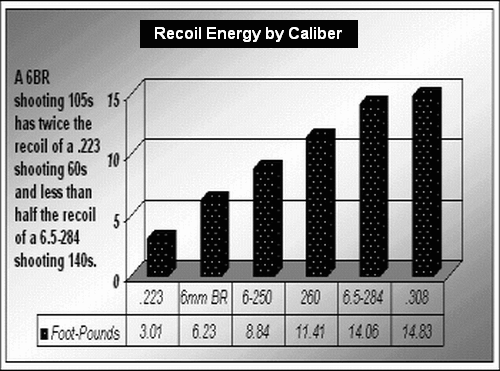
 Many visitors to the site ask us, “I’ve got a .223 and .308. What will a 6mmBR Norma (6BR) give me that I’m not getting already?” Well first you will probably average consistently smaller groups than your current .223 or .308 rifle (assuming the 6BR has a quality barrel and trigger). A good .308 Winchester can be superbly accurate, no question about that, but the lesser recoil of the 6BR works in the shooter’s favor over a long string of fire. Even with a Rem 700 or Savage action factory action, a 6BR with a benchrest stock, premium barrel, and a high-quality chambering job should deliver 5-shot groups in the high twos to mid-threes, provided you do your job. We have one 6BR rifle that shoots Lapua factory-loaded 6BR ammunition in the low twos and high ones. That’s exceptional, we admit, but it still shows how the 6BR is an inherently accurate cartridge, even with factory loads.


