GAP Grind PRS Competition and Vintage Sniper Rifle at Talladega — that’s what you get in a double-feature episode of Shooting USA TV, now available on YouTube. This is a killer episode, with great coverage of two rapidly-growing shooting sports. The GAP Grind is the biggest PRS tactical match of the year, while Vintage Sniper Rifle matches have proven popular with competitors of all ages, from 18 to 80. Learn all about these shooting disciplines in this 48-minute Shooting USA production. Photos, unless otherwise indicated, come from Ramia Whitecotton’s GAP GRIND 2016 photo album
PRS Competition — the GAP Grind
This Shooting USA episode features the Bushnell GAP Grind Pro-Am, a tough tactical/practical match in Tennessee with 300 competitors. Conducted in association with the Precision Rifle Series (PRS), the GAP Grind features a Pro/Am format — new shooters partner with an experienced shooters for the two-day, 25-stage event. This year John Scoutten teamed up with novice shooter Jen Hodson.
Yes this video includes the GAP Grind PRS match. Click the arrow and it should begin with the PRS segment, 28 minutes into the episode:
One stage required the use of “human support” by one’s team-mate. Here Shooting USA’s John Scoutten provides a strong shoulder for female competitor Jen Hodson.
Lots of Action, with 20+ Stages
The GAP Grind is a notoriously challenging, “high tempo” match with minimal down-time between stages. Over the course of 20+ stages, competitors will fire 200+ shots at a variety of steel, paper, moving, and reactive targets out to 1,200 yards. Targets vary in size/difficulty based on the shooter’s position, distance, and time allotted. Most stages include “stressors” — i.e. time limits or required movement(s).
On the first day of the Bushnell GAP Grind, teams are scored together. On the second day team members still work together but scores are logged individually. This is a difficult event with awkward positions, barriers, and other challenges. Targets vary in size, shape, and distance. One of the toughest targets is the 500-Yard Mover. And the shooting platform (below) offered a double-decker challenge…
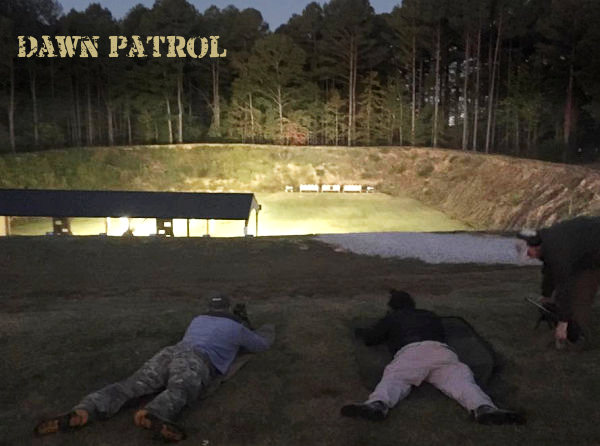
Here’s a “Dawn Patrol” shot from Bryan Sikes. He mastered this stage: “6:00 am cold bore — nailed it!”
Vintage Sniper Rifle Competition at Talladega
In this episode, Shooting USA features the Vintage Sniper Match at the CMP’s Talladega Marksmanship Park. This is a popular two-man team event, for shooter and spotter, using military rifles in service up to 1953. One added challenge is the time limit. The team has only 20 seconds to complete each shot — That’s 20 seconds for the spotter to read the conditions, and for the shooter to pull the trigger.
File photo from Vintage Sniper match at Camp Perry. At Talladega, there are video target monitors at each shooting station.
Guns of Grandfathers…
In this episode two USAMU marksmen, SGTs Daniel Crody and Robert Shoup, compete with an Springfield M 1903 A4 reproduction topped with a vintage optic. “For me it holds a little bit of sentimental value,” says SGT Crody. “I did have two grandfathers in World War II. It is definitely a pleasure holding a piece of history… and to be able to see and feel what these guys had as far as tools to operate with.”
“It’s a match that brings a different type of competitor out. It brings a nostalgic competitor out. You’ll see World War II time-period rifles, sniper-type rifles that were used during World War II, Korean War era,” says the CMP’s Chief Executive Officer, Mark Johnson. “The optics are either original optics or current reproduction of old optics.”
Team Applied Ballistics will soon release a new DVD on the science, skills, and strategy required for successful Extreme Long Range (ELR) shooting. The new DVD features a reality-style documentary following Team Applied Ballistics in the 2017 King Of 2 Mile (KO2M) competition. Team AB has now won this prestigious event two years in a row. Team shooter Mitchell Fitzpatrick won the KO2M title in 2016, followed by team-mate Derek Rodgers in 2017.
Bryan Litz tells us: “Applied Ballistics is proud to announce the release of our latest DVD: ELR Shooting With Applied Ballistics. With lessons learned from our successful 2016 KO2M campaign, you can see how the AB ELR team developed our equipment and approach through practice and careful analysis. Learn the essential elements of ELR competition from the top team in the sport.”
This documentary, filmed over the course of a year, shows Team Applied Ballistics preparing for, and competing in, the 2017 KO2M match. This presentation includes interviews from all Team AB members, along with tips on ELR shooting.Pre-Order the ELR DVD and Save $5.00 (Pre-Order Price $19.95)
2017 K02M Match-Winning Performance on Video
The video below shows Team Applied Ballistics shooter Derek Rodgers winning the 2017 King of 2 Miles event. This excellent video combines firing line and target-cam views. You can see the strings-of-fire at 2667 and 3028 yards. Then Watch Derek, after four misses, hit the last target with his fifth (and final) round! That plate was set at a mind-numbing 3368 yards (1.91 miles). Derek had Paul Phillips as a spotter and Emil Praslick as a wind coach — a very powerful team and it showed.
If you want to learn more about ELR shooting and how team Applied Ballistics achieves great results in ELR competition, we recommend an excellent article just released byShooting Sports USA. SSUSA’s Editor John Parker interviewed Team Applied Ballistics members Bryan Litz and Paul Phillips. Both men said that successful Extreme Long Range shooting requires solid team-work.
Bryan Litz (center) conferring with Team AB members Emil Praslick (L) and Doc Beech (R).
Paul Phillips explained: “ELR is very difficult. It requires a great shooter with 1/2-MOA accuracy, a really good wind coach and spotter to see impacts, trace and the ability to quickly negotiate and engage the targets. It’s one fluid team working together.”
Bryan Litz, Applied Ballistics founder, concurred: “Of all the various precision rifle disciplines, ELR shooting is particularly suited to a team approach. All aspects of ELR shooting are both highly challenging as well as critical to success. One individual is typically not able to stay on top of all the variables effectively enough to hit targets at extreme ranges all by themselves.”
Litz says superior wind-reading skills are vital in the ELR game: “One of the important challenges of hitting targets at long range is reading the wind. All the shooters on our team can read wind, but when we’re shooting a match, we put our strongest wind-reader in this position for all shooters. Emil Praslick is arguably the best in the world at putting a number on the wind. He’s got a well-rehearsed process that works in all scenarios. When Emil isn’t available, someone else on our team will apply his process and focus specifically on the wind.”
Think you need a relatively long case-neck for good accuracy? Think again. Stan Ware broke all the rules with his radical Wolfpup cartridge, proving that a near-no-neck design can deliver match-winning accuracy. Read on to learn how the Wolfpup works…
Retired gunsmith Stan Ware is a talented shooter who’s not afraid to think “outside the box”. Stan competes in both Hunter Benchrest (HBR) and Varmint for Score (VFS) disciplines. In his quest to build the ultimate Hunter Benchrest cartridge, Stan created the radical “Wolfpup” wildcat, based on a 6mmBR parent case. Noting the dominance of 30 BRs in VFS matches, Stan wondered if a stretched 30 BR could work in HBR competition. The challenge was case capacity. Under HBR rules the cartridge must hold at least 45.0 grains of water, equal to the capacity of the classic 30/30 case.
To get the requisite HBR case capacity, Stan figured he needed to boost the volume of a 30 BR case significantly, so he would have to move the shoulder forward — a lot. He did this by running a 30 BR reamer deeper and deeper, test-firing brass along the way. After three reamer passes, he ended up with the capacity he needed (the Wolfpup holds 45.3 grains of water). But then he looked at the finished product — a case with almost no neck, and he wondered “how could this possibly work?”.
From Trashbin to Winner’s Circle
Ware’s prototype Wolfpup ended up so short-necked, so unlike any “normal” cartridge, that Stan figured it was “dead on arrival”. Stan told us: “I said ‘this ain’t going to work’ and I threw the brass in the trash can. Honest. But later I thought I better shoot it and see what it does.” There was one problem — Stan didn’t have a seating die. He noticed the short neck provided a bit of tension after fire-forming, so he literally seated some bullets, BIB 118s and 125s, with his fingers. For powder he used H4198 and started with 35 grains, one grain more than a 30 BR load. Stan then did a pressure work-up: “I actually went up to 41.0 grains and didn’t have a sticky bolt. I ended up at 37.9 grains of Hodgdon 4198 — that gave 3150 fps, where the sweet spot is.” (Later testing revealed a second accuracy node at about 3020 fps, using 36.4 grains of H4198).
Stan’s radical short-necked Wolfpup shot great from the get-go. Once he found the right velocity node, the gun shot in the ones and zeros with both 7-ogive and 10-ogive bullets, both 118s and 125s. The Wolfpup proved easy to tune — it’s not finicky at all. And it’s a winner. Stan began shooting the Wolfpup in 2006 in both VFS and HBR matches and the ‘Pup’ started winning matches right away. In 2007, Stan won the Wisconsin State VFS Championship shooting the Wolfpup. In June 2010 at a Webster City, Iowa VFS match, Stan won the Grand Agg and posted high X-Count for the match, while placing first at 100 yards and second at 200 yards. How’s that for a cartridge that almost ended up in the trash bin?
Does Stan deserve an award for “most innovative benchrest cartridge design”? Stan chuckles at that notion: “I’m not a hero, not a genius. I really didn’t do anything. The fun part is thinking outside the box — for me anyway. Shooting is an age-old process of experimentation. You never learn it all.”
Why Does It Work?
How can such a radical case design perform so well? “That’s a good question,” Stan admitted. He then explained: “The 30 BR is inherently accurate, so I figured something based on the 30 BR should be accurate too. My personal belief is that the short neck doesn’t hurt you. Plus if the throat in the barrel is straight, the bullet can self-align. If the chamber is good, the bullet will self-center in the throat. In a regular case there’s not much room to do that, so a bullet can start off-center, and you don’t get the same results every time. A bullet in a conventional case is stopped from self-centering by the stiffer neck, particularly in a tight-clearance BR gun.”
Reloading the .30 Wolfpup
Stan’s Wolfpup chamber has a neck dimension of 0.330″. He turns his necks for a 0.327″ loaded round. Bullets are jammed .020″ forward of first contact with the lands. When he closes the bolt it pushes the bullet back in the case — almost a soft seat. Stan notes: “To start with I normally bump the shoulder .0005-.001″ so they go in easy. Just by doing that I get a little neck tension. I also use a bushing. Right now I’m running a .322, but it’s not particularly sensitive. I’ve tried one-thousandths increments up to a .325 bushing and couldn’t tell a lot of difference.” For bullet seating, Stan uses a Wilson 30 BR seater die into which he ran the chamber reamer. This gives perfect case fit during seating operations.
About the Illustrated Gunstock
You’ll notice Stan’s stock contains scenes from Vietnam and a quotation. Here’s the story. A Vietnam combat veteran, Stan served “in-country” with the Army’s 509th Non-Divisional Combat Unit (out of Fort Riley) from 1965-1966. Shortly before he left Vietnam, Stan went to a shop to have a souvenir lighter engraved. He asked the vendor for an appropriate inscription. The shop’s metal-worker engraved: “War is a tragedy. It takes mans’ best to do mans’ worst.” That message, along with the combat scenes, were hand-painted on Stan’s rifle by his wife Susan, a talented artist. She spent more than 20 hours painting the rifle stock.
On September 20-24, 2017, the CMP New England Games will take place in a scenic corner of Vermont (check out that photo above — is that nice or what?). Hosted by the Vermont State Rifle and Pistol Association and the Burlington Rifle and Pistol Club, the New England Games will be conducted at the Camp Ethan Allen Training Site, a beautiful facility.
Registration is currently open. Competitors are encouraged to register right away, though interested shooters will also be able to register for additional matches while attending the event. Last year, over 150 competitors shot in the inaugural New England Games. This year the number may top 200. The New England Games have become extremely popular for the breathtaking views and serene environment. Add in the new electronic target system and you have a recipe for success.
The 2017 New England Games will feature the CMP’s electronic High Power targets. Thus far in 2017, this mobile target system was used during the Oklahoma Games in April, the Eastern Games in May, and at Camp Perry in June. The electronic target system is now well-sorted and provides accurate scoring. Shooters have monitors right at their shooting stations, providing instant scoring info — no more waiting for the targets to be marked manually. And with the elimination of pit duty allowed by the target system, matches are completed in a shorter amount of time.
Here’s the view from the berm, looking back to the firing line…
The 2017 New England CMP Games will include a GSM New Shooter Clinic and a Small Arms Firing School (SAFS), led by certified instructors. No previous firearm experience is required for SAFS. Students participating in the clinic will learn gun safety, target shooting skills, positioning, and basic rifle mechanics. Then they will participate in a true M16 EIC match. The CMP provides ammunition and a rifle during the Rifle SAFS.
Similar to the Eastern, Western, and Oklahoma CMP Travel games, the New England Games features a variety of competitive shooting matches including: Garand/Springfield/Vintage andModern Military Match, As-Issued 1911 Pistol Match, EIC Pistol Match, .22 Rimfire Pistol Match, Rimfire Sporter Match, M1 Carbine Match, and Vintage Sniper Match, along with the regular High Power competitions.
Competitors Praise Venue and Match
Competitors at last year’s inaugural CMP New England Game were mightily impressed by Camp Ethan Allen, a beautiful venue. “I was blown away by the facilities at Camp Ethan Allen,” said Steve Cooper, CMP North general manger. “The grounds were neatly manicured, our offices for registration and sales were very convenient and the classrooms were perfect for our clinics.”
He went on to say, “As beautiful as the surroundings were, the people were even better. They truly wanted us there and they enjoyed the matches, clinics, and other activities. It will be a pleasure to return next year for an even bigger and better event.” Photos from the 2016 event are posted on the CMP’s Zenfolio website.
Many awards will be earned at the 2017 New England Games…
Of course, it wouldn’t be a true CMP Games event without a Rimfire Sporter Match.
The CEATS Pistol Range hosted both centerfire and rimfire matches in a lovely, tree-lined setting.
Learn More about the CMP New England Games
For registration, travel, and housing information, visit the New England Games Page on the CMP website. If you have questions, Contact Christina Roguski at 419-635-2141 ext. 714, or email competitions [at] thecmp.org.
How’d you like to score a check for $25,000? That’s the winner’s pay-out for the 2017 NRA World Shooting Championship (WSC), which runs September 14-16 at the Peacemaker National Training Center in Glengary, WV. This event offers over $250,000 in cash awards and product prizes, making the WSC the richest combined shooting event in the USA (if not the world).
WSC Highlight Video with Competitor Interviews:
You can still Register for the WSC — though remaining spots are filling up fast. It ain’t cheap — Pros pay $395 while amateurs and juniors pay $325. Keep in mind though that all guns and AMMO are supplied. This unique 3-day multi-gun match tests competitors’ skills across twelve challenging stages involving nearly every major shooting discipline for rifles, shotguns, and pistols. REGISTER HERE.
All the Equipment is Supplied
“What makes this event very unique, especially to a professional shooter, is all the equipment is supplied. You have to leave your ego at home and just try to adapt as best you can to the equipment that you have supplied.” — Jerry Miculek
This major match attracts both sponsored Pros and “regular Joes”. For 2017, shooters will be split into two groups: a Professional Division for sponsored shooters, and the Amateur Division for non-sponsored competitors. All firearms, optics, and ammo will be provided by match sponsors for both divisions. “This year the NRA is going back to basics and returning the match to the original format of two divisions for professionals and amateurs, putting everyone on an even playing field”, said Cole McCulloch, NRA Competitive Shooting Director.
Video Shows 2014 World Shooting Champion SFC Daniel Horner in 3-Gun Stage
Cash Awards, Huge Prize Table, and New Random Drawings
The NRA World Shooting Championship will offer $250,000 in cash and prizes. Along with the $25,000 winner’s pay-out, there will be fat cash prizes for second and third place overall, High Lady, and High Amateur Junior. Then there are the prize tables — a real treasure trove. The designated Amateur prize table by itself will offer products and certificates topping $100,000 in value.
NEW Random Drawings — The WSC has added a new type of prize for 2017. Ten (10) Random Draw Prize Winners of $400 will be chosen during the WSC Awards Banquet. These random drawings give every competitor a chance to win cash, no matter what their event ranking.
Match entry fees are $395 for Professionals, $325 for Amateurs and Juniors. All firearms and ammunition are provided, and entry fees include one awards banquet ticket. For more information, visit WSC.NRA.org, call the WSC Coordinator at 703-267-1479, or email NRAhighpower@nrahq.org. On the official WSC.NRA.org you’ll find descriptions fo the 12 WSC stages. In addition, there is information about Peacemaker National Training Center and nearby lodging options.
How to Win the World Shooting Championship
“The format at the NRA World Shooting Championship is unique in that you don’t know what you have to shoot until you show up, so training for the event is a little difficult. My advice is to pack some good eye and ear protection, bring an open mind, be prepared to listen to the stage descriptions, figure out the best way you can take the guns they provide, and post the best score you can. When the match supplies all the guns and ammo, all you have to do is deal with ‘the performance’. This is the most level playing field in the shooting sports — anyone from around the world can come and play.” — Bruce Piatt, 2015 NRA World Shooting Champion
Competitors can register in one of two divisions: professional and amateur. The pro division is reserved for shooters who possess sponsorships, receive financial support for their competitive shooting or those who have been part of specialized firearms teams. All other shooters register in the amateur division. The playing field is completely level — every competitor uses the same guns, optics and ammunition. No competitors are allowed to bring their own gear, so everyone starts the match on equal footing.
The IBS Groups Nationals has a 4-man team competition based on the HV Grand Aggregate results. The 2017 winning team was a “Murderer’s Row” consisting of Wayne Campbell, Billy Stevens, Bart Sauter, and Larry Costa. Each boasts Hall of Fame and/or multiple World Team accomplishments. Hamming it up in the background is HOF shooter Jack Neary.
2017 IBS Group Benchrest National Championships
Holton Gun & Bow Club, Holton, Michigan
August 14-19, 2017
Report by Jeff Stover, IBS President
This year the 2017 IBS Group Benchrest Championship was held at the Holton Gun & Bow Club, in Holton, Michigan. This is a pretty facility boasting an impressive firing line with forty (40) concrete benches. Monday morning in western Michigan saw the Heavy Bench (HB) shooters hauling their big railguns to the line. Hall of Fame and multiple World Team shooter Wayne Campbell shot a nice .1858 aggregate for five 10-shot groups. The only other “Teen Agg” was Iowa’s Dave Coots with a .1978. Wayne’s win foretold what was to come the rest of the week.
Wayne Campbell and Jeff Summers Put on a Show
On Tuesday, the bag guns came out for Light Varmint (LV) and Sporter (SP). Mr. Campbell maintained his mojo, shooting yet another “Teen Agg”. Wayne’s .1788 edged fellow HOF member Larry Costa’s .1854. The Light Varmint 100 was also contested on Tuesday. Peter Smith shot a very fine .1658 to beat out Canadian Bill Mitchell at .1960.
Wednesday was reserved for Heavy Varmint (HV) at 100 yards. Holton is Bob Scarbrough’s home range, but he can shoot “lights out” anywhere. Nevertheless, his .1518 had to be satisfying. Wayne Campbell, still on fire, laid down a .1694. In third place, Tennessean Jeff Summers posted a .1800. Mr. Summers is always near the top of any benchrest leader board. He is coming off another Super Shoot win. Most of the time Jeff does not win the small group of the day, but he wins many Aggregates. He is one of the most mistake-free shooters in the game.
File photo courtesy Holton Gun & Bow Club
Benchrest for Group Basics — Four Classes at Nationals
IBS group competition is contested at 100 and 200 yards. At the National Championships, it takes thirty targets of five shots each and ten targets of 10-shot groups to win a “4 Gun Nationals”. That includes four (4) gun classes: Light Varmint, Heavy Varmint, Sporter, and Unlimited. For all practical purposes, the first three are known as “bag guns” while the heavy bench rifles are “railguns”.
In fact, most competitors shooting a bag gun opt for a single rifle, which has been benchrest standard for decades: a 10.5-lb rifle chambered in 6PPC. This can compete in three classes: Sporter, Light Varmint, and Heavy Varmint. The fourth class shot at the Nationals is Unlimited (aka Heavy Benchrest or “HB”). This class features the big, heavy railguns — the most sophisticated Benchrest rigs of all which shoot 10-shot groups at 100 and 200 yards.
For the IBS Nationals, group-shooting competition features 100-yard targets for the first three days followed by three days at 200 yards. Six days total. It is done this way to require only one change of wind flags. Nationals competition requires “full rotation”. That means that every time a shooter goes to the line for the next match target, he or she must move a requisite number of benches to the right. At the end of the day a shooter will shoot across the full width of the line. Some ranges offer unique properties that render some parts of the range harder or easier to shoot small groups. Bench rotation is important to even out those factors.
Thursday was set for 200 yards. Starting off was Heavy Bench (HB), the big railguns. Upper Midwest shooter, Mark Buettgen shot steadily for a .2406 Agg, aided by a small .378. His largest group was a .527. Consistency wins bench matches. Lee Hachigian drove in from the Detroit area with his railgun to be next to the winner with a .2608.
On Friday, two Aggs were shot, Light Varmint and Sporter. Larry Costa nearly nicked a Teen Agg to win LV 200 with a .2027. Lurking high in the standings once again was Jeff Summers and his .2352. Wayne Campbell was not asleep. He was merely third at .2480. The Sporter competition was won by the best benchrest shooter of all time, Tony Boyer. Tony shot a .2287 to edge Billy Stevens. Mr. Boyer added another Hall of Fame point. His 170 points are 120 more than the next shooter (Lester Bruno, no slouch!) in the ranking.
Benchrest legend Tony Boyer added another Hall of Fame point to his amazing total. (File photo from 2016 IBS Group Nationals in Weikert, PA)
The HV guns came out to contest 200 yards on the last day of the Nationals. Jeff Summers worked a .1868 to the winner’s circle. The always tough Larry Costa was close at .1929.
At the IBS Group Nationals, shooters compete for Grand Aggregate (100+200) honors in four classes: LV, HV, Sporter, and HB. In addition, there are multi-gun titles: 2-Gun (all HV and LV targets in 100 & 200); 3-gun (all HV, LV, SP in 100 & 200), and 4-gun (all HV, LV, SP and Heavy Benchrest in 100 & 200).
The Grand Aggregate (100+200) winners were:
Heavy Varmint: Bob Scarbrough, Jr. (.1824)
Light Varmint: Jeff Summers (.2313)
Sporter: Wayne Campbell (.2119)
Heavy Bench: Lee Hachigian (.2374)
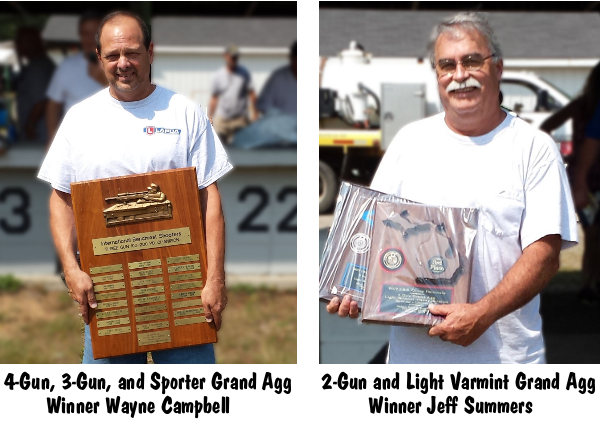
In the prestigious multi-gun competition, Jeff Summers won the 2-Gun. Wayne Campbell added more HOF points by winning BOTH the 3-Gun AND the 4-Gun. With his impressive 3-Gun and 4-Gun victories, the talented Mr. Campbell claimed the title of Top Overall shooter after six days of trigger-pulling.
2017 IBS Nationals Powderpuff Exhibition Shoot
For decades, IBS hosts an exhibition shoot on the afternoon of a day when only one Aggregate is contested instead of two. It is called the Powderpuff and is intended to allow family members and others who do not shoot competitively to give benchrest shooting a try. Each shooter is assisted by a coach who instructs the shooter. World-class shooters such as Billy Stevens and Bob Scarbrough give their time and talents to assist the novice competitors. There is no time limit to rattle the inexperienced shooters.
File Photo from previous Powderpuff Event at 2015 IBS Group Nationals
The competition is financially supported by the IBS President’s Fund. This year, at Holton in Michigan, we had four youth and 11 adult competitors. Chris Jeffers won the adult category with a nice .204″ group, while Jake Henderson put his five shots into a .244″ to win the youth division. Congratulations to all the Powderpuff competitors — we hope this inspires them to get more involved in Benchrest shooting.
To get the best accuracy out of any benchrest rifle, you need to find the optimal position of front rest and rear bag. The important point to remember is that each rig is different. One gun may perform best with the front rest right at the tip of the forearm (Position ‘D’ in photo), while another gun will work best with the rest positioned much further back. This Editor’s own 6BR sits in a laminated stock that is pretty flexy in the front. It shoots best with the front rest’s sandbag located a good 6″ back from the forearm tip (position ‘A’).
Here’s some benchrest advice that can help you reduce vertical and shoot tighter groups… without spending another penny. Many benchrest shooters spend a fortune on equipment and devote countless hours to meticulous handloading, but they never experiment with their rifle’s position/balance on the bags. This article explains why you should test your rifle in various positions. What you learn may surprise you (and improve your scores).
Next time you go to the range, experiment with the position of your rifle on the front rest, and try a couple different positions for the rear bag. You may find that the rifle handles much better after you’ve made a small change in the placement of your gun on the bags. Recoil can be tamed a bit, and tracking can improve significantly, if you optimize the front rest and rear bag positioning.
This competitor has the front rest positioned fairly far forward but not all the way out. Note the stop on the front rest — this limits forward stock travel.
Balance Your Gun BEFORE You Spend Hours Tuning Loads
In the pursuit of ultimate accuracy, shooters may spend countless hours on brass prep, bullet selection, and load tuning. Yet the same shooters may pay little attention to how their gun is set-up on the bags. When you have acquired a new rifle, you should do some basic experimentation to find the optimal position for the forearm on the front rest, and the best position for the rear bag. Small changes can make a big difference.
Joel Kendrick, past IBS 600-yard Shooter of the Year, has observed that by adjusting forearm position on the front rest, he can tune out vertical. He has one carbon-fiber-reinforced stock that is extremely rigid. When it was placed with the front rest right under the very tip of the forearm, the gun tended to hop, creating vertical. By sliding the whole gun forward (with more forearm overhang ahead of the front sandbag), he was able to get the whole rig to settle down. That resulted in less vertical dispersion, and the gun tracked much better.
Fore/aft stock position is important even with very wide fore-ends.
Likewise, the placement of the rear bag is very important. Many shooters, by default, will simply place the rear bag the same distance from the front rest with all their guns. In fact, different stocks and different calibers will NOT behave the same. By moving the rear bag forward and aft, you can adjust the rifle’s overall balance and this can improve the tracking significantly. One of our shooters had a Savage 6BR F-Class rifle. By default he had his rear bag set almost all the way at the end of the buttstock. When he slid the rear bag a couple inches forward the gun tracked much better. He immediately noticed that the gun returned to point of aim better (crosshairs would stay on target from shot to shot), AND the gun torqued (twisted) less. The difference was quite noticeable.
A small change in the position of the forearm on the front rest, or in the placement of the rear bag, can make a big difference in how your gun performs. You should experiment with the forearm placement, trying different positions on the front rest. Likewise, you can move the rear bag back and forth a few inches. Once you establish the optimal positions of front rest and rear bag, you should find that your gun tracks better and returns to battery more reliably. You may then discover that the gun shoots smaller groups, with less vertical dispersion. And all these benefits are possible without purchasing any expensive new gear.
Editor’s Comment: Young people are the future of the shooting sports. If we don’t get young boys and girls involved in target/recreational shooting, the shooting sports will decline dramatically as our population ages. That can eventually lead to range closures, gun/accessory makers going out of business, and our heritage as a nation being lost. Therefore it is in the interest of every shooter to encourage young people to enjoy the shooting sports. Here are some of the best programs dedicated to getting the next generation of shooters started.
Article based on report in NRABlog.com.
Want to get young people involved in the shooting sports? Through organized training programs youngsters learn safe firearms handling, improve marksmanship skills, and meet other kids with similar interests. They also learn important life skills such as teamwork and goal attainment. There are several youth marksmanship programs available. All these programs let you share your joy of shooting with the younger generation. Remember today’s juniors are the future of our sport.
NRA National Junior Shooting Camps
File photo from NRA Smallbore Rifle Championship
The NRA’s National Junior Shooting Camps provide high-quality training opportunities in rifle, pistol and shotgun disciplines. Instruction is directed by highly qualified, top-level coaches. NRA offers camps for advanced and intermediate juniors. There are also Junior Olympic Shooting Camps, hosted by USA Shooting and supported by the NRA and the Civilian Marksmanship Program.
National 4-H Shooting Sports
The National 4-H Shooting Sports Program was created to teach marksmanship, the safe and responsible use of firearms, the principles of hunting and archery, and much more. State level 4-H clubs offer programs for individual training as well as team competitive shooting. There is also a National 4-H Shooting Sports Championship each summer which hosts Shotgun, Air Rifle, Air Pistol, Smallbore Rifle, Smallbore Pistol, Compound Archery, Recurve Archery, Muzzleloading Rifle and Hunting Skills events.
Boy Scouts of America
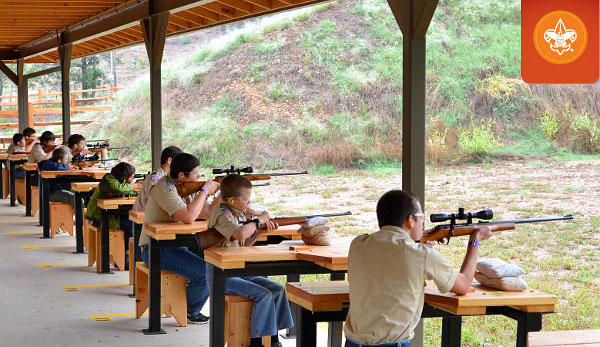
The Boy Scouts of America (BSA) offers several marksmanship opportunities for new and intermediate shooters. Programs provide training for marksmanship badges and there are a variety of other competitive and recreational programs. Check with your local Boy Scout organization to learn about the range offerings for scouts in your region.
American Legion Junior Program
Thousands of male and female junior shooters have participated in the American Legion Junior Shooting Sports Program, which has a perfect safety record. The Junior Program includes a Basic Marksmanship Course, Qualification Awards and Air Rifle Competition. To learn more, visit www.legion.org/shooting.
Youth Hunter Education Challenge (YHEC)
The NRA’s Youth Hunter Education Challenge (YHEC) program helps kids 18 and under to learn hunting, marksmanship, and safety skills. From rifle, bow, and muzzleloader shooting, to wildlife identification, map & compass orienteering and more, YHEC participants get hands-on training in eight skill areas. This is a great program for parents and kids who want to go on family hunts together.
Winchester/NRA Marksmanship Qualification Program
From a young shooter’s first BB gun to sophisticated air rifles, shotguns, muzzleloaders, pistols, and rifles, the year-round Winchester/NRA Marksmanship Qualification Program offers a pathway to excellence for young shooters. Qualification shooting provides incentive awards for developing and improving marksmanship skills. Progression is self-paced and scores are challenging but attainable. Performance is measured against established par scores and any shooter who meets or exceeds those scores is entitled recognition awards for that rating.
Brownells / NRA Day
Brownells / NRA Day events provide adults, youth, families, hunters, sportsmen, competitors – literally everyone – the opportunity to come together under a formal program to learn, experience, share, and grow in appreciation of the shooting sports. The event themes offered in the program are designed for discovery. They provide exposure to the many different activities available in shooting sports and offer participants the opportunity to explore them in a safe, controlled environment.
The White Horse Center Range near Peeltree, West Virginia, will host the 2017 National IBS 1000-Yard Nationals from September 1-3, 2017. This will be a great match — over 100 shooters have signed up so far, including many of the nation’s top 1K benchrest aces. It’s not too late to sign up. You can register (on-site) up until 5:00 pm on Friday, September 1. The current match fee is $90.00 per gun class, or $175.00 for both classes (Light Gun and Heavy Gun). The White Horse 1000-yard range will be open on Friday for sight-in and practice.
This record-setting offset (assymetical) Heavy Gun belongs to talented shooter Mike Gaizauskas.
2016 IBS 1000-Yard Overall (2-Gun) Champion Tom Mousel (below) will travel to West Virginia to defend his title this weekend at White Horse. Last year Tom posted a stunning 3.356″ Group Agg to win Light Gun Group as well. That’s a 1/3 MOA Agg at 1000 yards — truly remarkable precision.
The Deep Creek Tracker stock, with adjustable “keel”, is the hot ticket now in the 17-lb Light Gun class.
Match Schedule and Fees The 1K Nationals will be a 3-target Aggregate match for both Light Gun (LG) and Heavy Gun (HG) with six (6) targets total. Practice and Sight-in will be available Friday (9/1/2017). NOTE: There will be a $10.00 per target fee during practice days. Match fees for the Nationals are now $90 per gun ($45 per gun for juniors). All registrations MUST be received by 5:00 pm Friday, September 1st. No walk-up registrations will be accepted on match days.
How to Get There
The Center is located 9.7 miles south on State Route 20 from I-79, exit 115 or 10.1 miles north of Route 20 from Buckhannon. Look for a brown and yellow Dept. of Natural Resources sign on Route 20. Take Crouse Road to the next sign, turn right at the sign, and proceed up the hill to the Center. Map coordinates are: 39°, 7′, 11″ North latitude; 80°, 13′, 4″ West longitude. The White Horse Center website has information on area hotels and campgrounds.
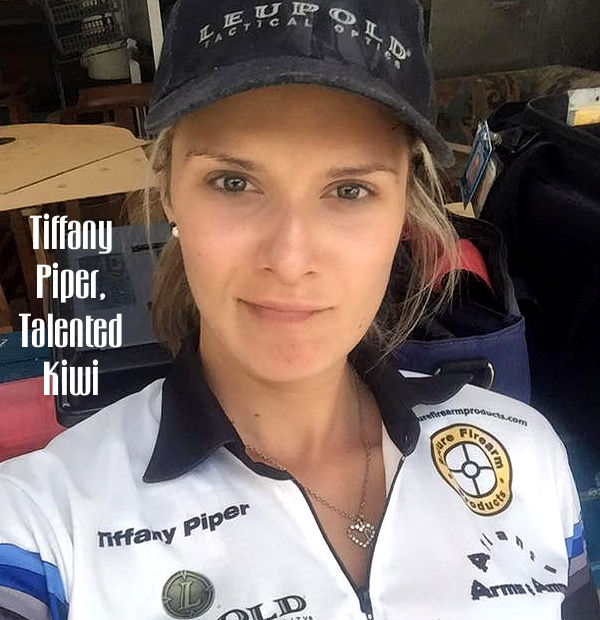
The NRABlog has interviewed seven prominent lady shooters, asking them for tips for other lady shooting sports enthusiasts, particularly new shooters. Top female competitors such as 2016 Bianchi Cup Winner Tiffany Piper and Team S&W Co-Captain Julie Golob offer good advice on competitive shooting as well as using firearms for self-defense. Read the full article here.
Here Are Some of the Top Tips from Leading Ladies:
Tiffany Piper (Action Pistol): The best piece of advice I would give is practice makes perfect. In New Zealand, we barely get enough range time with our noise restrictions so muscle memory and technique are key.muscle memory and technique are key. Study up on shooting techniques, watch YouTube videos of other professional women shooters, and try out what you see. Don’t get intimidated thinking it’s a male’s sport[.]”
Julie Golob (Team S&W, 3-Gun and Pistol): “If something isn’t clear, just ask about it! Shooters are some of the best people you’ll ever meet, but we can be confusing and use a lot of shooter slang and lingo. When in doubt, ask!”
Tori Nonaka (Team Glock): “I always recommend to new shooters to first concentrate on the basics of gun safety. That way they will be more comfortable when they next learn about the particular gun…. Their confidence will grow as they familiarize themselves with their specific weapon. Then, it’s all about practice at the range.”
Corey Cogdell (Olympic Trap Shooter): “It’s empowering for women to know how to use a firearm in a sporting atmosphere as well as for self-defense. So if you are new to firearms, check out your local gun club and take a lesson! There you’ll find instructors and other shooting sports enthusiasts who will be more than willing to help you.”




 Guns of Grandfathers…


 Retired gunsmith Stan Ware is a talented shooter who’s not afraid to think “outside the box”. Stan competes in both Hunter Benchrest (HBR) and Varmint for Score (VFS) disciplines. In his quest to build the ultimate Hunter Benchrest cartridge, Stan created the radical “Wolfpup” wildcat, based on a 6mmBR parent case. Noting the dominance of 30 BRs in VFS matches, Stan wondered if a stretched 30 BR could work in HBR competition. The challenge was case capacity. Under HBR rules the cartridge must hold at least 45.0 grains of water, equal to the capacity of the classic 30/30 case.
 From Trashbin to Winner’s Circle
 Why Does It Work?

 On September 20-24, 2017, the CMP New England Games will take place in a scenic corner of Vermont (check out that photo above — is that nice or what?). Hosted by the Vermont State Rifle and Pistol Association and the Burlington Rifle and Pistol Club, the New England Games will be conducted at the Camp Ethan Allen Training Site, a beautiful facility.










 The
The 


 The 1K Nationals will be a 3-target Aggregate match for both Light Gun (LG) and Heavy Gun (HG) with six (6) targets total. Practice and Sight-in will be available Friday (9/1/2017). NOTE: There will be a $10.00 per target fee during practice days. Match fees for the Nationals are now $90 per gun ($45 per gun for juniors). All registrations MUST be received by 5:00 pm Friday, September 1st. No walk-up registrations will be accepted on match days.