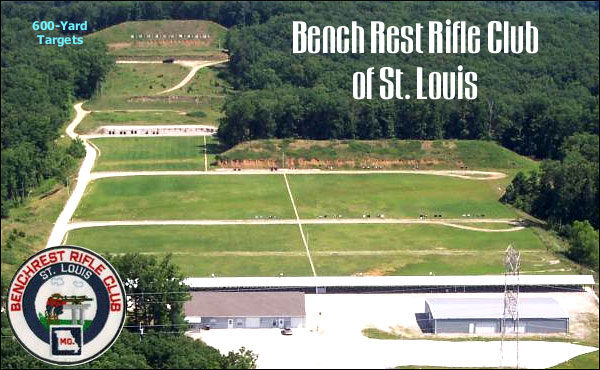
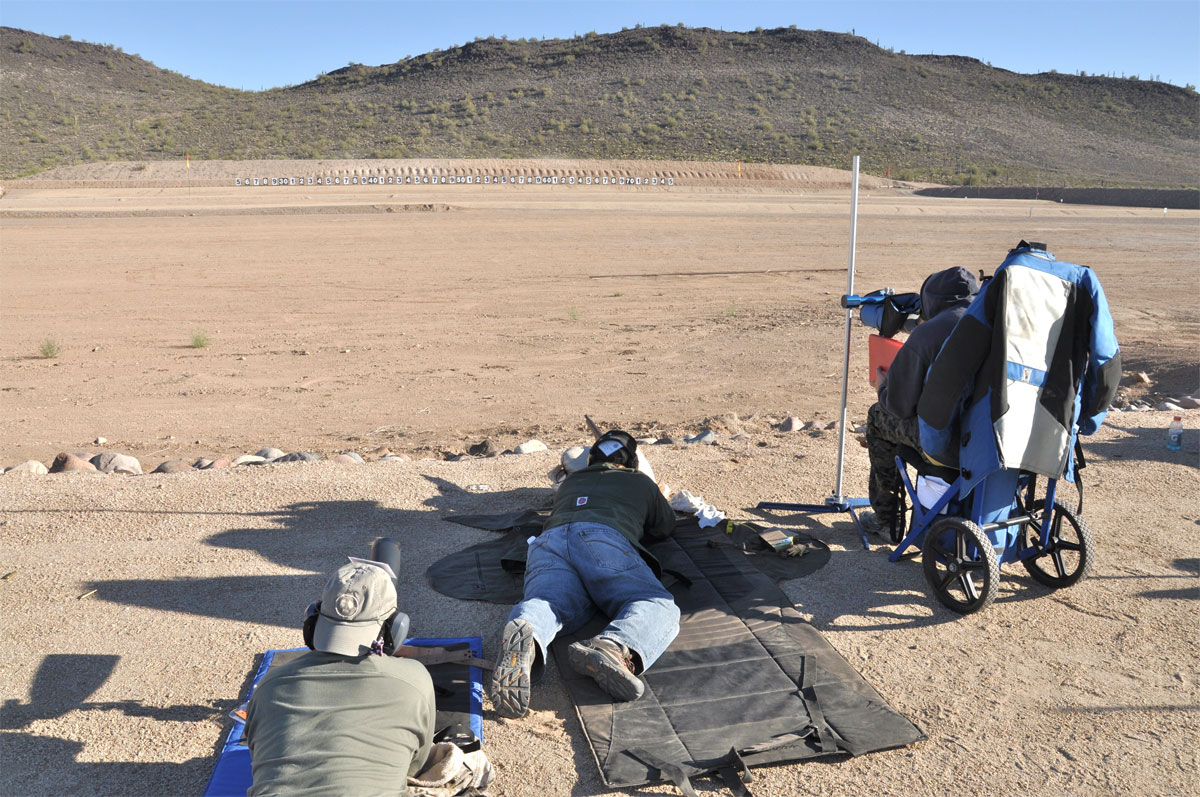
The NBRSA short-range Group Benchrest Nationals commenced this week at the St. Louis Benchrest Club Range in Wright City, Missouri. This will be followed, next week, by the World Benchrest Shooting Federation (WBSF) Championships at the same venue. Lapua staffer (and Forum member) Kevin Thomas trekked to Missouri for this combined National/International event. Kevin reports: “The best benchrest shooters [on the planet] will fight it out over the next two weeks to see who can shoot the smallest groups possible. And I’ve got to say, many of these shooters are truly amazing. It doesn’t hurt a bit that virtually all of them are shooting Lapua brass, either.”
The WBSF event has attracted shooters from around the world. Benchrest aces from Australia, Canada, Great Britain, and South Africa are already in St. Louis, with other international competitors set to arrive next week. On Monday, Day One of the NBRSA Nationals, the Unlimited Class rigs showed off their capabilities. As shown below, these heavy rail guns represent the pinnacle of precision in the 100/200-yard benchrest game.
Here’s living legend Walt Berger, founder of Berger Bullets. Now in his late 80s, Walt is still competing at a very high level. Walt is proof that Benchrest shooting is truly a “sport for a lifetime”.
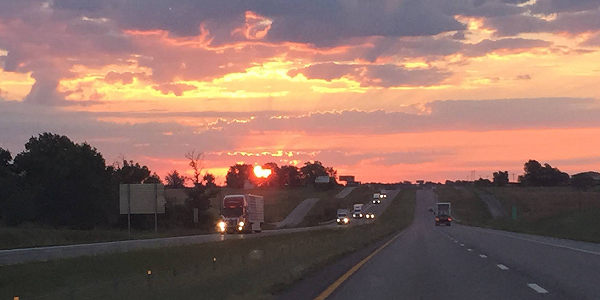
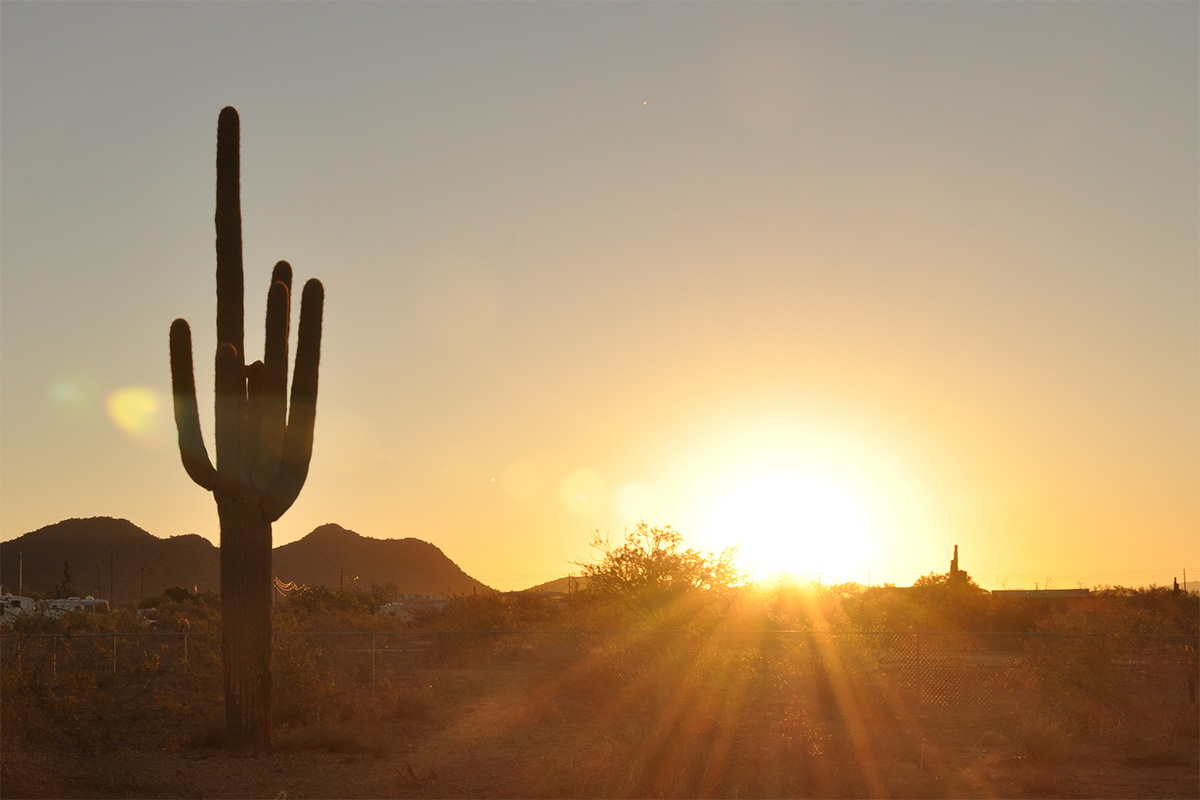
Here’s a beautiful Missouri sunrise captured as Kevin Thomas drove to St. Louis for the 2015 NBRSA Benchrest Championships.
Can you really make a silk purse from a sow’s ear? Would you believe a winning benchrest rifle could be constructed with a stock fashioned from a cast-off log-splitter? Well it can.
Anyone who has attended an IBS benchrest match knows that this brotherhood of shooters includes some “backyard engineers” who can build amazing things with low-cost components. Consider Steve Jordan. He has built a winning Heavy Gun with a gunstock made out of a wood splitter. Check out the photo. The butt section is in the shape of a “V” like an ax. The “V” sits on an adjustable, flat rear sandbag. The flat shaft of the wood-splitter, running horizontally, serves as the main chassis and fore-end. The barrel block sits on top (with the action floated), while the flat, forward section of the shaft rides the front bag. Not only does this “log-splitter” stock work, but Jordan has won IBS matches with it! Sometimes simple and cheap beats expensive and fancy.
Sam Hall Says the Log-Splitter Has Been “Kicking Our Tails”
Sam Hall (multi-time IBS 600-yard champion) reports: “I was not at the first match where Steve Jordan debuted his barrel-blocked, Heavy Gun stock made out of a wood splitter. From what I heard he cleaned house with it that day. When I first heard about this log-splitter rig, I thought guys were pulling my leg. But the log-splitter Heavy Gun really exists. In fact, over the past two years at Piedmont, Steve’s home-built log-splitter HG has won numerous Heavy Gun matches, out-performing nearly all the other Heavy Guns on the line, even those that cost thousands more to build.
Steve made the rifle as economical as possible. Steve’s entire stock is made from a metal wood splitter. From what I understand, Ray Lowman gave him the barrel block. This rides on the shaft of the wood splitter. With this inexpensive, simple rig Steve has been kicking our tails! By the way, Steve’s Heavy Gun is chambered as a 6mm Dasher.”
One recent trend in F-TR competition is the use of low-profile, benchrest-type stocks shot with a light hand-hold and little or no face contact. For this method of F-TR shooting to work, you need the right equipment, and practice a “minimalist” shooting technique. One of the pioneers in this style of F-TR shooting is action-maker John Pierce of Pierce Engineering. Above you can see John shooting one of his F-TR rifles at the 2015 Canadian F-Class Championships. Note the straight-line stock and see how the adjustable bipod is set quite low to the ground (in fact the bipod’s arms are almost straight out).
Members of the Michigan F-TR Team, including Bryan Litz, have used similar rigs with success. Bryan said it took a while to adapt his shooting technique to this kind of rig, but there is a pay-off. Armed with a Pierce-built F-TR rifle, Bryan won his first-ever F-TR Match. Bryan explains the technique he uses when shooting this kind of rifle:
“Coming over from sling shooting, I knew there would be unique challenges to F-TR which I wanted to learn prior to (not during) a major tournament. I learned a new shooting position which doesn’t involve drawing the right knee up. For F-TR I get more straight behind the gun rather than at an angle. I found that the rifle shoots best with very light cheek, shoulder and grip pressure, approaching free recoil. This is how Eric Stecker shot his similar rifle into second place in the SW Nationals [with high X-Count by a large margin]. I learned the rifle’s sensitivity to different bipod and rear bag supports, and found the best buttplate position to allow the rifle to track and stay on target after recoil. This set-up shot best with a mostly free-recoil approach, that means ‘hovering’ over the comb, rather than resting your head on the stock. This took some ‘getting used to’ in terms of neck and back muscle tone. These are the kind of details I think it’s important to focus on when entering a new discipline.”
Bryan’s Pierce-built F-TR rig is a tack-driver: “I can certainly vouch for this set-up! In last weekend’s mid-range State Championship in Midland, MI, I shot my Pierce rifle into first place with a 598-44X (20 shots at 300, 500 and 600). Once you get used to the positioning and way of shooting these rifles, they just pour shots through the center of the target.”
Pierce F-TR Rifles with Scoville Stocks
Shown below are three complete Pierce F-TR rifles, along with a barreled action for comparison. The carbon-fiber/composite stocks are built by Bob Scoville. These Scoville stocks are very light, yet very strong and very stiff.
Could this be the most scenic rifle range in North America? We can’t say for sure, but it certainly is a strong candidate. This is the General Vokes Rifle Range in Chilliwack, British Columbia, Canada. Our friend Anette Wachter (30CalGal.com) was there for the annual BC Target Championship. All that greenery combined with the majestic snow-capped peaks in the distance makes for a stunning venue.
After seeing this photo, one of Anette’s Facebook friends from down-under was inspired to make a trip to Canada: “Maybe I can get a rebel Australian team to go there, even just for the scenery!”
Anette (at right) says the match has been going well: “Starting off a bit slow but there were tricky conditions today. I just need to step it up tomorrow… but they are predicting rain. [Editor’s comment: That’s why it looks so green. BC has rain, unlike drought-stricken California where I’m based.]
Anette reports there were fewer participants than in years past: “There has been a small turnout this year since they changed the dates.” She also noted that she is getting a good workout: “People wonder why I have such strong arms. Try carrying all this gear from line to line!” Good luck Anette.
Ready for some action in Arizona? The 12th Western CMP Games and Creedmoor Cup Matches will be held at the Ben Avery Shooting Facility in Phoenix, Arizona. The CMP Games run 9-13 October while the Creedmoor Cup Matches dates take place 14-18 October. All interested shooters are invited to participate in these unique, national-level competitions. NOTE: Registration for the Creedmoor Cup matches must be done online via www.creedmoorsports.com.
To see a real pro shooting Service Rifle, check out the above video. That’s former National Champion (now Creedmoor Sports G.M.) Dennis DeMille, shooting 300-yard Rapids from the prone position. This was filmed at the 2010 Berger Southwest Nationals at Ben Avery. You’ll see Dennis adjusts his sights while looking through the spotter. Then watch how calm and steady Dennis stays from shot to shot. That comes with years of practice and training.
The Precision Rifle Series (PRS) is holding its season-ending Championship Match this weekend at a “top-secret” ranch location near Tehachapi, California. The nation’s top 75 PRS marksmen (plus 30 regionally-qualified shooters) have been invited to compete in a challenging series of stages, with targets from 100 yards to well over 1000 yards. This is supreme test of marksman and rifle. The PRS involves shooting from multiple positions, carrying all your hardware over considerable distances. This ain’t no belly benchrest match that’s for sure.
This video showcases the 2014 PRS Championship in Frost, Texas. This year’s PRS Finale will be held in California. (Video is well worth watching — with LOTS of action):
The PRS has attracted a host of sponsors, so the prize table will be huge for this event:
For those interested in learning more about the PRS game, Rich Emmons, one of the founders of the Precision Rifle Series (PRS), has written an insightful article about getting started in the tactical game. Here are highlights from Emmon’s PRS — Intro to Competition article.
Precision Rifle Series — Intro to Competition
by Rich Emmons, PRS President
Tactical Shooting with a precision rifle is not like other disciplines, there is no set course of fire or format. That is what makes it so fun! What I quickly learned from my first competition and the many that followed was there is so much to learn and shooting in competition put everything you thought you knew to the test.
Getting Started — What to Expect
If you’re reading this, you have probably already have been bitten by the long range shooting bug. It can seem quite intimidating to just jump in with a new bunch of shooters you don’t know and shooting lingo you don’t quite understand yet. But here is the key — show up and shoot! I guarantee you if you show up to a match as a new shooter, other experienced shooters will guide you along and give you help on anything you need.
AUDIO: Click Button to hear Rich Emmons Talk about the Precision Rifle Series.
Now, a couple things you should just expect. You’re not as good as you think you are. Don’t expect to come into your first match and beat all the veterans. That just doesn’t happen unless you have had some really good coaching or other shooting competition experience to get you ready for this type of competition. If possible, find a local rifle club that has monthly long range matches, or any type of match will help prepare you for a larger PRS event. Getting involved with a rifle club and starting out shooting monthly matches is definitely the way to jump into competition shooting.
The Gear You Need
The first question that many ask is: “What kind of rifle/caliber/scope do I need?” The easiest answer to this is, the best you can afford. It’s no secret the gear is expensive. It took me several years of buying sub-par gear and eventually trading up to figure this out. Now, a guy can get a real sense of pride of doing it on the cheap, or with a factory rifle. I’ve seen many old Savage 10FPs take down custom rigs that cost 10 times as much. And if that’s all you can afford, then eventually you will learn the limitations of yourself or your gear. As for choice of cartridge/caliber, the Precision Rifle Blog has analyzed three years worth of match results from the best tactical shooters in the nation. CLICK HERE to read an article that reveals what the “top guns” use.
With all the talk about the new Norma Dasher brass coming in the fall from Bullets.com, we thought it was time to feature a special rifle chambered for the 6mm Dasher wildcat. This gun has a great story behind it. Forum member Bob A. (aka “Killshot”) used his “Forum Classifieds Special” to beat all comers in the F-Class Division in the American-Canadian Match and the Long Range Regional Match in 2013 in Sacramento, CA. Bob’s 6mm Dasher sports a blue-printed Rem 700 action. Who says you need a high-dollar custom action to run with the big dogs? In fact, this same gun, built with components sourced from AccurateShooter Forum Classified Ads, set a Sacramento F-Class range record of 200-17X a few years back. In this story, Bob talks about the build, and he explains his methods for loading ultra-accurate Dasher ammo.
Bob’s Budget-Build Dasher F-Classer
I wanted to build a proper rifle for F-Open but needed to keep it simple and, well, cheap. I found a solid “base” to build on in the form of a Dave Bruno-built, “pre-owned” 6-6.5×47 Lapua that I located in the AccurateShooter Forum classifieds in late 2011. The base action was a trued and blue-printed Remington 700 receiver circa 1971 with a spiral-fluted bolt. It was in a Shehane ST1000 stock painted sky blue and had a Jewell 1.5-oz BR trigger. I sent the bolt to Greg Tannel (Gretanrifles.com) to have the firing pin hole bushed and sleeved, the ejector removed and the hole filled and the face trued. I ugraded to Tannel’s Light Steel firing pin assembly while it was out.
Having the working bits completed, I needed a barrel. So I went to the AccurateShooter classifieds again and found a 1:8″-twist, 30″ x 1.25″ (diam.) Bartlein with a 0.236″-land bore. I called Dave Kiff and explained my pursuit and he recommended his PT&G “world record” 6 Dasher reamer (.2704″ no-turn neck and .104″ freebore). A month or so later the reamer and gauges arrived.
I had the barrel chambered by Marc Soulie of Spartan Precision Rifles (510-755-5293, Concord, CA). Marc is a great builder and I’m pleased to call him a friend.
The rifle got its good looks from a Pennsylvania artist named Kenny Prahl. His Prahl Designs shop (724-478-2538) added the white ghost-flames over the existing sky blue metallic paint.
Looks Great, Shoots Better
Fire-forming showed great promise — ten-shot groups of half an inch at 200 yards were typical. I lost only one case to a split neck and the “blow lengths” are good and consistent. This was followed up with load development which saw 100-yard, five-shot groups in the .1s and .2s as the rifle showed its preference for Reloder 15 over Varget powder, and for CCI 450s over all other primers. The bullet of choice was the ever-popular Berger 105gr Hybrid Target.
In February 2012 I began shooting the Dasher in monthly club matches at the Sacramento Valley Shooting Center, the home range of a number of excellent F-Class, Benchrest and High Power shooters. Using a Farley Coaxial rest up front (also picked up from a WTB ad on AccurateShooter’s Forum) and an Edgewood bag in the back, I gradually improved my gun-handling to the point where I could shoot a respectable score. This was very different from the bipod shooting I’d done in the past in F/TR.
Dasher Loading Tips
My chamber is set up for blue box Lapua 6mmBR brass. My case preparation is straight-forward. I fire-form with virgin cases right out of the box. I don’t size them but I will give the primer holes a good look and clean up the flash hole with a .058″ bit in a pin vise. To fire-form, I seat a Berger 108gr BT .030″ into the lands over a standard 6mmBR load of Varget.
For match loads, I use Alliant Reloder 15. While Varget is less sensitive to temp changes, RL15 has given me lower extreme spreads and better long range control. [Bob acknowledges that every barrel is unique, so a different powder might work better for you.]
I clean my fired cases with stainless steel media in a Thumler’s rotary tumbler after every firing. I anneal after every other firing using a Bench-Source machine which is very well made and easy to operate. I use a Whidden full length bushing die with Redding bushings for sizing.
Dan Pohlabel is a member of the all-conquering Team Sinclair F-TR squad. This talented group of shooters hasn’t lost a team match in years. What’s the secret of Team Sinclair’s success? Well there is not one single factor. These guys have very accurate rifles, they work hard on load development, and they practice in all conditions. In this interview, Dan Pohlabel talks about F-TR competition, reviewing the hardware (and skill set) it takes to win. He offers some great tips on developing loads. You’ll find a longer version of this interview on the Sinclair Int’l website. CLICK HERE to Read Full Interview.
Q: What do you find most challenging in F-TR Shooting?
It has to be keeping up with the competition, our sport has grown so quickly with new talented shooters. Staying at the top requires having a laser of a rifle, perfect loads, near perfect wind reading, and, of course, breaking good shots.
Q: How can novice shooters improve their game?
Seek out the local F-TR shooters and go to matches with them, listen and learn. Attend team matches and offer to score for one of the teams. As a scorer, you will sit close enough to hear the coach make wind calls and see the results on the target. Through the spotting scope you will see changes in mirage and it’s the quickest way to learn the basics of wind reading. Choosing and buying equipment is relatively easy, learning to read the wind is a journey.
Q: What’s in your range bag for match days?
Rear bag, towel, shooting glasses, canned air, ear protection, data book, pen, rifle rain cover, hat, rifle tools, timer, ammo, and bug spray.
Q: What specialized gear can you not live without?
1. A good set of elbow pads. It’s hard to keep concentrating on shooting when your elbows are rubbed raw from days of competing on them.
2. Good bug spray. We shoot from the ground but our shooting mats aren’t that big. It’s hard to concentrate with bugs crawling or chewing on you.
Q: Load Development — How do you work up a load?
First, I call Derek Rodgers and get his load data, he is the best load development shooter I know! Otherwise, here is the procedure I recommend. Measure throat length with bullet of your choice, to determine how much room is left in the case. The above measurement determines what powders you can use. We use only Hodgdon Extreme powders. Shoot a ladder test, five rounds each in 0.2 grain increments, to find the accuracy node for that bullet/powder combination. Take the best two loads and do a jump test with five rounds each, test at .005″, .025″, .060″ jump. One of these groups will be significantly better than the rest, now you can tweak that measurement +/- .002” or .005” to get the best accuracy.
Test at least three different primers to determine which offers a little better ignition for your load, a 5-shot test will usually tell you which is the best. Go back and test the two best combinations in a 10-shot test at least twice, pick a cool overcast day and also a hot sunny day and compare results. Take your final “best load” back and do a “simulated match”, 20 shots, waiting at least 20 seconds between shots. If you like those results it’s probably a reliable and accurate load.
Q: What rear bag do you use?
I use a two-bag system, large bag on bottom with a smaller bag on top. I had the bags made of marine canvas, zippered and filled with plastic beads. I can adjust the amount of fill to make them a perfect height for my shooting position. Teammate Jeff Rorer uses a similar system and mine is nearly a copy of his rear bags.
Q: How often do you practice and how many rounds do you shoot per year?
In good weather I practice a couple times a week at the local range, a couple more dry-firing practices/week at home. I typically shoot between 2,000-2,500 rounds per year.
Q: How do you prepare mentally before a match?
[I do] lots of visualization — run the video in my head of what I expect to see and of my performance. I think about the correct strategy for the conditions, staying disciplined to the strategy.
Q: What do you avoid before a shoot?
No late nights or excessive alcohol. Very little caffeine in the morning. Leave your cell turned off. Avoid emotional people.
Q: What’s your procedure on a Match day?
I arrive early, get squadding card, move gear, watch wind speed/direction, check over rifle and gear, sit and relax, visualize and focus on the most important goal of the day. Most days we shoot three relays of 20 shots. It’s important to eat and hydrate continually all day. My focus and concentration are better when I snack all day with fruit and energy bars, and lots of water. While taking my turn in the pits, I try to relax and only focus on what is ahead of me and [not] what’s already happened.
Q: What is your favorite reloading product?
My favorite reloading product is the Sinclair Premium Neck Turning Tool with Handle, I also use the expander mandrels provided by Sinclair for sizing the brass in preparation for the turning process. Correct and repeatable neck tension begins with turning necks to a uniform thickness. Sinclair also has mandrels to size the necks after neck turning that accurately size the necks for a specific neck tension.
Q: What is your preferred scope?
The scope I find the most useful is the Nightforce Competition Scope. This scope is very light-weight, has 15-55X magnification, world-class quality glass, 10 MOA per revolution on the turrets, 1/8 moa adjustments. It’s perfect for F-Class competition.
Q: What advice do you have for someone wanting to get into the sport?
Find a local club with some F-TR shooters and ask for their help. Most shooters will be happy to take you with them to a match, listen and learn while you’re there. You may find out it’s not what you thought, or you may be hooked. If you decide to jump in, start with an inexpensive rifle. This sport is expensive and you don’t need a $5000 rifle to learn good wind-reading skills. Start with a used Savage F-TR rifle and learn the basics, shoot for a year at least before making a larger investment. The money you saved buying a used Savage rifle will help pay for your divorce lawyer, LOL.
Q: What training drills do you use?
Dry-firing the rifle at home is a good way to practice when you can’t get to the range and shoot. It allows me to practice set-up, rifle handling, and position. When I can practice at a local range, I also dry-fire between shots to increase the amount of repetitions and increase the time spent in position.
Q: Who has been your biggest influence in shooting?
Eric Bair, 2006 F-Open National Champion helped me get started and gave me great advice. Most of the shooters on Team USA and Team Sinclair help each other, nobody knows all the answers but we share what we have learned. Danny Biggs, 2008 and 2009 F-TR National Champion also helped me when I was struggling to learn some of the ranges. I learned a lot from Danny.
Experience and Youth — HV Grand Agg Winner Harley Baker with Hart Trophy Winner Henry Miller.
Report by Ken Frehm
In early August, many of the nation’s best Benchrest shooters headed to New York for the N.Y. State IBS Championships and 16th Annual Pro-Am Group Shoot at the Camillus Sportsmen’s Club (located outside Syracuse, NY). For this IBS event, held August 1st and 2nd, shooters were graced with two beautiful sunny summer days. Forty sharpshooters tested their skills against each other as well as the challenging, and ever-changing winds at Camillus.
Many competitors arrived early on Friday to see if they could get a handle on the unique conditions at Camillus. Our benches, as well as our facilities, have been newly renovated and a new tree line pattern influenced the course in an entirely different way. The 100-yard matches on Saturday were quite difficult as winds gusted to 20+ miles per hour and 180-degree shifts in direction were commonplace. Getting five in one hole was difficult at best. Good-natured grumbling, head shaking and “Where did that come from?” comments were heard from some top shooters. Yet, many managed to Agg in the twos!
On Sunday, the second day, the 200-yard matches were blessed with less fickle winds, and some conditions that even remained constant for a very brief time. Improved groups and scores reflected the kinder conditions that Mother Nature shared with us.
Top Shooters at N.Y. State Group Benchrest Championships, August 1-2, 2015:
Two-Gun Aggregate
HV Grand Aggregate
LV Grand Aggregate
1. Brushingham, Bob 0.2762
2. Baker, Harley 0.2870
3. Dolinsky, Brian 0.3002
4. Auman, Al 0.3007
5. Reed, Tim 0.3023
1. Baker, Harley 0.2469
2. Auman, Al 0.2538
3. Reed, Tim 0.2602
4. Brushingham, Bob 0.2605
5. Peinhardt, Wyatt 0.2664
1. Brushingham, Bob 0.2919
2. Hamister, Bob 0.2941
3. Miller, Jim 0.2957
4. Mitchell, Paul 0.3063
5. Dolinsky, Brian 0.3121
On the line, we had three youngsters competing. 11-year-old Henry Miller (from Malden Bridge, NY) proved that you don’t have to have gray hair to have low Aggs! Henry won the Clyde Hart Trophy silver bowl. New shooters (amateurs) as well as top experts were intermingling, helping each other and sharing their experiences. Of course a lot of good-natured ribbing was overheard. Amazingly, I didn’t hear a serious complaint during the entire two-day event.
There were many tables set up for ammo-loading activity under the pavilions as well as in our clubhouse. A number of spouses were there to help their better halves in any way they could. Many campers were in evidence as well.
Interview with Shooters — Challenges and Great Friendships
I asked some of the competitors, “What is the hardest thing for you? … What is the most challenging? They told me: “Having the patience to wait until things are right… as well as the mental game of conditioning oneself to be strong and to be a champion.”
I also asked competitors: “What is the most pleasurable thing about this sport for you?” In every instance the folks I interviewed told me that the best aspect of benchrest competition was “the People”. Having relationships within the community of Benchrest folks is what is BEST — No doubt about it!
My job of roving photographer/event reporter gave me a unique opportunity to see things in a new way and to gain insights from a wide range of helpful marksmen. My most important take-away was that this group of sportsmen (and women) are friendly, helpful, and genuinely nice people. What are the secrets to winning? They will share them with you willingly! Need help? They are there!
Hardware Report — Top Guns
Harley Baker finished second overall in the Two-Gun and took the HV Grand. Baker’s rig featured a Tony Leonard Stock, Bat Action, Krieger barrel, and BixNAndy trigger. Harely shot Sta-Moly Bullets with 30 grains of Vihtavuori N133. The rifle was smithed by Jeff Peinhardt.
Jim Miller, who placed third in the Light Varmint Grand Agg, shot JW 65g bullets with 30.0 grains of N133 powder. Jim’s rifle featured a Roy Hunter Stock, March Scope, and BixNAndytrigger.
Bob Brushingham won the Two Gun Overall. Bob’s rifle, smithed by Don Beaver, featured a Panda action and Krieger barrel. Bob shot Berger 65g Bullets pushed by 28.6 grains of LT32.
Many Hands Make Light the Work — Praise for the Volunteers
Many volunteers helped make the weekend a great success. Four different groups manned the golf carts that put up and took down the targets between each relay and match. Event Chairman, Bob Hamister put it all together. Volunteers from the Syracuse Police Department, as well as our club members and some of their kids joined in the effort. Camillus Club members prepared all the targets, the target boards, the moving backers and all the paraphernalia that was needed. In the clubhouse, three ladies and our club president (Bill Parfitt) manned the scoring boards, and the computers. Three ladies took over the griddle, delivering delicious food and drinks for the shooters’ breakfasts and lunches.
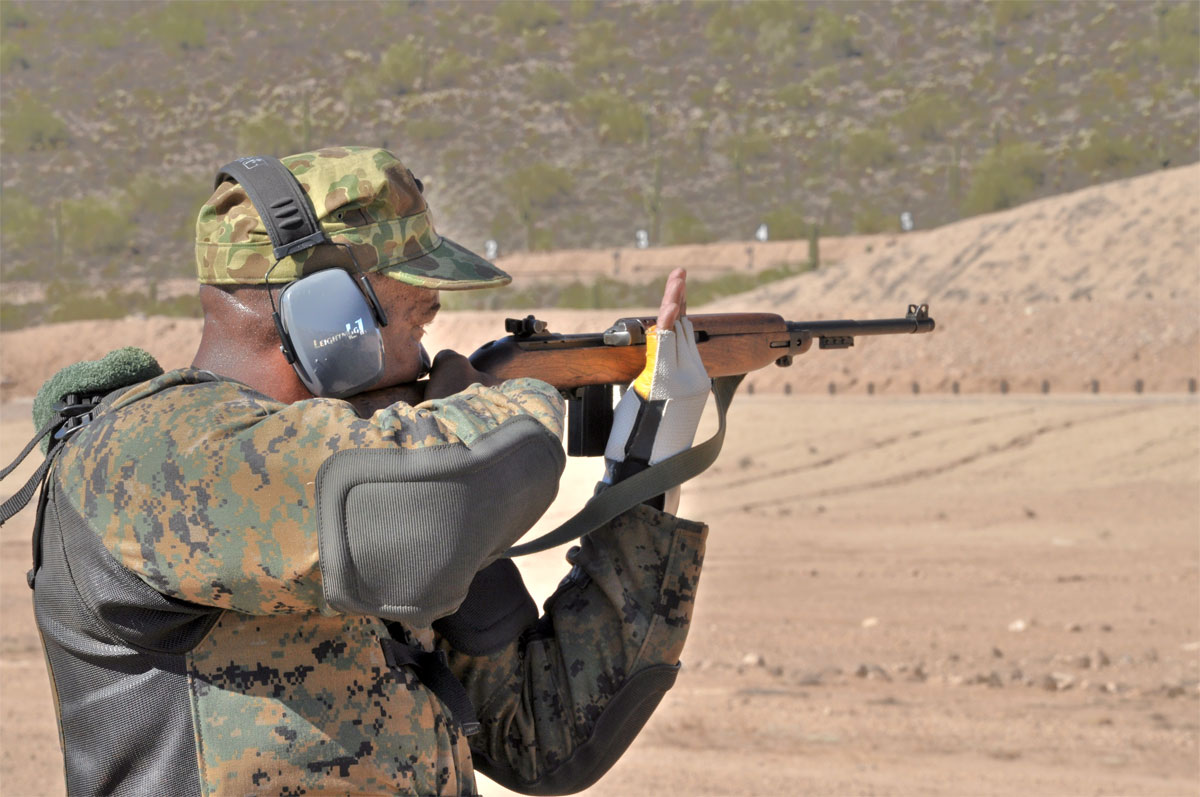
Didn’t get enough of Camp Perry this summer? Then tune in to Shooting USA TV this evening. Tonight’s episode of Shooting USA television spotlights the National Matches and CMP events at Camp Perry, Ohio. The National Matches at Camp Perry are the World Series of American shooting sports, attracting the nation’s top pistol and rifle marksmen. There are individual competitions, such as the Vintage Sniper Match, or the M1 Garand Match featuring legendary firearms. Then there’s the National Trophy Infantry Team Match, known as the Rattle Battle among competitors, simulating an assault by an Infantry Squad. Catch this episode of Shooting USA on the Outdoor Channel. NOTE: This is a repeat broadcast including footage from the 2014 National Matches.
Tubb 2000 rifle, left-hand version. Note how the butt-plate is adjusted for cant, angle, and drop.
The 1903 Springfield on Tonight’s Show
Vintage military rifle fans take note — this week’s show also features an American classic, the U.S. Rifle, Model of 1903, better known as the 03 Springfield. While its design was initially borrowed, its accuracy, quality and service record proved to be a fine military bolt-action rifle in the trenches of WW I and on into World War II. “It was a beautifully made gun, extremely, extremely well balanced,” says Firearms Historian Garry James.






 After seeing this photo, one of Anette’s Facebook friends from down-under was inspired to make a trip to Canada: “Maybe I can get a rebel Australian team to go there, even just for the scenery!”






 Dasher Loading Tips


 The 1903 Springfield on Tonight’s Show


