The 2011 Snipers’ Hide Cup took place from April 7 to 9 at the Rifles Only facility in Kingsville, Texas. The popular three-day tactical competition, organized by SnipersHide.com, featured a rich prize table with thousands of dollars worth of scopes and tactical gear. The match drew 63 of the nation’s best tactical marksmen in the civilian, law enforcement and military communities. The multi-stage event places competitors in a number of tactical scenarios with shooting out to 1000 yards. The vast majority of the shooting is done with rifles, but there is some pistol action also. This year, the match format involved “a lot of run and gun, positional, and movers”. The wind played a major role this year, exceeding 24 mph on some stages.
Top Two Finishers Use 6.5 Creedmoor
The overall match winner was Geordie Richardson of Weatherford, TX (via Australia), with a score of 1385/2300. Geordie shot well on nearly every stage, staying in the top three throughout the competition. One fellow competitor remarked: “I was two spots down from [Richardson] and watched the magic happening. He couldn’t miss.” Geordie’s match-winning rifle was a Surgeon Rifles Scapel chambered in 6.5 Creedmoor in a Sentinel stock with Atlas bipod. On top was a S&B 5-25x56mm with Gen2 XR reticle. Geordie shot Hornady factory 6.5 Creedmoor ammo, as did runner-up Tate Moots, as well as the fourth place and seventh place finishers.
Charles “Tate” Moots (Team FNH) took second place overall with a score of 1305/2300 points. Moots used a FN SPR A5M bolt-action rifle, chambered in 6.5 Creedmoor and topped with a Leupold 6.5×20 ERT scope. Finishing third was John Sommers, fourth was Rob Ormond, and taking fifth was George Gardner of GA Precision.
Match runner-up Moots was top finisher in the exciting Helicopter Stage, which required each competitor to engage a ground target from a flying helicopter with an FN SCAR 17S, and upon landing exit the aircraft and fire a five shot group with their precision rifle. Shown below is a helicopter stage from the 2010 Snipers’ Hide Cup. (Turn sound volume down at work.)
The .308 Winchester, a shortened version of the .30-06, has almost completely replaced the .30-06 in NRA competition. The .308 is required for Palma shooting, so it is also used by many Palma competitors in other long-range and mid-range prone matches. However, with the exception of M1 Garand matches, you won’t see many .30-06 rifles on the firing lines. Does that mean the .30-06 is obsolete? Is the .308 Win really much more accurate? Or does it just offer the advantages of reduced recoil and reduced powder consumption?
Cartridge photos courtesy Deuce45s.com, a leading source of specialized military cartridges.
In his Sibling Rivalry: .308 vs. .30-06 article on the Rifleman’s Journal site, German Salazar argues that the .30-06 remains a viable competition cartridge, particularly for the long-range game. This isn’t just a subjective opinion. German has data to back up the argument that the .30-06 can still do the job.
German compares the actual scores produced by his .308 Win rifles with the scores from his .30-06 rifles. German analyzes scores, over a two-year period, shot by “matched pair” rifles (one in each caliber) with similar actions, stocks, sights, and barrels. For comparison purposes, German also includes score data from his 6XC, a modern low-recoil chambering.
RESULTS: .308 Has Small Edge at Middle Distance, But .30-06 Is Better at Long Range
Surprisingly, the .30-06 performed nearly as well as the .308 at middle distances. The .30-06 delivered 99.2% of max possible scores vs. 99.5% for the .308 Win. Notably, at 1000 yards, the .30-06 racked up 97.7% of max scores vs. 97.3% for the .308 Win. So, at 1000 yards, the .30-06 actually proved superior to the .308 Win. German explains: “This isn’t too surprising when one considers [the .308’s] limited case capacity for the bullet weights typically used in Long-Range shooting. They just run out of steam and dip perilously close to the transonic range as they approach 1000 yards of flight. The extra 150 fps or so that can be safely obtained from the .30-06 case really pays off at 1000 yards.”
Mid-Range Comparison
In NRA Mid-Range matches (500 and 600 yards), the average score and percentage of possible score for each cartridge was as follows:
If we look at the score averages, the .308 comes out on top at the Mid-Range distances… by 0.3% of the possible score. By the way, notice that the 6XC, as good as it is, simply straddles the .30 caliber cartridges; it is not the winner.
Long-Range Comparison
German rarely shoots the .308 in matches that are only 1000 yards; most of his 1000-yard .308 shooting is done in Palma matches which include 800, 900 and 1000 yards. To make the comparison useful, the Long-Range results are presented only as a percentage of the possible score and the 800- and 900-yard stages of Palma matches were NOT included.
In NRA Long-Range and Palma matches, the average percentage of possible score for each cartridge at 1000 yards was as follows:
Editor’s Note: Among the three cartridges German studied, the 6XC actually proved best at 1000 yards, delivering 98.9% of the maximum possible scores. The .30-06 was second-best with 97.7%, slightly better than the .308 Win at 97.3%.
You’ll want to read German’s full Sibling Rivalry article, which includes an interesting history of the .30-06 and .308 in High Power shooting, along with tables showing German’s actual scores with his .30-06, .308 Win, and 6XC rifles.
If you missed this week’s “Shakedown” episode of Top Shot, you can now watch the full episode on the History Channel website. We think this is one of the best Top Shot shows so far, because there is plenty of shooting, with modern guns, over interesting courses of fire — the kind you’d see at a multi-gun match. And the elimination round was a true skills test. This week’s “expert” is none other than Iain Harrison, the Top Shot Champion from Season One. Iain selected four firearms for this week, and they are good ones: Sig p228 (9mm), Browning High Power (9mm), AR15 (5.56×45), and FN-FAL (7.62×51).
Competitors shoot all four weapons in sequence, off-hand, over a timed course. To add challenge, each shooting station offers an unstable platform — with wood planks that swing, wobble, or bounce. At left you can see the AR15 station — a wood platform suspended by ropes. You’ll be surprised with the performance of some of the favored shooters (including Gunny Zins), and you’ll see why it may be a good thing that the U.S. Military switched from the 7.62 NATO cartridge to the 5.56 round. Most of the shooters had big problems with the heavier-recoiling 7.62×51 “battle rifle” at 100 yards.
The 2011 MidwayUSA/NRA Bianchi Cup National Championship will take place in Columbia, MO, May 25-28. This major event draws shooters from all over the world. In 2010, international competitors hailed from Australia, Canada, Germany, Italy, Japan, New Zealand, Netherlands, Switzerland, and the United States. Firearm categories include: Open Division, Metallic Sights, Service Pistol, and Revolver. In addition there be awards for the top shooters in specific classes: Law enforcement, Women, Junior, International, Newcomer, Senior, Grand Senior.
Bianchi Cup — Classic Course of Fire
The MidwayUSA/NRA Bianchi Cup is a combination of Speed and Accuracy. Competitors shoot from both standing and prone positions and are also required to shoot with both strong and weak hands at various stages. Stages may combine stationary and moving targets. As conceived by former police officer and holster-maker John Bianchi, the Bianchi Cup originated in 1979 as a Law Enforcement Training match. The Course of Fire consists of four separate matches:
The Practical Event: From the appropriate shooting line, the shooter fires at distances from 10 yards to 50 yards under varying time limits.
The Barricade Event: From within shooting boxes and behind barricades, a shooter fires at targets on either side of the barricade at different distances and under varying time limits.
The Falling Plate Event: From the appropriate shooting line, the shooter fires at 8 inch round steel plates arranged in banks of six at distances from 10 to 25 yards under varying time limits.
The Moving Target Event: From within shooting boxes at distances ranging from 10 to 25 yards, the shooter fires at a target moving from left to right with the target being exposed for only 6 seconds.
2010 Bianchi Cup Video
How to Save Money on Entry Fees
This year, there are some new ways to save on entry fees. First, if you “bring a buddy” who has never competed at the Bianchi Cup, both you and your friend get a discount. Match organizers also offer reduced fees to Juniors, Production Firearms shooters, and Active Duty Military personnel.
The 2011 Hickory Groundhog and Egg Shoot at Vale, NC was a big success. Some 177 shooters vied for over $7,000 worth of prizes. The main course of fire was challenging, with three sets of paper groundhog targets at 100, 300, and 500 yards, and NO Sighters. Shooters can also compete in an Egg Shoot for cash and other prizes. For the primary three-yardage Groundhog match, there are two rifle classes: Custom Division and Factory Division. The match, one of the most popular varmint competitions in the country, is sponsored by Bulls-Eye Sporting Goods (Larry Willis, owner). The event is held every year on the first Saturday in April.
This year’s “Top Shot” at the Hickory was Randy Chappell. Shooting a 6 BRDX (we were told), Randy scored 90 points to win the Custom Division. Randy took home a new Nightforce NXS scope plus $300.00. Runner-up Robbie Roberts steered his 6BR to second place in Custom, earning him a Sightron Scope and $150.00 in cash. Finishing third in Custom Division was past Hickory winner Chris Brady, Terry Brady’s son. Chris, who also shot a 6BR, took home a Shehane Tracker stock and $50.00.
CUSTOM Division
1st Place, 90 points Randy Chappell
2nd Place, 82 points Robby Roberts
3rd Place, 80 points Chris Brady
FACTORY Division
1st Place, 72 points Greg Davis
2nd Place, 59 points Jeff Godfrey
3rd Place, 59 points Jason Elmosre
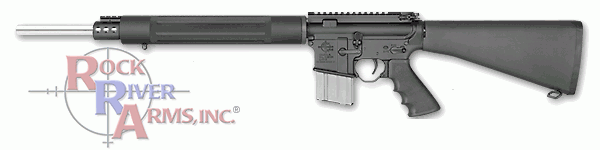
Rock River AR Wins Factory Division
There were some surprises this year in the Factory Division. While many folks expected a Savage 6BR or 6.5-284 to win, that wasn’t in the cards. This year a semi-auto ‘Black Rifle’ outshot all the factory bolt guns. Greg Davis scored 72 points with his .223 Rem Rock River AR15 to win the Factory division by a comfortable margin. The next best Factory shooters, Jeff Godfrey and Jason Elmore, both had identical 59-point totals. Godfrey was awarded second place over Elmore on a tie-breaker.
Challenging Conditions on the Range
Conditions at the Hickory were pretty tough this year. Sam Hall, a past Hickory winner and IBS Shooter of the year explained: “It was difficult this year, with 20+ mph, gusty winds in the afternoon. This is a ‘no sighters’ match and I was having trouble with my cold bore zero. I wasn’t the only one.”
The 6 BRDX — The Best BR Improved Yet?
Shooting his new 6 BRDX, Sam finished eighth in Custom Division, with 73 points. Sam likes the 6 BRDX chambering, which is a 6BR Improved with a 40° shoulder, but with a longer neck than a BRX or Dasher. “I’m real happy with the BRDX… I think it is as accurate as a BRX or Dasher, but the brass is much easier to form. Randy Chappell told me the same thing. I think it has enough case capacity to hit the velocities we want. The BRDX was shooting ‘lights out’ earlier this year, but I think maybe my tune wasn’t right for the conditions at the Hickory.”
In a near-perfect performance, Sarah Scherer, a sophomore at Texas Christian University (TCU), claimed the gold medal in Women’s 10m Air Rifle at the ISSF World Cup Korea. Scherer entered the final round tied with Poland’s Agnieska Nagay, a two-time Olympian. Scherer then nailed an impressive 103.5 score in the final, to finish with 501.5 total points, winning by one point. Nagay finished with 500.5 total points (398+102.5) for the silver medal and a quota place for Poland. Finishing third was Serbia’s Ivana Maksimovic with 499.4 total points (397+102.4).
Sarah, an All-American and NCAA Champion shooter at TCU, wowed the crowd. National Rifle Coach Major Dave Johnson said, “Sarah was a focused machine. I was impressed with her control and determination.” You can watch Scherer shoot in the ISSF Video below (action starts after 35-second intro).
Not only is this a huge accomplishment for Scherer, she also brings home a much-needed 2012 Olympic quota for Women’s 10m Air Rifle. In an ISSF interview, Scherer said, “It has been my first time in a final, and it was a bit intimidating to shoot shoulder to shoulder with these experienced athletes. But I have been training hard to get here, so I was quite confident. It feels great to win a quota place for my country.” This was Scherer’s first ISSF Gold. But she is no stranger to the podium. Sarah was the 2010 NCAA National smallbore rifle champion and the 2010 USA Junior Olympics air rifle champion.
Forum member Jerry Tierney reports that the Sacramento Valley Shooting Center (Folsom Shooting Club) had a great turnout for its 600-yard high power prone and F-Class match this past weekend. There were 55 shooters total, with more F-Class shooters than prone shooters, and the 20 F-TR shooters was the biggest . That’s impressive attendance for this early in the season.
Noma Mayo Wins Prone, Pete White Wins F-Open, Sean Mattson Wins F-TR
Jerry Tierney reports: “I really hate to say this but, Lane got beat by the girl again. Prone winner was Norma Mayo with a 599-43X, edging runner-up Lane Buxton who shot 598-40X. That is a bunch of Xs!” Interestingly, If Noma had shot on the F-class target (using iron sights and sling) her score would have been 582.
F-Open winner was Peter White, who posted 592-33x to edge Jerry Tierney on X-Count. Jerry shot 592-20X for second place. Jerry was shooting his 7mm SAUM (with Berger 180gr Hybrids) while Peter was shooting his 6BRX with Varget, Berger 108s, and CCI BR4s. Forum member Sean Mattson shot 555-16X, finish first in a large F-TR field. With 20 shooters, F-TR was the most popular class.
NBRSA 600-Yard and 1000-Yard Nationals Coming Soon
One reason this Match was so well-attended by F-Classers is that the NBRSA 600-Yard and 1000-Yard Nationals plus a 1K F-Class Bench Match will be held later this month in Sacramento, so this weekend was an ideal “tune-up” match. The entry/information forms are now available for the NBRSA 600-yard Nationals (Sloughhouse 600: April 20-21, 2011), 1000-Yard F-Class Bench Match (April 22, 2011), and 1000-Yard Nationals (Sloughhouse 1000: April 23-25, 2011). All three major events will be held at the Sacramento Valley Shooting Center, located outside Sacramento, California.
The 2011 NRA Intercollegiate Rifle Club Championships, hosted by Clemson University, conclude today. We have final results from the Air Rifle competition which wrapped up earlier. Clayton Peck of Michigan State won the overall air rifle title with a 582 score. Clemson’s Dylan Smith took second with 570, barely edging Tori Kostecki from North Georgia CSU who posted a 569. In team competition, Clemson won gold, Penn State took second, while West Virginia finished third. Below is a slide show with images from the air rifle finals which took place at The Citadel Marksmanship Center.
The winter 2011 digital edition of the CMP’s On the Mark Magazine is now available online for free in PDF format. This latest edition of On the Mark contains a number of interesting articles for competitive shooters including a great article on the “mental game” by Gary Anderson, former Director of Civilian Marksmanship. In addition to recent match reports, you’ll find:
Mental Performance and Sports Psychology, by Gary Anderson, DCME
Motivation: How to Stay ‘On the Mark’, by Lisa Markland
Three-Position Air Rifle Rule Interpretations
Profile of SFC Josh Olson, USAMU Paralympic Competitor, by Steve Cooper
Five Competition Classes in Take-5 Events
There five (5) different classes for competition, as listed below. A shooter may enter different classifications for pistol and rifle.
Great Location for Family Getaway
This Editor has often competed at the Morro Bay shooting range facility. This is a great venue for a weekend getaway. The range is close to the ocean, with affordable hotels and good camping facilities nearby. You can bring the whole family. There’s plenty for them to see and do.


 If you missed this week’s
  Competitors shoot all four weapons in sequence, off-hand, over a timed course. To add challenge, each shooting station offers an unstable platform — with wood planks that swing, wobble, or bounce. At left you can see the AR15 station — a wood platform suspended by ropes. You’ll be surprised with the performance of some of the favored shooters (including Gunny Zins), and you’ll see why it may be a good thing that the U.S. Military switched from the 7.62 NATO cartridge to the 5.56 round. Most of the shooters had big problems with the heavier-recoiling 7.62×51 “battle rifle” at 100 yards.
 The 2011 MidwayUSA/NRA Bianchi Cup National Championship will take place in Columbia, MO, May 25-28. This major event draws shooters from all over the world. In 2010, international competitors hailed from Australia, Canada, Germany, Italy, Japan, New Zealand, Netherlands, Switzerland, and the United States. Firearm categories include: Open Division, Metallic Sights, Service Pistol, and Revolver. In addition there be awards for the top shooters in specific classes: Law enforcement, Women, Junior, International, Newcomer, Senior, Grand Senior.
 Challenging Conditions on the Range
 In a near-perfect performance,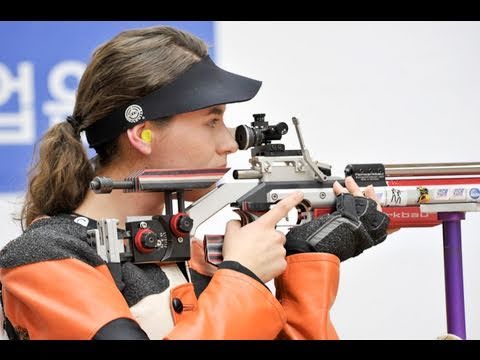


 The 2011 NRA Intercollegiate Rifle Club Championships, hosted by Clemson University, conclude today. We have final results from the Air Rifle competition which wrapped up earlier. Clayton Peck of Michigan State won the overall air rifle title with a 582 score. Clemson’s Dylan Smith took second with 570, barely edging Tori Kostecki from North Georgia CSU who posted a 569. In team competition, Clemson won gold, Penn State took second, while West Virginia finished third. Below is a slide show with images from the air rifle finals which took place at The Citadel Marksmanship Center.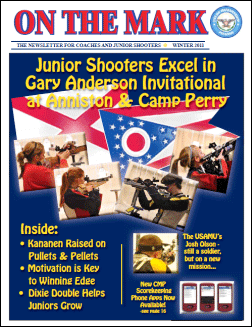
 The
The 


