|
|
December 14th, 2010
 The NRA has licensed Krüger Schießscheiben (Krüger) to produce official NRA targets for use in Europe and worldwide. Krüger, a family-run company based in Dillingen/Saar, Germany, was the smart choice. Since 2004, Krüger has been the official target supplier of the International Shooting Sports Federation (ISSF). Krüger currently produces targets for a wide variety of disciplines: air pistol, air rifle, running target, 300m centerfire, and both rimfire and centerfire benchrest. Krüger also makes archery targets. The NRA has licensed Krüger Schießscheiben (Krüger) to produce official NRA targets for use in Europe and worldwide. Krüger, a family-run company based in Dillingen/Saar, Germany, was the smart choice. Since 2004, Krüger has been the official target supplier of the International Shooting Sports Federation (ISSF). Krüger currently produces targets for a wide variety of disciplines: air pistol, air rifle, running target, 300m centerfire, and both rimfire and centerfire benchrest. Krüger also makes archery targets.
 Mike Krei, the NRA’s director of competitive shooting, announced: “The Krüger Target Company and the NRA have signed a five year license agreement that allows Krüger to produce many of the targets used in NRA competitions. Company owner Mr. Andreas Krüger and Sales Manager Joachim Seibold flew in from Germany to work out the contract and now they will be manufacturing NRA targets both nationally and internationally”. Mike Krei, the NRA’s director of competitive shooting, announced: “The Krüger Target Company and the NRA have signed a five year license agreement that allows Krüger to produce many of the targets used in NRA competitions. Company owner Mr. Andreas Krüger and Sales Manager Joachim Seibold flew in from Germany to work out the contract and now they will be manufacturing NRA targets both nationally and internationally”.
Browse Wide Selection of Krüger Targets
While Krüger specializes in competition targets, it also produces a large selection of fun targets and hunting targets as well. These can all be ordered through Krüger’s website (or via catalog), and yes, the targets can be shipped from Germany to the USA. Click on the catalog cover at left to download the current English-language Krüger Targets catalog as a 56-page PDF file (5.6 MB).
Here are some of the fun targets produced by Krüger. Click on the small images to see a larger version. After viewing, click browser “Back” button to return to this page. NOTE: These are NOT hi-rez images to be down-loaded and reprinted. However, Krüger’s fun targets may give you some ideas for creating your own specialty and holiday targets. See more targets on Krüger’s website, www.best-targets.com.
Krüger Fun Targets — Click to View
NOTE: After viewing larger target image, click browser “Back” button to return to this page.
December 11th, 2010

Jeff Stover, president of the International Benchrest Shooters (IBS), told us his organization is looking to grow the ranks of shooters in registered benchrest matches. As part of that effort, the IBS Executive Board has commissioned two online surveys to gauge the opinions of both active benchresters and the general precision shooting community. Below are links to the two surveys. The first is for current, or former, benchrest competitors and the second is for NON-benchrest shooters. Jeff adds: “The survey takes only a few minutes to fill out.” So have at it guys…
IBS Surveys (Click Link to participate):
For Benchrest Shooters | For NON-Benchrest Shooters
Results of the survey will be presented and discussed at the IBS Annual Meeting on January 15, 2010 in Harrisburg, PA. Details of the meeting, and the survey results, will be posted on the IBS web site within 48 hours of the meeting’s conclusion.
The Future of IBS Competition — Comments by Jeff Stover
The primary purpose for the surveys is determine how we can grow benchrest shooting. We realize there are a lot of shooters that were once into the sport but have drifted away. Why? Have they found something else, or are we doing something wrong?
The second group we want to reach are serious shooters that do not consider themselves to be benchresters. How do they view us? Are they interested in learning more? How can we help?
By design, the surveys contains some quite provocative and controversial questions. Some questions seek opinions on caliber-neutral scoring in Score and whether the two benchrest organizations should be combined. We even tackle the age-old questions about competitions for factory rifles and whether there should be shooter classifications.
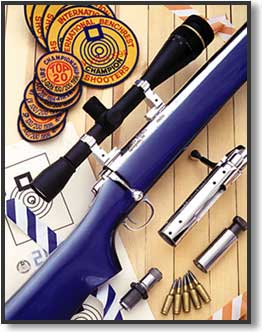 I have been thinking a lot about benchrest in comparison to the other shooting disciplines. In doing so, it is nearly impossible to avoid buzz words, such as “elite”, “ultimate” and “cutting edge”. Simply put, benchrest shooting CAN be described as such, because that is what we do. If that turns off some, so be it. The rifles that sit on the rests aimed at IBS or NBRSA targets from 100 to 1000 yards ARE the most accurate on the planet. Note I did not say “some of the most accurate”. I have been thinking a lot about benchrest in comparison to the other shooting disciplines. In doing so, it is nearly impossible to avoid buzz words, such as “elite”, “ultimate” and “cutting edge”. Simply put, benchrest shooting CAN be described as such, because that is what we do. If that turns off some, so be it. The rifles that sit on the rests aimed at IBS or NBRSA targets from 100 to 1000 yards ARE the most accurate on the planet. Note I did not say “some of the most accurate”.
Probably the most challenging part of our game is there is NO room for error. A group or aggregate that measures, say .270″ is a far cry from a .170″. Point out a .10″ tick mark on a ruler to the average Joe and tell him that is the distance that represents the difference between great and average. I think the very nature of our discipline appeals to a particular type of individual. We are trying to place each shot in the same hole or on top of a small ‘x’. It is hard to dabble in benchrest. It is a bit of an “all or nothing” game.
Selling our sport can be a little difficult. Some of the uninitiated think it is either too complex or too easy (see the comments on this benchrest video on Youtube if you want to lose your lunch).
I don’t mind that we are a “niche” sport, but we need to be a critical mass to make sure the normal weekend shoots have healthy numbers. Interestingly, most of the really large shoots, such as both Nationals and the Super Shoot have held their own in recent years. So, maybe the economy does play into the number of shoots that a person attends. There is a question to that effect in the survey.
Recently, I had a call from a fellow that is building a sophisticated range here in the east. He was not a benchrest shooter, but wanted information on what we needed so that he can host registered matches. He directly told me that benchrest was important because that is where all the accuracy improvements were coming from and he felt his range needed to cater to our discipline. Enough said.
Comments can be directed to me at jstover33 [@] comcast.net. — Jeff Stover, IBS President
December 10th, 2010
 USA Shooting has named Kim Rhode and Staff Sgt. Joshua Richmond as the 2010 Female and Male Athlete of the Year. Rhode had an outstanding year with a World Championship title, a National title, two World Cup gold medals, a World Cup Final silver and an equaled world record. Just three weeks after Nationals, Rhode took on the top shooters in the world at the World Shooting Championships in Munich, Germany. Rhode won the gold medal and World Champion title with 97 out of 100 targets. National Shotgun Coach Bret Erickson said, “Kim is a dominating force on the international scene and has been for years.” USA Shooting has named Kim Rhode and Staff Sgt. Joshua Richmond as the 2010 Female and Male Athlete of the Year. Rhode had an outstanding year with a World Championship title, a National title, two World Cup gold medals, a World Cup Final silver and an equaled world record. Just three weeks after Nationals, Rhode took on the top shooters in the world at the World Shooting Championships in Munich, Germany. Rhode won the gold medal and World Champion title with 97 out of 100 targets. National Shotgun Coach Bret Erickson said, “Kim is a dominating force on the international scene and has been for years.”
Rhode currently leads the point total in U.S. Olympic Team selection, and unless another shooter equals or exceeds her point total, she will compete at the 2012 Olympic Games in London. That would be her fifth consecutive Olympic Games appearance (she has medaled in the previous four). In London, Rhode would have a chance to become the first individual-sport American athlete to medal in five consecutive Olympics.
Richmond Rises to Top in 2010
Staff Sgt. Joshua Richmond was a world-beater in 2010, finishing as the ISSF World Champion in double-trap. Josh began his impressive year in Acapulco, Mexico at the first shotgun World Cup of the season. Richmond scored 192 out of 200 targets for the gold medal. In Colorado Springs, Richmond won the silver medal at the USA Shooting National Championship with 333 out of 350 targets.
In the video below, you can watch Richmond win the Gold Medal for Men’s Double-Trap at the 2010 ISSF World Shooting Championship in Munich Germany. In Munich, Richmond was on fire. He nailed 146 out of 150 targets in qualification and shot a perfect 50 in the final. That gave Josh a total of 196 out of 200 targets — equaling the world record, and securing the World Championship.
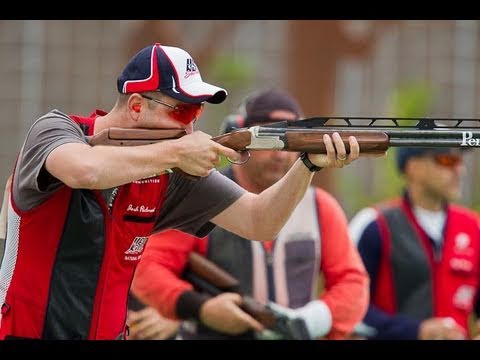
Richmond is stationed with the U.S. Army Marksmanship Unit at Fort Benning, GA, where he is training in preparation for the 2012 Olympics. Richmond credits the USAMU for his success: “I would like to thank the USAMU for molding me into a champion.”
December 8th, 2010
 If you get the Outdoor Channel, tune in to the ShootingUSA hour of programming tonight. The first half-hour features the Fort Benning 3-Gun Match, one of the most popular multi-gun matches of the year. This is the only Multi-gun match that draws on the assets of the US Army — that means competitors get to ride in armored fighting vehicles on some stages. This year the match was designed to represent different army units, beginning with basic training and a DI yelling commands at the competitors. Below is some helmet-cam footage shot by our friend Zak Smith at the 2008 Fort Benning 3-Gun Match. In this stage, which was based on a “Sgt. York” scenario, Zak starts in the back of a Bradley Fighting Vehicle and proceeds into a trench system to engage pistol targets. If you get the Outdoor Channel, tune in to the ShootingUSA hour of programming tonight. The first half-hour features the Fort Benning 3-Gun Match, one of the most popular multi-gun matches of the year. This is the only Multi-gun match that draws on the assets of the US Army — that means competitors get to ride in armored fighting vehicles on some stages. This year the match was designed to represent different army units, beginning with basic training and a DI yelling commands at the competitors. Below is some helmet-cam footage shot by our friend Zak Smith at the 2008 Fort Benning 3-Gun Match. In this stage, which was based on a “Sgt. York” scenario, Zak starts in the back of a Bradley Fighting Vehicle and proceeds into a trench system to engage pistol targets.
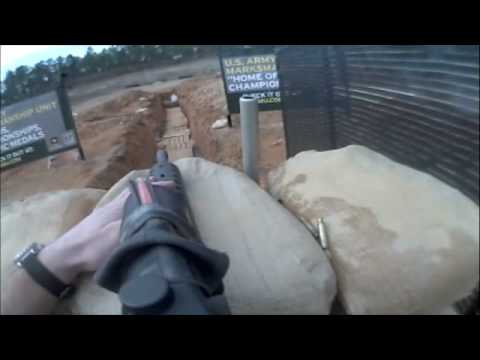
 The “Sighting In with Shooting USA” half-hour follows the Fort Benning feature. On this week’s “Sighting In” segment, soldiers from the US Army Marksmanship team (USAMU) action shooting team conduct a skills clinic for young shooters. This clinic focuses on basic skills and safety training. The USAMU Kids Clinic is the effort to help expand participation in practical shooting, and develop future champions in USPSA competition. The “Sighting In with Shooting USA” half-hour follows the Fort Benning feature. On this week’s “Sighting In” segment, soldiers from the US Army Marksmanship team (USAMU) action shooting team conduct a skills clinic for young shooters. This clinic focuses on basic skills and safety training. The USAMU Kids Clinic is the effort to help expand participation in practical shooting, and develop future champions in USPSA competition.
ShootingUSA TV and Sighting In air Wednesday on the Outdoor Channel at these times:
* Eastern Time: 4:00 PM, 8:30 PM, 12:00 Midnight
* Central Time: 3:00 PM, 7:30 PM, 11:00 PM
* Mountain Time: 2:00 PM, 6:30 PM, 10:00 PM
* Pacific Time: 1:00 PM, 5:30 PM, 9:00 PM
NOTE: Set your DVR to record both Shooting USA and Sighting In, listed as half hours.
December 6th, 2010
The 9th Annual SASS Convention and Indoor Championship will be held December 8-12 at the Riviera Hotel and Convention Center in Las Vegas, Nevada. At the Single Action Shooting Society’s annual gathering, SASS members can attend seminars on shooting skills, reloading, gun maintenance, stage planning, and match management. Firearms vendors will display their wares, and a wide variety of activities will be held, including: Indoor World Championship, Classic Cowboy Saloon Dance, Hall of Fame Induction, and Wild West Performers (e.g. Trick Ropers, Gun Spinners, and Bullwhip Artists). The Popular “Cowboys in the Sky” CW band will perform on Friday night.

Indoor Shooting Championship with Wax Bullets
The SASS Indoor World Championship of Cowboy Action Shooting is a three-day, nine-stage shooting competition to be held during the SASS Convention in Las Vegas. Competitors will shoot supplied firearms and wax bullets at steel targets in a variety of Cowboy Action Shooting scenarios. The ammunition is powderless, as the wax projectiles are propelled by standard primers only. This allows shooting indoors, within the convention center itself.
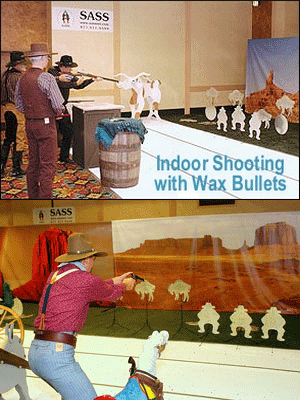 Editor’s Comment: Traditionalists may scoff at the use of wax bullets, but SASS has devised a form of action shooting that can be safely done indoors (on hotel premises) without ricochet risks and without pollution issues. By adapting its game to an indoor setting, SASS has added something new to the shooting sports, and has provided an exciting adjunct to its annual Convention. When shooters get together, they want to shoot. The wax-bullet technology allows SASS Convention-goers to enjoy shooting without traveling miles to a formal indoor or outdoor range. There may be something here that can be adapted to other shooting sports. We can certainly see the potential for winter indoors rifle training using primer-propelled wax bullets. Keep in mind however, that shooters must still employ normal safe-shooting procedures; even wax bullets can cause serious injuries. Editor’s Comment: Traditionalists may scoff at the use of wax bullets, but SASS has devised a form of action shooting that can be safely done indoors (on hotel premises) without ricochet risks and without pollution issues. By adapting its game to an indoor setting, SASS has added something new to the shooting sports, and has provided an exciting adjunct to its annual Convention. When shooters get together, they want to shoot. The wax-bullet technology allows SASS Convention-goers to enjoy shooting without traveling miles to a formal indoor or outdoor range. There may be something here that can be adapted to other shooting sports. We can certainly see the potential for winter indoors rifle training using primer-propelled wax bullets. Keep in mind however, that shooters must still employ normal safe-shooting procedures; even wax bullets can cause serious injuries.
Photo courtesy Single Action Shooting Society
November 30th, 2010
 The 3-Gun Nation Finals television broadcast airs this week on the Versus Channel. Held in September at the Desert Sportsmans’ Range in Las Vegas, the 3-Gun Nation Championship pitted many of the nation’s top multi-gun shooters in head-to-head competition. After a two-day qualifier to narrow the field, 16 of America’s top 3-gunners met in a single-elimination, man-on-man Final Tournament. $40,000 in prizes were up for grabs, with a fat $25K check for the overall winner. The 3-Gun Nation Finals television broadcast airs this week on the Versus Channel. Held in September at the Desert Sportsmans’ Range in Las Vegas, the 3-Gun Nation Championship pitted many of the nation’s top multi-gun shooters in head-to-head competition. After a two-day qualifier to narrow the field, 16 of America’s top 3-gunners met in a single-elimination, man-on-man Final Tournament. $40,000 in prizes were up for grabs, with a fat $25K check for the overall winner.
The action was fast and furious as, one-by-one, competitors were eliminated in the 3GN Championship Shoot-Off, an all-steel target course of fire, racing to the final stop-plate. In the Shoot-Off, all contestants used FNH arms: SCAR rifles, SLP 12-gauge shotguns, and FNX-9 semi-automatic pistols. We won’t spoil the drama by announcing the winner (you can check our Daily Bulletin archive for match results), but you can preview the event by watching this teaser video featuring Bruce Hiatt, Jerry Miculek, and SGT Dan Horner of the USAMU. More videos are found on the 3-Gun Nation Website.

3-Gun Nation Repeats on Mondays and Thurdays throughout December
This 3-Gun Nation Finals broadcast airs on Thursday, December 2, at 3:00 PM Eastern Time. The entire three-part championship block of episodes will repeat on Mondays and Thursdays throughout December.
November 27th, 2010
Over the past couple of weeks, State Long-Range Championships were held in California and Arizona. Many of the best shooters in the Western States were in attendance. In both CA and AZ, State titles were awarded in both High Power and F-Class disciplines.

California State Long-Range Championship, November 6-7, 2010
On November 6th and 7th, the California Long-Range Championship was hosted at the Coalinga Range. In the High Power division, Trevor Hengehold shot a brilliant match to finish first, and win the Championship, with a 795-36X score. Jim O’Connell was second with 783-37X which also earned him the High Senior Title. Dennis Flaherty had the next highest score (779-30X), and just two points behind Dennis was Gary Eliseo with 777-24X.
In the F-Class Division, Jerry Tierney, shooting his new 7mm RSAUM, won the championship with a 790-36X Score. Hot-shooting Brenda Hill took second with 780-31X, and Peter White was third with 773-19X. Though he had almost no time to practice with his RSAUM prior to the match (it was chambered the weekend before), Jerry was delighted with the gun’s performance: “This is the most accurate long-range rifle I’ve ever shot. And that’s saying a lot. I did get some load development help from Danny Biggs, who uses the same cartridge.” Jerry was shooting the new 7mm Berger 180gr “hybrid” bullets, with sorted Remington RSAUM brass, CCI BR2 primers, and Hodgdon H4831sc powder. The bullets were seated about 0.015″ off the lands and Jerry told us his load was running “real close to 3,000 fps”.

Jim O’Connell Reports: “Congratulations to Trevor Hengehold and Jerry Tierney, the two new State Champions (High Power and F-Class). Trevor started out in front and never looked back. Jerry posted some good scores on Sunday to come from behind for his victory. This was the last of the Big Coalinga matches for 2010. We get started early in 2011 with the State Fullbore Match in February (26-27) and the State Palma Match in March (5-6). We are planning on awarding F-Class titles at all the State prone Championships (Fullbore, Palma, and Long Range) in 2011.”
Arizona Long-Range Championship, November 20-21, 2010
At the Ben Avery Shooting Facility outside Phoenix, many of the best shooters in the Western states congregated last weekend for the season-ending Arizona Long-Range Championship. Conditions were challenging but the top competitors managed to master the switchy winds and post high scores. In the High Power Division, the match winner and new AZ State Champion is Rick Curtis. Congrats to Rick! Curtis finished with an impressive 986-45X Grand Agg, after posting a 591-24X Iron Sights Agg, and a 395-21X “Any Sights” Agg. Eddie Newman, the High Senior for the match, posted the next highest Aggregate score, a 985-37X. Phil Hayes also shot a 985 but with 34Xs. Middleton Tompkins followed Hayes with a 979-36X. Peter Church was next with a 974-43X (second highest X-Count), and our Contributing Editor German Salazar finished with 973-34X.
 In the F-Class Division, twenty-one shooters vied for honors. In F-Open, Texan Erik Cortina won the Championship with an impressive 972-17X. Charles Gooding was close behind with a 970-27X. Charles had high X-Count among all F-Class shooters. Freddy Haltom, shooting as a “Expert” had the third-highest score, an impressive 962-25X. Next in line was Tony Mangold with 944-19X. In the F-Class Division, twenty-one shooters vied for honors. In F-Open, Texan Erik Cortina won the Championship with an impressive 972-17X. Charles Gooding was close behind with a 970-27X. Charles had high X-Count among all F-Class shooters. Freddy Haltom, shooting as a “Expert” had the third-highest score, an impressive 962-25X. Next in line was Tony Mangold with 944-19X.
F-Open Champ Cortina offered this report: “I was able to pull it off last weekend and win the Arizona State LR F-Open Championship at Ben Avery. The winds were strong and switching, making it very challenging! We ended up shooting 5×1000 instead of 6×1000 as scheduled. On Sunday, we only shot two strings as the third was canceled because of rain. I was shooting my .284 Shehane with 180gr Berger VLD bullets. My winning gun is a switch barrel 6.5×47 Lapua / .284 Shehane built by Mark Pharr of Tumbleweeds Custom Rifles. This Lawton 7500-actioned gun is the same rifle I used to set Club Records at the Bayou Rifle Club in Houston: 600-49X at 300 yards, and 595-34X at 1000 yards.”
November 25th, 2010
Report By Steve Cooper, CMP
The 2010 Dixie Double Precision Air Rifle and Pistol Event gave junior and veteran shooters alike an opportunity to improve their game in a challenging environment at the 80-firing point CMP Marksmanship Center in Anniston, Alabama. Despite a calendar crowded with airgun events taking place nationwide and abroad, several of the country’s top air rifle and air pistol shooters brought their talents to the CMP Marksmanship Center during the 60-shot-times-two standing event, held Saturday and Sunday, 13 and 14 November.

A pair of US Army Marksmanship Unit soldiers took the top two podium spots in the open category of the CMP’s second annual Dixie Double Precision Air Rifle and Air Pistol Event, but University of Kentucky and USA Shooting’s Ashley Jackson, 22, wasn’t far off the pace. USAMU Shooter SFC Jason Parker finished first with a 1396 score, with his USAMU teammate SSG Hank Gray second with a 1385 score. Ashley Jackson applied pressure to members of the US Army Marksmanship Unit and took third overall with a 1381. Ashley finished with two impressive 100+ finals scores on each day of the 2010 Dixie Double.

Selina Curren, 14, picked up a BB gun for the first time a year ago and began shooting competitively with her 4-H club and has shown rapid improvement. At the 2010 Alabama Sports Festival she placed first in the 13 to 15-year-old class BB gun championship, second in the .22 rifle silhouette match and third in three-position .22 rifle match. A member of the Magic City Gun Club, coached by Perry Mitchell, Curren jumped to precision air rifle in September 2010 and made her first appearance at the Dixie Double this year.
“I’m learning things quickly,” she said after firing a second day score of 532 of a possible 600 in her second 60-shot precision air rifle standing match in two days. She improved by 30 points over her Saturday score of 502.
CLICK HERE to Read Full Story.
November 17th, 2010
by Steve Cooper, CMP Writer
 Having passed muster at the 2010 CMP Eastern and Western Games, the Vintage Sniper Match has been approved as the newest match to be held at Camp Perry in 2011, where the Sniper Match will be sponsored by Hornady Manufacturing. As it turns out, a top Hornady staffer excelled at the 2010 Western Games Sniper match, held recently at the Ben Avery Shooting Facility in Phoenix, AZ. The duo of Hornady’s Dave Emary, 52, and Bob Schanen, 62, placed first (out of 14 teams) with an Aggregate score of 559-11X out of 600 possible. Emary fired 141-2X and Schanen 148-4X at 300 yards and the tandem fired matching 135s at 600 yards with Emary scoring five Xs. Glendale “Don” Rutherford, 58, and Brad Donoho, 26, finished second with a 547-7X Aggregate. Emary, chief ballistic scientist at Hornady Manufacturing, said he proposed the idea for the match several years ago as a way to include the popular vintage sniper rifles which, until now, had no official competition format. Having passed muster at the 2010 CMP Eastern and Western Games, the Vintage Sniper Match has been approved as the newest match to be held at Camp Perry in 2011, where the Sniper Match will be sponsored by Hornady Manufacturing. As it turns out, a top Hornady staffer excelled at the 2010 Western Games Sniper match, held recently at the Ben Avery Shooting Facility in Phoenix, AZ. The duo of Hornady’s Dave Emary, 52, and Bob Schanen, 62, placed first (out of 14 teams) with an Aggregate score of 559-11X out of 600 possible. Emary fired 141-2X and Schanen 148-4X at 300 yards and the tandem fired matching 135s at 600 yards with Emary scoring five Xs. Glendale “Don” Rutherford, 58, and Brad Donoho, 26, finished second with a 547-7X Aggregate. Emary, chief ballistic scientist at Hornady Manufacturing, said he proposed the idea for the match several years ago as a way to include the popular vintage sniper rifles which, until now, had no official competition format.
 Vintage Sniper Match Course of Fire Vintage Sniper Match Course of Fire
The Vintage Sniper Match is a challenging prone slow-fire, two-person team event, fired at 300 and 600 yards using scoped vintage military rifles of the Korean War era and earlier. Both team members shoot and spot, alternating roles throughout the match. The event requires good communication and marksmanship in order to score well. After firing sighters at the 300-yard line, both team members fire 10 shots at a target that is exposed for only 20 seconds per shot. Targets are pulled and marked after each shot and the target rises again after a 20-second period. The team’s observer/coach may call out sight adjustments or “Kentucky Windage” corrections as needed prior to the following shot, until firing is complete.
With targets 600 yards in the distance, shooters of vintage military rifles must rely on their observer/coaches and knowledge of shooting conditions to give themselves an opportunity to score well in the new Vintage Sniper Match. After the first 10 shots are fired the shooter and the observer/coach switch positions, make ready and repeat the same sequence. Upon completion of fire at 300, teams move back to the 600 yard line and fire the course again. Though non-scoped rifles will be permitted at the 2011 National Vintage Sniper Match, priority for squadding will be given to competitors with scoped rifles first. Marc Mustafa, 57, of Littleton, Colorado said he enjoyed the Vintage Sniper Test Match because “he likes to move.” Used to shooting elk across the canyons in his home state, Mustafa said the new match format is right up his alley.

Because the match was a test event, each team member was given 15 shots for record at the Western Games but that total will be reduced to 10 (20 total) in the official match in 2011. Achievement awards were not presented following the test match, but the top three teams were acknowledged for their efforts. A total of 14 teams participated and their results may be found on CMP’s online Competition Tracker. For complete results of the Vintage Sniper Test Match and all 2010 CMP Western Games matches, log onto the CMP’s Match Results Webpage.

November 13th, 2010
Jonathan Ocab, a High Power shooter from California, had gunsmith Doan Trevor install a Sako-style extractor in the Rem 700 bolt in Ocab’s 6mmBR Eliseo R5 tubegun. Jonathan produced an excellent video showing how the Sako extractor improves the ejection of the short, fat 6mmBR cartridges in his rifle. Jonathan’s video demonstrates 6mmBR case ejection with an unmodified Rem 700 factory bolt versus a factory bolt fitted with a Sako-style extractor.
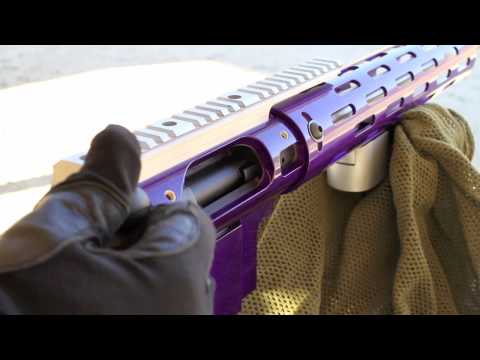
Johnathan explains: “Note how even when slowly operating the bolt, the bolt with the Sako extractor easily ‘kicks’ out the brass on ejection with minimal chance of operator error resulting in a failure to extract. While the unmodified bolt has issues ejecting brass on slow operation, it will eject if the operator pulls the bolt back quickly (fast and with some force).
While a Sako-style extractor isn’t an absolute necessity, this video shows the definite improvement this modification provides. For short cartridges like the 6mmBR, this is very useful. This modification is highly recommended for competition shooters, especially High Power competitors who seek improved function in rapid-fire stages. This modification is fairly inexpensive and any competent gunsmith should be able to perform the work (usually under $100 with parts and labor).”

EDITOR’s NOTE: In his video, Jonathan deliberately worked the unmodified Remington bolt slowly to show how the standard Rem extractor can struggle with short fat cases like the 6mmBR. In fact, when you work a standard, unmodified bolt more quickly, the extraction can be much more positive. Cycling the bolt with more “snap” provides more energy to eject the cases. We have run an R5 Tubegun chambered in 6mmBR with an unmodified Rem 700 bolt (no SAKO extractor), and the extraction was reliable, provided the bolt was worked quickly.
|


