|
|
November 12th, 2010
 The U.S. Army Reserve Shooting Team (USAR) performed superbly at this year’s Armed Forces Skill at Arms Meeting (AFSAM), conducted in October at Camp Robinson, Arkansas. The USAR Team captured the Overall AFSAM championship and the coveted Lexington Green Trophy. The U.S. Army Reserve Shooting Team (USAR) performed superbly at this year’s Armed Forces Skill at Arms Meeting (AFSAM), conducted in October at Camp Robinson, Arkansas. The USAR Team captured the Overall AFSAM championship and the coveted Lexington Green Trophy.
First held in 1991, AFSAM is an multi-nation shooting competition open to all NATO countries. At AFSAM 2010, competitors hailed from seven countries. Eighteen formal teams competed, with several more squads shooting for honors. In addition to U.S. Army Reserve and National Guard teams from the United States, shooters from Canada, Australia, England, Netherlands, Denmark and Norway competed in this year’s events.
Strong Individual and Team Performances
USAR shooters started strong in the nine individual events, taking seven first places, five second places and five third places. In the overall individual rifle aggregate, USAR team members took gold for first place and four of the top ten places. In the individual pistol aggregate, USAR shooters took first through fourth and secured six of the top ten places..Most impressively off all, USAR team shooter MSG Lance Espinosa won first place overall in both rifle and pistol matches.
 In team events, USAR teams took five first places, two second places, and four third places, earning trophies in nine of the ten AFSAM team events. In AFSAM team competition, National Teams vie for the Lexington Green Trophy, a Grand Aggregate comprised of the International Service Rifle match and Close Quarter Battle (CQB) match. The first is shot from 100 to 500 yards and ends with a run down, shooting at every yard line from 500 back to 100. The Close Quarter Battle starts with a mock casualty evacuation and ammo resupply exercise, requiring teams to run with two litters each loaded with 150 pound “casualties” and sprint to the firing point with eight 30 pound ammo cans. Shooters then fire four stages of a close quarters battle course. In this demanding CQB Match the USAR team finished 93 points ahead of the next closest team. That secured Lexington Green Trophy for the USAR team, as well as the overall AFSAM win. In team events, USAR teams took five first places, two second places, and four third places, earning trophies in nine of the ten AFSAM team events. In AFSAM team competition, National Teams vie for the Lexington Green Trophy, a Grand Aggregate comprised of the International Service Rifle match and Close Quarter Battle (CQB) match. The first is shot from 100 to 500 yards and ends with a run down, shooting at every yard line from 500 back to 100. The Close Quarter Battle starts with a mock casualty evacuation and ammo resupply exercise, requiring teams to run with two litters each loaded with 150 pound “casualties” and sprint to the firing point with eight 30 pound ammo cans. Shooters then fire four stages of a close quarters battle course. In this demanding CQB Match the USAR team finished 93 points ahead of the next closest team. That secured Lexington Green Trophy for the USAR team, as well as the overall AFSAM win.
November 7th, 2010
 The Ruger Rimfire Challenge World Championship concludes today at the Hogue Range near Morro Bay, California. This is a unique, family-friendly two-gun shooting event using rimfire handguns and rifles. Competitors engage steel targets in a variety of scenarios. There are separate classes for revolvers and self-loading pistols. A wide variety of rimfire rifles are allowed, including semi-auto, bolt action, pump action and lever-action. As you’d expect, Ruger 10/22s are the most popular choice in rifles. The Ruger Rimfire Challenge World Championship concludes today at the Hogue Range near Morro Bay, California. This is a unique, family-friendly two-gun shooting event using rimfire handguns and rifles. Competitors engage steel targets in a variety of scenarios. There are separate classes for revolvers and self-loading pistols. A wide variety of rimfire rifles are allowed, including semi-auto, bolt action, pump action and lever-action. As you’d expect, Ruger 10/22s are the most popular choice in rifles.
More Bang for Your Buck
For competitors, the Rimfire Challenge offers the same rapid-fire action as a centerfire Multi-gun match, but at a fraction of the cost. No big-buck custom firearms are needed, and with the low cost of rimfire ammo, a shooter can send hundreds of rounds downrange without breaking the bank. With the current tight economy, we predict increased interest in rimfire action shooting. Jim Shepherd of the Shooting Wire agrees: “With center-fire ammunition prices being what they are, .22 caliber rimfire makes a lot of sense. One indicator of the popularity of .22 caliber shooting is the Ruger Rimfire Challenge, a series of regional matches held across the United States. The finals are this weekend in California, and the [event has grown] far beyond expectations.”
At the Ruger Rimfire Challenge Championship, shooters compete in Junior and Senior Divisions, with separate awards for male and female shooters. It’s a great way for people of any age or skill level to get started in competitive shooting. In the video below, Ruger’s Ken Jorgensen explains how the Ruger Rimfire Challenge works, and why it has become so popular.

Superlative Range on the Pacific Coast
The Ruger Rimfire Challenge World Championship is held at the Hogue Action Pistol Range, a modern facility with 10 shooting bays. The Hogue Range is part of a large complex of shooting sports facilities operating on a former U.S. Army test range located between San Luis Obispo and Morro Bay, California. The public rifle range, located just North of the Hogue Action Pistol Range, is shown below. The San Luis Obispo region is a great weekend destination for the whole family, with beaches and tourist attractions nearby. Visit the San Luis Obispo Sportsmen’s Assocation (SLOSA) website to learn more about the Hogue Range and adjacent shooting facilities.

November 3rd, 2010
At clubs across the country, varmint fun shoots (also known as “groundhog matches”) are becoming more popular every year. In these matches, usually shot from the bench, you engage paper targets, clay pigeons, steel “critter” silhouettes, or some combination of paper and reactive targets. Shooters like these matches because you can shoot a wide variety of rifles, you don’t have to spend a fortune to be competitive, and there is fun for the whole family. Rules are inclusive — you won’t be turned away because your rifle is two ounces overweight. A large percentage of the match fees usually go back to shooters in the form of cash prizes. And the level of camaraderie is high.
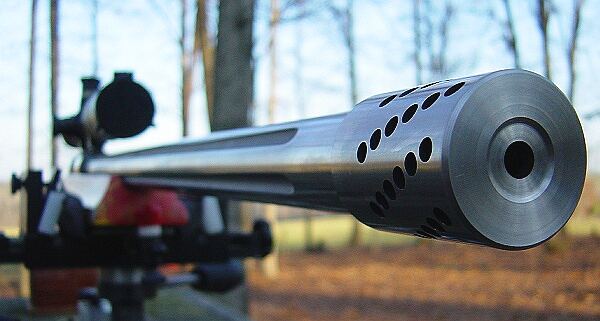
Harold Seagroves’ 3-time Hickory Ground Hog Match-Winning Rifle
 Inclusive Rules Welcome All Shooters Inclusive Rules Welcome All Shooters
Forum member Danny Reever recently explained the appeal of groundhog matches: “We don’t have a governing organization, or have to pay $50 a year membership just to compete in matches. Sure the rules vary from club to club, but you adapt. You build your rifle (or even pistol) to fall within the rules of either the clubs you shoot, or to fit all the clubs rules. If not there still is a class for you to compete in. If your factory rifle doesn’t conform to the rules, it can shoot in a custom class. If your custom doesn’t make weight for Light Custom (usually 17 pounds and under), you shoot it in heavy custom class. If you want to try your Tactical rifle or F-Class rig, bring it out there’s a class you can shoot it in. If you don’t like one club’s rules, you just don’t shoot there. It’s no big deal.
There are no National records, or Hall of Fame points — just individual range records. If you want to shoot in BIG matches (with big prizes), there is the Hickory Ground Hog Shoot among others. If competition isn’t your bag, many clubs offer mid-week fun matches that you can shoot just for fun. You shoot the same targets but with a more relaxed atmosphere with no time limits.
The best part is you don’t have to shoot perfect at every yardage. You always have a chance because in this sport it really isn’t over until the last shot is fired. Typically ALL the entry money goes to the host club, with much of the cash returned back to the shooters via prizes. Junior shooters often shoot for free, or at a reduced rate. That lessens the burden on the family’s wallet (not a small thing in these economic times). The low entry cost also encourages young guys to get involved who don’t have $4000 custom rifles or the money to buy them.
 More Fun, Fewer Complications More Fun, Fewer Complications
There isn’t a sea of wind flags to shoot over or to put up and take down. If the range has a couple of flags so much the better, but after all it is a varmint match. No pits to spot shots and slow things down either. If you can’t see your hits through your rifle scope or spotting scope well you are in the same boat as everybody else. That’s what makes it interesting/ sometimes frustrating!
As for calibers, I’ve seen everything from .223 Rem to .338 Lapua and everything in between. Our range record at my club is held by Bill Slattery, who shot a 147 out of a possible 150 with a 22BR 13 months ago. That’s on a target with a 1.250 ten ring at 200/300/500 meters. That record will stand for awhile, and shows you that some very good shooting is done at groundhog matches.
The best part is it’s laid back, everyone gets along, there is no place for big egos here. We who shoot the Ground Hog Matches don’t begrudge the other organizations and shooting disciplines, or those that shoot in them, heck some of us cross over and compete in registered benchrest matches too. Life’s too short, live and let live is our motto so just come out and have fun!”
Fellow Forum members chimed in:
FdShuster: “I’ve competed in our local ground hog matches for several years now, have introduced a number of others to them, and we all enjoy them and more importantly, continue to learn from them. Distances are as close as 100 yards, (with a 5/8″ 10 ring) to as far as 500 meters. with a 2″ 10 ring. Wind, mirage, bullet trajectories, all make them a challenge, and unlike shooting for group, where the group can be anywhere on the paper, in this game they must be very small, but also in the 10 ring. With the different classes, Custom, Factory, Hunter, almost any rifle will fit in somewhere. And Danny is correct about the friendly attitudes. I’ve seen competitors go out of their way, and jeopardize their chances of winning, to help someone else who may have a problem on the line.”
 Mike C: “Here in Texas, our version of groundhog matches involves shooting at clay pigeons at 400 yards. We use 60mm, 90mm, and 108mm clay pigeons attached to target boards. You have 10 shots to break 8 clays, with a seven-minute time limit. We have developed a good following at these matches. In 2011, a Shooter of the Year Award will be given based on the Aggregate score for three of our matches, which are held in Utopia, San Angelo, and Huntsville.” Mike C: “Here in Texas, our version of groundhog matches involves shooting at clay pigeons at 400 yards. We use 60mm, 90mm, and 108mm clay pigeons attached to target boards. You have 10 shots to break 8 clays, with a seven-minute time limit. We have developed a good following at these matches. In 2011, a Shooter of the Year Award will be given based on the Aggregate score for three of our matches, which are held in Utopia, San Angelo, and Huntsville.”
40X Guy: “I would have to say upon finishing my first year ever of ground hog matches, that the average Joe can grab his Swift, or his 25-06, or his 22-250 and go rip some holes in paper. Everybody is having a good time and its a gathering of like-minded people who have all shot chucks at some point or another. Even if one does not win the match, you can look at your target and say “darn that chuck target has five holes in him at 400 yards and he’s dead” just as well as the next guy shooting a custom bench rifle. Everybody fits in and everybody, 8 to 80, is having fun! It is addictive and will drive you to spend your hard-earned currency for sure!”
November 2nd, 2010
Brenda Hill of Bakersfield, California won the F-Class Regionals (Open Class) held in Coalinga, CA over the past weekend. In the course of winning the Regionals, Brenda set a new, pending, F-Class, Open Division, Womens’ score record at 1,000 yards. Brenda set the pending Women’s 1K Record with a score of 200-9X, breaking her own 199-9X NRA Record set on 10/25/2008.
Brenda was shooting a 6mm BRX built by Leroy Johnson of Johnson’s Precision Gunsmithing. Leroy has built many very accurate rifles for California shooters, and he is very knowledgeable about the 6BRX cartridge. Brenda certainly proved this little cartridge can be competitive at 1000 yards.

November 1st, 2010
 Here is the book we have all been waiting for. Tony Boyer, by far the greatest shooter in the history of short-range benchrest competition, has finally released his new 323-page book. It’s a beautiful product, full of color photos from cover to cover. Every serious benchrest shooter should read Tony’s book. He has dominated registered benchrest in a fashion that will never be duplicated. Tony Boyer has 142 U.S. Benchrest Hall of Fame points. That total is unprecedented. The next closest shooter, Allie Euber, has 47 Hall of Fame points. Here is the book we have all been waiting for. Tony Boyer, by far the greatest shooter in the history of short-range benchrest competition, has finally released his new 323-page book. It’s a beautiful product, full of color photos from cover to cover. Every serious benchrest shooter should read Tony’s book. He has dominated registered benchrest in a fashion that will never be duplicated. Tony Boyer has 142 U.S. Benchrest Hall of Fame points. That total is unprecedented. The next closest shooter, Allie Euber, has 47 Hall of Fame points.
The full-color book is 323 pages long, and there are color photos or color illustrations on nearly every page. The hard-cover first edition costs $42.50, while the soft cover version is $34.50. These are available from Bruno Shooters Supply, 1-800-455-0350. You can also buy directly from Tony Boyer’s publisher, Turks Head in Washington state, by visiting www.RifleAccuracyBook.com.
Special Limited Slipcase Edition, Signed by Tony Boyer — 500 Only
A total of 500 limited-edition, hardback versions of the Boyer book were printed. These 500 limited edition books are all signed by Tony Boyer. Cost is $64.50, and that includes a fitted external slipcase to protect the book’s cover. The Boyer-signed, limited edition books are offered exclusively through Turks Head. Call (206) 782-4164 (ext. 0) to order, or visit www.RifleAccuracyBook.com.
If you want a limited, signed edition, you should act quickly.
The Book Of Rifle Accuracy, By Tony Boyer
Hard Cover, Bruno Code: TBHC — Price: $42.50 | Soft Cover, Bruno Code: TBSC — Price: $34.50

October 30th, 2010
Top airgun and smallbore shooters competed this past week at the 2010 ISSF World Cup Rifle and Pistol Finals. In this season-ending World Cup, Russia led the pack of nations, taking an impressive total of five medals (four gold and one silver) out of ten shooting events. The USA was second with two gold medals and one bronze, while Italy finished third with one gold, two silver and one bronze.CLICK HERE for the complete match results posted on the ISSF-sports.org website.
Team USA put on a solid performance with three medals and six finals appearances. U.S. Army Sgt. 1st Class Daryl Szarenski won the Men’s 50m Free Pistol competition, finishing 5.5 points above the silver medalist. In an interview with the ISSF’s Marco Dalla Dea, Szarenski said, “This has definitively been my best season ever!”
 American Jamie Beyerle won the gold medal in Women’s 3-Position, 50m Rifle event. During the match, Beyerle shot an amazing 590 points to qualify in first place for the finals. Jamie also won the Air Rifle Champions Trophy (with a €500 prize from Sius Ascor), outdoing Germany’s Sonja Pfeilschifter. This was the second straight Champions Trophy for Beyerle, who also took the prize at the 2009 ISSF World Cup Final in Wuxi. In addition to her Gold Medal in 50m 3P, Jamie won Bronze in the Women’s 10m Air Rifle event. American Jamie Beyerle won the gold medal in Women’s 3-Position, 50m Rifle event. During the match, Beyerle shot an amazing 590 points to qualify in first place for the finals. Jamie also won the Air Rifle Champions Trophy (with a €500 prize from Sius Ascor), outdoing Germany’s Sonja Pfeilschifter. This was the second straight Champions Trophy for Beyerle, who also took the prize at the 2009 ISSF World Cup Final in Wuxi. In addition to her Gold Medal in 50m 3P, Jamie won Bronze in the Women’s 10m Air Rifle event.
Sgt. 1st Class Jason Parker was 1.5 points shy of medal contention in Men’s 50m Rifle Three Position. Parker finished fourth with a match score of 1170 points and the highest scoring final of 100.1 points. Teammate Sgt. Joseph Hein finished seventh in the Men’s 50m Rifle Prone event. Hein was in a four-way tie for third headed into the final, but fell short of a medal with a 101.8 point final for 698.8 total points.

October 24th, 2010
 The 2010 Western CMP Games & Creedmoor Cup Match in Phoenix, AZ concludes this morning with an EIC Service Rifle Match. Over the past week, many of the nation’s best “iron sights and sling” shooters vied for honors with Match Rifles, Service Rifles, Vintage Military Rifles, and Rimfire Sporters. This major annual event has drawn hundreds of competitors to the Ben Avery Shooting Facility outside Phoenix. Competition has been fierce, with some matches decided by just a point or two after multiple days. Initial results are available for many of the matches, which are listed below. Complete results will be posted on the CMP Match Results Page. The 2010 Western CMP Games & Creedmoor Cup Match in Phoenix, AZ concludes this morning with an EIC Service Rifle Match. Over the past week, many of the nation’s best “iron sights and sling” shooters vied for honors with Match Rifles, Service Rifles, Vintage Military Rifles, and Rimfire Sporters. This major annual event has drawn hundreds of competitors to the Ben Avery Shooting Facility outside Phoenix. Competition has been fierce, with some matches decided by just a point or two after multiple days. Initial results are available for many of the matches, which are listed below. Complete results will be posted on the CMP Match Results Page.

 Congrats go to all the competitors in attendance. Ronald Zerr (HMaster) and Joel Sylvia (Master), both shot great to earn Creedmoor Cup victories in the Match Rifle and Service Rifle classes respectively. Creedmoor Cup High Junior was Tyler Rico, while the High Senior was Sgt. Jeremy Hafenyager. In the CMP Classes Glendale Rutherford put on a dominating performance, winning the Springfield Match, As Issued EIC Match, and Vintage Military Rifle Match. Rutherford’s strong shooting earned him Three-Gun Aggregate top honors — Rutherford finished 21 points ahead of runner-up Bill Poole in the Agg. Maury Krupp won the hotly contested Garand Match, which saw 129 shooters on the firing line. Congrats go to all the competitors in attendance. Ronald Zerr (HMaster) and Joel Sylvia (Master), both shot great to earn Creedmoor Cup victories in the Match Rifle and Service Rifle classes respectively. Creedmoor Cup High Junior was Tyler Rico, while the High Senior was Sgt. Jeremy Hafenyager. In the CMP Classes Glendale Rutherford put on a dominating performance, winning the Springfield Match, As Issued EIC Match, and Vintage Military Rifle Match. Rutherford’s strong shooting earned him Three-Gun Aggregate top honors — Rutherford finished 21 points ahead of runner-up Bill Poole in the Agg. Maury Krupp won the hotly contested Garand Match, which saw 129 shooters on the firing line.
October 23rd, 2010
The United States Palma Team and USA Veterans Team recently ventured downunder to Queensland, Australia to compete in the Australian National Championships, held October 11-16 at the Belmont Shooting Complex outside Brisbane. The US Rifle Team travels well. Overall the Yanks performed great, with outstanding team and individual performances. Complete Match Results are posted at www.nraa.com.au. Team USA shooter Bryan Litz provides this Match Report…

U.S. Teams at Australian National Championships by Bryan Litz
The first match was the President’s Match, a two-day individual Aggregate with 10-shot strings fired at 600, 600, 900, and 1000 yards. Between the US Rifle Team and the US Veterans Team, we had five shooters in the top 20 (out of 128 shooters). That was a promising start.
Day 3 was the Chairman’s Team Challenge, a 4-man team match in which U.S. Teams Blue and Red captured first and second place. Conditions were challenging — during the first three or four days of shooting it rained constantly. There were several cease-fires called each day because of rain. We all learned how to cover our equipment and sights to stay dry while shooting.

 Litz Tops Field in Queen’s Prize Match Litz Tops Field in Queen’s Prize Match
Then began the 3-day Queen’s Prize match which is fired at 300, 500, 600, 800, 900, and 1000 yards. I managed to win this match, with a true come-from-behind performance. I went into the last day of shooting in 60th place. The extremely volatile conditions that last day (15-20 mph crosswind when shooting at 900 and 1000 yards) allowed me to make up so much ground on the leaders. For those who wonder, yes I shot “off the shelf” Applied Ballistics FULLBORE ammo to win the Queen’s Prize — the most prestigious match of the tournament. The winner is carried aloft in a ceremonial chair, proceeded by bagpipers and drums. You can see (photo right) that I enjoyed the pageantry.
The final individual event was the Royal Kaltenberg Challenge Cup, which is a shoot-off for an individual winner. The Cup was won by USA Shooter Noma Zinsmaster-Mayo. Congrats to Noma for a huge victory.
The President’s Challenge 4-man team match was swept by the Australian home team. The final event was an 8-man mini-Palma match which was won by Team USA.
 Preparation Paid Off for Team USA Preparation Paid Off for Team USA
It goes without saying that the recent adjustments made to the U.S. Rifle Teams program under Captain Dennis Flaharty are moving the team in a positive direction. Each of the U.S. Team wins in Australia were ‘come-from-behind’ victories where we made up ground at the longer ranges. That’s a testament to the coaching staffs’ skills and organization. The Sierra 2156 Palma MK bullet was used exclusively by the Americans in all Team events. Sierra’s 2156 MK continues to prove itself to be an outstanding bullet.
The 20 or so shooters on the US Veterans Team Captained by Eddie Newman also traveled
and performed very well in the tournament.
 Belmont Shooting Complex — World-Class! Belmont Shooting Complex — World-Class!
The Belmont Range near Brisbane, Queensland is a beautiful facility. Firing mounds are maintained like golf greens and there are over 25 flags. With great facilities (and no pit duty!), it’s truly the lap of luxury for Fullbore shooting. Belmont is the largest shooting complex in the southern hemisphere and most target shooting sports are conducted there. Coordinates: 27°30 ’40″S 153°7’50″E. It is the home of the Queensland Rifle Association (QRA). (Editor’s Note: Click the tab below the photo to see larger image — it’s even more impressive.)


The Top 10 Grand Aggregate Results (President’s Match, Queen’s Prize, Kaltenberg Cup combined) are listed below. Australian George Edser of the Central Club had the best Aggregate score with 646-050. The top American was Noma Mayo, two points behind, with 644-059.

October 22nd, 2010
More than two dozen of America’s best tactical shooters gathered for three days of competition at the Fall 2010 Alleghany Sniper Challenge, October 9-11, held at Seneca Rocks (WV) along the Eastern Continental Divide. This event is the only one of its kind that offers all steel targets at distances up to 1,200 yards and at varying angles across mountain valleys.

FNH Supplies Rifles for All Competitiors
However, it was the support of FNH USA which made the 2010 Fall Challenge a unique and true first of its kind all-equipment-provided event. FNH USA provided each competitor with one of its FN SPR A5 .308 long range precision rifles with standard 20-inch fluted barrels, McMillan stocks, and a MIL-STD optical rail with +20 MOA elevation. Competitors were also issued identical scopes, rings, slings, and Corbon ammunition. Apart from bipods, competitors were not allowed any other equipment such as GPS units or laser range finders.

“FN’s support was absolutely instrumental in making this match possible,” said Rod Hansen, who run the match along with co-Director John Markwell. “This match places each competitor on a level playing field and represents the most extreme and complete test of each shooter’s skill and knowledge of ballistics,” said Hansen. For more info on the FNH equipment used, call Tes Salb at(703) 288-3500 ext. 125, or email tess@fnhusa.com.
50 Shooters Participate in Two-Weekend Challenge
The Fall 2010 Alleghany Sniper Challenge takes place over two weekends, essentially becoming two matches. The first weekend match took place in September, and FNH USA provided all the rifles for that first weekend as well. More than 50 shooters took part and used FNH rifles over the two weekends.
ASC Counts Misses, Not Hits
Since Hansen and Markwell designed the match from the ground up they also made changes they felt would improve the experience for the competitors. Shooters engage almost 50 targets and are allowed to fire up to 125 shots, but they only count misses, not hits. The shooter with the lowest score wins.
The winners from the first weekend were: 1st Kevin Mussack of upstate, NY, 2nd Geoff Martel of Mt. Morris, NY, and 3rd Eric Underiner of Ringoes, NJ. Winners of the second match: 1st Pete Pi, Jr. from Cor-Bon in Sturgis, SD (who provided all the ammunition used), 2nd Rich Grinn of Clarkston, MI, and 3rd Chris Soyka of Iona, MI. FNH donated two rifles to be awarded as prizes (all prizes are awarded by random drawing and the winner of the match is only guaranteed a trophy).

2009 Fall ASC — Report and Photos
If you are interested in learning more about the Allegheny Sniper Challenge, Ian Kenney has written a detailed report, complete report for the 2009 ASC match. Kenney’s journal features some great photos and even a 3D Google Earth map with a birds-eye view of the target locations. CLICK HERE to read Ian’s 2009 match report, found on ShootingVoodoo.com.
October 22nd, 2010
 The USPSA National Handgun Championships were held October 9 through 16 at the Desert Sportsman’s Rifle & Pistol Club in Las Vegas, Nevada. Over 600 shooters put more than 250,000 rounds downrange in a quest for coveted U.S. Practical Shooting Association national titles in the Open, Limited-10, Limited, Production and Revolver divisions. The USPSA National Handgun Championships were held October 9 through 16 at the Desert Sportsman’s Rifle & Pistol Club in Las Vegas, Nevada. Over 600 shooters put more than 250,000 rounds downrange in a quest for coveted U.S. Practical Shooting Association national titles in the Open, Limited-10, Limited, Production and Revolver divisions.
K.C. Wins Opens Division — His First USPSA National Title
K.C. Eusebio won the Open division title, outgunning his nearest challenger by more than 73 points. K.C. notched his first Overall USPSA Nationals win with this impressive victory. The Team Limcat shooter who earlier this year won the Steel Challenge Nationals and the Steel Challenge World Speed Shooting Championships, put his speed and shooting skills on display as he won six of 18 stages and finished in the top five on all by three. However, Eusebio sat out the first day of competition waiting for his match ammo to arrive and had to make up the missed stages over the next two days of the competition. Second place in the match went to fellow Limcat shooting team member J.J. Racaza who posted a final score of 1649.2863.
Miculek Wins Yet Another Revolver Championship — But It Wasn’t Easy
Jerry Miculek once again won the Revolver Division, with a close victory over runner-up Matt Griffin. Miculek finished with 1680.7297 match points — mere 9.4980 points ahead of Matt. Getting to the top of the podium wasn’t a walk in the park though, as Miculek battled jetlag after returning from a match in Australia, an inner ear infection and a fly away front sight. Despite all the obstacles before him, Miculek won six of 18 stages and finished in the top five on all by one. No other shooter in any division in the competition came close to that kind of consistency.

Miculek competing earlier this year at the Steel Challenge. Photo Courtesy SteelChallenge.com.
“It was the longest three days of my life. I told my wife Kay it felt like I’d been here for a week,” joked Miculek.”It was the longest, hardest match and every time you pulled your gun out of the holster it was extremely difficult to try and survive the stage. Every time you made a shot it was a hard cover, no-shoot, long range disaster event. It was just nerve-wracking and I do believe it was the hardest [pistol match] I’ve ever shot,” said Miculek.
“There are some good shooters coming up,” said Miculek about his competition. “I’m getting toward the end of my competition lifespan, I guess you could say. I realize that physically so the younger bucks are going to start coming in and pushing the old bucks out. It’s just the way of the world and I left my mark and I hope they do well and leave their mark.”
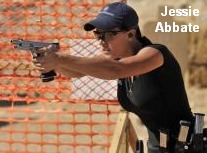 Jessie Abbate 3-Peats As USPSA Limited National Champ Jessie Abbate 3-Peats As USPSA Limited National Champ
Jessie Abbate won the USPSA Women’s Limited Division Championship for the third year in a row, finishing 75 points ahead of runner-up Lisa Munson. After finishing second in the earlier Open division contest, Abbate, adjusted her approach: “Coming into the Limited match, I decided that I had to be aggressive, I had to shoot my sights and let those be my speedometer,” said Abbate.
“This is a very hard match, especially for iron sights. There are more partial targets here than I’ve ever seen and I knew I had to be accurate. I had to be patient and let my sights tell me what to do.” That patience paid off as Abbate won 11 of the 18 stages in the match to post a final score of 1173.5946. Abbate used some Open Class techniques to her advantage in Limited Class: “I’ve been shooting mostly Open this year so and I’ve brought some things over from my open shooting to limited that have helped me a lot. Lots of speed, more shooting on the move and being a more aggressive shooter overall.”
Team Glock’s Dave Sevigny Wins His 6th Production Division USPSA Title
Competing in a field of 120 top Production division shooters, Sevigny had to come from behind to win. “Unfortunately I started out a little bit flat, and I think everybody at some point got sideways in this match. I’ve been in these situations before where I knew I had to lay the hammer down to go for the win, and I knew that today I had to do that.” Finishing second behind Sevigny was Team CZ shooter Matt Mink of Conway, Ark. who finished more than 80 points behind with a final score of 1556.5509.
Stories reported by Dave Thomas for USPSA.org.
|


