The CMP National Matches at Camp Perry, Ohio kick off July 7, 2023 with smallbore events. The Camp Perry matches are historic, having been held since 1907 at this location on the shores of Lake Erie. The 2023 First Shot Ceremony takes place Monday, July 10, at 4:30 p.m. on the grounds of Camp Perry. Multi-time Nat’l High Power Champion SFC Brandon Green will speak and make the traditional First Shot to officially open the National Matches.
For this week’s Saturday at the Movies, we offer six videos from Camp Perry. These cover both rimfire and centerfire shooting, team matches (including the famous “Rattle Battle”), along with pistol shooting. If you’re heading to Camp Perry this summer, today’s video showcase provides an informative preview.
CMP National Matches at Camp Perry — 2023 Preview
This 3-minute video shows the Camp Perry ranges and shooting facilities and explains the programs scheduled for summer 2023, including training courses. The video also covers nearby accommodations and explains how to register for the National Matches on the CMP website.
NTIT Team Match — “Rattle Battle” at Camp Perry
The CMP’s National Trophy Infantry Team Match (NTIT) has been a staple at the National Matches since 1922. Also known as the “Rattle Battle,” the event is one of the most unique in the competitive rifling world — scoring is based on how many hits six-person teams can score on a bank of targets during a series of 50-second firing periods at four yardages.
Watch CMP ‘Rattle Battle’ Video — 50 Seconds of Rapid Fire…
Teams fire upon eight silhouette targets from 600, 500, 300 and 200 yards during successive 50-second periods. After each rapid-fire string, team members move forward (to the next-closest distance) carrying all equipment from firing line to firing line. The video shows the California Grizzlies, one of the top junior squads. The lead photo shows the U.S. Army Reserve (USAR) Team in action during the NTIT match. See more in USAR “Rattle Battle” Video.
Camp Perry M1 Garand Competition — Vintage Military Rifle
The John C. Garand match is a Camp Perry classic. Note the signature Garand clip in the air.
The CMP hosts the popular M1 Garand Match as well as the Springfield M1A Match. This writer’s father carried a Garand in WWII — reason enough for me to want one. But I also loved the look, feel, and heft of this classic American battle rifle. And the unique “Ping” of the ejected en-bloc clip is music to the ears of Garand fans. Some folks own an M1 Garand for the history, while others enjoy competing with this old war-horse. The CMP’s John C. Garand Match is one of the most popular events at Camp Perry every year. There are other vintage military rifle matches.
Rimfire Sporter Event Draws Hundreds of Competitors
If there is a single CMP event at Camp Perry every summer that offers the highest level of shooter satisfaction, the most diverse group of competitors, and the lowest cost of entry, that would have to be the annual Rimfire Sporter Match. This year’s match will be held on Saturday, July 8, 2023, during the first weekend of the National Match Schedule at Camp Perry. One of the most popular annual Camp Perry events, the Rimfire Sporter Rifle match features .22 LR competition in open sights (O-Class), telescopic (T-Class) and tactical/unlimited (TU) classes, fired at 25 and 50 yards. A CMP Rimfire Clinic will be held prior to the match.
Each year, the Rimfire Sporter Match attracts hundreds of shooters to the shore of Lake Erie at Camp Perry. The CMP National Rimfire Sporter Rifle Match offers shooters a recreation-oriented competition where they use affordable, smallbore sporter rifles with either scopes or iron sights. All you need are a .22 LR rifle, sling, and ammo.
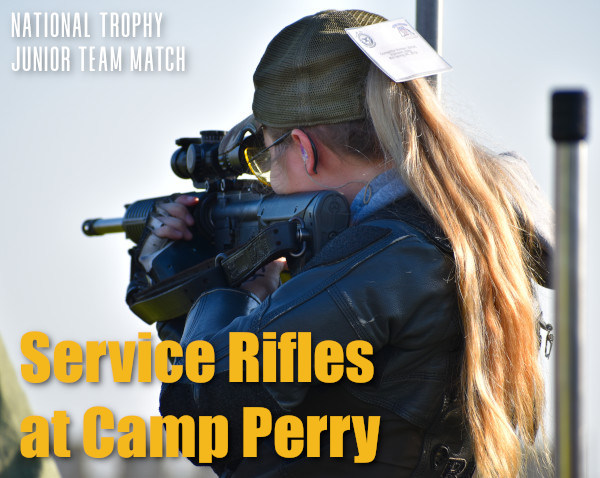
Service Rifle Matches — AR-Platform Rifles, Now with Optics
Service Rifle shooting is fun yet challenging. You need to develop skills with multiple positions and be able to make rapid wind calls. However, the modern AR-based service rifle is affordable and has relatively low recoil. Highly-customizable, modern service rifles can be fitted with adjustable stocks and optional magnified optics. Older military rifles, such as the M1A and M1 Garand, offer different challenges with heavier-recoiling cartridges, greater weights, and classic iron sights. Hi-Lux asked competitors at Camp Perry during CMP’s 2021 summer games what they enjoyed most about competition with service rifles and Military rifles such as the M1 Garand. The shooters’ responses had four key themes: Self-Improvement, Comradery, History (enjoying shooting rifles with heritage), and Challenge.
Camp Perry Bullseye Pistol Competition
Camp Perry hosts the most prestigious annual trophy matches in our nation’s history. And in a venue renowned for service rifle matches, the sport of precision pistol is no less important, no less challenging, and no less respected. The National Trophy Pistol Matches are all about traditional handgunning — the stance, the intense concentration, and of course, the one-handed grip. It’s all unmistakable as the game of Bullseye Pistol. Every year there are 20+ match trophies for the top Bullseye Pistol shooters, both military and civilian. And the very best will claim National Match Trophies and receive the President’s 100 Tab.
CMP Camp Perry National Matches Registration Links
The 2023 CMP National Matches at Camp Perry commence Friday, July 7, 2023 with the Rimfire Sporter Clinic and Smallbore check-in/practice. The summer schedule concludes Saturday, August 5 with the Palma Match and awards. Here is the full CMP schedule (click to zoom):
NOTE: This CMP Calendar is hosted online in spreadsheet format. This allows you to increase display size, and also to search for specific words. CLICK HERE to view full spreadsheet calendar.
History of Camp Perry
“In the year 1907 the machinery of the National Matches, now grown to immense proportions, was moved to the mammoth new range at Camp Perry.”
—James Drain, Arms and the Man, August 1911
Federal legislation originally launched the National Matches. The 1903 legislation also established the National Matches, commissioned the National Trophy and provided funding to support the Matches. The National Matches have been held at Camp Perry since 1907. The range is located along the shores of Lake Erie in northern Ohio near Port Clinton. The site was first acquired in 1906, in response to the need for a larger facility for military training and the NRA’s shooting programs. The original land for Camp Perry was purchased in 1906, and the reservation was named after Commodore Oliver Hazard Perry, the American naval commander who won the Battle of Put-in-Bay during the War of 1812.
On August 19, 1907, Cpl. L. B. Jarrett fired the first shot at the new Camp Perry Training Site. And that year, 1907, Camp Perry held its first National Pistol and Rifle Championship events. This location has hosted the annual National Matches ever since. Typically over 4,000 competitors attend the National Matches each year, making it the most popular shooting competition in the western hemisphere.
For three consecutive years, MidwayUSA Foundation has provided cash Coach Training Grants to support the training and certification of youth shooting sports coaches. This year, 52 cash grants were awarded for a total payout of $250,000. These grants will assist regional and state youth shooting agencies in training about 1,625 youth shooting sports coaches. This can, in turn, benefit 30,000 youth shooting athletes.
Coach Training grants are paid annually through the MidwayUSA Foundation. The grant cycle begins on February 1 and concludes on March 1 each year. CLICK HERE to learn more.
Brian Beard, President of USA Youth Education in Shooting Sports (USA YESS), said: “The Foundation’s Coach Training Grant Program has been instrumental in allowing us to train and certify more coaches for our shooting teams. The more trained coaches we have, the faster youth shooting sports will grow! We … can’t thank the Foundation enough!”
In addition to nearly 2,800 youth shooting team endowments, MidwayUSA Foundation also funds about 80 state and national youth shooting sports organizations through Agency and Donor Designated endowments. These organizations, including SCTP, SASP, ATA, ACUI, NCSSAA, and more, are eligible for the Coach Training Grant Program. Youth shooting teams interested in certifying more coaches should contact their state, regional, or national organization.
The MidwayUSA Foundation is a 501(c)(3) public charity working to sustain and grow the shooting sports industry by providing long-term funding to youth shooting teams. Donations are tax-deductible. The Foundation supports all shooting disciplines. For more information about the MidwayUSA Foundation, visit MidwayUSAFoundation.org or call 1-877-375-4570.
Thinking of getting started in the Practical/Tactical shooting game? Looking for ways to be more stable when shooting from unconventional positions? Then you may want to read Marcus Blanchard’s Practical Shooter’s Guide (A How-To Approach for Unconventional Firing Positions and Training). Unlike almost every “how to shoot” book on the market, Blanchard’s work focuses on the shooting skills and positions you need to succeed in PRS matches and similar tactical competitions.
Blanchard provides clear advice on shooting from barricades, from roof-tops, from steep angles. Blanchard says you need to train for these types of challenges: “I believe the largest factor in the improvement of the average shooter isn’t necessarily the gear; it’s the way the shooter approaches obstacles and how they properly train for them.”
Blanchard also offers good tips on shooting fundamentals. Here’s an example:
Blanchard on Trigger Control
“There will always be some amount of wobble when shooting in positions other than prone, and timing the shot to go off when the reticle is within the target is difficult to accomplish when poor trigger techniques are employed. The most common [mistake] I have seen is ‘slapping’ the trigger. The finger is usually hovering off the trigger, and when the shooter determines that NOW is the time to fire, they quickly pull their finger to the rear and ‘slap’ the trigger. The finger never pulls the trigger in the same place and often provokes a sympathetic contraction of the rest of the muscles in the hand, which results in unwanted movement before the bullet exits the muzzle.”
Author Marcus Blanchard has the credentials. A Marine Corps veteran, Blanchard is a regular Top 10 finisher in Precision Rifle Series events. In 2015 Blanchard was ranked 8th overall (nationwide) in the PRS series at year’s end. In 2016 Blanchard won the New Mexico Precision Rifleman’s Championship.
Check out the Table of Contents to see the Topics Covered:
Click image above to view larger Table of Contents.
6.5 Guys Recommend Practical Shooter’s Guide
The 6.5 Guys have reviewed Blanchard’s book and they recommend it highly: “What’s a good book for the beginning shooter who wants to get into long range precision rifle or the intermediate shooter who wants to improve his scores? [The Practical Shooter’s Guide] is particularly useful because it explores firing from various positions and props that are encountered in long range precision rifle [events]. This knowledge is completely missing from more traditional books where the shooter is usually slung up and shooting at a paper target. Marcus… goes into considerable detail about shooting from rooftops, reverse rooftops, side slopes, tank traps, barricades etc. This is the type of information that is very difficult to find. We consider ourselves reasonably knowledgeable shooters and this book provided us with new and useful information.” CLICK HERE for 6.5 Guys REVIEW.
6.5 Guys Review Marcus Blanchard’s Practical Shooter’s Guide
Former USMC scout-sniper Frank Galli explains that there is no voodoo when it comes to precision rifle marksmanship, but there ARE techniques that, when practiced, make the difference between good marksmanship and great marksmanship. Understanding the reasons that a bullet hits or doesn’t hit its intended target at ultra-long distances is a crucial element to learning.
Galli’s explanations of how to understand and compensate for wind speed and direction are excellent. In this book, Galli offers great wind-reading advice.
Published in 2020, Galli’s treatise is four years newer than Blanchard’s book, so it includes more of the latest gear and equipment. Galli’s book covers the fundamentals of precision marksmanship with easy-to-understand methodology. The book follows the same instruction process Galli uses in his live marksmanship classes (CLASS REPORT HERE).
Published in 2020, this well-illustrated, 272-page book covers the latest equipment (scopes, LRFs, chassis systems, magazines, bags, bipods, tripods) favored by tactical competitors in PRS/NRL type matches.
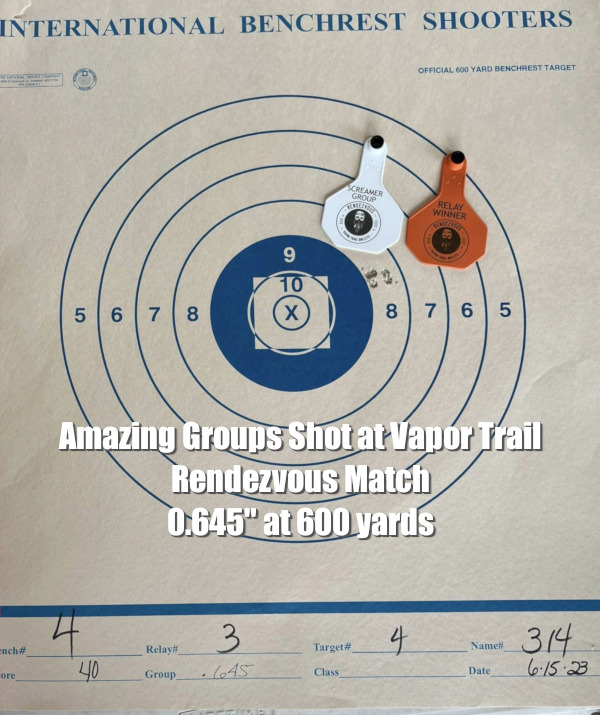
Modern long-range benchrest rifles are capable of remarkable accuracy. At the recent Rendezvous Match at the Vapor Trail Valley shooting club, some exceptional targets were shot. This is a special combined match with relays at both 600 and 1000 yards. Be amazed at the accuracy modern rifles can achieve at these distances. Match director Tom Jacobs reports: “We had two screamer groups under a inch at 600 yards, and six groups under 3″ at 1000 yards. Three of those were under 2.5″ screamers.”
New Range Record at 1000 Yards — 1.338″ 5-Shot Group
Dave Way set a new Vapor Trail 1000-yard Range Record for single 5-shot group. He had a wicked small 1.338″ group (0.128 MOA) with a 49 score.
New Single Target Small Group Record at 600 Yards — 0.645 (0.103 MOA)
At the Rendezvous, Jason Cohen set a new single-target small group range record at 600 yards. This was a 0.645″ group shot with a .284. That works out to 0.103 MOA (1 MOA is 6.282″ at 600 yards).
Multiple Agg and Overall Titles for Al Benarrock — and a $1500.00 Check
Al Benarroch had a phenomenal weekend. He won the 16 target 600yd/1000yd Ultimate Agg (Grand Overall), the 1000-yard 8-target group Agg with 4.953″, and the 1000-yard 8 target Overall. What a weekend for Al!
The match was a big success. Match director Tom Jacobs posted: “We had great weather at a match for once, temps were mild for us this time of the year, the winds were not bad at all but we did have quick switches, that the valley is known for. Mirage was bad at times, but no dam hurricanadors for once! We hung 778 targets down range, not including all the tuning targets throughout the week. We estimate 9336 rounds went down range for the match, not counting a week of guys tuning.”
What’s better than a super-accurate 6BR rifle? Well, two super-accurate 6BRs. This week we feature a pair of tack-drivers owned Forum member Mark Schronce. These “Brothers in Arms” share similar stocks, but otherwise the components are different. Mark’s 17-lb gray laminate Light Gun features a Hall action, HV taper barrel, and muzzle brake. The 21-lb Heavy Gun, in “Desert Camo” laminate, boasts a trick dual-port BAT action, and full-contour 30″ barrel without brake. Both guns shoot tiny groups, track like they’re on rails, and give Mark a serious hardware advantage in club competition.
Mark provides this report: “The Light Gun started as my 22-250 AI varmint gun, with a Hall action and McMillan Hunter Benchrest stock. I wanted to build a proper Egg Shoot gun, so I had Richard Franklin (Richard’s Custom Rifles) chamber a Lilja 12-twist in 6mm BR Norma, with a .262″ neck. Using Fowler 80gr FB bullets, the gun shot great right out of the gate. (See my report, Egg Shoots and 600-yard 6 BR). I was curious about the heavier 6mm bullets, so I had Richard chamber and fit a 1:8″ Krieger in 6BR. But this time we went with a .271″ no-turn neck. The Krieger holds quarter-MOA with the heavy bullets, and, to my surprise, it shot the 80s as well as the 12-twist Lilja did. For the 2005 season, I ordered one of Richard’s latest 008 F-Class stocks. This new design is very comfortable to shoot and it’s much more stable in the bags than my old Hunter stock. That added stability will be a big plus for 600- and 1000-yard benchrest matches.
A Heavy Gun for 1000-yard BR and “Belly Benchrest” (F-Class)
I’ve been active in 1000-yard Benchrest for a few years, shooting my 6mm BS and 6mm BR Light gun in both Light and Heavy classes. I wanted to build a rifle for the Heavy Gun Class yet stay within the 22-lb F-Class limit. And I wanted it to have the best hardware I could buy. On a BAT ‘MB’ action (with Jewell trigger) we fitted a 30″ 8-twist 3-groove Lilja, 1.250″ diameter, no muzzle brake. Richard cut the chamber for 6mm BR Lapua Brass, .271″ no-turn neck, throated for Sierra 107gr MKs, matching my current Light Gun. The stock is a pillar-bedded Richard’s 008 1000-yd/F-Class model, with 10 coats of auto clearcoat, all work by Richard. Burris Zee rings hold a Leupold 8.5-25×50 LRT mounted on a BAT one-piece Weaver base. The Heavy Gun weighs in at 21 lbs, much lighter than most Heavy Guns (50 to 100 lbs). But with the 6BR’s light recoil, it’ll do just fine for long range, yet still make weight for F-Class.
Why a 6mm BR Chambering in a Heavy Gun?
I toyed with the idea of going with a 6BR Improved for Heavy Gun, but I’m not convinced the Improveds are worth the extra hassle of fire-forming, not to mention the added cost of custom dies. By way of background, I used to have a Rem-actioned rifle chambered in 6BR BS (Bill Shehane), which is very similar to the 6BR Dasher. I found the 6BR BS was only about 100 fps faster than a standard 6BR. For the shooting I do, that extra 100 fps is not critical. If, in the future, I feel I need more speed, I will go to a .243 AI or a 6.5-284. To be honest, I love the 6BR cartridge. Barrels last forever, and the accuracy can’t be beat. Yes a 6BR is a little light for everyday 1000-yard shooting, but on good days it can set world records. I may move up to a 6.5-284 some day, but for now I will stay with the standard 6mm BR. If I ever do want to go to a bigger caliber, the 8.5-inch BAT Machine MB action gives me this option.
Hall vs. BAT Light vs. Heavy
Comparing the two actions’ bolt lift, lock-up, fit, and finish, I feel they are equally good. However, the BAT can run stout loads with Federal 205 primers — loads that cratered Fed 205s with the Hall. I don’t know if this is a function of the actions’ engineering, or the barrels. I’ve got a Lilja on the BAT, while the Hall wears a Krieger. I do know the BAT has a tight-fitting firing pin, and that might make a difference.
Both my actions have a built-in recoil lug — a really nice feature when you are changing barrels, and one of the main reasons I favor custom actions over a Remington. I think anyone would be pleased with either the BAT or the Hall.
There is a big difference in shooting a Light Gun vs. a Heavy Gun, as you might expect. The Heavy Gun is more stable and recoils straight back. However, even at 21 pounds, the Heavy Gun actually recoils harder into your shoulder than the muzzle brake-equipped Light Gun. But if you take the Light Gun’s brake off, and put the action back in the old Hunter bench stock, the gun would jump, torque and roll. It’s much better with the 008 stock now, but still not as rock solid as the Heavy Gun. On recoil the 21-pounder just tracks straight back, no jumping, no yaw, no rolling–very impressive.
Load Development and Accuracy Results
Developed last year, my favorite Light Gun load is 30.5 grains Varget, CCI BR4 primers, and 106gr Clinch River VLDs, running 2825 fps. The Light Gun shoots other bullets very well, but the Clinch Rivers performed best, with groups in the 0.1s to the low 0.2s at 100 yds. I use Lapua brass of course.
I began my load development for the Heavy Gun with components I had from last year: Varget, N140, and N540 powders, plus Fed 205, CCI BR4, and CCI 450 primers. I also had a good selection of bullets: 95gr and 105gr Bergers, 105gr Lapua Scenars, 106gr Clinch Rivers, and 107gr Sierra MKs.
The Heavy Gun liked the Bergers right from the start. During break-in and fire-forming (with 95gr Bergers 0.20” into the lands, 30.0gr Varget and CCI 450s), the rifle shot in the low 0.2s at 100 yds, 0.3s at 200 yds, with a 0.182″ small group at 200 yards (see photo). I then moved up to the heavier bullets and again the Bergers stole the show. Best load for the Berger 105s (seated 0.15″ into the lands) was 30.5 grains Varget and Fed 205s at 2850 fps. At 100 yards, this recipe shot in the 0.1s to the low 0.2s with a small group of 0.089″. (By the way, this same load in my Hall Light Gun would crater the Fed 205 primers. I may have to change to CCI BR4 primers for the hot summer days.) After working with the 105s I wanted to see how the Heavy Gun performed with lighter bullets. I tried my favorite Egg Shoot and 600-yard load–80gr Fowlers pushed by 31.5 grains of Vihtavuori N135 with Fed 205 primers. The results were fantastic. The big BAT produced a 100-yard aggregate (five, 5-shot groups) in the 0.2s with an 0.129″ small group. Overall, at 200 yards, both guns could agg five 5-shot groups in the 0.3s and 0.4s. Eggs Beware!
Big, Strong, and Versatile ‘MB’ Action by BAT Machine
I looked at all the custom actions, and decided on a BAT model ‘MB’, configured Right Bolt, Left Port, Right Eject. The ‘MB’ action has some pretty unique features, including an integral recoil lug on the underside, and a recessed tenon (i.e. the threads start 1″ from the front of the receiver). The action is 8.5″ long, but with a 7.5″ bolt. The extra inch is added to the front. That provides extra bedding surface and room for a third pillar. The 8.5″ action length gives me the option to go up to a 6.5-284, while the dual ports should help give me the speed I need for the 10-round strings in Heavy Class. Also I can load from either side for F-Class.
Why did I choose a BAT? First, BAT quality is second to none. Moreover, BAT will custom-configure your port(s) and bolt for the same price, no added fees. Other action-makers charge extra for anything other than your basic Right Bolt, Right Port. This makes the BAT about the same price as a Stolle or Nesika, if you want a set-up like mine. The right-side ejection port is slightly smaller than the left feed port, but I can still feed 6BR cases from either side if I wish. The MB action is so big, the little BR case runs out of ejector as soon as the case leaves the chamber, so I push the case out to the right as I load the next round from the left. The BAT will eject a loaded 6BR round just fine, but a fired case only ejects sometimes. This action would work great with a longer round, such as a .243 AI or 6.5-284. If you want completely reliable 6BR ejection, you’ll need a smaller BAT action. But then, like my Hall standard action, the port would be too small for a 6.5-284.
Richard’s #008 Stock — How it Handles
The 008 stock is the best design I’ve ever shot off the bench. I like to hold my guns, and the 008’s grip profile gives me the control I like. The trigger is close enough for my short fingers. The underside of the buttstock is flat and completely straight (parallel to the barrel), so the gun tracks straight back. During recoil, the scope stays on target, making for quicker recovery time. In the picture at left, you can see that the underside of the fore-arm is relieved in the middle with raised strips on the left and right. These “rails” make for less surface area contacting the bags, less friction, and more consistent recoil. The high comb on the stock allows better prone shooting. For now, the stock is fine for what prone shooting I do. But if I do get seriously into into F-class I may want to add an adjustable comb or cheekpad. We’ll see.
Plans for Competition — The Lure of Hickory Groundhog Shoot Dollars
Some years ago, after building this pair of accurate 6mmBR rifles, Mark Schronce told us: “I can’t wait to see how this pair perform at long range. I will also take the Light Gun to the big Hickory GroundHog match in April, but I may put the barreled action back in the Hunter stock. This year you have to use bipods or sand bags, no front rest. [Editor: that is no longer the rule.] I don’t know if want to drill into my pretty new 008 stock for a bipod mount. I’ll let you know how it goes, and hopefully I’ll come back with some loot from the Shoot.” NOTE — that year Hickory offered about $8000 worth of prizes.
Erich Mietenkorte has won the 2023 Iron Man Regional Silhouette Championship for the third consecutive year — a remarkable “Three-Peat” in sihouette shooting. Scoring 280/320 points, Mietenkorte won three out of the four championships during the two-day event, and was the 4-Gun Aggregate Winner.
The 2023 Iron Man Regional Silhouette Championship was held June 3-4 and hosted by the Deep Creek Shooting Range in Missoula, MT. It brought shooters from Washington, Montana, South Dakota, Missouri, and Canada. Each morning, competitors fire 40-shot relays in both Smallbore Hunter and Smallbore Standard Rifle course of fire. Rounds are shot from the offhand position (standing) at targets 40, 60, 77 and 100 meters. In the afternoon, competitors transition to centerfire and again shoot a 40-shot relay in High Power Hunting and High Powder Standard Rifle, with targets at 200, 300, 385, and 500 meters.
“In the past I’ve been asked why I shoot silhouette and not a different discipline and the first thing that comes to mind is, when I’m at a silhouette match, I just feel at home. The people are incredible, the shooting is challenging, and it’s just plain fun! Silhouette competitors are a big part of my second family and I’m happy to be able to shoot and support a sport that brings families together to make great memories,” commented Mietenkorte.
Erich explains his aiming method: “Pick a spot on the target and shoot for that. Try not to hesitate, if you’re on target, take the shot. It’s easy to get locked up by trying to make a great shot better. Make sure to follow through, keep that trigger pulled back. Don’t forget to have fun!”
Mietenkorte trains with SK Ammunition and competes with Lapua Midas+ and X-ACT matched to his rifle at Lapua’s Rimfire Performance Center. For High Power Rifle, Mietenkorte runs a 6mmBR using Lapua cases, and Vihtavuori N140 powder behind Berger 95gr and 115gr VLD Target bullets.
“Training with SK Ammunition, specifically Rifle Match, allows me to hone my abilities. There is no other ammunition I trust going into a big match like this. Training with rimfire ammunition allows me to reinforce offhand shooting fundamentals, which really sets me up for success on the high-power range as well,” stated Mietenkorte.
Talented shooter Mitchell Fitzpatrick of Applied Ballistics topped a field of over 280 competitors to win the 2023 Nightforce Extreme Long Range (ELR) Steel Challenge in Wyoming last week. The prestigious Nightforce ELR match was held June 9-11 in Glenrock, Wyoming, at the Tillard 55 Ranch. During the three-day match competitors shot 20 different stages with targets placed from 725 yards to 2125 yards. Awards were given for both individuals and teams.
Finishing third overall was Team Vihtavuori member Francis Colon who stated: “Not all challenges are created equal — in this case it was a last minute need for some extra help to run the Applied Ballistics LLC Mobile Lab at the Nightforce ELR Steel Challenge in Wyoming. Normally, I have months of advance notice to prep a rifle, barrels, and ammo for matches. However, in this case, I had less than a week and half to get a new rifle built, broken in, and begin learning to shoot a Barrett MRAD in .300 Norma Magnum[.] ”
Colon explained: “With an average target distance of 1200+ yards and 10-25 mph winds, I was definitely out of my element. But the AB solver on my Kestrel 5700 continued to help me make solid solutions at all ranges. The resulting success — finishing 3rd of more than 280 shooters — [with] my friend Mitchell Fitzpatrick (below) taking first place overall, is truly incredible and humbling.”
Colon observed: “The nerve-racking uncertainty of maintaining first round impacts on 1.5-2MOA targets at distances from 800 to 2200+ yards cannot be captured in words. It was exhilarating and gratifying. Thank you to Nightforce Optics, Barrett… and thank you to SIG SAUER for the Sig Kilo 10K with Applied Ballistics Rangefinding Binos!”
Following the match, Colon commented, “I had less than a week and half to get a new rifle, break it in, and learn to shoot the heavy-recoiling .300 Norma Magnum. I used Lapua .300 NM brass and Berger .30 Cal 215gr Hybrids powered byVihtavuori N565 to create a consistent, high-performance load and it worked exactly as expected. With an average target distance of 1200+ yards and 10-25 mph winds, it was imperative that my powder and projectile be as consistent as possible to make wind calls more successful.”
“This was my first ELR match and the first time shooting this rifle beyond 100 yards. To achieve that level of performance with those hurdles to overcome is testament to the quality of the Vihtavuori, Lapua, and Berger products working together to create an incredible system,” stated Colon, who is a top ranked Precision Rifle Series (PRS) shooter.
Shooting USA TV has a very good show released today. Shooting USA’s Wednesday Night episode features an interesting tactical-style airgun competition, and then there’s a sequence from Julie Golob on how to use video recordings to improve your pistol handling and marksmanship. For fans of military firearms, this week’s episode also features a notable WWII German rifle — the Gewehr 43.
Shooting USA SHOW TIMES: This Shooting USA Episode airs Wednesday, June 14, 2023 at 9:00 PM Eastern and Pacific; 8:00 PM Central. If you miss the regular broadcast, you can stream the show online at any time on Vimeo for $0.99 per episode.
The Rocky Mountain Airgun Challenge
The 2022 Rocky Mountain Airgun Challenge in Provo, Utah attracted top shooters with over $100,000 worth of prizes. The stages look like what you’d see at PRS/NRL events, but the targets are smaller, the range is shorter, and the power behind each shot is air. Practical Air-Gun competition has a well-established community that spans the globe, and recently competitors from other shooting disciplines, the powder burners, beginning to take notice. Air-Gun practical competition is fun and inexpensive — you are paying pennies a round vs. a $1.25 or more for premium centerfire ammo. The Rocky Mountain Airgun Challenge is leading the way in this interesting air-powered shooting discipline. This multi-day event featured a variety of events on multiple stages.
Germany’s Answer to the M1 Garand — the Gewehr 43
The Gewehr 43 is featured this week on Shooting USA. This semi-auto battle rifle was developed in response to the legendary M1 Garand — the US standard issue rifle in WWII. The effectiveness of the self-loading Garand was not lost on the German military, armed with bolt-action Mausers that dated back to the first world war. For Nazi Germany the pressure was on to develop a semi-automatic battle rifle that could match the repeating firepower of the M1. The result was the Gewehr 43.
Using Video to Improve Your Shooting — S&W Pro Tip
The talented Julie Golob has another Smith & Wesson Pro Tip on using video to improve your shooting. Julie states: “Did you know that one of the best tools for self-diagnosing technique is your smart phone? You can set up your smartphone to record your shooting and coach yourself through valuable skills. In this Pro Tip I am going to walk you through three different ways to use your [smartphone’s video camera] to become a better shot. READ FULL STORY with More TIPs and 14 Photos.
When most shooters think of biathlon, they imagine the winter sport which combines cross-country skiing with rimfire rifle shooting. Now there’s a new type of biathlon, a true “run and gun” competition with rifles and pistols. The Gun Run competitors move on foot over natural terrain, with 5-8 shooting stages over the course, typically 5 km (about 3 miles).
The Gun Run is a two-gun, centerfire biathlon. It is designed to test your physical fitness, marksmanship, and equipment. Competitors will carry their rifle, pistol, ammunition, mags and anything they believe they need to complete the course. They will travel over various distances depending on the match — but most often a 5 kilometer marked course consisting of natural terrain, roads, and trails. There will be anywhere from 5 to 8 shooting stages. There are night events, two-person team events, and even a land navigation event where you must use map and compass to complete the course.
The Gun Run is not a CrossFit competition and it’s not USPSA. This is a challenging event that test personal fitness and marksmanship with both rifle and pistol.
How to Participate in The Gun Run Events
Click below for the list of The Gun Run 2023 Events with links to sign-up pages. The next competition is slated for June 24, 2023 at The Sawmill Tactical Training Complex in Laurens, South Carolina.
Origins of The Gun Run
This isn’t a new concept … matches like this originated in Texas 20 years ago and have spread all over the country. Prior to that, Colonial Era Americans would gather on the village green sometimes multiple times a week and conduct close order drill with rifle marksmanship competitions. Shooting is as old a past time for this country as this country is old.
Fitness Challenge
Carrying all your gear in 90 degree weather up and down hills is not easy. Having the best gear and being a good marksman can help but having a level of fitness where you can maneuver with gear on is extremely important. The end result of all of this is improving your training plan. Whether it be physical or on the range, every event you compete in should give you areas to work on. Sometimes new kit needs to be bought but most often it is our fitness that needs the most improvement.
Sponsorship — American Defense Manufacturing (ADM) is a sponsor of The Gun Run. ADM produces patented, fully ambidextrous AR15 and AR10 platform rifles, as well as QD Mounting Solutions for optics and accessories for all firearm platforms.
In today’s high-inflation economy, FREE is good. Here’s a list of classic, older shooting books that can be downloaded for FREE from Google Books. This list includes many classic treatises on rifle marksmanship that still have value for today’s competitive shooters. In addition, we’ve included notable, illustrated firearm histories, such as Townsend Whelen’s fascinating book, The American Rifle, and The Gun and its Development (9th Ed.), by William Wellington Greener.
In the list below, the title link will take you to the Google Books page for each book. You can read the entire book online, or (in most cases) you can download it to your computer as a PDF file and save it (or print it). You can also create your own Google Library and save the books there for access from any computer.
To download a book, first click the title from the list above. Then, on the Google book page, look for the row of buttons under the book title. Click the “Download PDF” Button. This will load the full book as a PDF into your browser. You can then save this to your computer or tablet hard drive. Choose a location to hold your new e-book, and click “save”. Alternatively, click the blue “READ for Free” button and the book will appear right on the Google site, with navigation (forward/back) arrows at the top of the page.






 Hall vs. BAT
 Load Development and Accuracy Results
 Big, Strong, and Versatile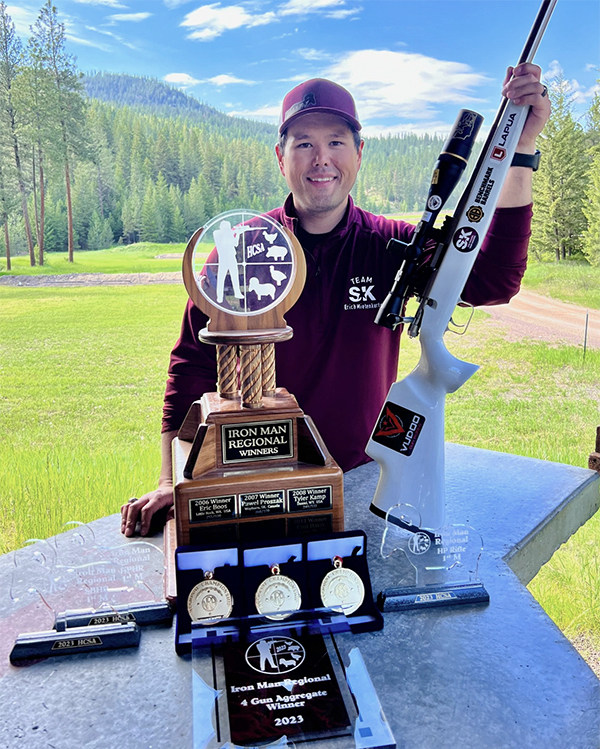


 In today’s high-inflation economy, FREE is good. Here’s a list of classic, older shooting books that can be downloaded for FREE from Google Books. This list includes many classic treatises on rifle marksmanship that still have value for today’s competitive shooters. In addition, we’ve included notable, illustrated firearm histories, such as Townsend Whelen’s fascinating book, The American Rifle, and The Gun and its Development (9th Ed.), by William Wellington Greener.


