The National Rifle League (NRL) started off sponsoring major centerfire tactical matches, similar to PRS competitions. That proved successful so the NRL added a .22 LR Rimfire series, called NRL22. The NRL22 rimfire discipline has been a major success, as rimfire guns are fun to shoot and ammo is very affordable. Now there are way more NRL22 matches than NRL centerfire competitions. The most popular NRL22 matches have drawn up to 200 rimfire competitors. And now there is a companion rimfire long-range series, NRL22X. Learn more about NRL22 and NRL22X at NRL22.org.
NRL22 is a great way to get into competition shooting with minimal expense. There are six (6) classes: Base, Open, Ladies, Young Guns (8-16), Old Guns/Adaptive, and Air Rifle. Base Class is for the budget-minded shooter — the combined MSRP of Rifle and Optic may not exceed $1200.00 (so you could spend $700 on a rifle and $500 on a scope for example). That keeps the sport affordable. Open, Ladies, Young Guns, Old Guns, and Air Rifle Classes have no price limits on Rifle and Optic. Visit NRL22.org to find an NRL22 match near you.
The NRL also sponsors NRL22X matches. These involve significantly longer distances for greater challenge. In 2023 there were 15 major NRL22X matches, culminating in the NRL22/NRL22X National Championships in Maxton, NC on July 7-9, 2023.
The two videos above from Long Range Shooters of Utah feature footage from the January 2019 course of fire from the NRL22 Rimfire Competition Series. Note the snow-capped hills in the lower video. Useful commentary explains how competitors establish their shooting positions.
How to Participate in NRL22 and/or NRL22X
If you want to get started in NRL22 or NRL22X competition, you’ll need an NRL22 annual membership. These run from $25-$60 depending on class and discipline. CLICK HERE for annual membership information.
NRL22 Membership Benefits Include:
– Eligibility to participate in all NRL22 matches
– Eligibility to participate in all NRL22X matches
– Welcome gift (not all welcome gifts are the same)
– Scoring and Ranking for all events
– Newsletters and updates
– Eligibility for special NRL22 raffles and giveaways
– Access to special NRL discounts from participating sponsors
NRL22 Publishes Monthly Courses of Fire
This video from a Utah NRL22 Match features shooters from four rimfire classes. With the NRL22 program, scores from from local matches like this are ranked against scores from other matches nationwide. In advance of match dates, NRL22.org publishes 5 courses of fire to be used in that month. Each course of fire will always include 2 prone stages, 1 positional, 1 barricade, and a fifth that can be any of those. Details of the course of fire, including target distances, target sizes, time limits, and barricade profiles, are listed at NRL22.org.
Official NRL22 Rimfire Steel Target Package
To facilitate consistent NRL22 match scoring, there is a popular NRL22 Rimfire Steel Target Kit. Crafted by JC Steel Targets from AR500 steel, this kit from JC Steel Targets includes 8 hanging targets, 4 KYL (Know Your Limits) targets, plus all needed hangers. That’s lot of steel and hardware for $394.95. There is also an official 2020/2021 Expansion Target Package with 5 more hanging targets for $79.95.
About NRL22 Tactical/Practical Competition The goal of NRL 22 is to make Precision Rifle competitions more available to every community. However, nearly all localities have access to 100-yard ranges and most shooters own a .22 LR rifle. The NRL22 program is designed so any facility with a 100-yard range can host matches. Participants at local NRL22 events can then attend a National Championship. NRL22 now has six classifications: Open, Base, Ladies, Young Guns (8-18 age), Old Guns/Adaptive, and Air Rifle. The NRL22 and NRL22X disciplines are continuing to grow in popularity.
Over the past 12 months, this article was one of the TOP TEN most-read Daily Bulletin features. We’re reprising it today for those who may have missed it the first time. The above diagram comes from a TiborasurasRex YouTube Video comparing G1 and G7 BC models. CLICK HERE to watch the video.
The better, up-to-date ballistics programs let you select either G1 or G7 Ballistic Coefficient (BC) values when calculating a trajectory. The ballistic coefficient (BC) of a body is a measure of its ability to overcome air resistance in flight. You’ve probably seen that G7 values are numerically lower than G1 values for the same bullet (typically). But that doesn’t mean you should select a G1 value simply because it is higher.
Some readers are not quite sure about the difference between G1 and G7 models. One forum member wrote us: “I went on the JBM Ballistics website to use the web-based Trajectory Calculator and when I got to the part that gives you a choice to choose between G1 and G7 BC, I was stumped. What determines how, or which one to use?”
The simple answer is the G1 value normally works better for shorter flat-based bullets, while the G7 value should work better for longer, boat-tailed bullets.
G1 vs. G7 Ballistic Coefficients — Which Is Right for You?
G1 and G7 refer both refer to aerodynamic drag models based on particular “standard projectile” shapes. The G1 shape looks like a flat-based bullet. The G7 shape is quite different, and better approximates the geometry of a modern long-range bullet. So, when choosing your drag model, G1 is preferable for flat-based bullets, while G7 is ordinarily a “better fit” for longer, boat-tailed bullets.
Drag Models — G7 is better than G1 for Long-Range Bullets
Many ballistics programs still offer only the default G1 drag model. Bryan Litz, author of Applied Ballistics for Long Range Shooting, believes the G7 standard is preferable for long-range, low-drag bullets: “Part of the reason there is so much ‘slop’ in advertised BCs is because they’re referenced to the G1 standard which is very speed sensitive. The G7 standard is more appropriate for long range bullets. Here’s the results of my testing on two low-drag, long-range boat-tail bullets, so you can see how the G1 and G7 Ballistic coefficients compare:
G1 BCs, averaged between 1500 fps and 3000 fps:
Berger 180 VLD: 0.659 lb/in²
JLK 180: 0.645 lb/in²
The reason the BC for the JLK is less is mostly because the meplat was significantly larger on the particular lot that I tested (0.075″ vs 0.059″; see attached drawings).
For bullets like these, it’s much better to use the G7 standard. The following BCs are referenced to the G7 standard, and are constant for all speeds.
Many modern ballistics programs, including the free online JBM Ballistics Program, are able to use BCs referenced to G7 standards. When available, these BCs are more appropriate for long range bullets, according to Bryan.
[Editor’s NOTE: BCs are normally reported simply as an 0.XXX number. The lb/in² tag applies to all BCs, but is commonly left off for simplicity.]
SFC Brandon Green Fires 2023 First Shot at Camp Perry Matches
The First Shot Ceremony for the 2023 Camp Perry National Matches took place July 10, 2023. The star of the show was Sergeant First Class (SFC) Brandon Green of the USAMU, one of the greatest marksmen in American history. Brandon delivered a speech and kicked off the competition with the First Shot (see above), taken with a famed Winchester Model 70 used by Gary Anderson 51 years ago.
SFC Green is truly one of the greatest shooters on the planet. His record in major competitions is truly remarkable. Green has won three NRA National High Power Championships, and in winning the 2022 NRA Long Range Championship, Brandon became the first person in history to win all four individual matches in the series: the Wimbledon Cup, the Mustin Trophy, the Leech Cup, and the Remington Band of Brothers Trophy. Green, from Box Springs, Georgia, is the first shooter to accomplish this feat in the history of the National Trophies, spanning more than a century of championship rifle competition. In addition, Green has won the Interservice Long Range championships five times and the Interservice Individual Championship four times.
SFC Brandon Green Fires Cannon at Conclusion of First Shot Ceremony
CLICK HERE for gallery of photos from 2023 First Shot Ceremony at Camp Perry.
Green has had a stellar marksmanship career. First Shot Ceremony Emcee and CMP Programs Chief, Christie Sewell noted: “His historic 2018 shooting season finished with Brandon earning four individual national records, capturing his first President’s 100 Match win in dramatic fashion. He set a new national record – a perfect score of 400, with a 20 ‘X’ count. That year he also won his third National Trophy Individual championship and third Mountain Man Trophy, setting a new national record.”
Green Fires First Shot with Gary Anderson’s Famed Winchester Model 70
Green was given the opportunity to choose his gun for the ceremonial first shot, so he chose the bolt-action Winchester Model 70 that Director Emeritus of Civilian Marksmanship, Gary Anderson, used in 1972 to set the only perfect 200-yard standing slow-fire score at the National Matches. “To shoot it was absolutely a huge honor,” Green said. “I was shooting a piece of history.”
The gun’s story begins long before that historic shot. “This gun plays a special role in the history of marksmanship,” said Anderson. “It started as my dad’s rifle and was converted to a match rifle. In 2019, I used it to shoot the first shot, so it’s been here at the First Shot Ceremony a couple times.”
Brandon Green Joins Rimfire Match before First Shot Ceremony
Green, a 20-year member of the U.S. Army Marksmanship unit, arrived at Camp Perry a few days ahead of the rest of his USAMU teammates. SFC Green wanted a few days, he said, to collect his thoughts and prepare the First Shot Ceremony speech he would deliver to the hundreds of people attending the event. But he got sidetracked. As he walked across the Petrarca Range parking lot, he stopped to watch men and women compete in the Smallbore Prone Iron Sight Championship and to talk to CMP Smallbore Program Manager Brad Donoho.
“I told Brad it looked fun and said I’ll have to find a rifle,” Green said. “Brad said I’ve got a guy who has an extra rifle. I borrowed a gun and borrowed ammo and had a lot of fun.”
Members of Congress and CMP Chairman/CEO Attend First Shot Ceremony
The July 10 First Shot ceremony was attended by hundreds of marksmen, National Matches competitors, and dignitaries in the legislative, marksmanship, and military worlds. Guest speakers were Congresswoman Marcy Kaptur (Ohio); Congressman Bob Latta (Ohio); Major General John C. Harris Jr.; and Gerald O’Keefe, Chairman of the Board and Chief Executive Officer of the Civilian Marksmanship Program. O’Keefe talked about the impact the National Matches’ long history has made on marksmanship, and he said the CMP is committed to carrying that impact into the future.
Want to improve your understanding of Ballistics, Bullet Design, Bullet Pointing, and other shooting-related tech topics? Well here’s a treasure trove of gun expertise. Applied Ballistics offers dozens of FREE tech articles on its website. Curious about Coriolis? — You’ll find answers. Want to understand the difference between G1 and G7 BC? — There’s an article about that.
“Doc” Beech, technical support specialist at Applied Ballistics says these articles can help shooters working with ballistics programs: “One of the biggest issues I have seen is the misunderstanding… about a bullet’s ballistic coefficient (BC) and what it really means. Several papers on ballistic coefficient are available for shooters to review on the website.”
Credit Shooting Sports USA Editor John Parker for finding this great resource. John writes: “Our friends at Applied Ballistics have a real gold mine of articles on the science of accurate shooting on their website. This is a fantastic source for precision shooting information[.] Topics presented are wide-ranging — from ballistic coefficients to bullet analysis.”
Here are six (6) of our favorite Applied Ballistics articles, available for FREE to read online. There are dozens more, all available on the Applied Ballistics Education Webpage. After Clicking link, select Plus (+) Symbol for “White Papers”, then find the article(s) you want in the list. For each selection, then click “Download” in the right column. This will send a PDF version to your device.
Shoot Better by Maintaining Physical Fitness
Even at age 68, Vera Koo was one of the top female shooters in the action pistol game. An 8-time Bianchi Cup Women’s Champion, Vera knows what it takes to win. She credits her success not just to dedicated practice, but also dedication to personal health. Vera has always regarded personal fitness as a key priority that helps her achieve competitive success. In this video, Vera explains the benefits of fitness training. Shooting practice combined with physical fitness training can bring your performance to the next level, says Vera. And Vera adds that shooting sports (or any competitive activity), provides key motivation to exercise — which will provide long-term health benefits.
“You cannot perform your best, if you are not AT your best. Stick with an exercise program that you enjoy, and see your strength and stamina develop. And then see your scores go up!
I noticed all the top shooters are in great physical condition. Since I entered the sport at a rather late age — at 47 — I took up weight lifting and aerobic exercise. My exercise programs have helped me gain strength and stamina that allows me to focus and shoot well.” — Vera Koo
The Competitive Mindset — Focus on the Victories
Along with physical fitness, mental “fitness”, i.e. having the proper competitive mindset, is also important to success in the shooting sports. In this second video, 8-Time Bianchi Cup Lady’s Winner Vera Koo explains how she works to develop focus, calmness, and self-confidence when she competes. Vera explains one needs to adopt a “Warrior Mindset”.
“Champions spend hours practicing for the smallest improvements. Even when they are good, they strive to be great. The common characteristic among [all Champions] is that they are all strong of heart — they are all warriors.” — Vera Koo
Learning from Vera Koo, video host Gabby Franco concludes: “Our mind is one of the most powerful tools we have to achieve our goals”.
Vera believed that true champions are those who, like committed warriors, never give up and keep improving their skills. Vera encourages shooters to focus on each victory — no matter how small — in order to keep growing and improving.
Forum member David Joe, an F-Class competitor, agrees that fitness training can help your shooting: “Vera proves putting all the pieces together can deliver winning results. The only way to find out if you have the talent required win is to isolate all the critical variables besides marksmanship — namely health and equipment. While the specialized equipment might not help in other pursuits, the health focus will.”
The 600-yard target has an X-Ring 6 inches (1 MOA) across, while the 10-Ring spans 12 inches (2 MOA).
The following article is about reloading for NRA/CMP Highpower Rifle competition and is geared toward competitors shooting the AR15 Service Rifle. In Highpower Rifle competition, shooters fire in four stages: Standing slow-fire at 200 yards, Sitting rapid-fire at 200 yards, Prone rapid-fire at 300 yards, and Prone slow-fire at 600 yards. Competitors use a sling for support in all positions but standing. A typical AR15 Service Rifle sports a 20″ free-floated barrel and a 4.5-pound trigger. Service Rifle scopes are limited to maximum power of 4.5X.
Thoughts on Loading for Service Rifles, Particularly for 600 Yards
by Danny Arnold, Team CMP Article originally published in CMP Shooting News
Before we get started, I want to stress that all of the information that follows is geared toward the .223/5.56 Service Rifle. That doesn’t mean that there’s nothing here for anyone else, but the .223/5.56 Service Rifle platform is where I’ve spent the majority of my time, so here we go.
There is only one “Perfect” 600–yard load for my rifle, True or False? This example is more anecdotal than scientific, but it provides some food for thought….
Team CMP spent the early part of March competing in the Orange Blossom Regional. As soon as we got on the range, Sara Rozanski (Team CMP member) started having problems with her 600-yard ammunition. Nearly 1/3 of her cases were exiting the chamber minus the primers. I offered to swap my ammunition for hers, suspecting that my Wylde chamber would be more forgiving than her CLE chamber — a solution that seemed to solve the problem. At least neither of us was blowing primers!
Sara’s ammunition was a factory load using a well-known 80+ grain bullet with an unknown primer and powder, using brass from a respected manufacturer. My load was a different brand of 80-grain bullet, with my choice of powder and primer, all in brass made by someone else. Given the color of the primers, the only thing that our ammunition could possibly have had in common was the brand of powder… maybe. So, how did we shoot?
Sara and I shot the two-person team together and the entire 2,400 Aggregate, although on different relays. Sara’s combined 600-yard score was 780-28X (97.5%). Mine was a 783-24X (97.87%). Our scores were never more than two points apart on any of the four days. Keep in mind that we were using each other’s ammunition the entire time.
So, we had different barrels, chambers and ammunition, but similar results. That goes back to the idea that a good load will perform similarly if fired in a good barrel.
Are We Too Focused on Ballistic Coefficients (BCs)?
The revailing wisdom has always trended toward loading the highest-BC bullet we could find and pushing it as fast as possible. Back in the early ’90s when I got started with the AR15, the 80-grain Sierra was state of the art. Actually, I picked up all of my Leg points with it, although today it looks a bit dated — kinda like me.
So, the question I’ll pose is this: Would you rather shoot a high-BC bullet that groups 3/4-MOA (minute of angle) or a lower-BC bullet that groups into one-half-MOA traveling 50 feet-per-second faster? The reason that I posed this question is a situation I found myself in a decade ago. Our coach decided that he wanted us to pair-fire some 600-yard for practice. Unfortunately, I hadn’t gotten the memo and all that I had available was my normal short-line ammunition, loaded with a 77-grain bullet. The shooter I was paired with was using a higher-BC bullet than I was, but in the end, we both shot 198s.
Admittedly, using 77-grainers meant that coach had to work a little harder to keep us together on target, but it was a teaching moment for me. I knew that my upper shot 77s better than the available bullets in the 80-grain range, so I cranked out a windage table for the 77-grain bullet at 600 yards and shot those for the rest of the season. After all, the wind blows ALL bullets around. It’s just a matter of knowing what YOUR bullet is doing.
With the shortages that we’re experiencing right now, a lighter bullet may be all that you have available for the 2021 season. That doesn’t mean that you’re disadvantaged though.
Danny Arnold teaching Highpower Clinic at 2021 CMP Eastern Games
Loading High-BC Bullets
In the past decade, several bullets have appeared that weigh 80-grains or more. One thing that many of them have in common is a very sharp nose profile, whether metal or polymer. The question is: Are you using the right seating stem?
The jacket material in the bullet’s nose is very thin. If you section a bullet, you’ll find that there is a surprising amount of air space in the nose. If you’re using older seating dies, your seating stem may be contacting the bullet nose too close to the tip, where the jacket is the both thinnest and is unsupported by the lead core. This can manifest itself either as a deformation at the very tip of the bullet or as a circular dent around the bullet nose that you can see and feel with your thumbnail. I think we can all agree that denting a bullet is usually considered a bad thing.
One company goes so far as to recommend their proprietary seating stem for use with their high-BC bullets. Other companies leave it up to you to find a seating stem that will allow the bullet nose to go deeper into the seating stem, moving the contact point further down the bullet where the jacket is thicker and supported by the core material.
Seating Depth and Bullet Preferences
Some bullets don’t mind some “jump” into the lands, but some really do. Unfortunately, manufacturers don’t tell you much about that. Your chamber configuration (Wylde, CLE, or some hybrid of the two) and the bullet that you choose will determine your optimal seating depth. Long and short of it, a quality measuring tool to determine seating depth is a necessity these days. Keep in mind that if you’re doing this with a brand new barrel, the throat is likely going to change slightly in the first 200 rounds and may need to be re-measured. Actually, since all of your short range ammunition has to be loaded to magazine length, you’re probably better off developing your short range loads before starting on long range load development. That gives the throat a chance to wear in a bit on a new barrel.
Brass Prep — Why It Is Important
When match-grade AR15s first arrived on the scene, it was amazing how little it took to get them to shoot well. Other than making sure that I had brass from the same lot and running it through a set of match-grade dies, I did nothing. Of course, we were also using a post front sight. Was the occasional bad shot me, the rifle, the load or just an archaic sighting system?
Transitioning to optics has caused me to reconsider how and what I do in my reloading process: That, and having some extra time on my hands to experiment.
A little (or a lot) of time spent with a neck turning tool, a primer-pocket uniformer and a flash-hole reamer will quickly show you how consistent brass is by manufacturer and even by individual lot. That exercise also makes the prices charged for high-quality brass seem ridiculously cheap. That doesn’t mean that I advocate neck-turning or other uniforming practices, nor do I advocate spending scandalous amounts of money on long-range brass. However, our sport is about consistency. The consistency of your brass is a matter of choice, whether you choose to simply segregate cases by weight (cheap option), neck turn (labor intensive) or open your wallet a little wider for premium brass.
Weighing Charges vs. Throwing with Powder Measure
To measure or weigh? For a long time, I used a powder measure to throw all of my 600-yard loads. The powder I was using metered well, and the results downrange didn’t justify the extra time spent with a scale. That was in the day of iron sights though. Nowadays, I’m throwing my charges and trickling up to the desired weight as measured on a scale that weighs to a 100th of a grain.
To quantify the difference between individually weighing each charge versus throwing charges with a powder measure, I weighed six kernels of powder that I trickled into the pan and then dumped them into the hopper. Going through that process 10 times, I came up with an average weight of .08 grains for six kernels. Next, I threw 50 charges for weighing using my powder measure. If I felt the measure hanging up as it cut kernels, I put the charge back into the hopper without weighing it.
That’s six kernels of powder sitting in the pan — average weight .08 grains.
Those 50 smoothly-thrown charges varied .26 grains from lowest to highest, with the majority varying no more than .16 grains from highest to lowest. If the desired weight was exactly in the middle, at worst you’d be .13 grains (9-10 kernels) low or high, with the majority being off no more than .08 grains (6 kernels) above or below the desired charge weight. Is that enough to send a shot outside the 2-MOA 10-Ring? Probably not.
Has more consistent brass and weighing charges to one-hundredth (0.01) of a grain added up to higher scores? Honestly, this question is hard to answer. Looking at the results on paper at 200 yards, using a powder that meters well combined with a consistent touch on the loading lever doesn’t appear measurably different than meticulously weighing each and every powder charge. Looking back over my 600-yard plots however, I can see a trend toward a group that is closer to X-Ring height.
Since the bullseye is widest at the center, shooting groups that are the height of the X-ring gives you more room for error when the wind is blowing. That can translate into higher 600-yard scores.
How You Load Your Ammunition vs. How You Load Your Rifle
The loading/chambering cycle of the AR-15 is, in a word, violent. You have a relatively heavy bolt and carrier assembly under power of a stout buffer spring slamming forward to chamber each round of ammunition. By design, those rounds were supposed to be held securely by the magazine feed lips until the bolt stripped them off the follower. Obviously, due to their overall length, 600-yard loads can’t be chambered that way. Although the barrel extension is funnel-shaped, it’s also got a lot of “teeth” ringing the inside of it (see below).
Whether you’re using a standard magazine or a single-round loading device (SLED), dropping a round in the loading port and releasing the bolt is an act of faith in that you’re trusting the bullet to arrive in the chamber undamaged.
Ask yourself, how many times have you seen someone drop a round on the follower, press the bolt release and watch as the bolt jammed on a cockeyed round? If that happens once every 100 tries, how many times did the bolt close on a scratched, dented, or misaligned bullet? Could that be the cause of the occasional errant shot?
My technique is to drop each round on top of the SLED and then push it slightly forward with my finger, partially chambering it before releasing the bolt. Admittedly, some people may be unable to do this due to body configuration or left-handedness, but why go to all the trouble of loading “perfect” ammunition and then damage it on the way into the chamber?
Now that we’ve covered bullets, brass, and assorted errata we can move on to discussing loads for 600 Yards…
The NRA Highpower 600-yard target has a 6-inch (1 MOA) X-Ring, and a 12-inch (2 MOA) 10-Ring.
Load Development for 600 Yards
Finding a load for 600 yards is a lot like finding a load for short range. Once I decide on a bullet, powder, primer, velocity range and a measured guesstimate of seating depth, I load 10 rounds of each test load, increasing in 0.2 (2/10) grain increments. I test them from the prone position at 200 yards. Ideally, I want to see two loads that are 0.2 (2/10) of a grain apart that shoot almost identical groups. The load that I choose will fall in between the two best shooting loads that I tested. If the first load is XX.2 grains and the second is XX.4 grains, my chosen load will be XX.3 grains.
Why develop loads in 0.2-grain (tenths) increments if I have a scale that measures in 0.01-grain (hundredths) increments? Or, why not test in 0.1-grain increments?
For me, working in 0.2-grain increments gets me to the results quicker. Also, there is a difference between accuracy and consistency in this scenario. Developing loads in 0.2-grain increments gets me to an accurate load. Producing that load using a scale that accurately measures to .01-grain insures a consistent load, assuming that I do my part.
Once I’ve settled on a load, it’s time to play with seating depth, if I choose to. If I’m lucky and the groups are acceptable as-is, I won’t do anything. If I think there’s room for improvement, I’ll experiment a little. Depending on the bullet, changing the seating depth by a couple of thousandths one way or the other may change the group size. During this phase of testing, it’s a good idea to chamber a round and see if the entire round will then extract. If you leave a bullet stuck in the throat, your rounds are too long. Finding that out at a match can ruin an otherwise good day.
Danny Arnold shooting his AR15 Service Rifle, standing position at 2021 CMP Eastern Games.
Another thing to keep in mind is that your barrel is not static. Every round fired has an effect on the throat, vaporizing and scouring away metal until the distance the bullet travels before meeting the rifling measurably increases. If you have chosen a bullet that shoots best when close to the lands, you’ll need to periodically re-measure and possibly change your bullet seating depth to maintain that optimal relationship.
The Elephant in the Room — User Skill Level
There’s really not a delicate way to put this, so I won’t try. There’s little point in spending time and effort developing a load that shoots into half-MOA off the bench if you’re only capable of shooting 2 MOA using a sling right now.
That doesn’t mean that there’s no hope. On the contrary, it just means that your time and effort is better spent practicing with some good short-range ammunition on reduced targets at a 100 or 200-yard range. At that distance, wind is not a factor and your technique can be improved more quickly so you’re in a position to benefit from that ½ MOA ammunition.
About Team CMP
CMP has created a Highpower Team with top competitors. Team CMP competes at several events throughout the year and most importantly, helps to teach Highpower Clinics at CMP Competition Events. Learn from Team CMP at Camp Perry during the Advanced Highpower Clinic, scheduled this year for July 30 through August 1, 2021. Visit the Highpower Clinic Web Page for more information.
The Civilian Marksmanship Program is a federally-chartered 501(c)(3) non-profit corporation. It is dedicated to firearm safety and marksmanship training and to the promotion of marksmanship competition for citizens of the United States. For more information about the CMP and its programs, visit www.TheCMP.org.
The Annual Springfield M1A Match will be held Sunday July 30, 2023 at the Viale Range at Camp Perry.
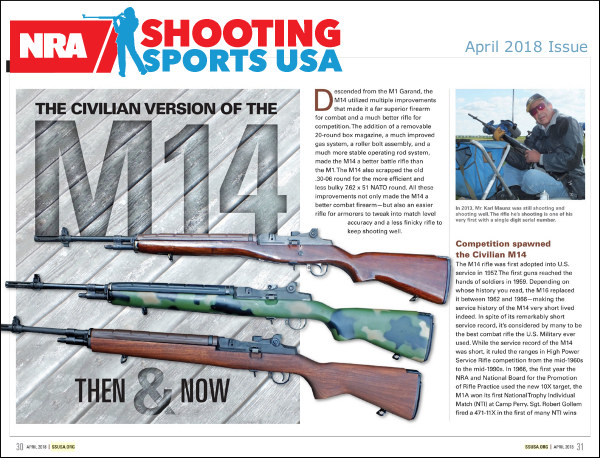
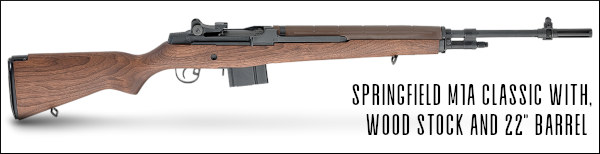
In the April 2018 issue of Shooting Sports USA, you’ll find a good article on the civilian version of the M14, now sold commercially as the Springfield M1A. An evolution of the battle-proven M1 Garand, the M14 was designed to shoot the 7.62×51 (.308 Win) round instead of the larger .30-06 Springfield cartridge used in WWI, WWII and Korea. While the vast majority of today’s M1As are chambered for .308 Win/7.62×51, Springfield Armory also produces a 6.5 Creedmoor version.
“Descended from the M1 Garand, the M14 utilized multiple improvements that made it a far superior firearm for combat and a much better rifle for competition.” — Dick Jones, Shooting Sports USA.
Dick Jones reports that accurized M14/M1As could post remarkable scores: “The accuracy potential of the M14/M1A is unquestionable. During their reign as service rifles, they produced multiple perfect 200 scores at 600 and 1000 yards in the hands of top shooters. This is a difficult feat with a modern, scoped, magnum-caliber rifle and remarkable with an iron-sighted battle rifle. Good competition rifles can group 10 shots under one MOA, and the meticulously-massaged rifles used by the top shooters during my career would consistently put up 10 shots under an inch at 200 yards off a test cradle.”
Springfield M1A at Camp Perry National Matches
The CMP hosts a major M1A Match every year at Camp Perry, sponsored by Springfield Armory. The Annual Springfield M1A Match will be held Sunday July 30, 2023 at the Viale Range at Camp Perry. Significant prizes will be awarded. In past years M1A Match competitors took home over $25,000 worth of cash and merchandise.
For many years, the semi-auto version of the M14 was “top dog” in iron sights Service Rifle competition. Now that discipline is dominated by .223 Rem (5.56×45) AR-type rifles, but the bigger .308-caliber rifle, now sold as the M1A, remains popular. This year’s Springfield M1A match will be held at Camp Perry on August 8, 2021.
In this video, YouTube Reviewer Hickok 45 compares the M1 Garand and the M14/M1A:
See how the modern M1A is built in this Springfield Armory Video:
As racing improves automobiles, competition improves firearms, and the current crop of Springfield M1As, from the Basic to the top-of-the-line Super Match and Loaded models, reflects the years of development. The M14 and its variants are still in service today and it’s still considered by many to be the best battle rifle in the history of the U.S. Military. — Dick Jones, Shooting Sports USA
Some seasons back, before COVID, our friend (and fellow Californian) Dennis Santiago drove across the country, all the way to Ohio. His mission? To attend the CMP National Matches at Camp Perry. For many years, this journey had been an annual pilgrimage for Dennis, who writes: “My goal [was] to spend time with as many of my friends as possible — the friends I’ve known and hang out with throughout the year, the ones I only see once a year at Camp Perry, and the many I’ve only conversed with on social media and will meet in person for the first time. More than anything, Camp Perry is where I come home to my shooting family. My mission is to celebrate my love of this sport with them.”
Here are some photos from Santiago’s successful journey across the USA to Ohio some years ago. After the long cross-country drive, he then headed to the Camp Perry rifle range, with the goal of shooting 10s and Xs across the course.
“Get your kicks on Route 66 — in Manuelito, New Mexico.” — Dennis Santiago
“The heartland is an ocean of corn. It is an amazing thing to see how much food we make.” — Dennis
“Arrived and I’m hungry… at Camp Perry National Rifle Competition, Port Clinton, Ohio.” — Dennis
Advice for First-Time Visitors to Camp Perry
Dennis first competed at Camp Perry in 2016, writing about the experience in his Dennis Talks Guns Blog. Here are some of Santiago’s tips for first-time Perry competitors:
1. Walk the Base. Do not drive around. Get used to walking. Walk from your hut to everything. Walk to the administration buildings. Walk to the ranges. Walk to commercial row. Walk to the CMP North Store. Walk to the CMP or Army trailer to have the triggers of your rifles(s) weighed. Walk. This is your primary mode of transportation while on base.
2. Go Shopping. It’s called Commercial Row. It is the best shopping mall for competitive shooters ever. The sale prices here are Black Friday quality. You stock up on supplies. You can buy elusive powders in quantity with the same lot number. Same with bullets and primers. I stocked up. Everything you need to keep making your pet loads — except brass. This is a service rifle tournament. Pretty much everyone is using LC or WCC cases.
3. Learn about the Perils of Perry. It rains at Camp Perry. Sometimes that rain comes with lightning. When that happens range controls issues an evacuation order. Depending on where you are and how much time you have, you either grab your stuff and make for a sheltered structure or leave your stuff under whatever rain cover you have and leave it there until the storm cell passes.
Coming Soon — The President’s 100 Match
In past years, Dennis has competed in the historic National President’s 100 Match, which takes place on Monday, July 24th this year. This is a huge event — in recent years there were over 1100 ranked competitors from throughout the nation, making this one of the biggest High Power events of the year.
Report based on story by Ashley Dugan, CMP Writer
This summer the Civilian Marksmanship Program (CMP) will celebrate the 25th Anniversary of the John C. Garand Match at the annual National Matches at Camp Perry. The event has been one of the CMP’s most popular competitive shooting events, attracting hundreds of competitors from around the country each year. The John C. Garand match runs July 27-30, 2023, at the Viale Range and Rodriguez Range (Saturday only) at Camp Perry. CLICK HERE for CMP National Games Matches information and full 2023 schedule.
The roots of the John C. Garand Match date back to 1998 when the CMP introduced the competition into its target competition schedule. The Garand Match is a unique event where participants use vintage “as-issued” M1 Garand rifles over a course of fire with 10 shots prone slow-fire, 10 shots prone from standing rapid-fire, and 10 shots standing, all at 200 yards.
In response to the growing popularity of the Garand Match, the CMP went on to establish other rifle events of the same type, including the Springfield, Vintage Military, Rimfire Sporter, M1 Carbine, Vintage Sniper Team, and Modern Military matches. Collectively, these have come to be known as “CMP Games Matches”.
Camp Perry M1 Garand Competition — Vintage Military Rifle
The John C. Garand match is a Camp Perry classic. Note the signature Garand clip in the air.
The unique “Ping” of the ejected en-bloc clip is music to the ears of Garand fans. Some folks own an M1 Garand for the history, while others enjoy competing with this old war-horse. The CMP’s John C. Garand Match is one of the most popular events at Camp Perry every year.
Approximately 40% of each year’s Garand Match competitors receive coveted gold, silver, or bronze Achievement Medals with neck ribbons. Medal presentations are decided by competitors scores. In 2023, competitors who fire 279 x 300 or higher will receive gold medals, scores of 272 to 278 will receive silver medals; 260 to 271 will receive bronze medals. Medal presentations typically take place on the range immediately after competitors finish.
The John C. Garand Trophy, awarded to the top competitor at the John C. Garand Match at Camp Perry, was donated to the National Trophy collection by the Garand Collectors Association in 2001. Nick Till is the latest winner of the trophy (2022). Brad Diehl is the current national record holder of the match with a score of 294-9X (set in 2018), while Steven Skowronek is the only individual to win the National John C. Garand Match as a junior, back in 2005. Skowronek returned to win the match again over a decade later in 2017.
DCM Emeritus Gary Anderson, who served as the DCM from 1999 through 2009, played a major role in getting the Garand Match established and in growing the CMP’s as-issued military rifle program into one of the CMP’s largest shooting sports disciplines. He recalled, “The Garand Match had 325 competitors in 1998, but it quickly grew to over 1,300 competitors in the years that followed. It succeeded because M1 rifles were affordable and readily available and because we adopted a simple 30-shot as-issued military rifle course of fire. Plus, there was a special appeal to being able to shoot rifles in competitions that had already served in the national defense of our country.”
History of the M1 Garand Rifle
Jean Cantius Garand, also known as John C. Garand, was a Canadian designer of firearms who created the M1 Garand, a semi-automatic rifle that was widely used by the U.S. Army and U.S. Marine Corps during World War II and the Korean War. The U.S. government employed Garand as an engineer with the Springfield Armory from 1919 until he retired in 1953. At Springfield Armory Garand was tasked with designing a basic gas-actuated self-loading infantry rifle and carbine that would eject the spent cartridge and reload a new round. It took fifteen years to perfect the M1 prototype model to meet all the U.S. Army specifications. The resulting Semiautomatic, Caliber .30, M1 Rifle was patented by Garand in 1932, approved by the U.S. Army on January 9, 1936, and went into mass production in 1940. It replaced the bolt-action M1903 Springfield and became the standard infantry rifle known as the Garand Rifle. During the World War II, over four million M1 rifles were manufactured.
After World War II ended, thousands of M1 Garand rifles were put into storage while others were loaned to allies during the Cold War. Production resumed in 1950 when North Korea attacked South Korea, making the rifle the main infantry firearm used during the Korean War. Nearly 1.5 million new M1 rifles were produced between 1952 to 1957.
How to Order an M1 Garand from the CMP
In 1996, a federal law established the Civilian Marksmanship Program and authorized the CMP to sell surplus .30 and .22 caliber military rifles, parts, and ammunition to qualified U.S. citizens. The CMP currently sells the famous M1 Garand and other vintage rifles through mail order and through its stores in Alabama and Ohio. To purchase an M1 Garand through the CMP, you must be an adult U.S. citizen, who is a member of an affiliated organization, and who has participated in Marksmanship Activity. This basically means you need to join a gun club and participate in a clinic or match. Proof of club membership and citizenship is mandatory for all ages. The CMP does not accept telephone, fax, or online orders for firearms — you must order by mail or in person. CLICK HERE for ordering information.
M1 Garands at CMP Retail Store in Anniston, Alabama.
While AccurateShooter.com focuses primarily on rifle disciplines, we know that most of our regular readers also own handguns. It’s fun to shoot pistols, both outdoors and indoors. With a short site radius, and the snap of pistol recoil, handguns can be challenging — but that’s part of the fun. We enjoy shooting revolvers and semi-auto pistols at distances from 25 feet to 50 yards. Here are some fun targets you can download and print for FREE. These should provide a fun challenge for your next handgun sessions.
1. Patriotic Stars Target with Three Score Values
Here’s a fun Patriotic Stars Target created by the NSSF. This would be a great target to shoot on the 4th of July. Aim for the stars. The red stars are worth 3 points, the blue stars are 5 points, and the smallest white stars are worth 10 points. After aiming for the one-color stars, try to hit the center red, white, and blue star for added fun. You can also use this target with rifles at longer ranges.
2. Red Center Pistol Target
Here’s a NRA-type target for pistol shooting. The bright red center helps when shooting indoors because well-placed bullet holes are much more visible. This target includes data entry boxes to record gun type, score, and load data. This Red Center Target is one of many good free targets available at Targets4free.com.
3. NSSF Billiards Table Target
This Billiards Table Target offers 15 brightly-colored numbered balls with the cue ball at the bottom. Aim for the numbers, shooting 1-15 in sequence, or alternate between stripes and solids. You can also draw an “X” on the white cue ball (or attach a paster), and use that to set your zero. This target is fun for shooting outdoors with rifles at 50 or 100 yards or indoors with pistols.
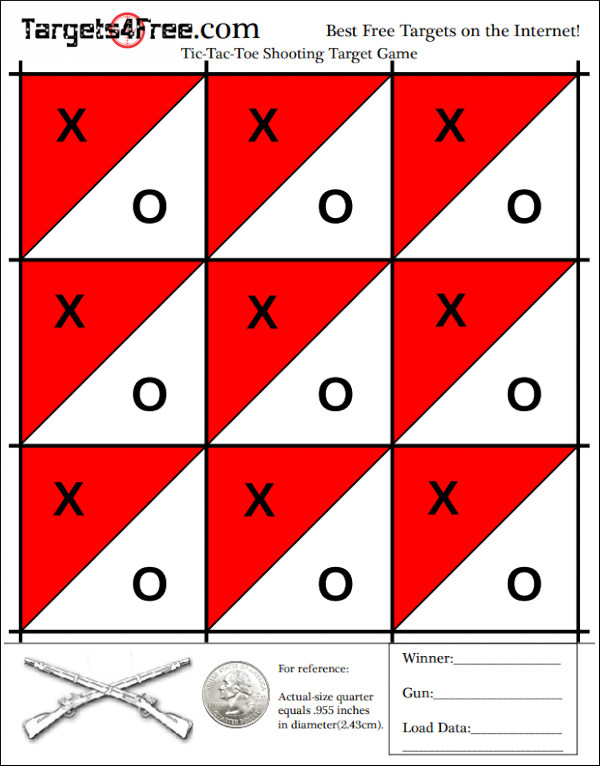
4. Tic-Tac-Toe Fun Game Target
This Tic-Tac-Toe Shooting Game Target lets you challenge your shooting buddies at the range. One player can shoot the red triangles, while the other shoots the white zones, taking turns. You proceed just like a regular Tic-Tac-Toe game, alternating shots, with the goal of getting three of the same color in a row. This is a fun game for a parent and a young family member. You’ll find other fun targets on Targets4free.com.
5. NRA Dartboard Target with Five Bullseyes
There are many dartboard-style targets available, but this one has the extra feature of FIVE notable black bullseye aiming points. That makes this NRA Dartboard Target quite good for handgun shooting. NOTE: You’ll want to set the target PDF file to print in landscape (horizontal) mode to get the best results with 8.5×11″ paper.


 NRL22 is a great way to get into competition shooting with minimal expense. There are six (6) classes: Base, Open, Ladies, Young Guns (8-16), Old Guns/Adaptive, and Air Rifle. Base Class is for the budget-minded shooter — the combined MSRP of Rifle and Optic may not exceed $1200.00 (so you could spend $700 on a rifle and $500 on a scope for example). That keeps the sport affordable. Open, Ladies, Young Guns, Old Guns, and Air Rifle Classes have no price limits on Rifle and Optic. Visit NRL22.org to find an NRL22 match near you.
 How to Participate in NRL22 and/or NRL22X
The goal of NRL 22 is to make Precision Rifle competitions more available to every community. However, nearly all localities have access to 100-yard ranges and most shooters own a .22 LR rifle. The NRL22 program is designed so any facility with a 100-yard range can host matches. Participants at local NRL22 events can then attend a National Championship. NRL22 now has six classifications: Open, Base, Ladies, Young Guns (8-18 age), Old Guns/Adaptive, and Air Rifle. The NRL22 and NRL22X disciplines are continuing to grow in popularity.


 The better, up-to-date ballistics programs let you select either G1 or G7 Ballistic Coefficient (BC) values when calculating a trajectory. The ballistic coefficient (BC) of a body is a measure of its ability to overcome air resistance in flight. You’ve probably seen that G7 values are numerically lower than G1 values for the same bullet (typically). But that doesn’t mean you should select a G1 value simply because it is higher.
 Drag Models — G7 is better than G1 for Long-Range Bullets






 1. Walk the Base. Do not drive around. Get used to walking. Walk from your hut to everything. Walk to the administration buildings. Walk to the ranges. Walk to commercial row. Walk to the CMP North Store. Walk to the CMP or Army trailer to have the triggers of your rifles(s) weighed. Walk. This is your primary mode of transportation while on base.