|
|
March 10th, 2010
Knights Armament has developed a sophisticated yet easy-to-use ballistics program that runs on the Apple iPod Touch and Apple iPhone platforms. The KAC Bullet Flight 3.1.0 software contains all the features you would want, including: user-selectable BC models (G1, G7, G8 etc.); output in inches, cm, MOA, Mils, and scope clicks; 360° wind drift calculation; computation of actual BC from collected data; and built-in accelerometer for angle detection.

In addition, KAC Bullet Flight 3.1.0 comes with a large database of bullet types (including weights, BCs etc.). You can also create your own custom ammo profiles (with velocity, BC, bullet type), allowing you to easily output ballistic plots for multiple firearms, without having to enter the rifle/bullet profile every time.
KAC Bullet Flight 3.1.0 is a very sophisticated program that rivals anything you can run on your home computer. A version of Bullet Flight is already in use with the U.S. Military in Iraq and Afghanistan. The Apple iPod touch/iPhone platform was chosen because this is now the #1 hand-held computing platform in the world. (With the iPod Touch, you do NOT need a phone service contract.) Also the Apple operating system and “multi-touch” screen allows an extremely user-friendly, easy-to-operate interface. “Ruggedized” Otterbox carry cases are also available for both first- and second-generation I-pods.
 |
 |
Software Starts at Just $3.99
There are three versions of KAC Bullet Flight, all very affordable. The basic L1 version costs just $3.99. We recommend the L2 version ($11.99) which adds a full calculation screen, the ability to generate a range-card, cosine-angle calculation, and GPS functionality. Finally, the $29.99 Level ‘M’ (Military) version further adds the ability to calculate an actual BC based on bullet drop, two velocities, or flight time. With Level ‘M’ you can also correct for very subtle factors, such as the Coriolis Effects, which come into play at ultra-long ranges.

March 7th, 2010
Sinclair Int’l has added many new products to its catalog, including recently-introduced reloading products from Hornady: AutoCharge electronic powder measure ($249.95), Lock-N-Load Concentricity Gauge ($99.95), and the Lock-N-Load UltraSonic Cleaning machine ($99.95). In addition, Sinclair has rolled out some impressive new products of its own, such as the new fully-adjustable, quick-attach Tactical/Varmint Bipod.
Sinclair Int’l Tactical/Varmint Bipod
With a hefty $229.95 MSRP, the new Sinclair Tactical/Varmint Bipod (item 04-8500) is nearly three times the price of a Harris bipod. Is it worth the extra money? For a typical varmint hunter, the answer might be no. But for the tactical competitor, the enhanced performance (and extra features) of the Sinclair tactical/varmint bipod may well be worth the extra coin.
The new Sinclair Tactical/Varmint Bipod is a strong, rugged design with billet aluminum and stainless steel construction throughout. There are many enhanced features compared to a Harris. First, the Sinclair Bipod’s individually adjustable legs can spread much wider (and lower) than on a Harris. The legs adjust from 6 1/2 inches to 12 1/2 inches in length, and there is a positive stop on each leg. The Sinclair Bipod also comes with a built-in “Pod-Loc” style cant adjuster, a really important feature that must be retrofitted (for about $27) on a Harris. In addition to the cant adjustment lever, the Sinclair bipod has a secure quick-release attachment system — the same system used on Sinclair’s popular F-Class Bipod. This lets you install or remove the bipod in seconds without any tools. Showing attention to detail, Sinclair also included an extra swivel stud on the bipod upper section, so you can attach a sling. Overall, the new 1 lb., 12 oz. Sinclair Tactical Bipod looks like a very good product that offers real advantages over a Harris for the tactical shooter. We just wish the price was lower.
Hornady AutoCharge Electronic Powder Scale & Dispenser
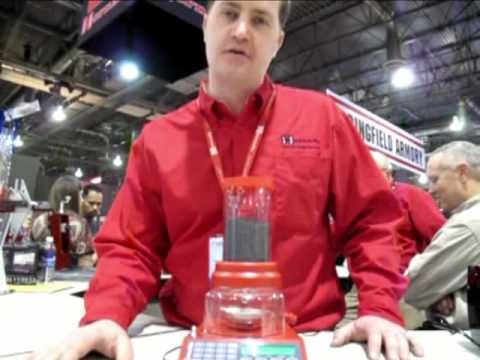
Here’s the first look at Hornady’s brand new Lock-N-Load AutoCharge electronic powder scale/dispenser. This unit can measure up to 1000 grains of powder. According to Hornady, the unit will calculate weight precisely to within ± 0.1 grains. That would put it on a par with the RCBS Chargemaster, though the Hornady unit sells for $60-$80 less than the “green machine”. The Hornady has many nice features, such as an easily readable, back-lit display, trickle function, calibration weights suitable to both low and high powder charges, and plenty of memory for your favorite loads. The Hornady, priced at $249.95 (item 050068) at Sinclair, also features three, user-selectable dispensing speeds — something you won’t find on the RCBS ChargeMaster. Those three speed settings let you optimize dispensing flow for the type of powder you’re using.

We hope to get one of these Hornady AutoCharge units soon and run a head-to-head comparison with our RCBS Chargemaster. Below is a video from SHOT Show 2010 of an early production Hornady AutoCharge.
March 5th, 2010
We recently received a prototype version of the new NEO rest from SebCoax.com. Designer Sebastian Lambang’s new rest is an engineering tour de force. Your editor can say, straight up, that this is the best joystick rest I’ve ever used. It is butter smooth in horizontal travel. The NEO does not suffer from the jerky, or jumpy vertical movement of some other joystick rests. With a 17-lb gun on the rest, yes there is more resistance in the vertical plane than in the horizontal, but you can still move the crosshairs up smoothly in one motion. You don’t have to “over-shoot” and then come back down on your aiming point. If you’ve used other coaxial rests, you know that the upward movement can be jerky if the resistance is set so that the joystick does not droop when you let go. Not so with the NEO. Seb Lambang has fitted the NEO rest with expensive, new German-made internal bearings. These new teflon liner bearings, plus two additional internal leaf springs for weight support, make all the difference.
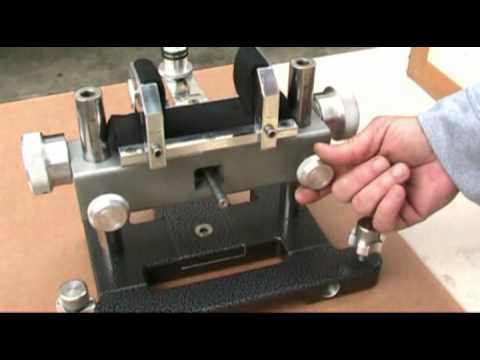
The upward movement is MUCH smoother than before. In this Editor’s opinion, the NEO is smoother (with less jumpiness) than the Farley. It is also easier to set joystick tension on the NEO rest that on the previous (Gen 1) SEB rest. Before you had to fiddle with hex-head bolts. On the NEO rest, SEB has provided two, large diameter knobs. It is easy to set the tension so the joystick doesn’t fall on release, but travel is still smooth and positive in all planes.

Make no mistake, joystick movement on this rest is smooth and fluid, even in straight upwards motion with a 17-pound rifle. No more of the jumpiness or stacking found on lesser designs. SEB has got a winner here. Just as a top-fuel dragster lives or dies on quarter-mile speed, a coaxial rest is judged, foremost, on its ability to move quickly and precisely to point of aim in ONE MOVEMENT. Here the NEO rest shines. It may be the smoothest-functioning coaxial rest ever produced. And it also has the unique feature of adjustable front bag width (see videos). That’s great if you shoot both wide benchrest rigs and narrow-forearm rifles. Also, when disassembled, the NEO rest packs up very compactly — a big plus when traveling. If you didn’t like joystick rests before, the SEB NEO may make you a believer.

Triple-Sandbag Configuration and Vibration Damping
How about shooting performance? The rest is rock-solid, with no wobbly movement, so no mechanical flaws should prevent match-winning performance. However, the NEO rest has three separate, fairly thin bags. This configuration has been used with success in rimfire benchrest. Some European centerfire rests use a similar tri-bag arrangement. However, we are concerned that the smaller, separate bags could behave differently than a conventional front bag. There may be differences in vibration damping and how the bag responds under recoil. We have NOT done enough testing to judge how the NEO’s tri-bag system performs compared to a conventional one-piece sandbag. But it’s something to consider.
NEO Rest Offers More JoyStick Travel
The SEB NEO rest has a very wide range of travel. Running the joystick to max travel, we placed shots 43 MOA apart vertically and 48 MOA apart horizontally. That’s four FEET of horizontal travel at 100 yards using JUST the joystick! If you need more than 43 MOA of vertical travel, the whole coaxial carriage moves up and down on two large columns, delivering a bag height range from about 5″ to 10″ above the bench top. That’s a HUGE amount of travel. The gross height is adjusted with two large knobs, one on either side of the carriage. This movement is very smooth — as if the carriage is on ball bearings.
The geometry of the NEO Rest is somewhat unique. Although the NEO can be positioned in either direction (i.e. it is reversible), it is designed to have the long, narrow foot out front, on the target side. This opens up the entire area behind the rest, so there is no interference with the joystick’s movement. “But what about my vertical speedscrew?” you may be saying. Well, with the SEB NEO’s 43 MOA of vertical travel, you really don’t need a vertical adjustment screw on the shooter’s side of the rest when aiming your rifle. There ARE two adjustment screws on the left and right rear sides, but these are intended to level the rest only.

Overall, we were very impressed with the quality, range of adjustment, and versatility of the NEO rest. It has more than enough joystick travel to shoot an ARA rimfire target with 25 bulls. It has enough gross vertical adjustment for 1000-yard F-Class use, even if the target is way up on a hill or down in a valley. And, the rest is relatively easy to transport, with a fairly small footprint and a convenient carry handle built into the “back” side of the rest.

NEO Rest Specifications
- Reversible base configuration: Rest can work with joystick tension adjustments in front, or in rear, per user preference. If you want the single long foot on the “driver’s side”, that is also possible.
– Size assembled: Approx. 13″ wide x 14″ long, 8.6″ tall.
– MOA adjustment (joystick travel): At least 40 MOA (vertical) x 44 MOA (horizontal).
– Net weight: approx 9.3 kgs (20.5 lbs), with standard aluminum base and filled bags.
– Bag Width Range: 200 mm (approx 7.874″) between posts CTC. This allows a max forearm width of about 4″ (four inches).
– Height Range (from bottom of base to top of horizontal bag): Approx. 5″ (lowest) to 10″ (highest).
– Sand Bag Thickness: Approx. 3/4″ for the “horizontal’ bag, approx. 1/2″ for the side chambers.
– Construction: All metal throughout. Base is cast aluminum. Rack gear posts and pinion are stainless steel (SUS 420J). Coaxial body, rest top, forearm stopper are made from aircraft grade alumunium.
– Price: Not yet set, but probably $675.00 to $750.00 US.
NEO Rest vs. SEB Standard Rest
Seb told us: “The NEO rest is NOT designed to replace the regular SEB rest. It’s only for people that need faster elevation adjustment, and a rest that can be set to a lower level overall or a higher lever overall. On the production NEO rests, the ‘body’ of the coaxial unit will be polished, just like the current (Gen 1) rest. The current (Gen 1) rest will remain in production, so don’t worry if you prefer that design. I haven’t established the final price of the NEO rest yet, but I think it will be about $675.00 to $750.00. Yes, it will be somewhat more expensive because of the extended travel capability and increased cost of materials.”

Further Enhancements for Production Model?
The NEO we received is a prototype model and SEB tells us that he may add or modify some features in the final production version. What changes would we like? First, we think a front rest in the $700+ price range should have a built-in level. Obviously you can buy a bubble level and stick it on, but Seb should include one. Second, we’d like to see some variations on the side sand chambers. They tend to plump up in the middle. For stocks with side flats, such as the McMillan Edge, the thickest part of the side bags is a bit too high. Also the side tension knobs push the bags inwards well above the contact point with the stock. We also would like to have more forearm stop travel. As made, the front forearm stop has a good range of adjustment. But an optional, longer extension for the stop would better suit rifles that balance/shoot best with the rest placed well back on the forearm.
Included Cord Helps Rest Alignment
Included with the NEO rest is a nylon cord with metal ends. Just pop one end of the cord in a hole in the middle of the forearm stop and draw the cord back in line with the target, running the cord through the ears of your rear sandbag. This allows you to center and align the rear bag optimally. The cord is a thoughtful accessory provided by SEB.


Review Disclosure: SebCoax.com provided the Seb NEO rest for testing and evaluation. The rest’s manufacturer is not currently advertising with AccurateShooter.com.
February 25th, 2010
 How would you like a full-length sizing die perfectly fitted to your fired brass? At one time that required you to purchase a die blank, a special undersized reamer (a chamber reamer is too big), and send the work out to a skilled gunsmith. You could expect to have $250-$350 tied up in your custom die when all was said and done. How would you like a full-length sizing die perfectly fitted to your fired brass? At one time that required you to purchase a die blank, a special undersized reamer (a chamber reamer is too big), and send the work out to a skilled gunsmith. You could expect to have $250-$350 tied up in your custom die when all was said and done.
Now Hornady’s custom shop offers a much less expensive alternative. For $121-$140, plus shipping, Hornady will produce a custom-made die based on your reamer print, spec sheet or fired brass. Lonnie Hummel and his team of skilled machinists have produced custom dies for many top shooters. Scott Parker had Hornady produce a custom full-length die for Scott’s 6BRX. Scott reports: “The die is great. I’m very impressed. The die is a perfect fit for my brass and the sized brass has very low run-out.”
Hornady’s non-bushing custom full-length sizing dies cost $121.00 for cases up to 2.60″ COAL, or $140.00 for cases 2.60″-2.99″ long. Add $20-$25.00 if you want a custom, non-micrometer seater die also. Hornaday also offers custom “match grade” bushing dies — both FL-sizing dies and bushing neck-sizers. These “match grade” (bushing-equipped) sizing dies (FL, or neck-only) cost $152.00 up to 2.60″, or $166.00 for longer dies.
To order any type of Hornady custom die (bushing or non-bushing) we recommend you send 3 or 4 fired cases along with a reamer print to Lonnie Hummel at Hornady Mfg., Box 1848, Grand Island, NE, 68802. Give Lonnie a call first at (800) 338-3220, ext. 208, to discuss design details and get an estimated delivery date.

February 20th, 2010
Caldwell recently sent us some new pre-printed targets that we really like. The new Caldwell Tip Top Targets have a combination of features we’ve never seen before in pre-packaged targets. First, the targets are printed on a unique, plasticized card stock — just slightly thinner than a business card. The plasticized material is very rip-resistant (if you really try, you can make a small tear on the edge, but it takes a LOT of deliberate effort). The plasticized material makes the targets 100% weatherproof, though you can still write on the surface. At the bottom of the targets, Caldwell includes a labeled data entry area where you can record firearm type, shooting conditions, distance, group size, load info, and chron data. Very Handy! The targets even come pre-punched for a 3-ring binder. That’s great if you want to save your targets. The 8″ Sight-In Tip Top Targets cost $7.49 for 25-pack, or $24.99 for 100 targets.

Bullets Punch Perfect Circles on New Target
What makes these “Tip-Top Targets” really unique is the way bullet holes appear. When a bullet passes through a normal paper target, the paper can rip. At best you get a fairly round hole but with a fuzzy, uneven edge. With these Tip Top Targets, the bullet hole looks like it was made with a hole punch. No more ragged, fuzzy edges. If you’ve ever shot wadcutter rounds from a pistol into a paper target, that’s the effect here. But the bullet hole edges are even MORE sharp and uniform. As a result, you can measure your group sizes quickly, with great precision.
Overall, we think the Tip Top Target is a real step forward. Caldwell did a great job with this product. The new material does not tear, does not get soggy in wet conditions, and does not flap around in the wind. The new material delivers crisp, uniform bullet holes for easy group measurement, and the 1″ square gridlines let you quickly estimate your group size.
Caldwell Tip Top Targets are offered in six (6) different versions: large, Inverted “T” for iron-sighted rifles or pistols; 4″-diam. Bullseyes; 8″-diam. single Bullseye; 100-yard Benchrest Target; 200-yard Benchrest Target; and 8″ Sight-in Target with 1″ grid (shown in photos).
We really like the layout of the sight-in target. In has five different aim points with a central diamond split by horizontal and vertical lines running through the points of the diamond. The diamond, which measures 1/4″ on a side, provides a VERY precise aiming point. Just line up your cross-hairs with the heavy black lines and you should be able to shoot bugholes with this target. It’s a very good design, with good contrast in the center of each aiming square.
Is there anything we would change on the Sight-In Target we sampled? Yes… First, we’d like to see a long-range version with an all-white background so that bullet holes are easier to see at long distances. Second, we’d modify the data entry table so you could list results for multiple loads. See our FREE Targets Page for paper targets with multiple load-entry/chron data boxes.
Review Disclosure: Caldwell provided a free 25-ct pack of 8″ Sight-In Targets for testing.
February 17th, 2010
Timney Triggers has a new Trigger Pull Gauge. This spring-type tension scale measures pull weights from 8 oz. to 10 lbs. and is also calibrated for metric (kg) weights. The wide hook makes the gauge easy to use even with over-sized trigger guards. The Timney gauge features a “tattle-tail indicator” that stops at the highest resistance. This works as follows — as you pull back on the gauge, the sliding indicator will move towards the heavier side of the scale; once the sear releases the sliding indicator remains at the point where the highest amount of pressure was exerted on the trigger.

We still think the Lyman Digital Trigger Pull Gauge is the best on the market, but it costs $52-55.00 compared to $28.49 for the Timney gauge. The Timney Trigger Pull Gauge will be available at MidwayUSA (item 969947) before the end of February.

February 9th, 2010
Mark Trope, Webmaster of the Gun Owner Network website, has written a very thorough review of the SEB Coaxial front rest. Mark’s SEB Rest Review covers all the bases, showing how the rest works with a variety of rifle types, including both wide-forearm match rifles and narrow-forearm sporter rifles.

Mark provides dozens of good photos of the rest, including many close-ups showing the fine points of SEB’s impressive design. The review shows how to set-up and level the rest, and how to tune the “feel” of the joystick to suit your preferences. Some rest users prefer the joystick to move quite freely, while others prefer to dial in some resistance so there is no chance of movement when you remove your hand from the joystick.

After covering the features and performance of the SEB Rest, Trope turns his attention to the SEB “BigFoot” rear bag. He explains why it’s a super-stable choice in rear bags, one of the best products available. You’ll note we acquired a SEB BigFoot rear bag for our latest AccurateShooter.com Project Rifle (see story above). After providing tips on how to fill the bag with heavy sand, Trope shows how to adapt a RubberMaid “ActionPacker” plastic storage bin to carry both the SEB Front Rest and the BigFoot Bag.

If you are considering the purchase of a joystick-style front rest, or joystick-style rest top, you should definitely read Trope’s Rest Review. It will definitely help you identify the features you need, so you can make an informed decision, whatever brand you ultimately choose. To learn more about the SEB coaxial rest, or to place an order, contact Sebastian Lambang’s American dealer, Ernie Bishop:
Ernie Bishop
306 West Flying Circle Drive
Gillette, WY 82716
(307) 257-7431
ernieemily [at] yahoo.com
February 4th, 2010
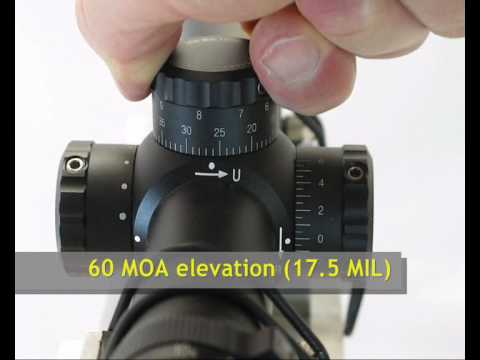
Forum member Thomas Haugland (aka “Roe”) from Norway has created an excellent video comparing the features on four long-range scopes: Schmidt & Bender PMII 3-12x50mm, Schmidt & Bender PMII 12-50x56mm, Leupold MK IV, and Zeiss Diavari Victory 6-24x56mm. Thomas shows how the adjustments function, he records the available vertical elevation, and he takes apart the turrets to show how the weather seals work. While the Leupold MK IV has MOA clicks, the three Euro scopes tested by Thomas have mil-based or mil/cm adjustments. These mil-based clicks work well with first focal plane reticles that have mil or half-mil hash marks.
Thomas explains:
These films emphasize the shooter’s Point of View (POV) and ‘user friendliness’. ALL these scopes get the job done, but they have some similarities and differences in the details and your own personal preferences would decide what scope can be labeled ‘best’. The perfect scope doesn’t exist, you’ll have a compromise somewhere — be that economy, magnification, reticle, turret, optical quality, sturdiness…
In these films I’ve set the Schmidt & Bender PMII 3-12×50 as the benchmark for comparison. Not because it is ‘best’ (it isn’t!) but because S&B is one of the manufacturers which first recognized the needs of professional Long Range shooters and put together products [optimized to work well] in high stress environments. The features that are important are: First focal plane, MIL reticles and MIL turrets, plenty of adjustment and suitable magnification.
Note that S&B and Zeiss scopes are also available in the USA with MOA-based turrets and/or second focal plane (SFP) reticles, for those shooters who prefer the MOA system, and SFP. A first focal plane reticle is best for ranging, but a target shooter working at known distances will probably prefer a second focal plane reticle that doesn’t change in size with magnification.
February 3rd, 2010
Many of our readers have been looking for a folding shooting mat that does double duty as a rifle case. Well, the NRA just released such a combo mat/carry case that appears to have all the needed capabilities. In carry mode, the case is 48″ long by 13″ wide. The rifle is stowed in a padded center section, and held in place with velcro straps. A center handle lets you carry the bag like a suitcase, or optional shoulder straps allow backpack-style carry. These straps stow away in a zippered compartment when not in use.

When you arrive at the range, just open up the bag and you have a 3 foot wide by 6 foot long shooting mat with rubberized “elbow” contact zones. In shooting position you’ll find a convenient pouch for ammo on the right, and a place for your log-book on the left. Constructed of tough, 600D polyester with heavy-duty silent zippers, the NRA Mat includes four multi-position pouches: a 9″ x 8″ clear map / document pouch, a 10″ x 10″ zippered ammo pouch with 20 cartridge loops, a 9½” x 10″ exterior MOLLE pouch, and a 9″ x 18″ utility / strap pouch. The front exterior has MOLLE loops to attach additional pouches.
The NRA combo carry case/shooting mat costs $99.95, in either “coyote” tan or black. We think thats a pretty good price considering that a quality roll-up mat by itself can cost $80.00 or more and you still need a rifle case. This mat would be a good choice for F-Class shooters, and for long-range High Power shooters, provided their rifle is less than 45-46″ overall. Measure your gun before you order this product from the NRA Store.
January 24th, 2010
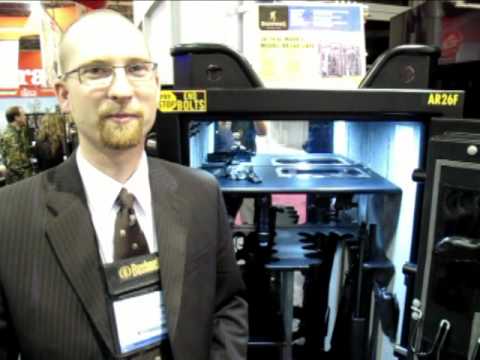
Among the many brands of gunsafes on display at SHOT Show 2010, two series of safes caught our attention. Browning’s new Tactical MK II safes possess many smart features, such as rubber-coated shelves and built-in LED lighting, that we’d like to see as ‘standard equipment’ on other safes. The Browning Tactical safes even offer handy Picatinny rail sections on the bottom of the upper shelves, so you can securely stow optics or rail-mounted accessories when not in use. Check out the video below, which showcases the unique features of the 60″x30″ Browning Tactical MKII safe.
 Cylindrical High-Security Safes from Pendleton Cylindrical High-Security Safes from Pendleton
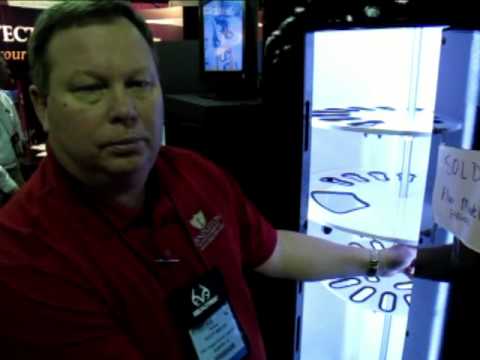
Pendleton drew crowds with its innovative line-up of cylindrical safes. A Pendleton Safe looks like a large vertical water heater clad in heavy steel. Pendletons feature a fairly narrow front door with a multi-level, rotating gun storage carousel inside.
The big advantage of the Pendleton safes is that they are very, very resistent to pry-bar attacks. The door gap is just .090″ (ninety thousandths) making it very hard to insert a prybar. The safe’s curved sides offer no entry points for prybars, and if a thief manages to tilt the safe over, it just rolls when leverage is applied to a prybar. The doors feature a patented cam locking mechanism and a commercial grade blocking plate to prevent drill attacks. Notable were the number of locking “bolts” — actually rectangular locking tabs of solid 1/4″ steel, providing 54 square inches of locking surface (compared to 4-8 sq. inches on bargain Costco/Walmart safes). Where some cheaper safes may have only three locking bolts on one side of the entry door, the 72″ Pendleton has 14 locking “tabs”, arrayed on the left AND right door sides (seven per side). A very impressive new safe, the Pendleton offers exclusive, patented security features, along with quality fabrication by a well-known, US-based commercial safe manufacturer.
|


