The big NRA Convention in Atlanta is just two days away. The 146th National Rifle Association (NRA) Annual Meetings and Exhibits will be held at the Georgia World Congress Center in Atlanta, Georgia from April 27-30, 2017. 80,000+ people are expected to attend this 4-day event which will feature dozens of seminars, workshops, and special events. There are still tickets available for many of the most important events at the 2017 NRA Annual Meetings. See links below:
GET EVENT TICKETS
Thursday April 27th
National NRA Foundation Banquet
Sponsored by Henry Repeating Arms, Century Arms and Kimber
Georgia World Congress Center Building B – 5 p.m.
Tickets start at $100 – Click here to purchase.
Friday, April 28th
20th Annual Firearms Law Seminar
Georgia World Congress Center – 8 a.m.
Tickets start at $50 – Click here to purchase.
NRA-ILA Leadership Forum
Sponsored by TownHall Media and Bearing Arms
Georgia World Congress Center Hall A3 – 12:30 p.m.
Tickets start at $10 – Click here to purchase.
When President Trump speaks at the NRA-ILA Leadership Forum on April 28th, it will be the first time a sitting president visits the NRA Annual Meetings & Exhibits since Ronald Reagan.
Sunday, April 30th
2017 National Prayer Breakfast
Brought to you by Fathers in the Field and sponsored by Trijicon and Universal Coin & Bullion.
Omni Atlanta Hotel at CNN Center Grand Ballroom – 7 a.m.
Tickets start at $40 – Click here to purchase.
4th Annual NRA Women’s New Energy Breakfast
Georgia World Congress Center Room B405 – 9:30 a.m.
Tickets start at $15 – Click here to purchase
NAVIGATE THE CONVENTION HALL
In and around the Convention Hall there will be 15 acres of firearms, shooting and hunting gear, and other exhibits. There will also be an on-site airgun range. For more information about the 2017 NRA Annual Meetings and Exhibits, including deals on hotels and airfare, show hours, exhibitors, maps, and much more, visit www.NRAAM.org.
“Involvement in the shooting sports develops … discipline, patience, self-control, and responsibility.” — Daisy President, Keith Higginbotham
Like many of our readers, your Editor got his first introduction to organized shooting sports through the Boy Scouts. At a Scouting summer camp I participated in competitive target shooting with both airguns and single-shot .22 LR rifles. That experience helped me earn my Rifle Shooting Merit Badge. That marksmanship badge remains one of the most popular non-mandatory Merit Badges. Since 2009, over 350,000 Rifle Shooting Merit Badges have been earned by young scouts.
Given the vital role Scouting plays in developing the next generation of shooters, we’re pleased that Daisy has agreed to partner with the Boy Scouts of America (BSA). This agreement makes Daisy the official airgun of the Boy Scouts of America.
This partnership makes Daisy’s unique inflatable BB Gun ranges available to the BSA’s 274 local councils as well as BSA camp sites across the country. Instructors emphasize shooting safety rules and teach basic marksmanship, including breath control, trigger pull, sight picture and more.
Daisy President Keith Higginbotham stated: “Teaching the basics of marksmanship and shooting safety… continues to be at the core of our mission. Hundreds of millions of adults have been positively affected by Scouting, learning to become responsible citizens, developing character and becoming self-reliant. Involvement in the shooting sports develops similar traits, such as discipline, patience, self-control, and responsibility.”
Daisy Inflatable BB Gun Range
Daisy’s unique inflatable BB Gun Ranges can be deployed at Scout camps, and as well as hunting and conservation events. These mobile ranges allow instructors to teach young poeple gun safety rules and marksmanship skills. When set-up, the range measures 22′ 5″ long by 9′ 6″ wide by 8′ 6″ tall.
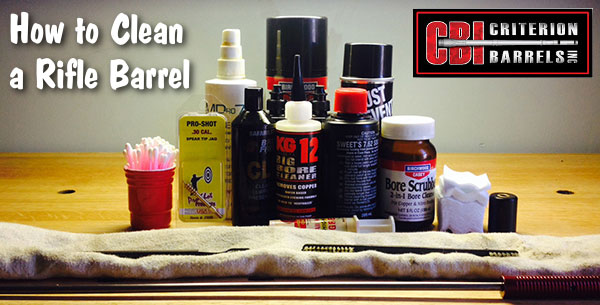
This article comes from the Criterion Barrels website. It provides good, conservative advice about barrel cleaning. Understand that cleaning methods may need to be adapted to fit the amount and type of fouling (and the particular barrel). In general, we do try to minimize brushing, and we follow the procedures Criterion recommends respecting the crown/muzzle. We have also had very good success using wet patches followed by Wipe-Out bore foam. Along with the practices outlined by Criterion below, you may want to try Wipe-Out foam. Just be sure to use a fitted cleaning rod bore guide, to keep foam out of the action recesses and trigger assembly.
The above video shows how to apply Wipe-Out or other bore-cleaning foam. We use a slightly different method. First, we use 3-4 wet patches to remove loose carbon fouling. Then we apply the foam as shown, but usually from the muzzle end (with bore guide in chamber). Here’s the important point — after 20-30 minutes, once the bubbles have dissipated, we apply the foam a second time, getting more of the active ingredients into the barrel. We then patch out, as shown, after 3-4 hours.
What is the Best Way to Clean a Rifle Barrel?
We are asked this question quite frequently alongside requests for recommended break-in procedures. Improper barrel cleaning methods can damage or destroy a barrel, leading to diminished accuracy or even cause a catastrophic failure. When it comes to barrel maintenance, there are a number of useful techniques that we have not listed. Some techniques may work better with different barrel types. This series of recommendations is designed to incorporate a number of methods that the Criterion Barrels staff has used successfully both in the shop and on their personal rifles. Please feel free to to list your own recommendations in the below comments section.
We recommend the use of the following components during rifle cleaning:
• Cloth patches (sized for the appropriate caliber)
• Brass jag sized properly for your bore
• One-piece coated cleaning rod
• General bore cleaner/solvent (Example: Hoppes #9)
• Copper solvent of your choosing (Example: Sweets/KG 12)
• Fitted cleaning rod bore guide
• Plastic AP brush or toothbrush
• Q-Tips
• Plastic dental picks
• CLP or rust preventative type cleaner
There are a number of schools of thought relating to the frequency in which a barrel should be cleaned. At minimum we recommend cleaning a barrel after each shooting session to remove condensation, copper, and carbon build-up. Condensation is the greatest immediate threat, as it can cause the barrel to rust while the rifle sits in storage. Copper and carbon build-up may negatively impact future barrel performance, increasing the possibility of a failure in feed or function. Fouling should be removed whenever possible.
The below tips will help limit the wear of different parts of your barrel during routine maintenance, helping extend the life of the barrel and improving its performance.
The Crown
The crown is the portion of the barrel where the bullet loses contact with the lands and grooves and proceeds to exit the firearm. The area most critical to accuracy potential is the angle where the bullet last touches the bore of the barrel.
Avoid damage to this area by using a plastic toothbrush and CLP type cleaner to scrub the crown from the exterior of the barrel. Even the most minimal variation in wear to the crown will negatively impact barrel performance, so be careful to avoid nicking or wearing away this part of the barrel.
Reducing Cleaning Rod Wear to the Crown
When running a patch through the barrel, place the muzzle about a ¼” from a hard surface that runs flat at a perpendicular angle to the cleaning rod’s direction of travel, like a wall or the edge of a work bench (pictured). When the jag impacts the hard surface, retract the cleaning rod and remove the patch.
By withdrawing the jag prior to its exit from the barrel, you are limiting the possibility of the brass dragging upon the crown if the rod is at all bent or misaligned. The soft cloth patch will continue to serve as the point of contact between the jag and the barrel, minimizing potential wear.
If possible, insert the rod through the chamber, pushing it forward toward the muzzle. Some rifles, such as the M1 Garand or M14, will require you to insert the cleaning rod through the muzzle. In these situations the use of a cleaning rod guide is recommended to limit the friction placed upon the crown.
Avoid using cleaning rod segments for scraping carbon from the recessed muzzle of an AR-15 barrel. We used this trick in the Marine Corps to impress the armorers and NCO’s with the cleanliness of our muzzles, but it likely played a significant role in reducing the service life of the rifle barrel in question.
Use a Q-Tip soaked in solvent to remove any copper or carbon residue from the recessed muzzle of an AR-15 barrel. A little bit of remaining carbon on the face of the muzzle will not negatively affect bullet travel so long as the crown edge remains consistent around the circumference of the bore.
The Lands and Grooves
This portion of the barrel may experience reduced efficiency due to copper fouling and cleaning rod damage. If copper fouling takes place during the initial break-in of the rifle, make sure to check our barrel break-in article.
For regular maintenance we suggest using a single piece coated cleaning rod rather than the traditional segmented rod or bore snake. While segmented rods and bore snakes may be convenient for field use, the corners between the segments may bow out and catch on the lands, scraping along the length of the rifling. Residual grit and particles from expended cartridges may also get caught between segments, resulting in an abrasive surface working its way down the length of the barrel. Most bore snakes will remove significant amounts of carbon fouling, but may fall short in the removal residual carbon buildup and copper fouling during deep cleaning. Good rods can be sourced from multiple manufacturers, but we have found good results using both Pro-Shot and Dewey brand products.
General cleaning requires the use of patches rather than nylon or brass bore brushes. Brass brushes may be required when aggressive cleaning is required, but can lead to unnecessary wear on the barrel if used frequently. This is not due to the nature of the soft brushes themselves, but from the abrasive particles of grit that become embedded in the material that is being run repeatedly through the bore. We recommend the use of bore guides when cleaning from both the muzzle and breech. These bore guides will help serve to protect the crown and throat from cleaning rod damage.
If significant resistance develops while running the cleaning rod through the bore, no attempt should be made to force it in further. Back the rod out and inspect the barrel to determine the cause of the resistance. The jag may be pushing between a bore obstruction and the rifling, digging a divot into the barrel before pushing the obstruction back through the muzzle. One way to minimize the risk of a stuck rod is by utilizing a slightly smaller patch during the initial push.
The process of cleaning the length of the rifling is relatively straightforward:
1. Check to make sure the rifle is safely unloaded.
2. Carry out any necessary disassembly procedures prior to cleaning.
3. Remove bolt (if possible) and insert fitted cleaning rod bore guide in action.
4. Soak a patch in bore solvent (similar to Hoppes #9).
5. Center and affix the patch on the brass jag, inserting it into the chamber end of the barrel. A misaligned patch may cause the jag to damage the lands of the rifling, so make sure the patch is centered on the jag.
6. Run the patch the full length of the barrel, retracting it upon reaching the end of the muzzle.
7. Let the solvent sit for a minute.
8. Continue to run patches through the bore until carbon residue is minimized.
9. Run a dry patch through the bore to ensure carbon residue has been removed.
10. Soak a patch in copper solvent (Sweet’s or KG-12).
11. Run the patch through the bore, leaving it to sit for 3-5 minutes (do not let solvent sit for more than 15 minutes.*)
12. Repeat this process until no blue residue remains on the patches.
13. Run a patch of Hoppes #9 and a dry patch through the bore to neutralize the copper solvent.
14. Inspect the barrel prior to reassembling the rifle, verifying that no bore obstructions remain.
*Please note that some ammonia-based copper solvents may prove to be corrosive if left sitting in the barrel for an extended period of time. It is essential that these solvents be removed within 15 minutes to avoid ruining the bore.
The Chamber
Proper cleaning of the chamber is a critical component of a general cleaning procedure. Carbon rings can build up near the neck and throat of the chamber wall, leading to feeding malfunctions and pressure spikes inside the chamber.
The chamber can be the trickiest part of the barrel to effectively clean, due to its fluctuation in size and the awkward ergonomics often required to remove carbon residue. Numerous chamber specific devices have been created to address this problem, and while some should be avoided (steel chamber brushes), others can be used to great effect (cleaning stars and plastic dental picks). The simplest approach to cleaning a chamber is to apply solvent to a couple patches, and use the cleaning rod to spin the wadded up patches inside the confines of the chamber. This should aid in removing any excess carbon. A Q-Tip can be used to reach portions of the chamber unreached by patches.
The Barrel Exterior
While the condition of the crown, rifling, and chamber are essential to firearm performance, the finish of the exterior should also be cleaned after handling. Condensation, humidity, direct water contact, and salt residue from skin contact can cause rust or corrosion. An application of anti-corrosion products is recommended when placing a firearm into deep storage for an extended period of time. [Editor: AccurateShooter.com recommends Corrosion-X or Eezox, but other products work well too.]
Finding Cleaning Components
While most cleaning components can be found at your local gun shop, some specialty items may need to be sourced through online retailers such as Brownell’s. Criterion utilizes both Dewey and Pro-Shot brand cleaning components during our day-to-day operations.
Do you have any rifle cleaning tips or tricks not mentioned in the above article? We’d love to hear about them. You can post your comments below.
This photo is one of Nightforce’s series of picturesque “Gunscapes”. SEE MORE HERE.
This story is not (directly) about firearms, or reloading gear, or any of the little details of our sport. It, instead, is about life… and, sadly, about death. The recent passing of a friend (and fellow shooter) got me to thinking, “I’m sixty — what if I only had ten more years to live — how would I want to live my life? What really counts the most? What things would I do differently? What dreams would I pursue?”
From the demographics of this website, I know we have thousands of readers in their 50s, 60s, and 70s. Hopefully we will all live long, happy, and fruitful lives. But it’s not a bad idea to consider that we are all mortal, and the clock is ticking. Consider this — in the United States, the average male life expectancy is 77 years*. Using that number as a benchmark, I personally may have just 15 more years to enjoy life and to do the things I love — shooting, traveling, sailing, camping, listening to music, being with friends and family. Breaking that down into months, I have 180 more months to do fun and rewarding stuff. Just 180 months — that’s a real number my brain can comprehend all too well. If I live an average lifespan, that means I also only have 780 more weekends to do all that I want to do. With less than 800 weekends remaining, I don’t want to waste a single one.
Living a Life with More Good Times, and Fewer Regrets
Recently, a group of men, very near the end of their lives, were surveyed. They were asked if they would do things differently if they could live their lives over again. The vast majority of these men gave surprisingly similar responses, which fit into five “Life Lessons”. These “Top 5 Regrets of the Dying” were reported in a story by Bronnie Ware, writing for the AARP online magazine. Ware writes: “When questioned about any regrets they had or anything they would do differently, common themes surfaced.” Here are the five regrets most often mentioned by older men:
1. I wish I’d had the courage to live a life true to myself, not the life others expected of me.
“This was the most common regret of all. When people realize that their life is almost over and look back clearly on it, it is easy to see how many dreams have gone unfulfilled. ”
Lesson: Don’t wait to follow your dreams. Be true to yourself.
2. I wish I didn’t work so hard.
“This came from every male patient [surveyed]. All of the men… deeply regretted spending so much of their lives on the treadmill of a work existence.”
Lesson: Don’t let your work crowd out other important aspects of life.
3. I wish I’d had the courage to express my feelings.
“Many people suppressed their feelings in order to keep peace with others. As a result, they settled for a mediocre existence and never became who they were truly capable of becoming.”
Lesson: Express yourself truthfully. Don’t suppress your feelings for decades.
4. I wish I had stayed in touch with my friends.
“There were many deep regrets about not giving friendships the time and effort they deserved. Many [were] so caught up in their own lives that they had let golden friendships slip by over the years.”
Lesson: Take an interest your friends’ lives; keep bonds of friendship strong.
5. I wish that I had let myself be happier.
“This is a surprisingly common [regret]. Many did not realize until the end that happiness is a choice.”
Lesson: Affirmatively pursue the things that bring you happiness. Don’t just stick to old habits.
Turn Off the Computer, and Do Something Memorable with Your Friends Today
How does this all apply to our shooting hobby? Well, if (like me) you are middle-aged (or older), go have some fun this weekend! Load up your rifle and get to the range. Don’t put off doing the things that make you happy. Call those old buddies you may not have seen in a long time. Renew friendships. Get out into nature. And start figuring out how you can live your dreams. As the saying goes, “Time waits for no man”.
*One of our readers pointed out that the numbers actually work out better than this, because once a man survives to later life, men of his surviving age cohort enjoy a projected lifespan longer than the average projected lifespan from birth. For example, using actuarial tables, a man born exactly 60 years ago (still alive today), has a calculated life expectancy of 23.4 years… meaning he would live to age 83.4 years, on average. CLICK HERE to see actuarial-predicted longevity based on your birthdate.
Practicing What I Preach…
As you read this, your Editor will NOT be sitting in front of a computer. Instead he will be on a boat, taking him 30 miles offshore to this beautiful spot. Three days with no internet, no TV, no Schedule Cs, and no traffic. Just good friends and unspoiled nature. Living like a kid again.
Many of our readers travel far and wide during summer months, both on family vacations and to participate in shooting matches. When transporting firearms across state lines, it is vital to understand the laws and regulations that apply in each jurisdiction. Moreover, all of us need to stay informed about gun laws in our home states, since new laws are passed every year.
Indiana attorney Brian Ciyou has created an outstanding resource, Gun Laws by State (2017 Ed.) (GLBS), that explains firearms laws in all 50 states. Ciyou’s gun law treatise, available in both book and online (web) formats, covers state laws as well as key federal laws that apply in federal buildings, airports, National Parks, and school zones. There is a handy Reciprocity Map showing which states recognize concealed weapon permits issued in other jurisdictions. Moreover, GLBS covers Reciprocal Carry for all 50 states, Constitutional Law, Federal Statutory Law, Use of Force, Criminal Provisions, Civil and Criminal Liability, Preemption, Federal Property Rules, and Interstate Transportation. The web version of Gun Laws by State is updated regularly, and Ciyou even provides a GLBS Gun Laws Blog with current topics on gun regulations nationwide.
FREE Access to Many Database Features
Access key state and Federal legal information for FREE on the GLBS website. Simply click on an interactive map to quickly review gun laws in any state (See Texas example at right). Other Navigation links provide quick access to particular topics, such as rules for Airline Travel, Amtrak, National Parks, and Federal properties.
We recommend that readers bookmark the GLBS website. Though much free info is available, you should definitely consider buying the book if you frequently travel with firearms outside your home state. The printed book version costs $20.00, while a digital eBook is $10.00 (or get both for $25.00). CLICK HERE to purchase Gun Law Books and/or eBooks.
The big NRA Convention is just two weeks away. The 146th National Rifle Association (NRA) Annual Meetings and Exhibits will be held at the Georgia World Congress Center in Atlanta, Georgia from April 27-30, 2017. This 4-day event will feature 800+ exhibitors, and include dozens of seminars, workshops, and special events. Over 80,000 NRA members and guests are expected to attend. In and around the Convention Hall there will be 15 acres of firearms, shooting and hunting gear, and other exhibits. There will also be an on-site airgun range. For more info, visit www.nraam.org.
There will be nearly 800+ Exhibitors displaying products at the 2017 NRA Annual Meetings and Exhibits. You can see products from big name companies such as Berger Bullets, Leupold, Lyman, Nightforce, Nosler, Redding, Remington, Ruger, Savage, Smith & Wesson, and Winchester. You can also meet with top hunting guides and outfitters.
The National NRA Foundation Banquet will be held April 27th in the Thomas Murphy Ballroom, Georgia World Congress Center Building ‘B’. The NRA-ILA Leadership Forum is slated for April 28th in Hall A3, Georgia World Congress Center. With the recent changes in the American national leadership, the ILA Forum should be popular this year.
Hank Williams Concert
Lifetime NRA member and multi-Platinum hit-maker and outdoor enthusiast Hank Williams Jr. will take the stage at the 2017 NRA Annual Meetings and Exhibits Saturday, April 29th! This is always a sell out event, so don’t wait to buy your tickets.
Location of NRA Annual Meetings in Atlanta:
Firearms Policy for the 2017 NRA Annual Meetings
During the 2017 NRA Annual Meetings & Exhibits, lawfully carried firearms will be permitted in the Georgia World Congress Center and the Omni Atlanta Hotel at CNN Center in accordance with Georgia law. However, firearms are not allowed in the remainder of the CNN Center, including the food court and shops. When carrying your firearm, remember to follow all federal, state and local laws.
Guns are big money. In the past eight years, the dollars generated by the production and sales of guns and ammo have more than doubled. In fact, total economic impact of the firearms and ammunition industry in the United States increased from $19.1 billion in 2008 to $51.3 billion in 2016, a 168% increase. Meanwhile the total number of gun industry full-time jobs rose from approximately 166,000 to more than 300,00, an 81% increase in that period, according to a report released by the National Shooting Sports Foundation (NSSF), the industry’s trade association. Read NSSF Report Highlights HERE.
Big Annual Growth — Numbers Up 15% from 2015 to 2016
The shooting industry’s economic impact rose from $49.3 billion in 2015 to $51.3 billion in 2016, a nearly 15% year-over-year increase. We can expect trends to slow down a bit with the election of President Trump, but recent years have still shown remarkable growth.
$6.5 Billion in Tax Revenues Generated
The firearms and ammunition industry generates sizable tax revenues. In the USA the industry and its employees pay over $6.5 billion in federal and state taxes including property, income and sales taxss.
The Firearms and Ammunition Industry Economic Impact Report: 2017 provides a state-by-state breakdown of job numbers, wages and output covering direct, supplier and induced employment, as well as federal excise taxes paid. Download the full NSSF Report HERE.
More Jobs, More Support for Conservation, More Tax Revenues
“Our industry is proud to be one of the truly bright spots in our economy as an unprecedented number of Americans have chosen to exercise their fundamental right to keep and bear arms and to safely enjoy the shooting sports,” said Stephen L. Sanetti, NSSF president and CEO. “In response to that growing market, we have increased our direct workforce dramatically over the last decade. In addition, since 2008 we increased federal tax payments by 156%, Pittman-Robertson excise taxes that support wildlife conservation by 138% and state business taxes by 107%.”
Big news for M1 Garand fans. The CMP recently announced that it should be receiving 86,000 M1 Garand rifles from the Phillipines. These WWII-era battle rifles were originally loaned to the Phillippines government through a Military Assistance Program. As “loaners”, they could eventually be repatriated to the United States. It looks like these old rifles will finally be coming home.
The return of the surplus Garands was disclosed last week by Gina Johnson, Gen. Mgr. of CMP South (Alabama). Posting on The M-1 Garand Enthusiasts Group Facebook Page, Ms. Johnson wrote:
“ … CMP will be receiving the rifles once the Phillipines prepares them for shipment. CMP reimburses the Army transportation costs of getting these rifles back as they have with every other shipment sent to us. We do not know when these rifles will be shipped back, but they have been approved.”
This was later confirmed by Mark Johnson, Chief Operating Officer of the CMP. Johnson stated that the rifles could be shipped back for distribution to American civilian shooters: “There are 86,000 or so M1s hopefully coming back to the Army,” he said. “We hope to see them in the future.”
These historic rifles can be returned to the USA and the CMP because the rifles were originally loaned to the Phillipines government through the Military Assistance Program, a more modern version of the “Lend Lease” program that provided arms and assistance to U.S. allies during WWII. Alloutdoors.com explained: “Since these rifles were loaned, not purchased outright, they are eligible for return to the U.S. Army and then the CMP”.
Condition and Price “To Be Determined”
As the CMP has not yet seen or graded the M1 Garands, the typical condition of the rifles remains unknown. But with so many rifles coming back the the USA, we can expect there will be some in very fine condition. It make take a long time for the CMP to inventory all 86,000 Garands and eventually list them for sale on the CMP Store.
Thunder Beast Arms suppressors are popular with tactical competitors and hunters.
Hopefully, in the near future, it will be much easier to purchase a suppressor for your firearm. Legislative efforts to reform the laws governing suppressors are moving forward in the U.S. Congress.
On January 9, 2017, Congressman Jeff Duncan (R-SC), co-chair of the Congressional Sportsmen’s Caucus (CSC), introduced H.R. 367 to remove suppressors from National Firearms Act control and treat them the same as long guns, replacing the outdated federal transfer process with a NICS background check. The measure picked up 42 Republican co-sponsors and one Democrat co-sponsor. Sen. Mike Crapo (R-Idaho) introducted the similar Hearing Protection Act of 2017 (S. 59) in the U.S. Senate.
The new silencer reform legislation has a key backer — Donald Trump, Jr., the President’s son. “It’s about safety. It’s a health issue, frankly.” Trump Jr. explains in a video interview with Joshua Waldron, the founder of SilencerCo.
Donald Trump Jr. Talks about Suppressors and Shooting Safety
Donald Trump Jr. Talks about Suppressors
“I’ve had the privilege of being able to hunt in Europe, where some of the strictest gun laws in the world exist. Guess what… virtually every hunting gun there is suppressed. It’s about safety. If you had that kind of noise levels in any other industry as you would in shooting sports, OSHA would be all over the place. It’s about safety.” Trump Jr. said the current U.S. suppressor laws are “arbitrary policies by people who don’t know what they’re talking about.” He says it’s time the U.S. follow the lead of European nations, and adopt sensible suppressor policies, “because if Europe can do it, American better well be able to do it.”
NSSF Supports Hearing Safety Act
The National Shooting Sports Foundation (NSSF) supports efforts to make silencers/suppressors easier to purchase. “This legislation will enable gun owners to have better access to hearing protection products and improve safety for the shooting sports by removing extensive wait times for burdensome paperwork processing that does not advance public safety,” said Lawrence Keane, NSSF senior VP and general counsel.
“Anyone who has ever worried about hearing loss from shooting might want to lend their ears to this cause” said Emily Taylor, an attorney at the Houston law firm of Walker & Byington.
Current law imposes signficant barriers to suppressor ownership, Taylor explained: “Currently, the manufacture, purchase, and possession of firearm silencers are regulated by the ATF and must comply with the requirements laid out in the National Firearms Act (NFA). Anyone who wants a firearm suppressor must first get approval from the ATF and pay the required tax. An extended waiting period comes along with the time it takes the ATF to process these requests.”
“The Hearing Protection Act seeks to amend the law so that firearm silencers are treated the same way as long guns,” Taylor added. “The bill would make it so that there is no longer a tax associated with the transfer of a firearm silencer, and anyone who pays a tax on a silencer after October 22, 2015 could receive a refund of such tax. Lastly, the bill would preempt certain state laws that tried to impose taxes or registration requirements on firearm silencers.”
Here’s the best reason to go to Las Vegas we know — to attend a shooting camp taught by some of the nation’s leading 3-Gun aces. In three weeks, the Clark County ranges will be ringing with the sounds of pistol, rifle, and shotgun rounds on steel…
April 20-23, 2017 NSSF presents its first-ever 3-Gun Shooting Sports Fantasy Camp, to be held at the world-class Clark County Shooting Complex in Las Vegas. This event features shooting instruction from some top pros, including Randi Rogers, Robert Vogel, Tommy Thacker, Dianna Muller, Ryan Muller, BJ Norris and Chris Cheng. You don’t even need to bring your bang-sticks — the program includes guns and all ammo (as well as meals and hotel accommodations). The April 2017 camp is sold out, but the NSSF plans more camps in the future.
During the 4-day session, “campers” will learn from the pros, practice techniques, have some friendly competitions, and, of course, enjoy Las Vegas nightlife (after the shooting stops).
Nevada’s Clark County Shooting Complex, located just North of Las Vegas, is the largest shooting facility in the United States. Opened in 2010, the modern 2,900-acre complex is a deluxe facility with multiple ranges, club-house, and even an RV park.
Hardware for 3-Gun Competition — Guns & Gear
In this NSSF video, Top Shot Finalist Chris Cerino reviews the hardware you’ll need for multi-gun matches. Chris talks about carbine configurations — including barrel, handguard, and optics options. Cerino also demonstrates pistol techniques and explains the key features of a belt/holster rig.