Small patches are not very efficient at distributing bore cleaning liquids inside your bore. The problem with a tight-fitting patch is that the solvent gets squeezed off in the first few inches. You can switch to a smaller jag, or a bore mop, but there is an even better way to get an ample amount of solvent in your bore. Just spray directly into the bore with a wash bottle, an inexpensive plastic bottle with an L-shaped dispensing neck, tapered at the end.
When using the wash bottle, you can either just plug the breech and spray from the muzzle end (where most copper fouling is), or, alternately, put the wash bottle neck directly in the chamber and spray forward. When spraying from the chamber forward, you may need to use a rubber O-Ring to seal off the action… depending on the bore size and the particular wash bottle’s neck spout diameter. We prefer to plug the breech and squirt from the muzzle.
Bottle Solvent Application Method Works Great for Smaller Bores
Using wet patches or wet brushes is an inefficient way to really saturate the tight bores of 17s, 20s, and 22s. Even with a cotton bore mop, most of the solvent will be squeezed out before it gets to the end of the bore, where most copper fouling occurs. For these smaller 17, 20, and 22-caliber bores, you can just take the wash bottle and stick the tapered nozzle right in the chamber. The tapered end will press fit in the throat, sealing off the chamber. With the barrel slightly nose-down, give the bottle a couple good squirts until the solvent mists out the muzzle. In just a few seconds, this will put more solvent in the bore than a half-dozen wet patches.
A solvent-filled wash bottle is also handy for wetting your brushes. It’s much easier to saturate a bore brush (without spilling solvent on your stock), by using the wash bottle. You can get wash bottles from USPlastic.com, Amazon.com, or lab supply stores. CLICK HERE for $4.98 wash bottle.
Barrel-maker Dan Lilja’s website, RifleBarrels.com has an excellent FAQ page that contains a wealth of useful information. On the Lilja FAQ Page you’ll find answers to many commonly-asked questions. For example, Dan’s FAQ addresses the question of barrel life. Dan looks at factors that affect barrel longevity, and provides some predictions for barrel life, based on caliber, chambering, and intended use.
NOTE: This article was very well-received when it was first published. We are reprising it for the benefit of readers who missed it the first time.
Dan cautions that “Predicting barrel life is a complicated, highly variable subject — there is not a simple answer. Signs of accurate barrel life on the wane are increased copper fouling, lengthened throat depth, and decreased accuracy.” Dan also notes that barrels can wear prematurely from heat: “Any fast varmint-type cartridge can burn out a barrel in just a few hundred rounds if those rounds are shot one after another without letting the barrel cool between groups.”
Q. What Barrel Life, in number of rounds fired, can I expect from my new barrel?
A: That is a good question, asked often by our customers. But again there is not a simple answer. In my opinion there are two distinct types of barrel life. Accurate barrel life is probably the type most of us are referencing when we ask the question. But there is also absolute barrel life too. That is the point where a barrel will no longer stabilize a bullet and accuracy is wild. The benchrest shooter and to a lesser extent other target shooters are looking at accurate barrel life only when asking this question. To a benchrest shooter firing in matches where group size is the only measure of precision, accuracy is everything. But to a score shooter firing at a target, or bull, that is larger than the potential group size of the rifle, it is less important. And to the varmint hunter shooting prairie dog-size animals, the difference between a .25 MOA rifle or one that has dropped in accuracy to .5 MOA may not be noticeable in the field.
The big enemy to barrel life is heat. A barrel looses most of its accuracy due to erosion of the throat area of the barrel. Although wear on the crown from cleaning can cause problems too. The throat erosion is accelerated by heat. Any fast varmint-type cartridge can burn out a barrel in just a few hundred rounds if those rounds are shot one after another without letting the barrel cool between groups. A cartridge burning less powder will last longer or increasing the bore size for a given powder volume helps too. For example a .243 Winchester and a .308 Winchester both are based on the same case but the .308 will last longer because it has a larger bore.
And stainless steel barrels will last longer than chrome-moly barrels. This is due to the ability of stainless steel to resist heat erosion better than the chrome-moly steel.
Barrel Life Guidelines by Caliber and Cartridge Type
As a very rough rule of thumb I would say that with cartridges of .222 Remington size you could expect an accurate barrel life of 3000-4000 rounds. And varmint-type accuracy should be quite a bit longer than this.
For medium-size cartridges, such as the .308 Winchester, 7×57 and even the 25-06, 2000-3000 rounds of accurate life is reasonable.
Hot .224 caliber-type cartridges will not do as well, and 1000-2500 rounds is to be expected.
Bigger magnum hunting-type rounds will shoot from 1500-3000 accurate rounds. But the bigger 30-378 Weatherby types won’t do as well, being closer to the 1500-round figure.
These numbers are based on the use of stainless steel barrels. For chrome-moly barrels I would reduce these by roughly 20%.
The .17 and .50 calibers are rules unto themselves and I’m pressed to predict a figure.
The best life can be expected from the 22 long rifle (.22 LR) barrels with 5000-10,000 accurate rounds to be expected. We have in our shop one our drop-in Anschutz barrels that has 200,000 rounds through it and the shooter, a competitive small-bore shooter reported that it had just quit shooting.
Remember that predicting barrel life is a complicated, highly variable subject. You are the best judge of this with your particular barrel. Signs of accurate barrel life on the wane are increased copper fouling, lengthened throat depth, and decreased accuracy.
Benchrest Barrel Life — You May Be Surprised
I thought it might be interesting to point out a few exceptional Aggregates that I’ve fired with 6PPC benchrest rifles with barrels that had thousands of rounds through them. I know benchrest shooters that would never fire barrels with over 1500 shots fired in them in registered benchrest matches.
I fired my smallest 100-yard 5-shot Aggregate ever in 1992 at a registered benchrest match in Lewiston, Idaho. It was a .1558″ aggregate fired in the Heavy Varmint class. And that barrel had about 2100 rounds through it at the time.
Another good aggregate was fired at the 1997 NBRSA Nationals in Phoenix, Arizona during the 200-yard Light Varmint event. I placed second at this yardage with a 6PPC barrel that had over 2700 rounds through it at the time. I retired this barrel after that match because it had started to copper-foul quite a bit. But accuracy was still good.
Most competitive shooters are pretty good about bore cleaning (some may even clean their bores too aggressively). However, we’ve found that many shooters neglect the chamber area and the bolt lug recesses. It’s too easy to clean the bore, slip out the guide rod and say “I’m done.” Sinclair Int’l explains why it’s important to clean the action interior: “Shooters use a lot of grease and oil on their bolts to reduce friction and to prevent wear[.] Unfortunately, both of these compounds attract grit, powder and primer residues. Cleaning your receiver is especially critical [with] custom actions where the fit between the action and bolt is held to very tight tolerances. Routine cleaning of the action will prevent unnecessary wear on the bolt body, locking lugs, and the action raceways/guide rails. Frequent action cleaning is also essential to keeping the trigger area free of debris which can cause trigger hang-ups and failures.”
Your rifle deserves a clean action and lug recesses. For action cleaning, our friend Danny Reever favors the PMA Action Cleaning Tool. This handy tool speeds up the cleaning process, letting you do a better job in less time. Danny reports: “I’ve been using the PMA Action Cleaning Tool Kit ($69.95) for quite some time. Previously, I used one of the old style (round knob) action-cleaning tools with cylindrical cotton rolls. I think the PMA Action Cleaning Tool Kit is easier to use, and possibly achieves better results. CLICK HERE to Read Full Tool Review.
Cleaning the Chamber
Combustion by-products, lubricants, and solvent residues can collect in your chamber. Severe build-up of grease and carbon can interfere with chambering. Also some solvents will promote corrosion. You need to keep your chambers clean.
1) Install a clean cotton mop of the correct size on the end of a chamber rod and insert the mop into the chamber. Rotate the mop several times to remove any brush bristles left behind and any excess solvent that was between the rod guide snout and the end of the chamber. Make sure the chamber is dry. Prior to storing a rifle you can oil the chamber but make sure the oil is removed prior to firing the rifle.
2) Alternatively, install an old bore brush on a chamber rod, overlap a couple of patches on the brush bristles, and wrap them around the brush completely. Then insert the patch-covered brush into the chamber while rotating it to remove the excess solvent and debris. Push it firmly into the neck area of the chamber. A similar method is to pierce a large patch on the end of the brush loop and insert it into the action, again rotating the brush as you push the patch up against the breech.
Cleaning the Lug Recess Area
The action lug recess area is one of the dirtiest places on a bolt-action rifle. To properly clean this area, always use a tool designed for the task, such as the $32.99 Sinclair Action Cleaning Tool (Brownells #749003115) which is part of the full Sinclair Action Cleaning Tool Kit ($48.99 at Brownells, #749004651).
1) Insert a cotton roll or cleaning felt into your lug recess cleaning tool and wet both ends and the face of the cotton roll/felt with solvent.
2) Insert the tool into the action and push it forward until it is positioned fully in the lug recess area and rotate the tool head several times. Then reverse the rotation for another few turns. While rotating the tool move it slightly in and out to cover the entire recess area and to also clean the breech face.
3) Remove the tool from the action and inspect the surface of the felt or cotton roll. If there is quite a bit of residue on both sides of the felt/roll, then repeat with another wet felt/roll.
4) When you feel the recess area is completely clean, insert a dry cotton roll into the tool and rotate the tool head to remove any remaining solvent and debris. If necessary, use a second dry cotton roll.
5) You can follow this step up with another pass of a mop or patches into the chamber to get any debris or solvent that pushed forward out of the lug recess area.
At the request of our readers, we provide select “Deals of the Week”. Every Sunday afternoon or Monday morning we offer our Best Bargain selections. Here are some of the best deals on firearms, hardware, reloading components, optics, and shooting accessories. Be aware that sale prices are subject to change, and once clearance inventory is sold, it’s gone for good. You snooze you lose.
NOTE: All listed products are for sale to persons 18 years of age or older. No products are intended for use by minors.
1. CDNN Sports — Winchester XPR with Vortex Scope, $599.99
⏺ Super deal on Winchester hunting rifle with Vortex 3-9x40mm scope
Here’s a great deal on a hunting rifle. For just $599.99, you can get a quality Winchester XPR rifle with Vortex Crossfire II 3-9x40mm with BDC reticle. For this rifle + optic special, there are six (6) chambering choices: .243 Winchester (regular and compact), 6.5 Creedmoor, 7mm Magnum, .300 WSM (regular and compact), .300 WinMag, .338 WinMag. These rifles feature a 20″, 22″, or 26″ barrel, Perma-Coat steel receiver, free-floating button-rifled barrel, MOA trigger system, and black composite stock.
2. Midsouth — Powders on Sale, Hodgdon, VV, Alliant & More
⏺ Big discounts on popular powders for rifles and pistols
Right now there a great sale on Powders at Midsouth. Many of the popular powders from Hodgdon, Vihtavuori, Alliant, Accurate, Winchester, and Shooters World are now IN STOCK and ON SALE. For example, save $18 per pound on Accurate LT-30 (28% off) and save $10 per pound on Alliant Reloder 16 a 15% savings. You want to act quickly on these deals, because some of the most popular propellants — such as Varget, RL 15.5 TS, RL 16, and VV N560 — can be expected to sell out quickly.
3. Sportsman’s WH — Rangefinders on Sale, Save up to 34%
⏺ Big discounts on Vortex, SIG, Leupold, and Bushnell Rangefinders
4. Palmetto SA — SIG Sauer 3-12x44mm Hunting Scope, $89.99
⏺ Save 50% now on good, basic hunting scope
Here’s a fantastic deal. Get a good, reliable major brand hunting scope for just $89.99. You can save 50% ($90!) this week on this SIG Sauer 3-12x44mm Buckmaster scope. This SFP riflescope features a custom Bullet Drop Compensation (BDC) reticle with holdover dots out to 500 yards plus an illuminated display for low-light hunting. NOTE: we believe this optic ships complete with front and rear flip-up lens covers.
5. Palmetto SA — Winchester 5.56 Ammo, $249.99 500 rds
⏺ Super deal on Winchester 5.56 (.223 Rem) ammunition
If you shoot an AR15 or .223 Rem varmint rifle, here’s a great deal. Get 500 rounds of good, reliable Winchester 5.56 55gr FMJ ammo for just $249.99. That works out to just 50 cents per round. This 55gr target ammo works great for service rifle practice or varminting. It will shoot fine in modern rifles chambered for either 5.56 NATO or .223 Remington.
7. Midsouth — CCI Blazer .22 LR Ammo, $32.99/500 Rounds
⏺ Very low price on good, reliable .22 LR ammunition
If you use .22 LR ammo for NRL22, varminting, or plinking, consider this CCI Blazer 40gr ammunition. Rated at 1235 fps, this CCI ammo runs pretty fast and packs a punch. Right now you can get a 500-ct brick for just $32.99. That’s just $3.29 per 50-ct box, a great value for quality American-made ammo.
8. Amazon — Deyace Extra Large Shooting Mat, $37.99
⏺ Nice, relatively big shooting mat with good padding
When shooting prone, you need a good shooting mat. The Deyace Extra Large padded shooting mat (#ad) is a great value for just $37.99. Measuring a generous 78″x28.5″, this XL mat has nice padding for elbows and knees, and the mat folds up nicely for transport. This mat is offered in four colors: Green, Tan, Tan Camo, and Black. For transport, we like this mat’s integral straps and carry handle.
9. Amazon — Digital Trigger Pull Gauge, $17.99
⏺ Cool sub-$20 tool that works really well — great buy
The Pridefend Professional Digital Trigger Pull Gauge (#ad) offers great performance for a very low price. We’ve used this “smart” pull gauge with success on match rifle triggers. This gauge measures in 1 oz. increments from 0 to 12 pounds. The gauge display is easy to read and you can choose ounce, pound, or Kg units. Though it costs just $17.99, this digital gauge offers better consistency than many conventional spring-type gauges. Plus, when you do a sequence of multiple pull tests on one gun, the unit automatically calculates maximum, minimum, and average pull weights.
⏺ Excellent, rugged rifle case at a very good price
When flying or driving it’s vital to protect your rifles. A good hard case option (at a great price) is the APACHE 9800 Weatherproof Protective Rifle Case. On sale for $149.99, this 53″-long case is $190.00 less than an equivalent-size Pelican case. Constructed from durable polypropylene, this quality hard case can protect long guns from from impact, moisture, and dust. The built-in purge valve equalizes pressure so you can open the case after changing elevations. NOTE: Case interior dimensions are 50⅜” by 13⅝”.
As an Amazon affiliate, this site can earn revenues through sales commissions.
With hunting season coming up soon, we know that many readers will be out in the field — with a set of binoculars. On most game hunts, you’ll speed a lot more time glassing with binocs than looking through your riflescope. With wide field of view and extended low-light capability, a good set of binoculars will be your most important game-finder. And with premium LRF binoculars, such as the ZEISS Victory series, one tool serves both for spotting and laser ranging.
“Without the stabilization of your binoculars [provided by] a tripod … you will be missing a majority of the game you are glassing for.” — Outdoorsmans.com
In this article, Vortex Optics’ Mark Boardman, an experienced hunter, explains the benefits of using a tripod with high-magnification binoculars. Everybody knows that powerful spotting scopes work best when mounted to a stable tripod or otherwise secured to a steady mount. Yet when most folks use binoculars, they never even think of using a tripod, despite the fact that tripod adapters are available for many premium binoculars.
Outdoorsmans Tripod Adapters Outdoorsmans.com sells tripod adapters for various kinds of binoculars. These really work: “Mounting your binoculars to a quality tripod is a must for the serious western hunter. Without the stabilization of your binoculars [by] mounting them to a tripod … you will be missing a majority of the game you are glassing for.”
A serious hunter should learn how to glass with tripod support, using methods outlined here. With binoculars offering more that 8X magnification, you can really benefit from a steady mount. You’ll be amazed at the difference the tripod will make.
OK, you’ve paid the tax stamp and acquired your new suppressor (aka “silencer” or “moderator”). Do you still need to wear earplugs or muffs? Absolutely. Even with that expensive new “can”, your rifle could be generating over 140 decibels (dB) of noise — about the same as as an unmuffled 9mm pistol shot. That’s loud enough to create permanent hearing loss with repeated exposure.
Firearms Are Loud: 140 dB to 175 dB
Audiology group ASHA explains: “Exposure to noise greater than 140 dB can permanently damage hearing. Almost all firearms create noise that is over the 140-dB level. A small .22-caliber rifle can produce noise around 140 dB, while big-bore rifles and pistols can produce sound over 175 dB. Firing guns in a place where sounds can reverberate, or bounce off walls and other structures, can make noises louder and increase the risk of hearing loss. Also, adding muzzle brakes or other modifications can make the firearm louder. People who do not wear hearing protection while shooting can suffer a severe hearing loss with as little as one shot[.] Audiologists see this often, especially during hunting season when hunters and bystanders may be exposed to rapid fire from big-bore rifles, shotguns, or pistols.” Source: ASHA, Recreational Firearm Noise Exposure.
Suppressors, On Average, Reduce Noise Levels about 30 Decibels
In an article for Ammoland, gunwriter Sam Hoober says that you can expect about 30 decibels (dB) of noise reduction from the average suppressor: “Looking at a few different products, SilencerCo attests their suppressors reduce the sound pressure of a 9mm gunshot to anywhere from 125.7 dB to 131.5 dB, depending on the model. Advanced Armament Co, another popular supplier, attests a 23 dB to 33 dB reduction or down to 127 dB. Liberty Suppressors, another manufacturer, attests a reduction of 24 dB to 38 dB, depending on model and other factors. In short, we can presume something on the order of 30 dB of attenuation as an average.”
Using that 30 dB number you can quickly discern that you’ll still need hearing protection — good hearing protection — when shooting any suppressed firearm (even a .22 LR). “Spikes of 130 dB and more can result in permanent hearing damage instantly”. Source: NRA Blog.
The Myth of the “Quiet” .22 LR
The NRA Blog notes that “many rimfire shooters, particularly those using the beloved .22 Long Rifle cartridge, argue that the small .22 LR caliber doesn’t produce enough sound to damage your hearing”. So, is that really true. or is it a myth?
In fact, a .22 LR can be much louder than you think — a .22 LR pistol can produce sound levels of 134 dB. That’s well above the normal human pain threshhold.
Sound Levels for Common Noises:
9mm Luger pistol: 160 dB
Jet aircraft engine (near): 140 dB
.22 LR pistol: 134 dB
Normal human pain threshold: 120 dB
Noisy Nightclub: 110 db
Riding Motorcycle at 65 mph: 103 db
Power Lawnmower: 95 dB
Hearing damage possible: 85 dB (sustained for 8+ hours)
Ringing Telephone: 80 dB
Normal conversation: 60 dB
The Risk of Hearing Loss
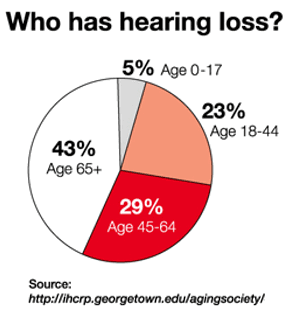
Hearing loss can be progressive and irreversible. If you are a shooter, this is serious business. As the NRA Blog cautions: “You may not even realize you’re harming your hearing. Hearing loss occurs gradually, and can go effectively unnoticed until symptoms become severe. By then, the damage is done.”
Nobody wants to go deaf. But we often see shooters without effective hearing protection when they are walking around a few yards behind the firing line. That’s bad — even if you are away from the firing line, gunshot noises can damage your hearing. You MUST use effective hearing protection every time you go to the range. Good foam earplugs costs mere pennies but they can prevent deafness in your later years. Many folks also wear muffs over plugs.
Here is Tom Mousel with Whitetail taken with his ultra-light hunting rifle fitted with 6mm Creedmoor Lilja barrel. Friend Cody (right) actually took the shot. This gun has a second barrel in 6.5 Creedmoor.
Hunting season is opening up soon across the country. Next Saturday, 9/28/24, is National Hunting and Fishing Day. This Sunday we feature a state-of-the-art, ultra-light hunting rifle. This rig is very accurate AND very light, and features two barrels, one in 6mm Creedmoor and the other in 6.5 Creedmoor. With this Titanium-actioned rifle, owner Tom Mousel has successful taken Whitetail deer and other game.
“Light is Right” when it comes to carrying deer rifles long distances in the backcountry. A lighter rifle DOES make a difference when you’re hiking many miles and carrying other gear including binoculars, laser rangefinders, food/water, and packs. And then, if you are successful, you’ll be carrying out game meat, so a lighter rifle translates to a lighter overall load.
When Forum member Tom Mousel (a top 1000-yard competitor) considered a new hunting rifle, he wanted a very light-weight rig. What he got was a low mass masterpiece — an ultra-accurate, five-pound hunting rifle. Not only does this twin-barrel rifle, as built by Alex Wheeler, come in under five pounds (before optics), but it has produced some quarter-MOA 3-shot groups at 1000 yards. The 6mm Creedmoor version of this rifle has demonstrated truly stellar accuracy at long range. The 6.5 Creedmoor barrel also shoots well and packs more punch for hunting use.
CLICK HERE to view full-screen large version of photo.
Here is Tom’s rifle weighing in at 4 pounds, 14 ounces with 21″ Lilja #1 contour 6mm barrel. Tom says: “Here’s the rifle with full Titanium action, bolt, and lug, in a Tom Manners 17 oz. carbon fiber stock. It’s exactly one pound heavier fitted with my Leupold Mark AR 4-12x40mm scope in Talley rings.”
Tom has two barrels for the rifle, one chambered for 6.5 Creedmoor and the other for 6mm Creedmoor. Tom reports: “The 6.5mm is a bit lighter being fluted. But I won’t be switching back now that I’ve shot the 6mm version. Neither has too much recoil, but the 6mm CM just kills the 6.5mm at distance for groups.”
Tom tells us: “What I like about this rifle is there were no corners cut to make it light. On some other ultra-lights, the fore-end has no strength or they are cut down really short. This is a full-sized stock, pillar-bedded with aluminum-filled epoxy and free-floated barrel. The ignition is set up with a TON of firing pin fall to function in the coldest temps.”
Gunsmith Alex Wheeler of Wheeler Accuracy is pleased with how this project turned out: “Tom has shot a bunch of sub-5″ groups and a couple one-inchers back-to-back at 1K. He has the Berger 115gr VLD going about 3050 fps.” Tom noted the 6mm barrel picked up about 50-60 FPS after the first 50 rounds. He shoots 115gr Berger VLDs with CCI 450s and Reloder 16, with the Bergers about .005″-.008″ in the lands.
Groups at 1000 Yards with 6mm Creedmoor Barrel, 115gr Bergers
Here are two of Tom’s 1000-yard targets. This is with the 6mm Creedmoor barrel shooting 115gr Berger VLDs pushed by Alliant Reloder 16 at about 3050 FPS. The average of the two groups is 0.246 MOA. Pretty amazing for an ultra-light rifle shot off a bipod. Tom acknowledges that he can’t do this every day. He says that “shooting 871 yards at my home range, the rifle typically shoots 4″ to 5″ 3-shot groups”.
Q & A with Tom Mousel About his Ultra-Light Hunting Rifle
Q: Why did you choose to build this rig?
Tom: I just wanted to do it to see how light we could build an accurate, good-shooting rifle.
Q: What are your favorite things about the rifle, and is there anything you would change?
Tom: Definitely the light weight, and the overall size — it has a pretty short barrel (21″), so it’s just handy. I wouldn’t change anything about the rifle, now that I have the Titanium bolt. When I bought the action originally it had the steel bolt.
Q: How does this rifle handle?
Tom: It points well considering it is a light rifle. The 6mm Creedmoor version has very little recoil. On a good bipod I can sight in at 1000 without a spotter.
Q: What are your favorite accessories?
I use a Solo Hntr Mtn Lite stretchy cover. You can see it in the photo at right showing me on a hunt. I like this because you can roll it up like a sock and and use it for a rear support.
Q: Why did you choose Alliant Reloder 16 powder?
Tom: Lonnie Anderson, a fellow Deep Creek shooter, did a 6mm Creedmoor and he said RL16 was absolutely the most accurate. We have also found that Reloder 16 is really consistent on velocities through the seasons — from 90 above to teens below zero.
Q: Could this ultra-light set-up work for a bigger caliber also?
Tom: I’ve tried bigger calibers, but I’ve never been satisfied with the consistency of the groups. There’s a cut-off — there’s too much torque and recoil. We see a limit — you don’t want “too much gun” for the platform. Even here, the 6.5 barrel just doesn’t shoot as well as the 6mm.
Q: What advice do you have for hunters considering ultra-light rifles?
Tom: Be careful about falling in love with ballistics and trying to build too much bang for too small a platform. If I built a 7mm WSM for example, I’d want to rifle to weigh at least two pounds more.
Full Titanium Action from Pierce Engineering
This photo shows the Pierce Engineering Titanium Featherweight short action featuring Titanium (Ti) receiver, Ti bolt, and Ti lug. This unit is a mere 15.90 ounces complete. (NOTE: with Titanium body and STEEL bolt the weight is 18.5 ounces). The long action version is 17.4 ounces for the complete Titanium action with Ti bolt and Ti lug.
Jud at Pierce Engineering tells us: “Both the Ti action body and Ti bolt are DLC-coated. This action also has an anti-bind rail for added smoothness and ease of functioning. This really is one of the lightest actions on the market. If you’re looking into building an ultra-light rifle I would seriously check one out! We make these with the highest level of detail, pride, and machining tolerances. They’re just sweet actions… and our Ti Featherweight short action is roughly half the weight of a Remington Model 7. So there’s a significant weight savings with the Pierce Ti Featherweight over a Model 7.”
Owner Profile — Tom Mousel, Hunter AND Long-Range Benchrest Ace
Tom Mousel knows a few things about accurate rifles. He is a top 1000-yard competitor at IBS matches and at the Deep Creek range near Missoula, Montana. In 2016 Tom set a remarkable 6-match Light Gun Group World Record, with a 2.9540″ group size Aggregate for SIX matches. And a year later, in 2017, Mousel set a 10-Match Heavy Gun World Record with a 5.3376″ Aggregate. NOTE: that is for TEN-shot groups in Heavy Gun. That’s an average ten-shot group under 6 inches for 10 matches! Over the past decade, Tom has remained at the top of the 1000-yard game, with many match wins at Deep Creek and other ranges.
If you are looking for a versatile, well-crafted semi-auto .22 LR pistol, here’s an option you should definitely consider — the SIG Sauer P322. Introduced in 2022, this .22 LR rimfire pistol that should be popular with SIG’s centerfire handgun owners and anyone who wants a quality, polymer-framed .22 LR pistol. The P322 offers excellent ergonomics and 20+1 capacity, making it good for cross-training and fun rimfire shooting.
This VIDEO explains the features of the new P322 (Loud Volume — turn down at work):
The P322 has many premium features, including an optics-ready removable rear sight plate allowing easy installation of a red dot optic. The P322 offers ambidextrous controls, interchangeable flat and curved triggers, and fiber optic front and rear sights. The P322 even comes with a threaded barrel adapter making it suppressor-ready right out of the box. And with a 20-rd magazine for 20+1 total capacity, the new P322 is the highest-capacity .22 LR pistol in its class. (And a mag extension is offered for 25-rd capacity).
Though it may look like a striker-fired pistol, the SIG P322 is a hammer-fired, single-action-only design (the hammer is enclosed by the rear of the slide). The P322 is blow-back operated with a fixed (non-tilting) 4″ barrel. This helps contribute to excellent accuracy and reliability.
Hands-On P322 Testing by 22Plinkster
SIG Sauer P322 Pistol Features:
Ambidextrous Controls With Reversible Magazine Catch
Optics-Ready Removable Rear Sight Plate
Fiber Optic Front and Rear Sights
Hammer-fired, Single-Action-Only, Fixed 4″ Barrel
Suppressor-Ready With Included Threaded Barrel Adapter
Interchangeable Trigger Shoes (flat and curved included)
20 Round Magazine Capacity (with +5 optional mag extension) SEE PRODUCT PAGE
Based on its external appearance, a modern riflescope may seem simple. It’s just a tube with two or three knobs on the outside right? Well, looks can be deceiving. Modern variable focal-length optics are complex systems with lots of internal parts. Modern scopes, even ‘budget’ optics, use multiple lens elements to allow variable magnification levels and parallax adjustment.
A few seasons back, we had a chance to look inside a riflescope thanks to a product display from ATK, now called Vista Outdoor, parent of Alliant Powder, CCI, Federal, RCBS, Speer, Weaver Optics. The Weaver engineers sliced open a Weaver Super Slam scope so you can see the internal lens elements plus the elevation and windage controls. We thought readers would like to see the “inner workings” of a typical modern rifle scope, so we snapped some pictures. The sectioned Super Slam scope was mounted inside a Plexiglas case, making it a bit hard to get super-sharp images, but you can still see the multiple lenses and the complex windage and elevation controls.
Check out the details of the focusing and magnification rings near the ocular (eyeball) end of the scope. There is very fine machining and threading to make everything work properly. The ocular lens is the piece of glass that faces the shooter while he aims.
Ever wonder how rifles, actions, stocks, optics, suppressors, and ammo components are produced in factories around the world? Today’s Saturday at the Movies installment features fascinating videos filmed inside major firearms industry factories including BAT Machine, ZEISS, Norma, SAKO, Nosler, CCI and Federal.
BAT Custom Rifle Actions — Factory Tour and Owner Interview
BAT Machine Co. makes some of the finest custom actions you can buy. Numerous national and world records have been set with BAT actions. To create this video, Ultimate Reloader’s Gavin Gear visited the BAT Machine production center in Post Falls, Idaho. Gavin talked with BAT’s founder Bruce Thom. The video features extensive footage of advanced CNC machines used to produce the superb BAT actions. If you own a BAT action, or hope to acquire one some day, definitely watch this video. CLICK HERE for Full Story.
Norma Ammunition Factory — Cartridge Creation Start to Finish
Norma has released a fascinating video showing how bullet, brass, and ammunition are produced at the Norma Precision AB factory which first opened in 1902. You can see how cartridges are made starting with brass disks, then formed into shape through a series of processes, including “hitting [the cup] with a 30-ton hammer”. After annealing (shown at 0:08″), samples from every batch of brass are analyzed (at multiple points along the case length) to check metal grain structure and hardness. Before packing, each case is visually inspected by a factory worker.
The video also shows how bullets are made from jackets and lead cores. Finally, you can watch the loading machines that fill cases with powder, seat the bullets, and then transport loaded rounds to the packing system. Guys, watch this video! You won’t be disappointed. The camera work and editing are excellent — there are many close-ups revealing key processes such as annealing and head-stamping.
SAKO Factory Tour in Finland
SAKO produces some of the best hunting rifles you can buy. SAKO, along with its sister company Tikka, operates sophisticated production facilities in Finland. In the video below, Canadian journalists visit the SAKO factory where rifles are made. It is interesting to see how stocks are made and barrels are bored and contoured. SEE More HERE.
Nosler Bullet Manufacturing
Ever wanted to see how Nosler bullets and cartridges are made? Here’s your opportunity. The Rocky Mountain Elk Foundation (RMEF) has produced a video (“Quality First”) that offers a behind-the-scenes look inside Nosler’s Oregon factory that produces bullets, brass, and ammunition. RMEF representatives visited Nosler’s famously-guarded manufacturing plant to show the technology used by Nosler to produce bullets and ammunition. After the intro, this video illustrates Nosler’s bullet construction techniques with a cool animation sequence. The video then showcases the Nosler ballistics lab, inspection room, and packaging line. SEE more HERE.
Video Showcases Nosler Production Facility and Ballistics Lab
ZEISS Sport Optics
ZEISS is a world leader in lens and optics technology. Along with ultra-high quality lenses used in production of computer chips and special optics for high-tech medical equipment, ZEISS produces great optics for hunters and shooters. ZEISS lenses are renowned for their sharpness, clarity, and high light transmission. ZEISS has a new series of LRP S3 and LRP S5 First Focal Plane scopes which promise to be favorites among PRS/NRL competitors and long-range hunters.
Silencerco Suppressor Fabrication Start to Finish
Here’s a cool video that shows the entire production process for a SilencerCo Octane pistol suppressor start to finish. Beginning with the raw materials, this video shows a wide variety of cutting, milling, drilling, burnishing, fitting, metal bathing, surface finishing, and laser etching processes. If you have any interest in production methods you’ll want to watch this video all the way through, and maybe a second time.
Rimfire Ammo Production at CCI/Speer and Federal Factories
YouTube host 22Plinkster got a chance to tour the CCI/Speer production facility in Lewiston, Idaho. This large plant produces both rimfire and centerfire ammunition. While touring the plant, 22Plinkster was allowed to capture video showing the creation of .22 LR rounds from start to finish. This is a fascinating video, well worth watching.
This revealing video shows all phases of .22 LR ammo production including cupping, drawing, annealing, washing, drying, head-stamping, priming, powder charging, bullet seating, crimping, waxing, inspection, and final packaging.
Field & Stream Tours Federal Ammo Plant in Minnesota
A while back Field & Stream toured the Federal ammunition production facility in Anoka, Minnesota. This large plant produces both rimfire and centerfire ammunition. While touring the plant, the reporter was allowed to capture video showing the creation of .22 LR rounds from start to finish. This is a fascinating video, well worth watching. Click speaker icon for sound.
Note to Viewers — After Starting Video, Click Speaker Icon to HEAR audio!
The Manufacturing Process for .22 LR Rimfire Ammunition Shooting Sports USA explains: “Rimfire cartridge cases are the oldest self-contained cartridge in existence, having been in continuous production since the mid-1850s. Rimfire cases are drawn from a thin piece of brass and formed with a hollow rim. A priming compound is then forced into the case using centrifugal force, where it is charged with powder and a bullet is seated in the mouth of the case. The case is then crimped around the bullet to ensure sufficient push and pull when the round is fired. When the firing pin strikes the thin brass rim of the case, the hollow rim is crushed and the primer is ignited.” Source: SSUSA.org 9/2/2017.


 Small patches are not very efficient at distributing bore cleaning liquids inside your bore. The problem with a tight-fitting patch is that the solvent gets squeezed off in the first few inches. You can switch to a smaller jag, or a bore mop, but there is an even better way to get an ample amount of solvent in your bore. Just spray directly into the bore with a wash bottle, an inexpensive plastic bottle with an L-shaped dispensing neck, tapered at the end.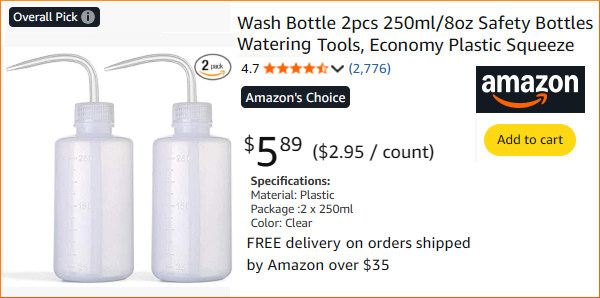


 Outdoorsmans Tripod Adapters


 The Risk of Hearing Loss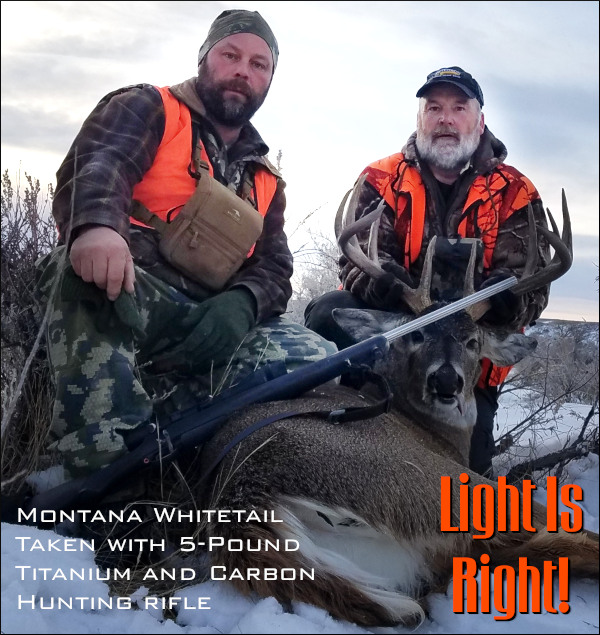


 Q: Why did you choose to build this rig?


 Norma has released a fascinating video showing how bullet, brass, and ammunition are produced at the


