|
|
February 2nd, 2010
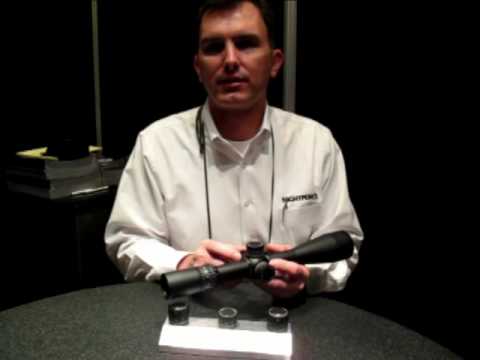
 Nightforce Optics has enhanced their elevation adjustments in this year’s lineup of high-magnification Nightforce scopes. Now you can get DOUBLE the elevation travel with a SINGLE TURN of the elevation knob. For an NXS with 1/4-MOA clicks, this means you can get a full 20 MOA of elevation travel with a single turn of the knob.
Bravo, Nightforce — this simple enhancement can make a BIG difference in the field. With most “high-performance” calibers, 20 MOA will get you to 700 yards or beyond. This means that the varminter can zero at all likely hunting yardages within the same revolution of the turret. That makes life much simpler, and reduces the chance of being way off in your elevation. No more confusion about which revolution you’re on….
Likewise, a tactical shooter, moving from near to far targets and back again, can likely stay on the same revolution at most target yardages. Even if you shoot out to 1000 yards, you will be able to get all the way out to 1K within two complete revolutions. This upgrade — doubling the elevation travel in each turret revolution — gives Nightforce scopes practical performance (inside 700 yards) similar to much more expensive scopes fitted with a single-turn or double-turn elevation systems (such as the U.S. Optics EREK knob). The new high-speed adjustment system will be offered in Nightforce’s 15x, 22x, 32x, and 42x series of scopes. Anticipated delivery date for scopes with the high-speed adjustment is May, 2010.
What About Retro-fitting Older NF Scopes?
Nightforce plans to provide an upgrade path for existing Nightforce scopes “eventually, but not right away”. The upgrade would allow installation of the “high-speed adjustment” system on older NF scopes. We don’t have any more specifics. Nightforce has NOT revealed how much the high-speed conversion would cost or when it might be available for pre-2010 scopes.
February 2nd, 2010
 Starting March 1, 2010, the National Shooting Sports Foundation (NSSF) will offer daily 90-second radio spots about the shooting sports and hunting. The new “Insights” radio featurettes, hosted by John Quaintance, will cover a wide variety of shooting topics, including firearms history, self-defense, competitive marksmanship, and firearms industry news. Each week one or more “Insights” segments will offer helpful hunting and shooting tips. According to Mark Thomas (NSSF Marketing Director), this program “will help NSSF reach a new audience of hunters and shooters, and will inspire potential participants … to try our sports.” For those who can’t get the daily NSSF “Insights” via radio, you can download the audio clips at nssf.org/insights and through iTunes.
 Listen to Sample Programs (MP3 files)
– Sight-in your Rifle in Record Time
– Select the Right Bullet for your Game
– Is it a Kentucky or a Pennsylvania Rifle?
– The Return of the 28 Gauge
NSSF encourages readers to let their local radio stations know about this free daily radio program. Station managers should contact NSSF for a sample program and to learn more about adding the show to their lineup.
February 1st, 2010
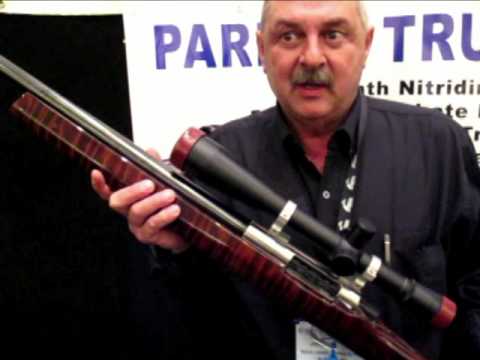
Many of our readers know Joel Kendrick, one of America’s top mid-range shooters. Joel is a two-time IBS 600-yard Shooter of the Year, and we have featured Joel’s match-winning 6×44 as one of our Guns of the Week. Joel now works with MMi-Trutec, specializing in the salt-bath nitriding process. This is a surface-hardening procedure for steel that creates a super-hard, low friction layer for the top 10-20 microns of the metal. Barrels treated with salt-bath-nitriding show much improved wear resistance and reduced friction.
For match rifles, varmint rifles, and hunting rifles, the most significant benefits of salt-bath nitriding are enhanced barrel life, and easier cleaning. Joel’s own F-Class rifle has a nitrided stainless barrel with over 5000 rounds — and it still holds 1/4 MOA at 100 yards. Other well-known shooters, such as John Whidden, have observed that nitrided barrels can shoot longer strings of fire between cleanings, with no reduction of accuracy. What is the cost of nitriding? As Joel explains in the video below, nitriding a single barrel costs $60.00, but there is a minimum first-time lot charge of $200.00. If you submit multiple barrels at the same time, the price per barrel can be reduced significantly. For more info, visit the MMI-Trutec website or contact Joel Kendrick by phone (704) 616-6442, or via email: joelkndrck [at] aol.com .
Is there a downside to nitriding? First, the nitriding process results in a BLACK matte or satin finish. If you like the natural silver finish of stainless steel, you shouldn’t nitride your barrel. Second, and most importantly, the salt-bath-nitriding process creates a surface so hard that you can NOT re-cut the chamber with normal reaming tools. Therefore, before nitriding, the barrel must be finished chambered. Basically the barrel should be fully finished, crowned, chambered and headspaced before nitriding. NOTE: MMi Trutec CAN mask the crown during nitriding so that the barrel can be re-crowned at a later time.

February 1st, 2010
There were rumors about problems at KBI/Charles Daily during SHOT Show this year. On Friday, January 29th, the company confirmed that it was going out of business. On the www.charlesdaly.com website, K.B.I, Inc. President Michael Kassnar, declared:
“To all our friends, fans, supporters and consumers of Charles Daly and by extension, KBI products, I regret to inform you that the rumors of our demise are true. KBI is going out of business and closing its doors, effective today, January 29, 2010.” Kassner blamed the business closure on a “multitude of events over the past five years”.
The Charles Daly Defense Unit produced US-made AR15 platform rifles for LEO and civilian buyers. Otherwise, most of KBI/Charles Daly’s product line were imported pistols, rifles, and shotguns. The company imported Armscor pistols from the Philippines, Jericho pistols from Israel, and both side-by-side and self-loading shotguns from Turkey.

Third Parties May Provide Product Support
What if you have a KBI or Charles Daly product — can you still get replacement parts and warranty repairs? The Charles Daly website states: “we are currently negotiating with several companies that will be performing after-sale service of Charles Daly, CD Defense and Jericho firearms. As soon as we have finalized a contract with one of these companies we will post the name, address and contact details of that company on www.CharlesDalyForum.com, so you will know who to contact to obtain service on your KBI firearm”.
February 1st, 2010
| If you couldn’t attend SHOT Show 2010, don’t despair. You can now download complete digital editions of the official SHOT Show Daily Magazines provided to SHOT Show attendees and exhibitors.
Each of the four (4) issues contains a major product review, and many interesting shorter features. The Day 1 Daily features new Rifles for 2010, while the Day 2 Daily features new Optics and Ammo. New Knives are featured in the Day 3 Daily. In the Day 4 Report, there is a good summary of new Airgun offerings.
Even if you’re not interested in the latest retail trends it’s worth downloading all four issues, because there are a number of features relating to club operations and range management. In addition, you’ll find many shorter items of interest to rifle shooters. As well there are handy directories of manufacturers and distributors. |
 |
January 31st, 2010
On Media Day, just prior to SHOT Show 2010, our Assistant Editor Jason Baney headed straight to the biggest, baddest rifles he could find — a pair of serious-looking tactical rigs from Barrett Rifles. First off was the mighty semi-auto Barrett 82A1, chambered in .416 Barrett. a “beast of a cartridge” according to Jason. The .416 is a very powerful chambering, and you can see the recoil pushed Jason pretty hard. That’s serious energy — Jason’s a big boy, and the Barrett 82A1 weighs nearly 31 pounds. Want one? You may have to liquidate some investments. MSRP on the Barrett 82A1 is a whopping $9345.00.


Ninety-Eight Bravo in .338 Lapua Magnum
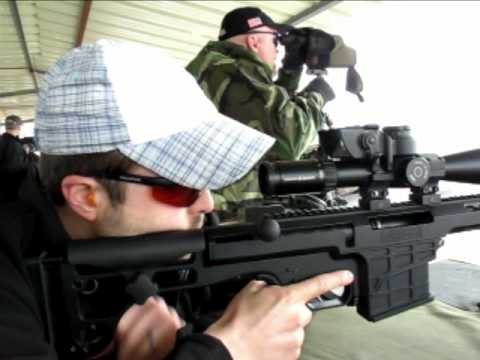
Next up was Barrett’s bolt-action model 98B (“Ninety-Eight Bravo”), chambered in .338 Lapua Magnum. At less than half the weight of the Barrett 82A1, the 98B was much easier to steer on the bench and the ergonomics were generally better according to Jason.
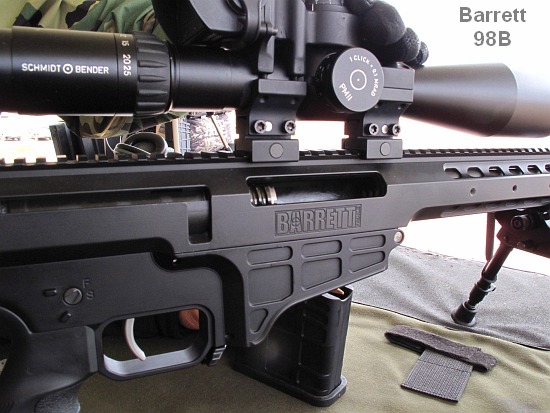
While recoil from the .338 Lapua Mag was stout, you can see in the video that the .338 LM kicked much less than the .416 Barrett, even in a gun with less than half the mass. The 98B gives you a good solid thump to the shoulder when firing. By contrast, the .416 Barrett in the 82A1 shakes your whole body. The 98B weighs 12.4-13.5 pounds (depending on configuration) and starts at $5039.99 without optics. Speaking of optics, the hooded display on top of the 98B is a Barrett Optical Ranging System (BORS). This $1500.00 gadget provides a digital read-out of your actual ballistics settings. It doesn’t control windage and elevation — that is still done manually with the scope knobs. BORS is an integrated electronic ballistic computer that mounts directly on the riflescope and couples to the elevation knob. Just turn the elevation knob until the LCD displays the target’s actual range (which must be pre-determined). The BORS’ three internal sensors automatically calculate a ballistic solution, compensating for up/down angle, temperature, and barometric pressure changes. It even tells you if the rifle is canted. It’s a handy device that eliminates the possibility that you loose track of your turret settings.

January 31st, 2010
The IBS recently announced that it would allow AR-platform rifles to compete in local IBS benchrest matches in their own class. If you plan to campaign your AR in this new class, you should definitely add a 3″-wide front sled and some kind of rear bag-rider to your gun. Without a flat fore-arm “sled” and rear bag-rider, ARs tend to be very wobbly, and the standard rear stock (with sling loop in place) is terrible in a rear sandbag.

 
Robert Whitley’s AR-X Enterprises has just what you need to improve your AR’s bench behavior. AR-X sells precisely-fitted Delrin bag-riders, crafted expressly for ARs by Evolution Gun Works (EGW). The 3″-wide front bag rider (aka “sled”) features a “twin rail” design and attaches to a tubular fore-arm via a swivel stud. The rear bag-rider mates to the bottom of a standard AR stock and attaches via the rear sling swivel anchor. This provides a smooth, straight surface to ride the bags.
These Delrin EGW bag-rider units were originally designed and prototyped for AccurateShooter.com’s 20 Practical AR project rifle. We tried many different designs, and the final production versions really work — as you can see in the video above. The AR bag-riders cost $40 front and $40 rear, or $75.00 for the set of two. To order, visit 6mmAR.com, or email Robert Whitley: rcw3 [at] erols.com .
January 30th, 2010
We had a chance to visit with Jim Kelbly of Kelbly’s Inc., at SHOT Show 2010. Jim had all the new March scopes on display, including the amazing 8-80x56mm long-range scope, part of March’s ground-breaking 10 times zoom range series. Jim reviewed the March line-up, explaining the many high-magnification models available for precision shooters.
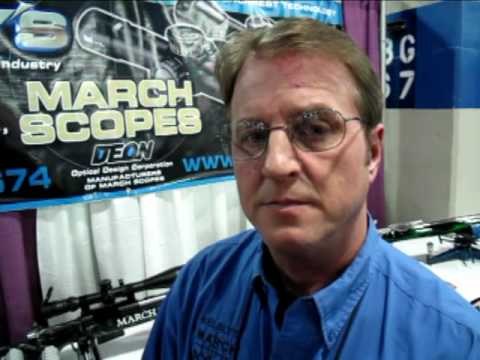

Jim also showed us the stainless Grizzly II action and the new Atlas series of stainless actions. The Atlas actions are designed for varminters, tactical shooters, and long-range shooters who want an affordable stainless action with a Remington 700 action footprint. The Atlas actions should be a simple drop-in installation for stocks inletted for Rem 700s. At the close of the interview, we asked Jim about the future of benchrest competition. Jim believes that we will see more cross-over of short-range shooters into the long-range disciplines (and vice-versa), along with growth in the F-Class and tactical disciplines.

January 30th, 2010
Kent Sakamoto of RCBS showed us the new RCBS products for 2010. The big news for reloaders is an automated, .22-caliber bullet feeder for the RCBS Pro 2000 progressive press. This caliber-specific bullet feeder cycles 22-cal bullets directly into a modified seating die. Now you can load all kinds of 22-cal cartridges without even handling the bullets. The bullet feeder is a simple, bolt-on upgrade to the Pro 2000 press, and it can also be adapted to Hornady’s Lock-N-Load progressive, according to Sakamoto. The new bullet feeder utilizes the RCBS electric collator/hopper, which feeds the bullets from an elevated bin. The 22-cal bullet feeder will be available in March 2010, with a 30-cal version to be released later in the year.
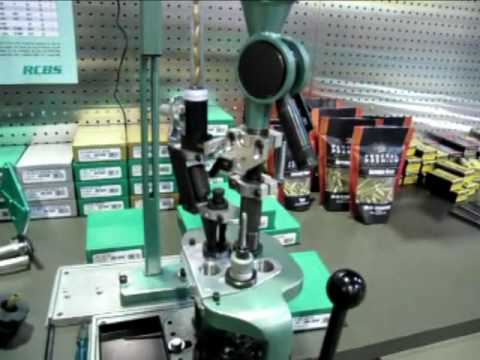
At Media Day, RCBS also showcased its long-awaited new AmmoMaster chronograph. Designed as an affordable, entry-level chrono, the new RCBS AmmoMaster is completely self-contained. All components, including cables and sky-screen, pack up into the central chrono “body” which is shaped like a giant cartridge case. The detachable control/display assembly (shaped like a bullet) can be positioned on your shooting bench for ease of access. The AmmoMaster chrono retails for about $125.00, making it one of the most affordable chronos on the market. It is available right now at leading vendors, including MidwayUSA (product #911572).
January 29th, 2010
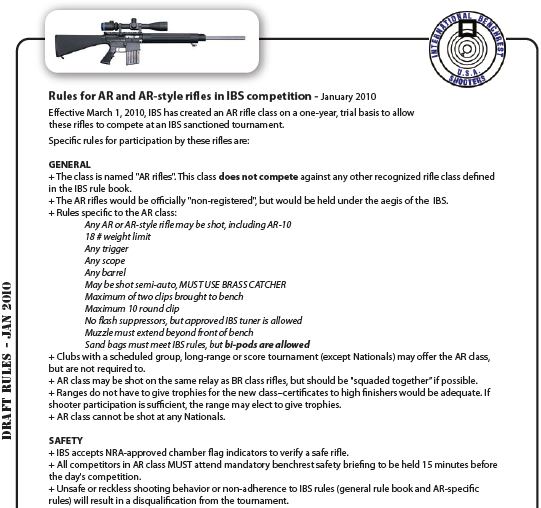
 Defying its reputation as a stodgy, conservative organization, the IBS will allow AR-style rifles to compete in their own class at IBS benchrest matches next year. Both AR15-platform and AR10-platform rifles can compete in this new, provisional class.
This will NOT displace any of the current classes (e.g. Sporter, LV, HV, Unlimited), nor change any rules for current classes. The “AR Experiment” will last for one year and then the IBS will determine whether to make the class permanent. IBS President Jeff Stover stressed three points:
1. This is an experiment for a one-year trial.
2. Clubs MAY have an AR class, but they are not required to do so.
3. The IBS Nationals are NOT affected — there will be no ARs at any Nationals
The IBS has distributed proposed draft rules, and the IBS plans to adopt final rules on March 1, 2010. Here are some of the key proposed rules:
|


