|
|
April 28th, 2007
Interest in the short-action magnums continues to grow among long-range and F-Class shooters. The 7 WSM, and versions made from 270 WSM or 300 WSM brass, have already proven themselves as a 1000-yard rounds. There is new interest in the Rem SAUM now that Norma brass is available. We often get requests for load data for these short magnums. Luckily, data for the WSM and Remington SAUM has been collected by ShortMags.org (now part of NetRifle.com). Click HERE to visit a page that contains collected data from all the major bullet makers and the Powder manufacturers. You’ll also find WSM/SAUM load data from Guns & Ammo magazine, Handloader magazine, and Shooting Times magazine. Most files are in Acrobat (.pdf) format, including bonus ballistics tables and drop charts for the WSM and SAUM.

April 27th, 2007
Californian Joe Friedrich recently shot a perfect 2500 score on the ARA rimfire target. We are working on a feature story about Joe, who is the ARA 2006 Aggregate Overall Champion. If you’ve never seen how a tuned, 17-lb “full-race” custom 22LR rifle performs on a one-piece rest, check out this Shooting Video. (Right click and “save as” to download, or left click if you have the Windows Media Player plug-in.) Note that the gun only recoils about half an inch. You may have to watch very carefully to see the gun move at all. If you look at the back of the action, however, you can see the rear of the bolt snap forward as Joe pulls the trigger, set at about two ounces. When conditions are good, and the barrel is warmed up, Joe can shoot one-ragged-hole 5-shot groups with this gun at 50 yards. Joe uses red box Eley EPS Ultimate ammo in his Bill Myers-built rifle. The rest is a Miller Uni-Rest with a Fudd sand-bag top.

April 27th, 2007
 When you’re practicing at long-range (or sighting in at 100/200 yards), it’s much easier to see your bullet holes with the layered “splatter” type targets that create a bright, contrasting ring of color around your hits. Through the end of April, MidwayUSA has Caldwell “Orange Peel” targets on sale. A yellow ring appears around a hit in the black bull, while a white ring appears around a hit in the surrounding orange field. Click HERE to download a 3.3 meg video that shows how the “Orange Peel” targets work, or click this Streaming Video link if you have a fast connection. Shown is the 25 pack of 4×4″ targets, item 559073, our favorite target set for 500- and 600-yard practice. This set is marked down $3.00 to $11.99. To see all “Orange Peel” targets, go to MidwayUSA.com and type “Orange Peel” in the search box.
April 26th, 2007
Well folks, the speculation is over… Schmidt & Bender has developed a long-range version of its 12.5-50×56 Field Target scope announced last year. Originally built as an air rifle scope for the popular European Field Target discipline, the initial version of this scope had parallax set for a maximum of 70 meters. We reported that this design could readily be adapted for long-range use, and we’ve been proven correct. The new long-range scope adjusts from 50m to infinity and is strong enough to handle any centerfire cartridge up to 50 BMG according to Schmidt & Bender.
This is an exciting product introduction–with S&B’s legendary lens quality, this new scope could set a new benchmark for clarity and resolution in high-magnification zoom scopes. Click HERE to download a Powerpoint presentation with specifications for the new scope. The scope has a 34mm main tube, 70mm eye relief, and a 1.8mm exit pupil at max power. It is currently offered with metric windage and elevation controls, .25 cm per click. NOTE: the North American export version of the scope might feature MOA clicks instead. According to Schmidt & Bender, “a new turret and MOA-based click value (probably 1/8 MOA) are under development”. Two reticles are offered with the scope at this time: 1) a second focal plane “Sport Reticle” which has a “floating” center dot and a lower dot in the bottom half; 2) a first focal plane “Tactical Reticle” with vertical and horizontal hash marks for ranging. We think neither of these reticles is ideal for long-range BR and target shooting. Hopefully, S&B will release a more conventional Fine Cross-hair reticle, or something similar to the Nightforce NP-R2 reticle. There is a discussion of the reticle options on Long-Range.com.

The key questions remain, when will the scope arrive in the USA and how much will it cost? We contacted Mark Cromwell, head of Schmidt & Bender’s North American division today. He confirmed that the new scope will be sold in the USA. Thirty Field Target versions are on order, which Mark hopes will arrive before September. The long-range version will probably not be available in North America before the end of 2007, and it might be January or February 2008 before we see inventory. Cromwell told us that the 12.5-50×56 will likely be priced in the $2600 range in the USA, but that is subject to change. Whether we can expect more reticle choices is unknown at this time. If you have questions about this scope, visit SchmidtBender.com where updates will be posted as available. Click HERE for Large Photo.
 
April 26th, 2007
The folks at Williamsport have completed a new 600-yard range and will be running 600-yard matches through the spring and summer of 2007. Match dates are: May 19, June 2, June 16, June 30, July 28, and August 25. This match is not affiliated with IBS, though IBS Light Guns are welcome. Either light or heavy or both can be shot. Light gun configuration is similar to IBS specifications (17-lb maximum, 3″ max fore-arm width). Sight-in and shooting will be done on a new berm constructed this spring. 10 benches are available. Four targets will be shot in two relays. The winners for group and score will be determined by Aggregate of the four targets. Anyone who has shot at Bridgeville will find this format familiar. The refreshment stand will be open and offering dinner specials after the conclusion of the match. This is a fun match, run by club members. Everyone is welcome. A non-member can shoot twice without joining. However, the third shoot will require a membership. Plaques will be awarded for each category, and an Aggregate winner for the year will receive a special award. For more info and directions to the range, visit the Original Williamsport Club Website, PA1000yard.com.

April 25th, 2007
The big news at the recent NBRSA 600-yard Nationals was Don Nielson’s dominant performance, which included a new 1.776″ 10-shot NBRSA-record group. From a hardware perspective, however, the major story was the 40X ED March scope used by Lou Murdica. With this new, ultra-sharp scope with ED (low dispersion) glass, Lou was able to see his 6mm and 6.5mm bullet holes clearly most of the time, and that helped him aim his shots more precisely. Lou finished third overall, second in two-gun score, and posted the Light Gun high score, with a 50-3X, 1.745″ target.

Until now, ED or low dispersion glass was only available in premium camera lenses or top of the line spotting scopes. This is a significant enhancement for benchrest scopes. “ED” or “LD” stands for low dispersion glass–this lessens chromatic aberration, which can cause an image to look fuzzy. All things being equal, low-dispersion lenses transmit a sharper image because different colors (wavelengths) don’t separate as they pass through the glass.
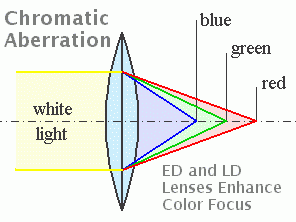
We have looked through various scopes at 6mm bullet holes at 600 yards. With a Leupold 8-25x LRT you can sometimes (in perfect conditions) see holes in the white but they are fuzzy and indistinct. With 36X Weavers or Sightrons, you have more magnification but most examples don’t have the sharpness to pick out 6mm holes consistently at 600. With a 12-42x Nightforce at max power you can see 6mm holes in the white when conditions are good, but it’s pretty difficult otherwise. With the March, Lou reports: “I could easily see 6mm bullet holes in the white or the blue in the mornings. At mid-day holes in the white were still really sharp, but shots in the blue were getting harder to see. At the end of the day when the mirage was bad, I could still see holes, but you needed to wait for the conditions to clear a bit.” Lou added: “On the March the image is bright and sharp all the way to the edge. It’s really noticeably better at the edges than other scopes.”
If all March 40X ED scopes perform as well as Lou’s, then this is a major advancement that may change the way the 600-yard game is played. If the March scope lets you see your bullet holes reliably, in all but the worst mirage conditions, then that really does give a “competitive advantage” over other scopes. We can expect some 600-yard competitors will trade in their Nightforces for March EDs. Lou tells us “many, many top short-range BR shooters are going with the March–Tony Boyer, Billy Stevens, Mike Ratigan–you name it.” But in short-range BR, it is not the resolving power that has driven sales of the March–it is the tracking reliability. Lou explained “In short-range BR, maintaining shot to shot Point of Impact (POI) is do or die. That’s why guys ‘lock up’ Sightrons and Leupolds. But with the March the POI stays constant. And when you do spin the knobs, you get totally repeatable tracking. I was clicking throughout the 600-yard match–even in the middle of a group. When I came back to my original zero it was always dead-on.” Lou noted: “Since I’ve been using the March, my shooting has improved dramatically. I’ve been up at the top and winning more than ever. Even at 300 yards the March makes a big difference. At the 300-yard Nationals Eric Stanton and I were the only two guys who used the scopes and we cleaned house with those things. I finished second overall and Eric finished first.”
The March scope, built by Koto Precision of Japan, is a 40-power, non-zoom, side-focus design, with 1/8-MOA clicks and 72 MOA of total elevation. Weighing 21.2 ounces, it has a 30mm tube, 52mm front objective, and a 1.3mm exit pupil. In the USA, March scopes are sold exclusively by Kelblys. Price is $2100.00 with a choice of four reticles. For more info, click HERE for the March data sheet.
April 25th, 2007
 Olympic-class shooters will be competing April 25-May 3, in Sydney, Australia as part of the ISSF World Cup series of shooting competitions. At World Cup events, hosted at various sites around the world, shooters can earn points towards Olympic elegibility for the next Olympic Games. In Sydney, air pistol and air rifle shooters, and small-bore (rimfire) rifle and pistol shooters will compete in individual and team competition at 10, 25, and 50 meters. To learn more about World Cup shooting, visit ISSF-Shooting.org, or log into the Australian Int’l Shooting Ltd. website.
April 24th, 2007
 Written by a team of respected outdoor writers, the new 316-page Rifle Bullets for the Hunter is an impressive reference for any shooter interested in bullet performance. Eric Stecker of Berger Bullets reports: “Hunters finally have a book that thoroughly addresses the component used where the metal hits the meat. This book hits on a topic of importance that until now has been mistakenly assumed, addressed in passing or ignored altogether.” Illustrated with over 125 color photos, the book covers a wide range of topics including: Bullet Testing, Stopping Power, Deer Bullets, Varmint/Small Game Bullets, Big Game Bullets, Solids, and Cast Bullets. Contributing authors include “Leupold Writer of the Year” Award winners Craig Boddington, John Barness, and Ron Spomer, plus Shooting Illustrated Editor in Chief Dave Campbell. The book costs $34.95, direct from Ballistic Technologies.

April 24th, 2007
The 6.5 Grendel is derived from the 6PPC necked up to 6.5mm. Popularized by Alexander Arms, the 6.5 Grendel is optimized for the AR15 platform. Fired through a dedicated 6.5mm upper, the 6.5 Grendel lets AR shooters employ a heavier bullet with excellent ballistics and downrange energy. For quite some time, Alexander Arms has offered loaded 6.5 Grendel ammo built with premium Lapua brass and bullets. That is great stuff, but a bit pricey at $24.99 per box. Now Grendel shooters have an alternative. Alexander Arms now sells low-cost 6.5 Grendel Ammunition made by Wolf. Priced at just $9.97 per box of 20, the Wolf ammo is loaded with a 123gr softpoint bullet that packs enough punch for deer-hunters. The round, which runs about 2600 fps, is also well-suited for target and varmint use. Wolf 6.5 Grendel ammo is also available from MidwayUSA for $11.99 per box of 20, item 449268. To learn more about the 6.5 Grendel, read our 6.5 Grendel Cartridge Guide, or visit 65Grendel.com.

April 23rd, 2007
The NBRSA 600-Yard Nationals (Sloughhouse 600) wrapped up yesterday in Sacramento, CA. The top performers were Don Nielson (overall champion), Ron Tilley (Second Overall), and Lou Murdica (Third Overall). Conditions were fairly challenging during the match. On Friday the first relay started very calm, but then the winds picked up later in the day. It was windy Saturday and Sunday, and a big storm on Saturday night actually carried away the cover over the shooting benches. Don truly shot a great match, leading right from the start. After the first day he shot his 6.5×47 in both light and heavy classes. Don was worried about the increased winds on Sunday but “despite my fears, I shot 90s on Sunday which is what I needed to win.” In addition to winning the overall Championship, Don took top honors in Two-Gun Score, Two-Gun Group, Heavy Gun 3-Target Score, and Heavy Gun 3-Target Group. Don also posted the Heavy Gun single target High Score for the match (98-3X). That same target produced the Heavy Gun Small Group, 1.776″, which is a new NBRSA 10-shot record. During the match, Don established three other new score records for the new, smaller 600-yard target.
Ron Tilley ruled the Light Gun Class, finishing first in both Score (276-5X), and group (2.414″ Agg), and Ron had the best LG 3-target Group Agg. (2.023″). Ron was shooting a 6BR smithed by Stu Harvey. Bert Seltzer nailed the Light Gun Small Group, a 1.7″ (49-2X). Lou Murdica, shooting a 6BR with 95gr Bergers, shot the Light Gun High Score (50-3X) on a target which also produced an impressive 1.745″ group. (Lou shot a 6.5×55 in Heavy Gun.) In Heavy Gun class L. Dragoman Sr. shot well as did Billy Copelin.
 We spoke to Don Nielson this morning and he had some interesting observations. He started off the match shooting his 6.5×47 in Heavy Gun and 6-6.5×47 in Light Gun. Both rifles weigh 17 lbs. and use Panda actions in Kelbly 1M stocks. But, after his 6.5×47 produced the 1.776″ group on Day 1, he shot that Hart-barreled rifle in both classes for the rest of the match. On Sunday it was very windy and Don had two larger-caliber rifles in his truck, a 280 Rem Improved and a big 30. Don thinks “the 6.5×47 is the ideal cartridge for 600 yards, but when it really blows you may want something bigger.” Don attributed the accuracy of his rifle to careful brass prep: “If you don’t have perfect brass, you might as well go home.” Don reamed the 6.5×47 flash holes to .0625″ with a Ron Hoehn tool, and turned the necks to .010″ wall thickness using his Pumpkin neck-turning tool. In the 6.5×47 he shot a “moderate” load of RL15 with new JLK 130gr bullets from Swampworks.com. He uses Federal 205m primers and he says he has had absolutely no ignition problems. In the 6-6.5×47, Don used H4350 with original, Jimmy Knox produced 105gr JLKs. FYI, if you want some of those Swampworks’ 130s, you better get in line. Don just ordered another 3000.
We noted that Don and Lou Murdica are both veteran short-range benchrest shooters. We asked Don if his short-range experience gave him an edge in the 600-yard game. He replied: “Well both Lou and I are used to holding off as the conditions change. I never clicked once I had a group going–I held off as conditions dictated. I also tried to shoot sighters in all conditions that might occur during record fire, and noted how these impacted on the target. That way I felt I knew how to compensate with my hold no matter which way the conditions went.” Lou Murdica noted that his new March 40X ED scope made it easier to hold off: “Most of the time I had no trouble seeing 6mm bullet holes at 600 yards in both the white and blue areas of the target. Most of the other guys had trouble seeing their bullet holes with other scopes.”
Congratulations to all the competitors. We also credit Ed Eckhoff and his crew, who, as usual, did a great job running the match at the Sacramento Valley Shooting Center.
|


