SFC Emil Praslick III is now retired from the U.S. Army, but he left a great legacy as one of the USAMU’s greatest coaches and team leaders. A highly-respected wind expert, Praslick also was known for his ability to help his shooters master the “mental game”, which is so important at the highest levels of competition. Here is an article from the CMP Archives in which Praslick explains how to focus your mind to achieve greater success.
Thinking Your Way to Success by SFC Emil Praslick III (Ret.)
Why does it seem that the same small group of shooters wins the majority of the matches? Within the Army Marksmanship Unit’s Service Rifle Team, the same effect applies. On a team filled with uncommonly talented shooters, the same two or three are consistently at the top of the final results bulletin. What is the difference among shooters who are technically equal? Confidence. A confident shooter is free to execute his shots without the fear of failure, i.e. shooting a poor shot.
Negative thoughts (can’t, won’t be able to, etc.) will destroy a skilled performance. The mind’s focus will not be on executing the task, but on projecting fear and self-doubt. Fear is the enemy, confidence is the cure.
How does a shooter on the eve of an important match (the President’s or NTI, for example) attain the confidence needed to perform up to his potential? A pre-competition mental plan can assist in acquiring that positive mental state. The plan can be broken down into a few phases.
Build a feeling of preparedness. Developing and executing a plan to organize your equipment and pre-match routine will aid you in feeling prepared on match day.
Avoid negative and stressful thoughts. Focusing on “winning” the match or shooting for a specific score (like making the “cut” or making the President’s 100) can cause undue stress. Good shooters focus on aspects that are within their control: their sight picture, their sight alignment, their position. Each shot should be treated as an individual event.
Train stage-specific tasks during your practice sessions. Instead of shooting matches or practice matches only, include some drills that focus on your problem areas. Training in this manner will assist your level of confidence.
As part of your pre-match routine, imagine yourself shooting perfect shots. Visualize getting into the perfect position, acquiring a perfect sight picture, and perfect trigger control.
Let a feeling of calm and well-being wash over you. Spend a few minutes alone thinking positive thoughts. Many shooters use their favorite music to help build the mood.
Once you develop your pre-competition mental plan, stick with it. Through your training you will develop the physical skills to shoot higher scores. The confidence you will need to apply them in match conditions will grow as you develop into a complete shooter; both physically and mentally.
The USAMU’s article archives are a great resource for competitive shooters. Click HERE for more excellent instructional articles by Emil Praslick and other USAMU Coaches and shooters. You’ll find articles on Wind-Reading, Fitness, Equipment, Shooting Positions, Shooting Techniques, Match Strategies and much more.
Paula Crenshaw earned Distinguished Badge #2521 in 2020 at age 67.
Feature based on story in CMP’s The First Shot
Paula Crenshaw, a 67-year-old grandmother, never stops reaching toward new ambitions. This November, Paula earned the prestigious Distinguished Rifleman Badge at the 29 Palms Marine Base. “I’ve always been late to the party,” Paula said. “I didn’t start medical school until I was 37.”
A physician from Reno, Nevada, Paula took up rifle shooting in her early fifties to support her husband’s interests and undertake a new challenge. Turns out she loved competitive shooting. And now, in 2020, many years later she earned her own Distinguished Badge, #2521 at the age of 67. Earning the coveted Badge was “The fulfillment of my dream” Paula notes.
Paula earned her “hard leg” 10 EIC points during the National Matches at Camp Perry in 2019.
Distinguished Badges are awarded to marksmanship competitors who collect at least 30 Excellence-In-Competition (EIC) “leg” points — earned by placing in the top 10% of an EIC match. This Distinguished Rifleman program was started way bay in 1884. Now, two decades into the 21st century, the badge continues to be a prized achievement for competitive shooters.
Paula is a member of the Coalinga Rifle Club in California and the Palomino Valley Gun Club in Nevada. She had been on the hunt for a Distinguished Badge since she earned her first points in 2018, then went on to claim her own “hard leg” (10 EIC points) at the annual National Matches at Camp Perry, Ohio, in 2019.
After that, “legging out” (that is, earning enough points to receive a Distinguished Badge) became a near obsession. “I dry-fired almost every day,” she recalled. “I worked out. I thought about winning first thing in the morning and as I fell asleep at night. I read many shooting books, sometimes multiple times. I drove my non-shooting friends away talking about shooting!”
By the end of 2019, she had been so dedicated to competing that she had wrangled up 22 EIC points, just eight points away from a badge.
Overcoming a Pandemic and Anxiousness about Earning the Badge
The start of 2020 met Paula with not only the difficulty of finding matches due to the enduring pandemic but also with some EIC nervousness that kept her scores below a point-earning level. With the close of the 2020 shooting season rapidly approaching, Paula decided to go to the 29 Palms Marine Base in California in November for one of her last EIC match chances — carrying within her a newfound resolve to capture those final points she had sought after for so long.
Achieving the Goal — After So Many Years
Though her emotions were up, Paula competitive game was down as she fired a sub-par offhand score to start out the first stage of her match. “I was done for, and therefore totally relaxed and enjoyed shooting the rest of the match,” she said. Her new leisurely approach to her final three firing stages, without the pressure, shockingly boosted her scores — enough to earn herself the final points she needed for her Distinguished Rifleman Badge.
“No one was more surprised than me to learn I had won the eight-point leg,” she said, proudly. “I had finally done it”.
Husband and Wife that Shoot Together
Paula and husband Greg have shot together for many years. This demonstrates that competitive shooting can be a great activity for a couple to share. Paula told us that she often meets shooters’ wives at shooting matches who are interested in trying the sport, but some feel intimidated at first. Paula encourages them to get started. Interestingly, many shooting instructors find that women learn faster than men initially, primarily because they are better listeners, and they don’t let their egos get in the way.
Paula notes: “For us, as a couple, to share in the joys and despairs of shooting competition has been really special. The wives and girlfriends of the men I shoot with have a really wonderful opportunity to grow in their relationships. So many men I shoot with have expressed remorse they don’t share this with the women they love. Greg doesn’t babysit me and we are independent at the range. But he really helped me get started, and continues to be supportive to this day. But I’m at a point I can help him too.”
Paula said husband Greg has been a great shooting partner — helpful and supportive from the very start. And Greg was very proud of Paula’s accomplishment in earning her Distinguished Badge. To celebrate and mark the moment she earned her final Distinguished Points, Greg pinned his own Distinguished Badge on her hat. “Greg most certainly helped make this possible for me….”
Details of Service Rifle — Components and Match Loads
Paula’s rifle features a 1:7″-twist Krieger barrel with Wylde Chamber, barrel sourced from White Oak. The Sun Devil lower is fitted with a Geissele Nat’l Match trigger. The stock is a Magpul UBR. The upper is fitted with a Hera Handguard. On top is a March 1-4.5x24mm Service Rifle scope with MTR-5 reticle. Paula uses a Hollis sling, Monard shooting coat, and both Monard and Creedmoor gloves.
Match Ammunition — For 200/300 yard stages, Paula runs 73gr Berger bullets, with Varget powder and Wolf primers. For 600 yards, she uses 75gr or 80gr Hornady bullets, also with Varget powder but with CCI BR4 primers. Bullets are loaded 0.060″ off the lands.
Here is Paula’s rifle from 4 years ago. She has upgraded her rig with many new components.
Shooting Sports — Multi-Generational Fun for All Ages
One thing Paula really likes about the shooting sports is that you can keep getting better even in your 50s, 60s, 70s and beyond. Walt Berger has won Benchrest matches in his 80s! Few other sports offer true multi-generational competition like this.
“The really wonderful thing about shooting is that you can do it at any age, and even with disabilities. There is a discipline for everyone. We all seem to put lots of energy into the junior shooters. I’d like to see more energy put into helping older shooters get started. For an aging person who can no longer do some of the sports of their youth, shooting is a wonderful new venture. For me, my age, just was never a factor. I do work out to stay as strong since old age is somewhat of a slide into decrepitude. Whether you are young, middle-aged, or a senior shooter, you can all compete together.” — Paula Crenshaw
Paula is justifiably proud of her accomplishment, and she notes that there is, perhaps, an important message to be found in her earning the Distinguished Badge at age 67. Paula demonstrated that men and women can achieve important things even late in life, even after retirement. “Keep striving for your dreams” Paula told us, and “stay active with the outdoor activities you love”. A physician, Paula observes some people who remain vital and active even in their 80s, while some people in their 40s let things slide.
Even during this tough Pandemic year, Paula stays fit through weight-lifting, and she also enjoys motorcycle riding (on her own machine). She wants to encourage readers to continue all their outdoor hobbies as long as they can. As they say, you only go around once in life. The important thing, Paula tells us, is to continue to do what you enjoy, focus on your goals, and remain positive. Even at 67 Paula still enjoys mountaineering and motorcycling as well as shooting. Here is Paula in her younger days, rock-climbing.
NEXT Challenge for Paula Will Be Palma Shooting
What’s the next challenge for Dr. Paula Crenshaw? Well right now our friend Gary Eliseo of Competition Machine is building Paula a new Palma rifle, using his vaunted TubeGun chassis. Paula looks forward to competing in long-range Palma matches with the new rifle, which will be chambered in the .223 Remington. Yes, you read that right. With the latest generation of bullets and high-energy powder, a .223 Rem can be competitive with a .308 Win in many conditions.
Paula encourages women of all ages to try shooting. In her experience women often excel far beyond their expectations: “Women seem to have an advantage in shooting, in that they take to it quicker. They get better quicker. Everyone has theories. I watch beginning juniors. The guys fidget more and seem to feel embarrassed if they don’t do well. The girls don’t seem to worry if they do badly. They listen better. But I see many fantastic female juniors excel only to give it up later. So it seems men stick with it longer.”
AccurateShooter’s Target Page provides over 50 FREE downloadable targets. You’ll find all types of targets — sight-in targets, varmint targets, rimfire targets, bullseye targets, tactical targets, load development targets and more. CLICK HERE for all our free targets, including our popular LOAD DEV target.
On this load development target, all your load data fits neatly in the boxes under each target. The diamonds have 1/2″ sides and you can align your cross-hairs on the horizontal and vertical lines. When we test, we crank in a little elevation, setting the point-of-impact higher. That way our shots fall in the gray circles, leaving the red diamonds intact for precise aiming.
Storm Tactical Targets — Hundreds of FREE, Printable Targets
If you want an even greater selection of targets, specialized for PRS and NRL shooters, Storm Tactical offers a vast collection of tactical targets, available in three different versions: MOA, MIL Yards, and MIL Meters. These target sets were created with input from Sniper’s Hide. Storm Tactical also created a great rimfire target set. This includes side-by-side target blocks for fun, one-on-one competition. If you shoot NRL22 or just enjoy shooting with a buddy, we highly recommend the rimfire target set.
Overall there are 299 Storm Tactical Targets in four sets.
CLICK links to launch each Storm Tactical target collection. Then you can click the download icon to save to your hard drive. OR, you can scroll up and down to select the target(s) you like which you can tell your printer to print. We do recommend downloading the complete archives. File sizes are listed.
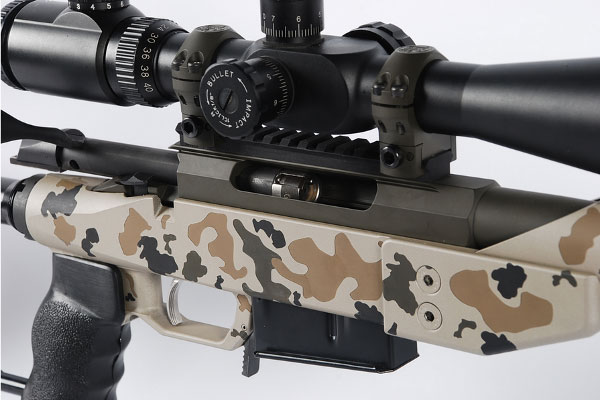
Here’s a Tikka T3 in Third Eye Tactical cerakoted chassis.
Rimfire Twin Target, for One-on-One Shooter Challenges
You’ll find this fun target on the third page of the Rimfire Target Pack. Just download the PDF file and instruct your printer to deliver page three. Or print out all six (6) rimfire targets if you like.
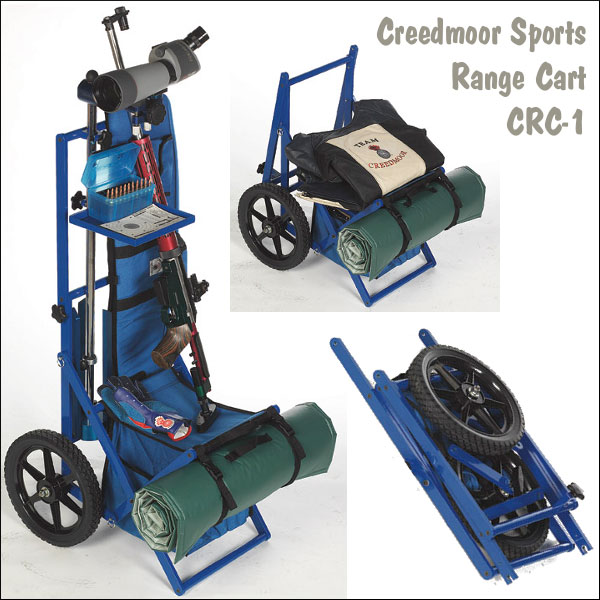
Creedmoor Sports makes some of the best dedicated shooting carts you can buy, and right now the Creedmoor carts are on sale. These are truly multi-function units that can haul your rifle, shooting coats, spotting scope, ammunition, and all your other gear. PLUS they have a built-in seat that lets you rest between relays.
Creedmoor CRC-1 Range Cart
Was: $499.95 Now: $475.00
Save an additional $15 with CODE “SANTA”
Rifle competitors, particularly sling shooters have to haul a lot of gear to the firing line: Rifle, coat glove, ammo, spotting scope with stand), data books, mats, slings, and of course, lunch. You’ll really appreciate how much easier life gets with this cart. It also folds up small enough to fit into the trunk of your car.
The Creedmoor Range Cart, also known as the CRC-1, is strong and durable with Solid 14″ rubber wheels with bearings (no more flat tires). The CRC-1 Cart folds quickly and easily in less than 1 minute, with a stowed size of just 30″ x 17″ x 8″. The removable rifle case that doubles as a rack/holster.
Here is Dennis DeMille, former Creedmoor Sports GM, shooting a 200-yard rapid fire sitting stage during a High Power match at Marine Corps Base Camp Pendleton, Wilcox Range 103.
Deluxe Shooting Cart Conversion Kit
Was: $129.95 Now: $120.00
Do you already have a shooting stool and want to upgrade to a cart? This Shooting Cart Conversion Kit bolts right onto your Creedmoor Sports stool and gives you similar capabilities to the Creedmoor Range Cart. Lightweight and easily collapsible, this is a handy addition to your range equipment. We’ve used this system and it works surprisingly well.
What kind of accuracy do you think is possible from a rimfire benchrest rifle? If we said 0.44 MOA you might not be surprised, thinking this was at 50 yards. But how about 0.44 MOA accuracy at TWO HUNDRED yards. Now that’s impressive. Consider this — at 200 yards, a 10 mph crosswind will push that little 40gr bullet 15.3 inches. Here’s the story, which comes from the Land Down-Under, Australia.
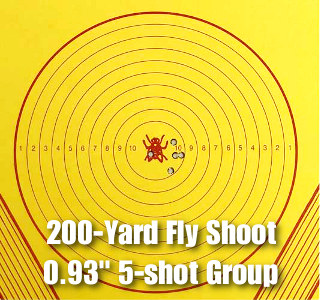
A couple seasons back, Australian John Lavaring shot a group at 200 yards that would make most centerfire shooters proud. The five-shot group, with all shots in the center 10-ring, measured just 0.93 inches. That works out to 0.44 MOA at 200 — mighty impressive for a .22 LR. Recorded at a Rimfire Fly Shoot benchrest event in Canberra, Australia, this 200-yard target set two new Australian SSAA National records! John was using ELEY Tenex ammunition.
Congratulations to John Lavaring for a spectacular demonstration of how well a rimfire rig can shoot — even at 200 yards. We rarely shoot our .22 LR rifles past 50 meters. Maybe it’s time to start a Rimfire ELR series, with targets at 200 or even 300 yards. What do you think of the Rimfire ELR idea? Leave comments below.
Anschutz 54 Benchrest Rig
The rifle was a Anschutz model 54 Match in a custom benchrest stock. John’s record-setting rig features a barrel block, which you can see forward of the action. Scope is a Bausch & Lomb BR model. We don’t have the round count on Lavaring’s barrel, but good rimfire benchrest rifles can often get 10,000 rounds (or more) of accurate life.
Rimfire Ballistics at 200 Yards
Some folks may be wondering about .22 LR ballistics at 200 yards. Well, with a 25-yard zero, the 200-yard drop for John’s 40gr Tenex ammo is 54 inches, assuming 0.145 G1 BC and 1085 fps muzzle velocity per ELEY website. And at 200 yards, a 10 mph crosswind will push that little bullet 15.3 inches! We’re told the winds were pretty tricky when Lavary shot his record group. This makes his achievement all the more impressive — we have to admire John’s wind-reading ability.
This ELEY ammo has proven to be exceptionally accurate. Here is a short video showing TEN rounds of Tenex shot from a machine rest with target at 50 meters.
Are you thinking of getting into the NRL22 game next season, our would you just like to add a modern chassis-style rimfire rig to your rifle collection? Here is a cool new MDT chassis that can transform a basic CZ 457 .22 LR rifle into something much more modern and versatile. With this $499.95 MDT XRS Chassis system, you can build a very competitive NRL22 rig for under $1000.00 (before optics). Right now a basic CZ 457 rifle costs just $427.00 at Bud’s Gunshop, with heavy-barreled 457s $80-$120 more.
MDT Offers New CZ 457 Inlet for MDT XRS Chassis System
MDT now offers a CZ 457-inletted MDT XRS Chassis System. This modern modular aluminum chassis transforms a “plain Jane” CZ 457 into something that can really perform in rimfire tactical competitions. The XRS Chassis System provides adjustability and features that can benefit tactical shooters. The stock features adjustable cheekpiece and adjustable length of pull. The 12.12″ long fore-end comes with M-LOK slots built in for accessory mounting and attachment of ARCA or Picatinny rails. With a rail on the bottom you can slide your bipod fore and aft to adapt to various stage positions and supports.
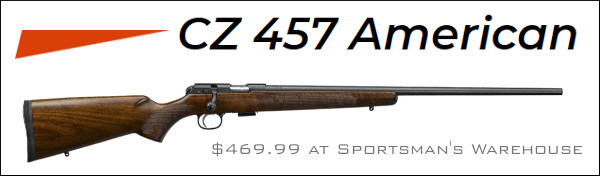
Weighing in at 3.9 pounds, the XRS features an adjustable length-of-pull (via spacers) from 13.25″ to 15.0″. There is also a handy quick-adjust cheek piece. This affordable XRS chassis is a great upgrade for a basic CZ 457 .22 LR bolt-action rimfire rifle. The CZ 457 American, shown below. is under $470.00.
Each XRS is constructed from a full-length, CNC-machined core of aircraft-grade aluminum with textured polymer outer panels (for durability and “feel”). The precision aluminum bedding system helps maximize the accuracy of the CZ 457 action. The XRS features a replaceable over-molded and textured grip system, with BOTH angled and vertical grips included with purchase.
CLICK HERE for more information on the MDT XRS Chassis System with a starting price of $499.95.
Emil Praslick III is widely recognized as one of the greatest wind wizards on the planet — a master at identifying wind value and direction, and predicting wind cycles. As coach of the USAMU and top civilian teams, Emil has helped win many high-level championships. In the three videos we feature today, Emil, who works with Capstone Precision Group (Berger, Lapua, SK, Vihtavuori) and Team Applied Ballistics, explains how to determine wind direction and velocity using a variety of indicators. Praslick, now retired from the U.S. Army, was an 18-time National and 2-time World Champion coach with the USAMU.
Video ONE: Wind Theory Basics — Understanding “Wind Values”
In this video from UltimateReloader.com, Emil explains the basics of modern wind theory. To properly understand the effect of the wind you need to know both the velocity of the wind and its angle. The combination of those variables translates to the wind value. Emil also explains that the wind value may not be constant — it can cycle both in speed and velocity. Emil also explains some of the environmental conditions such as mirage that can reveal wind conditions.
Video TWO: Determining the Direction of the Wind
Key Point in Video — Find the Boil
Emil explains how to determine wind direction using optic. The method is to use spotting scope, riflescope, or binoculars to look for the “Boil” — the condition in mirage when the light waves rising straight up. The wind will generate that straight-up, vertical boil in your optics when it is blowing directly at you, or directly from your rear. To identify this, traverse your scope or optics until you see the boil running straight up. When you see that vertical boil, the direction your optic is pointing is aligned with the wind flow (either blowing towards you or from directly behind you).
Video THREE: The No Wind Zero Setting
In this second video, Emil defines the “No-Wind Zero”, and explains why competitive shooters must understand the no-wind zero and have their sights or optics set for a no-wind zero starting point before heading to a match. In order to hit your target, after determining wind speed and direction, says Emil, “you have to have your scope setting dialed to ‘no wind zero’ first.”
Coach of Champions — Emil Praslick III
SFC Emil Praslick III, (U.S. Army, retired) works with Berger Bullets and Applied Ballistics. Emil served as the Head Coach of the U.S. National Long Range Rifle Team and Head Coach of the USAMU for several years. Teams coached by Emil have won 33 Inter-Service Rifle Championships. On top of that, teams he coached set 18 National records and 2 World Records. Overall, in the role of coach, Praslick can be credited with the most team wins of any coach in U.S. Military history.
Today’s featured rifle comes from the land Down-Under — Australia. This impressive .300 WSM F-Open rig has top-tier components/accessories from multiple countries. From the USA comes the Borden BRMXD action, Krieger barrel, McMillan Kestros ZR stock, and R.A.D. 2 recoil system. The 10-60x56mm March scope comes from Japan. The Lenzi rear bag is from Italy, and the SEB front rest is from Indonesia, with a Rodzilla top from America. This rifle is brand new, and just had its first competitive test this weekend, emerging with the top 600m Aggregate. By all indication, this .300 WSM F-Open beast is a winner.
Impressive .300 WSM F-Open Rifle from Australia
This rifle belongs to Kris Wilson, aka “Willow” on our AccurateShooter Forum. Just last week Kris posted in the Pride and Joy Rifle thread: “Got my latest build up and running — a .300 WSM F-Open rifle. Never shot a .300 WSM (Winchester Short Magnum) before today and I have to say that, while the recoil is on the sharp side, it’s entirely manageable thanks to the stock design and front rest.” Kris resides in Sydney, New South Wales, Australia and shoots at the Hornsby RSL Rifle Club. He is his club’s current F-Open Champion, even with some very tough competition — his club boasts two Australian F-Open championship-winning club members. Kris loves the F-Class game: “I started rifle shooting in 2015 when I was introduced to the world of F-class through shopping for a riflescope. Once I saw what F-class was all about, I was hooked.”
Kris produced this video on December 5, 2020. He reports: “Here is my first real outing with my new .300 WSM. I had previously sighted in at 50 meters at an indoor range to establish a wind zero. Had a rough idea of velocity so I threw together two loads to run at 600 meters. Our Aussie targets have a max numerical ring value of 6 (equivalent to “10” on USA targets). On Stage One I shot a 60.8X (60.10X max possible), grouping about 3.7 inches. On Stage Two, shown in this video, I shot a a 66.9X (66.11X max possible) with a 3-inch grouping. I took first place in both stages and won the overall Aggregate for the day. That earned me a Christmas ham and turkey for my trouble!”
.300 WSM Rifle Hardware, Cartridge Choice, and Reloading
Report by Kris Wilson, NSW, Australia
Stock: McMillan Kestros ZR with R.A.D. 2 system. 70% black, 15% grey, 15% red.
Action: Borden Rimrock BRMXD, left bolt, right port, left eject. The action is fully DLC coated and fitted with a +20 MOA rail
Trigger: TriggerTech Diamond
Barrel: Krieger 1:10″-twist, 4 groove finished at 31″ and fitted with an Ezell tuner.
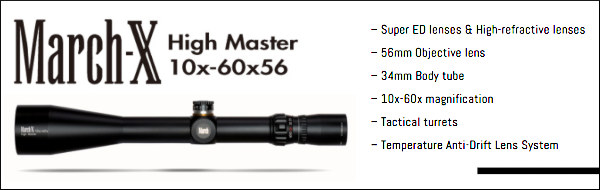
Scope: March High Master 10-60x56mm with MTR-1 reticle, illuminated
Rings: ARC M10 High Rings
Front Rest: SEB Mini Rest, with Rodzilla Rest Top system
Rest Feet: Bryan Blake (F-Class Products) adjustable stainless feet
Rear Support: Lenzi (Italy) LR Rear bag, with custom metal base plate
Cartridge Selection — Why the .300 WSM Was Chosen over a 7mm Cartridge
I set out with the goal of building my ultimate F-Open rifle. Now “ultimate” is of course subjective, but I did not want to leave any stone unturned when it came to building a .300 WSM. When researching the equipment for my new build I had a couple of ideas in mind. I was already shooting a 7mm, in the form of a 280AI which had served me well, but I already had plans to switch to a .284 Shehane with the introduction of Peterson .284 Win brass, coupled with the fact Norma stopped making 280AI brass (Note: Peterson now makes 280AI brass). While I was reasonably well-covered with my .284 Shehane, I wanted something with a bit more horsepower to hold up at long range in choppy conditions. A lot of the top guys here shoot 7mm SAUMs but I wasn’t keen on going down that path. Why? For every accurate SAUM I’ve seen, I’ve seen others struggle and given that the 7mm SAUM seems to be particularly hard on barrels, I wanted something that could match the 7mm SAUM ballistically, but have better barrel life.
After plenty of research on AccurateShooter.com, and speaking with some shooters, both locally and in the USA, I decided to give the .300 WSM a go. This cartridge is not particularly popular in Australia for F-Open, primarily because most states enforce muzzle energy restrictions, so pushing the .300 WSM to its potential simply isn’t viable for many shooters here. It IS viable in my home state however, along with the ACT, so I can at least use it in major competitions in two Australian states without having to run at lower nodes where it would otherwise be trumped by the 7 SAUM shooters. I was also attracted to the cartridge through its general design, having a 35-degree shoulder angle similar to the inherently accurate .284 Winchester. I also think the .300 WSM resembles a super-sized Dasher, another devastatingly accurate cartridge. Most .300 WSM shooters report ease of tuning, another key factor I considered.
Choice of Stock, Action, and Barrel
My gunsmith, Matt Paroz (aka MattP on the AccurateShooter Forum) is one of Australia’s top gunsmiths as well as one of Australia’s top F-Open shooters. He knows what it takes to build match-winning rifles. Matt is also an agent for McMillan stocks and I was sold on the Kestros ZR after seeing how it well it tracked — the lower center of gravity it offers cannot be underestimated once you start stepping up in caliber size. I had previously seen a couple of rifles that Matt built for an Australian F-Open team member and I was blown away not only by the quality of the builds, but how well the components worked with one another. I already own a Barnard action, a match-winning action in its own right, but I was desperate to get my hands on a Borden. I liked the fact that Jim Borden times his actions as they leave his factory, so I ordered a BRMXD, left bolt, right port, left eject. I ordered my BRMXD fully DLC-coated, for both longevity and aesthetics.
I opted for a TriggerTech Diamond trigger which has been timed to the action and offers a level of crispness the factory Barnard trigger cannot replicate. The synergy between action and trigger is just superb. I managed to get my hands on a 10-twist, 4-groove Krieger barrel that looks like a winner so far. Finished at 31″, this barrel has been super-easy to tune so far, with Berger 215gr hybrids showing very good promise. NOTE — Overall the rifle comes in 500 grams (1.1 lbs.) below F-Open max weight, so the next barrel will probably finish at 32″.
The barrel sports an Ezell tuner. I don’t touch the tuner until I’ve sorted my load and bullet seating depth. The tuner just affords me that extra flexibility in tightening up an already good grouping. At the end of the day, like any competitive shooter, I’m chasing tight vertical and horizontal, something which will run inside 1 MOA at 1000 yards. If I drop a shot, I want it to be my fault, not the rifle’s.
About my optics choice — when the chance to own a March High Master came up, I didn’t think twice. I have used March previously and got a sneak peek through an original High Master prototype which was doing the rounds in Australia. With superb image quality, it left a lasting impression. March has built up an excellent following and reputation in Australia, and so far I have to say it was money well spent. The March is held in place with a set of beefy ARC M10 rings.
The rest of my F-Open setup includes a modified SEB Mini up front, with a Rodzilla Rest top and Bryan Blake adjustable feet. I chose the SEB Mini because it has a wide, stable footprint but relatively light weight. That makes the Mini easier to transport. At the rear I use an extremely well-crafted Lenzi LR bag which sits on a custom rear plate. This heavy combination keeps things nice and planted. That aids in straight tracking.
Reloading for the .300 WSM — Process and Die Choice
When it comes to reloading, I keep it simple and don’t over-think things. I use Norma .300 WSM brass. I ensure case mouths are always deburred on the inside and out but I do not neck turn. I am set up to turn necks with a 21st Century unit, but after neck turning previously for a 6mm SLR, I just didn’t see a noticeable benefit in doing so. I always full length re-size after firing and prefer bushings, generally opting for .002″ of neck tension on anything I shoot. So far it seems to be working. With my .300 WSM I run a Redding Type-S full-length bushing die with a .335 bushing. A loaded round comes in at 0.337″ across the neck and I opted for a no-neck turn reamer which comes in at 0.343″, so there’s plenty of clearance. I use a Forster micrometer seating die. I prefer the feel of the Forster and I use Redding dry lube media to assist in smooth bullet seating.
Reloading room with MEC single-stage press on left and AutoTrickler with Force Restoration Scale on right. Note there are plenty of bullets — Kris got his supplies before the shortage.
I use an AMP Annealer and anneal after every firing. Powder charges are measured and dropped with a V3 AutoTrickler and A&D FZ500i scale. The 215gr Berger Hybrid seemed like a pretty good place to start as far as bullet selection. I point them with a Whidden bullet pointing die. Powder options can sometimes be a contentious choice and if you’re lucky you’ll get a couple of powders which will work well in any given barrel. For my .300 WSM I use Alliant Reloder 23. It is very temp-stable. My primer of choice is S&B Standard Large Rifle Primers. How does it all come together? The first nine shots through the barrel while zeroing the scope resulted in an ES of 17 and SD of 6 — promising signs for a light initial load of 63 grains.
First Test in Competition — Kris Earns Victory at 600m with his .300 WSM
The first real test came after only 19 rounds had gone down the barrel. My local range and district had its annual Christmas shoot with Christmas hams and turkeys awarded to discipline winners. I was up against a decent field with two members from the Australian F-Open team running against me — one sporting a .284 Win and the other a 7mm SAUM. I ran two different loads using Reloder 23. I was hoping to be in the vicinity of 2920 fps with my pointed Berger 215gr hybrids. What made this a bit harder was not being able to run my LabRadar prior to the shoot. Based on user comments on the 215gr hybrids, I jumped them 20 thousandths, hoping they would hold together and not end up with a shotgun grouping on target.
My first sighting shot at 600 meters was a 4 which landed high, but windage was good. I wound down 1 MOA and the second sighter was a 5. My first scoring shot was an X. I proceeded to shoot clean, scoring a 60.8X (100.8X on a USA target), with the group measuring 3.7 inches. Quite a good start for shots 20-31 through the barrel! For Stage 2, we were only allowed one sighter with 11 shots to count (66.11 max possible). I knew my second load was a touch higher so I came down several clicks, and my first sighter was an X. This second stage load grouped tighter, shooting clean again with a 66.9X, with 11 shots in 3 inches. That was good enough to take first place in both stages and win the overall Aggregate for the day. See HEXTA target screen capture below. American readers take note — a SIX in Australia is the same as a TEN in your USA system.
Suffice to say I was very pleased with how things turned out! Despite the bigger bang this rifle makes, the Kestros ZR and R.A.D. 2 system made it remarkably compliant. The recoil is sharp but the R.A.D. system just takes all the sting out of it — it reminded me of shooting my old 280AI in terms of felt recoil. I was able to get back on target with a minimum of fuss and didn’t find the rifle fatiguing at all, so it gets a massive thumbs up from me. This just illustrates how important component selection and rifle set-up is to the overall experience. Going home with a Christmas ham and Turkey was an added bonus!
CONCLUSION — The .300 WSM is Very Effective for F-Open
With recent trends in F-Open equipment, such as rifle stock technology making a lower center of gravity possible, bigger F-Open options such as the .300 WSM are now quite manageable. That’s not to say this caliber is a pussy cat — it definitely kicks more than the .284s out there. But with my choice of components, the recoil is manageable and the R.A.D. 2 system takes the sting out, so I’m not left nursing a sore shoulder at the end of a stage. The rifle is off to a very positive start so far but I know it’s capable of more. The lead up to Christmas will keep me busy fine-tuning a load in time for the NSW State Title match to be held in late January 2021. With COVID-19 halting most competitive shooting in Australia in 2020, this 2021 NSW competition is sure to prove popular. I intend to have my .300 WSM rifle humming in time for it.
Kris Wilson (NSW, Australia) Talks About Competitive Shooting
When I was introduced to F-Class shooting, I was fascinated with the level of accuracy shooters were obtaining with their rifles and it was something that just drew me in. Since then it has been a gradual learning curve, not to mention the fact everyone I have met has been super friendly and willing to share their knowledge. The shooting fraternity is a great community to be part of…. Mixing it with Australia’s best is what drives me right now.
For the past two years I have taken competition more seriously as I hope to represent Australia in the future. In my first Nationals match in 2019, I finished 15th out of 30 F-Open shooters. I then finished 7th in the 2019 NSW State Championships, with every shooter above me having been a state or national championship winner, including current F-Open world champion Rod Davies. 2020 has been different due to COVID-19 — unfortunately many of Australia’s state championships and prize shoots were cancelled. But I’ve been working hard to maintain my skills and the new rifle is motivation. As reloading equipment and rifle components continue to improve, it’s a great sport which encourages learning and provides many opportunities to keep improving your shooting.
NOTE: The contest is OVER, so ignore information on the PDF about submitting targets — that’s from back in 2013.
Here’s a target for the holidays that can provide some fun at the range. This Christmas Tree Target was created by Sierra Bullets for a 2013 contest. This contest is now over, but you can still have fun with the target. This tree target is designed to be shot at 15 yards with pistol, or at 100 yards with rifle.
Santa’s Extra Accuracy Challenge
Start with the big circles, and then work your way down to the small circles (7,8,9,10) as you build your confidence. Shoot the gifts for bonus points.
For an extra challenge (with an accurate rifle), try working your way back up to the top, aiming for the X-Marks in the circles and finishing with the small, inset star at the top. Try to hit each X-Mark and then put your final shot in the inner star. Have fun!
Christmas is less than a month away, and today, Black Friday, is one of the busiest shopping days of the year. Books have always been popular holiday gifts. If you haven’t completed your holiday shopping, here are some recommended titles that should please the serious shooters and firearms enthusiasts on your shopping list. For shooting clubs, books also make great end-of-season member awards. Most of us would rather have a useful book than one more piece of wood to toss in a box in the closet. Check out these ten titles — for yourself or your shooting buddies.
Here Are TEN BOOKS Recommended for Serious Shooters:
If you’re a serious long-range shooter, consider adding this book to your library. Relying on extensive ballistics testing, Modern Advancements Volume II is a great successor to Volume I that contains some fascinating research results. UK gun writer Laurie Holland notes: “Volume II of the Modern Advancements series is as fascinating as Volume I and if anything even more valuable given a series of ‘mythbusters’ tests including: case fill-ratio, primer flash-hole uniforming, neck tension, annealing, and much more. The work also addresses that perennial discussion of a bullet ‘going to sleep’ and shooting smaller groups (in MOA) at longer distances than 100 yards.” The amount of testing done for this Volume II work, with a staggering amount of rounds sent downrange, makes this book unique among shooting resources. There is a ton of “hard science” in this book — not just opinions.
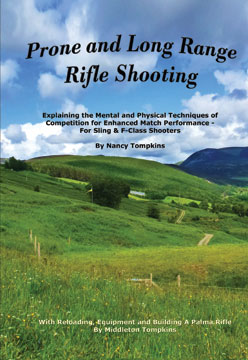
Nancy Tompkins is one of the greatest long-range shooters in American history. She has won five National Long-range Championships. Tompkins’ treatise is a must-read for serious Palma, F-Class, and High Power shooters. The revised Second edition includes F-Class equipment and techniques, and newly updated information. Color pictures. Topics include Mental & Physical training, Reading Wind & Mirage Shooting Fundamentals, International Competition, and Loading for Long Range. Nancy Tompkins is a 4-time winner of the National Long Range Championships, and has won countless other major events. Nancy has been on six Palma Teams (as both a shooter and a coach).
The new, 2020 Edition of The Wind Book was released a few months ago. The updates make this very helpful 144-page book even better. The Wind Book for Rifle Shooters by Linda Miller and Keith Cunningham, first published in 2007, is a very informative resource. But you don’t have to take our word for it. If you click this link, you can read book excerpts on Amazon.com. This lets you preview the first few chapters, and see some illustrations. Other books cover wind reading in a broader discussion of ballistics or long-range shooting. But the Miller & Cunningham book is ALL about wind reading from cover to cover, and that is its strength. The book focuses on real world skills that can help you accurately gauge wind angle, wind velocity, and wind cycles. Readers have praised the book, earning it 93% 4- and 5-star reviews on Amazon.
Ryan Cleckner is noted for his ability to explain complex topics in an easy-to-comprehend manner. Now Cleckner has authored a book, the Long Range Shooting Handbook, which expands on the topics covered in Cleckner’s popular NSSF video series. The Long Range Shooting Handbook is divided into three main categories: What It Is/How It Works, Fundamentals, and How to Use It. “What It Is/How It Works” covers equipment, terminology, and basic principles. “Fundamentals” covers the theory of long range shooting. “How to Use It” gives practical advice on implementing what you’ve learned, so you can progress as a skilled, long range shooter. You can view Sample Chapters from Ryan’s Book on Amazon.com.
Sadly, Glen Zediker passed away on 10/1/2020. He will be missed. His Top-Grade Ammo book is a great resource for all hand-loaders — beginners through advanced. Released in 2016, this 314-page guide covers every aspect of the reloading process — component sorting, priming, sizing, bullet seating and more. With 430 photos, Top-Grade Ammo is a richly-illustrated, step-by-step guide to producing high-quality handloads. Unlike many reloading books, Top-Grade Ammo is current and up-to-date, so it covers modern practices and the latest precision reloading tools. While Zediker focuses on producing match-grade ammo for competition, this book will also help novice reloaders on a budget. This book features a special “lay-flat” binding so it’s easy to use as a benchtop reference. To view Chapter List and sample pages visit ZedikerPublishing.com.
Thinking of getting started in the Practical/Tactical shooting game? Looking for ways to be more stable when shooting from unconventional positions? Then you may want to read Marcus Blanchard’s Practical Shooter’s Guide (A How-To Approach for Unconventional Firing Positions and Training). Unlike almost every “how to shoot” book on the market, Blanchard’s work focuses on the shooting skills and positions you need to succeed in PRS matches and similar tactical competitions. Blanchard provides clear advice on shooting from barricades, from roof-tops, from steep angles. Blanchard says you need to train for these types of challenges: “I believe the largest factor in the improvement of the average shooter isn’t necessarily the gear; it’s the way the shooter approaches obstacles and how they properly train for them.”
Tony Boyer, the most successful shooter in the history of short-range benchrest competition, shares many of his match-winning tips in this 323-page book. The book covers all aspect of the benchrest discipline: loading, windflags, rest set-up, addressing the rifle, and match strategies. This is a high-quality publication, filled with valuable insights. Every serious benchrest shooter should read Tony’s book. Boyer has dominated registered benchrest in a fashion that will never be duplicated, having amassed 142 U.S. Benchrest Hall of Fame points. The next closest shooter, Allie Euber, has 47 Hall of Fame points. This handsome, full-color book is 323 pages long, with color photos or color illustrations on nearly every page.
This book by 11-time National High Power Champion David Tubb focuses on position shooting and High Power disciplines. Section One covers fundamentals: position points, natural point of aim, breathing, triggering mechanics and follow-through, sling selection and use, getting started, getting better, avoiding obstacles. Section Two covers mechanics of offhand, sitting, and prone positions. Section Three covers shooting skills, including wind reading and mental preparation. Section Four covers the technical side of shooting, with extensive discussions of rifle design, load development, reloading barrel maintenance, and rifle fitting. We consider this book a “must-read” for any sling shooter, and there is plenty of good advice for F-Class shooters too.
Cartridges of the World (16th Edition, 2019), belongs in every serious gun guy’s library. This massive 680-page reference contains illustrations and basic load data for over 1500 cartridges. If you load for a wide variety of cartridges, or are a cartridge collector, this book is a “must-have” resource. The latest edition includes 50 new cartridges and boasts 1500+ photos. The 16th Edition of Cartridges of the World includes cartridge specs, plus tech articles on Cartridge identification, SAAMI guidelines, wildcatting, and new cartridge design trends. In scope and level of detail, Cartridges of the World is the most complete cartridge reference guide in print. Cartridges of the World now includes a full-color section with feature articles.
Bullseye Mind (Mental Toughness for Sport Shooting) by Dr. Raymond Prior, $17.95 (Softcover).
Having a Bullseye Mind means thinking in ways that create confidence and consistency, even under pressure. A “must-read” for competitive shooters, Bullseye Mind is a mental training book written specifically for the shooting sports. The book is well-organized, with handy highlighted lists and key “talking points”. Each chapter concludes with examples from a world-class shooters such as: Matt Emmons, 2004 Olympic Gold Medalist; Vincent Hancock, 2-time Olympic Gold Medalist; Jamie Corkish, 2012 Olympic Gold Medalist; Petra Zublasing, 2014 World Champion/ISSF Shooter of the Year; and Nicco Campriani, 2012 Olympic Gold Medalist, 2010 World Champion. This book has earned rave reviews from competitive shooters who found it really helped their “Mental Game”. One recent purchaser states: “This book is as though you had a coach in your back pocket…”


 If you want an even greater selection of targets, specialized for PRS and NRL shooters,


 Creedmoor Sports makes some of the best dedicated shooting carts you can buy, and right now the


 Anschutz 54 Benchrest Rig




 Santa’s Extra Accuracy Challenge