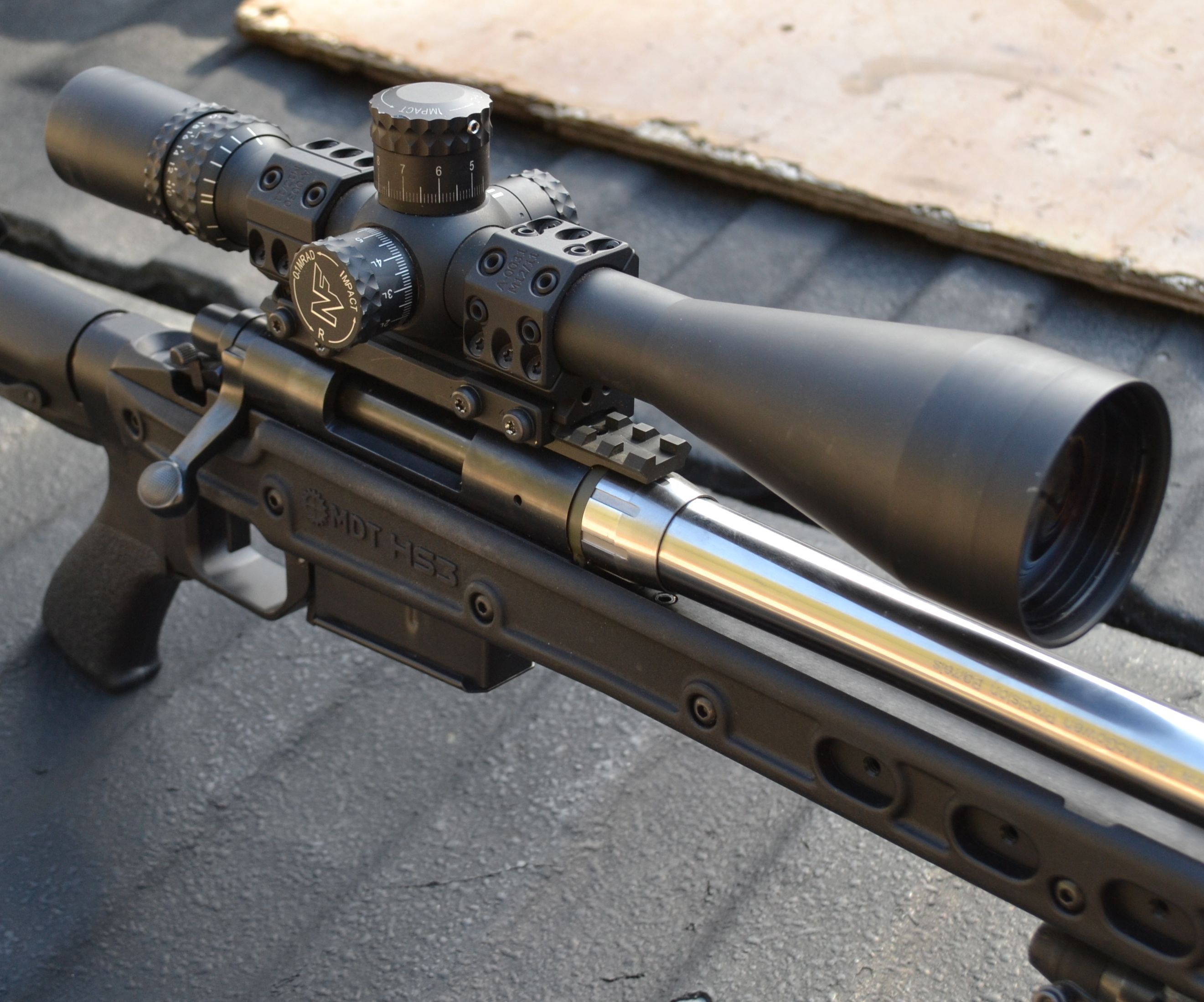
With the oppressive Washington House Bill 1240 (HB 1240) being signed into law on 4/25/23 by Washington state Governor Jay Inslee, a legal action has been filed in Federal District Court (Eastern Washington) by several plaintiffs to combat this overreaching legislation. The case, Banta et al v. Ferguson seeks a temporary and permanent injunction based on the unconstitutionality of HB 1240. There is an additional action filed by the Second Amendment Foundation. That other lawsuit, named Hartford v. Ferguson, was filed in the U.S. District Court for the Western District of Washington.
Banta et al vs. Ferguson
The action contesting HB 1240 was filed in the Eastern District of Washington, U.S. District Court. Plaintiffs include Amanda Banta (2012 Olympian Sport Shooter), Sharp Shooting Indoor Range & Gun Shop, The Range LLC, Aero Precision LLC, and the NSSF. The complaint is filed against defendants Robert W. Ferguson, Attorney General of Washington State, and John R. Batiste, Chief of the Washington State Patrol.
“We do not agree with this law and we do not think it is constitutional,” said Scott Dover, CEO of Aero Precision. Dover explained: “HB 1240 bans some of the most common firearms and parts available. It impacts the lawful ownership of products we manufacture and sell to thousands of our customers in the State of Washington. It also restricts the rights of the individuals, Aero Precision employees, who make these parts. We will fight this law in the courts and are confident in the outcome given the clear rulings in multiple Supreme Court cases, including Heller and Bruen.”
Description: Aero Precision has filed a lawsuit in conjunction with several other plaintiffs to combat the overreaching semi-auto rifle ban legislation by the state of Washington.
About Aero Precision
Aero Precision is a firearms manufacturer based in Tacoma, Washington. Aero Precision has been in business in Washington since 1994, originally starting in the Aerospace industry. Today, Aero Precision is the largest firearms manufacturer in Washington, employing roughly 650 employees in Washington and over 200 in other states. Aero Precision manufacturers AR Parts and components, bolt-action rifles, suppressors and more.
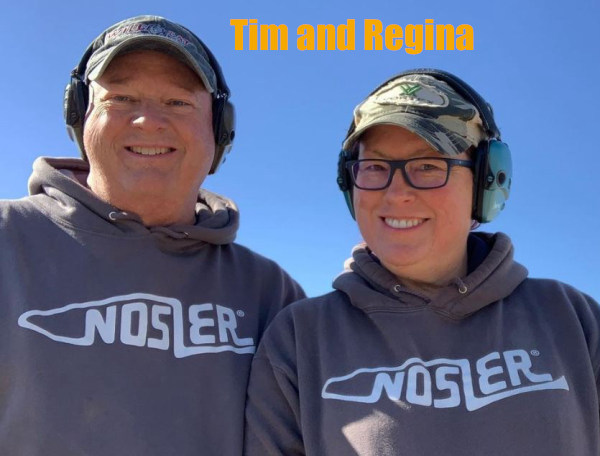
You’ve heard the adage — “The couple that plays together, stays together.” Here’s a story about a married couple that competes together in precision rifle matches. Shooters Tim and Regina Milkovich recently both placed in the Top 10 at the popular CowTown Accurized AR Match. Regina took third with a nearly-clean run, dropping only one shot on Stage 5 to end with 49 points and an overall time of 49.50. Tim followed closely behind, placing sixth with 48 points and a time of 37.95.
This match, held at the CowTown Range in Peoria, Arizona, is designed to test and build shooters’ long range skills. Shots are taken from normal PRS-style positions and supports. Each match consists of five stages with targets ranging from 100 to 700 yards. Each stage has a 20-round maximum, and the match typically requires 40 to 50 hits.
Tim and Regina, who are both sponsored by Nosler, can often be found competing together at individual and team matches. At this match, both shot ARs chambered in .223 Rem loaded with Nosler .22 caliber 77gr Custom Competition bullets.
This video is from a Cowtown Accurized AR match last October.
Regina is a Top Female PRS Shooter
Regina is one of the top female precision rifle competitors in the country. She is one of only two women to ever win a national-level Precision Rifle Series (PRS) match. Just a few years ago Regina was a novice in the PRS/NRL game. Now ranked as a Master Class shooter, today she is a respected, top-level competitor.
Time is a Veteran Who Shoots Many Disciplines
Tim is a military veteran with service in the U.S. Marine Corps, U.S. Army, and U.S. Air Force. He has been shooting competitively since 1986 in multiple disciplines including Pistol Silhouette, Bullseye Pistol, USPSA, IDPA, and 3 Gun. Tim has a Master Class ranking in most of the disciplines he shoots.
Tim also shoots bolt-action rifles. Below are his 6.5×47 Lapua cartridges loaded with Nosler 140gr RDF bullets and Varget powder. Photos from Tim Milkovich Facebook Page.
The Governor of Washington state, Jay Inslee, recently signed radical new legislation, House Bill 1240, that outlaws AR-platform rifles and other semi-auto, mag-fed “modern sporting rifles” (MSRs). This new WA state law, which goes into effect immediately as an “emergency” measure, will be fought in Federal Court. Two lawsuits have been filed, both seeking to strike down HB 1240 as unconstitutional.
The Second Amendment Foundation (SAF) has filed a federal lawsuit against the state of Washington, challenging the constitutionality of the recently enacted HB 1240, which bans the manufacture, sale, import, and distribution of many semi-automatic firearms. The lawsuit, named Hartford v. Ferguson, was filed in the U.S. District Court for the Western District of Washington.
In addition, NSSF (National Shooting Sports Foundation) filed a lawsuit, Banta et al v. Ferguson, against Washington’s Attorney General Robert Ferguson and John Batiste, Chief of Washington State Patrol, seeking declaratory and injunctive relief from state authorities enforcing HB 1240, which bans modern sporting rifles. The lead plaintiff is Amanda Banta, a 2012 Team USA Olympian and 10-year member of the U.S. Rifle Team and resident of Spokane, Washington.
GunsAmerica Digest reports: “HB 1240 is part of a broader gun reform package signed into law that includes a 10-day waiting period, mandatory firearms training for prospective gun buyers, and a new legal pathway for the Attorney General and family members of shooting victims to sue gun makers who market their products to prohibited persons. These additional provisions take effect this summer. HB 1240 has exemptions for law enforcement and members of the military. Existing owners of black rifles are also grandfathered in — at least for now.”
NSSF challenges Washington’s MSR ban, arguing that it violates the Second and Fourteenth Amendment. The U.S. Supreme Court held in Heller that the Second Amendment protects the rights to keep and bear arms “typically possessed by law-abiding citizens for lawful purposes.” There are over 24.4 million MSRs in circulation today, more than there are Ford F-150s on America’s roads.
HB 1240 is very harsh. According to GunsAmerica Digest: “HB 1240 only allows 90 days for firearm dealers and manufacturers to sell or transfer their existing stock out of the state. Furthermore, the bill stipulates that violations will be considered a misdemeanor offense, which could result in a maximum penalty of 364 days in jail and a fine of $5,000.”
“NSSF will not stand idly by as politicians cleave away fundamental Constitutional rights from Americans,” said Lawrence G. Keane, NSSF Senior V.P. and General Counsel. “The right to keep and bear arms that are commonly owned belongs to law-abiding citizens. Politicians in Washington exceed their authority when they usurp those rights to mollify radical special-interest groups. These politicians violate their oaths to protect and defend the Constitution and the rights of the citizens they represent.”
SAF claims the new law — which took effect immediately — infringes on Second and Fourteenth Amendment rights and is seeking preliminary and permanent injunctions from the court.
SAF founder and Executive V.P. Alan M. Gottlieb criticized the state for putting politics above constitutional rights: “[Washington] has criminalized a common and important means of self-defense, the modern semiautomatic rifle. The state has put politics ahead of constitutional rights, and is penalizing law-abiding citizens while this legislation does nothing to arrest and prosecute criminals[.]”
SAF Executive Director Adam Kraut called out the authors and supporters of the legislation: “As we note in our complaint, the firearms that Washington bans as ‘assault weapons’ are, in all respects, ordinary semiautomatic rifles. To the extent they are different from other semiautomatic rifles, their distinguishing features make them safer and easier to use.”
If you need a good hunting rifle, consider a Tikka. The latest generation Tikka T3x rifles are very popular with hunters around the globe — for good reason. These rifles offer smooth-running actions, easy sub-MOA accuracy with good ammo, crisp triggers, and reliable detachable box magazines. The Tupperware stocks aren’t super-rigid, but they are comfortable and easy to handle. The Tikka T3 and T3X models are smart choices for hunters, offering good performance for the price (starting at $749.00 for the T3X Lite version). The T3x series is offered in a wide selection of chamberings, from .204 Ruger up to the large magnums.
Testing the T3x Series on the Range — Fun in Finland
This video was produced at a range in Finland. Tikka product manager Taneli Pokkinen shoots three Tikka rifles — the first two prone, off bipod, and the third standing (as a hunter might shoot). You can see the recoil of various chamberings, plus the accuracy at 100m, which is pretty impressive. Rifles tested are: 1) Tikka T3x Varmint Hunter; 2) Tikka T3x Super Varmint (with suppressor); 3) Tikka T3x Roughtech Ember. NOTE: At 4:30 there is a 5-shot group from the Super Varmint as shot by a gunsmith. All shots are touching — very impressive!
These two short videos explain two key features of modern Tikka rifles — the smooth running bolt and the precise, crisp, and relatively light trigger. We recommend you check out both of these tech videos if you’ve never handled a Tikka rifle before. Tikkas really do have very good factory triggers, with bolt smoothness that rivals some custom actions.
Tikka Rifles — Five Recent Models Reviewed
If you are considering a Tikka for PRS/NRL, check the first segment of this video covering the Tikka T3x TAC A1. In order, here are the five (5) Tikka rifle reviewed, with video start times (if you want to skip around): 1. Tikka T3x Super Varmint (00:40, video only); 2. Tikka T3x TAC A1 (01:13); 3. Tikka T3x Super Varmint (02:34); 4. Tikka T3x Lite Roughtech Ember (05:12); 5. Tikka T3x Varmint Hunter (wood) (07:31). Note: The review sections are done by a knowledgeable Tikka product manager Taneli Pokkinen. CLICK HERE for 40+ Tikka factory videos.
Tikka T3X — Hickok45 Shows Function and Shoots at Steel Plates
Popular YouTube gun reviewer Hickok45 reviews the Tikka T3x Tactical Compact Rifle in 6.5 Creedmoor. There are good explanations of the operation of the action and magazine. In addition Hickok45 shoots the rifle offhand (05:10 and 13:44 time-marks), evaluating the ergonomics of the stock and the trigger feel. Hickok45 now has 7.27 million subscribers to his YouTube Channel.
Tikka T3x Compact Lite Roughtech Ember
The Tikka Compact Lite Roughtech Ember has a handsome brown polymer stock with subtle camo. This nicely-finished 6.8-pound $1299.00 rifle comes with a stainless fluted barrel fitted with factory muzzle brake. The stock has interchangeable pistol grips for various shooting positions. The fore-grip has attachment points, allowing forearm width to be increased. In this video, at the 8:40 time-mark, the trigger is adjusted to crisp 2.5 pounds, as verified with a trigger gauge. That is excellent for a factory trigger.
Why the TIKKa T3x Is Great for Hunting
With 650,000+ subscribers, the Backfire Channel is one of the most popular gun channels on YouTube. You can trust Backfire reviewers because they pay their own money for all the products they review. This video reviews current generation Tikka rifles. Backfire had high praise for Tikka T3x rifles: “The Tikka T3x SL is an incredibly lightweight mountain rifle that should be in every hunter’s safe. We like it for its lightweight build, stainless steel barrel, superb trigger, and surprisingly accurate shooting. Overall, this is the hunting rifle we recommend more frequently than any other.”
TIKKA T3x TAC A1
Along with the hunting rifle models, Tikka also produces quality, metal chassis tactical-style rifles. The Tikka T3x TAC A1 has earned considerable praise and is PRS/NRL competition-ready right out of the box. The T3x TAC A1 is offered in multiple calibers/chamberings, barrel lengths, and chassis colors. The impressive T3x TAC A1 retails for $2199.00 – $2299.00 at EuroOptic.com.
BONUS: TIKKA T3x vs. Ruger American
This comparison video compares the Tikka T3x with the Ruger American rifle. The reviewers explain the key differences and the pros and cons of each type. The video examines the receivers, barrels, triggers, and stocks of the Tikka and the Ruger. What’s the bottom line? Well the Ruger has a price advantage, but the Tikka T3x has a better trigger, nicer action, better magazines, and probably better 5-shot accuracy.
This week, Shooting USA TV spotlights the 2022 GAP Grind, the largest PRS Pro-Am Tactical match with nearly 400 competitors. The 10th Annual GA Precision/Elite Tactical GAP Grind PRO-AM was held September 30 through October 2, 2022 at the K&M Shooting Complex in Tennessee. The GAP Grind, the largest, most popular PRS match in the world, drew nearly 400 amateur and pro shooters. Recognized as the premier PRO-AM precision rifle match with both individual and team competition, the GAP Grind has introduced thousands of new shooters to the sport since its inception. It was great to see the GAP Grind successfully mark its 10th Anniversary.
SHOW TIMES: This Shooting USA Episode airs Wednesday, April 12, 2023 at 9:00 PM Eastern and Pacific; 8:00 PM Central. If you miss the regular broadcast, you can stream the show at any time on Vimeo for $0.99 per episode.
In this video Eagle Eye Shooting Shares Highlights from the 2022 GAP Grind
Big Prize Table at 10th Annual GAP Grind Event
The year’s largest PRS match drew hundreds of attendees, and more than 80,000 rounds were fired throughout the three-day event. Bushnell gave out $5,000 to the top place finishers and added over $5,000 worth of product to the prize table. Trophies were awarded to the top 5 teams, top 5 professionals, and to the top 5 amateurs.
Lots of Action, with 20+ Stages
The GAP Grind is a challenging, “high tempo” match with minimal down-time between stages. Over the course of 20+ stages, competitors will fire 200+ shots at a variety of steel, paper, moving, and reactive targets out to 1,200 yards. Targets vary in size/difficulty based on the shooter’s position, distance, and time allotted. Most stages include “stressors” — i.e. time limits or required movement(s).
This extensive, 45-minute video shows many of the 2022 GAP Grind Stages
GAP Grind Pro-Am Format — Seasoned Shooters Help Newcomers
The GAP Grind typically attracts nearly 400 competitors — half experienced shooters and the other half newcomers to the sport. The key to growing the shooting sports is attracting new shooters. The best way to bring in “new blood” seems to be the Pro-Am type format. At the GAP Grind, experienced shooters share their knowledge and guide the new shooters through the competition.
GAP Grind Hardware
You’ll find the latest and greatest PRS hardware at the GAP Grind. Over the past few seasons, most top competitors have “stepped down” from the 6.5/6mm Creedmoor to the smaller, more efficient 6mm Dasher, 6BRA, 6 GT and other 6mm cartridges. The Dasher offers excellent accuracy with less recoil than the 6.5 Creedmoor. Also, many competitors will be switching to the impressive new Zeiss FFP LRP S3 and S5 scopes in the months ahead.
Suppressor Processing at NRA Convention Silencer Central, America’s largest silencer dealer, will allow NRA Convention attendees to submit their ATF eForm 4 application onsite with purchase. This special program will be available at the Silencer Central booth (#7963) at the NRA Annual Meeting & Exhibits, April 14-16, 2023, in Indianapolis, Indiana.
To streamline the process of obtaining a suppressor, attendees will be able to purchase a silencer at the Silencer Central booth (#7963), have their photo and fingerprints taken, generate their free NFA Gun Trust, setup a no-fees, no-interest payment plan for just $199 down, receive assistance registering for their ATF.gov account, and get submitted to the ATF all at the event.
Silencer Central CEO Brandon Maddox stated: “This new process helps us deliver on that commitment by allowing our customers to purchase, certify, and submit right on the spot.” This can save suppressor buyers many days or even weeks in processing time.
“We make buying silencers simple,” said Maddox. “While others might say they share that claim, we continue to lead the pack with our investment in innovation and technology while approaching our customer experience with a lens for continuous improvement.”
Silencer Central delivers silencers directly to customers in the 42 states where silencers are legal. Silencer Central’s process has revolutionized the way suppressors are sold and reduced unnecessary hurdles to silencer ownership. For more information, call 888-781-8778 or visit SilencerCentral.com.
Barrel nut system allows “Pre-Fit” barrel installation on a Remington action. CLICK photo to zoom.
REMAGE Project Report by Bill, Rifleshooter.com Editor
Installing a new barrel on your Remington 700 (especially without a lathe) may seem like a daunting task, but thanks to companies like McGowen Precision Barrels and Criterion, there are easier alternatives. By adopting a Savage-style barrel nut on a 1 1/16″ thread for a Remington 700 receiver, pre-chambered (aka “pre-fit”) barrels can be easily swapped with just a few hand tools. This system is sometimes called a REMAGE conversion (for “REMington savAGE”). With simple tools a “Pre-fit” 6mmBR-chambered barrel was installed on the author’s Remington action — no machining or lathe-work required.
The existing barrel is simply removed from the action (normally the hardest part) and the new barrel is screwed on with the Go Gauge in place. After headspace is verified with the Go Gauge, the barrel nut is tightened against the action and you are off to the range. It takes all of the machine work out of the barreling process.
Note: Because barrel nut has a slightly larger diameter, some stocks may require minor inletting. Also, if you are shooting fired brass from another rifle with the same chambering, you should FL-size the brass before loading it for your new pre-fit barrel. And always check the set-up with a dummy round loaded to normal cartridge length BEFORE you head to the range. With Pre-Fits, the freebore should be adequate for your cartridge, but always check and adjust your seating depth as needed.
Bill has been a serious shooter for over 20 years. A former Marine Corps Sergeant, he’s competed and placed in High Power Rifle, ISPC, USPSA, IDPA, 3-Gun, F-Class, and precision rifle disciplines. In addition to being an NRA-certified firearms instructor and range officer, Bill has hunted big game in North America, South America, and Africa. Bill writes extensively about gunsmithing, precision rifles, and the shooting sports on his Rifleshooter.com website.
The new Tunable Ultimate Recoil Device from MDT allows you to shoot smaller calibers with nearly 3.14 times more recoil. This is a big deal for tactical competitors who want to cross-train with rimfire rifles that use much more affordable .22 LR ammo. (Good .22 LR ammo can be purchased for under $0.15/round.)
With this new MDT reverse-pulse muzzle brake, a .22 LR rig will feel like a .223 Rem, and a .223 Rem can feel like a .308 Win. The added recoil provides realistic training, stressing perfect body position while allowing you to save money on ammo.
Watch Video to See Tunable Ultimate Recoil Device in Action
With very large calibers (.338 and above), the MDT-TURD can increase felt recoil up to 900%. This heavier recoil pulse can help a shooter build muscle strength during training.
Built with marine-grade submarine steel and reverse baffles, the MDT-TURD creates parabolic concussion forward and to the side. The unique patent-pending design removes the need for hearing protection for the shooter while creating disorientation for competitors at your match.
The above image shows a .22 LR tactical rifle on recoil-measuring slide platform. (See Video at 1:15 time-mark). With the MDT-TURD fitted, the rimfire rifle shows significantly greater recoil — 314% more compared to the same rig with bare muzzle. This allows more effective cross-training, as the device-equipped rimfire rifle will have a recoil pulse more similar to a centerfire PRS/NRL rig.
This image show how the forward-angle brake ports INCREASE the felt recoil by venting the explosive energy FORWARD. This effectively pushes the rifle backward, increasing felt recoil. This way a .223 Rem can recoil like a .308 Win, and a .22 LR rimfire rifle can recoil like a .223 Rem.
About MDT ▬▬▬▬▬▬▬▬▬▬▬▬
MDT was born with a single purpose — to provide better value and better accuracy for precision rifles. The first MDT chassis was developed from the ground up based on the needs of shooters. Our engineers verified every function and feature based on the input from competitive shooters. The end result was a game-changing product called the TAC21 that continues to perform at the range, in the field and in competitions around the world.
Today, MDT chassis systems, magazines, and accessories are still developed the same way. We collaborate, question and verify our concepts with precision shooters from around the globe to ensure that every MDT product is designed with the same single purpose — to provide our customers with the absolute best product possible.
The U.S. Army Marksmanship Unit (USAMU) has created a series of instructional videos about High Power Rifle shooting, Service Rifle shooting, 3-Gun matches, and pistol competition. We’ve linked five of these informative USAMU videos today along with a special profile video on Amanda Elsenboss, who, as a USAMU shooter, has won both the Long Range and High Power National Championships in recent years.
In addition, as a major BONUS, we link twenty (20) informative articles authored by expert USAMU shooters and coaches. Those excellent, detailed articles covering a wide range of topics including rifle positions, wind reading, fitness training, trigger control, nutrition, training plans, and much more.
Amanda Elsenboss — National HP and Long Range Champion
The gifted SSG Amanda Elsenboss won the 2019 NRA Long-Range Championship and the 2021 High Power National Championship. In 2022 Amanda also won the National President’s Rifle Match, the first woman ever to do so. Those accomplishments place Amanda among America’s legendary shooters. Amanda started shooting at age 8 with her father, then began competitive marksmanship at age 13. In 2009, she joined the U.S. Army as part of the USAMU rifle team. She has left full-time service, but is now a member of the Pennsylvania National Guard.
Sight Alignment and Trigger Control
In this USAMU Shooter’s Corner instructional video, SFC Kenneth Rose explains key elements of using sights on a service rifle. Rose also explain how to make the trigger pull at the optimum moment when the sights are perfectly aligned and steady.
How to Set Up Sling and Rifle for Prone Shooting
In this video, the USAMU’s SGT Jonathan Wannemacher explains how to set up a service rifle sling for prone rifle shooting. Wannemacher has earned a number of coveted awards including the the Distinguished Rifleman Badge and President’s Hundred Tab.
Rifle Grip, Stance, and Body Position for 3-Gun Action Matches
SFC Daniel Horner, now with SIG Sauer, is arguably the best 3-Gun action shooter on the planet. Horner has won multiple major 3-Gun Championships, shooting rifle, shotgun, and pistol in timed action matches. Horner’s speed, accuracy, and mobility is without peer. In this video, Horner shows techniques for AR-type rifle shooting in 3-Gun competition.
Amazing Trick Shot with Air Rifle
In this Trick Shot Tuesday video SPC Ivan Roe shoots a pill (at two different angles) off the top of a balloon. Very impressive shooting! Ivan hails from Manhattan, Montana and has been a notable member of the USAMU International Rifle Team.
How to Use Data Books During Matches
Data books can be very valuable tools during marksmanship training. In this video, USAMU shooter SGT Lane Ichord explains Data Book basics and how to log information during practice and matches.
BONUS: 20 Marksmanship Articles from USAMU Experts
USAMU shooters and coaches have written an excellent series of articles on highpower and service rifle shooting. Many of these originally appeared in The First Shot, the CMP’s on-line magazine. Here are twenty notable USAMU expert articles:
For many riflemen, reading the wind is the toughest challenge in long-range shooting. Wind speeds and directions can change rapidly, mirage can be misleading, and terrain features can cause hard-to-predict effects. To become a competent wind reader, you need range-time and expert mentoring. In the latter department, Frank Galli, founder of Sniper’s Hide, offers a detailed digital resource: Wind Reading Basics for the Tactical Shooter.
Wind Reading Basics is much more than a 47-page eBook — it has charts, instructions for ballistic calculators, and even embedded videos. Galli explains: “We break down the formulas, walk you through using a ballistic computer, and give you all the information in one place. From videos, to useful charts, we make it simple to get started. It’s all about having a plan, and we give you that plan.”
Galli’s Wind Reading Basics, priced at $7.99, can be downloaded from iTunes for iPads, iPhones and iOS compatible devices. Here are sample sections from the eBook (which includes videos):







 Suppressor Processing at NRA Convention