The COVID-19 Pandemic claims another victim — the 2021 CMP Western Games. The CMP announced that the 2021 CMP Western Games at Ben Avery in Phoenix, Arizona have been officially cancelled. Judy Legerski, CMP Board Chairman, stated: “Due to the severely limited number of participants allowed at the Ben Avery facility imposed by the State of Arizona, it is not feasible to hold an event at the facility”. The Games had been slated for March 12-21, 2021.
Arizona health restrictions allow only 10 persons per building regardless of building size, and allow no more than 50 people on the Highpower rifle range (including range officers/staff) despite the outdoor venue. That would make it very difficult to conduct the major Western Games matches. In addition this year no ammunition or rifle sales would be allowed. (The CMP marketplace was a big draw for Western Games participants each year.)
“These restrictions leave us no choice but to withdraw from the event”, Legerski said. “We had planned a full slate of events in Arizona, including CMP Games Rifle, EIC Service Rifle, multiple pistol matches, Vintage Sniper Rifle, Rimfire Sporter Rifle, and a series of rifle and pistol training courses.”
TALLADEGA SPRING CLASSIC (March 16-21) WILL REPLACE WESTERN GAMES THIS YEAR
To replace the 2021 Western Games, the CMP will host a series of rifle and pistol matches at the CMP Talladega Marksmanship Park in Alabama. The March 16-21 2021 Spring Classic event at Talladega will include a pistol 2700, a mid-range 3×600 rifle match, long range rifle clinic, and pistol Marksmanship 101 course. Many of these are new events not held before at Talladega. CLICK HERE for full details.
This Talladega Spring Classic will provide an opportunity for competitors to shoot a variety of new matches. Mrs. Legerski stated: “We are sorry that we cannot hold the Western Games this year. We look forward to returning to the great Ben Avery Range in Arizona in 2022.”
The 2021 SHOT Show in Las Vegas was cancelled this year, due to the COVID Pandemic. But Brownells is hosting 5-day virtual event called the “NOT-SHOW” on January 18-22, 2021. The Brownells NOT-SHOW kicked off this morning. will feature new product introductions and special discounts on a wide variety of merchandise (not just the new releases). In addition the Brownells NOT-SHOW will have Daily Product Giveaways from January 18-22, 2021.
The Brownells NOT-SHOW has five main sponsors: AeroPrecision, CMC Triggers, Hornady, Stag Arms, and Magpul. New products from these five companies will be showcased in the NOT-SHOW event, along with many other companies’ offerings. There will be a wide variety of products featured, including optics, reloading tools, and more.
Everyone knows that Magpul makes excellent rifle magazines for ARs, as well as AICS-type mags for bolt guns. But Magpul also produces many other quality product including rifle stocks, AR buttstocks, bipods, rifle sights, pistol mags, and sling accessories. Here are Magpul products at Brownells.
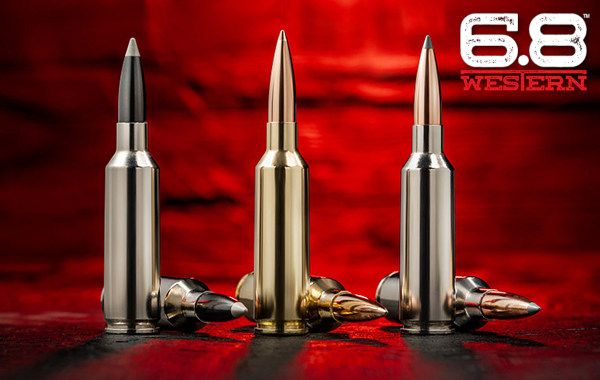
Winchester and Browning have introduced the new 6.8 Western, a new .277-caliber cartridge designed for long-range hunting. The new 6.8 Western is a high-capacity cartridge with a modern 35-degree shoulder, optimized for a conventional short action. The 6.8 Western is VERY similar to the existing .270 WSM. It shares the same 0.535″ rim diameter, and the same 0.277″ bullet diameter, however the 6.8 Western’s case length is slightly shorter. The .270 WSM has a 2.100″ case length, while the new 6.8 Western has a 2.020″ length. That’s just 80 thousandths shorter. Both cartridges, the 6.8 Western and .270 WSM, share a 35° shoulder, so in fact, the 6.8 Western is VERY close to the existing .270 WSM, just .080″ short. With a 1:8″ twist, the 6.8 Western should be able to shoot bullets up to 175 grains.
In designing this new cartridge, Winchester wanted WSM performance in a slightly shorter case: “The key feature… was to shorten up that shoulder, shorten up the OAL of the cartridge so we could get longer, sleeker, heavy-for-caliber bullets to really drive the G1 BC higher and higher, to get the flattest possible trajectory.” Winchester claims that the 6.8 Western is the “largest [cartridge] on the market to fit into lighter, short-action rifles like the Winchester Model 70, Winchester XBR, and Browning X-Bolt Pro”. That’s a bit deceptive, since the .300 WSM, with a 0.2100″ case length, will fit in many of those rifles with most bullets. Oh well — there’s always some marketing hype.
6.8 Western — High-BC Bullets, Good Knock-Down Power, Tolerable Recoil
What is the real advantage of the new 6.8 Western? Fundamentally it can be loaded with heavier, higher-BC bullets than a 6.5 PRC, while having less recoil than a .300 WSM (with most bullets). (But the same can be said of the older .270 WSM.) WideOpenSpaces.com states that with the 6.8 Western “recoil is much lower than the .300 Win Mag, .300 PRC, and the .300 WSM cartridge. At the same time, the 6.8 is said to deliver more energy to the target than a 6.5 PRC [or] 6.5 Creedmoor[.]” Winchester is even claiming more downrange energy than a 7mm Remington Magnum.
This video, with lots of field footage, explains the main features of the new 6.8 Western:
This video has great cartridge illustrations, with 3D Animations and comparative energy tables:
“When people think of the perfect long-range rifle cartridge, they want many key features — good precision, flat trajectory, large down-range energy, and manageable recoil.” — Keith Masinelli, Winchester
This video shows loaded ammo. Direct comparison with .270 WSM at 8:55 minute time mark.
Why Develop a New Hunting Cartridge So Similar to the .270 WSM?
With interest in long-range hunting growing rapidly, engineers at Winchester and Browning sought a solution that could offer magnum performance with a modern high-BC projectile, yet chamber in a short action rifle for shorter bolt-throw and less weight. The 6.8 Western was “designed to be capable in any big-game hunting scenario and a great fit for those who enjoy long-range target shooting”. For the 6.8 Western, the designers basically shortened the .270 WSM case to allow for longer bullets (with the same cartridge OAL limits), and possibly make the case a bit more efficient.
The First 6.8 Western Rifles from Browning and Winchester
Browning X-Bolt Pro in 6.8 Western
Browning will release a light-weight, X-Bolt Pro rifle chambered for the 6.8 Western. This will have a 26″ barrel with 1:7.5″-twist, so it should be able to shoot all the high-BC .277-caliber bullets. With a carbon-reinforced stock, this rifle is relatively light-weight — just 6 lbs., 12 ounces before optics. The rifle has a 3-lug bolt with 60° bolt lift. Trigger adjusts from 3-6 pounds, fine for a hunting rifle. According to Wide Open Spaces, the barrel and receiver are finished with Tungsten Cerakote to protect the rig in harsh weather conditions. On Browning’s website, the Browning X-Bolt in 6.8 Western has a $2,469.99 MSRP. At that price, it may make more sense to buy a used X-Bolt rifle and re-barrel it.
“The 6.8 Western cartridge brings a new perspective to long-range hunting and shooting,” said Ryan Godderidge, Senior VP of Sales, Marketing, and Firearms for Browning. “It provides magnum-level performance in our short action rifles, giving the shooter highly effective down-range energy, even at longer ranges, while allowing for a lighter-weight platform.”
Winchester Model 70 in 6.8 Western
Winchester will release a Model 70 chambered for the 6.8 Western. It will have a 24″ stainless barrel, stainless action with 3-round hinged floor-plate internal magazine. Wide Open Spaces reports: “Right now, it appears the Model 70 Extreme Weather MB is the first 6.8 Western that will roll off their factory floors. The stock is composite with a Pachmayr Decelerator recoil pad. At 44.25″ overall, this rifle is shorter than the Browning X-Bolts, but weighs slightly more at seven pounds even.” Listed MSRP is $1,599.99 for this new 6.8 Western Model 70.
On January 15, 2021, the National Rifle Association (NRA) announced it was filing for Ch. 11 Bankruptcy. This is part of a strategic re-organization that will see the NRA abandon New York State and, hopefully, reincorporate in Texas. It is not clear how this move will impact the current legal action brought by New York Atty. General seeking to dissolve the 150-year-old organization, which was founded in 1871. The New York Times reports: “The bankruptcy filing could delay the resolution of the Attorney General’s case while the matter is litigated in Bankruptcy court.” And a lawyer for the NRA, Wm. Brewer III, stated: “Under this [reorganization] plan, the Association wisely seeks protection from New York officials who it believes have illegally weaponized their powers against the NRA and its members.”
In a letter to members, NRA CEO and Executive VP Wayne LaPierre posted: “We are DUMPING New York, and we are pursuing plans to reincorporate the NRA in Texas.” To facilitate the restructuring, the NRA and a subsidiary have filed Ch. 11 petitions in the U.S. Bankruptcy Court for the Northern District of Texas, Dallas Division. LaPierre continued: “The NRA is pursuing reincorporating in a state that values the contributions of the NRA, [that] celebrates our law-abiding members, and will join us as a partner in upholding constitutional freedom. This is a transformational moment in the history of the NRA.”
“The plan allows us to protect the NRA and go forward with a renewed focus on Second Amendment advocacy”, added current NRA President Carolyn Meadows. “We will continue to honor the trust placed in us by employees, members, and other stakeholders[.]” The NRA also announced Marschall Smith will serve as Chief Restructuring Officer. A former Senior VP and General Counsel of 3M Company, Smith has more than 35 years of legal and business experience.
Important Points for Current NRA Members:
1. The NRA is Not Closing Operations — The organization will continue providing services to its members even during the Bankruptcy Proceedings. NRA Leader LaPierre’s letter states: “We will continue to train Americans and teach them firearm safety. We will continue to teach hunter safety” and “We will continue to publish and deliver your magazines.”
2. NRA Memberships Remain in Full Effect — As far as we know, the NRA does NOT plan to nullify or cancel any current NRA memberships through the bankruptcy or re-organization. LaPierre’s letter states: “Importantly, our plans do not impact your membership at any level. NRA supporters will continue to enjoy all their full member benefits – from new members to Life Members to Benefactor Members.
3. The NRA Will Keep HQ in Virginia — The NRA does NOT plan to abandon its current headquarters in Fairfax, Virginia. However, NRA officials state they might open additional executive offices in Texas.
4. The NRA Will Continue to Use Membership Funds for Operations — LaPierre’s letter to members states: “All membership dues and financial donations will be fully dedicated to supporting our operations and public advocacy. This plan actually improves our business. It protects us from costly, distracting and unprincipled attacks from anti-2A politicians aimed at attacking the NRA because we are a potent political force.” There is no discussion in the LaPierre letter about changes to executive compensation and benefits, or efforts to replace top leadership. The use of NRA funds by Wayne LaPierre and other high-ranking NRA officials has been challenged by forces both inside and outside the organization. Including special pension benefits it has been stated that LaPierre received over $2.15 million in compensation in 2018.*
*In 2019 the Washington Post reported LaPierre had total 2018 compensation of about $2.15 million after a 57% pay raise. In previous years, he had a lower base salary, but was eligible for large pension payouts. According to Celebrity Net Worth: “Wayne LaPierre’s NRA salary starts at $985,000 per year. In most years he also typically earns a bonus of roughly $150,000. Outside of base salary and bonuses, Wayne participates in the NRA’s employee retirement plan. In 2015 he became old enough to receive a $3.7 million distribution from his retirement account. So in that one year, he earned a bit over $5 million, but in most years his salary is closer to $1 million.”
McMillan Fiberglass Stocks (“McMillan FS”) has been sold. This notable company, the number 1 name in fiberglass stocks for decades, was started by Gale McMillan and then run by his able son Kelly McMillan. Under Kelly’s leadership, the company expanded its product line, producing outstanding stocks for benchrest shooters, F-Class competitors, sling shooters, hunters, and military marksmen. McMillan also has a modern Mc3 (“McCubed”) division which produces outstanding molded stocks using a state-of-the-art polymer called Zenolite.
McMillan Sold to Bob Beck Group
McMillan Fiberglass Stocks has been sold to Bob Beck of Extreme Outer Limits, MOA Rifles, and Rugged Ridge Outdoor Gear. Beck is a longtime customer and friend of Kelly McMillan. Bob’s plan is to continue the success of the legendary brand Kelly and the McMillan family built. He is committing resources to reduce delivery times and maintain McMillan’s dominance as the premium brand for fiberglass and synthetic rifle stocks on the market.
The new owner promises to maintain the advanced designs and top quality of McMillan stocks: “With former President of Berger Bullets Eric Stecker as General Manager, and McMillan’s highly experienced staff staying with the company, [we] will carry on the McMillan brand legacy well into the future. We have many exciting plans and new products coming that will appeal to all long gun enthusiasts.”
Over the years McMillan Fiberglass Stocks supported competitive shooting in a major way — providing sponsorship for individual competitors as well as teams. McMillan was a major sponsor of F-Class Team USA. We want to thank Kelly McMillan and his company for being such a strong supporter of the shooting sports. The success of F-Class Team USA in international competition was aided immensely by the support of Kelly and his company.
Kelly McMillan at the 2018 Berger SW Nationals.
About McMillan Fiberglass Stocks
Gale McMillan, founder of the McMillan companies, began producing stocks in 1973 for himself for the demanding benchrest matches in which he competed. Fellow competitors, always in search of the next competitive edge, asked the inventor to produce some stocks for their rifles. From these roots, the McMillan family of companies has grown into one of the most well-known and respected brands in the firearms industry.
McMillan Fiberglass Stocks manufactures custom rifle stocks and accessories. Product areas include Tactical, Competition, Benchrest, Hunting & Sport, and Ultralight. Customers include shooters, military, law enforcement, government agencies, custom gunsmiths, and OEM rifle manufacturers.
Jim Borden, the very knowledgeable owner of Borden Accuracy, provided an interesting historical insight about barrel fitting and the term “blueprinting”. Jim recently posted on the Borden Accuracy Facebook page an explanation of the term “blueprinting” as it originally was used with respect to barrel/shoulder/lug fitting.
Barrel/Shoulder Fit and Blue-Printing
Jim told us: “Something often overlooked on barrel installation is the shoulder fit. Many are so overly obsessed with doing a crank-on fit of threads that the shoulder contact is overlooked. Full, solid barrel shoulder to recoil lug or action face is critical to optimum accuracy and precision.
Many years ago part of the ‘blueprinting’ of an action was the use of Prussian blue to ‘blueprint’ lug fit, thread fit, and barrel shoulder fit. It was a colloquial expression that had nothing to do referring to a blueprint or drawing of the action.” Bet you didn’t know that!
About the photo below, Jim noted: “the fuzzy look on the threads is a liberal coating of Never-Seez thread lubricant.”
Look carefully to see the Prussian Blue applied to the barrel shoulder, plus Never Seez on threads.
Sebastian Lambang of SEBrests.com has done it again. He’s taken his very successful SEB Mini front tripod rest, and made it even better, with multiple enhancements. He calls the enhanced front rest the SEB “Mini-X”. This new Mini-X has some very impressive features, including a new, improved top bag and new tilt-adjustable fittings on the legs. The new Mini-X is currently featured on Seb’s Facebook Page
On the end of each legs are angle adjustments, which Seb calls an “ankle”. This allows the foot-pads to remain flat on uneven (non-level) ground. Each foot adjusts separately using a locking lever. You can adjust the angle and height in seconds using the blue locking lever and blue height adjustment wheel. See adjustment process in animated GIF photo below left:
New Configurable Side-Plate Design
For the new Mini-X, Seb changed the design of the side plates securing the sandbag: “The plates can be adjusted so the user can rotate the thin outer side plate to place the tension screw on either the lower or higher position. The old one is on the lower position. This screw height placement can make a difference on the side bag’s tension. The higher position would keep the stock in place — not moving up during recoil. In F-Class that is OK. People can use the lower holes for Benchrest Competitions.” Seb says the new-design side plates also have smoother, rounded edges.
Seb tells us the new Mini-X weighs 5.5kg (12.1 pounds) with sandbag empty. That makes it much easier to carry/transport that some heavy front rests.
Here are the new SEB Mini-X and standard Mini side-by-side. In the middle, you can see the new Mini-X side-plate with multiple holes for tension screw.
Standard Mini Rest Improvements
The original SEB Mini rest also has some enhancements for 2021. A new bag is available, and the height adjustment screws are now angled 10 degrees. This allows the adjustment shaft to be more vertical (straight up and down). That should make the height adjustments work more smoothly and adapt better to uneven ground. Here are recent photos from the factory. Note how the sandbag is lower in the center. This is designed to prevent the center “hump” that can form over time in conventional bags. A hump in the middle can prevent the stock from riding evenly, which can, in turn, allow rocking. This new bag should provide a better engagement on the sides of a flat-bottomed competition stock. We also expect improved tracking. F-Class bag is shown. There is also a benchrest bag version.
Here is a smart, innovative product for a defensive long gun that might be used at night. Virdian has combined a forearm handstop with a green laser. This product, the Viridian HS1 is unique — no other company currently offers a handstop laser. Viridian states: “The HS1 has a minimal footprint but adds exceptional control and targeting speed to M-Lok equipped rifles.” The handstop provides a convenient grip point in the bridge between thumb and fore-finger. The HS1 can be set so that the laser activates when the shooter’s support hand engages the HS1. Because it employs the popular M-Lok system, one can install the HS1 very quickly and move the HS1 fore and aft along a handguard with ease, to suit the user.
The HS1’s laser adjusts for windage and elevation. MSRP for the Viridian HS1 is $179.00. The HS1 is currently available through retailers, or on Viridian’s website.
“We were humbled by the initial demand for the HS1″, said Brian Hedeen, Virdidian President/CEO. “Our first run sold out instantly. The HS1’s intuitive design cuts down time-to-target. But it’s not just the addition of a laser — the hand stop adds … control and precision to rifles. And now they’re back in stock.”
Does your Black Rifle have a sloppy upper/lower fit? That can be annoying; what’s more, loose fit can limit accuracy potential. Here’s a clever solution for poor-fitting AR-15 and AR-10 upper and lower receivers. The new JP MicroFit takedown pins can improve even the sloppiest ARs, providing a rock-solid upper/lower receiver fit.
MicroFit pins come in three sizes and two types: standard (“mean”), oversized, and undersized, with types for both front and rear of the receivers. The mean pins match standard takedown pin sizes while the over- and under-sized vary by slightly more than .001″ (+/-) from the standard diameter. NOTE: Although most poor-fitting receivers are loose, some are too tight. Very tight receivers, such as post-Cerakote, can be remedied with the undersized pins.
Shown is JP Enterprises’ PSC-12™ upper assembly with LRP-07™ lower assembly.
“An AR with a loose upper/lower receiver… will not reach its accuracy potential. That was the goal with our original JP Tension Pin, but MicroFit™ pins provide the same result without tool-assisted takedown. The MicroFit pins require no modification to the receiver. They simply replace your current pins”, stated JP Enterprises founder John Paul.
JP’s MicroFit pins feature a polished black finish with a hard, durable QPQ coating. This provides smooth insertion/removal plus excellent corrosion resistance. All pins feature a two-faceted punch or bullet capturing recess. This allows the user to apply force to the pins safely without risking scratching the receiver. JP’s MicroFit pins are sold as both as individual pins and as replacement sets.
Sinclair International has created a series of instructional videos illustrating the basics of metallic cartridge reloading. The 8-Part series starts with reloading basics and provides step-by-step, how-to instructions that will help new reloaders get started. Detailed, animated illustrations show you what happens inside the chamber when shooting, and inside the dies during each step of reloading. The videos can be viewed on Sinclair International’s YouTube channel. Shown below is the first video in the series:
Each of the Sinclair videos is hosted by then Sinclair Int’l President Bill Gravatt (now with Creedmoor Sports). Bill doesn’t just show you “how”, he tells you “why”. The how-to segments cover case inspection, proper die set up, case sizing, primer installation, powder measuring, bullet seating, crimping, and even goes into the record keeping needed for the handloader. “We wanted to give shooters who haven’t reloaded a look at all the advantages of creating your own ammo and how easy it is to get started,” said Gravatt, “without telling them they had to have any certain brand or type of equipment to do the job.”
The Eight Video Topics Are:
Part 1 — Intro to Video Series
Part 2 — Intro to Reloading Safety
Part 3 — Metallic Cartridge Components
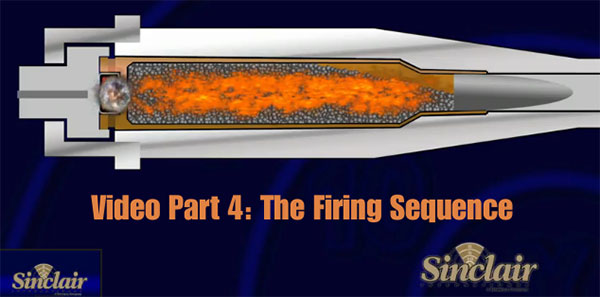
Part 4 — The Firing Sequence
Part 5 — Tools for Reloading
Part 6 — Loading Bottle-Neck Cartridges (2 videos)
Part 7 — Loading Straight Wall Cartridges
Part 8 — Reloading Series Conclusion
Reloading Tools
Shown below is Part 5 of the video series, covering the tools used for precision reloading.
We also strongly recommend the Part 4 Video to readers who are getting started in reloading. This “How Things Work” segment covers the sequence of events inside the chamber (and barrel) when the cartridge is fired. The video includes helpful graphics that show what happens to the primer, powder, cartridge, and bullet when the round is fired. The video also illustrates “headspace” and explains how this can change after firing. We think this video answers many common questions and will help reloaders understand the forces at work on their brass during the firing process.




 In a
In a 


 McMillan Sold to Bob Beck Group


 Barrel/Shoulder Fit and Blue-Printing


 Viridian HS1 Features: