Here’a useful article by Sierra Bullets Media Relations Manager Carroll Pilant. This story, which originally appeared in the Sierra Bullets Blog, covers some of the more common ammo problems that afflict hand-loaders. Some of those issues are: excessive OAL, high primers, and improperly-sized cases. Here Mr. Pilant explains how to avoid these common problems that lead to “headaches at the range.
I had some gentlemen at my house last fall getting rifle zeros for an upcoming elk hunt. One was using one of the .300 short mags and every 3rd or 4th round would not chamber. Examination of the case showed a bulge right at the body/shoulder junction. These were new cases he had loaded for this trip. The seating die had been screwed down until it just touched the shoulder and then backed up just slightly. Some of the cases were apparently slightly longer from the base to the datum line and the shoulder was hitting inside the seating die and putting the bulge on the shoulder. I got to thinking about all the gun malfunctions that I see each week at matches and the biggest percentage stem from improper handloading techniques.
One: Check Your Cases with a Chamber Gage
Since I shoot a lot of 3-gun matches, I see a lot of AR problems which result in the shooter banging the butt stock on the ground or nearest solid object while pulling on the charging handle at the same time. I like my rifles too well to treat them that way (I cringe every time I see someone doing that). When I ask them if they ran the ammo through a chamber gage, I usually get the answer, “No, but I need to get one” or “I didn’t have time to do it” or other excuses. The few minutes it takes to check your ammo can mean the difference between a nightmare and a smooth running firearm.
A Chamber Gauge Quickly Reveals Long or Short Cases
Size Your Cases Properly
Another problem is caused sizing the case itself. If you will lube the inside of the neck, the expander ball will come out a lot easier. If you hear a squeak as the expander ball comes out of a case neck, that expander ball is trying to pull the case neck/shoulder up (sometimes several thousandths). That is enough that if you don’t put a bulge on the shoulder when seating the bullet … it can still jam into the chamber like a big cork. If the rifle is set up correctly, the gun will not go into battery and won’t fire but the round is jammed into the chamber where it won’t extract and they are back to banging it on the ground again (with a loaded round stuck in the chamber). A chamber gage would have caught this also.
Oversizing cases also causes problems because the firing pin doesn’t have the length to reach the primer solid enough to ignite it 100% of the time. When you have one that is oversized, you usually have a bunch, since you usually do several cases at a time on that die setting. If the die isn’t readjusted, the problem will continue on the next batch of cases also. They will either not fire at all or you will have a lot of misfires. In a bolt action, a lot of time the extractor will hold the case against the face of the breech enough that it will fire. The case gets driven forward and the thinner part of the brass expands, holding to the chamber wall and the thicker part of the case doesn’t expand as much and stretches back to the bolt face. If it doesn’t separate that time, it will the next time. When it does separate, it leaves the front portion of the case in the chamber and pulls the case head off. Then when it tries to chamber the next round, you have a nasty jam. Quite often range brass is the culprit of this because you never know how many times it has been fired/sized and in what firearm. Back to beating it on the ground again till you figure out that you have to get the forward part of the case out.
Just a quick tip — To extract the partial case, an oversized brush on a cleaning rod [inserted] and then pulled backward will often remove the case. The bristles when pushed forward and then pulled back act like barbs inside the case. If you have a bunch of oversized case that have been fired, I would dispose of them to keep from having future problems. There are a few tricks you can use to salvage them if they haven’t been fired though. Once again, a case gage would have helped.
Two: Double Check Your Primers
Another thing I see fairly often is a high primer, backwards primer, or no primer at all. The high primers are bad because you can have either a slam fire or a misfire from the firing pin seating the primer but using up its energy doing so. So, as a precaution to make sure my rifle ammo will work 100% of the time, I check it in a case gage, then put it in an ammo box with the primer up and when the box is full, I run my finger across all the primers to make sure they are all seated to the correct depth and you can visually check to make sure none are in backwards or missing.
Three: Check Your Overall Cartridge Length
Trying to load the ammo as long as possible can cause problems also. Be sure to leave yourself enough clearance between the tip of the bullet and the front of the magazine where the rounds will feed up 100%. Several times over the years, I have heard of hunters getting their rifle ready for a hunt. When they would go to the range to sight in, they loaded each round single shot without putting any ammo in the magazine. On getting to elk or deer camp, they find out the ammo is to long to fit in the magazine. At least they have a single shot, it could be worse. I have had hunters that their buddies loaded the ammo for them and then met them in hunting camp only to find out the ammo wouldn’t chamber from either the bullet seated to long or the case sized improperly, then they just have a club.
Four: Confirm All Cases Contain Powder
No powder in the case doesn’t seem to happen as much in rifle cartridges as in handgun cartridges. This is probably due to more handgun ammo being loaded on progressive presses and usually in larger quantities. There are probably more rifle cartridges that don’t have powder in them than you realize though. Since the pistol case is so much smaller internal capacity, when you try to fire it without powder, it usually dislodges the bullet just enough to stick in the barrel. On a rifle, you have more internal capacity and usually a better grip on the bullet, since it is smaller diameter and longer bearing surface. Like on a .223, often a case without powder won’t dislodge the bullet out of the case and just gets ejected from the rifle, thinking it was a bad primer or some little quirk.
For rifle cases loaded on a single-stage press, I put them in a reloading block and always dump my powder in a certain order. Then I do a visual inspection and any case that the powder doesn’t look the same level as the rest, I pull it and the one I charged before and the one I charged after it. I inspect the one case to see if there is anything visual inside. Then I recharge all 3 cases. That way if a case had powder hang up and dump in the next case, you have corrected the problem.
On progressive presses, I try to use a powder that fills the case up to about the base of the bullet. That way you can usually see the powder as the shell rotates and if you might have dumped a partial or double charge, you will notice as you start to seat the bullet if not before. On a progressive, if I don’t load a cartridge in one smooth stroke (say a bullet tipped over sideways and I raised the ram slightly to reset it) Some presses actually back the charge back adding more powder if it has already dumped some so you have a full charge plus a partial charge. When I don’t complete the procedure with one stroke, I pull the case that just had powder dumped into it and check the powder charge or just dump the powder back into the measure and run the case through later.
CZ has announced its new CZ 600+ bolt-action rifle series. These new rifles are offered in various formats for hunting, PRS/NRL, and target shooting. Notable features include and fast barrel swap system, a shorter bolt throw, and a wide selection of stocks. CZ offers 3-shot accuracy guarantees: Most models have guaranteed sub-MOA accuracy at 100 yards (three-shot groups), while the RANGE model offers guaranteed sub-0.75 MOA accuracy in five-shot groups.
“The CZ 600+ represents the future of hunting and precision rifles,” said Tom Taylor, CZ-USA’s Chief Marketing Officer. The CZ 600+ series features a groundbreaking modular design highlighted by patented innovations. These include an advanced Silent, Ergonomic, and Ambidextrous (S.E.A.) safety, a quick 4-position adjustable trigger, and an innovative interchangeable barrel system. The series guarantees unmatched precision accuracy, supported by CZ’s lifetime barrel warranty. For detailed information about the CZ 600+ series, visit CZFirerms.com.
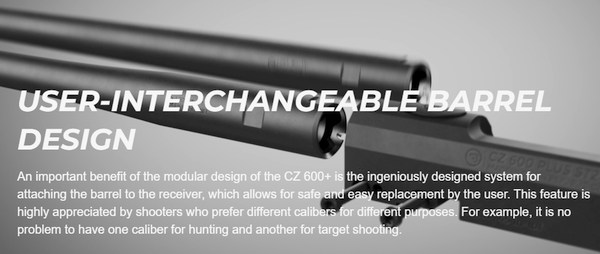
Interchangeable Barrel System for Versatility
With the interchangeable barrel system, shooters can easily and safely swap barrels, allowing one rifle to adapt to multiple calibers, from hunting to sport shooting, seamlessly.
Innovative Features and Design — CZ 600+ Rifles Include:
Advanced S.E.A. Safety: Silent, Ergonomic, and Ambidextrous cross-bolt design for secure handling.
Quick Adjustable Trigger: Easily adjusted to suit personal preferences without disassembly.
Controlled Feeding System: Smooth bolt operation with 100% controlled feeding.
Lifetime Barrel Warranty: Cold hammer-forged barrels with exceptional durability and precision.
Robust Construction: Available with lightweight aluminum alloy receivers with integrated Weaver rails or steel receivers with Remington 700-style mounting interfaces.
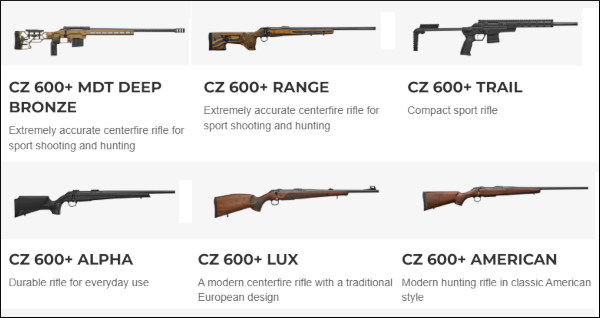
The CZ 600+ Series — SIX Models
CZ 600+ MDT: Tactical Rifle with MDT Stock for PRS/NRL.
CZ 600+ RANGE: Optimized for precision shooting with adjustable stock features.
CZ 600+ TRAIL: Compact model with retractable stock and compatibility with AR and CZ mags.
CZ 600+ ALPHA: Rugged polymer stock designed for reliable performance in all conditions.
CZ 600+ LUX: Classic European walnut stock with fiber optic adjustable iron sights.
CZ 600+ AMERICAN: Timeless American styling combined with modern enhancements.
Are you in the market for your first handgun, for target use or for self-defense? The Winchester Blog has a good article for handgun buyers. This story, “Things You Should Know When Purchasing Your First Pistol”, provides many smart tips that can help you choose the right handgun, and save money in the process. In addition, the article explains how to train with your new pistol and handle it safely. READ Full Article.
If possible, you should test a variety of different pistols, to determine which works best for you. Check the feel, the ergonomics, the sight picture, and the controls. And, if possible, test the pistols with live-fire at a range which rents samples.
How do you know if your choice is right for you?
Once you’ve narrowed down choices, try to get time shooting the pistol(s) you are considering. You can usually rent guns at commercial ranges. This is an excellent way to “try before you buy.” NSSF has a list of places to shoot[.] When looking for a range that rents firearms, an online search and then a phone call to confirm what options are available is a solid plan. If you have friends and family who own a model you are interested in, ask if they will go to the range with you so that you can try it.
Take pistols for a test drive
First, dry-fire and manipulate the pistol. Can you easily lock the slide open? Are the sights suited to your vision? Then, fire a magazine or two of ammo [in a supervised range facility]. — Winchester Blog
The Winchester Blog article lists techniques that can help you get the “feel” for a particular firearm:
1. Practice the 4 Rules of Firearm Safety and make sure the gun is empty.
2. [After confirming the gun is empty] manipulate the slide, safety, magazine release, and dry-fire.
3. Perform a dry or empty magazine change — make sure you can hit the release and also reload a new magazine easily.
4. Perform a draw, or if you’re at a range where that is not allowed, simply pick the pistol up off the table and bring it up to your eye level and align the sights. Do this a few times. Can you acquire the sights quickly?
5. How does the backstrap fit your hand? Can you get both hands on the gun with enough “purchase” that you can really grip it well?
This Winchester Blog article is by Becky Yackley. Becky has competed in 3-Gun, Bianchi pistol, Service Rifle, NCAA air rifle, smallbore and air pistol events around the world since 1989.
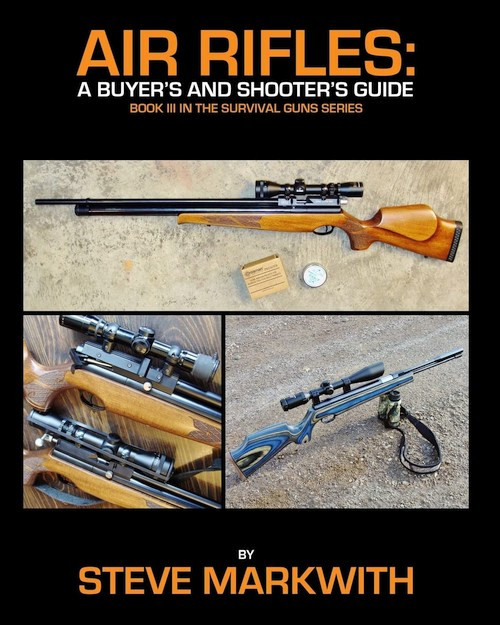
We like air rifles both for fun shooting and for competition. However, so many options are now available that is easy to get overwhelmed with the choices. Thankfully, there is a good book that helps air rifle shooters make informed decisions about air guns and accessories. Steve Markwith’s comprehensive resource, Air Rifles: A Buyer’s and Shooter’s Guide offers a wealth of useful information. This 154-page book is now available for $14.48 (paperback) or $9.95 (Kindle)..
“This is a very informative book explaining the ins and outs of air rifles, their capabilities and limitations. I highly recommend this book to anyone considering purchasing an air rifle for marksmanship practice or small game hunting.” – L. Stanek, Verified Amazon Reviewer
Read Free Sample Chapters Online
If you go to Amazon.com and look right below the book cover photo, you’ll see a “READ SAMPLE” button. Click that to view a FREE preview with extensive samples from many chapters. The book covers all the most important types of air rifle systems, both pre-charged pneumatics and other self-charging guns. Markwith reviews the wide variety of pellets available, offering suggestions for particular applications. You’ll also find a useful discussion of Airgun Power, Range, and Accuracy. This will help you pick the right air rifle.
Markwith explains the many attractions of airguns. They are not considered firearms (in most jurisdictions) so they can be purchased at local shops or mail-order outlets without FFL fees or background checks. You’ll find a huge online selection of airguns at PyramydAir.com that can ship direct to you — no FFL required. Air rifles are also quiet and very inexpensive to shoot. While .177 and .22 caliber air rifles are most common, there are also larger-caliber airguns offered for hunting or special applications.
Pyramyd Air has dozens of helpful videos about air rifles and air pistols.
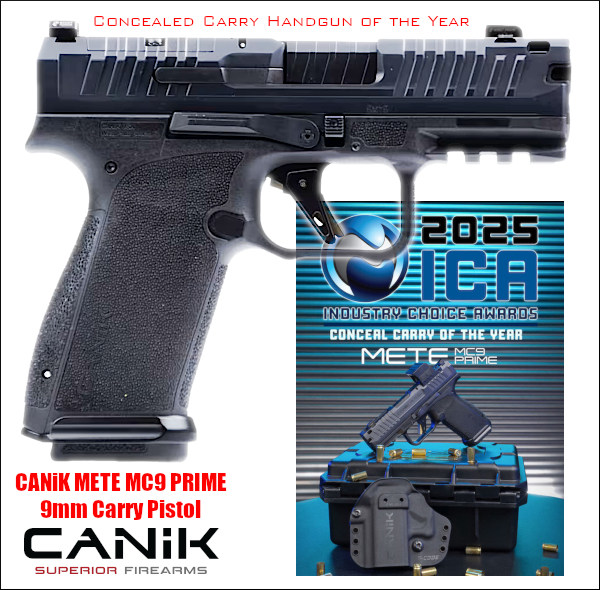
The compact CANiK METE MC9 PRIME pistol has been named the 2025 ICA (Industry Choice Awards) Concealed Carry Handgun of the Year. This compact single-stack 9mm pistol features a ported barrel and an optics-ready slide. Average retail price is $599.99.
Testers have stated the METE MC9 Prime has good ergonomics, a good trigger, and the ported barrel reduces muzzle rise compared to popular carry pistols such as the Glock 19 and Ruger American. The controls are nice and the pistol ships with 3 backstraps, so the grip can be adapted to owner hand size.
The METE MC9 Prime is equipped with an integrally-compensated slide and ported barrel, flat-faced trigger with 90-degree break, slide lightening cuts, and flared slide for smoother manipulation. The frame boasts full grip stippling for a better feel and control. The slide is optics-ready with co-witness capability. This made-in-USA CANik firearm ships in a premium hard case and includes two 17-round magazines, a G-Code IWB/OWB ambidextrous holster, 3 sizes of backstraps, tool/cleaning kits, and magazine speed loader.
Jeff Rose, CANiK Director of Marketing stated: “This isn’t just another micro-compact. The MC9 Prime delivers unmatched capacity, uncompromising control, and a trigger that redefines what you expect from a concealed carry firearm.” The METE MC9 Prime is the first pistol made in CANiK’s new facility in West Palm Beach, Florida.
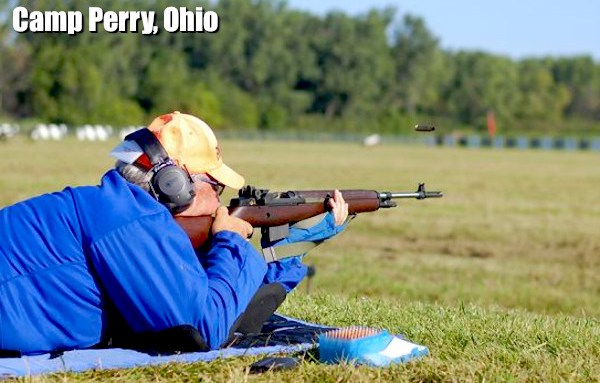
The CMP M14 Heritage Match was held Sunday, August 3, 2025 at the Viale Range at Camp Perry.
M1A rifles at M14 Heritage Match at Camp Perry
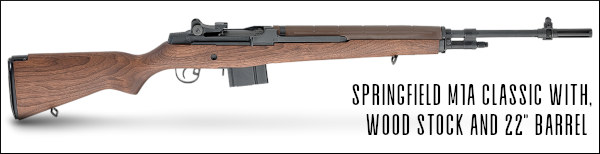
Today we feature the M1A rifle. Last week, the rugged M1A rifle, descended from the M1 Garand and M14, was the star of the show at Camp Perry. The M14 Heritage Match was held last Sunday, August 3, 2025, at the CMP 2025 National Rifle Matches.
History of the M14 Heritage Match and Springfield M1A Match
The M14 Heritage Match, previously the Springfield Armory M1A match, began with one man’s concept. Springfield Armory’s Mike Doy witnessed the waning of classic M1 Garand and M1A rifles from the competitive High Power firing lines. “I really wanted to get those M1A rifles out of safes and closets and back out onto the field. So [in 2008] I promoted the idea of running an M1A-specific match at Camp Perry. That first year we had over 600 competitors and spectators.” After running as a Springfield Armory-sponsored match (with cash prizes) for many years, the match is now the “M14 Heritage Match”.
Folks, take the time to WATCH this 3-minute video. It has great match footage of Camp Perry and interviews with M1A competitors. Well worth watching!
Nick Till in 2009 M1A Match. Nick was the 2007 Service Rifle Nat’l Champion. Photo courtesy NRA Blog.
M1A Competition at Camp Perry National Matches
For many years, the semi-auto version of the M14 was “top dog” in iron sights Service Rifle competition. Now that discipline is dominated by .223 Rem (5.56×45) AR-type rifles, but the bigger .308-caliber rifle, now sold as the M1A, remains popular. The CMP hosts a major M1A Match every year at Camp Perry now called the “M14 Heritage Match”. Significant prizes are awarded. In past years M1A Match competitors took home over $25,000 worth of cash and merchandise when the match was sponsored by Springfield Armory.
Photo courtesy Civilian Marksmanship Program.
M1A Match 2016 — Rapid Fire Sitting Stage
In the April 2018 issue of Shooting Sports USA, you’ll find a good article on the civilian version of the M14, now sold commercially as the Springfield M1A. An evolution of the battle-proven M1 Garand, the M14 was designed to shoot the 7.62×51 (.308 Win) round instead of the larger .30-06 Springfield cartridge used in WWI, WWII and Korea. While the vast majority of today’s M1As are chambered for .308 Win/7.62×51, Springfield Armory also produces a 6.5 Creedmoor version.
Dick Jones reports that accurized M14/M1As could post remarkable scores: “The accuracy potential of the M14/M1A is unquestionable. During their reign as service rifles, they produced multiple perfect 200 scores at 600 and 1000 yards in the hands of top shooters. This is a difficult feat with a modern, scoped, magnum-caliber rifle and remarkable with an iron-sighted battle rifle. Good competition rifles can group 10 shots under one MOA, and the meticulously-massaged rifles used by the top shooters during my career would consistently put up 10 shots under an inch at 200 yards off a test cradle.”
In this video, YouTube Reviewer Hickok 45 compares the M1 Garand and the M14/M1A:
“Descended from the M1 Garand, the M14 utilized multiple improvements that made it a far superior firearm for combat and a much better rifle for competition.” — Dick Jones, Shooting Sports USA.
M1A Match Equipment Rules and Course of Fire
Renewed interest in the M1A led to the first dedicated Camp Perry M1A match in 2008. That first-ever match drew over 500 shooters. Match equipment rules allow pretty much all types/grades of M1As. The one-day course of fire consists of 50 shots at 300 yards on the NRA MR-65F target, as follows: 5 sighters; 20 shots slow-fire prone; 10 shots rapid-fire prone; 10 shots rapid-fire, kneeling or sitting; and 10 shots slow-fire standing. Here are photos from the 2014 MIA match, courtesy NRA General Operations.
See how the modern M1A is built in this Springfield Armory Video:
As racing improves automobiles, competition improves firearms, and the current crop of Springfield M1As, from the Basic to the top-of-the-line Super Match and Loaded models, reflects the years of development. The M14 and its variants are … still considered by many to be the best battle rifle in the history of the U.S. Military. — Dick Jones, Shooting Sports USA
What is Parallax?
Parallax is the apparent movement of the scope’s reticle (cross-hairs) in relation to the target as the shooter moves his eye across the exit pupil of the riflescope. This is caused by the target and the reticle being located in different focal planes.
Here’s a good explanation of scope parallax. This video has been watched over 790,000 times.
Why is it Important?
The greater the distance to the target and magnification of the optic, the greater the parallax error becomes. Especially at longer distances, significant sighting error can result if parallax is not removed.
How to Remove Parallax
This Nightforce Tech Tip video quickly shows how to remove parallax on your riflescope.
While keeping the rifle still and looking through the riflescope, a slight nod of the head up and down will quickly determine if parallax is present. To remove parallax, start with the adjustment mechanism on infinity and rotate until the reticle remains stationary in relation to the target regardless of head movement. If parallax has been eliminated, the reticle will remain stationary in relation to the target regardless of eye placement behind the optic.
Varminting for Fun — With Rimfires and Centerfires
One of the most fun things you can do with a rifle is to shoot varmints such as ground squirrels, prairie dogs, rockchucks, and groundhogs. There’s great satisfaction making a perfect hit on a critter that sends the beastie spinning in the air. Varminting also affords a great excuse to acquire more rifles, because it really does make sense to own and use multiple varmint rifles in various calibers.
Having multiple rifles on a varmint safari lets you preserve barrel life, and shoot lesser-recoiling calibers at the shorter distances. For example, with California ground squirrels, we like a .17 HMR inside 125 yards, then switch to a 20 Practical (20-223 Rem). For prairie dogs, you may want that 20 Practical, plus a nice .22 BR for 250-400 yards, and a .243 Ackley (or 6XC or 6mm CM) for long shots.
Seven Varmint Rifles — Rimfire and Centerfire
With 980,000 subscribers, the Backfire YouTube Channel is highly popular. The capable hosts provide honest, candid reviews. This video covers seven different varmint rigs. First off is the Air Arms TX 200 (00:25). Then the excellent .22 LR CZ 457 is featured (01:33), followed by a .223 Rem AR15-platform rifle (02:30). Next up is the .22 LR Christensen Arms Ranger 22 (03:40), which proved to be “crazy accurate”. Then the video showcases a Bergara Premier in 22-250 (04:20), an “excellent coyote gun that you could use on varmints as well”. Last up is the Ruger American Predator (05:20) in .17 HMR.
6XC Rifle Featured in Gunwerks Rockchuck Adventures
This Gunwerks video showcases varmint hunting in the Western USA. In this video Aaron Davidson and the Gunwerks crew try out some new rifles on some rockchucks. Most of the the rifles were suppressed but the host said the rockchucks took cover after the first shot, so this required good coordination among shooters and spotters. A 6XC varminter is featured at 2:44 and there’s some nice drone footage starting at 2:00.
6mmBR for Longer Range Varmint Adventures
The video creator reports “I spent a great deal of time deciding what 6mm cartridge I would pick for my next varmint build. I was sure of certain things. First, it had to fit an action that I owned. Most importantly, it had to be highly accurate, with light recoil. Quality, highly frangible bullets had to be available in the 50 to 70 grain weight range (for smaller to larger varmint hunting). For flat shooting ballistics, I wanted velocity above 3300 fps. I decided that the 6mmBR, with a slow twist barrel, was what I was looking for.” Components for this rifles are: Borden Alpine Action, Krieger Barrel, Grayboe Ridgeback Stock, Bix’N Andy Trigger, Thunderbeast Ultra Suppressor.
.22-250 Nails Ground Squirrels and Rock Hyraxes in South Africa
Here’s an interesting video from South Africa. The video maker starts with shots on ground squirrels. His .22-250 blasts them into little pieces. They he switches to more distant targets, a furry ground-hog size animal called the Rock Hyrax, Cape Hyrax, or Dassie. Mature Rock Hyraxes weigh 4-5 kilograms and have short ears and tail. These Rock Hyraxes are found at higher elevations in habitats with rock crevices, allowing them to escape from predators (but not skilled varmint hunters).
20 Practical — Great Choice for AR-Platform Rifle
If you want to use an AR-platform rifle in the varmint fields, consider getting a 20-caliber barrel chambered for the efficient, low-recoil 20 Practical cartridge. The 20 Practical is simply a .223 Remington necked down to 20 caliber. The parent .223 Rem cartridge of course works great in an AR, but the 20 Practical offers some notable advantages for high-volume varmint shooters. The 20 Practical cartridge is simply the .223 Rem necked down to 20 caliber — you can use standard .223 brass and load with standard.223 Rem dies. Just swap in a smaller expander and use smaller neck bushings.
The 20 Practical delivers very high velocity with very low recoil while still providing outstanding accuracy. The 20 Practical is great option for folks who favor “fast and light” — smaller, lower-mass bullets traveling at very high velocities. This little cartridge can launch 40-grainers at over 3900 fps.
.17 WSM — The Most Powerful .17 Cal Rimfire
We think that every varmint hunter should own a nice .17 Cal rimfire rig. Out to 200 yards or so the .17 WSM or .17 HMR is very effective on small varmints. It’s nice to be able to shoot affordable ammo out of the box and not have to scrounge for hart-to-find powder and primers. This video features a superb .17 Cal varmint rig, the Primal Rights TS Custom chambered for the impressive .17 WSM cartridge.
Prairie Dog Hunting with .17 HMR Savage A17 Rifle
On varmint excursions, we like to have a .17 rimfire for the closer shots, inside 150 yards. This video shows a successful Prairie Dog hunt with a .17 HMR. Watch and you’ll see hits out to 160 yards (00:50), proving the effective range of the .17 HMR cartridge. The host is shooting a Savage A17 semi-auto 17 HMR rifle in a Boyds laminated stock.
Varminters now enjoy three .17-caliber rimfire options. The .17 Mach 2, .17 HMR, and .17 WSM are all good choices, with the 17 Mach 2 (17 HM2) being the cheapest and the .17 WSM the most powerful. With a 3000 fps MV, the .17 WSM has some really impressive ballistics, — with a much flatter trajectory than both the .17 HMR and .22 WMR:
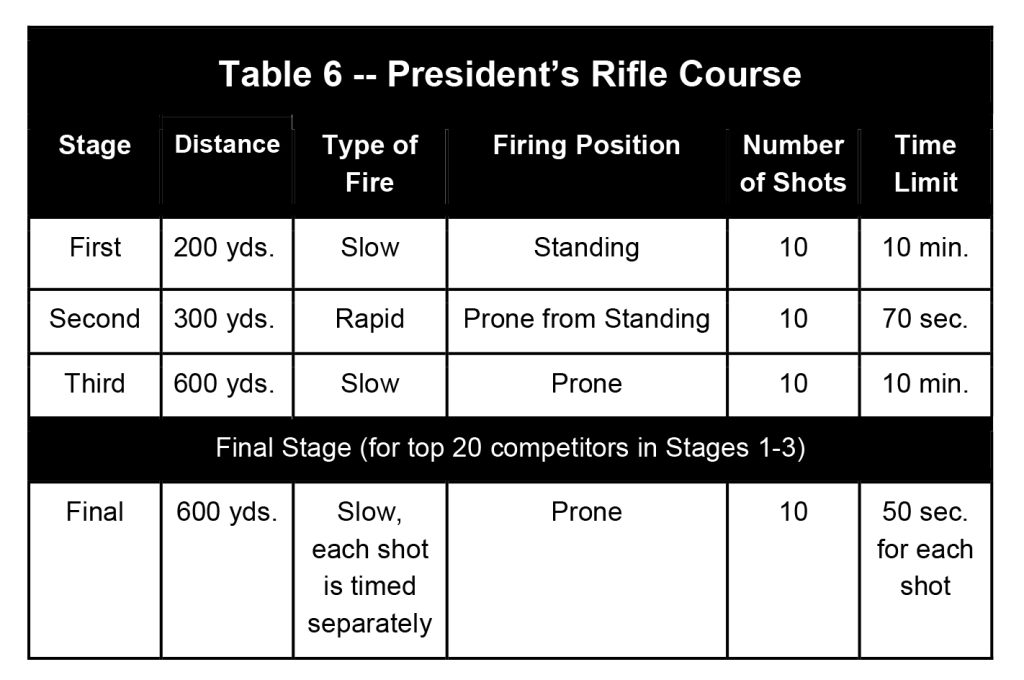
Today Shooting USA TV features the annual President’s Rifle Match at Camp Perry, Ohio. Also known as the “President’s 100″, this major Service Rifle match attracts nearly one thousand competitors to the historic ranges of Camp Perry each summer. This is a challenging, multi-stage modern service rifle competition that is a tough test of marksmanship skills. In the President’s 100 match, competitors shoot at 200, 300, and 600 yards from standing and prone. NOTE: This week’s TV episode also features the M1 Garand rifle in a History’s Guns segment.
Shooting USA SHOW TIMES: This Shooting USA Episode airs Wednesday, August 6, 2025 at 9:00 PM Eastern and Pacific; 8:00 PM Central. If you miss the regular broadcast, you can stream the show online at any time on Vimeo for $0.99 per episode.
This video is from a previous Shooting USA episode about the President’s 100 Match.
Looking downrange at the 600-yard targets. Camp Perry photos courtesy Dennis Santiago.
The historic National President’s 100 Match is a huge event. In recent years, there have been over 1000 ranked competitors from throughout the nation, making this one of the biggest rifle events of the year. The top 100 competitors overall in the President’s Rifle Match are designated as the President’s 100. They receive President’s 100 medallions and certificates.
The President’s 100 Rifle Match is richly steeped in history. This unique match was first held in 1878. Here’s the view from the line at 600 yards:
President’s 100 Course of Fire
There is a three-yardage, four-stage Course of Fire for the President’s Rifle Match Course of Fire. Firing is done on the SR target at 200 and 300 yards and the MR target at 600 yards. Scores in stages 1-3 determine the President’s 100 and the final rankings of competitors in 21st place and below. Scores in stages 1-4 determine the match winner and the final rankings in places 1-20. If there is a tie for first place (equal total and X-count), the tied shooters will continue to fire one-shot-at-a-time until the tie is broken. No sighters are permitted in National Trophy Rifle Matches.
Origins of the President’s Match The National Rifle Association’s President’s Match was instituted in 1878, as the American Military Rifle Championship Match. In 1884, the name was changed to the President’s Match for the Military Rifle Championship of the United States. It was fired at Creedmoor, New York until 1891. In 1895, it was reintroduced at Sea Girt, New Jersey. Today, the match is held at Camp Perry, Ohio.
The President’s Match was patterned after the Queen’s Match for British Volunteers. That British competition was started in 1860 by Queen Victoria and the NRA of Great Britain to increase the ability of Britain’s marksmen following the Crimean War.
The tradition of making a letter from the President of the United States the first prize began in 1904 when President Theodore Roosevelt personally wrote a letter of congratulations to the winner, Private Howard Gensch of the New Jersey National Guard.
After a hiatus in the 1930s and 1940s, The President’s Match was reinstated in 1957 at the National Matches as “The President’s Hundred.” The 100 top-scoring competitors in the President’s Match were singled out for special recognition.
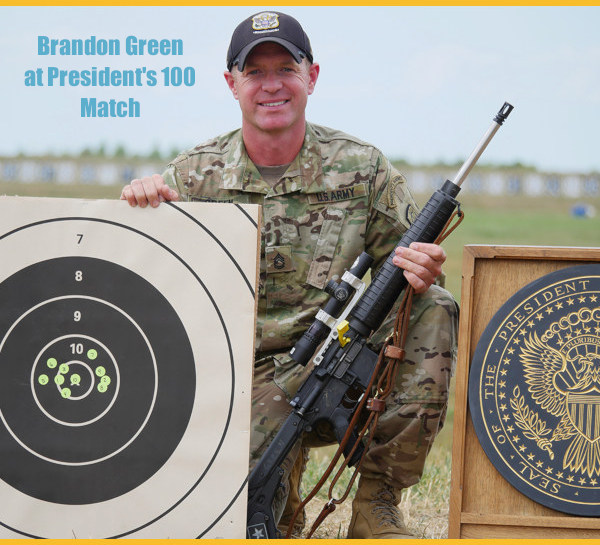
At the 2018 National Matches, SFC Brandon Green (then with the USAMU) shot a 400-20X score to win the President’s 100 match. That set a new national record for the prestigious President’s 100 Match. No other competitor had ever achieved a perfect 400 score — not dropping a point in 40 shots — in the President’s 100 match since the event began (in its current form) in 1894.
E-Targets at 2025 National Matches — Rimfire and Centerfire
After years of testing, the Civilian Marksmanship Program (CMP) will make full use of eTargets at the 2025 National Rifle Matches at Camp Perry, which run July 20 through August 9, 2025. The advanced Kongsberg eTargets will be used at all Highpower rifle matches, National Trophy Rifle competitions, and Rifle Games events. In addition the eTargets will be used for the Rimfire Sporter Match on July 20 and the National Mid/Long Range Matches in August. The use of eTargets eliminates the need for pit duty, drastically cutting down the duration of each match. CLICK HERE to learn more about Camp Perry eTargets.
These matches are conducted by the CMP and Ohio National Guard. Since their inception, the National Matches have become a huge, national shooting sports event with over 4,500 annual participants.
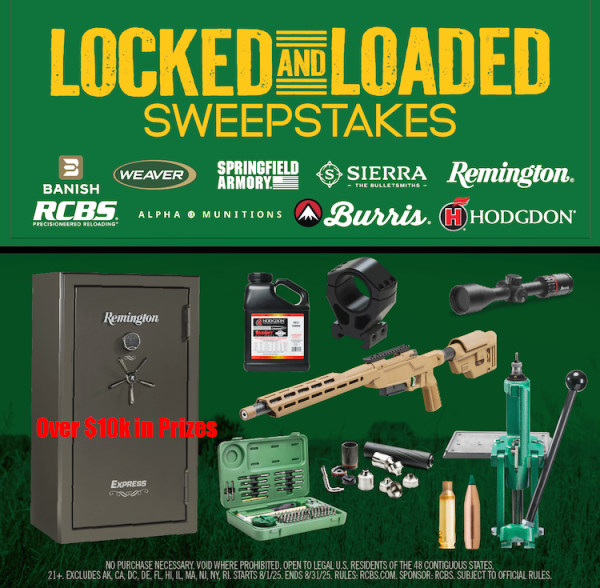
RCBS Launches Locked & Loaded Sweepstakes This month RCBS is running big new contest — the Locked & Loaded Sweepstakes. The winner will receive over $10K worth of prizes from leading manufacturers. Major prizes include a Springfield Armory Model 2020 Heatseeker chassis rifle, Remington Gun Safe, and Banish 30-V2 Suppressor.
Running August 1–31, 2025, the sweepstakes brings together an impressive lineup of brands. One lucky winner will take home a fully loaded prize package valued at over $10,000, featuring premium equipment from RCBS, Hodgdon, Springfield Armory, Banish Suppressors, Burris Optics, Alpha Munitions, Remington Ammunition, Sierra Bullets, Weaver Mounts, and Remington Safes.
The Sweepstakes is open for entries August 1 through August 31, 2025. No purchase is necessary. Must be 21+ years and a resident of the 48 contiguous U.S. states. (Some restrictions apply.)
One grand prize winner will get a prize package worth over $10,000:
RCBS – Rock Chucker Supreme Master Reloading Kit, MatchMaster Die Set
Springfield Armory – Model 2020 Heatseeker Bolt-Action Rifle
Remington – Express Series Gun Safe with Free Shipping
BANISH Suppressors – BANISH 30-V2 Suppressor + Tax Stamp fees
Burris Optics – XTR PS 3.3-18 Scope and XTR Signature Rings
Weaver Mounts – Deluxe Tool Kit & Scope Mounting Kit
Hodgdon Powder – 8 pounds of Winner’s Choice of Powder
Alpha Munitions – Case of Alpha Cartridge Brass
Remington Ammunition – Case of Rifle Primers
Sierra Bullets – 500 Bullets
“We’re proud to team up with some of the best [industry] brands to deliver a sweepstakes that truly outfits a shooter from top to bottom,” said Joel Hodgdon, RCBS Marketing Director. “This prize pack has it all.”
NO PURCHASE OR PAYMENT IS NECESSARY TO ENTER OR WIN. PURCHASE DOES NOT IMPROVE CHANCES OF WINNING. OPEN TO LEGAL RESIDENTS OF THE 48 CONTIGUOUS UNITED STATES, 21+. VOID in AK, CA, DC, DE, FL, HI, IL, MA, NJ, NY, RI & WHERE RESTRICTED OR PROHIBITED.


 Oversizing cases also causes problems because the firing pin doesn’t have the length to reach the primer solid enough to ignite it 100% of the time. When you have one that is oversized, you usually have a bunch, since you usually do several cases at a time on that die setting. If the die isn’t readjusted, the problem will continue on the next batch of cases also. They will either not fire at all or you will have a lot of misfires. In a bolt action, a lot of time the extractor will hold the case against the face of the breech enough that it will fire. The case gets driven forward and the thinner part of the brass expands, holding to the chamber wall and the thicker part of the case doesn’t expand as much and stretches back to the bolt face. If it doesn’t separate that time, it will the next time. When it does separate, it leaves the front portion of the case in the chamber and pulls the case head off. Then when it tries to chamber the next round, you have a nasty jam. Quite often range brass is the culprit of this because you never know how many times it has been fired/sized and in what firearm. Back to beating it on the ground again till you figure out that you have to get the forward part of the case out.









 The National Rifle Association’s President’s Match was instituted in 1878, as the American Military Rifle Championship Match. In 1884, the name was changed to the President’s Match for the Military Rifle Championship of the United States. It was fired at Creedmoor, New York until 1891. In 1895, it was reintroduced at Sea Girt, New Jersey. Today, the match is held at Camp Perry, Ohio.