Competing at the Camp Perry National Matches is a “bucket list” item for every serious marksman. The National Matches were first held in 1903, moved to Camp Perry, Ohio, in 1907 and continue to take place every summer at Camp Perry. The National Matches have become a huge, national shooting sports festival with well over 6,000 annual participants.
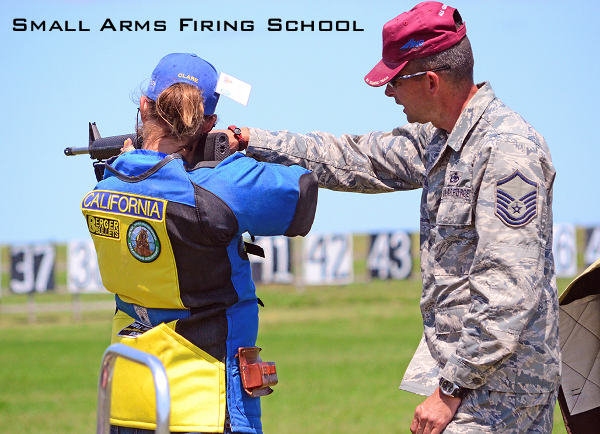
Year 2019 Camp Perry NM Competition activities begin with NRA/CMP pistol matches on July 8-14, 2019. The CMP Junior Rifle Camp, USAMU SAFS, and Smallbore matches run the next week, with the hugely popular Rimfire Sporter Match on July 21. High Power Rifle events kick off on July 23 with the 4-Man Team Match and rifle events run continuously for the next two and a half weeks.
Here are some key dates for RIFLE events:
July 27 – CMP/USAMU Rifle SAFS
July 29 – President’s 100 Rifle Match
July 30 – National Trophy Individual Rifle Match
July 31 – National Junior Team Match
August 1 – National Trophy Team Match, National Carbine Match
August 2 – National Trophy Infantry Team Match (“Rattle Battle”)
August 3 – M1 Garand Match, Springfield/Vintage Bolt Rifle Match
August 4 – M1A Match, Springfield/Vintage Bolt Rifle Match
August 5 – CMP Vintage Sniper Rifle Match
August 5-8 – CMP Long Range Individual Matches
August 9 – Camp Perry Palma Match
Larry Medler has come up with a smart little invention — a simple, inexpensive Empty Chamber Indicator for rimfire rifles. It is made from a section of plastic “weed-wacker” line and a wooden ball from a hobby shop. Larry says he was inspired by Juniors who used something similar for their 17-Caliber Air Rifles.
At a Rimfire Sporter match like this, all shooters must have an Empty Chamber Indicator.
Construction Method: First, drill a 7/64″ diameter hole all the way through the 1″-diameter wooden ball. Then enlarge half of that 1″-long hole using a 13/64” diameter drill. Next insert an 8″ piece of heavy duty (0.095″ diameter) weed wacker line through the ball, leaving about 2″ on the side with the bigger-diameter hole. Then, with the short end of the line, fold over the last half-inch so the line is doubled-over on itself. Then slide the line into the ball, stuffing the doubled-over section through the 13/64″ (large) hole. Finally, pull the longer end of the line until the doubled-over section is flush with the outside of the ball. This gives you a sturdy line attachment without messy adhesives. When the assembly’s complete, hold the ECI by the tail and dip the ball in yellow paint. If you’re making more than one ECI, you can drill horizontal holes in a spare block of wood and use that as a drying rack.
The Empty Chamber Indicator for Smallbore Rifles
Larry explains: “At all Highpower rifle matches, silhouette matches, and other shooting events I have attended, Open Bore Indicators (OBI), or what are now called Empty Chamber Indicators (ECI) have been mandatory. The NRA’s yellow ECI for Highpower rifles is easy to use and has been well-received by the shooters. However, I had not seen a truly workable ECI for 22 rimfire rifles — until I visited Michigan’s Washtenaw Sportsman’s Club where I saw juniors using ECIs for their 17 Caliber Air Rifles. Someone at the club made the empty chamber indicators by attaching an 8″ piece of weed wacker line to a 1″-diameter wooden ball, painted bright yellow. I now make similar ECIs for the 22 rimfire silhouette matches I run.”
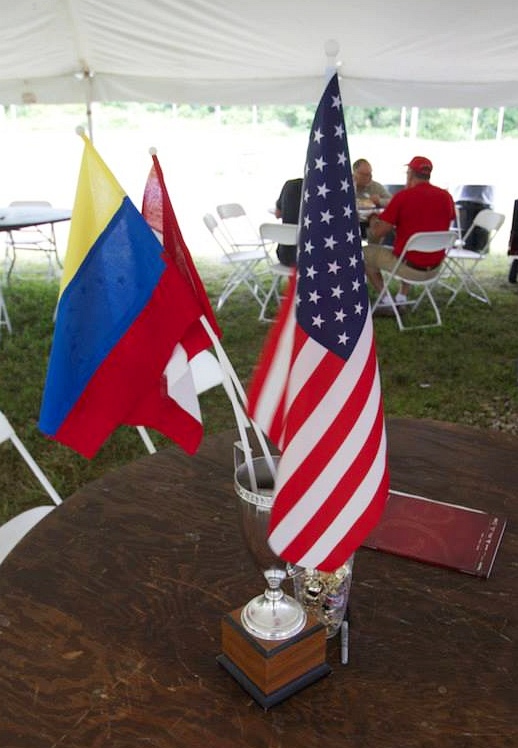
Shooters from across the nation and many foreign competitors will compete this year at the CAAFTC held at the Rochester Brooks Int’l Skeet and Trap Club.
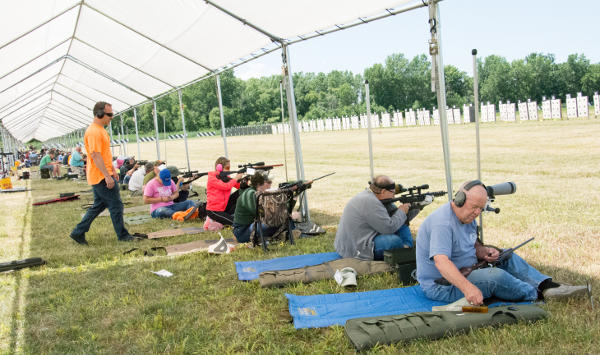
Upstate New York heats up in the summer with the largest field target event in the country — the Crosman All-American Field Target Championship (CAAFTC). This very popular airgun event takes place June 21-23, 2019 in upstate New Yorkat the Rochester Brooks International Skeet and Trap Club in Rush, New York. 0ver 100 air rifle and air pistol competitors will participate in the big event hosted by Crosman. This event attracts top Airgunners from across the nation (and some foreign countries). Along with regular Field Target matches, there will be specialty side matches, plus a factory tour. The event is free to the public.If you are a Field Target Shooter and want to attend, don’t hesitate — registration closes soon.
After getting squared away with check-in and some practice rounds on Friday, take part in the pistol match and the Quigley Bucket Challenge (see video below). For the Quigley Bucket Challenge, competitors must try to hit a 1.75″ target from 55 yards away, using open sights (no scopes).
The three-day competition features multiple shooting matches including the main two-day rifle event. There are four divisions for competitors: Open, Hunter, WFTF, and Pistol. In addition to the main rifle event, this year will also feature a pistol match, the Quigley Bucket Match and the Pyramyd Air Gunslinger match. The Bucket match re-creates famous scene in the movie Quigley Down Under in which the lead character shoots a bucket at 700 yards. Here the distances are scaled down a wee bit (wink). Competitors, using iron sights only, get 5 shots at a 1.75″ bucket placed at 55 yards.
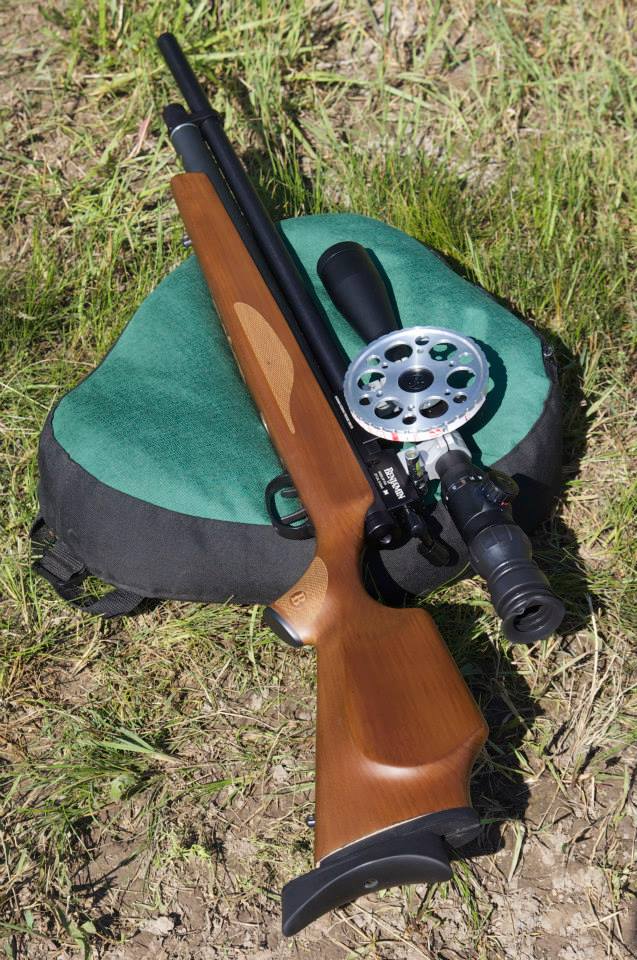
Tech Talk: Why the Big Side-Wheels on the Scopes?
Field Target rifles shoot pellets propelled by compressed air. These light-weight, low-BC projectiles drop very quickly, with a looping trajectory. In order to hit targets at distances out to 50 yards or so, you have to adjust your scope to compensate for pellet drop. But you can’t set the scope correctly without knowing the precise range to the target. This is the function of the big wheels on the side of the scope. Field Target Competitors use the parallax adjustment on high-magnification scopes to determine target range. The big wheel allows quick, yet precise parallax adjustment. Markings on the wheel show the shooter the scope settings required for the distance “dialed-in” via the over-size parallax wheel.
The CAAFTC is sanctioned by the American Airgun Field Target Association and is a featured AAFTA Grand Prix event. The 120-shot match has competitive rifle divisions based on allowable gun and support equipment. Here are the main air rifle classifications:
Hunter Division – rifle fires at a maximum 20 foot pounds of energy (FPE), shooter may use a non-attached bipod, non-restrictive clothing, and sitting stool. Open Division - maximum 20 FPE maximum rifle, shooter may wear a body harness, no bipod, 6″ maximum height seat. World Field Target Federation (WFTF) – similar to Open but shooters compete according to international standard of maximum 12 fpe for rifles. Freestyle Division – 20 FPE maximum rifle, no other restrictions. (This is new for 2016).
The pistol competition includes similar divisions based on shooting styles. Both rifle and pistol divisions include sub-classes based on the air rifle powerplant: piston driven or pre-charged pneumatic.
“If you want to see some of the country’s finest airgun shooters, this is the hottest event of the summer and it’s free for the public,” says Chip Hunnicutt, Marketing Manager for Crosman. “Alongside the world-class shooters, we’ll have enthusiasts simply having a good time and even parents bringing their kids for some good fun outdoors.” (NOTE: Click framed images below to zoom.)
The NRA Blog ran an feature on Silhouette shooting by NRA Silhouette Program Coordinator Jonathan Leighton. Here are selections from Leighton’s story:
NRA Silhouette Shooting
The loud crack from the bullet exiting the muzzle followed by an even louder ‘clang’ as you watch your target fly off the railing is really a true addiction for most Silhouette shooters. There is nothing better than shooting a game where you actually get to see your target react to the bullet. In my opinion, this is truly what makes this game so much fun.
Metallic Silhouette — A Mexican Import
Silhouette shooting came to this country from Mexico in the 1960s. It is speculated that sport had its origins in shooting contests between Pancho Villa’s men around 1914. After the Mexican Revolution the sport spread quickly throughout Mexico. ‘Siluetas Metalicas’ uses steel silhouettes shaped like game animals. Chickens up front followed by rows of pigs, turkeys, and furthest away, rams. Being that ‘Siluetas Metalicas’ was originally a Mexican sport, it is common to hear the targets referred to by their Spanish names Gallina (chicken), Javelina (pig), Guajalote (turkey) and Borrego (ram). Depending on the discipline one is shooting, these animals are set at different distances from the firing line, but always in the same order.
Before Steel There Was… Barbeque
In the very beginnings of the sport, live farm animals were used as targets, and afterwards, the shooters would have a barbeque with all the livestock and/or game that was shot during the match. The first Silhouette match that used steel targets instead of livestock was conducted in 1948 in Mexico City, Mexico by Don Gonzalo Aguilar. [Some matches hosted by wealthy Mexicans included high-ranking politicians and military leaders]. As the sport spread and gained popularity during the 1950s, shooters from the Southwestern USA started crossing the Mexican border to compete. Silhouette shooting came into the US in 1968 at the Tucson Rifle Club in Arizona. The rules have stayed pretty much the same since the sport has been shot in the US. NRA officially recognized Silhouette as a shooting discipline in 1972, and conducted its first NRA Silhouette Nationals in November of 1972.
Now There Are Multiple Disciplines
The actual sport of Silhouette is broken into several different disciplines. High Power Rifle, Smallbore Rifle, Cowboy Lever Action Rifle, Black Powder Cartridge Rifle, Air Rifle, Air Pistol, and Hunter’s Pistol are the basic disciplines. Cowboy Lever Action is broken into three sub-categories to include Smallbore Cowboy Rifle, Pistol Cartridge Cowboy Lever Action, and regular Cowboy Lever Action. Black Powder Cartridge Rifle also has a ‘Scope’ class, and Hunter’s Pistol is broken into four sub-categories. Some clubs also offer Military Rifle Silhouette comps.
Where to Shoot Silhouette
NRA-Sanctioned matches are found at gun clubs nation-wide. There are also many State, Regional, and National matches across the country as well. You can find match listings on the Shooting Sports USA website or contact the NRA Silhouette Department at (703) 267-1465. For more info, visit SteelChickens.com, the #1 website dedicated to Silhouette shooting sports.
This .308 Win was purpose-built for PRS/NRL tactical competition. With all the focus on the 6.5 Creedmoor, 6mm Creedmoor, and smaller 6mm cartridges, it’s easy to forget that the PRS has a Tactical Division limited to .223 Rem and .308 Winchester. This gun was built by Jim See of Elite Accuracy LLC to compete in that class, which also has a .308 bullet-weight limit of 178 grains, and a velocity limit of 2800 fps.
With those restrictions, this is truly a Tactical Tack-Driver, as you can see from those 100-yard targets in the photo above. This gun seems to shot great with everything Jim has tried. He started the season with Sierra 168gr Tipped MatchKings. Later he switched to 168gr Berger Hybrids. For both bullet types he uses Varget powder, CCI 200 primers, and Lapua large primer .308 Win brass. His current match load runs about 2765 FPS, with impressive 5-7 FPS standard deviation. The gun hammers — even at very long range. Jim told us: “That soda bottle was shot at one mile with a 168gr Berger Hybrid on top of Varget.” Jim says the 1:9″ twist rate helps deliver a “clean sub-sonic transition” at that distance.
With its heavy-contour barrel, the gun weighs in at a hefty 22 pounds, including optics and bipod. If you like this rig, Jim See can build you one just like it, or with the chambering of your choice. Visit EliteAccuracy.com to learn more about Jim’s gunsmithing services.
This rig features a RBRP Impact Precision 737 Action which was designed specifically for PRS-type tactical applications. This action features an integral lug, and built-in +20 MOA Picatinny rail. Both receiver and bolt are black-nitrided for slickness and durability. Jim loves the action: “It is really slick operating. It functions really well and doesn’t get gummed up with dirt or grit, so it has caught on for the PRS/NRL game. This action has won a major share of 2-day PRS matches this past season.”
Barrel Is a Resurrected .300 WSM
This rifle has one “resurrected” component — the barrel. The 1.25″ straight-contour, 1:9″-twist Brux was originally chambered as a .300 WSM finished at 30 inches. As acquired from Pat Scully, the barrel had 1200 WSM rounds through it. See then re-chambered the Brux as a .308 Winchester, finished it at 25 inches, and attached a 4-baffle side-discharge muzzle brake. Jim says the brake really helps control muzzle lift.
Jim See .308 Win Tactical Rifle Specifications:
Action: Impact Precision 737R
Action Finish: Black Nitride (bolt + body)
Barrel: Brux 1:9″ twist, 25″ finished
Chambering: .308 Win, PT&G Std. Match Reamer
Muzzle Brake: Custom 4 baffle, side discharge
Trigger: Trigger-Tech Diamond, straight shoe
Magazine: Accuracy International
Scope: Vortex Razor HD Gen II, 4.5-27x56mm FFP EBR reticle
Scope Base: Integral +20 MOA rail
Stock: J. Allen Enterprises (JAE) chassis
Front Rail: JAE Swiss ARCA rail
(extends bipod mount 2″ forward)
Bipod: Atlas PSR
Running the Rifle in Competition
Jim says this rifle performed well right out of the gate: “For about three years I wanted to shoot Tactical division and in 2018 it happened to work out. I decided it was a good year to test the .308 Win waters and see how the .308 could stack up competitively against the Open Class rifles.
I dug around the shop and found an 11-twist 30″ M-24 from an old F-class rifle and chopped it down to 23″ and fit it to an Impact action. [EDITOR: This barrel was later replaced with the 1:9″ Brux finished at 25 inches.] I had not received my 168gr Berger Hybrids yet so I ran the Sierra 168gr Tipped MatchKings in the first couple matches of the season. Those SMKs were used for the target and chrono pictures here.
The first spring match was ‘The Battle for Breakneck’ in Nebraska. This is a true field match with mostly prone stages with a few natural rock barricades thrown in for positional shooting. The yardages went out to a little over 1400 yards. I went in feeling good and shot very well in the windy conditions, hitting targets out to 1350 yards. I finished with a score of around 105 out of 135 points. The Open Class winner shot a 117 score I believe. I ended up being First-Place Tactical and 16th overall in a field of 100 shooters.”
Consistency and Preparation — Keys to Success in PRS/NRL Competition
Through his Elite Accuracy LLC company, Jim offers skills training for tactical shooters. When we asked Jim if he had any advice for PRS/NRL competitors, Jim replied: “Consistency is what will continually put you at the top of a match. In addition, your gear needs to be prepared (100% sorted out) and your mind needs to be prepared and ready. Don’t let your mind get in your own way. Mental preparation and confidence will be key to success.”
7mm (.284) remains the caliber to beat in F-Class Open Division (though some shooters have had success with .30-Cal short magnums.) With a standard .284 Winchester, or better yet, a .284 Improved, you can drive the high-BC Berger 180gr and 184gr bullets to competitive velocities.
The straight .284 Win is an excellent cartridge, quite capable of winning F-class matches. However, in most barrels, it can’t push the 180s at 2900-2950 fps velocity levels*. A lot of barrels will top out at about 2850 fps. That’s where the .284 Shehane comes into play.
The .284 Shehane is a slightly modified wildcat that retains the same 35° shoulder as the parent case. However, by blowing the sidewalls out 0.010″, the .284 Shehane picks up about 3.3 grains of extra case capacity. That enhancement makes a BIG difference. The extra boiler room is enough to drive the 180s at 2900-2950 fps with H4831sc. With N560 or Reloder 17 you can go even faster.
Norm Harrold Won 2018 F-Class Open Division Nationals with .284 Shehane Rifle
Norm Harrold (above) won the 2018 USA F-Class Nationals shooting a .284 Shehane. Norm’s F-Open rig features a McMillan Kestros ZR stock and Bartlein barrel chambered for the .284 Shehane, which has a bit more case capacity than a standard .284 Winchester. Norm loaded Berger 184gr 7mm bullets in Lapua brass. Norm revealed his load in an Erik Cortina YouTube Video.
F-Class shooter Erik Cortina notes that the .284 Shehane has a velocity edge over the straight .284 Win because it holds more powder: “The Shehane has more capacity than the .284 Winchester. Ryan is using 54.0 grains simply as a fire-forming load. Typical load for a Shehane is around 57.0 grains of Hodgdon H4831 SC.” By blowing the sidewalls out 0.010″, the .284 Shehane picks up about 3.3 grains of extra case capacity. That enhancement makes a BIG difference. The extra boiler room is enough to drive the 180s at 2900-2950 fps with H4831sc, with long barrels.
Forum member Jim Hardy has shot the .284 with great success. He tells us: “In my humble opinion, the .284 Shehane is the best balanced long-range round there is — bar none. Here is why:
You have to shoot a 30 Cal Magnum with a 240gr bullet to equal the performance of most 7mm chamberings with the 180 Berger VLD. With the .284 Shehane, you have a .308 bolt face, medium action, and Lapua brass. You use less powder than the 7 mags, and have great accuracy and ballistics even while fire-forming. The .284 Shehane shoots inside the 6.5 AND the straight .284, the .300 WSM, and the .300 Win Mag with less recoil. What is not to love about the 284 Shehane? It is a no-brainer for long range — F-Class or Prone or 1000-yard Benchrest.”
Scotland’s Grant Taylor. who used the .284 Shehane to finish third at the 2009 F-Class Worlds in England says the .284 Shehane is “very accurate with superb vertical spreads at 1000 yards. [This] caliber… has awesome accuracy. I’m getting 2930-2950 fps with spreads in the 3-5 fps range. I use Hodgdon H4831sc powder, CCI BR2 primers, and pointed 180gr Bergers.”
.284 Shehane Shines in 1K Benchrest Competition Too
The .284 Shehane has won in Benchrest as well as F-Class competition. In 2013, Henry Pasquet won the IBS 1000-Yard Nationals shooting a .284 Shehane. Henry’s Championship-winning rig is shown below. Note the 5″-wide fore-end which is not legal for F-Class. Henry also runs a combo tuner/muzzle-brake.
Amazing Accuracy When Fire-Forming .284 Shehane
If you look at that 5-round group you might think it was shot with a 6 PPC or maybe a 6mmBR. But no, this was done with heavy 180gr Berger Hybrid bullets and the .284 Shehane. In fact, this impressive sub-quarter MOA group was shot while fire-forming with a very well-worn barrel! Gun builder Ryan Pierce of Piercision Rifles explains: “Here’s a 5-shot 0.191″ group at 100 yards with my .284 Shehane fireforming loads. This barrel has 2200 rounds through it. It had 2000 as a straight .284 Win and then I set it back to .284 Shehane to form brass with. [The load was] 180 Hybrids with 54.0 grains of H4831 SC.”
*Some exceptional barrels chambered in straight .284 Win can reach 2900 fps with the 180s. Ryan Pierce has a 32″ Brux barrel that is delivering 2900 fps with the straight .284. However, Ryan acknowledges that his velocities are not typical: “A lot of .284 Win barrels top out at around 2850 fps with the 180s”.
TALLADEGA, Alabama — The Annual D-Day Anniversary Matches will be held June 6-9, 2019, at the CMP’s Talladega Marksmanship Park in Alabama. The event commemorates the Anniversary of the Allied landing at Normandy in June, 1944. In 2015, the $20-million-dollar Talledega Park celebrated its Grand Opening with its first D-Day Match. That was a great success, and the 2019 D-Day Match promises to be even better. This has become a hugely popular event — recently there were over 250 competitors. For many, this match was their first opportunity to shoot on electronic targets. That speeds up relays AND eliminates the need to do Pit Duty.
It’s not too late to join the fun — there are still slots available for the event. You can register online. For more information, email shall [at] thecmp.org or phone 256-474-4408 ext. 414.
EDITOR: Worth Watching! Guys, this nicely-produced video shows multiple disciplines (including Service Rifle, Carbine, Pistol, and Vintage Sniper) and lets you see how the electronic targets work. We highly recommend you watch this video.
Electronic Targets + No Pit Duty = More Fun
Competitors will be firing all matches on electronic targets. The John C. Garand Range has a huge firing line with monitors at all shooting stations. These connect to three banks of electronic targets positioned at 200, 300, and 600 yards. Spectators can view the results in real time on large monitors.
INVITATION: The CMP’s John C. Garand D-Day Anniversary Match is a big event with many different competitions for rifle and pistol shooters. Along with the signature M1 Garand event, a Vintage Sniper Match, EIC Service Rifle Match, .22 Rimfire Pistol Match, EIC Service Pistol Match, and .22 Rimfire Pistol matches will be conducted.
State of the Art Shooting Facility in Alabama
The 500-acre CMP Talladega Marksmanship Park is one of the most advanced outdoor shooting facilities in the Western Hemisphere. The facility includes a 600-yard rifle range, a 100-yard multi-purpose range, and a 50-yard pistol range, equipped with Kongsberg electronic targets and scoring monitors that allow shooters to see their shot locations/scores in a matter of seconds. Since the 54 targets at each line register hits and calculate the scores, no pit duty is required at Talladega.
Firing line at 2019 Super Shoot. Photo courtesy Armeria Regina.
What components do world-class, short-range group benchrest shooters use? BAT actions, Krieger barrels, and Bix’n Andy triggers (and Jewells) are the components of choice. And barrel tuners are now widely used by the top shooters. As for powder, Vitavuori N133 is still the choice of virtually all top competitors. And yes the 6PPC definitely rules the roost. Every Top 20 shooter at the 2019 Super Shoot shot a 6PPC. Every one. Read on to learn more about the Top 20 Equipment used at this year’s Super Shoot.
We recently reviewed the Top 20 Equipment List for the 2019 Super Shoot at the Kelbly’s Range in Ohio. This Top 20 List reveals the gear choices for the 13.5-lb Heavy Varmint Class and the 10.5-lb Light Varmint/Sporter Class (20 entries for each division). Here are notable gear choices for Top 20 Competitors (both divisions) at the 2019 Super Shoot:
Actions: 14 of 20 HV and 16 of 20 LV/SP shooters used BAT actions. So there were 75% BATs for both classes combined. Barrels: 10 of 13 listed HV barrels and 9 of 12 listed LV/SP barrels were Kriegers. Overall, of the barrels identified in the Top 20 Equipment lists, 76% were Krieger. That’s dominance! [Note: We have been informed that entries with no barrel-maker listed may have been Bartlein barrels.] Triggers: Notably 10 of 20 HV triggers were Bix’n Andy — 50%. For the other class, 7 of 19 listed triggers were Bix ‘N Andy. All others were Jewells. Tuners: In HV Class, 12 of 20 shooters used tuners, mostly Bukys. 11 of 20 LV/SP shooters had tuners. Overall that is 57.5% tuner usage for both classes combined.
Cartridge: For both classes, every single Top 20 competitor shot the 6PPC. ‘Nuf said. Powders: 19 of 20 HV Shooters used Vihtavuori N133. Likewise 19 of 20 LV/SP shooters used VV N133, with one not reporting. That is total dominance for N133.
Bullets: There was a wide selection of bullets used in both classes. Custom bullets by “boutique” bullet makers were certainly favored by Top 20 shooters. Sta Moy 65s were popular, as were Hottenstein 68s and Bart’s bullets among others.
Editor: This story by Tommy C. (aka “dc.fireman”) comes from our Shooters’ Forum. It’s fascinating to see how a relatively inexpensive Savage M12 BVSS varmint rig was transformed into a sophisticated 300M match rifle with a modern chassis, Shilen barrel, and top-of-line sights. With some ingenuity, and careful parts selection, Tommy created a rifle that can compete with match rifles costing many thousands of dollars more. American ingenuity at work!
Savage Reborn — Old BVSS Transformed into 300M Match Rifle
by Tommy C. (aka “dc.fireman”)
So, I began the project of building a 300M International competition gun, about a year ago, intending to compete at the 300M Nationals this year in Minnesota at the Minneapolis Rifle Club. Realistically, I didn’t want to pay the price-tag demanded of the Bleikers, Grunig & Elmigers, Hammerlis, or Tanners that (infrequently) pop-up for sale from time to time. So I decided to build my own 300M Match rifle with an American action, barrel, chassis, and trigger.
Here is Tommy’s completed 300M Match rifle with Savage action in PDC Custom chassis.
I had decided on the .260 Remington (aka 6.5-08) as the caliber choice. This beat out 6.5×47 Lapua simply due to the cost/availability of brass. The .260 Rem cartridge is based on the .308 Win parent. I made my first batch of brass by necking down some Federal .308, and it worked great. [Editor: We do recommend Lapua .260 Remington brass for match purposes for those who don’t have a supply of good .308 brass.]
I had an older Savage M12 stagger-feed action, originally from an old .22-250 BVSS. I contacted James at Northland Shooter Supply, and he walked me through the game plan and equipment I needed: Shilen Select Match 26″ barrel, NSS Stainless recoil lug and nut, a set of Forster headspace gauges, and the NSS action wrench.
Catalog photo of current Savage M12 BVSS in .22-250 Rem.
A few months later, I replaced the original Accu-trigger with a Rifle Basix SAV-II trigger, and immediately wondered why I waited so long to do that. The Rifle Basix is perfect for my application. Mind you the he safety DOES NOT work now, but, I don’t need it for my application.
Another member on the AccurateShooter Forum sold me a BVSS stock that has been re-worked by Alex Sitman of Masterclass Stocks, and it served as a placeholder, until I could find a maker who could nearly replicate my Feinwerkbau 2700 Alu stock in my smallbore match gun.
After scouring the AccurateShooter Forum, and multiple internet searches, I found PDC Custom in Michigan. I spoke with Craig Kierstadt a few times, before finally deciding to pull the proverbial trigger on his chassis. He had a few of the older chassis stocks with spacing for the Savage stagger-feed action. He machined an Anschutz rail into the fore-end for my hand stop and sling. Then he powder-coated the chassis black, and sent it to me sans grip and butt plate.
Photo of action/chassis. Tommy says: “It locks up really tightly, and you can tell Craig spent some time on the CNC work need to make this all fit.”
There are a few minor issues with the PDC chassis, but overall, I would rate this a 9.5 out of a possible 10. The price, and the features built into it, plus the ease of which everything fit together, far outweigh any minor issues. And two of the issues I quickly corrected with Teflon tape. I will need to make a walnut cheek piece — a curved one isn’t conducive to aperture iron sight shooting.
Savage Action .260 Rem 300M Match Rifle Components:
Action, Barrel, Stock, Grip
Savage M12 stagger-feed action, 4.27″ spacing
Shilen Select Match Barrel, 26″
Rifle Basix SAV-II Trigger
PDC Custom Chassis — tool-less adjustments
Bobsled SLED for single loading (required)
MEC Contact III Butt plate (German)
MEC handstop/sling swivel (German)
Walnut Target grip for AR-15 (eBay sourced)
Sight Components and Hardware
MEC Spy Long rear sight (German)
Centra front sight tunnel (German)
Centra adjustable aperture (German)
Medesha sight extension tube + collar
Champion’s Choice front sight base
Champion’s Choice mirage band
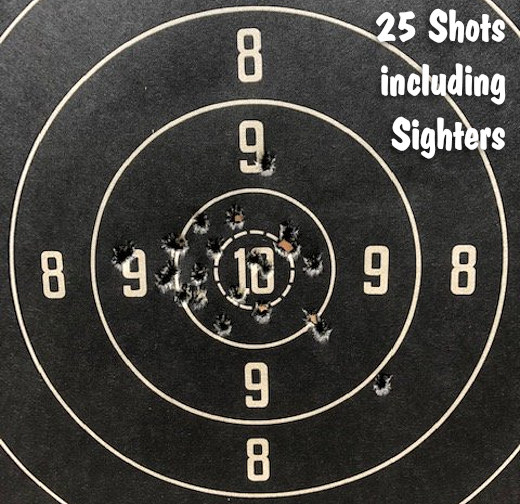
For his practice load, Tommy shot 123gr Hornady ELD-M bullets with H4831 powder and CCI BR2 primers. This load performed well — Tommy posted: “My 25-shot initial prone test today shows promise. There are five sighter shots, and 20 record shots. One of the 9s at 9 o’clock is my first sighter, the other one I own. The 8 out at 4 O’clock was a round that was difficult to chamber. My initial scoring puts me somewhere in the vicinity of 193-7X.”
The target used is the NRA C2, “300M International Rifle Target, reduced for 200 yards”. The 10 Ring is 2.40″ in diameter, while the Inner 10 (X-Ring) is 1.24″.
Match Load — Varget and Nosler Bullets
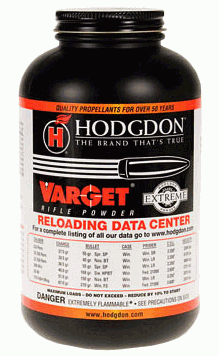
For his match load, Tommy switched to Varget and Nosler bullets: “My match load uses 37.9 grains Hodgdon Varget with a Nosler 123gr bullet. This was a recommendation by a gentleman with a lot of experience in 300M shooting.”
Tommy adds: “The amount of knowledge gained via the AccurateShooter Forum has made this all a reality, instead of just a passing thought.”
While 100/200 yard benchrest competitors have been drilling tiny groups at the Kelbly Super Shoot this week, other folks, with MUCH bigger rifles, have been shooting at very long range in Raton, New Mexico.
This week the NRA Whittington Center at Raton hosts the Fifty Caliber Shooting Association (FCSA) annual Extreme Long Range (ELR) Record Match. Some of the most talented long-range shooters on the planet are there, including past King of Two Miles Derek Rodgers, along with his Team Global Precision team-mates Mark Lonsdale and Paul Phillips.
Here is Mark preparing to shoot on the first day of the FCSA 1.5 Mile ELR Match with Paul and Derek spotting and calling wind. The cold bore 10″ gong was at 1,040 yards and all three men nailed it. From there the six steel targets ranged from 1,180 yards, up the side of the mountains, to over 2,600 yards.
Site of Day 1 for the FCSA ELR match at Raton, NM. Targets at 2,300, 2,585, and 2,725 yards. Weather cleared up but wind was brutal.
After Day 1 of the FCSA 1.5 Mile ELR match, Derek was in 2nd place, Mark in 3rd, and Paul in 5th. Mark reported: “Today we had winds gusting well over 15 mph from 6 o’clock, but as they hit the base of the mountains, they created an updraft that caused shots out past 2,000 yards to go high. But just when you had that wind doped, it would switch to a gusting 9 o’clock (left to right) pushing bullets 20 feet to the right. A very challenging day but good practice for Ko2M next month.”
These gents are shooting big rigs with jumbo-sized cartridges. Mark is campaigning a .416 Barrett with Cutting Edge Bullets. Below is his ELR rifle, which features jumbo BAT action, Bartlein barrel (with brake), McMillan stock, and Nightforce scope. Mark posted: “Getting the .416 Barrett ready to shoot in the FCSA 1.5 Mile ELR Match. Weather is definitely warmer than yesterday’s match but wind is howling today.”
TECH TIP — Barrel Life in the ELR Game
Mark Lonsdale posted this interesting commentary on barrel life in the ELR game: “How long a barrel lasts has a lot to do with how hot you run your loads and resultant chamber pressures, but it can also be poor cleaning technique. That said, if you are into ELR or long range precision shooting, and you shoot a lot, you need to think of match-grade barrels as a consumable item — just like the tires on your car. You change your tires when they show excessive wear, so you change your barrel when the accuracy drops off. Similarly, you buy tires that best suit your needs, street or off-road, so you buy a barrel that meets your requirements for weight, accuracy and muzzle velocity.”
“Accuracy is also subjective based on the needs of the shooter. Hunting big game does not require the same pin-point accuracy as long range varmint hunting, and having fun at local club matches does not require the same accuracy as aspiring to be a national champion. With accuracy comes cost, but when compared to the cost of ELR ammo in .338, .375 or .416, a new barrel is actually an affordable consumable. Just remember, ‘the only good rifle is an accurate rifle’.”





 Upstate New York heats up in the summer with the largest field target event in the country — the Crosman All-American Field Target Championship (CAAFTC). This very popular airgun event takes place June 21-23, 2019 in upstate New Yorkat the Rochester Brooks International Skeet and Trap Club in Rush, New York. 0ver 100 air rifle and air pistol competitors will participate in the big event hosted by Crosman. This event attracts top Airgunners from across the nation (and some foreign countries). Along with regular Field Target matches, there will be specialty side matches, plus a factory tour. The event is free to the public.If you are a Field Target Shooter and want to attend, don’t hesitate — registration closes soon.



 The
The 
 Metallic Silhouette — A Mexican Import
 Before Steel There Was… Barbeque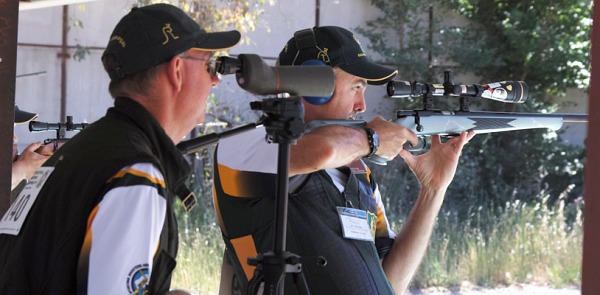


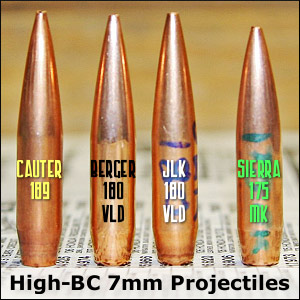 7mm (.284) remains the caliber to beat in F-Class Open Division (though some shooters have had success with .30-Cal short magnums.) With a standard .284 Winchester, or better yet, a .284 Improved, you can drive the high-BC Berger 180gr and 184gr bullets to competitive velocities.


 Match Load — Varget and Nosler Bullets


 After Day 1 of the FCSA 1.5 Mile ELR match, Derek was in 2nd place, Mark in 3rd, and Paul in 5th. Mark reported: “Today we had winds gusting well over 15 mph from 6 o’clock, but as they hit the base of the mountains, they created an updraft that caused shots out past 2,000 yards to go high. But just when you had that wind doped, it would switch to a gusting 9 o’clock (left to right) pushing bullets 20 feet to the right. A very challenging day but good practice for Ko2M next month.”


