Moving into the second day of the Long-Range National Championships, five shooters are clustered at the front with equal scores of 598 points. Leading the way, based on X-count, is our friend and Forum member John Whidden (598-36X). Just three Xs back with 598-33X is Bryan Litz, Berger’s Chief Bullet Designer and Ballistician. We’re pleased to see Forum member John Friguglietti, aka Mudcat, ranked fourth. Among the top ten, in the preliminary standings, are shooters from international squads. It’s good to see foreign competitors on the firing line at Perry this year.
It’s no surprise that John Whidden is leading the way. He’s won the Long Range Championship before, and he finished in second place last year. In the past John has campaigned a .243 Winchester in the Long-Range Nationals. This chambering has a reputation for short barrel life, but as John explained: “When the National Championship’s at stake, I can afford to use a fresh barrel for the match. If the .243 offers the right combination of accuracy, low recoil, and performance in the wind, I’m not that concerned about barrel life.”
The 2012 National Rifle and Pistol Championships begin July 9 at Camp Perry in Port Clinton, Ohio. A tradition at Camp Perry since 1907, the championships are divided into five separate phases: Pistol, Smallbore 3-Position, Smallbore Prone, High Power and Long Range.
The National Matches begin in early July with the First Shot Ceremony and conclude in August with the Long Range High Power Championship. This year, Nosler returns as title sponsor for the High Power Rifle Championships. NRA President David A. Keene said “The NRA, CMP and the Ohio National Guard work together and will continue to do so to make the National Championships the most prestigious matches in the world.
The 2012 National Championships calendar is as follows:
July 9: First Shot Ceremony
July 10-14: NRA National Pistol Championships
July 18-21: NRA National Smallbore Rifle Position Championships
July 22-26: NRA National Smallbore Rifle Prone Championships
August 5: NRA/Springfield M1A Match
August 6-10: NRA National High Power Rifle Championships
August 11-15: NRA Long Range Championship
You can follow the 2012 Championships with profiles, photos and scoring updates at www.nrablog.com. For more on the National Rifle and Pistol Championships at Camp Perry visit www.nrahq.org/compete or call 1-877-672-6282. On the Online Registration page, you can enter the various competitions. To enter the NRA/M1A Springfield match, please use the NRA High Power Rifle Championship option.
This video by Mark Dalzell demonstrates the long-range capabilities of the Savage 110 BA chambered in .338 Lapua Magnum. Mark took his “BadAss” rig out to the southwest Nevada desert just north of Jean Dry Lakes. He placed a 2’x3′ target way, way out there — a full mile (1760 yards) away. At that range, flight time to target was 3.75 seconds! Sighting with a Nightforce 5-22x50mm NXS scope, Mark needed a few shots to get on target, but eventually made multiple hits, using 67 MOA of elevation and 2.25 MOA left windage. You can view the hits starting at 1:56 time-mark on the video. (Mark had a second camera set up closer to the target — this displays frame in frame in the video, and if you watch carefully you can see the strikes.) The ammo was HSM 250gr HPBT match with a 3.600″ COAL. The shooting was done at 8:13 in the morning, with clear conditions, very light winds. Temp was 57°, humidity 24.5, Density Altitude 3666. Video soundtrack is La Grange by ZZ Top.
— CLICK to hear Mark Dalzell TALK about his .338 LM Savage 110 BA and how he scored hits at 1760 yards.
Good Shooting Mark. That’s darn good for a factory rifle. You also had the elevation dialed in real close before the firing started! That shows a good knowledge of your ammo’s long-range ballistics. We also noticed how effective that muzzle brake was. Recoil looked about the same as an un-braked .308 Win.
You have to love a gun company CEO who actually gets behind the trigger. In this “behind the scenes” video made during the filming of a Savage Arms commercial in Utah, Team Savage Captain Stan Pate guides Savage CEO Ron Coburn in the use of the Savage Palma rifle chambered in .308 Winchester. Despite the somewhat wobbly shooting platform, Ron successfully hits targets at 1200 yards. Ron comes away smiling, as do members of the film crew who get “trigger time” at the end of the video.
The video has a very positive vibe and does a great job illustrating why it’s fun to shoot accurate rifles at long range. Hat’s off to Savage for putting its CEO behind the trigger. We love Stan Pate’s closing line. With a big grin, he says that the Savage rifle’s accuracy makes long-range shooting “So easy — even the Boss can do it“.
Successful long-range shooters know that careful weighing of powder charges helps them achieve superior long-range accuracy. By maintaining powder charges within very narrow weight tolerances, hand-loaders can produce ammo with more consistent muzzle velocities from shot to shot. Low Extreme Spread (ES) and Standard Deviation (SD) numbers translate directly to reduced vertical dispersion at very long ranges (although velocity is not the only contributing factor to vertical spread). In pursuit of load weight uniformity, many of our top long-range aces have invested in the latest, high-tech magnetic force restoration (MFR) digital scales (such as the Sartorius GD503). These laboratory-grade MFR scales are extremely stable (with minimal drift) and they can reliably measure to .005 grain, that is five thousandths of a grain. That is less than the weight of one kernel of typical extruded powder. For example, with Varget, there are three to four kernels in one-tenth of one grain of Varget. That means each kernel weighs .025 to .035 grains.
With the capability of modern modern MFR scales to measure less than one-hundreth of a grain, we have a new frontier in precision reloading. You’ll note, in the preceding paragraph, we said that one-tenth of one grain of Varget is three or four kernels. Well, “which is it?” you might ask. The answer is that it might be three, or it might be four, depending on the size of the individual kernels. That’s a disturbing uncertainty that we simply had to accept… until now.
Powder Kernel Uniforming — A Breakthrough
We now have the tools and the methodology to resolve the inherent uncertainty in individual kernel weight. Using the new technique of powder kernel uniforming, first pioneered by German Salazar, we can now, for the first time, ensure that every kernel of powder that goes into a cartridge is virtually the same weight — the same, in fact, within 0.01 grain (one-hundredth of a grain) TOTAL spread.
For a reloader looking to achieve “perfect” load weight uniformity, powder kernel uniforming offers the ultimate control over powder weight. The method we devised to uniform individual kernels consists of kernel core-drilling. The propellant we chose for this kernel-uniforming test was a new prototype (not yet commercially available) EuroChemie RL “X” propellant. This was chosen because it offered relatively large, can-shaped kernels that could be drilled relatively easily.
Core-Drilling Kernels with Micro Drill-Bits
The center of each kernel was bored out with a micro-drill. But here’s the key. Before drilling, we first weighed each kernel. Then we selected a micro drill bit of appropriate diameter to achieve uniform weights. With the heavier kernels (in the 0.04 gr range) we used a larger micro-bit. With the lighter kernels (in the 0.02 range), we selected a smaller diameter micro-bit that removed less material from the center of the kernel. Obviously, many kernels were ruined while we perfected the drilling process. It required great patience and a very steady hand. But after a few dozen hours of drilling, we had a batch of uniformed kernels that were all within plus or minus .005 grains (.01 grain ES). Now we were ready to do some testing.
Proof That It Works
All this time-consuming work to drill holes in individual kernels would be pointless, of course, if it did not produce meaningful accuracy gains. The proof, as they say, is “on the target”. We were curious to see if our uniformed powder kernels would out-perform unmodified kernels, so we did some field testing. We prepared two batches of 6mmBR ammo in Lapua brass, with full case prep, and bullet base to ogive sorting (we wanted to eliminate as many variables as possible). Bullets were Lapua 105gr Scenar Ls, which proved to be some of the most consistent projectiles we’ve ever measured.
One set of rounds was loaded with a carefully-weighed charge of unmodified kernels. Case to case charge weight was held to .05 grain (half a tenth uniformity). Then we prepared a second batch of cartridges with uniformed kernels, using the exact same charge weight, also held to .05 grain (half a tenth) tolerances. We took these rounds to the range, and did a “round-robin” test at 800 yards, shooting one of each type in sequence (i.e. one uniformed on right, then one non-uniformed on left) until we had two 10-round groups. The test was done with a rail gun fitted with a 1:8″ twist, 28″ Krieger 0.236″ land barrel. The uniformed-kernel ammo was shot at the right diamond, while the non-uniformed rounds were shot at the left diamond. Conditions were good, so we simply “held center” on every shot. No attempt was made to correct for wind as our primary concern was vertical dispersion.
Ammo with Uniformed Kernels Shows Significantly Less Vertical Dispersion at Long Range
As you can see, the uniformed-kernel ammo out-performed the non-uniformed ammo. The difference is quite clear. The rounds with non-uniformed kernels (on the left) produced a 10-shot group with roughly 3.0 inches of vertical dispersion. On the right, our ammo with uniformed kernels produced a group with 9 of 10 shots showing roughly 1.75 inches of vertical dispersion (we did have one high flier among the uniformed-kernel rounds). Additionally, we had a lower 10-shot ES and SD with the uniformed-kernel ammo. We repeated this test two more times and the results were similar. The targets speak for themselves. If you are looking for ultimate long-range accuracy, powder kernel uniforming is a “new frontier” you may wish to explore. With all other factors held constant, we were able to reduce vertical dispersion by more than an inch at 800 yards by drill-uniforming our NitroChemie powder. That’s huge in the long-range game.
Yes, the kernel-uniforming process is incredibly time-consuming and tedious, and a set of micro-drills is not cheap. We also freely acknowledge that the process may be much less productive with narrow-kernel propellants that are hard to drill. (Also EuroChemie powders are preferred because the burn rate controlling compounds are impregnated throughout the entire kernel — not just the outside.) But the potential for significant accuracy gains is there. We proved that.
Is it worth the huge investment of time to drill your powder kernels? That’s a question each reader must ask himself. But if you know the competitor on the next bench over has uniformed his kernels, can you afford not to do the same? Sometimes the extra effort is worth it, just for the peace of mind you get knowing you’ve done everything possible to achieve “ultimate accuracy”.
If you want to learn how to shoot accurately at very long-range, one of the very best places to learn is the Williamsport 1000-Yard Benchrest School. The Fifth Annual Benchrest School will be held April 27, 28 and 29 this year. There are still a few slots available for this year’s sessions. Classes, taught by top 1K shooters, are held at the Original Pennsylvania 1000-Yard Benchrest Club Range, one of the best 1K ranges in the country.
Prospective students will be taught all aspects of long range benchrest shooting from some of the most skilled marksmen in the country. All areas are covered from load development, precision reloading, bench skills, and target analysis. Much time is spent at the loading bench and on the firing line.
If you’re interested, you need to contact the school directors right away. While these Benchrest schools typically sell out, as of 3/24/2012, there were still a few student slots available for the late-April class session. If you want to grab one of the remaining slots for the 3-day school, don’t hesitate. For more information or to sign up for the 2011 1000-Yard Benchrest Class this April, contact School Director Frank Grappone, or visit the Williamsport website, PA1000yard.com.
To see what the 1K Benchrest school is like, watch the slide show/video below, produced by Sebastian Reist, an alumnus of the 2009 Williamsport 1000-yard BR school. Sebastian, a talented professional photographer, captured the highlights of his Williamsport 1K training weekend:
This year at the Deep Creek Rifle Range, near Missoula, Montana, the All National Guard Team conducted two very popular (and effective) marksmanship clinics. First, in the spring, All Guard Team members ran an Across the Course (XTC) clinic with individual instruction and live fire at the 200, 300 and 600 yards. Instruction covered shooting positions and techniques /strategy for the various distances involved in XTC matches.
This fall, in conjunction with the sold-out Long Range and F-Class Regional, the All National Guard Team held a long range clinic — which was sold-out as well. In attendance were competitive shooters, Army National Guard sniper teams ,and long-range hunters. With over 50 civilian and military shooters present, the program included basic instruction followed by coached shooting at the 800-yard and 1000-yard lines. Before the shooting began, instructors explained the positions used in sling shooting and F-Class, and also explained the hardware competitors need for these disciplines. The clinic continued with discussions of ballistics and wind reading strategies. For the live-fire portion of the clinic, students were grouped into pairs, with one All Guard Team member assigned to each pair. This worked well — while one student was shooting the other could observe the coach’s instructions.
The All Guard Team provides this service as part of its mission to improve marksmanship among the civilian population. The Remington-Bushmaster Team headed by Ken Roxburgh, and the USMC Rifle Team, can also provide instruction for shooting clinics.
The NRA National Long Range Championship commenced Saturday, August 13 with the Band of Brothers Trophy Match followed by the Mustin Trophy Match. All Long Range matches are shot from the prone position from ranges between 800 and 1,000 yards. The Band of Brothers Match course of fire was twenty shots at 1,000 yards. Saturday’s second event, the Mustin Match, was also shot slow fire in the prone position from 1,000 yards. Mustin competitors have more time than during the High Power Championships, being allotted 30 minutes to get off their 20 shots for record on the Long Range targets.
Whidden Leads LR Championship, Not Dropping a Point So Far
Last year John Whidden won the Mustin Match with a 198-11X and a shoot off score of 100-8X. Whidden won again this year, shooting 200-9X to edge David Tubb by two Xs. With his Mustin win, and his second-place showing in this year’s Band of Brothers Match, Whidden is leading the 2011 Long Range Championship so far, not dropping a point in either event. Listed below are initial results:
Band of Brothers Trophy Match
1. Lance Dement, 200-14X
2. John Whidden, 200-14X
3. Tyrel Cooper, 200-13X
4. Phillip Crowe, 200-12X
5. Justin Skaret, 200-12X
Mustin Trophy Match
1. John Whidden, 200-9X
2. David Tubb, 200-7X
3. Norman Houle, 199-12X
4. Rodrigo Rosa, 199-11X
5. Sherri Gallagher, 199-11X
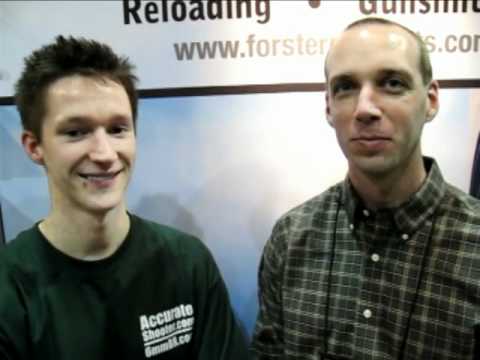
While visiting the Forster Products booth at SHOT Show yesterday, we had a chance to chat with three-time National High Power Long Range Champion John Whidden. John was his amiable self as usual, sharing his match-winning experience with Kelly Bachand, a young .308 Palma shooter. John and Kelly are squadded together on the U.S. National Team that will be going to Australia for the World Full-bore Championship later this year.
John shared his thoughts on shooting the .243 Win in competition and he also discussed the advantages of a V-Block system in a prone rifle. With a good V-Block you can use the same stock with different barreled action. You can even change between centerfire and rimfire in the same gun. John uses V-Blocks in his own rifles, and Whidden Gunworks makes V-Blocks for Remington, Rem Clone, and Savage Actions.
A new NRA record in the team Palma event was set yesterday at Camp Perry by the Litz-Gallagher team. The new record of 1796-119X was set by Brian Litz (Captain and Shooter), Michelle Gallagher (Coach and shooter), Nancy Tompkins (Coach and shooter), Bob Gustin (shooter). Shooting the Palma course of fire at 800, 900, and 1000 yards, these four beat the 1796-112X mark set in July at Raton, NM by an all-female ‘dream team’ of shooters coached by Steve Conico. (Both Michelle Gallagher and her mother Nancy Tompkins were member of the Raton ‘Dream Team’). Bryan Litz reports: “At Perry, Michelle and Nancy did an outstanding job shooting, and coaching Bob and myself to very high scores especially at the 1000-yard-line where the conditions were extremely difficult.”
Team member Bob Gustin also won the Individual Palma match with a 450-33X, not dropping a point. That’s remarkable considering Bob shoots right-handed while sighting with his left eye through off-set rear and front sights. Congrats to Bob and all the team members. Bryan Litz won’t take any time off after his team’s record-breaking performance. Bryan reports: “I’m on my way to Canada now for the America Match this Sunday — a bi-annual international fullbore match.” Good luck Bryan.


 Moving into the second day of the Long-Range National Championships, five shooters are clustered at the front with equal scores of 598 points. Leading the way, based on X-count, is our friend and Forum member John Whidden (598-36X). Just three Xs back with 598-33X is Bryan Litz, Berger’s Chief Bullet Designer and Ballistician. We’re pleased to see Forum member John Friguglietti, aka Mudcat, ranked fourth. Among the top ten, in the preliminary standings, are shooters from international squads. It’s good to see foreign competitors on the firing line at Perry this year.
 The 2012 National Rifle and Pistol Championships begin July 9 at Camp Perry in Port Clinton, Ohio. A tradition at Camp Perry since 1907, the championships are divided into five separate phases: Pistol, Smallbore 3-Position, Smallbore Prone, High Power and Long Range.

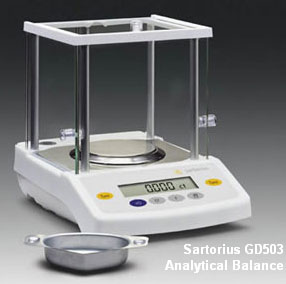 Successful long-range shooters know that careful weighing of powder charges helps them achieve superior long-range accuracy. By maintaining powder charges within very narrow weight tolerances, hand-loaders can produce ammo with more consistent muzzle velocities from shot to shot. Low Extreme Spread (ES) and Standard Deviation (SD) numbers translate directly to reduced vertical dispersion at very long ranges (although velocity is not the only contributing factor to vertical spread). In pursuit of load weight uniformity, many of our top long-range aces have invested in the latest, high-tech
  For a reloader looking to achieve “perfect” load weight uniformity, powder kernel uniforming offers the ultimate control over powder weight. The method we devised to uniform individual kernels consists of kernel core-drilling. The propellant we chose for this kernel-uniforming test was a new prototype (not yet commercially available) EuroChemie RL “X” propellant. This was chosen because it offered relatively large, can-shaped kernels that could be drilled relatively easily.
 Core-Drilling Kernels with Micro Drill-Bits
 Proof That It Works
 If you want to learn how to shoot accurately at very long-range, one of the very best places to learn is the