Christmas is coming soon. Books have always been popular holiday gifts. If you haven’t completed your holiday shopping, here are some recommended titles that should please the serious shooters and firearms enthusiasts on your shopping list. For shooting clubs, books also make great end-of-season member awards. Most of us would rather have a useful book than one more piece of wood to toss in a box in the closet.
Here Are TEN BOOKS Recommended for Serious Shooters:
Glen Zediker’s latest book, Top-Grade Ammo, is a great resource for all hand-loaders — beginners through advanced. This 314-page guide covers every aspect of the reloading process — component sorting, priming, sizing, bullet seating and more. With 430 photos, Top-Grade Ammo is a richly-illustrated, step-by-step guide to producing high-quality handloads. Unlike many reloading books, Top-Grade Ammo is current and up-to-date, so it covers modern practices and the latest precision reloading tools. While Zediker focuses on producing match-grade ammo for competition, this book will also help novice reloaders on a budget. This book features a special “lay-flat” binding so it’s easy to use as a benchtop reference. To view Chapter List and sample pages visit ZedikerPublishing.com.
If you’re a serious long-range shooter, consider adding this book to your library. Relying on extensive ballistics testing, Modern Advancements contains some fascinating research results, including the effects of twist rate on muzzle velocity, BC, and precision. Other sections detail the evolution of modern rifle, bullet, and optics designs. And there is an important comparison test of chronographs. Laser rangefinders and wind measurement devices are explained in detail by contributing author Nick Vitalbo. This book is a valuable resource for anyone who wants to understand the current “state of the art” in today’s shooting world. There is a ton of “hard science” in this book — not just opinions.
Thinking of getting started in the Practical/Tactical shooting game? Looking for ways to be more stable when shooting from unconventional positions? Then you may want to read Marcus Blanchard’s Practical Shooter’s Guide (A How-To Approach for Unconventional Firing Positions and Training). Unlike almost every “how to shoot” book on the market, Blanchard’s work focuses on the shooting skills and positions you need to succeed in PRS matches and similar tactical competitions. Blanchard provides clear advice on shooting from barricades, from roof-tops, from steep angles. Blanchard says you need to train for these types of challenges: “I believe the largest factor in the improvement of the average shooter isn’t necessarily the gear; it’s the way the shooter approaches obstacles and how they properly train for them.”
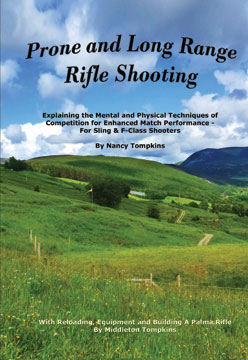
Nancy Tompkins is one of the greatest long-range shooters in American history. She has won five National Long-range Championships. Tompkins’ treatise is a must-read for serious Palma, F-Class, and High Power shooters. The revised Second edition includes F-Class equipment and techniques, and newly updated information. Color pictures. Topics include Mental & Physical training, Reading Wind & Mirage Shooting Fundamentals, International Competition, and Loading for Long Range. Nancy Tompkins is a 4-time winner of the National Long Range Championships, and has won countless other major events. Nancy has been on six Palma Teams (as both a shooter and a coach).
Ryan Cleckner is noted for his ability to explain complex topics in an easy-to-comprehend manner. Now Cleckner has authored a book, the Long Range Shooting Handbook, which expands on the topics covered in Cleckner’s popular NSSF video series. The Long Range Shooting Handbook is divided into three main categories: What It Is/How It Works, Fundamentals, and How to Use It. “What It Is/How It Works” covers equipment, terminology, and basic principles. “Fundamentals” covers the theory of long range shooting. “How to Use It” gives practical advice on implementing what you’ve learned, so you can progress as a skilled, long range shooter. You can view Sample Chapters from Ryan’s Book on Amazon.com.
Tony Boyer, the most successful shooter in the history of short-range benchrest competition, shares many of his match-winning tips in this 323-page book. The book covers all aspect of the benchrest discipline: loading, windflags, rest set-up, addressing the rifle, and match strategies. This is a high-quality publication, filled with valuable insights. Every serious benchrest shooter should read Tony’s book. Boyer has dominated registered benchrest in a fashion that will never be duplicated, having amassed 142 U.S. Benchrest Hall of Fame points. The next closest shooter, Allie Euber, has 47 Hall of Fame points. This handsome, full-color book is 323 pages long, with color photos or color illustrations on nearly every page.
This book should be on the shelf of every short-range benchrest shooter. (Shooters in other disciplines will find the book helpful as well.) Butch Lambert says Mike’s book is “far and away the best Benchrest book written. Very comprehensive, it touches on every aspect of our game.” Mike’s 368-page book is dedicated to getting the most from modern rifle accuracy equipment with an emphasis on shooting 100-200-300 yard group benchrest tournaments. This book covers the most popular hardware plus new equipment offerings are covered, including external mount scopes, actions, triggers, stocks, wind flags, and more. Also covered are rifle handling techniques, note taking, tuning, bullet selection, goals, and match strategies. Mike provides many tips that will help active competitors update their own competitive program.
This book by 11-time National High Power Champion David Tubb focuses on position shooting and High Power disciplines. Section One covers fundamentals: position points, natural point of aim, breathing, triggering mechanics and follow-through, sling selection and use, getting started, getting better, avoiding obstacles. Section Two covers mechanics of offhand, sitting, and prone positions. Section Three covers shooting skills, including wind reading and mental preparation. Section Four covers the technical side of shooting, with extensive disuctions of rifle design, load development, reloading barrel maintenance, and rifle fitting. We consider this book a “must-read” for any sling shooter, and there is plenty of good advice for F-Class shooters too.
Bullseye Mind (Mental Toughness for Sport Shooting) by Dr. Raymond Prior, $14.00 (Softcover).
Having a Bullseye Mind means thinking in ways that create confidence and consistency, even under pressure. A “must-read” for competitive shooters, Bullseye Mind is a mental training book written specifically for the shooting sports. The book is well-organized, with handy highlighted lists and key “talking points”. Each chapter concludes with examples from a world-class shooters such as: Matt Emmons, 2004 Olympic Gold Medalist; Vincent Hancock, 2-time Olympic Gold Medalist; Jamie Corkish, 2012 Olympic Gold Medalist; Petra Zublasing, 2014 World Champion/ISSF Shooter of the Year; and Nicco Campriani, 2012 Olympic Gold Medalist, 2010 World Champion. This book has earned rave reviews from competitive shooters who found it really helped their “Mental Game”. One recent purchaser states: “This book is as though you had a coach in your back pocket…”
Cartridges of the World (15th Edition, 2016), belongs in every serious gun guy’s library. This massive 680-page reference contains illustrations and basic load data for over 1500 cartridges. If you load for a wide variety of cartridges, or are a cartridge collector, this book is a “must-have” resource. The latest edition includes 50 new cartridges and boasts 1500+ photos. The 15th Edition of Cartridges of the World includes cartridge specs, plus tech articles on Cartridge identification, SAAMI guidelines, wildcatting, and new cartridge design trends. In scope and level of detail, Cartridges of the World is the most complete cartridge reference guide in print. Cartridges of the World now includes a 64-page full-color section with feature articles.
For some applications, we prefer a non-bushing FL die over a bushing die. Shown here are three Forster full-length sizing dies, with necks honed to three different dimensions: 0.265″, 0.266″, and 0.267″.
The Honed Full-Length Sizing Die Option
There are many good options in full-length (FL) sizing dies. Most precision hand-loaders prefer FL dies with neck bushings. These let you adjust the “grip” on your bullet by using larger or smaller bushings. FL bushing dies are available from Whidden Gunworks, Forster, Redding and other makers.
Conventional, non-bushing full-length sizing dies can create ultra-accurate ammo with very low run-out. But many conventional non-bushing FL dies have an undersized neck diameter so you end up with excess neck tension, and you work the brass excessively.
There is another effective option, one that promises extremely low run-out. The honed FL die is a full-length sizing die that has the necked honed to provide a precise fit to the case-neck. When done right, honed FL dies produce extremely straight ammo — as there are no issues with bushing alignment (or bushings that are not perfectly concentric). This Editor owns honed dies from Forster, Redding, and Whidden. They all perform extremely well, delivering match ammunition with extremely low run-out measured with a 21st Century Concentricity Gauge.
In one of the most popular articles we’ve ever published, Bugholes from Bipod, California shooter “Froggy” explained why he prefers honed dies for his tactical ammo.
Q: Do you FL size every time? Do you use custom dies?
Absolutely, I full length resize all of my brass every time I reload. And guess what? I’ve never had a feeding problem.
I do use a modified sizing die, without bushings. My FL resizing die has been custom-honed in the neck area to give .0015″ press fit on the bullet. I also put a slightly larger radius at the neck shoulder junction. I feel that this helps to seal the chamber. With this die, I get consistent neck tension every time–without bushings. Bushings are useful when you’re fishing around for a good load. But once you find the right amount of sizing for ideal neck tension, you can do this better with a customized FL die.
6.5 Guys Review Forster Honed Full-length Dies
The 6.5 Guys recently reviewed honed FL sizing dies from Forster, explaining the pros and cons of this type of reloading die. They explained that, if you load a wide variety of bullets from different manufacturers, you many want to stick with a Bushing FL die. However, if you have settled on a particular bullet and found the “ideal” neck tension, then a honed die may make sense.
In this Gear Update, the 6.5 Guys discuss a service offered by Forster Products to custom hone the neck diameter of its full-length sizing dies to the customer’s specifications (to the thousandth). Whidden Gunworks also offers custom-honed FL dies.
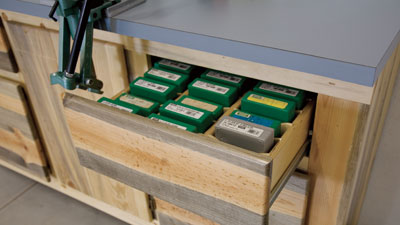
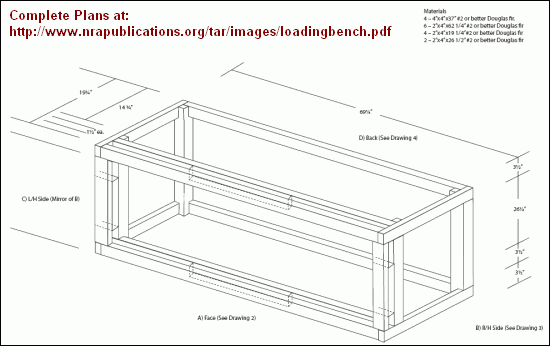
A while back, the American Rifleman magazine published an excellent article showing how to construct a rock-solid Reloading Bench. This bench is very well-designed, with many deluxe features, such as an upper drawer with fitted slots for die boxes, and large lower drawers with 100-lb rated slides to store heavy materials or tools. If you have good wood-working skills this would be an excellent project. You can download a detailed set of Bench Blueprints showing all dimensions and listing all needed materials.
The author, Dave Campbell, offers good advice on building the bench top: “I ripped a sheet of 3/4″ AC plywood into two 24″ wide pieces and cut them to 72″ long. Then I glued them together to form a 72″ long, 1 1/24″ thick top. The trick here is to keep the edges smooth and flat so that the laminate will adhere properly and without voids. I chose a light grey laminate finish for the top because it’s easier to see what I am working on and keep clean. If you have never worked with laminate, remember it’s prudent to glue and rout the edges flush before gluing on the top. The top was attached to the carcass with eight steel L-shaped angle brackets and No. 10×1 1/4″ wood screws.”
At the request of our readers, we provide select “Deals of the Week”. Every Monday morning we offer our Best Bargain selections. Here are some of the best deals on firearms, hardware, reloading components, optics, and shooting accessories. Be aware that sale prices are subject to change, and once clearance inventory is sold, it’s gone for good. You snooze you lose.
1. Whittaker Guns — Howa 1500 Youth Model in 6.5 Grendel
Great “Bang for the Buck” — If you’re looking for a hunting rifle for your son or daughter, here’s a very good gun that’s light-weight and sized for youngsters. Right now the Howa Mini Action Youth Model in 6.5 Grendel is just $349.99 at Whittaker Guns. This special Youth model has a shorter stock with 12.5″ length of pull. Weighing under 5.7 pounds with 20″ barrel, this rifle is light enough for a boy or girl to carry easily. Factory hunting ammo is available from Federal, Hornady, and Alexander Arms.
2. MidwayUSA — 1500 Rounds Norma Tac-22 Ammo, $109.99
Check out those groups. That’s impressive accuracy at 50 yards. You’d expect to pay $10.00 or more per box for rimfire ammo that can shoot this well. But you can now get the Norma Tac-22 for the equivalent of $3.66 per box in this package deal — 1500 rounds in Ammo Can for $109.99. This works out to just 7 cents a round for very good .22 LR rimfire ammo — that’s a steal. NOTE: The target photos come from Champion Shooters Supply, which may have gotten an exceptional lot. This vendor tells us: “We have found this to run very well in Ruger rifles, handguns, and target pistols. These are 5-shot groups at 50 yards with an Anschutz 1913 rifle. This is an incredible value.”
3. Grafs.com — Caldwell Rock Front Rest, $119.99
The Caldwell Rock BR Front Rest is sturdy and stable. It ships with two front bags, a wide tri-lobe plus a conventional bag (shown above). The latter works quite well for rifles with narrow forearms — such as hunting rigs or ARs. This is a good option for a young shooter or someone getting started on a tight budget. We’ve used this rest on a varmint hunt and it worked well. Use the Mariner wheel for gross elevation changes and “fine tune” elevation by squeezing your rear sand bag. This same rest costs $139.61 at Amazon. Save $20.00 by purchasing through Grafs which also offers a single, flat $7.95 handling fee per order — no extra shipping charge. Purchase multiple items from Grafs.com and pay just one $7.95 fee.
4. Precision Reloading — Nosler Brass and Bullets 20-25% Off
Here’s a good sale at Precision Reloading. If you are looking for great pricing on Nosler-brand brass and bullets, save now — components are discounted 20-25%. Check out the great pricing on 250-bullet quantities. Here are some of the better deals:
Nosler .204-Cal 40gr B-Tip Varmint Bullet: $40.99 for 250ct (marked down from $51.99)
Nosler .243-Cal 107gr Match Bullet: $40.99 for 250ct (marked down from $51.99)
Nosler .284-Cal (7mm) 175gr Accubond Bullet: $39.99 for 100ct (marked down from $55.99)
Nosler .308-Cal 155gr Match Bullet: $199.99 for 1000ct (marked down from $256.99)
Nosler .308-Cal 190gr Match Bullet: $65.99 for 250ct (marked down from $83.99)
5. GunBuyer.com — S&W M&P 9mm M2.0, $419.00
Here’s a good deal on a very reliable, accurate full-size 9x19mm pistol — the Smith & Wesson M&P 9mm in handsome Flat Dark Earth finish. We like the distinctive color with contrasting matte black ambidextrous controls. This 9mm pistol is now on sale for $419.00. When we featured this same pistol in September, it proved very popular and sold out at the vendor. If you like it, you might want to act soon.
6. Bruno Shooters Supply — Halloween Sale through 10/31/2017
To mark Halloween, Bruno Shooters Supply is running a store-wide sale this Monday and Tuesday (through 10/31/2017 at 11:59 PM). There are notable savings on a wide range of products including powder, bullets, brass, primers and even premium-quality Krieger barrels. If you need reloading components, or a new barrel for your rifle, check out this sale — but don’t dawdle. Sale prices expire on Halloween Night, Tuesday, October 31st at 11:59 pm.
7. Amazon — Howard Leight Electronic Muffs, $39.00
Every shooter should own a pair of Electronic muffs, even if you prefer shooting with earplugs and/or standard muffs. Electronic muffs are great when you are doing spotting duties or are working near the firing line. They allow you to hear ordinary conversations while still providing vital hearing protection. Right now Amazon.com has the Howard Leight Impact Sport Electronic Muffs on sale for just $39.00, with free Prime Shipping. This is good deal — these NRR 22 muffs are currently Amazon’s #1 seller in the category.
8. CDNN Sports — Ruger 17 HMR American Compact, $269.99
This is a good little rifle in our favorite varmint chambering. With ballistics far superior to a .22 LR, the 17 HMR is ideal for prairie dogs and small varmints out to 180 yards or so. Now you can get a reliable, name brand 17 HMR rifle for a very attractive price. CDNN Sports is selling the 17 HMR Ruger American Rimfire Compact, with 18″ barrel, for just $269.99. That includes two (2) comb units and a FREE padded carry sling. FFL required.
9. Amazon — Mystery Deal of the Week, 37% Savings
This double-duty product safeguards your firearms during transport AND provides a comfortable foundation when shooting prone. With a solid 4.5-star rating (240+ reviews) this item has impressed rifle-owning purchasers. Right now this product is being offered for around $52.00, a bargain considering all it can do. This versatile product performs multiple tasks and would be well-suited for PRS competitors. If you read the reviews you’ll see that recent purchasers have been very happy: “Superb for the money”; “Very practical”; “Really nice and well-constructed”; “Heavy Duty and versatile”.
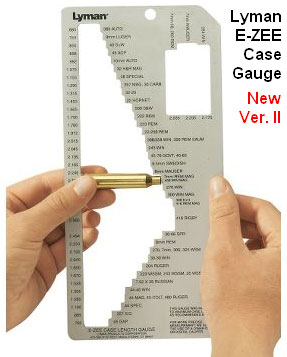
Lyman’s popular E-Zee Case Length Gauge is now bigger and better. The new version II of Lyman’s Case Gauge is much larger than the original version. The Case Gauge II now measures more than 70 cartridge types — way more than before. This tool is a metal template with SAAMI-max-length slots for various cartridge types, including relatively new cartridges such as the .204 Ruger and Winchester Short Magnums. This tool allows you to quickly sort brass or check the dimensions. If you have a bucketful of mixed pistol brass this can save you hours of tedious work with calipers. You can also quickly check case lengths to see if it’s time to trim your fired brass.
If you load a wide variety of calibers, or do a lot of pistol shooting, we think you should pick up one of these Lyman Case Gauge templates. They are available for under twenty bucks at Brownells ($18.99) and Amazon.com ($17.77). The E-Zee Case Gauge has long been a popular item for hand-loaders.
NOTE: For years the E-Zee Case Gauge had a silver finish with black lettering, as shown above. Some of the most recent production of E-Zee guages have a new “high contrast” look, with white lettering on a black frame. You may get either version when you order online (Brownells shows silver, Amazon shows black). We actually prefer the older version.
Case Gauge Should Last a Lifetime
Easily measure the case length of over 70 popular rifle and pistol cases with Lyman’s new E-Zee Case Length Gauge II. This really is a “must-have” piece of kit for any gun owner who hand-loads numerous pistol and rifle calibers.
This rugged, precisely-made metal gauge makes sorting or identifying cases fast and accurate. The template is machined with SAAMI max recommended case lengths. Made from metal, with no moving parts, the E-Zee Case Gauge II should last a lifetime.
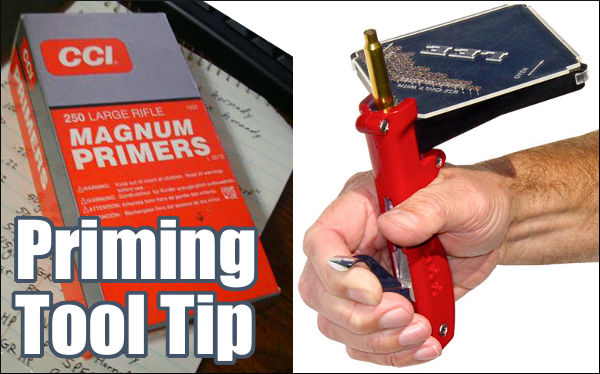
From time to time, we all encounter a primer that doesn’t go off. It’s normal to attribute the problem to a bad primer. But sometimes there are other explanations. George S., one of our Forum members, experienced a couple failures to fire, but he learned that the issue was his priming TOOL, not his primers. Here’s what George told us. There’s a lesson to be learned:
“I had issues with CCI 450s when I had my first 6BR barreled. I had probably three or four out of 20 rounds that failed to fire. the primers were dented but didn’t fire. I called CCI since I had bought a case of them. The tech was decent enough but had the audacity to tell me I was not seating the primers all the way in the pocket. I proceeded to let him know I had been reloading longer than he had been alive and I knew how to seat a primer.
Turns out that I did and I didn’t! I was using the RCBS primer tool I had used for years and the primers felt just fine to me. I finally decided to check the tool and since I had a new one I took the seating pins out and measured them. The seating pin on the tool I had been using for years was shorter by a few thousandths! I then used the pin from the new primer tool and darned if the primers that didn’t seat down to the bottom of the cup.
I switched to a K&M primer tool for seating the CCI primers and have not had a problem since. It was the combination of harder cup and lack of proper seating. I did call the CCI tech back and apologized for being an idiot.”
Another Forum member witnessed a problem cause by misuse of a priming tool: “I did … see a failure to fire on a Rem 9 1/2 primer only a week ago. That was in the new Rem muzzleloader that uses a primed case to ignite the pellets. After watching the muzzleloader’s owner seat his primers, I believe that it was operator error not the primer. He was seating the primer and then squeezing the priming tool so hard that his hands hurt after a few. We got that corrected.”
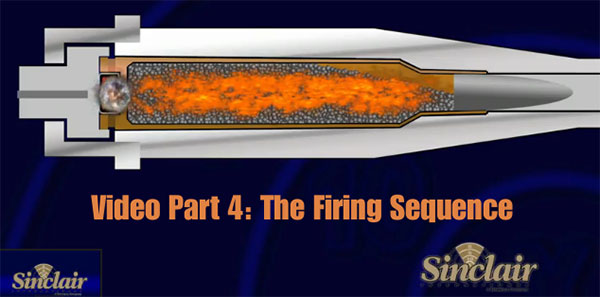
Sinclair International has produced an eight-part video series on metallic cartridge reloading, hosted by Sinclair’s former President Bill Gravatt. The entire series can be viewed (for free) via Sinclair’s YouTube Channel. While this set of videos starts with the basics, it covers many more advanced aspects of reloading as well. Accordingly, both novice and experienced reloaders can benefit from watching the eight videos. We think everyone should watch Video No. 2. Introduction to Reloading Safety, which provides guidelines for safe reloading practices.
Watch Firing Sequence Video
We also strongly recommend Video No. 4 to readers who are getting started in reloading. This “How Things Work” segment covers the sequence of events inside the chamber (and barrel) when the cartridge is fired. The video includes helpful graphics that show what happens to the primer, powder, cartridge, and bullet when the round is fired. The video also illustrates “headspace” and explains how this can change after firing. We think this video answers many common questions and will help reloaders understand the forces at work on their brass during the firing process.
At the request of our readers, we provide select “Deals of the Week”. Every Monday morning we offer our Best Bargain selections. Here are some of the best deals on firearms, hardware, reloading components, optics, and shooting accessories. Be aware that sale prices are subject to change, and once clearance inventory is sold, it’s gone for good. You snooze you lose.
This is a heck of a deal. Fine action, great stock, really great price. For comparison, Savage sells its similar 6.5 Creedmoor Model 10 GRS for $1449.00 MSRP (street price $1250.00). Frankly, we prefer the Howa 1500 action and trigger, though we like the versatility of the Savage barrel nut system. Hard to go wrong here with Bud’s Gun Shop’s $772.00 price. That’s for payment via money orders, checks, or echecks; credit card price is $795.16. Get $772.00 price HERE.
Rifleshooter.com published a FULL REVIEW of this rifle: “Precise — The Howa GRS was capable of sub-MOA 5-shot accuracy out of the box. Value — The street price on these guns is well below the cost of a custom rifle. This would be a great entry-level gun. Stock — The length-of-pull and cheek-piece adjustments on the GRS were fantastic. Stock was extremely comfortable in alternate positions.” READ Rifleshooter.com REVIEW HERE.
Howa 1500 GRS 6.5 Creedmoor Specifications
Howa 1500 Heavy Barreled Action with HACT 2-Stage Trigger
GRS Berserk Stock (Pillar bedded 15% fiberglass-reinforced Durethane)
Accepts Detachable Box Mags (with extra-cost accessory kit)
Push button adjustment for comb height and length-of-pull
2. Sportsman’s Guide: GSG .22 LR Sig-Clone Pistol, $199.99
Everyone should have a good .22 LR rimfire pistol. As an owner of a Sig P226 (9mm), this Editor smiled when I saw this German-made rimfire pistol. A virtual clone of Sig’s full-size P-series pistols, this polymer-framed rimfire gun offers excellent ergonomics. Priced at just $199.99 at Sportsman’s Guide, this GSG lets you practice your handgunning with low-cost .22 LR ammo. This suppressor-ready GSG FireFly features a 4″ barrel with threaded muzzle. Shown is the handsome Flat-Dark-Earth (Tan) finish. The same GSG is also offered in a matte black and olive drab finishes, but we like the tan best. Very nice offering for under $200.00. NOTE: Though this looks like an aluminum-framed Sig, the frame is polymer, like a Glock or HK.
3. Amazon — RCBS Rock Chucker Supreme Press, $112.49
We said this was a good deal when priced around $135.00. Well now the Rock Chucker is just $112.49 at Amazon — matching the lowest price we’ve seen in years. The RCBS Rock Chucker remains a classic — a big, strong, versatile press that can handle most reloading chores with ease. And now you can get a genuine Rock Chucker Supreme for $112.49 — an insanely great deal. The Rock Chucker offers plenty of leverage for case-sizing and the “O” is tall enough for long cartridges. The Rock Chucker has a very strong base and should last a lifetime.
4. Natchez — Leupold VX-6 Scopes Closeout, Save Hundreds
Natchez Shooters Supplies is running a big sale on Leupold VX-6 scopes. You can save hundreds of dollars on a wide variety of VX-6 optics, from 1-6x24mm up to 3-18x50mm models. If you are looking for a high-quality hunting optic at a great price check out these deals. For example, Leupold’s 2-12x42mm FireDot (Illum.) Duplex VX-6 scope is marked down from $1199.99 to just $749.99 — a $450.00 savings! Shown above are four hot deals, but a dozen Leupold VX-6 models on are sale now.
5. Amazon — Neiko Digital Calipers, $16.85
Even if you have a good set of calipers, you may want to get one of these Neiko 01407A Digital Calipers. The #1 best-selling digital caliper on Amazon.com, this Neiko tool features a large LCD Screen and measures up to 6.0 inches. With over 3000 customer reviews, this product has earned an overall rating of 4.4 out of 5 stars. It’s hard to go wrong for $16.85, even if you just use these as a spare set for measuring group sizes and case trim lengths.
6. Natchez — Surplus SKB 5041 Transport Cases, $129.99
Natchez has obtained a supply of British MOD Surplus SKB 5041 rifle cases. These were ordered as mine detector cases, but were never issued. Natchez has removed the foam cut for the detectors and replaced it with new 2-piece convoluted foam. Interior dimension of the case is 50″x14.5″x5″ so this will hold long-barrel match rifles comfortably. These are extremely high-quality cases, very tough and rugged, waterproof with gaskets. These cases feature four SKB patented trigger latches, four reinforced padlock locations, and inline wheels. Though in excellent condition, some case may have minor exterior scuffs. You won’t find a better case at anywhere near the price. These normally retail for $299.99.
7. Pro Precision Rifle — Bolt Fluting 30% Off
Pro Precision Rifles (PPR) is having a big sale during the month of October for bolt knob installations and bolt fluting on Remington bolts. During this promo you can get a bolt fluted for just $50.00. Likewise, installing a custom bolt knob is just $50.00. That’s one-third off both services. Bolt fluting is normally $75.00 as is bolt knob installation. So you can save $25.00 with either service. Your final price is $50.00 for each service + $7.50 return shipping (or $12.00 SH with insurance).
PPR’s owner tells us: “This pricing includes all my knobs, including the Two-Tone, that usually runs $10.00 more due to the extra machining required. Coated knob or polished knobs are no additional charge”. If you guys want to add a cool custom touch to your favorite bolt-gun, take advantaged of this October special by visiting www.boltfluting.com.
Guys, here’s just what you need (maybe) to convince the significant other to join you for a day at the range — a combo set of “high-fashion” ear muffs and ANSI-rated safety glasses. The comfortable, zebra-print muffs provide 21 dB of noise reduction (we recommend running plugs underneath them). The stylish, tortoise-shell pattern Bella Ballistica™ shooting eyewear has passed MIL-PRF-31013 ballistic tests and meets ANSI Z87+ high-velocity requirements with a chic designer appearance. The lady in your life just might appreciate the stylish eyewear and distinctive muffs, earning you “bonus points”. And she’ll never suspect you only spent seven bucks!
9. Amazon — Mystery Deal of the Week, Big Name Brand 40% Off
Here’s an excellent product from one of the most prestigious names in the Optics industry. You’ll be amazed at the quality of this product for the low $258.12 price. Honestly you’d expect to pay three times as much for a product like this, which has received five stars from 60% of verified buyers. Today’s selling price is a full 40% off the original third-party sale price. If you have a new hunting rifle build in progress, this could be exactly what you need to top off your new deer-slayer. CLICK HERE to view the Mystery Deal of the Week.
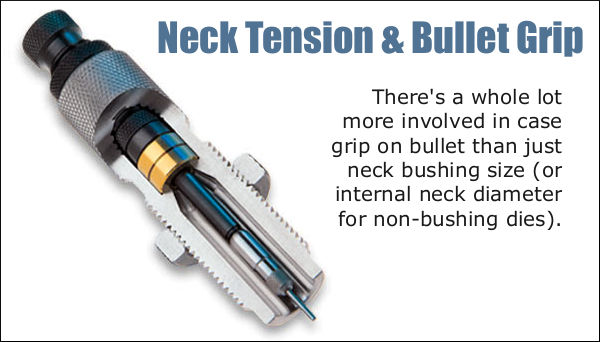
Many novice hand-loaders believe that neck bushing Inside Diameter (ID) size is the only important factor in neck tension. In fact, many different things will influence the grip on your bullet and its ability to release from the case neck. To learn the ins and outs of neck tension, take some time and read this article carefully.
Neck Tension (i.e. Grip on Bullets) Is a Complex Phenomenon
While we certainly have considerable control over neck tension by using tighter or looser bushings (with smaller or bigger Inside Diameters), bushing size is only one factor at work. It’s important to understand the multiple factors that can increase or decrease the resistance to bullet release. Think in terms of overall brass-on-bullet “grip” instead of just bushing size (or the internal neck diameter in non-bushing FL dies).
Bullet grip is affected by many things, such as:
1. Neck-wall thickness.
2. Amount of bullet bearing surface (shank) in the neck.
3. Surface condition inside of neck (residual carbon can act as a lubricant; ultrasonic cleaning makes necks “grabby”).
4. Length of neck (e.g. 6mmBR neck vs. 6mm Dasher).
5. Whether or not the bullets have an anti-friction coating.
6.The springiness of the brass (which is related to degree of work-hardening; number of firings etc.)
7. The bullet jacket material.
8. The outside diameter of the bullet and whether it has a pressure ridge.
9. Time duration between bullet seating and firing (necks can stiffen with time).
10. How often the brass is annealed.
11. Amount (length) of neck sized (e.g. you can size only half the neck).
12. Interior diameter of bushing, or neck section of non-bushing die.
— and there are others…
One needs to understand that bushing size isn’t the beginning and end of neck tension questions, because, even if bushing size is held constant, the amount of bullet “grip” can change dramatically as the condition of your brass changes. Bullet “grip” can also change if you alter your seating depth, and it can even change if you ultrasonically clean your cases.
In our Shooters’ Forum a reader recently asked: “How much neck tension should I use?” This prompted a Forum discussion in which other Forum members recommended a specific number based on their experience, such as .001″, .002″, or .003″. These numbers, as commonly used, correspond to the difference between case-neck OD after sizing and the neck OD of a loaded round, with bullet in place. In other words, the numbers refer to the nominal amount of interference fit (after sizing).
While these commonly-used “tension numbers” (of .001″, .002″ etc.) can be useful as starting points, neck tension is actually a fairly complex subject. The actual amount of “grip” on the bullet is a function of many factors, of which neck-OD reduction during sizing is just one. Understanding these many factors will help you maintain consistent neck tension as your brass “evolves” over the course of multiple reloadings.
Seating Depth Changes Can Increase or Decrease Grip on Bullet
You can do this simple experiment. Seat a boat-tail bullet in your sized neck with .150″ of bearing surface (shank) in the neck. Now remove the bullet with an impact hammer. Next, take another identical bullet and seat it with .300″ of bearing surface in another sized case (same bushing size/same nominal tension). You’ll find the deeper-seated bullet is gripped much harder.
Neck-Wall Thickness is Important Too
I have also found that thinner necks, particularly the very thin necks used by many PPC shooters, require more sizing to give equivalent “grip”. Again, do your own experiment. Seat a bullet in a case turned to .008″ neckwall thickness and sized down .003″. Now compare that to a case with .014″ neckwall thickness and sized down .0015″. You may find that the bullet in the thin necks actually pulls out easier, though it supposedly has more “neck tension”, if one were to consider bushing size alone.
In practical terms, because thick necks are less elastic than very thin necks, when you turn necks you may need to run tighter bushings to maintain the same amount of actual grip on the bullets (as compared to no-turn brass). Consequently, I suspect the guys using .0015″ “tension” on no-turn brass may be a lot closer to the guys using .003″ “tension” on turned necks than either group may realize.
Toward a Better Definition of Neck Tension
As a convenient short-cut, we tend to describe neck tension by bushing size alone. When a guy says, “I run .002 neck tension”, that normally means he is using a die/bushing that sizes the necks .002″ smaller than a loaded round. Well we know something about his post-sizing neck OD, but do we really have a reliable idea about how much force is required to release his bullets? Maybe not… This use of the term “neck tension” when we are really only describing the amount of neck diameter reduction with a die/bushing is really kind of incomplete.
My point here is that it is overly simplistic to ask, “should I load with .001 tension or .003?” In reality, an .001″ reduction (after springback) on a thick neck might provide MORE “grip” on a deep-seated bullet than an .003″ reduction on a very thin-walled neck holding a bullet with minimal bearing surface in the neck. Bushing ID is something we can easily measure and verify. We use bushing size as a descriptor of neck tension because it is convenient and because the other important factors are hard to quantify. But those factors shouldn’t be ignored if you want to maintain consistent neck tension for optimal accuracy.
Consistency and accuracy — that’s really what this all about isn’t it? We want to find the best neck tension for accuracy, and then maintain that amount of grip-on-bullet over time. To do that you need to look not only at your bushing size, but also at how your brass has changed (work-hardened) with time, and whether other variables (such as the amount of carbon in the neck) have changed. Ultimately, optimal neck tension must be ascertained experimentally. You have to go out and test empirically to see what works, in YOUR rifle, with YOUR bullets and YOUR brass. And you may have to change the nominal tension setting (i.e. bushing size) as your brass work-hardens or IF YOU CHANGE SEATING DEPTHS.
Remember that bushing size alone does not tell us all we need to know about the neck’s true “holding power” on a bullet, or the energy required for bullet release. True bullet grip is a more complicated phenomenon, one that is affected by numerous factors, some of which are very hard to quantify.
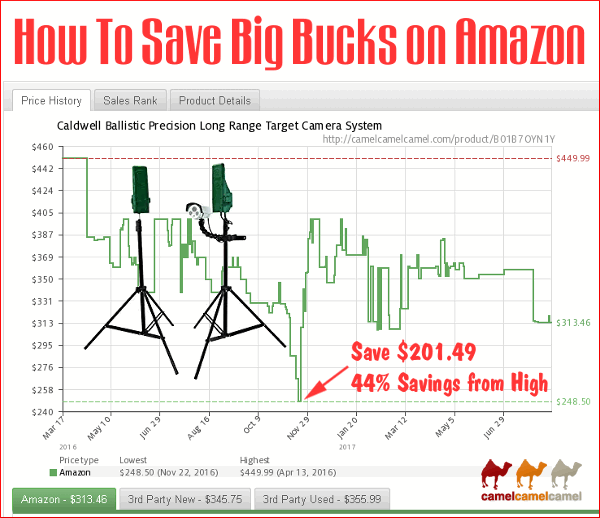
UPDATE: Some readers did not understand how to most effectively use this price-tracking service. They wondered: “What good does it do for me to know past prices?” Well you can set a price target, and CamelCamelCamel.com will email you (in the future) when the price has dropped to that level. That’s a powerful tool that WILL save you money!
Take the time to read this article and we bet you’ll save $100.00 or more this year. Honest. This article explains how to find the right time to buy a product from Amazon.com at a super-low price. Amazon price trend graphs, updated by the hour, show exactly when prices have been slashed on your favorite Amazon items. With this “insider info” you can save big — often 50% or more. This applies to everything Amazon sells — optics, reloading gear, tools, electronics, you name it.
Here’s how it works — find a product you want on Amazon.com. Then go to CamelCamelCamel.com and enter the product in the search field. Usually the product name is enough, but you can also enter the Amazon URL. When the product appears in the search results, click on the product name. Then a chart will appear that shows the price trends for a given time period (All Time, 1 Year, 6 Months etc.). You can see right away if it’s time to buy, or you need to wait for a price reduction.
Here’s one example. Steiner makes a black version of its 8×30 Military-Marine Binoculars called the AZ830. We found these on sale for about $120.00 and posted that on our Deals of the Week. Later the same binoculars cost over $280! Yet some months before, this Steiners cost just $75.87! You could save $204.71 by buying at just the right time — that’s a 73% savings! Check out the 1-year price history from CamelCamelCamel.com:
Here’s another example, the popular RCBS Rock Chucker press. In the last year, the price has fluctuated between $166.68 and $112.49, a $54.19 difference! By using the CamelCamelCamel price checker website, you could snag a Rock Chucker for $112.49, saving over 32%.
Track Third-Party Prices As Well for Ultimate Savings
CamelCamelCamel will also give you the lowest third-party price on Amazon. This option shows products sold on Amazon but fulfilled by third parties. Check out this chart for the Kowa TSN-880, one of the best spotting scopes on the market. The third-party price is in blue. In the last year it bounced between $849.95 and $2450.00! That’s a difference of $1600.05, or 65%. Even measured vs. the Amazon direct sale high price ($2254.00), the savings is over 60%.
Set Up Your Own Price Watch Page with Notifications
We have no affiliation with CamelCamelCamel.com but we know it can help you save big money on Amazon purchases. We have subscribed to this service, and you may want to do so as well. When you subscribe, you can create a Product Price Watch List. Let’s say you’re looking to snag a Leica Rangefinder, Lyman BoreCam, and Vortex Scope. Put those items on your watch list and you can see price trends instantly whenever you visit CamelCamelCamel.com.
In addition, you can have email alerts sent to you when the price of a “watched” product hits a “trigger” price you set. For example, we told the site to let us know when the AZ830 binoculars hit $120.00 again. And we snagged a nice Seiko titanium watch recently, saving $90 on the price.








 Lyman’s popular



 In our
 Neck-Wall Thickness is Important Too