SIG Sauer is introducing SHOOT SIG — a membership program with fun matches and member benefits. The matches are convenient, running under two hours start to finish. And SIG Sauer will even provide the pistol if you don’t have one. SHOOT SIG benefits include: 1) exclusive member pricing; 2) access to purchase SHOOT SIG Gun of the Year; 3) 15% Webstore cart discount after match completion. An annual SHOOT SIG membership costs $50. Individual match registration costs $45. To learn more about the SHOOT SIG Program and the member benefits visit ShootSig.com.
SHOOT SIG Matches — Fast, Fun, and Affordable
Developed by Team SIG shooter Daniel Horner, the SHOOT SIG competition program is designed for all levels of shooters. To compete you need two boxes of ammo, and an hour (or two) of your time. There are three, simple standardized courses of fire. Bring your own gun or use one of the SIG guns at the range, with generous prize opportunities and giveaways at every match.
Don’t have a SIG? No problem, at each match there are SIG firearms available for use. Want to compete with a pistol that’s not a SIG? No problem, you can still compete. However, competitors using different pistol brands (e.g. Kimber, Glock, S&W, Walther, Taurus) are NOT eligible for match prizes.
SHOOT SIG Member Benefits
SIG Product Purchase Program: The Shoot SIG Product Purchase Program allows SHOOT SIG members to purchase one (1) SIG SAUER discounted pistol or rifle at a discounted rate direct from the factory per membership year.
Quarterly Prize Pack Drawing: Every quarter, SHOOT SIG members are eligible to receive 1 of 5 prize packs with SIG products and partner organization products. The inaugural prize pack includes SIG branded eye and ear protection, an ammo bag, and two boxes of SIG 9mm ammunition.
Aspirational Raffle: As a member of SHOOT SIG you are automatically entered into a members-only sweepstakes for an MCX-SPEAR with a SIG SAUER Electro-Optics TANGO6T and SLX Suppressor package.
SHOOT SIG Welcome Pack: SHOOT SIG Members will receive a welcome package. This includes a welcome letter, an exclusive members-only SHOOT SIG hat, and a SHOOT SIG sticker set.
Stunners in silver. Above are the NRA Leech Cup (left) and Wimbledon Cup (right).
Shooting Sports USA has a fascinating article about the Perpetual Trophies awarded in national-level NRA matches. The story recounts the history behind the elaborate trophies, some from the 1870s. SSUSA’s Jennifer Pearsall writes: “The pieces of wood, stone and precious metal … are more than just instant recognition of achievement. They are the link of the American shooter’s present to his or her patriotic past. As you read this legacy of the NRA ranges, their founders, and the long list of cups, bowls, and plaques, realize that the history of competitive shooting is undeniably a significant part of the foundation of this country”. Read Full Trophy Story HERE.
The NRA was co-founded by Col. William Church and Gen. George Wood Wingate (ranked Captain at the time). Both Church and Wingate hoped to improved the marksmanship skills of American soldiers. One of the newly-formed NRA’s first actions was to issue: “An Act to Establish a Rifle Range and Promote Skill in Marksmanship”. That led to the opening of the famed Creedmoor Range, with a special inaugural match in June of 1873.
Many of the awards presented in the first NRA matches were cash or firearms. Some of these firearms were heavily embellished works of art. In the very first match, a member of the 22nd New York Regiment took home a gold-mounted Winchester Model 1866 valued at $100 — big money for the time.
In the 1870s shooting competitions were social as well as sporting events. Ladies and gentlemen came to watch and cheer the winners. This illustration, originally from Harpers Weekly, portrays the shooters and the viewing gallery at the 1876 Grand Centennial Championship—the “Palma” Match.
The Leech Cup — A Gift from Ireland
The Leech Cup was created for the first meeting of the American and Irish shooting teams. The elaborate cup was presented by Major Arthur Leech, captain of the the Irish team, to the Amateur Rifle Club of New York. This masterpiece of Irish silversmithing was later given to the NRA in 1901 by the New York Club. Today, the Leech Cup is the oldest trophy offered in overall NRA competitive target shooting, awarded through the National High Power Long Range Championships.
Michelle Gallagher with Leech Cup in 2013.
The Wimbledon Cup
The Wimbledon Trophy was a gift from the NRA of Great Britain. It was given, as a gesture of sportsmanship, after the the U.S. Team was denied the ability to compete in England’s Elcho Shield match, then limited to Britain, Scotland, and Ireland. To maintain friendly competitive relations, the British presented the Americans with a large, engraved, lion-footed tankard trophy to be awarded each year to the Champion U.S. long-distance rifleman.
The Palma Team Trophy
Originally named the Centennial Trophy, in honor of the Centennial celebration of the independence of the United States of America, the Palma Trophy was commissioned from Tiffany’s at a cost of $1,500. The trophy was a full-sized replica of a Roman Legion standard, executed in bronze with silver and gold inlay. On the banner of the standard was the legend, “In the name of the United States of America to the Riflemen of the world”. Above the banner was an eagle, bearing in its talons a wreath of palm leaves and a plaque on which was the single word, “PALMA”, the Latin word for palm tree, which was used by the Romans to signify victory, or the ultimate in excellence.
Because the word Palma was so easily seen, the trophy soon became known as the “Palma Trophy”, and by 1878 was referred to officially by that name. The original seven and one-half foot trophy is now lost, having not been seen since at least 1954. Serving in its place is a copy which was commissioned by Dr. Herbert M. Aitken of Eau Claire, WI. The copy was made from the original Tiffany blue-prints at a cost of $32,500. Dr. Aitken has given this copy of the Palma Trophy to the NRA for use in the Palma Match. The trophy is retained by the winning team until the next Palma Match.
In 2008, the Palma Trophy was returned to the NRA, and it was decided that the trophy, once refurbished, will travel to the host nation for the match every four years, then returned to the NRA for safekeeping.
The first competition for the Palma Team was a challenge match for which the British Commonwealth nations were invited. The match was fired in 1876 at the old Creedmoor Range on Long Island as part of the Centennial celebration of the United States. Teams representing Scotland, Ireland, Canada, Australia, and the United States took part. The match is currently fired on a four-year interval.
CMP Guide to Target Shooting with Vintage Military Rifles
The Civilian Marksmanship Program (CMP) has released VMR: Target Shooting With Vintage Military Rifles, a detailed book by Gary Anderson, Director of Civilian Marksmanship Emeritus. Gary himself was a world-class marksman who earned two Olympic Gold medals in rifle shooting.
The CMP says this 284-page illustrated book is “likely the most comprehensive manuscript ever written about the methods of training and competing with popular American and foreign vintage military rifles.” Fans of vintage military rifles will likely find this 18-chapter book “to be the most complete coverage of the topic, from a competitor’s and historian’s point of view”, said Christie Sewell, CMP Programs Chief.
Anderson definitely has the credentials — he won Olympic Gold Medals in Tokyo and Mexico City in the 1960s. Gary also set multiple U.S. and international records. The originator of the CMP’s competitive vintage rifle program, Anderson set out to present a detailed manual covering all aspects of shooting vintage military rifles. The book covers 1903 Springfield, U.S. Krag, 1917 U.S. Enfield, M1 Garand, M1 Carbine and many more, including rifles from “across the pond.”
Target Shooting With Vintage Military Rifles Topics:
Origins and Fundamentals of Marksmanship
Operation, Cleaning, Loading & Unloading
Sight Adjustment, Zeroing & Fine Tuning
Highpower Rifle Match Procedures
Firing Rifles in Competition
Prone, Sitting and Standing Position Building
Using a Scorebook/Databook
Strategies for Improvement
Critical Value of the Sling
Rifle and Range Safety
Purchase Online at CMP E-Store
This excellent Gary Anderson book is sold through the CMP E-Store for $29.95. You can also print out and submit the CMP Publications order form (order item NLU # 792, $29.95). The CMP stores in Alabama and Ohio will also carry this Gary Anderson book.
The 2023 Berger Southwest Nationals (SWN) will be held in Phoenix on February 15-19, 2023. After National Championships, this is the biggest event of the year for F-Class and Palma shooters. But the winds at the Ben Avery Range in Phoenix can be notoriously unpredictable this time of year. It can be calm and consistent one afternoon, then very breezy and switchy the next.
If you want to succeed at the Berger SWN event, you need to be a good wind-reader. One missed call could mean a 6 instead of a 10 and that can make a difference in final standings. The book featured here will help you improve your wind-reading skills. The Wind Book for Rifle Shooters is definitely a good investment for any serious long-range rifle competitor.
“The pessimist complains about the wind; the optimist expects it to change; the realist adjusts the sails.” — William Arthur Ward
Readers often ask us: “Is there a decent, easy-to-comprehend book that can help my wind-reading?” Many of our Forum members have recommended The Wind Book for Rifle Shooters by Linda Miller and Keith Cunningham.
Updated Edition Released in May 2020
A NEW hardback edition of The Wind Book for Rifle Shooters was released in May 2020. This 144-page book, first published in 2007, is a great resource. But you don’t have to take our word for it. If you click this link, you can read book excerpts and decide for yourself. When the Amazon page opens, click the book cover photo (labeled “Look Inside”) and another screen will appear. This lets you preview chapters from the first edition, and view some illustrations. Along with the new hardback edition ($22.99), Amazon offers a Kindle (eBook) edition for $14.99.
Other books cover wind reading in a broader discussion of ballistics or long-range shooting, such as Applied Ballistics for Long-Range Shooting by Bryan Litz. But the Miller & Cunningham book is ALL about wind reading from cover to cover, and that is its strength. The book focuses on real world skills that can help you accurately gauge wind angle, wind velocity, and wind cycles.
All other factors being equal, it is your ability to read the wind that will make the most difference in your shooting accuracy. The better you understand the behavior of the wind, the better you will understand the behavior of your bullet. — The Wind Book for Rifle Shooters
The Wind Book for Rifle Shooters covers techniques and tactics used by expert wind-readers. There are numerous charts and illustrations. The authors show you how to put together a simple wind-reading “toolbox” for calculating wind speed, direction, deflection and drift. Then they explain how to use these tools to read flags and mirage, record and interpret your observations, and time your shots to compensate for wind.
I believe this is a must-have book if you are a long-range sport shooter. I compete in F-Class Open and when I first purchased this book and read it from cover to cover, it helped me understand wind reading and making accurate scope corrections. Buy this book, read it, put into practice what it tells you, you will not be disappointed. — P. Janzso
If you have one book for wind reading, this should be it. Whether you’re a novice or experienced wind shooter this book has something for you. It covers how to get wind speed and direction from flags, mirage, and natural phenomenon. In my opinion this is the best book for learning to read wind speed and direction. — Muddler
This article is copyright 2023 AccurateShooter.com. Publication on another site is a willful violation of copyright law.
The Lapua Monarch Cup 2023 schedule has been finalized. The Lapua Monarch Cup (LMC) is a series of smallbore rifle silhouette matches held in Canada, the United States, and Mexico. Following an abbreviated schedule in 2022, this year’s LMC event features a competition in each country.
For the silhouette shooting community, we predict the Lapua Monarch Cup will be a highly popular event this year. Here are the locations and dates for 2023 Monarch Cup Matches:
1st Match – Canadian Metallic Silhouette National Championship
— Bull River Shooters Association, Cranbrook, British Columbia, Canada
— June 25-27, 2023
2nd Match – NRA Smallbore Rifle Silhouette National Championship
— NRA Whittington Center, Raton, NM, USA
— July 17-19, 2023
3rd Match – Lapua Monarch Cup
— Club De Tiro Saltillo Safari, Saltillo, Coahuila, Mexico
— Oct. 21-22, 2023
Competitors earn scores from each match within their respective classification (Master, AAA, AA, & A), giving all shooters an opportunity for $25,000 in cash prizes to be distributed within the three countries. The Monarch Cup has become one of the most prestigious smallbore silhouette match in the world. Monarch Cup Director Daniel Salazar Stated: “We are focused on taking this shooting sport to a new level, with new scoring system and new awarding system”.
Adam Braverman, V.P. Sales & Marketing with Capstone Precision Group added: “Lapua is very excited to see this match series take place in 2023. We are happy that we were able to include Canada in the 2023 version. The Lapua Monarch Cup is a world class match made even better with Canada’s inclusion.”
Lapua Monarch Cup Board Members are Erich Mietenkorte, Daniel Salazar, Jason Marsh, Alfredo (Pepe) Valdes, and newly appointed Chris Cawthorne. Adam Braverman serves as an advisor. For registration information and the full details on the Lapua Monarch Cup, visit www.lapuamonarchcup.com
For information on the newly created North American Silhouette Shooting Association (NASSA), visit nassasilhouette.org
About Capstone Precision Group
Capstone Precision Group produces Berger Bullets and Ammunition in Mesa, AZ, and is the exclusive distributor of Lapua Components and Ammunition, Vihtavuori Powders and SK Rimfire. Capstone Precision Group is a Part of Nammo Group. For more information, visit Capstonepg.com.
Vudoo V22 Ravage with a fluted 18″ Kukri barrel in an Urban Camo Grayboe Ridgeback stock.
Rimfire precision shooting is hot. NRL22 and PRS Rimfire are some of the fastest-growing shooting disciplines in the USA. The NRL now runs 7-8 times as many rimfire matches as centerfire matches these days. The popularity of rimfire precision shooting is easy to understand — .22 LR ammo is a small fraction of the cost of handloaded centerfire ammunition and you can have a fun competition at any local range that goes out to 200 yards or so.
If you’re looking for a top-tier .22 LR precision bolt-action rifle, here is a very impressive option…
Vudoo Gun Works Ravage Precision .22 LR Rifle
Among the most accurate .22 LR precision rifles you can buy is the mag-fed Vudoo Ravage with Ridgeback stock. Popular YouTube gun tester 22Plinkster declared: “It’s a Tack-Driver … this .22 LR Rifle is the most accurate .22 LR bolt-action rimfire rifle I have ever shot in my life.” And he notes that he has shot Anschutz, Lithgow, and other quality rifles.
Firing from a Lead Sled, 22Plinkster starts out at 50 yards, and produced a 0.335″ group at 50 yards using Lapua Midas+ ammunition (4:00 time-mark). Then this session gets really impressive. Continuing with Lapua Midas+ ammo, this Vudoo Ravage produced a sub-half-inch group at 100 yards*. You can watch that Midas+ group form up from 7:20 to 8:25 in the video. Then, with ELEY Tenex ammo, he produced a 0.707″ group (10:30) and an even smaller group (11:55). This complete rifle is available from Vudoo Gun Works for $2905.00 without optics. That a ton of money, but if you compete in the rimfire ELR game, the investment may be worth it, as the exceptional accuracy really makes a difference past 250 yards.
22Plinkster says Vudoo’s Ravage is a top choice for NRL22/PRS rimfire matches and Rimfire ELR competitions: “This is the cream of the crop. [Many] people who are winning PRS rimfire matches are shooting Vudoos. What sets this rifle apart from a lot of the other Match 22 rifles is what it does past 300 yards. A lot of rifles — Anschutz, Lithgow, CZ — shoot really good out to 300 yards. But after 300 yards, their accuracy diminishes big-time.”
If you are interested in getting a Vudoo rimfire rifle, then definitely watch this 20-minute Guns & Tactics video. It provides extensive accuracy testing for multiple ammo types with verified group sizes. Then the reviewer shows the working details of the rifle, including the bolt, trigger system, and magazine. The video also includes field testing from bipod as well as competition-type practical stages out to nearly 400 yards.
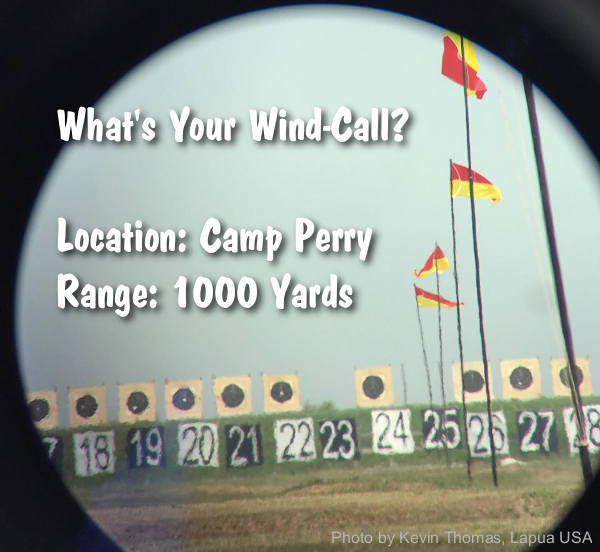
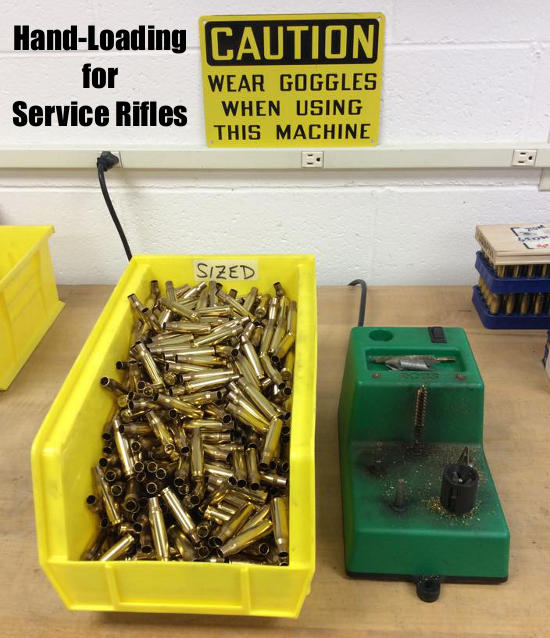
The U.S. Army Marksmanship Unit (USAMU) has published a great series of reloading “how-to” articles on its Facebook Page. This post covers key factors to consider when loading ammunition for Match Rifles and Service Rifles, with a particular focus on self-loading “gas guns”. Visit the USAMU Facebook Page regularly for other, helpful reloading and marksmanship tips.
We offer some “cardinal rules” to help new gas-gun handloaders with safety and efficiency. These address both Match Rifle and Service Rifle versions of the AR15, M1 Garand, M1A, and M110. However, they can also improve safe reloading for many other auto-loaders such as M1 Carbines, FALs, SIGs, etc. The author distilled these principles many years ago to help focus on the essential aspects of these rifles.
RULE ONE: Service Rifles Are Not Benchrest Rifles
Gas-guns require a relatively loose fit between ammunition and chamber (vs. bolt actions) for safe, smooth operation. Many techniques, such as neck sizing and keeping cartridge headspace quite tight, are popular in the extreme bolt gun accuracy realm. However, they are of little value with Service Rifles, and some could even be hazardous. Before adopting a specialized technique, seriously consider whether it is appropriate and beneficial in a gas-gun.
RULE TWO: Never Compromise Safety to Obtain Accuracy
Example: If choosing a brand of great, but ultra-sensitive match primers offers possibly better accuracy at the risk of slam-fires in your design of rifle, don’t do it! You are issued exactly two eyes and ten fingers (best-case scenario). Risking them trying to squeeze 0.25 MOA better accuracy out of an M1A, etc. simply isn’t worth it.
RULE THREE: Tailor the Precision to Your Individual Skill and Your Rifle’s Potential
This has been addressed here before, but bears repeating for newcomers. If you are struggling to break out of the Marksman Class, or using a CMP M1 “As-Issued,” then laboriously turning the necks of your 600-yard brass is a waste of time. Your scores will improve much faster by practicing or dry-firing. On the other hand, if the reigning champions anxiously check your scores each time you fire an event, a little neck-turning might not be so far-fetched.
Verifying Load Improvements — Accuracy hand-loading involves a wide variety of techniques, ranging from basic to rather precise. Carefully select those which offer a good return on investment for your time and labor. In doubt? Do a classic pilot study. Prepare ammo for at least three or four ten-shot groups with your new technique, vs. the same with your standard ammo. Then, pick a calm day and test the ammo as carefully as possible at its full distance (e.g. 200, 300, or 600 yards) to verify a significant improvement. A little testing can save much labor!
This video explains the procedure for ordering an M1 Garand from the CMP.
RULE FOUR: Be Your Own Efficiency Expert
Serious Service Rifle shooters generally think of ammunition in terms of thousands of rounds, not “boxes”, or even “hundreds”. Analyze, and WRITE DOWN each step in your reloading process. Count the number of times each case is handled. Then, see if any operations can be dropped or changed without reducing safety or accuracy. Eliminating just two operations saves 2000 steps per 1000 rounds loaded. Conversely, carefully consider any measurable benefits before adding a step to your routine.
RULE FIVE: In Searching for Greater Accuracy with Efficiency, Look for System Changes
For example, instead of marking your 300-yard rounds individually to differentiate them from your 200-yard ammo, would a simple change in primers work? If accuracy is maintained, using brass-colored primers for 200 and silver for 300 provides an indelible indicator and eliminates a step! Similarly, rather than spending hours selecting GI surplus brass for weight and neck uniformity, consider splurging on some known, high-quality imported match brass for your 600-yard loads. Results should be excellent, time is saved, and given limited shooting at 600 yards, brass life should be long.
RULE SIX: Check All Your Primers Before Packaging Your Loaded Ammo
This seems simple and even intuitive. However, many slam-fires (which were much more common when M1s and M1As were the standard) are due, at least in part, to “high” primers. Primers should be seated below flush with the case head. The USAMU has addressed this at length in a previous column, but each round should be checked for properly-seated primers before they are packaged for use.
After being held at the Kelbly’s Range in Ohio for decades, the Super Shoot, the top-tier short-range benchrest score competition, will be held May 22-25, 2023 at the Bench Rest Rifle Club in Missouri. This is a great location, much favored by elite benchrest shooters. This excellent range was the host of the 2022 NBRSA Nationals (photo above).
This will be Super Shoot 49. Historically, the Super Shoot has been the largest 100/200-yard Benchrest match in the world. This year the Super Shoot will be held at one of the premier benchrest facilities in the USA, the Bench Rest Rifle Club of St. Louis situated in Wright City, just northwest of St. Louis.
To shoot in the big match, it’s best to first register as a member of the SuperShootSports.com website. Membership is free. By becoming a member you will have access to online registration for the 49th Super Shoot and other features as they become available. There is no charge to join as a site member but there ARE fees to compete in the actual 2023 Super Shoot. So no payment is required initially to register on the site, but competition fees will be required at a later date. Match Sponsors include Shilen Rifles and Hottenstein Bullets.
The Bench Rest Rifle Club of St. Louis hosted the 2015 World Benchrest Championships:
The St. Louis shooting range facility is excellent. Forum member Alex M. posted: “The St. Louis Bench Rest Rifle Club is the finest shooting facility I have seen. The various rifle, pistol, shotgun, and archery ranges are great. They have a nice official trap field, together with manually operated traps. I shoot pistol and rifle with my wife at 25 to 600 yards. They have a very nice dedicated rimfire range, and training bays. I shoot their monthly F-Class matches (600 yards) where they award medals (1st, 2nd, 3rd) for F-Open, F-T/R and F-Bench. They also host the very popular Sierra Cup Challenge.”
Map to Bench Rest Rifle Club Range in Wright City, Missouri.
2022 Super Shoot — Last One at the Kelbly’s Range
The last Benchrest Super Shoot at the Kelbly’s Range was held May 24-27, 2022. This was the “final showdown” of the world’s group-shooting benchrest aces at the Kelbly’s range facility in Ohio. The overall 2022 Super Shoot Champion, with best combined 100 and 200-yard group-size Two Gun Aggregates (Aggs), was Jeff Summers. Gun writer James Mock noted: “The master of the Super Shoot, Jeff Summers, did it again. He fought the tough conditions and came out on top of the 200+ shooters at the final Kelbly-held Super Shoot. [That is] four times that Jeff has finished first. This shows that good guys can do well. Second place went to Ohioan Don Powell.” Summers finished with a 0.2513 Agg.
Doug Koenig is one of the best action shooters in history — both with rifle and pistol. In a recent video from SHOT Show Range Day, Doug, a 19-time Bianchi Cup Champion and a PRS Production Division Champion, talks about the disciplines he shoots, both rifle and pistol. He notes he has moved to Florida and he will be starting his own shooting school, which will open at the end of the year.
In this video, Doug is interviewed by Shooting Sports USA Editor John Parker. Koenig talks about his namesake Precision Rifle Series competition held in Colorado, the revitalized U.S. Steel Nationals and more.
You can see more Doug Koenig PRS/NRL videos on the Pursuit Channel, including coverage of precision rifle matches in Pennsylvania, Colorado, and Wyoming. The videos are worth watching for the scenery as well as the rifle action.
Doug Koenig — Action Pistol Master
Doug Koenig has won the Bianchi Cup a remarkable 19 times. No one else, man or woman, is even close to that achievement. After his Bianchi victory in 2021, Doug said: “Winning the Bianchi Cup title for the 19th time in my career is very special on its own. But to do so after the difficult year we’ve all faced, and to do so wearing a Team Ruger jersey, has made this win that much more meaningful for me.”
What skills does it take to win a Bianchi Cup? You need speed, accuracy, control, and discipline. Koenig explains some of these techniques in the video below. You’ll find 30 more Doug Koenig videos on the NSSF YouTube Channel:
The NRA Blog ran an feature on Silhouette shooting by NRA Silhouette Program Coordinator Jonathan Leighton. Here are selections from Leighton’s story:
NRA Silhouette Shooting
The loud crack from the bullet exiting the muzzle followed by an even louder ‘clang’ as you watch your target fly off the railing is really a true addiction for most Silhouette shooters. There is nothing better than shooting a game where you actually get to see your target react to the bullet. In my opinion, this is truly what makes this game so much fun.
Metallic Silhouette — A Mexican Import
Silhouette shooting came to this country from Mexico in the 1960s. It is speculated that sport had its origins in shooting contests between Pancho Villa’s men around 1914. After the Mexican Revolution the sport spread quickly throughout Mexico. ‘Siluetas Metalicas’ uses steel silhouettes shaped like game animals. Chickens up front followed by rows of pigs, turkeys, and furthest away, rams. Being that ‘Siluetas Metalicas’ was originally a Mexican sport, it is common to hear the targets referred to by their Spanish names Gallina (chicken), Javelina (pig), Guajalote (turkey) and Borrego (ram). Depending on the discipline one is shooting, these animals are set at different distances from the firing line, but always in the same order.
Before Steel There Was… Barbeque
In the very beginnings of the sport, live farm animals were used as targets, and afterwards, the shooters would have a barbeque with all the livestock and/or game that was shot during the match. The first Silhouette match that used steel targets instead of livestock was conducted in 1948 in Mexico City, Mexico by Don Gonzalo Aguilar. [Some matches hosted by wealthy Mexicans included high-ranking politicians and military leaders].
As the sport spread and gained popularity during the 1950s, shooters from the Southwestern USA started crossing the Mexican border to compete. Silhouette shooting came into the US in 1968 at the Tucson Rifle Club in Arizona. The rules have stayed pretty much the same since the sport has been shot in the US. NRA officially recognized Silhouette as a shooting discipline in 1972, and conducted its first NRA Silhouette Nationals in November of 1972.
Great Video of Silhouette Shooting in Canada with Drone Footage
Now There Are Multiple Disciplines
The actual sport of Silhouette is broken into several different disciplines. High Power Rifle, Smallbore Rifle, Cowboy Lever Action Rifle, Black Powder Cartridge Rifle, Air Rifle, Air Pistol, and Hunter’s Pistol are the basic disciplines. Cowboy Lever Action is broken into three sub-categories to include Smallbore Cowboy Rifle, Pistol Cartridge Cowboy Lever Action, and regular Cowboy Lever Action. Black Powder Cartridge Rifle also has a ‘Scope’ class, and Hunter’s Pistol is broken into four sub-categories. Some clubs also offer Military Rifle Silhouette comps.
Where to Shoot Silhouette
NRA-Sanctioned matches are found at gun clubs nation-wide. There are also many State, Regional, and National matches across the country as well. You can find match listings on the Shooting Sports USA website or contact the NRA Silhouette Department at (703) 267-1465. For more info, visit SteelChickens.com, the #1 website dedicated to Silhouette shooting sports.


 The Palma Team Trophy






 The

 Metallic Silhouette — A Mexican Import
 Before Steel There Was… Barbeque