|
|
January 19th, 2011
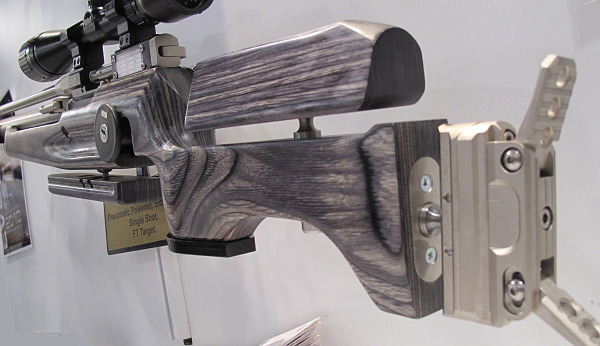
It is rare in the shooting sports when a single manufacturer, and single gun type, completely dominate a competitive discipline. But in the world of Field Target shooting, the Air Arms EV2 definitely has proven itself the “best of the best”, winning multiple major events in 2010, among them the European Championship, UK Championship, and World Championship. If you get your hands on an EV2 you’ll notice immediately that the rifle is well-balanced and very comfortable to hold — in any position. All the parts are machined to tight tolerances, and it comes with “all the bells and whistles” right out of the box. Watch the video below to learn more about the EV2 — truly the “choice of champions”.
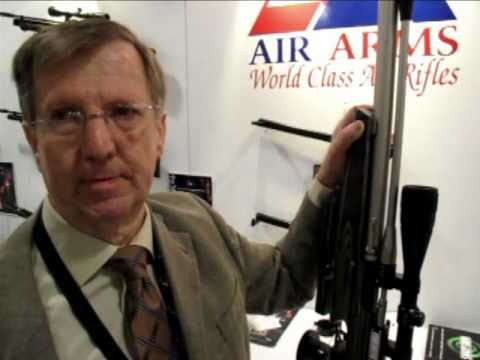

The Air Arms EV2 is available from PyramidAir.com for $1959.00, your choice of black, sky blue, or Red receiver and barrel-end fixture.

January 5th, 2011
 The CMP has recently posted its 2011 schedule for its CMP Summer Youth Rifle Camps (see chart below). The CMP Summer Rifle Camps are primarily designed for junior shooters participating in three-position air rifle. These popular five-day camps have been a staple of the CMP Summer line-up since 2000. Registration opens on 17 January. Cost is just $225 for each junior shooter, a fee kept low through CMP camp subsidies. The CMP has recently posted its 2011 schedule for its CMP Summer Youth Rifle Camps (see chart below). The CMP Summer Rifle Camps are primarily designed for junior shooters participating in three-position air rifle. These popular five-day camps have been a staple of the CMP Summer line-up since 2000. Registration opens on 17 January. Cost is just $225 for each junior shooter, a fee kept low through CMP camp subsidies.

 Campers receive classroom instruction by top air rifle experts, and personal attention on the range from established collegiate athletes. National Rifle Team Members and Olympians contribute to the camp curriculum. For the third straight year, Sommer Wood, a collegiate shooter at Clemson, will be Camp Director. Campers receive classroom instruction by top air rifle experts, and personal attention on the range from established collegiate athletes. National Rifle Team Members and Olympians contribute to the camp curriculum. For the third straight year, Sommer Wood, a collegiate shooter at Clemson, will be Camp Director.
Just like 2010, all full-length three-position air rifle camps will take place at the CMP North and South ranges, in Port Clinton, Ohio and Anniston, Alabama respectively. There will also be a three-day Advanced Standing Camp and several Outreach Clinics at various locations in the country. But note: All camps and clinics will be commuter only — the CMP removed the program’s housing option in 2010.

Outreach Clinics in Four States Supplement Summer Camp Offerings
To reach a wider base of young shooters, the CMP will also be offering summer Outreach Clinics, in addition to the scheduled Camp programs in Alabama and Ohio. In 2011 Outreach Clinics will be held in Texas, Arizona, South Dakota, and New York.Registration for Outreach Clinics opens April 1, 2011.
For more information regarding the 2011 Summer Camps please visit the CMP homepage, www.odcmp.com and click on the Summer Rifle Camps link. You can also contact Sommer Wood at swood [at] odcmp.com.
December 28th, 2010
 The Civilian Marksmanship Program (CMP) invites air rifle and air pistol shooters to the 5th Annual Camp Perry Open. This year’s match will include a 3-position air rifle competition, an international air rifle (all standing) event, a pistol course of fire, and junior clinics. The 3-day match will be held January 14-16, 2011 at the CMP Marksmanship Center in Camp Perry, Port Clinton, Ohio. Visit the Camp Perry Open webpage for complete information including rules, fees, event schedule, and match descriptions/courses of fire. You can also download (and print) the Camp Perry Open Match Program (PDF) for future reference. This includes rules, schedules, match descriptions, registration info, gear lists, and even directions to the CMP range. The Civilian Marksmanship Program (CMP) invites air rifle and air pistol shooters to the 5th Annual Camp Perry Open. This year’s match will include a 3-position air rifle competition, an international air rifle (all standing) event, a pistol course of fire, and junior clinics. The 3-day match will be held January 14-16, 2011 at the CMP Marksmanship Center in Camp Perry, Port Clinton, Ohio. Visit the Camp Perry Open webpage for complete information including rules, fees, event schedule, and match descriptions/courses of fire. You can also download (and print) the Camp Perry Open Match Program (PDF) for future reference. This includes rules, schedules, match descriptions, registration info, gear lists, and even directions to the CMP range.

The U. S. National Team coaches, Maj. David Johnson and Sergey Luzov, plan to bring some National Team members to shoot in the International event. The Army Marksmanship Unit (USAMU) is also sending some of their best to shoot in the International standing course of fire event. Members of many top NCAA rifle teams will attend as well. This is a great opportunity to see some of the best shooters in the USA compete.

Special Junior Clinic
On Saturday afternoon, 15 January 2011, there will be a clinic for a maximum of 50 school-aged junior
shooters. The clinic will run from 2:30 – 5:30 PM. On-the-line training will be provided by the members of the U. S. National Development Team, as well as USAMU Team members. The culmination of this event will be a 20-shot standing competition. This was a very popular event in 2010, so register early!
What to Bring
In addition to your air rifle, you’ll need a Clear Barrel Indicator (CBI). You will not need spotting scopes because the match will be fired on MEGAlink Electronic Targets and the exact shot locations are shown on electronic monitors at each firing point. (Isn’t technology great?) Shooting mats are provided at the range, but you may bring your own. Shooters using precision air rifles should bring them along with their shooting jackets and other equipment. Also, bring your own pellets. The CMP will have air tanks and CO2 available at the range. Please bring your own adapters.
HOW TO REGISTER (Registration Closes January 1!)
To register, log on to the CMP’s Camp Perry Open Registration page. Competitors over the age of 18 must complete and sign a CMP Affidavit and Liability Release prior to competing at Camp Perry. Shooters under the age of 18 must have a 2011 Parental Permission Form completed prior to competing at Camp Perry. These Release Forms may be submitted to Katie Harrington at: CMP, P. O. Box 576, Camp Perry OH 43452, or fax it to 419-635-2573. If you have questions call Katie at 419-635-2141 ext. 1131, or email kharrington [at] odcmp.com. NOTE: The last day to register is January 1, 2011. (In hardship situations, a late registrant might be accepted, but this isn’t guaranteed.)
December 18th, 2010
Story by Steve Cooper, CMP Writer
Sergeant First Class Josh Olson lost his right leg during a combat patrol in Iraq, but thanks to a rehabilitation program at Walter Reed Army Medical Center and an USAMU initiative to retain wounded warriors, Olson continues to serve his country as a member of the Army Marksmanship Unit (USAMU).
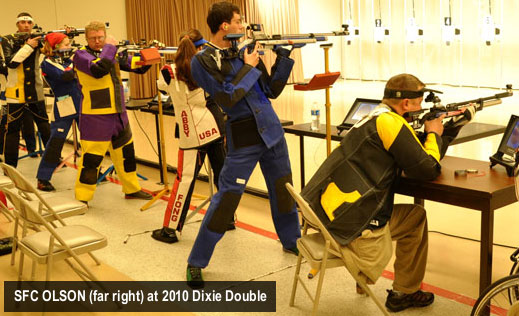
SFC Olson recently spent two days with USAMU teammates and fellow shooters at the CMP’s Dixie Double Precision Air Rifle and Air Pistol Event. There, as an out-of-competition air rifle participant, Olson fired the highest aggregate score in the match. However, as he fired from a seated position, he wasn’t officially competing against the able-bodied shooters. Though he wears a full leg prosthesis at the office and when competing in prone competition, SFC Olson said it gets uncomfortable when traveling or sitting for long periods of time. Hence he removed the artificial limb while shooting from the bench.
 In 2003, while deployed in Iraq, SFC Olson was leading a motorized patrol when his vehicle was ambushed. He left the vehicle to return fire when an RPG rocked his truck and blew his leg out from under him. Severely wounded, Olson was med-evac’d, first to Mosul, then to Germany, and finally to Walter Reed Army Medical Center in the USA. For the next 18 months, SFC Olson received inpatient and outpatient care at Walter Reed in Washington, D.C., prior to reactivating with the Army, eventually assigned to the USAMU. In 2003, while deployed in Iraq, SFC Olson was leading a motorized patrol when his vehicle was ambushed. He left the vehicle to return fire when an RPG rocked his truck and blew his leg out from under him. Severely wounded, Olson was med-evac’d, first to Mosul, then to Germany, and finally to Walter Reed Army Medical Center in the USA. For the next 18 months, SFC Olson received inpatient and outpatient care at Walter Reed in Washington, D.C., prior to reactivating with the Army, eventually assigned to the USAMU.
Olson recalled: “During my time at Walter Reed, a lot of the physical therapy and occupational therapy events we did involved shooting. When at Walter Reed, we were actually shooting sporting clays and I shot really well. One of the occupational therapists said the AMU was looking for amputees who wanted to stay on active duty and possibly try out for the Paralympics. I jumped at the opportunity and was able to stay on active duty”.
 After joining the USAMU, SFC Olson began shooting competitively in June 2005 and went through a ‘baptism of fire’ at Camp Perry and in international competition. When he’s not shooting a precision air rifle, SFC Olson competes in .22 caliber international rifle. Following the CMP Dixie Double, he participated in the Championship of the Americas (CAT Games) in Rio de Janeiro, Brazil in the prone able-body event. After joining the USAMU, SFC Olson began shooting competitively in June 2005 and went through a ‘baptism of fire’ at Camp Perry and in international competition. When he’s not shooting a precision air rifle, SFC Olson competes in .22 caliber international rifle. Following the CMP Dixie Double, he participated in the Championship of the Americas (CAT Games) in Rio de Janeiro, Brazil in the prone able-body event.
SFC Olson hopes to compete in the Paralympic Games or regular Olympic Games in London in 2012. He will try out for both events, either competing as a disabled shooter in the Paralympics or as an able-bodied competitor on equal terms with other Olympic marksmen. He said if he does not make the Olympic team, he’ll know he’s done his best to get there.
When not competing, SFC Olson helps National Guard and Reserve soldiers prepare for combat prior to deployment. “If I can help one person learn skills that will save their life or that of a buddy, it will be well worth it.”
This story has been edited for length. Read full story in the CMP Online Magazine.
November 25th, 2010
Report By Steve Cooper, CMP
The 2010 Dixie Double Precision Air Rifle and Pistol Event gave junior and veteran shooters alike an opportunity to improve their game in a challenging environment at the 80-firing point CMP Marksmanship Center in Anniston, Alabama. Despite a calendar crowded with airgun events taking place nationwide and abroad, several of the country’s top air rifle and air pistol shooters brought their talents to the CMP Marksmanship Center during the 60-shot-times-two standing event, held Saturday and Sunday, 13 and 14 November.

A pair of US Army Marksmanship Unit soldiers took the top two podium spots in the open category of the CMP’s second annual Dixie Double Precision Air Rifle and Air Pistol Event, but University of Kentucky and USA Shooting’s Ashley Jackson, 22, wasn’t far off the pace. USAMU Shooter SFC Jason Parker finished first with a 1396 score, with his USAMU teammate SSG Hank Gray second with a 1385 score. Ashley Jackson applied pressure to members of the US Army Marksmanship Unit and took third overall with a 1381. Ashley finished with two impressive 100+ finals scores on each day of the 2010 Dixie Double.

Selina Curren, 14, picked up a BB gun for the first time a year ago and began shooting competitively with her 4-H club and has shown rapid improvement. At the 2010 Alabama Sports Festival she placed first in the 13 to 15-year-old class BB gun championship, second in the .22 rifle silhouette match and third in three-position .22 rifle match. A member of the Magic City Gun Club, coached by Perry Mitchell, Curren jumped to precision air rifle in September 2010 and made her first appearance at the Dixie Double this year.
“I’m learning things quickly,” she said after firing a second day score of 532 of a possible 600 in her second 60-shot precision air rifle standing match in two days. She improved by 30 points over her Saturday score of 502.
CLICK HERE to Read Full Story.
October 30th, 2010
Top airgun and smallbore shooters competed this past week at the 2010 ISSF World Cup Rifle and Pistol Finals. In this season-ending World Cup, Russia led the pack of nations, taking an impressive total of five medals (four gold and one silver) out of ten shooting events. The USA was second with two gold medals and one bronze, while Italy finished third with one gold, two silver and one bronze.CLICK HERE for the complete match results posted on the ISSF-sports.org website.
Team USA put on a solid performance with three medals and six finals appearances. U.S. Army Sgt. 1st Class Daryl Szarenski won the Men’s 50m Free Pistol competition, finishing 5.5 points above the silver medalist. In an interview with the ISSF’s Marco Dalla Dea, Szarenski said, “This has definitively been my best season ever!”
 American Jamie Beyerle won the gold medal in Women’s 3-Position, 50m Rifle event. During the match, Beyerle shot an amazing 590 points to qualify in first place for the finals. Jamie also won the Air Rifle Champions Trophy (with a €500 prize from Sius Ascor), outdoing Germany’s Sonja Pfeilschifter. This was the second straight Champions Trophy for Beyerle, who also took the prize at the 2009 ISSF World Cup Final in Wuxi. In addition to her Gold Medal in 50m 3P, Jamie won Bronze in the Women’s 10m Air Rifle event. American Jamie Beyerle won the gold medal in Women’s 3-Position, 50m Rifle event. During the match, Beyerle shot an amazing 590 points to qualify in first place for the finals. Jamie also won the Air Rifle Champions Trophy (with a €500 prize from Sius Ascor), outdoing Germany’s Sonja Pfeilschifter. This was the second straight Champions Trophy for Beyerle, who also took the prize at the 2009 ISSF World Cup Final in Wuxi. In addition to her Gold Medal in 50m 3P, Jamie won Bronze in the Women’s 10m Air Rifle event.
Sgt. 1st Class Jason Parker was 1.5 points shy of medal contention in Men’s 50m Rifle Three Position. Parker finished fourth with a match score of 1170 points and the highest scoring final of 100.1 points. Teammate Sgt. Joseph Hein finished seventh in the Men’s 50m Rifle Prone event. Hein was in a four-way tie for third headed into the final, but fell short of a medal with a 101.8 point final for 698.8 total points.

August 3rd, 2010
 While much of the American shooting community is focused on the National Championships in Camp Perry, Ohio, nearly 2500 of the world’s top shooters are competing in Munich, Germany in the 50th ISSF World Shooting Championships which concludes August 11, 2010. While much of the American shooting community is focused on the National Championships in Camp Perry, Ohio, nearly 2500 of the world’s top shooters are competing in Munich, Germany in the 50th ISSF World Shooting Championships which concludes August 11, 2010.
 The 50th World Shooting Championship opened in Munich, Germany on the 30th of July with a festive Opening Ceremony on Munich’s iconic Marien-platz. This is the largest World Shooting Championship ever — with 2,460 shooters from 103 countries competing for medals in 54 events. Competitors will also vie for 69 Olympic Quotas allowing their respective nations’ teams to compete at the 2012 Games in London. The 50th World Shooting Championship opened in Munich, Germany on the 30th of July with a festive Opening Ceremony on Munich’s iconic Marien-platz. This is the largest World Shooting Championship ever — with 2,460 shooters from 103 countries competing for medals in 54 events. Competitors will also vie for 69 Olympic Quotas allowing their respective nations’ teams to compete at the 2012 Games in London.
At the ISSF World Championships, disciplines include Air Rifle, Air Pistol, Smallbore Rifle, Smallbore Pistol, Running Target, 300m Rifle, and Trap, with classes for Men, Women, and Juniors. So far Americans have done well, with high individual placings and a team win in the mens’ 50m rimfire prone event (see photo). The 50m mens’ prone team, consisting of Matt Emmons, SGT Michael McPhail, and SFC Eric Uptagrafft, won its second consecutive World Championship.
The ISSF-Sports.org website provides extensive coverage of the ISSF World Championships, including video webcasts of the finals in many disciplines. There are numerous photo galleries where you can see the shooters and high-tech air rifles and rimfire rifles used by the top shooters from many countries.
Running Target Competition is Fun to Watch
At the ISSF Worlds, one of the most challenging events is the Running Target Competition. Since this is not an Olympic shooting discipline, you may have never seen it before. But we guarantee this is worth checking out. Shooting in a man vs. man format, pairs of shooters engage a quickly moving target at 10 meters with air rifles. But the scoring is like tennis. For each pair of shots (one by each shooter), the competitor who puts his shot closest to dead center gets one point, while his opponent gets nothing. This is all done offhand from the standing position, requiring superb holding skills. It’s hard enough to shoot “10s” when the target is fixed. Imagine trying to put a pellet in a tiny 10-Ring, when the target is moving! To watch the Running Target Finals, CLICK this LINK then select the “Medal Match 10m Running Target Men” video from the list at the right. Forward to the 28-minute mark for the final Gold Medal shoot-out between Russia and China.

Team USA photo by Wolfgang Schreiber, ©2010 ISSF
July 23rd, 2010
In cooperation with the NRA Office of Disabled Shooting Services, Pyramyd Air is offering $224.00 off the Air Arms S400 MPR air rifle for qualifying shooters with disabilities. Disabled shooters and Adaptive Shooting groups can obtain the Poplar-stocked S400 MPR for $750.00 with FREE Shipping. This gun normally retails for $974.00.

 How to Get the Discount — Call Vanessa How to Get the Discount — Call Vanessa
Disabled shooters wanting an Air Arms S400 MPR air rifle should contact NRA Disabled Services Director Vanessa Ross. Call Vanessa at (703) 267-1495 or email disabled-shooting@NRAhq.org. Vanessa will provide a Promo Code good for the rifle discount. In addition, there is a second discount code providing 10% off an entire Pyramyd Air order. You cannot combine two promo codes on a single order, so use the second promo code for a separate order if you want to purchase pellets, targets, rifle cases, and other accessories.
Pyramyd Air S400 MPR Specifications
Though it weighs only seven pounds, a good thing for disabled shooters, Pyramyd’s S400 MPR is a quality air rifle with features similar to imported “name brand” air rifles. This breechloader has a 12-groove barrel and a walnut stock, which comes in right-hand, left-hand, or ambidextrous versions. An adjustable rear diopter sight and front sight with insert come with the gun. The S400 MPR has a 5-way adjustable trigger. You can adjust height, forward or rear placement, rotation of trigger blade, first-stage length, second-stage pull weight and placement of the trigger pad. NOTE: The cocking bolt is NOT adjustable for position and is on the right side of the gun.
NRA Disabled Shooting Services Director Vanessa Ross comments: “We are extremely grateful to Pyramyd Air for their commitment to the disabled community and offering a cost-effective way for individuals to get into the competitive game. To learn more about the NRA’s disabled shooting program visit www.nrahq.org/compete/disabled.asp.
July 14th, 2010
This profile of disabled veteran Dwight Hayes (Sgt. U.S. Army, retired) first appeared in the NRA Blog. While competing in the Airgun match at the National Veterans Wheelchair Games in Colorado, Hayes was interviewed by NRA correspondent Lars Dalseide. Hayes’ strong will and his determination to serve others provides an inspiration for all of us.
 Sgt. Dwight Hayes — Overcoming Adversity by Lars Dalseide Sgt. Dwight Hayes — Overcoming Adversity by Lars Dalseide
Dwight Hayes is a regular at the Bracken Rifle & Pistol Range in San Antonio, Texas. With his Lone Star cap snugly in place, he goes to the range to work on guns, organize shoots, and gather with friends. It’s a long way from his time as a Special Forces Weapons Sergeant at Fort Bragg, North Carolina, but it’s time well spent.
“If you’re in San Antonio, Bracken is the place to be,” said Hayes. “Bracken and the folks at Alamo Mobility have been great to us disabled vets.” Working with disabled veterans is of great importance to Dwight. It’s an attitude he developed while hospitalized after a failed High Altitude Low Opening, or HALO, jump. Having more than a hundred such jumps under his belt, this one should have been all but routine.
 “I broke one of my rules,” smiled Hayes, adding: “Gotta stick to the rules.” “I broke one of my rules,” smiled Hayes, adding: “Gotta stick to the rules.”
So what are the rules?
“During a HALO jump, you’re okay if you can see the road. If you see the cars, you’re still okay. If you can make out the color of the car, you’re still okay. If you can tell the difference between a Ford and a Chevy, you’re still okay. If you can make out the gender of the driver, you’re still okay. But if you can make out the license plate, then you’re in trouble.”
Before there’s a chance to react, Dwight rocks his wheelchair with laughter and slaps my back. Apparently the story is a standard. “They love that one back at Audie Murphy.”
Hayes refers to the Audie Murphy Veterans Memorial Hospital back in San Antonio. According to Hayes, they have one of the best Spinal Cord Injury Centers in the country. It’s also where he spent two years recovering from his failed HALO jump. Now he goes there to comfort those new to the ward.
 “I know what it’s like,” Hayes said. “I know all about time alone, watching the walls, sitting in an empty hospital. I go there and get them out.” “I know what it’s like,” Hayes said. “I know all about time alone, watching the walls, sitting in an empty hospital. I go there and get them out.”
With assistance from Audie Murphy and the Paralyzed Veterans of America, Hayes and other vets do their best to take the patients out into field. Everything from deep sea fishing to time on the range (sponsored by Winchester) to hunting trips.
“They even have a deer lease,” said Hayes. “Got a doe and an eight-point buck last season.”
The main lesson he tries to pass on is perseverance. He shares this through the story of his injury, his rehabilitation, and his twenty-five years in the U.S. Army. “The injury occurred eighteen years in,” Hayes explained. “I was able to serve a full twenty-five because I successfully petitioned for reinstatement after demonstrating that I could still do my job. Maybe, some of the kids at Audie will hear that and know they can still be productive too.” And that, too, will be time well spent.
July 7th, 2010
 The 30th National Veterans Wheelchair Games commenced this week in Denver, Colorado. The largest annual wheelchair sports competition in the world, this event offers 17 different sports to veterans who use wheelchairs due to spinal cord injuries, amputations and neurological diseases. One of the popular events is the Air Rifle competition, which has attracted ten relays of competitors, all of whom are wounded or disabled military veterans. The 30th National Veterans Wheelchair Games commenced this week in Denver, Colorado. The largest annual wheelchair sports competition in the world, this event offers 17 different sports to veterans who use wheelchairs due to spinal cord injuries, amputations and neurological diseases. One of the popular events is the Air Rifle competition, which has attracted ten relays of competitors, all of whom are wounded or disabled military veterans.
With the help of family, friends, and volunteers, they unpack their guns, sight in their rifles, and shoot three rounds of twenty shots in thirty minutes. The competitors display a wide array of emotions — some are intense, some are smiling, and some are satisfied with the mere act of competing.
The stories are as diverse as those who are shooting: An Army ranger injured post-retirement, an officer with multiple sclerosis, an enlisted man wounded in combat. They come from California, from Ohio, from Florida and Texas. “We’ve seen a wonderful change in our guys,” said a group leader from California. “They find a sport in which they can flourish and their smiles are contagious.”
Photos and story by Lars Dalseide, courtesy NRA Blog.
|


