Today is Friday the 13th. For those of you who are superstitious — maybe you should avoid climbing ladders, playing the stock market, or using power tools today.
When it comes to shooting, there are many things that shooters chalk up to “bad luck”. In fact, most of these instances of “bad fortune” just come from a failure to anticipate problems. When you have a major, critical problem at a shooting match, i.e. a “train wreck”, this can be the end of your weekend. In this article, Ballistics Guru Bryan Litz talks about “train wrecks” and how to avoid them, even if you are shooting on Friday the 13th. As Bryan told us: “I don’t believe in superstition — we make our own luck!”
How to Avoid “Train Wrecks” In Competition
In any shooting competition, you must try to avoid major screw-ups that can ruin your day (or your match). In this article, past F-TR National Mid-Range and Long Range Champion Bryan Litz talks about “Train Wrecks”, i.e. those big disasters (such as equipment failures) that can ruin a whole match. Bryan illustrates the types of “train wrecks” that commonly befall competitors, and he explains how to avoid these “unmitigated disasters”.
Urban Dictionary “Train Wreck” Definition: “A total @#$&! disaster … the kind that makes you want to shake your head.”
Success in long range competition depends on many things. Those who aspire to be competitive are usually detail-oriented, and focused on all the small things that might give them an edge. Unfortunately it’s common for shooters lose sight of the big picture — missing the forest for the trees, so to speak.
Consistency is one of the universal principles of successful shooting. The tournament champion is the shooter with the highest average performance over several days, often times not winning a single match. While you can win tournaments without an isolated stellar performance, you cannot win tournaments if you have a single train wreck performance. And this is why it’s important for the detail-oriented shooter to keep an eye out for potential “big picture” problems that can derail the train of success!
Train wrecks can be defined differently by shooters of various skill levels and categories. Anything from problems causing a miss, to problems causing a 3/4-MOA shift in wind zero can manifest as a train wreck, depending on the kind of shooting you’re doing.
Below is a list of common Shooting Match Train Wrecks, and suggestions for avoiding them.
1. Cross-Firing. The fastest and most common way to destroy your score (and any hopes of winning a tournament) is to cross-fire. The cure is obviously basic awareness of your target number on each shot, but you can stack the odds in your favor if you’re smart. For sling shooters, establish your Natural Point of Aim (NPA) and monitor that it doesn’t shift during your course of fire. If you’re doing this right, you’ll always come back on your target naturally, without deliberately checking each time. You should be doing this anyway, but avoiding cross-fires is another incentive for monitoring this important fundamental. In F-Class shooting, pay attention to how the rifle recoils, and where the crosshairs settle. If the crosshairs always settle to the right, either make an adjustment to your bipod, hold, or simply make sure to move back each shot. Also consider your scope. Running super high magnification can leave the number board out of the scope’s field view. That can really increase the risk of cross-firing.
2. Equipment Failure. There are a wide variety of equipment failures you may encounter at a match, from loose sight fasteners, to broken bipods, to high-round-count barrels that that suddenly “go south” (just to mention a few possibilities). Mechanical components can and do fail. The best policy is to put some thought into what the critical failure points are, monitor wear of these parts, and have spares ready. This is where an ounce of prevention can prevent a ton of train wreck. On this note, if you like running hot loads, consider whether that extra 20 fps is worth blowing up a bullet (10 points), sticking a bolt (DNF), or worse yet, causing injury to yourself or someone nearby.
[Editor’s Note: The 2016 F-Class Nationals will employ electronic targets so conventional pit duties won’t be required. However, the following advice does apply for matches with conventional targets.]
3. Scoring/Pit Malfunction. Although not related to your shooting technique, doing things to insure you get at least fair treatment from your scorer and pit puller is a good idea. Try to meet the others on your target so they can associate a face with the shooter for whom they’re pulling. If you learn your scorer is a Democrat, it’s probably best not to tell Obama jokes before you go for record. If your pit puller is elderly, it may be unwise to shoot very rapidly and risk a shot being missed (by the pit worker), or having to call for a mark. Slowing down a second or two between shots might prevent a 5-minute delay and possibly an undeserved miss.
4. Wind Issues. Tricky winds derail many trains. A lot can be written about wind strategies, but here’s a simple tip about how to take the edge off a worse case scenario. You don’t have to start blazing away on the command of “Commence fire”. If the wind is blowing like a bastard when your time starts, just wait! You’re allotted 30 minutes to fire your string in long range slow fire. With average pit service, it might take you 10 minutes if you hustle, less in F-Class. Point being, you have about three times longer than you need. So let everyone else shoot through the storm and look for a window (or windows) of time which are not so adverse. Of course this is a risk, conditions might get worse if you wait. This is where judgment comes in. Just know you have options for managing time and keep an eye on the clock. Saving rounds in a slow fire match is a costly and embarrassing train wreck.
5. Mind Your Physical Health. While traveling for shooting matches, most shooters break their normal patterns of diet, sleep, alcohol consumption, etc. These disruptions to the norm can have detrimental effects on your body and your ability to shoot and even think clearly. If you’re used to an indoor job and eating salads in air-conditioned break rooms and you travel to a week-long rifle match which keeps you on your feet all day in 90-degree heat and high humidity, while eating greasy restaurant food, drinking beer and getting little sleep, then you might as well plan on daily train wrecks. If the match is four hours away, rather than leaving at 3:00 am and drinking five cups of coffee on the morning drive, arrive the night before and get a good night’s sleep.”
Keep focused on the important stuff. You never want to lose sight of the big picture. Keep the important, common sense things in mind as well as the minutia of meplat trimming, weighing powder to the kernel, and cleaning your barrel ’til it’s squeaky clean. Remember, all the little enhancements can’t make up for one big train wreck!
The CMP Western Games “Fall Classic” event — featuring CMP Highpower Rifle and CMP Pistol Matches — takes place next week, October 10-15, 2023 at the Ben Avery Shooting Facility near Phoenix, Arizona. This year, the CMP decided to move the Western CMP Games back to its original October timeslot. Although the CMP’s most recent Western Games were held in March of 2023, there will also be a fall Western Games this year, as was the tradition in past years.
The decision to move Western Games back to October was reached after the CMP conducted a survey of competitors. Though the results (155 submissions) indicated spring was favorable (65%) versus fall (34%), the final decision was based on cost to host the event. Spring training for baseball causes inflated expenses for hotels, rental cars, and flights in the earlier months of the year. An October event allows more affordable travel/accommodations for Western Games participants. That should allow more competitors to enjoy the events at Ben Avery.
The 2023 October Western Games will have a condensed schedule of events:
Garand, Springfield, Vintage & Modern Military Matches
Carbine Match
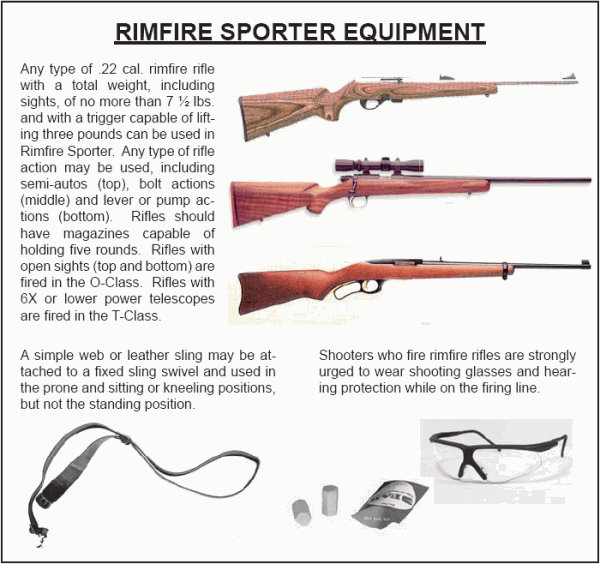
Rimfire Sporter Match
Mid-Range 3X600
80 Shot Rifle
2-Man Rifle Team
EIC Service Rifle
CMP Match Pistol 2700
EIC Service Pistol
.22 Rimfire Pistol
EIC Service Revolver
Military & Police Service Pistol
and 1911 As-Issued Pistol Match
The Western CMP Games will feature three days of Garand/Springfield/Vintage & Modern Military Matches, a Carbine Match, a Rimfire Sporter Match, a Vintage Sniper Match, and a Rifle Basic Class. The CMP Highpower Rifle Matches include the CMP Team HP Clinic with Live Fire, a 4-Man Team Match, three days of CMP 800 Aggregate Matches and a CMP Service Rifle EIC Match. The Highpower Rifle portion of the Western Fall Classic will include a 2-Man Team Match, two days of CMP 800 Aggregate Matches, a CMP Service Rifle EIC Match and a Mid-Range 3×600 event. For educational purposes, a Rifle & Pistol Marksmanship 101 Classes with introductory EIC Matches are also part of the October lineup. There will also be a GSM New Shooter Clinic, a Highpower Rifle Clinic, and an M1 Maintenance Clinic.
Handgun shooters can compete in 4 days of Pistol Matches including CMP Match Pistol 2700, CMP .22 Rimfire Pistol EIC Match, CMP EIC Service Pistol Match, CMP 1911 As-Issued Pistol Match, Military & Police Service Pistol Match and the NEW CMP Service Revolver EIC Match.
M1 Garand
Line-up of M1 Garands at the CMP Sales tent.
This CMP Video Explains the Process for Ordering an M1 Garand from the CMP:
M1 Carbine
CMP M1 Carbine Matches — Growing in Popularity
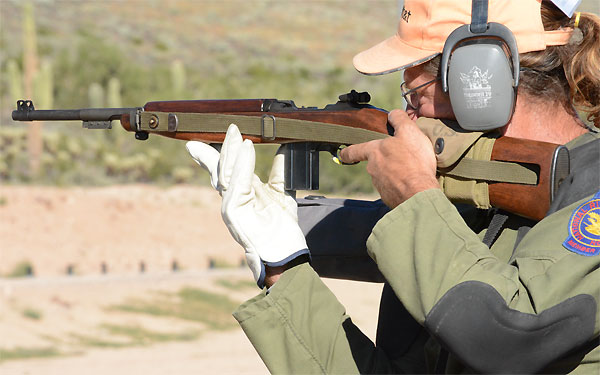
The CMP M1 Carbine Match is part of the CMP Games program that already includes Garand, Springfield and Vintage Military Rifle Matches. “As-issued” U. S. Military M1 Carbines are fired over a 45-shot course of fire at 100 yards on either the old military “A” target or the “SR” target. The course includes 5 sighters and 10 shots for record prone slow fire in 15 minutes, a 10-shot rapid fire prone series in 60 seconds, a 10-shot rapid fire sitting series in 60 seconds and 10 shots slow fire standing in 10 minutes.
Modern Service Rifle (AR15 Family)
Vintage Sniper Match Rifles
All competitors firing on the Highpower range will be firing on Kongsberg Electronic Targets (KTS) (see above center). The KTS system registers each shot and relays the location and score value to a monitor beside each shooter.
Earlier this month, gunmaker GLOCK Inc. presented a $50,000 check to the Civilian Marksmanship Program (CMP) at the CMP Talladega Marksmanship Park in Alabama during the GLOCK Sport Shooting Foundation (GSSF) Annual Match. GLOCK has been a generous sponsor and supporter of the CMP and Talladega Marksmanship Park throughout its existence, dedicating thousands to the organization each year to be used toward programs and initiatives.
GLOCK Inc. V.P. Josh Dorsey and Nat’l Sales Manager Bob Radecki presented the $50,000 check to the CMP’s acting park manager Bret Lankford and Business Development Exec. Stefanie Teaford.
“We’re always so grateful to GSSF and GLOCK, Inc. for supporting the CMP,” said Teaford. “We’ve been able to use their substantial contributions to enhance our impact in the marksmanship community through organized opportunities and through the distribution of fundamental and safety instruction to countless individuals across the country.”
About the CMP’s Talladega Marksmanship Park
Since 2015, Talladega Marksmanship Park, “The Home of Marksmanship,” has been a worthy destination for firearm supporters and guests looking for practice, competition and mindful learning opportunities. Featuring CMP electronic targets and scoring monitors that can only be found at the 500-acre facility, the park regularly hosts rifle, pistol, shotgun and archery events all year long. The CMP’s Unknown Distance Range at Talladega also allows guests to practice their skills in the field of over 100 steel targets, out to 625 yards, and provides even more marksmanship fun at the Park.
The public is welcome, all year long, to test out their firearms or to simply take a tour of the grounds. Off the firing line, the Club House holds a fully stocked Pro Shop that includes an exclusive collection of rifles, ammunition, marksmanship accessories and CMP memorabilia that is always open during park hours. Learn more at the CMP Talladega Park webpage.
The Civilian Marksmanship Program is a federally chartered 501(c)(3) non-profit corporation. It is dedicated to firearm safety and marksmanship training and to the promotion of marksmanship competition. For more information, visit TheCMP.org.
Chris Simmons Wins International Precision Rifle Federation PRS World Championships
Lapua congratulates Team USA’s Chris Simmons on winning the first-ever International Precision Rifle Federation Precision Rimfire World Championships. This highly anticipated match took place August 28 through September 3 at the Piancardato Tiro A Volo range in Collazzone, Italy. Chris was shooting a Vudoo rifle with Lapua X-Act .22 LR rimfire ammunition. Simmons posted an Aggregate score of 165.00 points with a time of 1480.45. The first four finishers were also from the USA. CLICK HERE to see hundreds of photos from the event.
The International Precision Rifle Federation (IPRF) World Championships drew top shooters from 23 nations. The three-day event had competitors tackle a challenging course of fire at different distances, shooting from both supported and unsupported obstacles, with long-range shots, and moving targets, all within tight time constraints.
Simmons, no stranger to the winner’s circle, was part of a two-year selection process to represent the United States at the inaugural IPRF event. Over the past nine months, Simmons took his training to another level, getting up before daylight to hit the range. He also spent many evenings after work shooting 10-12 different positions in a 90-second timeframe, firing hundreds of rounds daily.
Match was conducted in a beautiful hillside location in Collazone, Italy.
After surviving tricky wind conditions and bad wind calls, Simmons found himself in second place prior to going into the last two stages. He then performed great in the final two stages, taking the overall win: “Paul Dallin and I ended up tied and it came down to the fastest aggregate time of all the stages,” commented Simmons. “I won the World Championship by 23 seconds in 2023! Paul is a hell of a shooter and competitors and was tough to beat. Congratulations to him on his second-place finish!”
Top Five Shooters at IPRF Rimfire World Championships:
1. Chris Simmons, USA
2. Paul Dallin, USA
3. Payton Grimes, USA
4. Tyler Orth, USA
5. Radek Novak, Czech Republik
“It was an honor to be able to represent Team USA in the World Precision Rifle Championships in Italy. Thank you to Lapua for supporting both myself and Team USA with quality ammunition,” stated Simmons.
Member of Team USA with a patriotic stars and stripes rimfire rifle.
Competitors came from 23 different countries from around the world.
The USA’s Payton Grimes was top lady shooter and 3rd overall.
The event included unusual stages with across-the-water shots.
Ammo Testing at Lapua Rimfire Performance Centers
The Lapua X-ACT .22 LR ammunition used by Chris Simmons was matched to his VuDoo rifle at a Lapua Rimfire Performance Center in the USA. Unique lots of ammunition are tested at 50 and 100 meters simultaneously, identifying the best performing ammunition for purchase. This service is available to any shooter who wishes to gain a competitive advantage. Schedule your testing at either of Lapua’s Rimfire Performance Centers located in Mesa, Arizona, or Marengo, Ohio.
To learn more about the Lapua Rimfire Performance Centers or to schedule an appointment, visit Rimfiretest.com.
Larry Medler has come up with a smart little invention — a simple, inexpensive Empty Chamber Indicator for rimfire rifles. It is made from a section of plastic “weed-wacker” line and a wooden ball from a hobby shop. Larry says he was inspired by Juniors who used something similar for their 17-Caliber Air Rifles.
How to Make the Empty Chamber Indicator
Construction Method: First, drill a 7/64″ diameter hole all the way through the 1″-diameter wooden ball. Then enlarge half of that 1″-long hole using a 13/64” diameter drill. Next insert an 8″ piece of heavy duty (0.095″ diameter) weed wacker line through the ball, leaving about 2″ on the side with the bigger-diameter hole. Then, with the short end of the line, fold over the last half-inch so the line is doubled-over on itself. Then slide the line into the ball, stuffing the doubled-over section through the 13/64″ (large) hole. Finally, pull the longer end of the line until the doubled-over section is flush with the outside of the ball. This gives you a sturdy line attachment without messy adhesives. When the assembly’s complete, hold the ECI by the tail and dip the ball in yellow paint. If you’re making more than one ECI, you can drill horizontal holes in a spare block of wood and use that as a drying rack.
At a Rimfire Sporter match like this, all shooters must have an Empty Chamber Indicator.
The Empty Chamber Indicator for Smallbore Rifles
Larry explains: “At all Highpower rifle matches, silhouette matches, and other shooting events I have attended, Open Bore Indicators (OBI), or what are now called Empty Chamber Indicators (ECI) have been mandatory. The NRA’s yellow ECI for Highpower rifles is easy to use and has been well-received by the shooters. However, I had not seen a truly workable ECI for 22 rimfire rifles — until I visited Michigan’s Washtenaw Sportsman’s Club where I saw juniors using ECIs for their 17 Caliber Air Rifles. Someone at the club made the empty chamber indicators by attaching an 8″ piece of weed wacker line to a 1″-diameter wooden ball, painted bright yellow. I now make similar ECIs for the 22 rimfire silhouette matches I run.”
Getting started in the shooting sports can be intimidating, especially for women. Thankfully, there are many training resources available. NSSF has compiled a series of target shooting tips for women, by women. These tips, presented by instructors Kay Miculek, and Lena Miculek-Afentul, cover basic shooting methods and safety. Topics include pistol grip, stance, eye dominance, and ear protection. These tips can benefit any novice shooter, not just the ladies.
Rifle Stance and Hold (for Action Shooting)
Champion 3-Gun shooters Kay Miculek and Lena Miculek-Afentul demonstrate rifle stance basics and how to properly hold an AR-platform rifle for action shooting.
Grip and Stance for Pistol Shooting
Mother/daughter team Kay Miculek and Lena Miculek-Afentul demonstrate proper grip and stance for shooting semi-automatic pistols in action disciplines.
Eye Dominance (and Hand/Eye Cross-Dominance)
Learn how to identify your dominant eye. Kay Miculek, a cross-dominant shooter, explains how other cross-dominant individuals can maintain a proper sight picture.
CMP Mid-Range Event Gains Attention at 2023 National Long Range Matches Article based on report by Ashley Dugan, CMP Staff Writer
The first-ever CMP Mid-Range 3×600 event at the 2023 CMP National Matches was a big success. This multi-class match drew 110 participants in its inaugural year. This new event had three stages of slow, prone 600-yard shots. The 3×600 was included as part of the CMP Long Range National Match Program. The CMP Mid-Range program will be a fixture at the National Matches in the future, with competition for multiple classes: Long Range Rifle, Service Rifle, Palma, F-Open, F-TR, and AR Tactical.
“We were very excited for the turnout this year,” said Sara Rozanski, CMP highpower coordinator who facilitates the Long Range events. “This is a program we’re looking to put more focus on, and we really hope others consider giving it a try during their trips to Camp Perry each summer.”
USAMU Shooter Leads Field at Inaugural Camp Perry Mid-Range Match
Leading the first Mid-Range Camp Perry 3×600 was SSG Ben Cleland of the USAMU. Ben finished with a superb 600-46X score. Cleland admitted Mid-range is one of his favorite types of matches to shoot, with distances no different than those used in service rifle matches and added challenges that make them even more enjoyable to shoot.
Cleveland stated: “It’s a true precision game — it’s kind of like smallbore with a lot more wind, in my mind, so I really enjoy shooting that. If you’re on it, you can shoot some really big scores and have some great performances, but it’s still very challenging.”
According to Cleland, the 3×600 match is a gateway for service rifle competitors into Long Range events, using the same ranges and distances as regular High Power events. “More people are getting interested in it,” he said of the Mid-range discipline. “It’s not so hard moving from one rifle to the other, as far as shooting goes. The hard part is showing up at Camp Perry with that many different guns, well prepared.”
Scores on the line were extremely tight in the Mid-Range match, with the first seven places separated by only one point. The top three competitors were determined by X-Count, with Cleland finding the win by a margin of seven Xs overall. CLICK HERE for full 3×600 Match Results.
Along with the Mid-Range Event, There Were Five Days of 1000-Yard Matches
Along the the Mid-Range event, the National Long Range events included five days of individual and team 1,000-yard matches for Long Range, Service, Palma, Match, F-Open, F-T/R and AR Tactical classes. Daily awards were presented to overall winners of each match as well as to the top junior, woman, senior and grand senior participants. Overall aggregate awards were also determined for those who competed in all events in the Long Range series.
Individual Aggregate winners included:
Long Range: SSG Jarrod McGaffic, 33, Fort Benning, GA – 1643-89X
Service Rifle: SP4 Dustin Carr, 22, Fort Benning, GA – 1615-74X
Palma: SP4 Adam Fitzpatrick, 27, of Columbus, GA – 1635-99X
F-Open: Kenneth Livengood, 69, Palmerton, PA – 1623-61X
F-T/R: Jack Dean, 50, Cape Coral, FL – 1609-58X
Jessie Harrison — one of the greatest female pistol shooters on the planet. In the video below, Jessie offers good tips on safe handgun mag changes.
In this Pro Tip Video, Jessie Harrison talks about Dry-Fire Pistol Training:
One of our Forum members asked: “Are there any good books on pistol marksmanship? I’m looking for a book that covers techniques and concepts….” Here are eight recommended titles that can make you a better pistol shooter. These books run the gamut from basic handgun training to CCW to Olympic-level bullseye shooting.
More Good Guidebooks for Competitive Pistol Shooters
There are other good books which can help competition pistol shooters. For new pistol shooters, we recommend the NRA Guide to the Basics of Pistol Shooting. This full-color publication is the designated student “textbook” for the NRA Basic Pistol Shooting Course.
If you’re interested in bullseye shooting, get the USAMU’s The Advanced Pistol Marksmanship Manual. This pistol marksmanship guide has been a trusted resource since the 1960s. Action Shooters should read Practical Shooting: Beyond Fundamentals by Brian Enos, a well-known pistol competitor with many titles. Julie Golob’s popular SHOOT book covers pistol marksmanship, along with 3-Gun competition. Julie holds multiple national pistol shooting titles.
AccurateShooter.com may earn a small Affiliate commission on books sold through Amazon.
Want to learn the basics of position shooting? Then you should check out an article by Gary Anderson, DCM Emeritus, in On the Mark digital magazine (Summer 2014, pp. 6-13). This article covers all the key elements: body position (prone, sitting, standing), sling use/adjustment, sight picture, aiming process, and trigger control. While this 8-page article was specifically written for Rimfire Sporter shooters, the techniques described by Anderson apply to all types of position shooting, whether you shoot air rifles, smallbore rifles, or centerfire rifles.
Here’s what Anderson says about aiming — how to keep your sights steady and get them centered on the middle of the target:
Trigger Contact and Center As soon as aiming at the target begins, the index finger must move from the trigger-guard to contact the trigger. It is important to get initial pressure on the trigger as soon as aiming begins. Then the shooter must focus on the sight picture and centering the sight picture movements over the aiming point. No one, not even champion shooters, can hold the aligned sights perfectly still. The sights are going to move a little bit or a lot, depending on the shooter’s skill level. The secret is to center those sight picture movements over the aiming point on the target (see trace illustration) before pulling the trigger.
When the sight picture movements on the target are centered, the last step in firing the shot is to add… smooth pressure on the trigger until the shot breaks.
Anderson also discusses the 5 Basics of Shot Technique:
BONUS: Olympic Gold Medalist Jamie Gray
Here’s an interesting video about three-position shooting. Produced by GOnra Media, this video demonstrates rifle hold and body alignment for prone, standing, sitting, and kneeling positions. Olympic Gold Medalist Jamie Gray demonstrates the proper stance and position of arms and legs for each of the positions. Ideally, in all of the shooting positions, the shooter takes advantage of skeletal support. The shooter should align the bones of his/her arms and legs to provide a solid foundation. A shooter’s legs and arms form vertical planes helping the body remain stable in the shooting position.
The question of barrel break-in is controversial. Some folks advocate an elaborate, lengthy cycle of shooting and brushing, repeated many times — one shot and clean, two shots and clean and so on. This, it is argued, helps barrels foul less and shoot more accurately. Others say minimal break-in, with patching and brushing after 10-15 rounds, is all you need. Still others contend that break-in procedures are a total waste of time and ammo — you should just load and shoot, and clean as you would normally.
We doubt if there will ever be real agreement among shooters concerning barrel break-in procedures. And one must remember that the appropriate break-in procedure might be quite different for a factory barrel vs. a custom hand-lapped barrel. This Editor has found that his very best custom barrels shot great right from the start, with no special break-in, other than wet patches at 5, 10, and 15 rounds. That said, I’ve seen some factory barrels that seemed to benefit from more elaborate break-in rituals.
What’s the best barrel break-in procedure? Eric Mayer of Varminter.com decided to ask the experts. Eric interviewed representatives of three leading barrel manufacturers: Krieger, Lothar-Walther, and Shilen. He recorded their responses on this video. In order of appearance, the three experts are:
Shilen, Krieger, and Walther Experts Talk about Barrel Break-in
Do I Need to Break-In a New Rifle Barrel?
Eric Mayer of Varminter.com says: “That is a simple question, [but it] does not necessarily have a simple answer. Instead of me repeating my own beliefs, and practices, on breaking-in a new rifle barrel, I decided to answer this one a bit differently. While we were at the 2016 SHOT Show, we tracked down three of the biggest, and most popular, custom barrel makers in the world, and asked them what they recommend to anyone buying their barrels, and why they recommend those procedures. We asked the question, and let the camera run!” Launch the video above to hear the answers — some of which may surprise you.
Barrel Break-in — Initial Inspection and Cleaning
This video explains that you should always inspect and clean the bore of your barrel before sending rounds through it. There may be remnants of the production process, such as lapping residues, that you’ll want to get out of the bore. We’ve even seen a few tiny metal pieces in some factory barrels. And it’s always wise to borescope a new barrel to see if there are visible defects in the rifling such as lands that have flawed edges — we’ve seen that on some cheaper barrels.
Barrel Break-In — Ian Klemm’s Surprising Observations
Here’s a 10-minute Vortex Nation interview with Ian Klemm. Ian, a 4-Time F-TR National Champion is one of America’s best long-range shooters. In this video, Ian explains his approach to barrel break-in, which may surprise you. Does barrel break-in even matter? Conventional wisdom says “Yes” and perhaps there’s some truth to that, but Ian argues that break-in is NOT nearly as important as the internet wants you to believe. Ian believes that you don’t need to waste a ton of time/ammo to get your barrel ready to shoot extremely accurately. This may be particularly true with premium hand-lapped custom barrels.
Barrel Break-In Procedures with Keith Glasscock
Keith Glasscock is also one of America’s greatest F-Class shooters who has finished second at the Nationals multiple times. Keith is also a highly-respected wind coach who has a popular YouTube video channel, Winning in the Wind. In this video, Keith explains his procedure for breaking-in his match barrels. He starts by bore-scoping the barrel and cleaning it. If he finds some burrs he may use some JB Bore Paste, a patch, and a worn brush and “give that throat a little scrub” (See 1:30 time-mark). He used different stroke lengths to avoid putting a “step” in the throat. When he’s satisfied he goes to the range. He fires the first five rounds, then cleans. He then fires quite a few rounds before cleaning the barrel again and beginning load development (See 8:25 time-mark).
General Barrel Break-in Procedures Recommended by Brownells
Brownells Gun Techs Steve Ostrem and Caleb Savant tackle a thorny topic: breaking in a new barrel. What IS breaking-in a barrel? And WHY do it? The rifling of a freshly machined barrel has microscopic burrs and sharp edges. “Breaking-in” is the process of putting bullets down the bore to smooth out those rough spots. The goal is to round down the sharp edges so they’re not stripping copper off a bullet as it travels the bore, which leads to fouling that leads to reduced accuracy and inconsistent groups. In a very minor way, you’re actually lapping the barrel. The breaking-in process works best on cut-rifled and button-rifled barrels. Cold hammer-forged, chrome-lined, or nitrided barrels — such as commonly found on AR-15s — may not benefit much from the process. Pistol barrels really don’t need to be broken in because larger-diameter bullets are not so much affected by tiny variations in the bore. Likewise, break-in is more helpful for a .17, .20, or .22 caliber rifle than a .45 caliber rifle.
George Gardner of G.A. Precision Talks About Barrel Break-In
G.A. Precision’s George Gardner is a leading figure in the PRS/NRL world. In this video, George makes the valid point that not all barrels require the same amount of break-in. George says some barrels require very little break-in, while others benefit from a more elaborate break-in process that helps reduce future copper and powder fouling. He calls this “seasoning” the barrel so it fouls less. For a typical barrel, George’s recommended process (4:25 time-mark) starts with one shot, then clean for three one-round cycles. This is followed by three shots then clean, with repeat 3-shot cycles if need. For cleaning George prefers nylon brushes (5:50 time-mark). NOTE: George also makes a very important point — you MUST swab the chamber and get it dry between cleaning cycles (5:30 time-mark).


 Train Wrecks (and How to Avoid Them)
 4. Wind Issues. Tricky winds derail many trains. A lot can be written about wind strategies, but here’s a simple tip about how to take the edge off a worse case scenario. You don’t have to start blazing away on the command of “Commence fire”. If the wind is blowing like a bastard when your time starts, just wait! You’re allotted 30 minutes to fire your string in long range slow fire. With average pit service, it might take you 10 minutes if you hustle, less in F-Class. Point being, you have about three times longer than you need. So let everyone else shoot through the storm and look for a window (or windows) of time which are not so adverse. Of course this is a risk, conditions might get worse if you wait. This is where judgment comes in. Just know you have options for managing time and keep an eye on the clock. Saving rounds in a slow fire match is a costly and embarrassing train wreck.






 Earlier this month, gunmaker GLOCK Inc. presented a $50,000 check to the Civilian Marksmanship Program (CMP) at the CMP Talladega Marksmanship Park in Alabama during the GLOCK Sport Shooting Foundation (GSSF) Annual Match. GLOCK has been a generous sponsor and supporter of the CMP and Talladega Marksmanship Park throughout its existence, dedicating thousands to the organization each year to be used toward programs and initiatives.


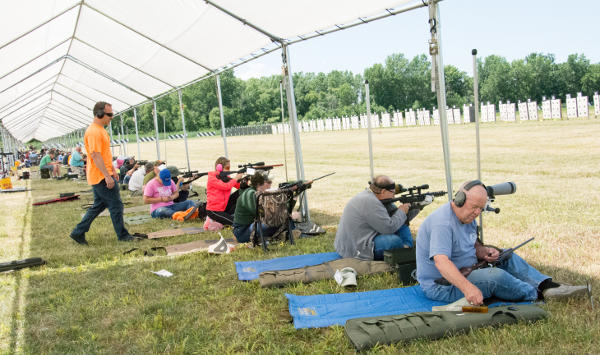


 As soon as aiming at the target begins, the index finger must move from the trigger-guard to contact the trigger. It is important to get initial pressure on the trigger as soon as aiming begins. Then the shooter must focus on the sight picture and centering the sight picture movements over the aiming point. No one, not even champion shooters, can hold the aligned sights perfectly still. The sights are going to move a little bit or a lot, depending on the shooter’s skill level. The secret is to center those sight picture movements over the aiming point on the target (see trace illustration) before pulling the trigger.


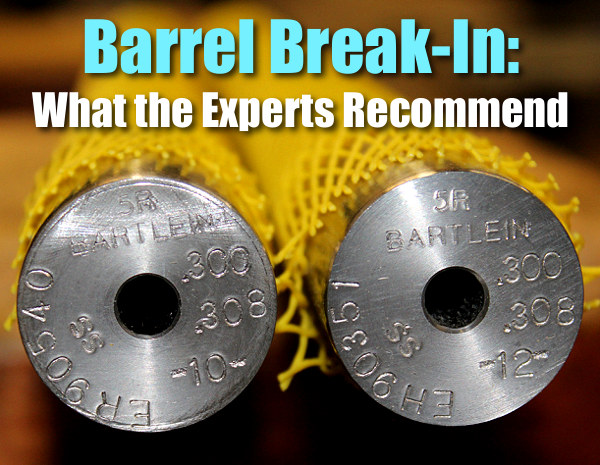
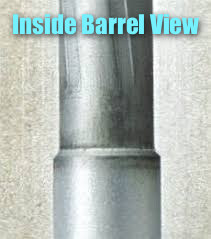 We doubt if there will ever be real agreement among shooters concerning barrel break-in procedures. And one must remember that the appropriate break-in procedure might be quite different for a factory barrel vs. a custom hand-lapped barrel. This Editor has found that his very best custom barrels shot great right from the start, with no special break-in, other than wet patches at 5, 10, and 15 rounds. That said, I’ve seen some factory barrels that seemed to benefit from more elaborate break-in rituals.


