Here’s a really impressive feat of marksmanship and rifle accuracy. Starting with a cold bore, i.e. no sighters and no warm-up shots right before the string, Curtis Roman made 3 hits in a row at 1.404 MILES (2472 yards). The hits were on a steel target 3-foot square (36″x36″). To put things in perspective, one MOA at 2472 yards spans 25.88 inches. Looking at the target, his three shots were very close to 1 MOA.
Sterling Precision and Applied Ballistics shooter Curtis Roman set a new FCSA Extreme Long Range (ELR) Cold Bore Record on Sunday, May 22, 2022, at the Spring Canyon ELR Match at the NRA Whittington Center in Raton, NM. At this match, Curtis was able to make 3 consecutive impacts at 2472 yards, starting with a cold bore. This feat was witnessed by fellow competitors. Through his spotting and wind-reading skills, Roman’s teammate David Lindsey played a key role in setting this new Cold Bore ELR World Record.
Curtis was shooting a Sterling Precision-built .416 Stroker with 500 grain Cutting Edge Lazer bullets. The ballistics solution for the 2472-yard distance was calculated by a Kestrel 5700X with Applied Ballistics using Doppler radar data.
This video shows Curtis Roman at the 2021 KO2M event at the Whittington Center last year:
Rules of Extreme Long Range Competition There are various rule sets for different ELR events at different venues. However the Extreme Long Range Shooting Organization (ELRSO) has created a set of standardized rules with the goal of running ELR matches under uniform guidelines. Here are some highlights of the ELRSO Rules for Extreme Long Range Competition:
Any caliber of rifle up to and including .50 CAL can be shot at any ELRSO Unlimited event. Eligible rifles must be .50 caliber or smaller.
Rifle, as ready to fire with all equipment attached, may not exceed (50 lbs. Heavy) or (25 lbs. Light), scales will be required at each match to verify weight compliance.
Attached Bipods for the front rest, and rear bag or pad for rear support will be the only rest systems permitted. No mechanical rests, mono-pods are allowed.
Bipod must be rigid and may only have two points of contact with the ground and one point of attachment to the rifle. Distance between feet may not exceed 20 inches.
Weight of all equipment must be brought to firing line in a single trip. No additional weight may be added to the rifle [after] weigh-in.
No electronic data gathering equipment, flags or wind data references permitted forward of the firing line.
No electronic communication will be permitted between the shooter, or spotter, and any other person.
Range Distance Requirements Light Class – Minimum distance for initial target will be no less than 1,000 yards. Maximum distance for final target will be no more than 1,800 yards. Range must be capable of extending to 1,800 yards to host an ELRSO Limited Class match.
Heavy Class – Minimum distance for initial target will be no less than 1,400 yards. Maximum distance for final target will be no less than 2,600 yards, and no more than 3,600 yards. Range must be capable of extending to a minimum of 2,600 yards to host an ELRSO Unlimited Class match.
Do you own a Ruger 10/22? Here’s a new product you may want to acquire. Luth-AR’s new Modular Chassis Assembly (MCA) offers adjustability and features that can transform a 10/22 into a much more effective rifle for rimfire gun games. Priced at just $189.95, the new MCA-22 modular chassis is great for NRL22 competition, Tactical 22 matches, Steel Challenge, Practical Rimfire Challenge matches, as well as casual plinking.
The new MCA-22 Rimfire Chassis is compatible with the original Ruger 10/22 barreled action as well as 10/22 clone actions such as the PRP Rubicon.
A well-known seller of AR parts and accessories, Luth-AR now offers the MCA-22 Modular Chassis Assembly for 10/22-style rimfire barreled actions. The MCA-22 was developed by Roth Performance in conjunction with Luth-AR.
The MCA-22 Rimfire Chassis provides improved ergonomics and adjustability along with M-LOK mounting options. This can make your 10/22 more effective for rimfire competition shooting and general recreation use. The Ruger 10/22 (or similar) receiver, trigger group, and barrel can be easily installed in the MCA-22 chassis, which accepts standard or bull barrels with the use of an insert.
MCA™-22 features:
— Easy to install, light weight chassis and cost effective.
— Constructed with high-strength glass filled nylon, 6061 aluminum and steel.
— Designed for comfort and ergonomic control for wide range of body types.
— Ambidextrous goose-neck style pistol grip with palm swell.
— Aggressive grip panel and front grip strap texturing.
— Click-adjustable cheek piece.
7mm (.284) remains the caliber to beat in F-Class Open Division (though some shooters have had success with .30-Cal short magnums.) With a standard .284 Winchester, or better yet, a .284 Improved, you can drive the high-BC Berger 180gr and 184gr bullets to competitive velocities.
The straight .284 Win is an excellent cartridge, quite capable of winning F-class matches. However, in most barrels, it can’t push the 180s at 2900-2950 fps velocity levels*. A lot of barrels will top out at about 2850 fps. That’s where the .284 Shehane comes into play.
The .284 Shehane is a slightly modified wildcat that retains the same 35° shoulder as the parent case. However, by blowing the sidewalls out 0.010″, the .284 Shehane picks up about 3.3 grains of extra case capacity. That enhancement makes a BIG difference. The extra boiler room is enough to drive the 180s at 2900-2950 fps with 30-32″ barrels using H4831sc, Vihtavuori N560, or Alliant Reloder 16. (That’s with a reasonably fast barrel. Some barrels are faster than others.)
Norm Harrold Won 2018 F-Class Open Division Nationals with .284 Shehane Rifle
Norm Harrold (above) won the 2018 USA F-Class Nationals shooting a .284 Shehane. Norm’s F-Open rig features a McMillan Kestros ZR stock and Bartlein barrel chambered for the .284 Shehane, which has a bit more case capacity than a standard .284 Winchester. Norm loaded Berger 184gr 7mm bullets in Lapua brass. Norm revealed his load in an Erik Cortina YouTube Video.
F-Class shooter Erik Cortina notes that the .284 Shehane has a velocity edge over the straight .284 Win because it holds more powder: “The Shehane has more capacity than the .284 Winchester. Ryan is using 54.0 grains simply as a fire-forming load. Typical load for a Shehane is around 57.0 grains of Hodgdon H4831 SC.” By blowing the sidewalls out 0.010″, the .284 Shehane picks up about 3.3 grains of extra case capacity. That enhancement makes a BIG difference. The extra boiler room is enough to drive the 180s at 2900-2950 fps with H4831sc, with long barrels.
Forum member Jim Hardy has shot the .284 with great success. He tells us: “In my humble opinion, the .284 Shehane is the best balanced long-range round there is — bar none. Here is why:
You have to shoot a 30 Cal Magnum with a 240gr bullet to equal the performance of most 7mm chamberings with the 180 Berger VLD. With the .284 Shehane, you have a .308 bolt face, medium action, and Lapua brass. You use less powder than the 7 mags, and have great accuracy and ballistics even while fire-forming. The .284 Shehane shoots inside the 6.5 AND the straight .284, the .300 WSM, and the .300 Win Mag with less recoil. What is not to love about the 284 Shehane? It is a no-brainer for long range — F-Class or Prone or 1000-yard Benchrest.”
Amazing Accuracy When Fire-Forming .284 Shehane
If you look at that 5-round group you might think it was shot with a 6 PPC or maybe a 6mmBR. But no, this was done with heavy 180gr Berger Hybrid bullets and the .284 Shehane. In fact, this impressive sub-quarter MOA group was shot while fire-forming with a very well-worn barrel! Gun builder Ryan Pierce of Piercision Rifles explains: “Here’s a 5-shot 0.191″ group at 100 yards with my .284 Shehane fireforming loads. This barrel has 2200 rounds through it. It had 2000 as a straight .284 Win and then I set it back to .284 Shehane to form brass with. [The load was] 180 Hybrids with 54.0 grains of H4831 SC.”
Scotland’s Grant Taylor. who used the .284 Shehane to finish third at the 2009 F-Class Worlds in England says the .284 Shehane is “very accurate with superb vertical spreads at 1000 yards. [This] caliber… has awesome accuracy. I’m getting 2930-2950 fps with spreads in the 3-5 fps range. I use Hodgdon H4831sc powder, CCI BR2 primers, and pointed 180gr Bergers.”
.284 Shehane Showcase — Two Special F-Open Rifles
Jason Cohen’s “We the People” patriotic .284 Shehane F-Class rifle. This rig scored second place in its very first match, a 3×20 at 1000 yards in Wyoming.
Here’s another handsome .284 Shehane F-Open rifle. Owner Jason Cohen explained why he chose the .284 Shehane chambering: “The .284 Shehane has a proven record of accomplishments and that is why I have chosen it. I use Lapua brass (6.5-284 necked-up), CCI BR-2 primers, Hodgdon H4350 powder, and Berger 184gr bullets. All these components have been a successful combination that has worked flawlessly[.]”
The barrel is a Blake Machine 1:8″-twist finished at 32 inches. It was fitted to my action by Dale Woolum of Woolum Accuracy. Dale also threaded the barrel for a Woolum Accuracy tuner. This has proven to be a valuable tool in my load development.
The rifle began its life as a Will McClosky Cerus stock. This was sent that to Bryan Blake at Blake Machine. Jason noticed that Bryan had been adding aluminum rails to the front of Cerus stocks to lower the center of gravity and improve tracking. Jason asked Bryan to fit the stock with forearm rails, shown in the photo below. Bryan did all the stock work and fitted the action, rails, and RAD recoil pad.
The .284 Shehane — Accurate and Forgiving Wildcat
Jason explains why he selected the .284 Shehane chambering: “The .284 Shehane is amazing, very forgiving and not temperamental. Straight .284 or Shehane — you cannot go wrong. I run a 184gr Berger at about 2850 FPS and get great brass life in my other rifles. I usually start to consider tossing the brass around 15 firings. Primer pockets start to get a little looser and the brass seems to need more sizing than the newer brass with less firings.”
.284 Shehane Load Development
Load development for me starts with each new barrel. I screw on the new barrel, fire 25 rounds of whatever I have left over and then clean it. I push out to 600 yards and do a ladder test in round-robin format. I start 0.6 grains lower than my last charge that worked. I work up from that reduced charge weight in increments of 0.3 grains. The paper tells the rest of the story. Once I get something that works well at 600 yards I go back in work around that by 0.1 grains. After that I play a little with seating depth and look for a change. I will occasionally mess with the tuner and tighten things up if possible.
.284 Shehane Raffle Prize Rifle for Team USA
This stunning .284 Shehane rifle was constructed as a raffle prize to benefit Team USA members preparing for the F-Class World Championship. This eye-catching F-Open rifle was crafted by Blake Barrel and Rifle in Arizona. This prize rifle features all top-of-the-line components: Borden BRMXD Action, Cerus multi-laminate stock with forearm extension, R.A.D. recoil reduction system (hydraulic-damped buttpad), Bix ‘N Andy trigger, and Nightforce Competition scope. The stainless Blake barrel is chambered for the .284 Shehane wildcat, and sports an F-Class Products tuner on the end.
.284 Shehane Also Shines in 1K Benchrest Competition
The .284 Shehane has won in Benchrest as well as F-Class competition. In 2013, Henry Pasquet won the IBS 1000-Yard Nationals shooting a .284 Shehane. Henry’s Championship-winning rig is shown below. Note the 5″-wide fore-end which is not legal for F-Class. Henry also runs a combo tuner/muzzle-brake.
*Some exceptional barrels chambered in straight .284 Win can reach 2900 fps with the 180s. Ryan Pierce has a 32″ Brux barrel that is delivering 2900 fps with the straight .284. However, Ryan acknowledges that his velocities are not typical: “A lot of .284 Win barrels top out at around 2850 fps with the 180s”.
Ready to learn more about marksmanship? This summer, the CMP will offer a wide selection of training programs at the National Matches at Camp Perry. CMP training courses serve all levels of shooters, with personalized instruction for all. During this year’s National Matches, there will be an array of educational courses taught by experts, including USAMU team personnel and coaches. Courses span from junior to advanced, delivering a little something for everyone.
Participants in CMP National Matches clinics receive one-on-one instruction. Here is a quick guide (ranked from Advanced to Beginner) for scheduled learning events at the 2022 Camp Perry National Matches, which run July 12 through August 13, 2022.
ADVANCED – Team CMP Advanced Highpower Clinic:
Led by members of CMP Gold (CMP’s own competitive Highpower squad), the Advanced Highpower Clinic offers more complex instruction in service rifle competition techniques using classroom and range discussion. Though the class traditionally utilizes only dry-fire training on the range, in 2021, a 600-yard live-fire portion was added. This course is only open to those who have attended the Advanced Small Arms Firing School at least once and have an “Expert” classification with the CMP or National Rifle Association.
The Advanced High Power Clinic, led by Team CMP members including Bob Gil (above), provides advanced training on wind reading, mental management and more.
INTERMEDIATE/ADVANCED – Junior Smallbore and Air Rifle Camp:
The camp is open to intermediate and advanced junior athletes who shoot both three-position smallbore and standing or international air rifle. Instruction is held on CMP’s outdoor Petrarca Range and within the Gary Anderson CMP Competition Center indoor air range, both located on the grounds of Camp Perry. Participants must be between the ages of 12 to 20 and currently involved in three-position smallbore competition matches and international air rifle. Camp will cover safety and a reinforced understanding of the fundamentals, among several other points of interest. Those juniors hoping to move their marksmanship careers on to college are encouraged to sign up for this valuable course.
INTERMEDIATE – U.S. Marine Corps Junior Highpower Clinic:
The three-day clinic gives focus to more advanced training outside of fundamentals, including weather conditions, how to read wind, equipment use, shooting positions and rulebook standards. Juniors in the clinic spend one day in the classroom, followed by two days of live-fire on the range at 200, 300 and 600 yards. Those young athletes who would like to attend this clinic must first attend the Rifle Small Arms Firing School.
BEGINNER – Small Arms Firing Schools (SAFS):
One of the most popular events of the National Matches, the SAFS course is a combination of classroom education and hands-on instruction on fundamentals, competition basics and safety. Training is led by members of military marksmanship teams as well as certified CMP instructors. At the conclusion of the course, students fire real competitions on the range, with instructors nearby. Equipment is provided by the CMP, with participants only needing a willingness to learn in order to attend. Currently, the CMP offers Small Arms Firing Schools for Pistol (M9), Smallbore Rifle, .22 caliber Rimfire Sporter Rifle and Highpower Rifle (M16) during the National Matches as well as an Advanced SAFS course for further training.
BEGINNER — As-Issued Military Rifle Clinics:
Any CMP Games competitors who have not previously fired in one of these matches are required to attend a clinic before they fire. All other competitors in these matches are encouraged to attend as well. These free one-hour clinics will cover the Garand-Springfield-Vintage Matches with instruction and demonstrations. Topics include match rules, shooting positions and techniques, scoring and pit pulling procedures and how to fire the courses of fire. The clinic is open to all competitors. More experienced juniors may attend the USMC clinic, taught by current marksmanship professionals.
BEGINNER — M1 Maintenance Clinic:
CMP Armorers will present this two-hour clinic on disassembly, assembly and maintenance of the M1 Garand Rifle. Special attention will be given to accurizing steps that can be taken with the rifle while maintaining its legality for CMP-sanctioned As-Issued Military Rifle Matches. Topics such as head space, barrel installation, component purpose/function, general rifle assembly, rifle/component maintenance and various other techniques will be covered during the course.
Fans of PRS/NRL competition should watch Shooting USA today March 16, 2022. This action-packed episode features the 2021 Armageddon Gear (AG) Cup Invitational, a major PRS event with $75,000 in cash prize awards. The show airs today, Wednesday 5/18/22 at 9:00 PM Eastern/Pacific (8:00 PM Central) on the Outdoor Channel. You can also stream the show anytime on Vimeo for $0.99.
$75,000 in cash prizes makes the AG Cup the biggest cash money match in Precision Rifle Competition. It’s an elimination format shot over three days of challenging stages of fire at K & M Precision’s ranges in West Tennessee. In this episode, match organizer Tom Fuller joins John Scoutten to narrate the action and the award of the cash in extended coverage of the match. The 2020 AG Cup showcased an all-star line-up of tactical talent with the nation’s top PRS/NRL marksmen invited to the three-day match in TN.
Highlights of 2020 Armageddon Gear Cup Tactical Match:
Armageddon Gear Founder Tom Fuller competes in PRS and supervised the latest AG Cup.
SHOOTING USA TV Air Times
View Shooting USA on the Outdoor Channel Wednesdays 9:00 PM (Eastern and Pacific) + 8:00 PM Central.
NOTE: If you miss today’s 5/18/22 broadcast, you can still view the show on Vimeo for a small 99-cent fee, or just $1.99 per month unlimited. LINK HERE: Shooting USA on Vimeo.
Shooting USA is available On Demand via Vimeo.com. Watch a single episode for $0.99, or get a full-month subscription for $1.99 and watch as many shows as you like with limited commercial interruptions.
Some folks say you haven’t really mastered marksmanship unless you can hit a target when standing tall ‘on your own hind legs’. Of all the shooting positions, standing can be the most challenging because you have no horizontally-solid resting point for your forward arm/elbow. Here 10-time National High Power Champ Carl Bernosky explains how to make the standing shot.
Carl Bernosky is one of the greatest marksmen in history. A multi-time National High Power Champion, Carl has won ten (10) National High Power Championships in his storied shooting career, most recently in 2012. In this article, Carl provides step-by-step strategies to help High Power shooters improve their standing scores. When Carl talks about standing techniques, shooters should listen. Among his peers, Carl is regard as one of the very best standing shooters in the history of High Power shooting. Carl rarely puts pen to paper, but he was kind enough to share his techniques with AccurateShooter.com’s readers.
If you are position shooter, or aspire to be one some day, read this article word for word, and then read it again. We guarantee you’ll learn some techniques (and strategies) that can improve your shooting and boost your scores. This stuff is gold folks, read and learn…
How to Shoot Standing by Carl Bernosky
Shooting consistently good standing stages is a matter of getting rounds down range, with thoughtfully-executed goals. But first, your hold will determine the success you will have.
1. Your hold has to be 10 Ring to shoot 10s. This means that there should be a reasonable amount of time (enough to get a shot off) that your sights are within your best hold. No attention should be paid to the sights when they are not in the middle — that’s wasted energy. My best hold is within 5 seconds after I first look though my sights. I’m ready to shoot the shot at that time. If the gun doesn’t stop, I don’t shoot. I start over.
2. The shot has to be executed with the gun sitting still within your hold. If the gun is moving, it’s most likely moving out, and you’ve missed the best part of your hold.
3. Recognizing that the gun is sitting still and within your hold will initiate you firing the shot. Lots of dry fire or live fire training will help you acquire awareness of the gun sitting still. It’s not subconscious to me, but it’s close.
4. Don’t disturb the gun when you shoot the shot. That being said, I don’t believe in using ball or dummy rounds with the object of being surprised when the shot goes off. I consciously shoot every shot. Sometimes there is a mistake and I over-hold. But the more I train the less of these I get. If I get a dud round my gun will dip.* I don’t believe you can learn to ignore recoil. You must be consistent in your reaction to it.
5. Know your hold and shoot within it. The best part of my hold is about 4 inches. When I get things rolling, I recognize a still gun within my hold and execute the shot. I train to do this every shot. Close 10s are acceptable. Mid-ring 10s are not. If my hold was 8 inches I would train the same way. Shoot the shot when it is still within the hold, and accept the occasional 9. But don’t accept the shots out of the hold.
6. Practice makes perfect. The number of rounds you put down range matter. I shudder to think the amount of rounds I’ve fired standing in my life, and it still takes a month of shooting standing before Perry to be in my comfort zone. That month before Perry I shoot about 2000 rounds standing, 22 shots at a time. It peaks me at just about the right time.
This summarizes what I believe it takes to shoot good standing stages. I hope it provides some insight, understanding, and a roadmap to your own success shooting standing.
— Good Shooting, Carl
* This is very noticeable to me when shooting pistol. I can shoot bullet holes at 25 yards, but if I’ve miscounted the rounds I’ve fired out of my magazine, my pistol will dip noticeably. So do the pistols of the best pistol shooters I’ve watched and shot with. One might call this a “jerk”, I call it “controlled aggressive execution”, executed consistently.
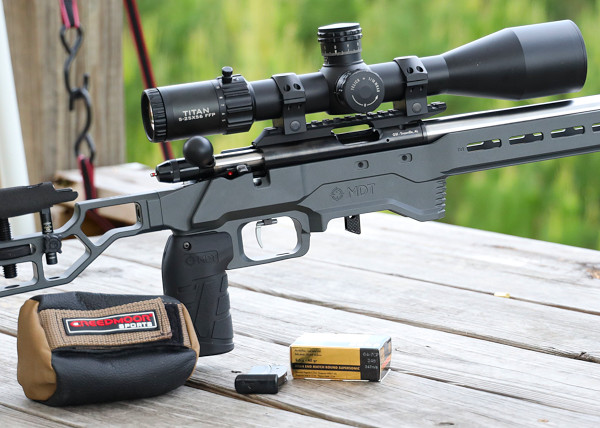
If you are looking to compete in NRL22 or PRS rimfire tactical matches, there is a new, turnkey solution that combines the legendary Anschutz 54 rimfire action with the excellent MDT ACC chassis. Called the Anschutz Model 1710, this new competition-ready rifle is capable of winning matches right out of the box. Creedmoor Sports recently received the first set of model 1710s in the USA. At our request, Creedmoor’s Brent Books and Wayne Dayberry field-tested a new model 1710. After confirming the elevation click values for various yardages, Brent put the Anschutz through its paces, showing its superb accuracy. FYI, this 1710 came with an impressive factory test target — 10 shots at 50 meters, all in a dime-sized circle.
Shooting at the CMP Talladega Marksmanship range, Brent ran a sequence of shots, hitting steel at 100, 150, 200, 250 and 300 yards without a miss. You can see this 5-shot sequence, all in one continuous take (no edits), in the video below. As Brent observed, “it definitely shoots”. Then, later, Brent cranked in more elevation (21.1 MILs) and hit steel at 435 yards. Watch this all in the video — it’s impressive!
Anschutz 1710 at Talladega, Drilling Steel from 100 to 435 Yards
Watch Hits at 100, 150, 200, 250, 300, and 435 Yards
With RWS 100 .22 LR ammo, Brent drills hit after hit with no misses out to 300 yards.
“This video shows a run after we confirmed our dope. Brent Books and I are shooting an NRL22 match in two weeks. Although he has extensive smallbore and airgun experience, this will be his first match of this type. I thought it would be a good/fun exercise for him to run the plates fairly quickly and also showcase the performance of this rifle system at the same time on the video.” — Wayne Dayberry
Anschutz Model 1710 — Great Accuracy Right from the Start
Report by Wayne Dayberry
The Anschutz 1710 MDT ACC rifle system is purpose-built for smallbore tactical precision rifle competition. With its capabilities we went from from bore-sight to 300 yards in just 12 shots. We started with a factory-fresh .22 LR Anschutz 1710 in an MDT ACC Ghost Gray chassis. This rifle incorporates a 20-inch heavy profile threaded stainless barrel and the 5119 two-stage trigger. After a clean, lube, and inspection, we mounted up an Element 5-25x56mm First Focal Plane optic we already had in a set of rings and headed out to the CMP Talladega Marksmanship Park. In addition to traditional target ranges, the CMP range has an unknown distance steel range with targets out to 600 yards. Due to a compressed schedule, we did not have time to follow the traditional zeroing and velocity-gathering processes, so we headed straight to the unknown distance steel range. This range has steel from 75 yards to 600 yards much like you would see in PRS and NRL type competitions.
Given the compressed timeframe, we didn’t follow the traditional steps one would normally take to do a break-in process, zero, collect data, and build out rifle dope. We were essentially doing all of that on a steel target range as we were putting the first rounds down the barrel while shooting this piece. At the same time, with a quality rifle system, and following a process, it worked out well as we were able to stretch out the capability of this rifle to 435 yards very quickly.
Anschutz 1710 Components and Specifications:
The new Anschutz model 1710 is built with premium components top to bottom. It features an Anschutz Match 54 repeater action with blued receiver, Anschutz 5119 two-stage trigger, 20″ stainless steel barrel, and MDT ACC alloy chassis with built-in rails. The chassis is adjustable for LOP and cheek height.
Receiver: Scope mount attachment with 11mm rail and drilled and tapped
Barrel Length: 20″ stainless steel heavy barrel, no iron sights
Chamber: Optimized Match Chamber
Crown: Recessed Target Crown
Muzzle Diameter: 0.90″
Trigger: New 5119 Two-Stage Trigger
Trigger Weight Range: 4 oz. to 7.5 oz. (110 to 215g)
Trigger Weight: Adjusted to 6.35 oz. (180g)
Magazine Capacity: 10
Magazine Release: Extended
Rifle Weight without scope: 10 lbs., 10 oz.
This photo shows the Anschutz 1710 fitted with bipod and suppressor. The tripod clamps via the integral forearm ARCA rail.
Testing the Anschutz 1710 on Steel — Expedited Procedure
The closest steel on the Talladega range that day was 75 yards so we started from scratch at that distance. Brent was on the rifle, so I spotted and ran ballistics. After bore-sighting at 75 yards, and confirming zero on steel with a few rounds, we went to the ballistic solver to start a profile. For the RWS R100 ammunition we were running, I entered a G1 BC of .14 and a guess at the muzzle velocity of 1080 FPS. The call of 1.1 MILs for the 100-yard steel resulted in Brent’s shot landing .2 MILs high of center on the first round; we “confirmed” 0.9 MILs. We noted the impact and moved on to 150 yards.
As I mentioned we were very short on time so the “confirmations” of our dope for our first pass were with a single shot and measuring in the reticle. That’s obviously not the normal process, but for us, it was good enough for this exercise, given the time we had. We were shooting on freshly-painted targets and getting excellent feedback to see POA / POI deviations and could easily measure this in the reticle, which helped. And we were shooting a top-of-the-line Anschutz which came with a confirmation test target showing a 10-shot group at 50 meters with all shots touching and within a circle the size of a dime. With a former NCAA All-American smallbore shooter running the gun, and this test target in hand, confidence was high.
Moving to the 150-yard target, a call of 3.7 MILs hit 0.6 high on our first round so we measured and confirmed 3.1. We trued the muzzle velocity in the solver as we went. At 200 yards I called 6.0 MILs and the first round hit was .3 high. We measured and confirmed 5.7 MILs. 9.0 mils was the call at 250 yards and we hit just a bit high. After measuring, we confirmed 8.6 MILs. At 300 yards, Brent was holding about 1 mil wind as a storm started rolling in. I called 12.5 MILs elevation and the first round impact was near the top of the plate, and after measuring we confirmed a come up of 11.7 MILs.
The net result was this — we went from mounting the optic and bore-sighting, to making solid first-round impacts from 100 yards out to 300 yards, at each 50-yard increment, in just 12 rounds! That’s efficiency!
Stretching it out to 435 Yards on Steel
Later, we went on to make solid hits at 350 yards and 435 yards. I got on the gun and put two on top of each other at 350 yards — pretty cool. This just proved this gun is an absolute hammer. The 435-yard target was a bear target, which was quite a bit larger than the 12″ steel we were shooting in the video. Not a small target by any means, but we were shooting 435 yards with a rimfire rifle as a storm rolled in. I think between us, Brent and I hit 5 of 6 (at 435 yards) which was pretty good given the sporty conditions. Next stop… the 600-yard plates at the end of this range. That’s a come-up of about 36 Mils.
Rimfire Maintenance — Tips from a Top Competitor
An NCAA All-American smallbore shooter, Brent Books knows a thing or two about rimfire rifles, and how to maintain optimal accuracy. Brent told us: “I shot on the rifle team at Jacksonville State University so 500 rounds a week was common through my Anschutz 2013. I’d clean my rifle at the end of each week before we travelled to a competition with a wet patch through the barrel, a few passes of the nylon brush (unscrewing the brush before pulling it back through), one more wet patch, and then dry patches until they came out clean. A bore guide was always used to protect my action from debris and to align the cleaning rod. After cleaning the barrel, I’d completely disassemble the bolt to clean and lube it, making sure the bolt would glide effortlessly in the action. After cleaning, I’d shoot a minimum of 50 rounds to foul the barrel with ammo I was using to compete.”
Anschutz Model 54 Action with 5119 Trigger
The Anschutz 1710 features the competition-proven Model 54 action, running a 10-round magazine. In the 1710, the safety-equipped action is fitted with an outstanding 5119 two-stage trigger that adjusts from 4 to 7.5 ounces. First released in 1954, Anschutz Match 54 action still represents a benchmark for smallbore rifles. Match rifles fitted with Model 54 actions have captured numerous World Championships and Olympic medals. These actions are smooth, consistent, and ultra-reliable, making them a great choice for multiple smallbore rifle disciplines. Anschutz boasts that this action has: “solid, extremely reliable construction [with] a functional safety that does not fail even under the most adverse conditions.”
MDT Adjustable Core Competition (ACC) Chassis
What’s so cool about the MDT ACC Chassis? MDT’s ACC chassis is optimized for NRL and PRS shooting formats, although it can be used in other disciplines. The ACC chassis design has been optimized with input from top PRS and NRL shooters. Key features include: full 17″ ARCA/RRS fore-end, flared magazine well, extended barricade stop, widened thumb shelf, adjustable cheek riser, adjustable length-of-pull, and adjustable MDT Vertical Grip Elite.
The ACC boasts an integrated weight management system, allowing shooters to fine tune chassis weight and balance. Weights can be added to the buttstock, the fore-end interior or fore-end exterior. This allows the shooter to increase the chassis-only weight from 4.5 lbs up to 12.3 lbs. Complete with barreled action, scope, rings, bipod, and accessories, shooters can run 20+ lbs for the full rig.
The weight can be tuned without taking the barreled action out of the chassis. Internal fore-end weights can be inserted from the front of the fore-end and screwed in place, while external M-LOK-compatible weights can be easily attached on either side of the fore-end. This ACC weight-management system allows shooters to rapidly adjust the feel and recoil characteristics of their system.
Recommended Accessories
Creedmoor Sports stocks a large variety of products that can be used with the Anschutz 1710. Below you’ll find the Element Titan 5-25x56mm FFP MRAD scope, Soup Can Sandbag, and RWS R100 Ammunition used for the Anschutz 1710 testing featured here. Click each item below for more product information:
Big news for High Power rifle shooters — Electronic Targets will be employed at the 2022 High Power Rifle National Matches at Camp Atterbury, Indiana. That means faster relays, quicker scoring, and NO PIT DUTY!
The 2022 NRA High Power National Matches will run at Camp Atterbury from July 8-28, 2022. Registration is now open. Click HERE to Register.
Silver Mountain Targets Electronic Targets at Camp Atterbury This Summer
The NRA has confirmed that the Silver Mountain Targets electronic target system will be deployed for the High Power Rifle phases of the 2022 National Matches at Camp Atterbury, Indiana. The Silver Mountain Targets (SMT) technology, the “fourth generation of Electronic Target System”, is an OPEN SENSOR system fitted to conventional wood target frames. It uses four sensors to plot shot location (and score value) with great precision. Scores are transmitted via a WiFi network to mobile devices placed at each shooting station. Along with shot location, the score values are listed and recorded on the receiving devices.
“The NRA has been working with the Indiana State Rifle and Pistol Association (ISRPA), as well as the Central Indiana High Power Rifle Shooters (CIHPRS) in order to bring electronic targets to the NRA National Matches”, said Joseph P. De Bergalis, Jr., Executive Director of NRA General Operations.
Over the past three years, the NRA has confirmed that Silver Mountain Targets systems have worked very effectively in rifle competition. The SMT sensor technology is now proven in competition: “In 2019, the ISRPA chose Silver Mountain Targets for our High Power matches including the ISRPA Across the Course State Championships and the Governor’s Cup match in 2019″, said ISRPA President Charles Hiltunen. “We did an extensive comparison of alternatives and Silver Mountain Targets best fit our needs. Since then we have been very happy with the targets.”
“Silver Mountain Targets is very excited to be chosen for the very first deployment of this technology at the NRA National Matches. Our advanced modular architecture represents the latest in electronic target technology,” said SMT’s David Schnelle. “The system is designed to be easily expandable and provide a high level of reliability. System components are battery-powered to simplify deployment on a military range and allows the system to even operate if there is a power outage. Communications between targets and the firing line is a highly reliable WiFi connection, utilizing any WiFi-capable device to display competitors’ shots.”
“The National Rifle Association is pleased to continue our improvements at Camp Atterbury in order to better serve the competitive shooting community and further promote the shooting sports”, said Cole McCulloch, Director of NRA Competitive Shooting.
“With the Silver Mountain Target system, we will be able to run more relays in less time and reduce demands on competitors and staff. We are also very pleased that technical representatives from Silver Mountain Targets will be on-site for the entire championship to ensure optimum performance and to train NRA staff and volunteers on the technology.”
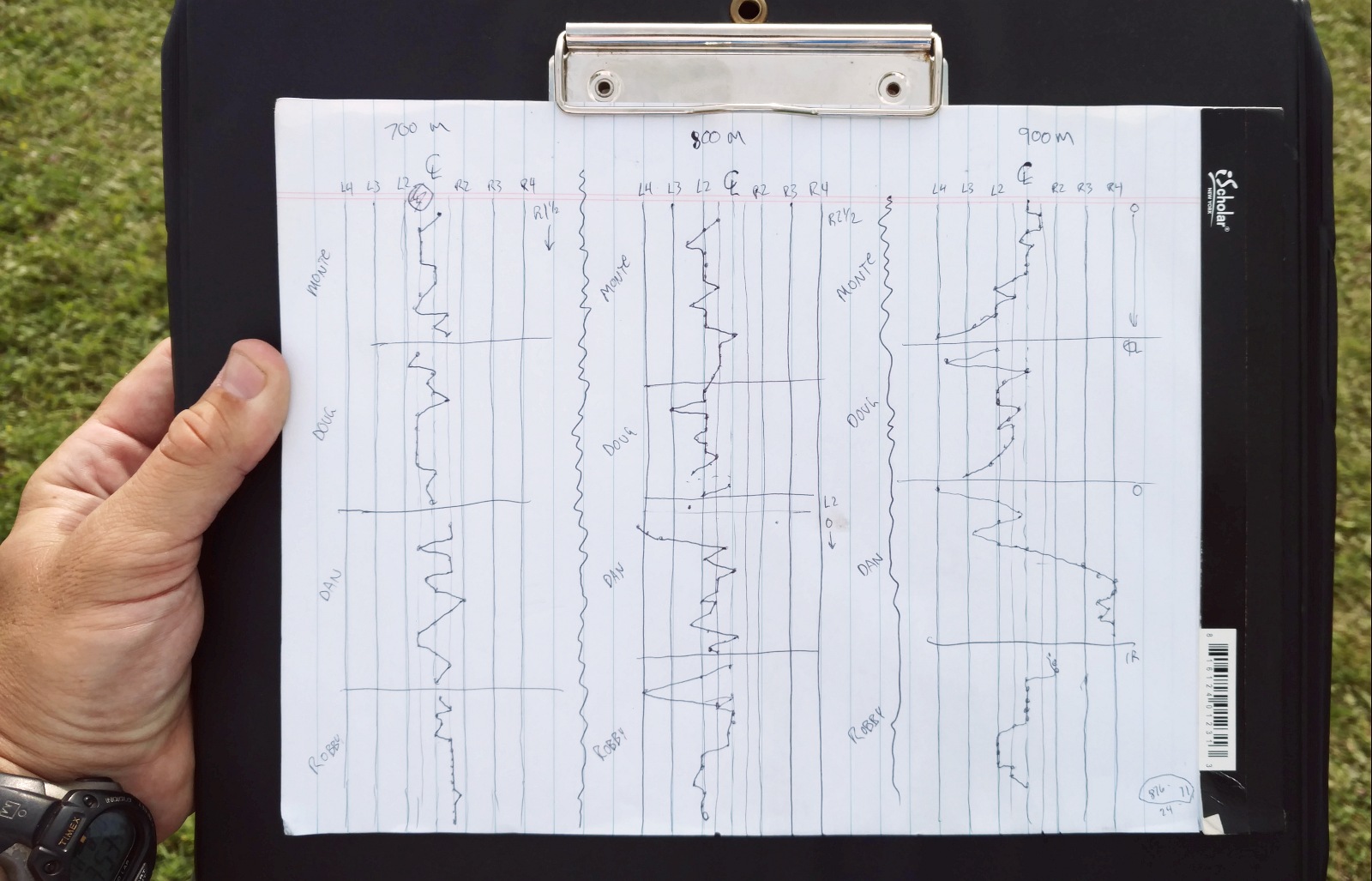
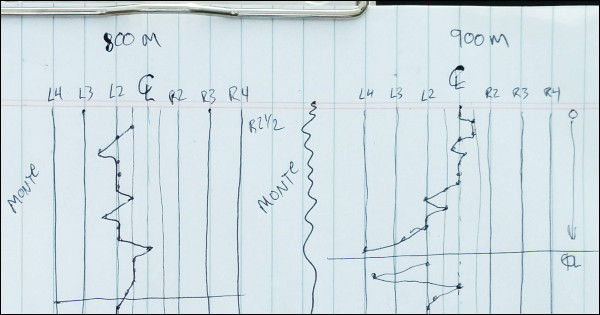
CLICK HERE to see full-screen version of Wind Plot.
Team shooting is very different than individual competition. Typically a team coach makes the wind calls for the shooters. In some cases (where the rules allow), the wind coach even dials elevation and windage changes for the active shooter. For the wind coach to do his job effectively, he must follow the changes in the wind and determine what the correct wind call should have been for each shot. (In other words — what was the “right call”)
Bryan Litz, founder of Applied Ballistics and Past USA F-TR National Champion, served as wind coach for the winning 4-man F-TR Team at the 2017 Canadian F-Class Championships, which preceded the F-Class World Championships also held in Canada. Here Bryan explains how he has used a Wind Plot to make better wind calls, helping his team-mates maximize their scores.
Wind Plot Methodology by Bryan Litz
The wind plot I use is a running history of what the correct wind call was for every shot fired. The more you shoot, the more history you have in a condition, and I find that very useful information. This kind of plot IS NOT showing where the bullet hit, and is NOT showing what you held. It’s showing what you should have held to center each shot. IMO, this is the most valuable information to have when guessing where to hold next for each shot. Here are some key points:
1. I always look for blocks of stable conditions to shoot in and wait out the rest.
2. If the wind plot shows drastic changes, either I’m not picking the right time to shoot or it’s just a really unstable wind condition.
3. When you see many shots using the same hold (e.g. Robby’s 700m and 900m strings on plot), it can indicate very fast shooting and fast pit service.
Q. What are the numbers and Markings on this Wind Plot?
Litz: The wind plot represents the rings on the target. Left 2 for example, is the 5 line on the international target, while Left 2 is the 10 line on the USA target. F-Class shooters and coaches talk about wind holds in relation to these rings. A Left 2 hold isn’t left 2 MOA or 2 MILS, it’s the second ring from center. The vertical lines on the plot represent the rings going out from center, 4 or 5 in each direction. A left or right 5 hold is edge of black on the int’l target.
Q: What Does this Specific Plot Reveal?
Litz: Looking at the plot, from left to right is 700m, 800m, and 900m that we shot progressively through the day. Top to bottom shows each shooter in sequence (shooters names are shown by their blocks). To the right I note what was on the gun for that shooter, and note when it changes. Often times we run the same wind on the gun for several shooters but if it changes, I note what the new windage is and continue on. For example if we’re settled into a condition where we’re shooting Vs with a right 3 hold, I might adjust the scope 1 MOA right because a right 3 hold is equal to 1 MOA. So we can move the scope and start shooting with a center hold.
Q. Are you Plotting Where the Bullet Hits?
Litz: Not exactly. This kind of plot IS NOT specifically showing where the bullet hit, and IS NOT showing what the shooter held. It’s showing what the shooter should have held to center each shot. IMO, this is the most valuable information to have when guessing where to hold next for each shot.
On each shot, the shooter or coach takes a guess about where to hold, and fires the shot. If the bullet hits the center, you plot the point right where you held because it was the correct hold. However, if you miss the call, you plot what hold was required to put that shot in the center. For example if you shoot a right 3 and hit where you held, the correct call would have been “center”. In this way, you’re building a history of what you should have done, which may or may not be what you actually did. This shows you the trends, and brackets which can be used to make future decisions.
Q: Is this Type of Wind Plot Something New?
Litz: I didn’t invent this method, it’s been around a long time. Vertical can be plotted the same way. In team matches, we have a plotter who is advising on elevation trends and suggesting corrections. But, as wind coach, my job is the horizontal so I only keep the wind plot. I have learned lots of strategies from my coaches Emil Praslick and Steve Hardin.
There are many ways to plot and many standard work sheets for this. They’re all tools and the key is to find something that works for you in different situations. I don’t keep a plot when I am personally behind the trigger string firing because I lose more points when I take the time to do it vs. just shooting fast. When pair firing or coaching, I can keep the wind plot without compromising the shooting.
Here Team Australia used plots and communication gear linking coaches. This helped the Aussies win the 2013 F-Open Team World Championship held at Raton, NM.
Know Your Goal — Keep It Simple
Know your goal of plotting. The simplest plot is where you write the shot number where it hit on a target face. This kind of plotting is useful for evaluating shooter performance because it shows how big the group is (in particular the vertical dispersion). However keeping a plot like this does little to help you figure out the wind. It just shows you what shots you messed up on. It does nothing to help you find the center. [Editor: That’s a whole different matter with many variables.] The wind plot I use is a running history of what the correct wind call was for every shot fired. The more you shoot, the more history you have in a condition, and I find that very useful information.
We first ran this story a few years back. We’re republishing it today as a reminder to our readers that safety should be their paramount concern at the range. Avoid distractions and always check your barrel for obstructions before you chamber a round or pull the trigger. A moment of inattention can result in a catastrophic kaboom.
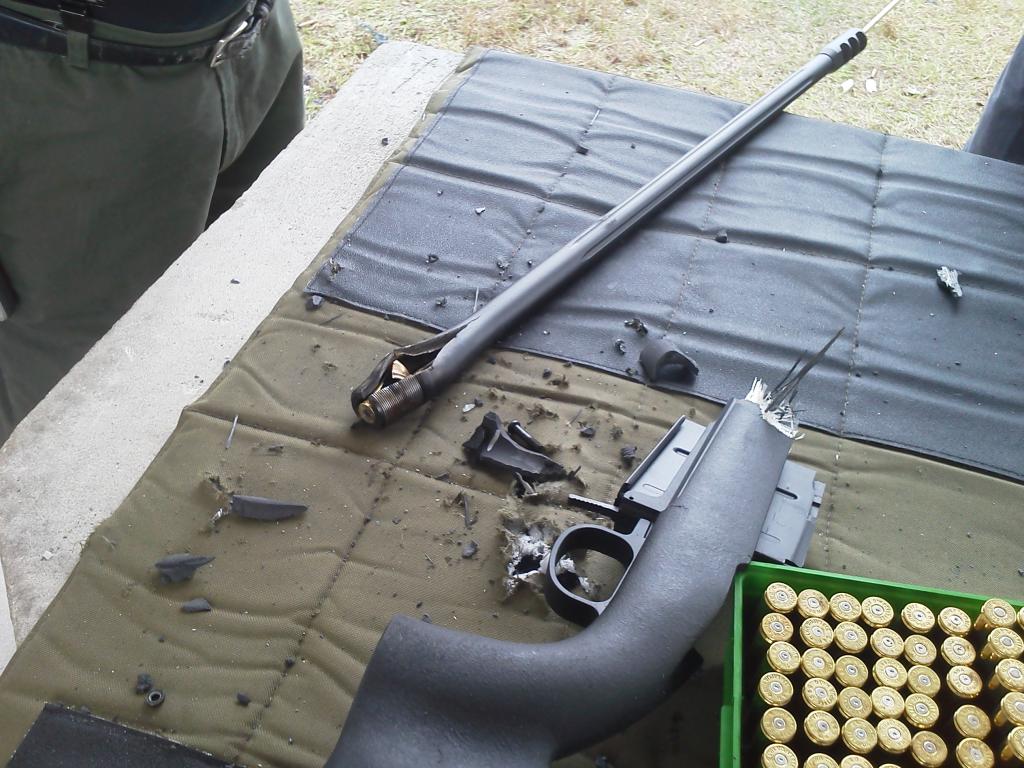
Discharging a .338 Lapua Magnum round with a cleaning rod in the barrel — that’s a recipe for disaster. What happens when a fired .338 caliber bullet and a cleaning rod try to occupy the same place at the same time? Well you get a catastrophic kaboom, with metal pieces flying all over the place, and a shooter very lucky to escape without serious injury. This incident occurred recently in Manatee, Florida, as reported by Sniper’s Hide member Queequeg. We thank SnipersHide.com for granting permission to publish these revealing images in the Daily Bulletin. CLICK HERE for more Kaboom info from the ‘Hide.
This story should serve as a chilling reminder to follow proper safety practices whenever you are at the range. Always check to make sure there is no obstruction in the bore BEFORE loading a live round.
.338 Lapua Magnum + Cleaning Rod + Inattention = Kaboom!
Kaboom at Manatee!
Sniper’s Hide member Queequeg recently published shocking photos of a catastrophic kaboom involving a .338 Lapua Magnum (Savage action). The action was blown off the rifle, shrapnel went through the roof, and the barrel split at the tenon before taking an excursion downrange. The action did crack in the front but the lugs remained engaged so the bolt did not slam to the rear (luckily for the shooter).
Here’s the report: “This happened [January 20, 2014] at the Manatee Gun and Archery Club. Al, Ren and myself were there with a couple other folks. Ren was at bench 12, I was at 13. The fellow at 11 was running a Savage .338 Lapua. He had a very bad day! He damn sure could have killed himself and quite likely Ren as well.”
Queeqeg added: “After the boom, I heard Ren ask ‘Are you alright’ and then turned to look in time to see the fellow reacting in total shock — literally stunned. Ren and I went over to him and could not see any major injuries. Ren was uninjured as well but had a lot of fiberglass splinters on him. The barrel nut is what I presume punched the two holes in the roof. The shooter is a regular there[.] He had been having a problem with sticky cases though he said he was certain the loads were mild. That’s why he was content to knock the sticky ones out with the rod. He simply forgot to remove the rod after knocking out the last stuck case. You can see what happened next.”
To learn more about this incident, go to the original Snipers Hide Forum Thread. There you’ll find more details and four pages of related discussions.
The Important Lesson Here
What did the .338 LM shooter do wrong here? You will say — “Well that’s obvious, he left a cleaning rod in the barrel and then shot a round.” Yes, that was a potentially fatal error. But that was his second mistake — one that occurred only because he made a more fundamental judgment error first.
The FIRST mistake was not acknowledging the problem with his ammo. Had he heeded the warning signs, he would still have a rifle (and an unsoiled pair of trousers). When he first observed that he was having problems with extracting cases, a warning light should have gone off in his head. Presuming his extractor was not broken (and that the chamber was cut properly) he should have been able to extract his brass if he was running safe loads. The lesson here we all need to learn is that if you observe a serious ammo-related issue, it is time to stop shooting. Don’t try to invent work-arounds just to extend your range session, when there are clear signs that something is wrong, very wrong.


 There are various rule sets for different ELR events at different venues. However the Extreme Long Range Shooting Organization (ELRSO) has created a set of standardized rules with the goal of running ELR matches under uniform guidelines. Here are some highlights of the ELRSO Rules for Extreme Long Range Competition:


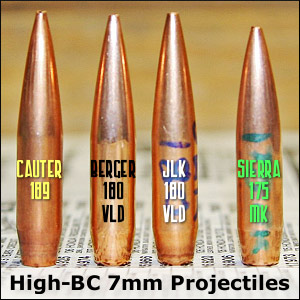 7mm (.284) remains the caliber to beat in F-Class Open Division (though some shooters have had success with .30-Cal short magnums.) With a standard .284 Winchester, or better yet, a .284 Improved, you can drive the high-BC Berger 180gr and 184gr bullets to competitive velocities.


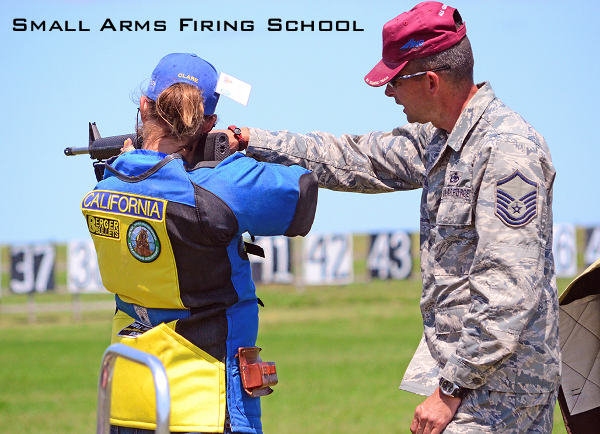


 How to Shoot Standing
 5. Know your hold and shoot within it. The best part of my hold is about 4 inches. When I get things rolling, I recognize a still gun within my hold and execute the shot. I train to do this every shot. Close 10s are acceptable. Mid-ring 10s are not. If my hold was 8 inches I would train the same way. Shoot the shot when it is still within the hold, and accept the occasional 9. But don’t accept the shots out of the hold.