|
|
January 20th, 2010
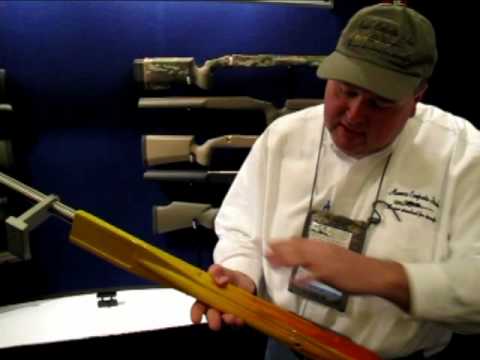
Manners Composite Stocks builds very strong, stiff stocks employing advanced manufacturing methods and high tech carbon fiber materials. In this video, stock-maker Tom Manners showcases his new products for 2010. These include the handsome new MCST 5A Tactical stock, composed of 30% carbon fiber, 65% fiberglass. Though as strong as any comparable stock on the market, the MCST 5A weighs just 4.1 pounds. Tom also displayed his impressive “long wheelbase” F-Class stock. A full 7″ longer than any other F-Class stock on the market, the Manners F-Class stock features all-carbon construction and a unique “fish-belly” design that provides extra rigidity so the stock tracks smoothly without the “springboard effect” common to some other low profile stock designs.


Tom also previewed the new Manners Mini Chassis, an integrated v-block/bottom metal/mag carriage. Manners’ Mini Chassis can be installed in one of Manners stocks or other designs, and it provides a rock-solid, “bolt-in and go” mount for a Rem-700 footprint action. The Mini Chassis takes both 5-round and 10-round AI magazines.
January 20th, 2010
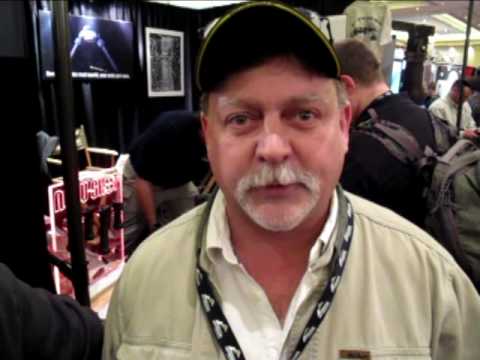
 Wisconsin’s Bartlein Barrels currently produces some of the most accurate cut-rifled rifle barrels in the world. We had a chance to chat with Bartlein barrel-makers Tracy Bartlein and Frank Green shortly after the doors opened at the 2010 SHOT Show in Las Vegas. Frank and Tracy weighed in on some of the “hot topics” in the barrel-making business: Gain Twist and the advantages of single-point cut rifling. In this interview, the “boys from Bartlein” discuss current trends in barrel-making, including what’s “hot” in short-range benchrest and the emergence of 7mm barrels for F-Class Open competition. Tracy also offers his opinions on cut rifling vs. button rifling, and he explains how modern technology has helped make modern barrels “better than ever”. Wisconsin’s Bartlein Barrels currently produces some of the most accurate cut-rifled rifle barrels in the world. We had a chance to chat with Bartlein barrel-makers Tracy Bartlein and Frank Green shortly after the doors opened at the 2010 SHOT Show in Las Vegas. Frank and Tracy weighed in on some of the “hot topics” in the barrel-making business: Gain Twist and the advantages of single-point cut rifling. In this interview, the “boys from Bartlein” discuss current trends in barrel-making, including what’s “hot” in short-range benchrest and the emergence of 7mm barrels for F-Class Open competition. Tracy also offers his opinions on cut rifling vs. button rifling, and he explains how modern technology has helped make modern barrels “better than ever”.
January 19th, 2010
Today at the SHOT Show’s “Media Day at the Range”, Burris gave us a glimpse of the future in hunting optics. The new Burris Eliminator scope will range your target, calculate your trajectory, and illuminate a spot on the reticle that becomes your aimpoint at extended range. We could write a treatise on the Eliminator’s breakthrough technology, but all you really need to know is that after you range your target with the scope, a red dot appears on the vertical crosshair that is the correct aiming point for your ranged distance. The ballistics “hold-over” is already calculated. Just put the calculated red dot on the target, and pull the trigger. It’s that simple.

The new “Eliminator” scope is being introduced as a 4-12x42mm optic, for an expected $850.00 street price. The laser is activated with a simple push-button on the left side of the scope, and also comes with a remote switch that you can attach to the rifle in a more convenient position allowing the laser to be activated while maintaining the aim of the rifle. In the above photo you can see the remote switch on the objective end of the scope.


Once the target range is acquired, the range displays for about 10 seconds and the illuminated aiming dot remains illuminated for 70 seconds. The illumination clock allows plenty of time to pull off a good shot, yet saves battery life.
So how does the Burris LaserScope calculate the appropriate trajectory of your load? The software in the scope contains a database of hundreds of factory-loaded cartridges and even calculates handload trajectories using two (2) user-provided data points. The user inputs the zero range (100 or 200 yards) along with the inches of drop at 500 yards. The 500-yard drop is best found by real world shooting, not by using a calculated trajectory approximation from a ballistic program. The scope’s software then uses the zero-distance and the 500-yard drop figure to extrapolate the entire trajectory.
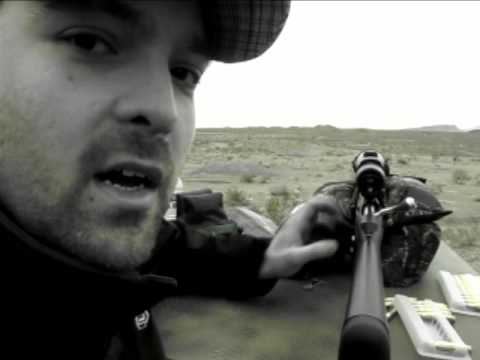
While shooting this scope on a Tikka 7mm-08, we successfully engaged targets from 350-570 yards that were approximately the size of a whitetail deer’s vitals area. Seeing how the conditions were not very conducive to accurate shooting with rain and a 5-15 mph switchy wind, we were impressed with the results.
For those that hunt or shoot out to about 600 yards or so, this scope will definitely speed up the process of pulling off an accurate long range shot. In a matter of seconds, you can locate a target, range it, and engage it. There is no time wasted fumbling with a separate laser rangefinder, no time wasted looking at a drop chart, and no time wasted clicking in the appropriate amount of elevation. As long as you can get a range on your target, the only thing left to worry about is the wind! This scope is obviously not for everyone, but we are confident that many hunters can benefit from this remarkable new technology.
Burris Eliminator Specs:
Click value 1/4″ at 100 yards
Weight 26 ounces; length 13″
Eye Relief 3-3.5″
Elevation Travel 50″
Laser range 550-800 yards based on reflectivity
January 19th, 2010
At the Media Day rifle venues, “Tactical” rifles were definitely the featured attraction. There were, of course, many AR-based black rifle offerings, but the purpose-built, precision bolt guns really were the stars of Media Day this year. Savage has a new .338 Lapua Magnum, its first ever. SAKO unveiled an impressive new .338 TRG with front rails and a very sophisticated folding stock (more on that later). Barrett had some thundering big boomers on display. You could feel the compression from the muzzle blast on the new .416 Barrett a dozen feet away. JP Enterprises had its handsome new MOR-07 on display. This features an aluminum chassis with either tubular or square 2×4-style fore-arm, plus a buttstock that looks like the Magpul AR stock. JP’s new MOR (Manually Operated Rifle) is offered either as a chassis to fit Rem footprint receivers, or as a $4499.00 complete rifle.

Though there were many impressive domestic tactical bolt guns, one of the nicest overall designs, in this Editor’s opinion, came from Austria’s Steyr Arms. The new Steyr SSG 08, shown below, features an advanced folding stock that is solid in the locked position while offering full adjustability of comb height and length of pull. The pistol grip was one of the most comfortable I’ve tried. The SSG 08 features a unique, 3-position triggersafety. In the “full safe” position, a positive pop-up selector locks the safety in place and actually blocks the firing pin. The detachable box magazine can be secured in two positions. In the first, the magazine is fully retained in the gun but you can cycle the bolt without picking up or extracting a round.

While the SSG 08 had all the tactical bells and whistles (such as forearm rails and 10-round magazine), it was the overall execution and competence of the weapon that impressed me. The design was well thought out — there were no “rough edges”, and everything, from the buttstock hinge to the mag release, functioned smoothly (and quietly). What separated the SSG 08 from most of the competition was the quality of the trigger. Many of the tactical rifles had very, very heavy trigger pulls with lots of over-travel. The Steyr SSG 08’s trigger was crisp and light. Shooting this gun was a pleasure. One noticed the attention to detail in every element of the rifle. We are told that Steyr received input from Austria’s Special Forces on this rifle. We aren’t surprised. With the SSG 08, one can see that real marksmen were involved in the design.
January 19th, 2010
Savage Arms was well represented today at the SHOT Show’s “Media Day as the Range.” We saw and shot several new offerings from Savage (including a tactical rifle in 338 Lapua Magnum and a hunting weight 6.5-284). We’ll cover these centerfire Savages later this week. One of the new Savages we really liked was the model 93R17 TR, a slick little 17 HMR. It looks and feels like a full-sized centerfire tactical bolt-gun, it comes with an excellent stock and nice trigger, and it is both affordable and very accurate. (NOTE:v Savage is also offering 22LRs rimfires in the same stock, the MK II TR and TRR.)

 This rifle features an all-new, texture-painted wood stock with a very sound “tactical” design. It is well thought out, with good ergonomics, and offers options and design details that most rimfires do not. The stock features a moderate beavertail fore-end, a fairly vertical grip and a shallow butt-hook at the rear for support using the non-shooting hand. The black textured paint is very similar to the black painted finish on McMillan stocks (notice the texture in the photo). This rifle features an all-new, texture-painted wood stock with a very sound “tactical” design. It is well thought out, with good ergonomics, and offers options and design details that most rimfires do not. The stock features a moderate beavertail fore-end, a fairly vertical grip and a shallow butt-hook at the rear for support using the non-shooting hand. The black textured paint is very similar to the black painted finish on McMillan stocks (notice the texture in the photo).
The “look and feel” of the model 93 TR is similar to the popular Rem 700 PSS, and that’s good news for tactical shooters. With the new m93 TR, you feel like you are shooting a full-size tactical rifle. It feels solid and comfortable. And this rifle features with an optional factory-installed picatinny rail — a very nice feature on a rimfire rifle. You can easily move your scope back and forth between the model 93 and a Picatinny equipped centerfire bolt-gun. The model 93 should prove very popular with shooters who want to train with an economical rimfire that has very similar ergonomics to a centerfire bolt gun. For training duties only you may prefer the 22LR version. But the 17 HMR would be our pick for a “working” varmint rifle.

With CCI hollowpoint 17 HMR ammo, the m93 proved very accurate — we hit everything we shot at with ease, even in rainy, gusty conditions. Targets were mostly clay pigeons at 50-100 yards; we could break a clay, then easily hit the smaller pieces. Clearly this gun can be a very effective short-range varminter.
Overall, we really liked the feel and ergonomics of this rifle. It is a good choice for those seeking a rimfire trainer that handles like an “adult-sized” centerfire rifle. We are confident this will make a great varmint rifle as well as a economical tactical trainer. Your Editor expects that this rifle will be a hot seller for Savage.

Savage m93 17 TR Specs: Cal 17HMR; barrel 21″; overall-length 40″; weight about 7.5 lbs.
January 18th, 2010
Eat your hearts out readers. Today while you’re working hard at “real jobs”, Jason Baney and I will be in Boulder City, Nevada testing the latest and greatest new firearms from Savage, Browning, Sig Sauer and other makers. Jason and I will be exercising our trigger fingers as part of the SHOT Show Media Day at the Range. At this annual event, over 50 leading manufacturers will showcase their new products for 2010.

We’ll have a chance to put a variety of rifles and pistols through their paces. Sig Sauer has promised some exciting new rifles, and Beretta, Glock, Ruger, and Taurus should all have some new pistols.
We will provide a complete report, with many photos and video, on Tuesday. But if you can’t wait, check out our Twitter Page Monday afternoon and evening for Media day updates. We hope to provide “instant updates” on Twitter.com, offering quick highlights of the new firearms on display.
CLICK HERE for Media Day Instant Field Reports on Twitter.com
January 18th, 2010
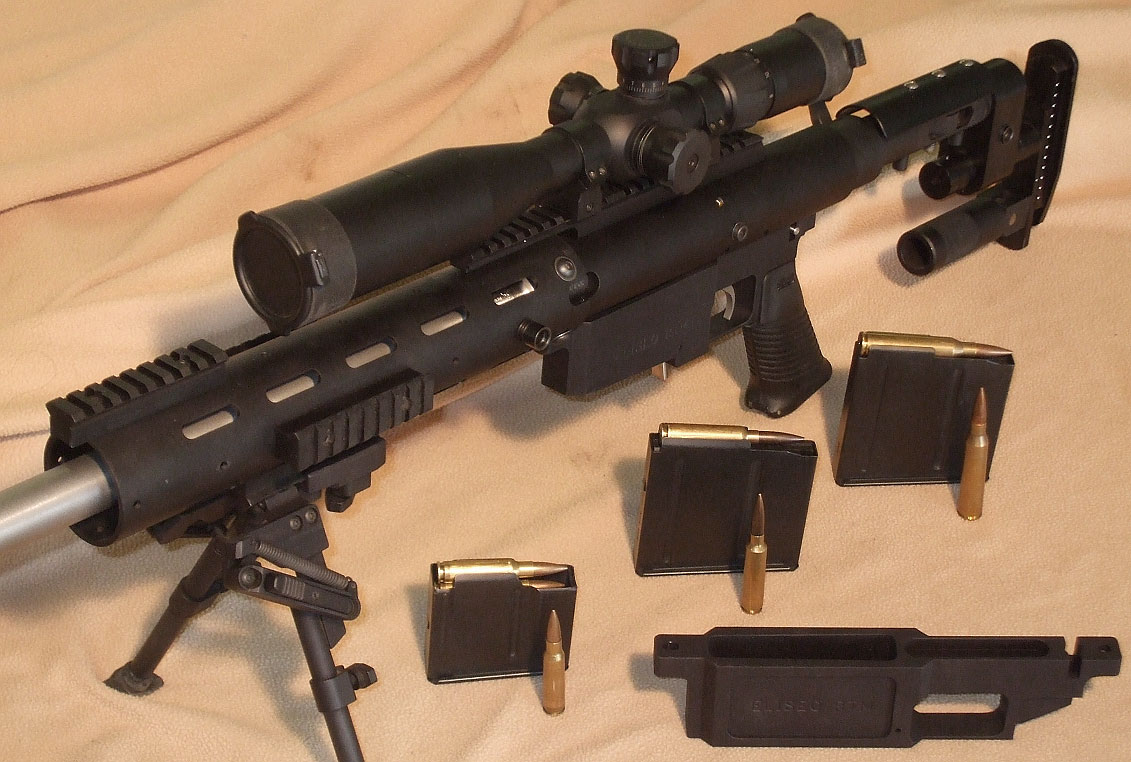
One gun, many calibers. That’s the concept behind Gary Eliseo’s new modular long action tube gun. By offering two different lower assemblies, along with swappable bolts and barrels, Gary’s versatile new RTM (Remington Tactical Modular) chassis can shoot a wide range of chamberings, from the midsize cartridges (such as 6XC) all the way up to the .338 Lapua Magnum. Eliseo’s RTM provides the tactical shooter with unrivaled versatility in a single package with consistent ergonomics and control function. You’ve heard the old adage, “beware the man with one gun.” Well that’s especially true if the one gun is built on the Eliseo RTM platform. To our knowledge, the RTM is first tube gun that can shoot everything from a 22-250 up to the .338 Lapua Mag. It’s a remarkable feat of engineering.


Gary provided this initial report: “I wanted to give Daily Bulletin readers a peek at the new RTM chassis I’ve been working on. Designed to accept the Remington 700 long actions or custom long action Rem clones, it will be available with two lower units. With the shorter lower, users can run short action cartridges like the 6-6.5×47, 6XC, 6.5 Creedmoor, 6.5×47 Lapua and .308 using AICS 5- or 10-round magazine. Or, with the longer lower (and a different barrel and bolt), you can shoot the .300 Win Mag up to the .338 Lapua Mag using AI 5-round single stack magazines.” Gary adds: “I’ve been working with John Pierce on this project — he’ll offer an action ‘package’ which will include a long action, two bolts, and even two barrels for those who want all the options.” Eliseo’s new RTM chassis comes equipped with an improved ambidextrous cheek piece, Gary’s new folding VRGS (vertical rear grip system), and a pair of quick detach sling swivel cups. For more information, visit CompetitionShootingStuff.com, or call Gary Eliseo at (714) 630-5734.

January 18th, 2010
On January 12, 2010 the New York Times “At War” Blog focused on the combat performance of the M4 Carbine, one of the preferred weapons of U.S. troops in Afghanistan and Iraq.
There has been some concern that m4s used in sustained fire-fights are overheating the barrel. It’s no surprise that guns firing magazine after magazine of ammo can over-heat the barrel. In a video found on the N.Y. Times site, Testers for Colt Mfg. recently shot an m4 in full-auto mode, loading magazines as fast as possible. The point was to test the gun to the point of catastrophic failure, something that occured after about two minutes.
CLICK HERE to watch m4 Rifle Test Video (Catastrophic Failure).
This is a pretty amazing video. As the NY Times author notes: “Watch the video closely. After several magazines, the barrel smolders. Then it becomes red hot. After 1 minute and 20 seconds the barrel begins to droop between magazines — like a piece of warm licorice. Then comes the catastrophic ending, at 1 minute and 51 seconds and after the 535th round, when the barrel ruptures.”

We hate to see any firearm abused like this. On the other hand, we’re glad a manufacturer testing the limits of extreme performance. Lessons learned can help improve the m4 design. The U.S. Army is considering fitting a heavier-contour barrel that may not heat up so quickly. A second video on the same NYT Blog page shows an m4A1 carbine with a heavier barrel. This second gun delivered 911 rounds before the gas tube ruptured. Note, in both the video demos, the m4s were modified to shoot full auto (not 3-round bursts like most m4s). This allowed a much high sustained rate of fire than would be possible with weapons limited to 3-round bursts.
January 17th, 2010
 Gary Anderson, who served the CMP as the Director of Civilian Marksmanship (DCM) for the past ten years, officially retired from that position on the December 31, 2009. Anderson celebrated his 70th birthday in October, 2009. The CMP has no immediate plans to appoint a new Director of Civilian Marksmanship. The CMP’s current Chief Operating Officer, Orest Michaels, will take over direct management of CMP programs. Gary Anderson, who served the CMP as the Director of Civilian Marksmanship (DCM) for the past ten years, officially retired from that position on the December 31, 2009. Anderson celebrated his 70th birthday in October, 2009. The CMP has no immediate plans to appoint a new Director of Civilian Marksmanship. The CMP’s current Chief Operating Officer, Orest Michaels, will take over direct management of CMP programs.
Anderson will continue his association with the CMP in a consulting capacity as “DCM Emeritus”, working work on several projects that include training curriculum development, master instructor training, rulebook editing and technical writing. Anderson will also stay busy with international-level shooting. Anderson was recently elected President of USA Shooting, the U. S. Olympic shooting governing body. He also serves as a V.P. for the ISSF.

CMP Thrived Under Anderson’s Leadership
During his tenure at CMP, participation in CMP National Matches events doubled, the CMP Games expanded dramatically, and Anderson guided the growth of the Army, Marine Corps, Navy and Air Force JROTC marksmanship programs, and CMP Master Instructor training program. Anderson also had a key role in the construction of the CMP Competition Centers at Camp Perry and Anniston.

While serving as DCM, one of Anderson’s top priorities was increasing youth participation in the shooting sports. In the photo above Anderson awards a certificate to a CMP-USMC Junior High Power Clinic participant.
Anderson said, “My work as the DCM has been richly fulfilling and I am grateful to the CMP and its Board of Directors for the opportunities they gave me to realize so many of my dreams and expectations for the shooting sports.” The CMP Board will hold a tribute to Gary Anderson at Anniston, Alabama on March 28th, after the 2010 JROTC Air Rifle National Championship.
January 17th, 2010
 Grafs.com has a handy new case lube unit from SmartReloader, the Swiss-owned “yellow” brand now competing with RCBS (Green) and Lee (Red). The SR-104 case lube pad/tray is so new you won’t even find it on the parent SmartReloader’s company website. Grafs.com has a handy new case lube unit from SmartReloader, the Swiss-owned “yellow” brand now competing with RCBS (Green) and Lee (Red). The SR-104 case lube pad/tray is so new you won’t even find it on the parent SmartReloader’s company website.
The SmartReloader Case Lube Unit is very nicely thought out. A closed-cell-foam lube pad is positioned in the middle. On left and right sides are small trays that can hold your lube bottle or cartridge cases. But the real brilliant feature of the design is the dual-purpose yellow pad cover/brass holder. When flipped open, the hinged cover has slots to hold your cases just like a reloading tray. When you’ve finished lubing your cases, fold the yellow lid back and it completely covers and protects the sticky lube pad. That’s really smart. Now you don’t have to worry about your lube pad attracting dirt, tumbler dust, and even unlucky insects that might wander across it.

If you still prefer to lube your cases on a rolling pad (there are easier methods in this Editor’s opinion), you should check this product out. The new SmartReloader Case Lube Unit costs just $12.99 at Grafs.com, item VBSR01702.
|