|
|
March 7th, 2010
Sinclair Int’l has added many new products to its catalog, including recently-introduced reloading products from Hornady: AutoCharge electronic powder measure ($249.95), Lock-N-Load Concentricity Gauge ($99.95), and the Lock-N-Load UltraSonic Cleaning machine ($99.95). In addition, Sinclair has rolled out some impressive new products of its own, such as the new fully-adjustable, quick-attach Tactical/Varmint Bipod.
Sinclair Int’l Tactical/Varmint Bipod
With a hefty $229.95 MSRP, the new Sinclair Tactical/Varmint Bipod (item 04-8500) is nearly three times the price of a Harris bipod. Is it worth the extra money? For a typical varmint hunter, the answer might be no. But for the tactical competitor, the enhanced performance (and extra features) of the Sinclair tactical/varmint bipod may well be worth the extra coin.
The new Sinclair Tactical/Varmint Bipod is a strong, rugged design with billet aluminum and stainless steel construction throughout. There are many enhanced features compared to a Harris. First, the Sinclair Bipod’s individually adjustable legs can spread much wider (and lower) than on a Harris. The legs adjust from 6 1/2 inches to 12 1/2 inches in length, and there is a positive stop on each leg. The Sinclair Bipod also comes with a built-in “Pod-Loc” style cant adjuster, a really important feature that must be retrofitted (for about $27) on a Harris. In addition to the cant adjustment lever, the Sinclair bipod has a secure quick-release attachment system — the same system used on Sinclair’s popular F-Class Bipod. This lets you install or remove the bipod in seconds without any tools. Showing attention to detail, Sinclair also included an extra swivel stud on the bipod upper section, so you can attach a sling. Overall, the new 1 lb., 12 oz. Sinclair Tactical Bipod looks like a very good product that offers real advantages over a Harris for the tactical shooter. We just wish the price was lower.
Hornady AutoCharge Electronic Powder Scale & Dispenser
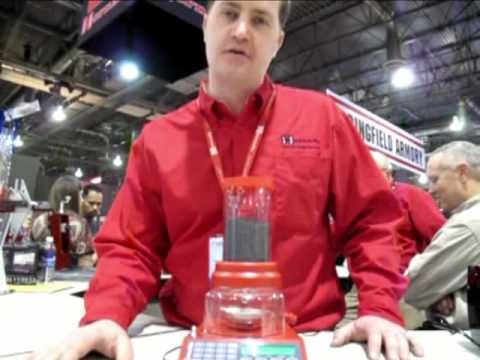
Here’s the first look at Hornady’s brand new Lock-N-Load AutoCharge electronic powder scale/dispenser. This unit can measure up to 1000 grains of powder. According to Hornady, the unit will calculate weight precisely to within ± 0.1 grains. That would put it on a par with the RCBS Chargemaster, though the Hornady unit sells for $60-$80 less than the “green machine”. The Hornady has many nice features, such as an easily readable, back-lit display, trickle function, calibration weights suitable to both low and high powder charges, and plenty of memory for your favorite loads. The Hornady, priced at $249.95 (item 050068) at Sinclair, also features three, user-selectable dispensing speeds — something you won’t find on the RCBS ChargeMaster. Those three speed settings let you optimize dispensing flow for the type of powder you’re using.

We hope to get one of these Hornady AutoCharge units soon and run a head-to-head comparison with our RCBS Chargemaster. Below is a video from SHOT Show 2010 of an early production Hornady AutoCharge.
March 7th, 2010
It looks like the NRA is considering creating a new type of multi-distance rifle match, or at least expanding High Power competition as we know it today. The NRA has seen the growing popularity of “tactical” matches with scoped bolt-action rifles, and apparently is looking for ways to bring the tactical game under the NRA umbrella.
 The NRA recently hired Trey Tuggle for the newly-created position of “Tactical Rifle Coordinator”. This position is part of the NRA Competition Division’s efforts to bring more people into the shooting sports. The focus of the Tactical Rifle Coordinator will be to promote the use of optics at existing High Power Matches as well as to move the NRA forward with a sanctioning process for Multi-Gun Action Shooting Events. The NRA recently hired Trey Tuggle for the newly-created position of “Tactical Rifle Coordinator”. This position is part of the NRA Competition Division’s efforts to bring more people into the shooting sports. The focus of the Tactical Rifle Coordinator will be to promote the use of optics at existing High Power Matches as well as to move the NRA forward with a sanctioning process for Multi-Gun Action Shooting Events.
As a former U.S. Navy SEAL sniper, Trey Tuggle knows his tactical rifles. Tuggle is also an entrepreneur, having created a counterterrorism assault vehicle company called Patriot 3.
Those interested in tactical or multi-gun competition can email Tuggle via ttuggle [at] nrahq.org.
March 6th, 2010
It’s already March 6th, and that means the 2010 U.S. F-Class Championships is less than three weeks away. That’s right, this year the F-Class championships will be held in March instead of October. The venue is the Sacramento Valley Shooting Center range in Sloughhouse, California, just east of Sacramento. 2010 Match dates are: March 25, 26, 27, and 28.

We know you east-coasters may still be shoveling snow, but it’s time to pack up those F-Class rifles, start loading ammo and get prepared for one of the biggest long-range shooting events of the year. There will be shooters from across the U.S., Great Britain, Canada, and likely from Australia and South Africa. Match organizers expect upwards of 150 competitors.

 This year the course of fire is at two distances: 600 and 1000 yards. There will be three days of individual competition and a one-day team match. Lunch will be served at the range each day, and a huge barbecue is included for Saturday. The awards for placing high in the standings will be great, but the prizes drawn randomly from all of the competitors participating will be even better. This year the course of fire is at two distances: 600 and 1000 yards. There will be three days of individual competition and a one-day team match. Lunch will be served at the range each day, and a huge barbecue is included for Saturday. The awards for placing high in the standings will be great, but the prizes drawn randomly from all of the competitors participating will be even better.
If you’re curious about the location and how the Nationals are run, check out this report on the 2006 F-Class Nationals previously held in Sacramento.
UNITED STATES F–CLASS NATIONAL CHAMPIONSHIP 2010
DATES: March 25, 26, 27, 28, 2010
LOCATION:
Sacramento Valley Shooting Center
P.O. Box 1407
15501 Meiss Road
Sloughhouse, California
Ph. 916-354-9668
Web site: www.sacvalley.org
March 6th, 2010
There are a lot of things a light, portable netbook can do for shooters. First, all your load data and shooting log info can be accessed while at the range. Second, you can run ballistics programs and download data directly from chronographs with PC connectivity. Third you can store or playback images and videos you take during shooting sessions — a valuable training aid. Use the netbook at your loading bench for instant web access to reloading databases such as Hodgdon’s Reloading Data Center. And of course, as with any Windows computer, you can run QuickLoad, the valuable tool for estimating load pressures and velocities.
This Editor has a 2.3-lb Samsung Go netbook, with 10.1″ screen. I love it. Because it is small and light (with excellent battery life), my netbook gets used 10 times as often as my regular laptop. The Samsung Go is a great netbook, but it costs over $400.00. If you can’t afford that, here’s a super-deal from eCost on a Refurbished HP Mini Netbook with Windows 7 OS.
Right now, for the next 4 days or so, you can purchase the refurb HP Mini 110 netbook for just $229.99. This 2.33-lb unit features a nice low-glare screen, 1.6GHz Intel Atom N270 processor, 160 gig harddrive, and 1GB of RAM. The Mini 110 comes with built-in 802.11b/g Wi-Fi for fast connection to wireless networks. If you’re concerned about durability you can add TWO years of warranty coverage for $74.99 (or 1 year for $59.99).

$229.99 (before shipping) is a great deal on a netbook. These are “recertified” units with 90-day HP factory warranty and available extended warranty. Many of these units are lease returns. Note, there is also a $239.99 version with a 250 gig HD, and a $264.99 version with built-in Mobile Broadband (Windows XP). IMPORTANT: These small netbooks do NOT include a CD/DVD drive. Programs must be loaded off a network connection, thumbdrive, or external CD player (extra cost).
March 5th, 2010
We recently received a prototype version of the new NEO rest from SebCoax.com. Designer Sebastian Lambang’s new rest is an engineering tour de force. Your editor can say, straight up, that this is the best joystick rest I’ve ever used. It is butter smooth in horizontal travel. The NEO does not suffer from the jerky, or jumpy vertical movement of some other joystick rests. With a 17-lb gun on the rest, yes there is more resistance in the vertical plane than in the horizontal, but you can still move the crosshairs up smoothly in one motion. You don’t have to “over-shoot” and then come back down on your aiming point. If you’ve used other coaxial rests, you know that the upward movement can be jerky if the resistance is set so that the joystick does not droop when you let go. Not so with the NEO. Seb Lambang has fitted the NEO rest with expensive, new German-made internal bearings. These new teflon liner bearings, plus two additional internal leaf springs for weight support, make all the difference.
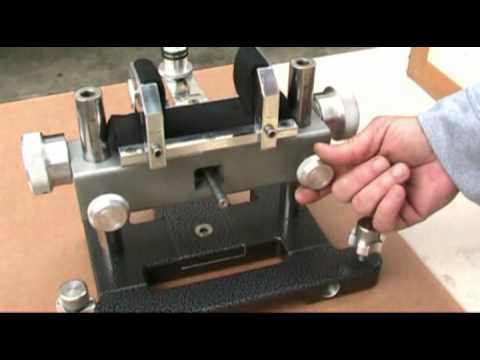
The upward movement is MUCH smoother than before. In this Editor’s opinion, the NEO is smoother (with less jumpiness) than the Farley. It is also easier to set joystick tension on the NEO rest that on the previous (Gen 1) SEB rest. Before you had to fiddle with hex-head bolts. On the NEO rest, SEB has provided two, large diameter knobs. It is easy to set the tension so the joystick doesn’t fall on release, but travel is still smooth and positive in all planes.

Make no mistake, joystick movement on this rest is smooth and fluid, even in straight upwards motion with a 17-pound rifle. No more of the jumpiness or stacking found on lesser designs. SEB has got a winner here. Just as a top-fuel dragster lives or dies on quarter-mile speed, a coaxial rest is judged, foremost, on its ability to move quickly and precisely to point of aim in ONE MOVEMENT. Here the NEO rest shines. It may be the smoothest-functioning coaxial rest ever produced. And it also has the unique feature of adjustable front bag width (see videos). That’s great if you shoot both wide benchrest rigs and narrow-forearm rifles. Also, when disassembled, the NEO rest packs up very compactly — a big plus when traveling. If you didn’t like joystick rests before, the SEB NEO may make you a believer.

Triple-Sandbag Configuration and Vibration Damping
How about shooting performance? The rest is rock-solid, with no wobbly movement, so no mechanical flaws should prevent match-winning performance. However, the NEO rest has three separate, fairly thin bags. This configuration has been used with success in rimfire benchrest. Some European centerfire rests use a similar tri-bag arrangement. However, we are concerned that the smaller, separate bags could behave differently than a conventional front bag. There may be differences in vibration damping and how the bag responds under recoil. We have NOT done enough testing to judge how the NEO’s tri-bag system performs compared to a conventional one-piece sandbag. But it’s something to consider.
NEO Rest Offers More JoyStick Travel
The SEB NEO rest has a very wide range of travel. Running the joystick to max travel, we placed shots 43 MOA apart vertically and 48 MOA apart horizontally. That’s four FEET of horizontal travel at 100 yards using JUST the joystick! If you need more than 43 MOA of vertical travel, the whole coaxial carriage moves up and down on two large columns, delivering a bag height range from about 5″ to 10″ above the bench top. That’s a HUGE amount of travel. The gross height is adjusted with two large knobs, one on either side of the carriage. This movement is very smooth — as if the carriage is on ball bearings.
The geometry of the NEO Rest is somewhat unique. Although the NEO can be positioned in either direction (i.e. it is reversible), it is designed to have the long, narrow foot out front, on the target side. This opens up the entire area behind the rest, so there is no interference with the joystick’s movement. “But what about my vertical speedscrew?” you may be saying. Well, with the SEB NEO’s 43 MOA of vertical travel, you really don’t need a vertical adjustment screw on the shooter’s side of the rest when aiming your rifle. There ARE two adjustment screws on the left and right rear sides, but these are intended to level the rest only.

Overall, we were very impressed with the quality, range of adjustment, and versatility of the NEO rest. It has more than enough joystick travel to shoot an ARA rimfire target with 25 bulls. It has enough gross vertical adjustment for 1000-yard F-Class use, even if the target is way up on a hill or down in a valley. And, the rest is relatively easy to transport, with a fairly small footprint and a convenient carry handle built into the “back” side of the rest.

NEO Rest Specifications
- Reversible base configuration: Rest can work with joystick tension adjustments in front, or in rear, per user preference. If you want the single long foot on the “driver’s side”, that is also possible.
– Size assembled: Approx. 13″ wide x 14″ long, 8.6″ tall.
– MOA adjustment (joystick travel): At least 40 MOA (vertical) x 44 MOA (horizontal).
– Net weight: approx 9.3 kgs (20.5 lbs), with standard aluminum base and filled bags.
– Bag Width Range: 200 mm (approx 7.874″) between posts CTC. This allows a max forearm width of about 4″ (four inches).
– Height Range (from bottom of base to top of horizontal bag): Approx. 5″ (lowest) to 10″ (highest).
– Sand Bag Thickness: Approx. 3/4″ for the “horizontal’ bag, approx. 1/2″ for the side chambers.
– Construction: All metal throughout. Base is cast aluminum. Rack gear posts and pinion are stainless steel (SUS 420J). Coaxial body, rest top, forearm stopper are made from aircraft grade alumunium.
– Price: Not yet set, but probably $675.00 to $750.00 US.
NEO Rest vs. SEB Standard Rest
Seb told us: “The NEO rest is NOT designed to replace the regular SEB rest. It’s only for people that need faster elevation adjustment, and a rest that can be set to a lower level overall or a higher lever overall. On the production NEO rests, the ‘body’ of the coaxial unit will be polished, just like the current (Gen 1) rest. The current (Gen 1) rest will remain in production, so don’t worry if you prefer that design. I haven’t established the final price of the NEO rest yet, but I think it will be about $675.00 to $750.00. Yes, it will be somewhat more expensive because of the extended travel capability and increased cost of materials.”

Further Enhancements for Production Model?
The NEO we received is a prototype model and SEB tells us that he may add or modify some features in the final production version. What changes would we like? First, we think a front rest in the $700+ price range should have a built-in level. Obviously you can buy a bubble level and stick it on, but Seb should include one. Second, we’d like to see some variations on the side sand chambers. They tend to plump up in the middle. For stocks with side flats, such as the McMillan Edge, the thickest part of the side bags is a bit too high. Also the side tension knobs push the bags inwards well above the contact point with the stock. We also would like to have more forearm stop travel. As made, the front forearm stop has a good range of adjustment. But an optional, longer extension for the stop would better suit rifles that balance/shoot best with the rest placed well back on the forearm.
Included Cord Helps Rest Alignment
Included with the NEO rest is a nylon cord with metal ends. Just pop one end of the cord in a hole in the middle of the forearm stop and draw the cord back in line with the target, running the cord through the ears of your rear sandbag. This allows you to center and align the rear bag optimally. The cord is a thoughtful accessory provided by SEB.


Review Disclosure: SebCoax.com provided the Seb NEO rest for testing and evaluation. The rest’s manufacturer is not currently advertising with AccurateShooter.com.
March 4th, 2010
Southwick Associates compiles statistics for the hunting/shooting industry and public wildlife agencies. Based on 2009 survey results, Southwick has ranked the most popular shooting/hunting brands and products. These rankings were based on HunterSurvey.com and TargetshootingSurvey.com online polls completed by nearly 45,000 hunters and shooters. The polls asked the hunters and shooters to list the outdoor products they purchased most often.
 There were some interesting results among rifle shooters. Remington is still the #1 rifle-maker, and Remington also leads the way in rifle ammunition. Hodgdon is the top reloading powder vendor with 36.5% of reported purchases. Top bullet-maker is Hornady with 30%, but remember this is for hunting AND target shooting. CCI makes the most popular rifle primers. We were somewhat surprised to see that the top scope brand for all firearms was Bushnell, which held a 17.3% share. There were some interesting results among rifle shooters. Remington is still the #1 rifle-maker, and Remington also leads the way in rifle ammunition. Hodgdon is the top reloading powder vendor with 36.5% of reported purchases. Top bullet-maker is Hornady with 30%, but remember this is for hunting AND target shooting. CCI makes the most popular rifle primers. We were somewhat surprised to see that the top scope brand for all firearms was Bushnell, which held a 17.3% share.
Southwick Associates’ HunterSurvey.com also measured buying activities over time. As you might expect, hunters spent the most money on gear in November. However the peak month for target shooters was June. We would have figured most of the spending would have taken place earlier in the spring — at least for rifle shooters who reload.

Rifle Shooting & Hunting
• Top rifle brand: Remington (16.5% of all purchases)
• Top muzzleloader brand: Thompson Center (29.5% of all purchases)
• Top scope for firearms: Bushnell (17.3% of all purchases)
• Top rifle ammunition brand: Remington (28.8% of all purchases)
• Top reloading bullet brand: Hornady (30.2% of all purchases)
• Top reloading powder brand: Hodgdon (36.5% of all purchases)
• Top reloading primer brand: CCI (36.0% of all purchases)
• Top shooting target brand: Shoot-N-C (38.9% of all purchases)
Shotguns
• Top shotgun brand: Remington (22% of all purchases)
• Top shotgun ammunition brand: Winchester (32.0% of all purchases)
• Top clay brand: White Flyer (34.3% of all purchases)
• Top balls, bullets, or shot brand: Hornady (26.2% of all purchases)
Handguns
• Top handgun brand: Sturm Ruger (16.6% of all purchases)
• Top handgun ammunition brand: Winchester (22.0% of all purchases)
• Top holster brand: Uncle Mike’s (21.4% of all purchases)
• Top blackpowder brand: Pyrodex (51.5% of all purchases)
Hunting Gear
• Top binocular brand: Bushnell (19.5% of all purchases)
• Top knife brand: Buck (16.7% of all purchases)
• Top scent or scent covering brand: Scent-A-Way (24.5% of all purchases)
• Top game call brand: Primos (34.8% of all purchases)
March 4th, 2010
Hornady has started shipping its new .308 Winchester Superformance™ match ammo. Loaded with a high-BC 178gr BTHP, the new ammo, which employs a proprietary blend of propellants (some of which are NOT commercially available), has shown outstanding velocities. One shooter reported 2820 fps from a 26″ barrel, while Hornady claims 2775 fps from a SAAMI-spec 24” test barrel. Hornady says this .308 match load is approximately 175 fps faster than any comparable factory .308 load.

CLICK HERE for Technical Info on Superformance ammo.
New Projectile Developed for this Match Ammo
With a 0.530 BC bullet moving around 2800 fps, the new Superformance™ ammo offers impressive ballistic performance — better than many reloaders may be able to achieve with their handloads. Accuracy has been very good also, according to Hornady Engineer, Joe Thielen, due in no small part to bullet design: “The new 178 grain BTHP Match bullet was purpose-built, and optimized specifically for the .308 Winchester chamber. It features an aggressive ogive as well as an extremely efficient boat tail that makes this projectile highly effective aerodynamically, [with] less wind drift and … flatter trajectories. Accuracy results were excellent. We shot a .680″ group at 200 yards with our test equipment, and field tests out to 1250 yards yielded 8″ groups (8 inches at 1250 yards is 0.611 MOA).”
The 178gr Superformance .308 ammunition should stay supersonic to approximately 1,275 yards. That’s a lot farther than any other factory .308 load for 175-180gr bullets. The ability to stay supersonic well past 1000 yards is a boone to long-range .308 shooters.
| Here is how Hornady has achieved high velocities with its new Superformance ammunition:
1) Superformance ammo uses advanced new Ball Powders (not yet for sale).
2) The powders are BLENDED, with different “recipes” for different cartridges.
3) The new powders maintain high-energy longer in barrel (like Reloder 17).
4) The new powders burn almost completely, reducing ejecta, for less exit pressure, and less felt recoil.
5) Superformance ball propellants pack very densely, so more grains of powder can fit inside a case, compared to typical extruded stick powders. |
Can Reloaders Replicate the Superformance .308 Match Ammo?
Forum members have asked: “How can we duplicate the Superformance ammo with our handloads?” Unfortunately, this will not be an easy task. The Superformance line of loaded ammo uses special blends of propellants customized for each cartridge/bullet combination. Hornady spent a lot of time and effort “tweaking” the blends to achieve maximum velocities. In addition, Hornady “commissioned” some new propellants expressly for the Superformance ammo. Therefore there’s no easy way to replicate Superformance loads with a single, off-the-shelf powder, and we caution strongly against “blending your own”. REPEAT: do NOT attempt to blend commercial powders to try to replicate Superformance velocities with your handloads.
March 3rd, 2010
Forum member Ken Littlefield recently had a older CMP Remington 40X restored/upgraded with a handsome walnut prone stock and top-of-the-components. Ken also added a CG Trigger and a RightSight front sight made by Stallings Machine. There’s also an adjustable cheekpiece, adjustable buttplate, and what looks like an aftermarket trigger guard and handstop. Ken posted his upgraded 40X on our Shooters Forum, noting: “Jim Cloward recently finished restocking my CMP 40X in English walnut. The rifle also has a CG uni-trigger and Rightsight. Jim also fitted a 0 degree rail to the receiver (I have a Leupold 6.5-20 EFR scope for ‘any sight’ training and matches). Jim can be reached at (425) 334-3006. The rifle will be used primarily as a winter training rifle for Palma, but hopefully we will sneak in a smallbore prone match now and then.”

Hopefully Ken can tell us more about the build and all the hardware upgrades. Ken certainly has created of the nicest 40X rimfires we’ve seen. Ken’s beautiful 40X has inspired envy among fellow Forum members. Flatlander posted: “Ken, I applaud your (incredibly successful) efforts to bring one of these old CMP rifles to the level of aethetic beauty and functionality it’s entitled to. I’d love to see more of these rifles ‘all dressed-up’ instead of stored in someone’s closet.”

March 3rd, 2010
Those interested in the landmark McDonald v. Chicago Second Amendment case can now read the complete transcript of the Oral Arguments conducted yesterday before the U.S. Supreme Court. We added the link to the transcript late in the day on Tuesday, so you might have missed it. (FYI, the written opinion in this case is not expected until June, 2010).
CLICK HERE for transcript of Oral Argument
(PDF file, 77 pages, 342kb).
To learn more about the plaintiffs in this case, click the link below to read a profile in the Chicago Magazine website. The ‘name’ plaintiff is Otis McDonald, a 76-year old retired maintenance engineer (and grandfather). The son of sharecroppers, McDonald grew up in Louisiana, then moved to Chicago at age 17. Now he simply wants the right to have a handgun to defend himself in his home.

Chicago Magazine Story on McDonald v. Chicago Plaintiffs.
March 3rd, 2010
GunsAmerica.com, a leading gun classifieds website, has launched a web magazine to complement its firearms for sale listing. Featured in the new webzine is a lengthy profile of the U.S. Army Marksmanship Unit, authored by Michael Molinaro, USAMU PAO. This article is full of interesting facts, and the video below is definitely worth watching.
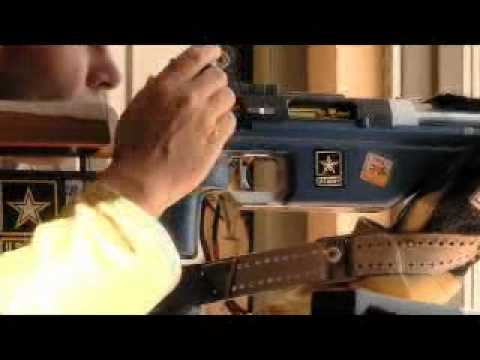
Located at Ft. Benning, Georgia, the USAMU includes many current world and Olympic champions. Members of the unit compete in every major international shooting competition. They very often win, and for that reason the USAMU is referred to as “The Home of the Champions.” When not training, or competing in shooting events, USAMU soldiers serve as marksmanship trainers for other U.S. Army units and even allied forces overseas. Recently, a USAMU group was deployed to Afghanistan where they worked with allied Afghan (ANA) units to improve the ANA troops’ shooting skills.
The USAMU also conducts numerous clinics throughout the year. The USAMU teaches more than a thousand novice and experienced shooters at the small-arms firing school every summer at Camp Perry, Ohio. The International Rifle, International Pistol, and Action Shooting teams all host popular youth camps each summer.
USAMU is composed of six competitive shooting sections: Service Rifle, Service Pistol, Action Shooting, International Rifle, International Pistol, and Shotgun. International Rifle, International Pistol, and Shotgun are Olympic sports. The USAMU’s world-class facilities (for both training and competition) consist of 260 acres with 7 ranges and 18 buildings.
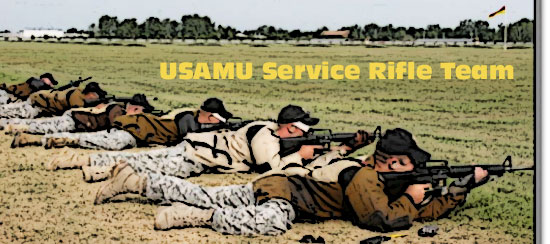
Since 1956, members of the USAMU have won hundreds of individual and team national titles, more than 40 World Championships, and 23 Olympic medals. Two noncommissioned officers in the unit, Sgt. Vincent Hancock and Sgt. Glenn Eller, are current Olympic Champions. Sgt. 1st Class James Henderson is the reigning National Pistol Champion and holds countless records in service pistol shooting. Sgt. Daniel Horner is the National Multi-Gun Champion. Spc. Joe Hein is the National smallbore prone Champion.
CLICK HERE to Read the Complete Story….
|


