We have a very active FREE Classifieds section in our Shooters’ Forum. Our Classifieds are currently grouped into two (2) basic categories: 1) Guns, Actions, Stocks, and Barrels; and 2) Tools, Dies, Optics & Miscellaneous. As our Forum has grown, so have the number of Classified listings. Some Forum members want us to create more Classifieds categories, so it will be easier to locate specific items, such as barrels or brass. Many other readers like the system just the way it is, since they can find a wide variety of items all in one place.
We want your opinion on the subject. Should we create more Forum Classifieds Categories? And should we include a paid section for Commercial listings? That way retail vendors could list new products, special bargains, or group buy offers. Express your views in the Poll below (you can pick more than one answer). If you have specific suggestions, post them in this Forum Classifieds Update Topic.
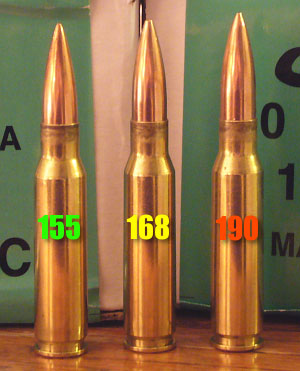
In December, we published the rules controlling choice of caliber and bullet weight for Palma competition. (CLICK HERE to Read.) In the USA, some events are still limited to 156gr or lighter bullets for .308-caliber shooters. But where such restrictions don’t exist, many shooters are using heavy 175-190gr bullets in their .308s. Is the heavier bullet always better? What considerations favor the lighter 155gr-class bullets in Palma competition? Top Palma shooter Kelly Bachand addresses these questions in today’s commentary.
Factors That Favor the 155s by Kelly Bachand
It is clear that 155gr bullets are adequate. In the Palma game, more matches have been won and more 450 scores have been shot with 155gr bullets than with any other weight projectile. With the NRA allowing heavier bullets in Palma matches, many shooters prefer to shoot the longer, heavier bullets when possible. With their higher BCs, the longer bullets would seem to offer a ballistic advantage. There may be an edge, but in my opinion, it comes at a high cost.
Shooting a heavier bullet adds complications. You’ll probably need a different powder and new load development will have to be done. New zeroes must be calculated and confirmed on the range. An expensive new barrel with a faster twist rate may be needed to stabilize the heavier bullets. And unless you’re lucky, there’s a chance that the new barrel is less accurate than your existing barrel. (If you’ve got a “hummer” barrel for the 155s, what are the odds of getting another one as good for the 190s?) For a shooter who only competes domestically and who has plenty of time and money, this does not pose much of a problem, as he can work up multiple loads and acquire multiple barrels, or even build up a second complete rifle. But shooting BOTH the 155s and the heavy bullets (which may require a new barrel) certainly adds to the cost of competing, and the time required to work up loads. One who also competes internationally has much more to worry about, since you’ll likely be switching between the heavy bullets for most domestic matches and the 155s for most international matches.
Consider the challenges you’ll encounter switching between a heavy-bullet domestic load and a 155gr international load. Will changing between two different loads (with very different recoil levels) alter your gun-handling and follow-through? Will having two loads (with different ballistics) create confusion when making wind calls? And if you DO shoot both 155s and 190s, should you have two different barrels, or should you stick to one barrel which is adequate for both bullet weights, but perhaps not optimal for either? The heavier bullets typically have a better BC which means they should be less bothered by the wind. At the same time the heavier bullets travel at a much slower velocity. Does this negate the ballistic advantage? You need to check the ballistic tables carefully, looking at BOTH BC and velocity.
As a person who prefers to keep things simple and stick with what works, it’s no surprise I continue to shoot 155gr bullets exclusively in Palma competitions. But I understand this is just one viewpoint. A Palma shooter reading this should survey competitors who are consistently putting themselves in the winner’s circle. Talk to top shooters and then make your own rational, informed decision about which bullets to use. Good luck and keep them in the center.
Every prone shooter needs a shooting mat, whether you’re shooting in competition, or stalking critters on a walk-around varmint safari. If you’re looking for an inexpensive mat that’s easy to carry, check out the MidwayUSA Competition Shooting Mat. Regularly priced at $49.99, this mat is on sale right now for just $24.99. The $24.99 sale price is good now through Feb 28, 2010.
Sized 69″ Long x 27″ Wide, this mat rolls up into a 6-7″ diameter “sausage” for transport or storage. The mat has rubberized elbow and knee pads; the mat is about .325″ thick at the elbow pads and .350″ thick at the knee pads. While we prefer a wider mat (with more room for ammo boxes and shooting accessories), this mat has many nice features. Grommets on the corners allow the mat to be staked down in high winds. The bottom has a non-skid texture so it doesn’t slide around, and the mat comes with both a carry handle and a shoulder strap.
The new IMR 8208 XBR powder is quickly acquiring a reputation for accuracy and pressure stability over a very wide range of temperatures. In addition, it looks like 8208 XBR has a huge load window for accuracy, at least in the 6 PPC cartridge. Here are five successive targets shot by journalist James Mock. With loads range from 30.5 grains to 31.5 grains, Mock nailed five “zero” groups in a row. (These were all three-shot groups.) Mock nailed “zeroes” over a full grain load-weight spread. That’s very impressive, and it bodes well for those who want to spend less time “tuning” their loads.
James observes: “[Here are] 5 consecutive ‘zeroes’ with charges from 30.5 to 31.5. I used a Krieger barrel (583 rounds) and a BAT Model B action. The bullets are from Del Bishop. I used both Wolf SR and Fed 205 primers.The combination that I used that day was really working. The Bishop 65 grain FB bullets were seated to just touch the lands in a barrel with 583 rounds.”
Mark DeYoung has been named the new President and CEO of Alliant Techsystems (ATK). Prior to his promotion to ATK’s top leadership position, DeYoung served as President of ATK’s Armament Systems Group, which makes commercial ammunition, tactical accessories, and medium-caliber gun systems. DeYoung has lead the way in ATK’s modernization efforts, helping the company adopt “lean manufacturing” methods. Under DeYoung’s guidance, ATK has become the largest producer of ammunition in the world. ATK’s Armament Systems Group will have a projected $2.1 BILLION in revenue this year, up from $600 million in 2003.
The ATK “family of companies” includes some of the most popular brands in the shooting and reloading market segments: Alliant Powder, CCI, Federal, Outers, RCBS, and Speer. With his experience in small arms ammo production, we can expect DeYoung to maintain ATK’s commitment to hunting and recreational shooting. ATK also has very large military and aerospace contracts, but DeYoung is a guy who understands small arms ammo manufacturing. A decade ago, DeYoung was put in charge of ATK’s Lake City Ammunition business, and he headed the commercial ammunition business launched in 2001. In the video below, DeYoung is interviewed at the 2008 SHOT Show by TheStreet.com.
Jim Shepherd, on the Shooting Wire, noted: “ATK has more than 18,000 employees worldwide and annual revenues of approximately $4.8 billion. Today, it has a President and Chief Executive Officer who may be more knowledgeable about firearms and the firearms industry than any other head of a major corporation in the United States.”
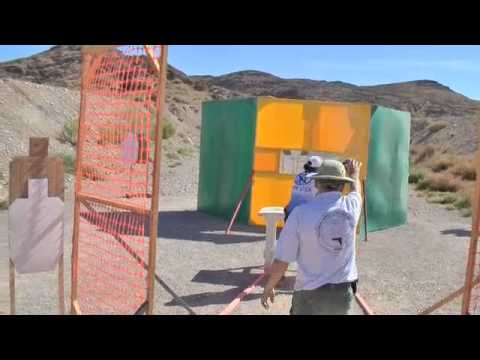
The U.S. Practical Shooting Association (USPSA) has announced the dates of its 2010 National Championships. Divided into four events, the Nationals are expected to draw more than 1,000 top shooters competing in a variety of divisions. Featured in the video below are “Women of USPSA” (including Team Glock’s Jessie Abbate) shooting at the 2009 USPSA Nationals. Be sure to watch this great video. Some very talented ladies demonstrate amazing shooting skills.
The first event on the calendar, the USPSA Single Stack Nationals, will take place April 28 through May 1 at the PASA Park ranges in Barry, Ill. In 2009 this event drew 270-plus devotees of the venerable 1911 pistol. Next on the schedule is USPSA’s MultiGun Nationals which will take place in Las Vegas, Nev. at the Desert Sportsman’s Rifle & Pistol Club ranges September 9 through 12. The MultiGun championship draws close to 150 shooters using pistol, rifle and shotgun in the Open, Tactical, Limited and Heavy Metal divisions.
The USPSA championship season will wrap up with back-to-back handgun championships also held in Las Vegas from October 8 through 16, 2010. With over 600 shooters participating, the USPSA back-to-back handgun championships represent the largest gathering of Practical Shooting competitors in the USA. In addition to America’s top guns, the match will also draw some of the best shooters from South America, Europe and the Pacific Rim.
USPSA National Championship dates
April 28 – May 1: Single Stack Nationals (PASA Park, Barry, IL)
Sept. 9 – 12: Multi-Gun Nat’ls (Desert Sportsman’s Range, Las Vegas, NV)
Oct. 8 – 12: Open & Limited-10 Nat’ls (Desert Sportsman’s Range, Las Vegas, NV)
Oct. 13 – 16 Limited, Production & Revolver Nat’ls (Desert Sportsman’s Range, Las Vegas, NV)
To learn more about the USPSA National Championships and other major matches on the 2010 schedule, visit www.uspsa.org or call (360) 855-2245.
Grizzly Industrial, makers of gunsmith lathes and other products, offers a Digital Tailstock Readout Kit for just $149.95. This digital readout (DRO), model T10118, is an affordable, helpful tool for shooters who do their own lathe work, and who need a fast, handy way to measure depth of cut with their tailstock. On the www.Grizzly.com website, you’ll find a full description of the Digital Tailstock Readout, complete with photos and product features. The unit is very versatile. It has two (2) digital readouts. One on the unit itself, PLUS a remote display that can be positioned up to 6 feet away. Both displays feature 0.0005″ resolution, inch or millimeter display, zero keys and ON/OFF keys. The scale has an 8-inch range and its display features ABS or INC mode as well as a Hold key. Both displays read independently of each other.
Shop Review by Mark LaFevers
What I find most helpful using this Grizzly Digital Tailstock Readout is the way it enhances the speed and certainty of multi-step processes. For instance, when preparing to bore a deep hole by first stepping through various bit diameters to get close, you are unlocking and moving the tailstock to change bits. The Grizzly DRO lets you lock down with a new bit in the chuck, hit zero as the leading edge of the flutes align with the face of the bore. As you are backing each bit all the way out to clear chips, the DRO lets you fast return without counting handwheel revolutions to within a hundredth, then slow down to begin the cut. This is very helpful in keeping track of what’s going on, and it’s a good backup for fine control (comparing the last few thousandths with your tailstock’s manual dial). I have a dial indicator set-up for fine work off the tailstock, but opted for this DRO instead because of its greater range and equal accuracy.
Mounting Tips and Splash-Guards
As the digital transducer is sensitive to contamination by liquids, you’ll need to be careful about splash from your cutting fluid sources. I used a simple stationary spring clip to hold a plastic sandwich bag over the face to catch any splash during chamber reaming using high pressure through-the-barrel flushing. The plastic was easy to see through with the eye, but the camera wanted to catch light glare and not show the on-tool digital display well. You can mount the remote readout wherever it is convenient, but I wanted my vision focused only in the working area for this operation.
For the value, I would rate this tool as a “must have” for anyone currently working without a DRO on their lathe tailstock. The Grizzly DRO is simple to set up, easy to operate, and has an ample 8″ range. Durability is unknown at this time as I’ve just started using the unit, but hopes are high. Like all your other electronic tools, keep an extra set of batteries on hand. Also, please note — to keep the price down and make the Grizzly DRO fit anyone’s particular tailstock quill diameter, Grizzly correctly judged that if you were in the market for this tool you will be able to build your own quill adapter.
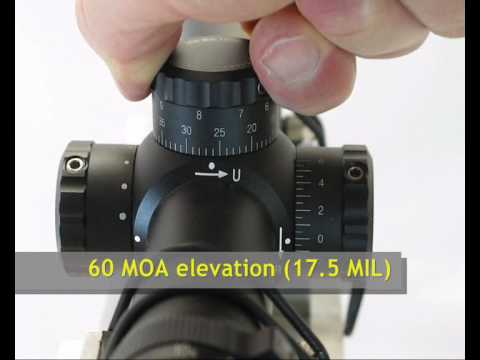
Forum member Thomas Haugland (aka “Roe”) from Norway has created an excellent video comparing the features on four long-range scopes: Schmidt & Bender PMII 3-12x50mm, Schmidt & Bender PMII 12-50x56mm, Leupold MK IV, and Zeiss Diavari Victory 6-24x56mm. Thomas shows how the adjustments function, he records the available vertical elevation, and he takes apart the turrets to show how the weather seals work. While the Leupold MK IV has MOA clicks, the three Euro scopes tested by Thomas have mil-based or mil/cm adjustments. These mil-based clicks work well with first focal plane reticles that have mil or half-mil hash marks.
Thomas explains:
These films emphasize the shooter’s Point of View (POV) and ‘user friendliness’. ALL these scopes get the job done, but they have some similarities and differences in the details and your own personal preferences would decide what scope can be labeled ‘best’. The perfect scope doesn’t exist, you’ll have a compromise somewhere — be that economy, magnification, reticle, turret, optical quality, sturdiness…
In these films I’ve set the Schmidt & Bender PMII 3-12×50 as the benchmark for comparison. Not because it is ‘best’ (it isn’t!) but because S&B is one of the manufacturers which first recognized the needs of professional Long Range shooters and put together products [optimized to work well] in high stress environments. The features that are important are: First focal plane, MIL reticles and MIL turrets, plenty of adjustment and suitable magnification.
Note that S&B and Zeiss scopes are also available in the USA with MOA-based turrets and/or second focal plane (SFP) reticles, for those shooters who prefer the MOA system, and SFP. A first focal plane reticle is best for ranging, but a target shooter working at known distances will probably prefer a second focal plane reticle that doesn’t change in size with magnification.
Sgt. 1st Class James Henderson, a service pistol shooter with the U.S. Army Marksmanship Unit (USAMU), was selected as the Military Marksmanship Association (MMA) Soldier of the Year for 2009. Henderson became the first Soldier in 24 years to win the National Pistol Championship at Camp Perry, Ohio. He won the National Trophy Pistol championship, the President’s Pistol match, and the Interservice Service Pistol championship. He was also a member of the first-place National Trophy Pistol Team and the first-place Interservice Service Pistol team. During the course of 2009, SFC Henderson broke numerous national pistol shooting records and claimed countless other individual and team accolades. He was featured in Sports Illustrated’s “Faces in the Crowd” section and was promoted to SFC in 2009.
Henderson stated: “This is a great honor. I have to thank the guys in the (custom firearms) shop. They help make this all possible. I couldn’t have done it without the support of my team. They push me every day and if I mess up I know one of them will win the match. Being on this team and in this unit is the best job in the Army.”
Henderson first served with the USAMU from 1991-1994 after tours at Fort Benning, Fort Sill and Korea. After a long stint in the Army Reserves, Henderson resumed active duty service and was assigned to the USAMU. Henderson is the only shooter to ever win the “Triple Crown” (President’s Hundred, National Trophy Individual Pistol Championship, and High Team Shooter) in the same year, and he did it twice (2002 and 2009).
If you’re looking for an extremely high-quality, 100% reliable semi-auto rifle for defense, three-gun matches, or predator control, you should consider the Sig556. Based on the Sig 550-series rifles used by the Swiss Army, the Sig556 features a piston/op-rod upper for enhanced reliability. The bolt, bolt carrier, and other receiver internals stay much cleaner and cooler in the Sig556 than with a direct-impingement design such as the AR-15. The Sig556 also features ultra-reliable magazines and a true folding stock as an option.
Now through March 8, 2010, Sig Sauer is offering a $300 Rebate on all Sig556 rifles. Customers must purchase a Sig556 rifle from a Sig Sauer commercial dealer before March 8, 2010. NOTE: Rebate Forms must be received by March 22, 2010. Remember, if you wait ’til the last minute to buy, you only have two weeks to submit the Rebate Form.


 In December, we published the rules controlling choice of caliber and bullet weight for Palma competition. (


 Mark DeYoung has been named the new President and CEO of
 The first event on the calendar, the USPSA Single Stack Nationals, will take place April 28 through May 1 at the PASA Park ranges in Barry, Ill. In 2009 this event drew 270-plus devotees of the venerable 1911 pistol. Next on the schedule is USPSA’s MultiGun Nationals which will take place in Las Vegas, Nev. at the Desert Sportsman’s Rifle & Pistol Club ranges September 9 through 12. The MultiGun championship draws close to 150 shooters using pistol, rifle and shotgun in the Open, Tactical, Limited and Heavy Metal divisions.


 Sgt. 1st Class James Henderson, a service pistol shooter with the
  Henderson stated: “This is a great honor. I have to thank the guys in the (custom firearms) shop. They help make this all possible. I couldn’t have done it without the support of my team. They push me every day and if I mess up I know one of them will win the match. Being on this team and in this unit is the best job in the Army.”


